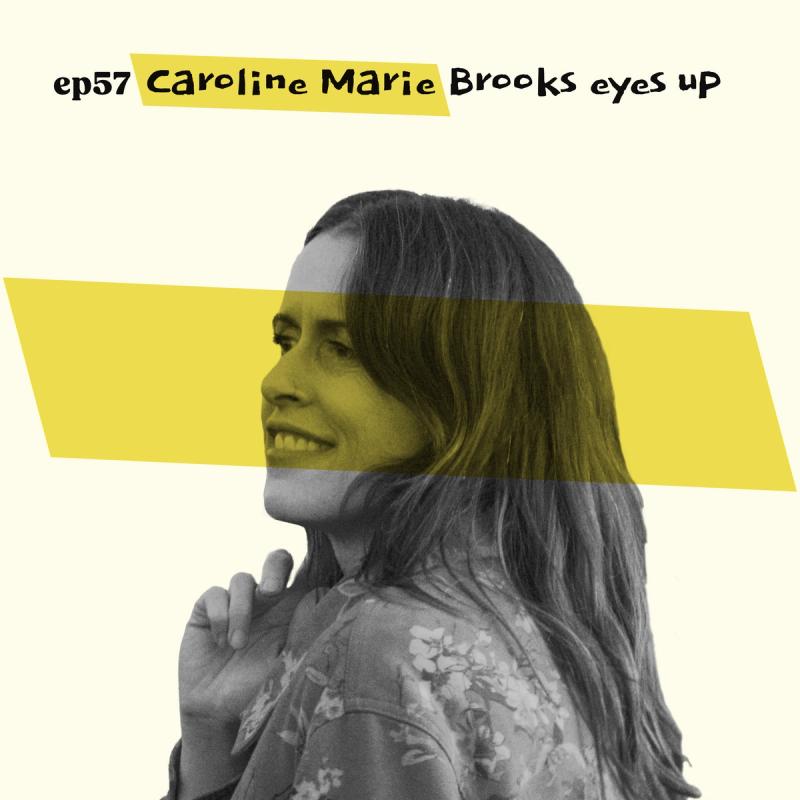
ep57
Caroline Marie Brooks eyes up
Listen
About this episode
Growing up in a musical Whitby household, Caroline Marie Brooks learned three-part harmony by ear before turning a Toronto songwriter circle with Good Lovelies into a twenty-year career. Now promoting her solo record, Light and Matter, she reflects on trading relentless road schedules for a healthier creative balance. Together, we dig into how the music industry has shifted from curated album cycles to nonstop content creation, why obsessing over streaming numbers kills artistic joy, and how she protects the alchemy of songwriting from becoming pure product. From self-booking independent tours and leading songwriting workshops to running the Mag River Nature Hub, Caroline reveals how climate advocacy, parenting, and quiet confidence shape her life on and off stage.
Show notes
showhide
Caroline Marie Brooks discusses growing up in a musical family, forming The Good Lovelies, and balancing the group with her solo work. She and Glen Erickson explore the creative process behind her album Light and Matter, the pressures of promoting music, and how songwriting can express connection to people and the natural world.
Key Topics
- A musical upbringing: Brooks traces her early musical education to family singing, her father’s guitar teaching, and discovering a natural feel for harmony.
- Finding a path in music: She describes balancing university and other interests with her musical ambitions before joining Carrie and Sue to form The Good Lovelies.
- Making room for solo work: Brooks reflects on balancing solo projects with the group, managing public-facing promotion, and finding a live performance style of her own.
- Songs about connection and hope: She shares how Light and Matter draws on songwriting as a process and her connection to the land, community, and hope.
Keywords
Caroline Marie Brooks, The Good Lovelies, Carrie, Sue, Glen Erickson, Fred Brooks, Joy, Paul Simon, Mary Oliver, Rick Rubin, Dan Mangan, Joel Plaskett, Sean Burns, David Foster, Feist, Guillermo del Toro, The Wheat Pool, folk music, Americana, harmony singing, songwriting, Light and Matter, We Will Never Be the Same, environmental studies, Forest School, climate action, Spotify, TikTok, Toronto, Whitby, Ontario, Alberta, Victoria, St. John’s, Newfoundland, West Coast, United States, United Kingdom, Australia, Gladstone Hotel, Massey Hall, Power Plant, Canadian Music Week, North by Northeast, East Coast Music Awards, Juno Awards, Folk Fest
ep57 Caroline Marie Brooks eyes up
released November 26, 2026
1:33:07
https://www.carolinemariebrooks.com/
https://www.instagram.com/carolinemariebrooks
https://www.youtube.com/c/CarolineMarieBrooks
hosts: Glen Erickson, Alexi Erickson
AFE: https://www.almostfamousenough.com
AFE instagram: https://www.instagram.com/almostfamousenough
AFE Spotify playlist: https://open.spotify.com/playlist/1o1PRD2X0i3Otmpn8vi2zP?si=1ece497360564480
Almost Famous Enough is a series of conversations centered around the music industry, pulling back the veil on what it really means to “make it”. Our podcast features guests who know the grind, who have lived the dream, or at the very least, chased the dream. Through these conversational biographies, truth and vulnerability provide more than a topical roadmap or compile some career advice; they can appeal to the dreamer in us all, with stories that can teach us, inspire us, and even reconcile us, and make us feel like we made a new friend along the way.
Chapters
00:00:00 Introduction
00:03:12 Caroline Marie Brooks and Her Solo Name
00:08:07 Growing Up in a Musical Family
00:16:22 University, Music, and Finding Her Path
00:23:14 Balancing Art and a Music Career
00:26:45 Social Media and the Artist’s Public Life
00:31:08 Streaming, Metrics, and Artistic Choices
00:33:30 Songwriting as a Creative Process
00:38:00 Art, the Marketplace, and Letting Go
00:41:20 How The Good Lovelies Came Together
00:44:04 Touring, Motherhood, and Making Space
00:47:27 Solo Work and Supporting Each Other
00:51:09 Finding Her Place on Stage
00:54:05 A More Flexible Solo Performance
00:58:04 The Ideas Behind Light and Matter
01:00:07 Songwriting, Land, and Connection
01:04:05 Practicing Hope in a Divided World
01:11:14 How Listeners Make Songs Their Own
01:17:57 New Music and The Good Lovelies’ 20th Anniversary
01:22:41 Post-Fame with Alexi
Transcript
showhide
ep57 - Caroline Marie Brooks eyes up
Glen Erickson (00:00) Have you ever wondered how songwriters seem to never run out of great stories or metaphors or interesting people to make the main characters in their songs? It's the same with comedians, right? How do they always seem to see the funniest things that happen in the mundane moments of life? I guess I always assumed these are hyper focused, hyper attention types of people. Either you're completely making the shit up or you're seeing things because you pay attention. How do you pay such good attention?
Are they tuning out the hustle and the bustle of regular life, keeping their shit together? I don't know. Keeping our shit together often feels like being so focused on keeping one foot in front of the other that it eventually feels impossibly risky to look up. Maybe you see where I'm going with this. There are two clear areas in my life I've had to figure out how to get my eyes off that downward lock and how to be present with my surroundings while doing my thing.
I play guitar, that should be obvious. There's always a point for any guitar player. When they want to break the magnetic curse of staring at their fingers, they'd build their confidence by eyeballing their fingers so hard that they believe it's the only way to keep it together. But you need to look up, watch your bandmates, take cues. You can't play with others if you're just playing with yourself. Yes, that sounded really bad. I'm also a snowboarder, or I was. Maybe I still will be.
We'll find out this Christmas break. But there was definitely a time when I realized if I'm gonna progress and actually take this thing down a mountain and enjoy the mountain and not kill everybody on the mountain around me, I need to take my eyes off the ground. It's just that when you're learning, you're not going down a mountain so much as you're only experiencing the things as far in front of you as your vision can immediately see, where you can control your micro reactions and you miss the beauty.
Of the mountain and almost kill everyone in your path. Caroline Marie Brooks is a singer songwriter, a member of the award winning Roots and Americana Harmony trio The Good Lovelies. Forming in Toronto in 2006, the group has earned multiple Juno and Canadian folk music awards. Caroline has carried on her own solo career with two albums since 2021, including the recently released Light and Matter.
Brooks is also a certified Forest School practitioner and has beautifully woven together her evolving sense of wonder, real time eco, grit, and education, and the gift of song, both in her own writing and in leading others through songwriting workshops.
This magical blend happens to be a model of someone fully present in what might appear to be competing priorities by taking an eyes up discipline and wrapping them all in one embrace. My name is Glen Erickson. This is almost famous enough. Thanks for spending your time with us. This is Caroline Marie Brooks.
Glen Erickson (03:12) so that'll be good. So thank you. Caroline, um, do you is it Caroline to you or Carolyn? Okay. Okay.
Caroline (03:18) Caroline, thanks for asking. Yep, yep.
Glen Erickson (03:21) And is the Marie added for the solo moniker to make separate from, you know, sort of
Caroline (03:28) Yeah.
Glen Erickson (03:29) the persona in Good Lovelies and all that, and just have a a subtle, subtle little distinction piece?
Caroline (03:32) Kind of. I actually Yeah, I like the
thr I like the three name thing, but and Marie was
Glen Erickson (03:38) Yeah.
Caroline (03:39) my grandmother's name, but I also there's another Caroline Brooks in LA. She's a songwriter.
Glen Erickson (03:43) Oh.
Caroline (03:44) And I received her royalty check. And now we're friends. It's like a whole story and she's awesome.
Glen Erickson (03:49) Yeah, how can you not be? Oh my goodness.
Caroline (03:53) But there is another Caroline Brooks. So I added the Marie just as like a little nod to my grandmother, but also uh just for that reason.
Glen Erickson (04:02) that's great. Well, you'll be my second three name moniker in about a few weeks. I had Brandon Wolfe Scott, who was part of Yukon Blonde, yeah, on.
Caroline (04:06) Oh yeah. Yeah, he's great.
Glen Erickson (04:10) And um, and that's a that's a fun three name moniker as well. Like, uh, why
Caroline (04:15) Yeah.
Glen Erickson (04:16) not? Okay, so uh I was looking forward to this conversation because but so I've had this assumption about the good lovelies.
And then I tried to track down a couple people who I thought could confirm my assumption before we talked. Um, but they could not confirm. But my assumption in my history is that I played in a band that kind of like mid-level alt-country kind of Radio 3 Darling kind of band for a while, 2007 to 2012, 2005 to 2012. and we're out of Edmonton. And
Caroline (04:50) Mm.
Glen Erickson (04:52) my recollection is
And I don't know why, but that early on in that career when we were just taking, you know, when you're just taking all the opening slots that come through town and the local promoters like you and start putting you on everything, kind of that stage of career. I feel like Good Lovelies played a venue on our university campus called the Power Plant, which is no longer there. But
Caroline (05:15) Hmm.
Glen Erickson (05:16) I feel like you guys played in that we opened that show, but
Caroline (05:21) What was your band's name?
Glen Erickson (05:22) the wheat pool.
This would have been like two thousand six, seven, like maybe seven.
Caroline (05:29) Yeah, probably not because we formed in 2006 and we didn't really hit the road properly till
Glen Erickson (05:35) Okay.
Caroline (05:36) 2008. But there were quite a few female trios around that time. And there was one who were like quite bluegrassy. we were all sort of on the scene at the same time. Like there was the Will and Jennies, there's like the be good Tanyas, the good lovelies. There's also, this great band from Victoria. so maybe it was them, but
Yeah, we did we have
Glen Erickson (05:58) Okay.
Caroline (05:58) s we have spent a lot of time playing in Alberta. It's probably after Ontario our most traveled province for sure.
Glen Erickson (06:07) Did you ever this would answer actually? I just realized how the question could be answered for me. Did you ever had Pat Stewart, the legendary drummer, play for you? Onto Okay, then it's a different band. Okay.
Caroline (06:14) No. No. Another van.
Glen Erickson (06:18) Now I just realized I could have figured that and I just uh get to suffer the uh online live embarrassment of the whole thing. But that's okay. Vulnerability isn't ever a bad thing, I guess. Um
Caroline (06:22) A little faster. I love it. I love it.
Glen Erickson (06:30) but I I had somehow locked it in that it was you guys.
But I know that I've seen you in other places um out in Ontario when either I'm sure it was either a CMW or North by Northeast kind of week
Caroline (06:44) Mm, mm.
Glen Erickson (06:45) that there was a place that I distinctly remember. anyhow, but somewhere in that lore of being out east and playing some of these things as well. so like long history, and I'm um
I'd like to get into it a bit and then sort of talk about
Caroline (06:59) Sure. Yeah, I love that.
Glen Erickson (07:00) how how that kind of brings you to where you are now. And I think um I don't know whether it's what you love to talk about. I've I'm I'm starting to realize I have to accept my place in media. Like that's not my mindset in doing a podcast, but you become part of the press machine uh
Caroline (07:17) Worse.
Glen Erickson (07:18) to a degree, even though I sort of that's not the main goal for me,
But your whole environmental efforts and lifestyle and the way you allow
Caroline (07:25) Mm. Mm-hmm.
Glen Erickson (07:28) it to just blend with everything, uh, I'm very curious about. So I don't know if that's something
Caroline (07:32) Yeah.
Glen Erickson (07:33) like you love to chat about or don't always chat about in these kinds of things, but
Caroline (07:36) Glen, I'm I'm
interested in chatting with you about things that you're interested in chatting with me about. I'm like a pretty open book, so I'm happy. Yeah.
Glen Erickson (07:44) good, 'cause
I I just love hearing people's stories and then uh finding out you know where that takes us and and all that kind of thing. So
Caroline (07:52) I love that. That's great.
Glen Erickson (07:54) um so you you grew up in Ontario, uh, family singers, you're part of the lore and music culture where you had like a sister band or or like a sister like group to
Caroline (08:06) Do you well? Yeah.
Glen Erickson (08:07) play. Yeah, so um it's funny 'cause like if you watch the um
You know, if you ever watch the shows like The American Idols or The Voice or Those, the amount of times that the origin story is either I grew up in church, right? Or
Caroline (08:21) Mm-hmm. Mm-hmm.
Glen Erickson (08:23) like my family, we all just sang all the time, and then they made my siblings and I start to sing together, like like putting us on
Caroline (08:25) Yeah
Glen Erickson (08:29) display for everybody. And then but that's how people get almost their formal training, because you can go to s university, you can
Get your music degree, you can get different versions of formal training. But the entire world of like being a performing artist, like in the
Caroline (08:47) Mm-hmm.
Glen Erickson (08:48) in the world everywhere from well, all the genres really, like and however they do it, doesn't those don't have a school. It's like there's
Caroline (08:56) Hmm.
Glen Erickson (08:57) a different way. So I'm I'm always curious about this version of a common origin story, which is, you know, my family.
Did music and we just sort of all gravitated that way. And then I had a bond with my sister. The band I was in, by the way, is fronted by two brothers and the brother harmonies that, you know, when I first
Caroline (09:15) amazing, yeah, yeah. Uh family harmony.
Glen Erickson (09:19) got invited to come and like play with them when we were exploring doing a band, I remember going home to my partner and being like, they sound like the perfect brother voices and they're handsome. So I think this band has a chance. I'm pretty sure we got a shot.
Caroline (09:29) Yeah
Glen Erickson (09:32) but so tell me about how.
that growing up around that music, that the way you look at it now reflectively on how that puts you on a path,
Caroline (09:42) Mm.
Glen Erickson (09:43) how did that sort of do the work of putting on your path or contributing to essentially a very young education in
Caroline (09:50) Mm.
Glen Erickson (09:51) in being an artist, being a player?
Caroline (09:53) Yeah, so my dad is Fred Brooks and I grew up in Whitby, Ontario. Um
Glen Erickson (09:58) Mm-hmm.
Caroline (09:59) his he toured for years with bands, bands like Bond, which were like they were on the, you know, Ontario in the East Coast circuit where they'd go and they'd play for like a week at a time in one spot and then move on to the next spot. And
Glen Erickson (10:12) Mm.
Caroline (10:13) um, but when he had kids with my mom Joy, uh he settled
uh on a teaching path. So he taught guitar in our home. That was my upbringing was this continuous in and out of the house like every night four, five, six people coming in for lessons. So music education piece was really clear. and I got my first guitar when I was six. So and I would say I was a terrible student with my dad in that I didn't feel accountable to him in the same way I would maybe to another teacher. Yeah. Yeah.
Glen Erickson (10:43) I was gonna ask. I d I tr I tried
to teach my son guitar and it was an absolute train wreck. It was terrible. Oh no.
Caroline (10:49) I'm doing it now with my own kid, like, and I'm I'm
like, this is you know what? Let's just jam. That's sort of my new attitude, is like, and
Glen Erickson (10:55) Ha ha ha.
Caroline (10:57) but my dad taught classical guitar and then he also is a songwriter. And I think that piece is more important to this story in that
Glen Erickson (11:04) Mm.
Caroline (11:05) I observed my dad in passing in life just writing music constantly and singing songs with my mom. And my parents had a band, and my
sister and I joined the band and um and they joke that they had kids so they could have backup singers in the family band. But I remember
Glen Erickson (11:23) for sure.
Caroline (11:24) yeah, my remember being a little girl and like I think I was about 12 and I would, you know, dissect the harmonies that my mom was singing on recorded uh, you know, they'd record a song and my mom would sing the harmony to it and I'd learn it by ear. And then
I would start picking that up. Like I remember very distinctly remember listening to Graceland by Paul Simon on repeat and just
Glen Erickson (11:45) Mm-hmm.
Caroline (11:46) like starting to pick up harmonies and realizing I could do it, like I could find the harmony fairly easily, which I believe ha as far as being a musician goes, beyond just a songwriter or a guitar player, like harmony is really probably the most important part of my musical life, you know, singing in harmony.
Glen Erickson (12:07) Would
you call it would you say it's almost like subconsciously instructing you on theory even though you don't know the language of it, right?
Caroline (12:15) Mm-hmm. Yeah, I mean,
I know the language more now than I did.
Glen Erickson (12:19) Yeah.
Caroline (12:20) But yeah, no, harmony still is a very intuitive, uh it's uh a very intuitive act to me now still. Like I know of in I know about intervals, and if I could pick it apart, I could. but I definitely speak more in like emotional language around harmony. Like I would like this to sound more uh distant or a tighter harmony or
kind of more mournful or whatever. Like I use a lot of that language. And that was also a huge part of my life is it was singing with my mom and sister. And then consequently just my sister in a duo for a few years. And then then after that with the good lovelies. So yeah, harmony singing has been a huge part. And then also thankfully my dad did get me taking guitar lessons and
You know, cause now I have a a like a big affinity to finger style guitar. I also play a ton of rhythm guitar in both my own projects and other people's projects. So yeah, that's that's sort of a snapshot of my um early formative musical life in the family setting.
Glen Erickson (13:25) Did you did you fight it? Were you part of the like where it's like you see it so much, like most people wouldn't
Caroline (13:32) Mm.
Glen Erickson (13:32) get that level of exposure? And I guess most people could only relate it to if, you know, what if both parents worked at the at the auto body shop or at the car dealership, you
Caroline (13:41) Mm.
Glen Erickson (13:41) know, and then are you gonna have to work in or everyone would expect that you would know the lingo and you would know how to fix your car already and all this sort of s stuff. And
But you see so common in music when parents who actually were professionally involved in music, there's I mean, we see a lot of nepotism, especially nowadays, even more, but you see equally as much the or you hear the stories of like, yeah, I didn't play a lick of in fact I just was listening to a podcast with the daughters of David Foster on it.
Caroline (14:12) Oh, interesting.
Glen Erickson (14:13) And like they didn't
Pick it up right away, young. So there's no like, they must be a prodigy. One of them's gonna be a prodigy for sure if you're David Foster's daughter. And they basically, one of them said she gave it a real shot. And and uh he said when it came to a recital afterwards, and something along the lines have told her, Yeah, you don't have it. You don't have to do this anymore. Which sounds so harsh, but
Caroline (14:38) Yeah.
Glen Erickson (14:39) she she looks at it as a blessing. She was like, he had.
The willingness to say, like, you don't have to do this for me anymore. And
Caroline (14:46) Yeah, they like that. Mm-hmm.
Glen Erickson (14:49) um, you know, like it's not your natural thing, like it was my natural thing, probably. And that's okay. Um, I would still think I would be pretty scarred by that statement. But, you know, but yeah, I
Caroline (14:59) Ha ha ha.
Glen Erickson (15:01) mean, just I you hear a lot of childhood stories. I mean, I've interviewed a number of people who were like, Yeah, my dad did this whole thing. I just like
Absolutely. The the episode coming out tomorrow is this guy named Sean Burns. Um and you know, he r his dad was super involved and a professional guitar player with a lot of these like old country acts and Texas, you know, dancehall kind of
Caroline (15:26) Yeah.
Glen Erickson (15:27) country. And, you know, and he like my question was like, did you just
slide into that right away, or did you rebel and like at the very least join a punk band or do something like at least very different stylistically or that matches up with youth. And it's just such a common story. So that's why I'm always
Caroline (15:43) Yeah.
Glen Erickson (15:43) so curious whether it was an easy thing
Caroline (15:46) Mm.
Glen Erickson (15:47) to follow or you had to kind of do the rebellious, I need to pick my own way of doing this or go my own way.
Caroline (15:54) Yeah, that's a great question. I think about that a lot as a parent now, not to flip it, but like
Glen Erickson (15:58) Yeah.
Caroline (15:59) I put zero pressure on my children in terms of I I can recognize that both of them are very naturally musically inclined. One of them is just going for it. He just plays instruments constantly. He sings constantly. Um, the other one is pushing back a bit, and that's totally okay. Like that's totally fine. I I I love this question because
Even though my parents were doing music, my dad was a guitar teacher, my mom had a regular day job. And um I actually went to university and I remember my dad saying, um, why d why don't you just go on the road? Because you'll owe the same amount at the end of it and learn more. And I went to university. It was a joking, jokingly rebelled and went to school. I have a I have a lot of intr other interests as well.
Glen Erickson (16:49) Mm-hmm.
Caroline (16:49) Like
Music, I love music, I love making music, but there are some days where I imagine my life might have taken a different turn. And I actually don't think I would have been less happy doing some of those things. Um that's not to say I I've I feel so blessed doing what I'm doing, but I didn't really think honestly that I would be a full-time musician. I for many years, like while I was in university and for a few years after, I was like, I I think this is something I will do.
all the time. Like I think I'll always write music or, you know, I'll um go to open mics or I'll play shows or I'll make records. But I always sort of imagined that I would have a day job as as well. And maybe that's a form of rebellion in a way, was just thinking, I really need this sense of security. And it wasn't until I met Carrie and Sue and we started just having some real wins.
And we were all of an age where we were like we all had great day jobs. Like after university, I really wanted to pay off my student loans so that the possibility of music could come to me because I was really worried about, you know, going on the road with a ton of debt from school. And um it wasn't until I met Carrie and Sue where I could see a path for it as a job, not to like reduce art to a job, but it is like
At the end of the day, we have to make a living. And that's I that was really I I think the the act of the three of us taking the leap together was really helped propel me into it. So yeah, in a way I rebelled in that I didn't go straight into a full-time music thing. Like I do have my young friends now, I'm watching them come out of high school and like sort of
Just go straight into music and just grind it out right away. I have a lot of admiration for that. But I needed a little step back and also some security to know that, you know, there were other paths for me. And those other paths have really informed my songwriting. Like, I not to digress, but I have a friend who is currently like, he's renovating his home right now. I promise I'll get to a point. But he's he's renovating his home and he's going through this period of time where.
His music has sort of taken a backseat to what he really wants. Like he he he just wants to be doing music all the time. But right now, in this period of time, in his middle age, he's building this home. And I said to him, I'm like, just it's a reminder that it's all part of the same story. So, like, for me, him renovating his home is also part of the story of him making music because his music
Glen Erickson (19:28) Mm.
Caroline (19:28) will
be informed by that. You know, like I guess it's maybe a little bright side way to look at being a musician because it it can be pretty bleak um in terms of like the workload and also finding the algorithm and all of these things. But like having I I never really separated my other interests like around the environment or teaching or all these things from my life as a musician. They are all sort of together. If that makes sense.
Glen Erickson (19:59) No, it's a hundred percent makes sense. Like I think
To be completely honest, I don't think I would buy into the concept that somebody is kind of a pure artist
Caroline (20:10) Yeah.
Glen Erickson (20:10) in my in my perception of that word, uh, or the attribution of that word, if they hadn't arrived at a place where my life is holistic, right? Like that that I have a bubble inside of me that does not allow me to compartmentalize all these things. I I think that that is more than just a personality trait or
you know, your astrology sign or however some people might attribute
Caroline (20:34) Mm-hmm.
Glen Erickson (20:35) that. I I think that's more how you're built and wired that that you keep all of those things in the same place and your capacity for it is the capacity that you're you're given, that you're born with. And you can like work on that. But um I don't think that's a digression at all. I think that's a really interesting observation, actually. Um the reason I hear it the way I hear it is
If I'm in midlife, and I'm assuming that means maybe 30s, maybe early 40s, um, and you've been working at a career in music, I mean, the thought of ever taking your foot off the gas and taking time away has to be the very first thing that is terrifying because the the industry just doesn't seem to allow for it. And because you literally sacrifice every moment and probably a lot of good.
Opportunities, time with family, pursuing relationships. You sacrifice so many things to even string along however long you get to do it for, that there's so much loaded inside of an idea of like, I'm gonna take a step back. And if your identity is even a little bit compartmentalized, then I can see how that might even be like a further sort of crisis of character moment, right? And
Caroline (21:51) Mm-hmm.
Mm-hmm.
Glen Erickson (21:52) And the idea
of what a career is supposed to look like or what things should like look like, um, because we hold those narratives probably too. I don't know how you feel about that thought
Caroline (22:02) Yeah.
Glen Erickson (22:03) or
Caroline (22:03) Yeah. Those narratives are also always evolving, right? So like
Glen Erickson (22:07) Yeah.
Caroline (22:08) twenty years ago when I started, what what a career looked like in music is very different from what it looks like now.
Glen Erickson (22:15) Yeah.
Caroline (22:16) You know, releasing this solo music recently as a middle aged woman versus like putting records out twenty
Glen Erickson (22:23) Okay.
Caroline (22:23) years ago with your friends in your mid twenties, you know, like those
Glen Erickson (22:26) Mm.
Caroline (22:27) are two very different experiences, though they are all rooted in the same thing.
Um, and you know, like I had coffee today with a friend who has changed his career musically as well. Like he he now writes soundtracks for TV shows. And so like there are so many ways it can look. But yeah, those narratives around I I definitely get a little in my head about like what what should my job look like to people? And also now it's so ever like it's so public, like the process of making a record, the po process of
You know, like putting out an album, all the visuals of like we used to anyways, I'm gonna sound like an old lady, but like we used to put a record out and then put on Google alerts to see what if people were mentioning our record in the press. And now it's just so different.
Glen Erickson (23:14) Yeah, absolutely.
Caroline (23:15) Like it's basically reversed itself where you as an artist are constantly pushing a record forward out, out, out, songs out, out, out, and this creating this imagery around it to capture people's
Very finite attention spans.
Glen Erickson (23:30) Well, and I've talked about this
a lot on this podcast, but because I've had people from all different stages of the journey. I've had people 25, you know, Joel Plaskett 30 years in
Caroline (23:41) Mm.
Glen Erickson (23:41) plus in his career, and uh and then people who were in their first three, four years. And and the idea behind the record cycle, the way you were talking about it, in a in a less socially accessible time period, meant that, yeah, that you
You prepared everything that somebody is gonna know and see about you. You actually curated that in advance,
Caroline (24:05) Mm.
Glen Erickson (24:06) made it a package, and then put that out and then went and did the work to get in front of people and try to keep their attention on it.
Caroline (24:14) Mm-hmm.
Glen Erickson (24:14) That was the way you had to do it. And you'd let that, you know, you'd if you had a good manager or someone you could stretch that out to 18 months, maybe you could have a whole plan
Caroline (24:22) Mm. Mm.
Glen Erickson (24:24) and try to
Like 18 months on a record now is like a craziest thing to think about. And like so the difference you're talking about now is basically inserting yourself in the public fishbowl and the demand to always be present.
Caroline (24:37) Yeah.
Glen Erickson (24:38) Like you don't get reprieve. So the idea in today's version of your friend taking a step back is 10x worse than it would have been 20 years ago, right? Because literally yeah, the the framework that we've now developed for how you
build a career as a as an artist or a performer or anything is is built around inserting yourself in there and being always present. um
Caroline (25:02) Mm.
Glen Erickson (25:04) So you're experiencing this now in this record, and probably you've been experiencing it over from the last one, because,
Caroline (25:09) Last few, yeah, yeah.
Glen Erickson (25:11) you know, the intensity of how this happened through the pandemic to where I think it is now, which is when you've made two solo records.
Caroline (25:19) Yeah.
Glen Erickson (25:20) Do do you struggle with the the fish bowl or the
the always presentness that feels required? Or is, or I'm curious then if, you know, being a middle-aged woman who's come to grips with a lot of these things and seems
Caroline (25:35) Yeah.
Glen Erickson (25:35) uh to be comfortable with the different parts of her story,
Caroline (25:39) Yeah.
Glen Erickson (25:39) or is that something that doesn't faze you anymore and you're trying to dictate what it looks like?
Caroline (25:44) Yeah, that's that's a great question. I definitely am less precious about it now than I was, say, five years ago. I I really have s been
over the last few years um really honing in on my ability to not take things personally and I'm also just leaning into like the absolute fun that you can have as a person and as a musician.
And I'm not always singing about fun stuff. Like, like let I'm not I'm I'm singing about like, you know, connection to the universe and to one another, which is actually very fun. Um, but I'm also just trying to release myself of like this um getting I I'm trying to not get in my own way. So I'm I'm taking a new approach where I'm trying not to be resentful of the amount I have to be public facing, like in terms of like
Well, today I have to put out another reel uh of me dancing my kitchen to my single. But also just being like, it's it's part of the game in a way. But also I'm like, how do I make it fun? So that at the end of the day, I'm not like cursing this machine that I'm part of. Because we are really part of it. Um, but it in and I think that's that's where I'm living right now. Like I weirdly
um got some TikTok accelerator funding. I don't know how I got it. Of all people,
Glen Erickson (27:18) Yeah.
Caroline (27:19) they gave me a bit of it's like funny money marketing, right? Like they'll give you some
Glen Erickson (27:23) Yeah.
Caroline (27:23) money. So I had to create all these reels. And at first I was just like, uh, how do I do this? And then I was like, you know what? I need a little microphone and I'm gonna make some reels. And I had a lot of fun doing it. And that's sort of where I'm living right now. It's not to say I think the hardest thing about it.
is the amount of time it takes and the amount of time it takes you away from other things like creative work or even admin work of like booking a tour. So um I've been an independent musician for the majority of my life and uh but either good lovelies or myself, we do like I do a lot of the sort of nitty-gritty by myself,
Glen Erickson (28:00) Mm.
Caroline (28:00) like booking tours and all those things. So yeah, that's probably the hardest part about it. But yeah, I'm learning not to live in resentment around it and sort of acceptance and trying to find joy in it.
It sounds really cheesy and a bit cringe, but I also like what else can we do? It's like we gotta l have some hope in this w w crazy world. And that's sort of where I'm living in this new age of releasing music in the algorithm.
Glen Erickson (28:25) Well, it only sounds cringe because you obviously have kids old enough to like
Caroline (28:28) Yeah.
Glen Erickson (28:29) make it really clear what things are cringe and aren't cringe. Um otherwise somehow I think
Caroline (28:32) Yeah, totally.
Glen Erickson (28:34) that would go right past us. But um that makes a lot of sense. I I mean I think it's a real astute observation. I mean, just because you're able to live there doesn't make it all sort of soft and and uh you know, a little granole-y perspective on
Caroline (28:49) Mm, mm.
Glen Erickson (28:50) on what I think is just really important because that.
That's honestly it's almost a mental health issue for some people I talk to
Caroline (28:57) Yeah, it is.
Glen Erickson (28:59) of of the level of challenge and pressure, you know, that if they already so many people already struggle with I think all of this and the concept of having to be always on, which we aren't really wired to do, and to be always vulnerable, which we're not wired to do at all. I think as humans, you know, anthropologically, like.
We're literally wired to protect ourselves from every threat.
Caroline (29:24) Mm, mm.
Glen Erickson (29:26) And we're in an era that I think, you know, it gets spun different ways about how people want to talk about media and then social media and now um other things. But I think the common thread has always been we're not wired, you know, to be so vulnerable and be put in a place of vulnerability to public perception in circles larger than we've ever known how to control the environments. And
like how
Caroline (29:50) Yes.
Glen Erickson (29:51) do you deal with that kind of thing? And I and I do think it's interesting. I mean, my very first episode ever was with Dan Mangan and he talked specifically about these things, right? Is like how he's similar to you, just chosen to accept that it's part of the job now and not begrudge the whole thing, other than begrudging the amount of time it takes comparison to the better things he would like. And
Caroline (30:17) Mm.
Glen Erickson (30:17) I think the real difference
And you you talk to a lot of people and you have friends who are obviously also trying to do the same thing you're doing and probably struggling and wrestling with the same things. So I'm interested in whether this is the type of thing you see or hear or not, but I'm starting to find a a divide between whether people can get to the place you just expressed or not. And I feel like it's actually whether part of the equation was whether anybody's paying attention and if you get fixated.
On that, because that wasn't part of the criteria you expressed as to why you could shift and find joy and and stuff in it. Um there's things you didn't like you said, but that wasn't part of your equation. So I'm wondering if that makes sense to you and sort of how you see your peers dealing with it, if it's very different than you or not.
Caroline (31:08) Yeah, I think that a lot of people there is a bit of of a divide where I have some friends who have just said, I won't participate in this, you know? And I respect that. I I think if you can draw a line, it's sort of how I have a lot of respect for people who pull their music from Spotify for ethical reasons. Um, you know, st streaming we can't we could spend an entire
We could spend an entire session talking about like the theft of music and art and who benefits from it financially and all those things.
Glen Erickson (31:37) Yeah.
Caroline (31:38) So there is like a participation piece, I think, that a lot of people struggle with and just say, no, I'm I'm not doing this. And that's okay. Actually think if you're an artist and you can figure out a way to do this job without that that level of stress, if it causes you that level of stress. Um
I think that's amazing. Um, and then I do have other friends who I think more similarly to me do find connection, uh a little bit of connection in this way. Um, and you you brought up a really good point about like the numbers game, you know, like oh, how many people have watched this or how who ha who has engaged with this? How long have they watched it for? And those sort of metrics can really
drive you crazy. And for anyone who's listening who doesn't know, like as artists, we have a login point for all of the music streaming DSPs, the digital streaming platforms. We can log in on the back end and see all of the data. And
Glen Erickson (32:39) Yeah.
Caroline (32:40) in a release cycle, it's very easy to I'm gonna log into Spotify for artists and I'm gonna look at see what song's doing the best. And like ultimately it doesn't matter.
Like
Glen Erickson (32:52) Yeah.
Caroline (32:53) it it's whether a song gets a million streams or ten thousand or a thousand. I'm try it it does matter in some ways, of course, visibility and like an income on your music and all those things, but I'm really just trying to separate myself from that. Like, do do I love this song that is maybe my lowest streaming song? Is that a song I loved making? I
Glen Erickson (33:17) Yeah. Yeah. uh
Caroline (33:19) do love it. And so it doesn't take away the value. Like I think I've been thinking a lot. I'm gonna go on a tangent again, but I've been thinking a lot about
Glen Erickson (33:28) Yeah, yeah, I like tangents.
Caroline (33:30) about uh conversations around AI and music. And one of the things that's come up for me lately is like, why why do we use the word like, why do we think of music as a product? You know, like if we can separate that
sort of terminology and think about it more as the process. Like the process of making a song or writing a song is more important than how than the outcome of that song. You know? I do I have been doing a lot of songwriting workshops with people, which feels like it's a such a privilege because I get to experience people like wrapping their heads around the alchemy of songwriting. And I don't even know.
Glen Erickson (34:13) Yeah.
Caroline (34:13) Like I don't even I I'm like
facilitating these workshops. I'm like, I don't know how to write a song. And like, but the process by which you can write a song is like it's really, really magical. It's it is alchemy in a way. There's no surefire way to do it. And um I I think in this world where we're just obsessed with like product and like creating something quickly, ready, gone. It's like if you concentrate more on the process, it really
it really just sort of brings uh puts a point on the importance of a song, you know?
Glen Erickson (34:51) Well, you're sounding very Rick Rubin for a second there. But um but I'll I'll
Caroline (34:54) Thank you.
Glen Erickson (34:56) also earmark what you just said about, you know, the product and then quickly done and gone. Like that's the quickly done and gone, that's part of the that's part of the vernacular of a product, right? In other words,
Caroline (35:08) Mm-hmm. Mm-hmm.
Glen Erickson (35:09) that concept is like that is what makes it better in a way, if I can do it quicker and better and have it out the door, because that
contributes to a bottom line that is kind of foundational to the concept of product. And so the Rick Rubinness of that was you saying like the process is is the thing. It's not a product. And he's, you know, he's always defended this this process so much that he talks about not caring about the audience that you're just, you know, you're you're only responsible to the song and to to what you're making and feeling
Caroline (35:46) Mm.
Glen Erickson (35:46) like you made the thing.
And you finish the thing, right? And then he goes in, then you worry all about all that other stuff afterwards, which is, I think, a really good distinction right there. Is because he I think his like his sound bites often just pull those other sentences and don't give you the whole context of his conversation where he doesn't say that it's not a product or that it's not going to become part of a marketing machine. He's just
Caroline (36:07) Mm. Mm. Exactly, yeah.
Glen Erickson (36:11) talking about the creative process. And and if the creative process becomes part of
the marketing of a product, so to speak, then the marketing of the product's always gonna win. And that's why they I think when I've thought about this, they need to be separated so much. And
Caroline (36:30) Mm-hmm.
Glen Erickson (36:32) and I mean anytime I talk to people and they start getting uptight, like not like a you and I talk, but people who are observing the music industry or just starting out maybe,
Caroline (36:43) Mm mm.
Glen Erickson (36:44) you know,
And right off the bat, you have to say, like, listen, you started out for art. You started out for your love, right, of music, or like you said, like your dad's songwriting kind of permeating more than just the other technical aspects. And then
Caroline (36:57) Mm mm.
Glen Erickson (36:59) that builds a desire in you to do that same thing and find that little magic. And that little magic and the art and the alchemy, as you said, is the thing. But
Caroline (37:09) Mm-hmm.
Glen Erickson (37:09) the minute you try to get somebody to come watch you perform.
Or the minute you try to then charge a ticket price because I need to pay for the sound equipment I did to perform, you've just entered the marketplace.
Caroline (37:16) Yeah, yeah. Yeah. Yeah.
Glen Erickson (37:23) And so as much as we fight against it, now there's not that doesn't mean we shouldn't fight against it, obviously, the all the
Caroline (37:28) No, it's
Glen Erickson (37:29) problematic parts, but we have no choice but to enter the marketplace if we want our art to be something that sustains us to keep making art and making the thing that makes us happy. And then we
Caroline (37:37) Mm. Mm-hmm.
Glen Erickson (37:41) But then we have to be so intentional, I guess, about how far we get sucked in and to what version of it we'll participate in. I guess is the thing going forward that I think just drowns so many people, you know, and make and makes them feel, yeah, like they're just in too big of an ocean to
Caroline (38:00) Mm.
Glen Erickson (38:00) to do it. Yeah.
Caroline (38:02) Yeah, the ocean thing is a really good metaphor for it because it can feel so overwhelming. Um and, you know, in the early days I felt that way. I was like, we have to do this and we have to do this to be this. Um and now I just I'm finding like this comfort in um creating things. And and I l I'm glad you brought it up because for me the there's like a visual piece to the
the songs to the record, like the the visual parts um elements that accompany these songs, whether they're little visualizers, which I made a uh four of them for this record, like little short visualizers for some of the songs or the album artwork. Like that's integral to the art piece of it. And I don't know how far that will take the record, but for me that's part of like messaging it out into the into the world. And
The marketplace. Like I know what you're saying. Like there is no way to fully separate yourself because you do have to make to make a record, you need quite a bit of money and you have to pay that back and hopefully make a living from it. So I I I know it is a little bit um maybe airy-fairy of me to like say I don't really care what happens to the music, but it's more just I'm trying to release myself from the pressure of w wanting too much, if that makes sense, so that there is an element of surprise and joy when things do happen.
Um yeah.
Glen Erickson (39:30) But you've been doing this long enough
Caroline (39:31) Yeah.
Glen Erickson (39:32) to also be able to say that and know with some sense of conviction about what it looks like on either side of a of the discussion or the argument. So
Caroline (39:42) Yeah, yeah.
Glen Erickson (39:42) like that's also a choice for you to say, like, I know what kind of anxiety or stress or, you know, different things are on the other side of, you know.
caring too much about these
Caroline (39:56) Yeah, yeah.
Glen Erickson (39:57) things that you can't necessarily control. Um, or you that's not your expertise, you know, uh for like I think that's the part that also gets missed when a lot of artists are discussing all of this. They they discuss
Caroline (40:10) Mm-hmm. Mm-hmm.
Glen Erickson (40:12) the machine that they're in and don't even discuss the fact that none of us were trained, like I said at the start, like we're barely even trained to play music uh in a lot of ways. But
Caroline (40:19) Yeah, yeah.
Glen Erickson (40:24) Other than like self-training, but um we're definitely not trained in the business of music. Um and some people figure it out and do really well, and then they go on and actually become parts of the industry, even.
Caroline (40:38) Yeah.
Glen Erickson (40:38) Um, but yeah, we're definitely not trained that way. So let me let me jump back again. So you moved into playing with uh the other two ladies in Good Lovelies
Caroline (40:49) Good lovelies. Yeah. Yeah.
Glen Erickson (40:51) and
I liked reading the story by the way. It felt like a meat cute, you know, like one of these cool things where you're all doing your own thing uh
Caroline (40:55) good, yes. Yeah.
Glen Erickson (41:01) like in Toronto, I think I read, and then you end up all playing on the same night and you're both is it like what what version of like kind of folk, like where were you all sort of landing? Because people just slap this broad
Caroline (41:14) Yeah.
Glen Erickson (41:14) folk thing to it, but what were you really sort of what kind of club was it? What were you trying to play?
Caroline (41:20) Yeah, so that was the
Glen Erickson (41:20) Back then.
Caroline (41:21) early 2000s. So we we were the three of us were on the scene in Toronto. So we all like I to go back, we were all working day jobs. We all played
Glen Erickson (41:32) Mm-hmm.
Caroline (41:32) a bunch of open mics. So we knew we knew each other. Carrie and Sue grew up together. They went to the same elementary school. So they have a lot of history. And we have a friend who a mutual friend who introduced me to Sue. So I would I had been friends with Sue for a while. And um
My sister and I had stopped playing for a while just because she was at school. There was a lot going on. And the three of us decided it was very in style in that era to do songwriter circles at bars in Toronto. So the three of us did a songwriter circle
Glen Erickson (42:01) Yeah. Yeah. Hmm.
Caroline (42:04) in Toronto at the Gladstone Hotel. And we had gotten together beforehand to practice some like, hey, make it was around Christmas time. And so we did a few
seasonal songs and we sang in harmony and it was a very uh like from the first day we sang together I was like, ooh, this is really special. And I it it there's something that happens with the blend of our voices and still um it's a a crazy experience. Like I'll be with them and we'll sing and it's been 20 years this year. So that was 20 years ago this December. And like we'll sing
Glen Erickson (42:39) Wow.
Caroline (42:40) at Massey Hall or we'll sing in a house concert on the West Coast or whatever. And I still get this like
feeling. So it's pretty special. And um around that time, Western Swing was really in as well. Like I brother were at that hood just come out and there was like this real like old timey three part harm crunchy three part harmony thing that we did very well. Like we did it very well and we put a record we made a little EP in my parents' basement and then we got hired for a few festivals and then we made a record full length.
And our lives basically the music stuff just took our lives away. Like we we just at some point we were like, I think we have to quit our jobs because this is going so well. So it was like actually a very fortuitous kind of coincidence that everything worked out and
Glen Erickson (43:29) By the way, it's funny that you said that with a little bit of a furrowed brow, like you you
Caroline (43:33) Yeah, like
Glen Erickson (43:33) guys were sitting around going, we're gonna have to quit our jobs when everybody's like, This is the dre
Caroline (43:37) Yeah, let's quit our jobs.
Glen Erickson (43:38) this is the dream story. The music forced me to quit my job. Yeah.
Caroline (43:42) Yeah,
it was great. And, you know, we just toured hard. Like I toured we toured incessantly. And um even I had my daughter in 2012 that year. We did 80 shows. I did 80 shows with a baby. And like we just kept going. Like we were hardcore. Um Yeah, yeah.
Glen Erickson (44:01) But that's the way he had to do it then. That was the only way.
Caroline (44:04) The only way and like touring the US at that time was like, it was great. Like we we were just hitting the ground running. And um
Yeah, so that's kind of the short form of how it happened. And then in twenty twenty three we put out a record called We Will Never Be the Same. And um and I really needed to slow down from touring, talking about like looking at your life and and you know, what and that was a bit it was very difficult because we had been in this even during the pandemic, we did shows online all the time, virtual shows, our our for our Christmas tour. We've never missed a Christmas tour.
In the pandemic, we did a virtual Christmas tour where we did seven shows for seven different time zones. Like it was madness. It
Glen Erickson (44:47) Wow, that's a great idea.
Caroline (44:48) was amazing. It was like it's been so much fun. And so I really uh in 2023, as that album was coming out, sort of said, I think I need to step back from the road a lot. Not not that I wanna stop like the band's got this beautiful Christmas tour we do every year and
we can still do festivals, we can still do small runs, but I can't keep up this rate and be a good mum and also, you know, fill my heart with other music. Like I definitely like feel called to make music with other people and with m you know. So um yeah, so that's like and it's worked. It's been really amazing. And uh yeah, this year we turned twenty which is crazy. And we have an annual Christmas tour like I mentioned and we're playing
some really big halls. It's like such a joyful experience to be in music with Carrie and Sue.
Glen Erickson (45:41) Yeah. We're so
You're obviously like you said those two were childhood friends. So it obviously
Caroline (45:47) Mm-hmm.
Glen Erickson (45:48) became for you to have stuck together this long, like a group of best friends,
Caroline (45:51) Mm-hmm. Mm-hmm.
Glen Erickson (45:54) and figuring out how to do that in a very unique avenue, uh, that most people don't have to figure out how to like be best friends and stick together. Like it's it's I guess I would say it's it's more it's quite a lightning rod, right? Like you're either
gonna get fused together or you're gonna get blasted apart pretty quickly. Uh
Caroline (46:14) Yeah. Yeah.
Glen Erickson (46:16) especially the era that you said like you were y like that's essentially we can both agree probably that's kind of the end of that era that sort of was the Canadian blueprint for how you build a music career was like big country, you have no choice,
Caroline (46:33) Driving.
Glen Erickson (46:34) get on the CBC is the only way you'll be heard from coast to coast.
Caroline (46:37) Yep,
yep. Just drive, yeah. Yeah.
Glen Erickson (46:37) And then and then drive and drive and drive and drive. And
and that started to run its course by 2012 to 2015, I think. And um but you galvanize yourselves probably is pretty tight. So I'm curious, even though I would make assumptions about the graces of growing older, but you get to a point where you want to make your own music and
uh to be cheeky about it, be non monogamous in your songwriting and your partnerships and and music playing.
Caroline (47:07) Yeah. Yeah. Yeah.
Glen Erickson (47:10) Um was that an easy thing on the group? Is that an easy choice? Did it ha did it present any difficulties? Like you you
Caroline (47:17) Any yeah, yeah.
Glen Erickson (47:19) choosing when I'm gonna go through a cycle versus the band wants to go through a cycle and does that create any tensions or or
Caroline (47:25) That's
Glen Erickson (47:26) did you have to go through anything?
Caroline (47:27) that's very honestly, I think the first solo record did not do that because it was during the pandemic. So we were sort of stuck apart. So that first al first solo album, which you know, I had been thinking about doing it for years and years and years, but there was no real opportunity that presented itself. Like when you're keep when you're at a pace like the good lovelies are have been, where where do you make the solo record and promote and tour it?
And I I will be honest, like, I'm not super touring my solo music, not just because I don't want to, but it's like uh there's only so many days in a year, you know, and good lovelies has always been such a central part of my life. Um and I think the nature of my relationship with Carrie and Sue is so loving that we recognize a desire in each other to do other things and
Though may privately, maybe there's some pain. I don't think like I know how I am receiving the fact that Sue is gonna make a solo record this year. For me, I'm like, I know that the action of her doing that will only bring more love to our project. You know, if there's
Glen Erickson (48:42) Hmm.
Caroline (48:44) space for us to explore ourselves outside of the band, it's only additive. It's like Ben my friend Ben building his kitchen.
You know what I mean? Like I feel like I at least that's how I perceive it. And there was also a period of time where Carrie lived in St. John's, Newfoundland, and Sue lived in Victoria, BC. And we just made it work. It was absolutely
Glen Erickson (49:06) Boy. Wow.
Caroline (49:07) insane. I was in Toronto. And they are like Sue really wanted to live out west for a while. She'd never had this opportunity. And we were like, just do it, you know? Like and that's sort of how it feels when it comes to making space for each other to explore.
um other musical projects or or you know artistic projects outside of the band. Especially at this point, you know, like I have kids at home and you Sue has a little guy and uh uh Carrie has a lot of family and it's a really precious time for us to be able to give each other the space we need. Um and like that being said, we still do like 30 shows a year, which is a lot for other bands, right? So I
Glen Erickson (49:51) Yeah.
Caroline (49:51) Yeah, I feel a lot of gratitude toward them because they've been very, very gracious in in my desire to want to have this other voice outside of the band. And Sue also, just shout out to Sue. She did all the graphic design of my records. So she's like involved in the project. Carrie helped me sequence the record. Like I feel like they're they're there. Yeah, it's definitely amazing. Yeah.
Glen Erickson (50:13) That's gotta feel good. That's fun. That's definitely fun.
Um, I don't know if this will be the case for you because of your upbringing and how you got started, but I I know it would be the case for a lot of people. Was there did you experience unexpected versions of self-doubt and insecurity stepping out uh on your own? It's not like you didn't know how
Caroline (50:37) Oh.
Glen Erickson (50:37) to sort of be out on your own before, but
Having done it that long at the scale the good lovelies have done it, like
Caroline (50:45) Yeah.
Glen Erickson (50:46) what what versions of insecurity crept up and how did I'm just wondering how they affected you? Like for me, they would they would like affect the timeline. I would procrastinate, I'd put things off, I wouldn't believe in myself, I
Caroline (50:56) Right, right.
Glen Erickson (50:57) wouldn't get things done because I might be self-sabotaging out of that fear or something. I'm so I'm wondering what version of insecurities or doubts might have hit you in in stepping out on your own.
Caroline (51:09) My doubts and insecurities are not in the making of the record. They're more in the presentation of the record, particularly like playing live. Um, because my show with Good Lovelies is so dynamic. Like it there's so much going on. There's like Carrie's hilarious, her banter's amazing, Sue has this sort of like stage presence that's kind of mysterious and also kind of silly. Like, I feel like there's always so much going on on stage.
So for me, the biggest self-doubt was like, how do I put on a show that people want to watch? Um, and I was like, am I am I funny enough?
Glen Erickson (51:45) Can I ask, can I ask,
can I ask what version you think you were of the three? Because you just described the other two as very
Caroline (51:53) Yeah.
Glen Erickson (51:54) dynamic characters to play in that space, but you're a th 33% of
Caroline (52:00) Yeah.
Glen Erickson (52:01) what people are experiencing. So what role did you play in that group?
Caroline (52:05) I mean musically I would probably be more the color guy, uh, playing a lot of the color stuff. And then as a person I would say I'm uh
it's so hard to describe myself in that setting, but yeah, yeah, good question.
Glen Erickson (52:18) I thought it might be, so I had to ask.
Caroline (52:21) I think I like to play off Carrie's like sense of humor a lot. Um I'm less of a storyteller than she is. She definitely tells a lot of stories. Like to pump Sue up on stage. Yeah, I feel like I play like a middle ground. I st I often stand in the middle too. Uh so I I feel like part of my role is like filling the gaps.
Which actually has been really helpful for me
Glen Erickson (52:44) Yeah, that makes a lot of sense.
Caroline (52:45) as a performer now because I'm like fighting against, for example, like one of the things Good Lovelies, it there's generally never silence because there's three of us, three women on stage. So there's gonna be if there's not a song playing, somebody's saying something. But
Glen Erickson (53:01) Yeah.
Caroline (53:02) I am learning to like play with silence on stage and like allowing there to be quiet
Glen Erickson (53:07) Mm.
Caroline (53:07) in a way that feels really good in the solo show.
That being said, I have like amazing side players, so I feel lifted up. Uh they don't really speak on the mic, they more players, but yeah, it's that's a great question. Definitely this the self-doubt around the presentation of the record.
Glen Erickson (53:25) Well, there's
a part B there's a part B to the question, which is then which I just thought of now in the moment, I have to be honest. Um what persona or the concept of has sort of come out of you, a solo artist that you didn't see before, maybe with with the group? Is there a part of you that's sort of come out and sort of found space or or sort of like
part of who you've become that sort of it just wasn't needed or necessary with the with the group.
Caroline (54:00) I think I can lean in more on uh
some of my personal feelings about like connection and uh our our desire for connection. I suppose in a way when I'm doing it by myself, I feel there there might be a little bit more freedom in terms of like going in a direction that's not expected. And also
Glen Erickson (54:30) Mm.
Caroline (54:30) being able to in the moment respond musically, like to uh a moment because I'm playing with I mostly play with this amazing guitar player named Dean Dreyard. And um one of the beautiful things about Good Lovelies is we play pretty much very similar arrangements every night. But with Dean there's like a flexibility there that I can kind of go on a musical tangent a little bit with him.
and let things sort of like
Glen Erickson (54:59) He he knows how to follow.
Caroline (55:01) he's amazing. He is incredible. And um yeah, so there's a flexibility there that exists that I'm leaning into in a big way. Yeah, and also in banter allowing myself to just like and I I don't think it's that I don't I think I'm very much myself in the Good Lovelies. Like as for turn in if if you saw me in a show, a a good lovelies show versus a Caroline Marie Brooks show.
I think you'd see the same person. I think you just there's a little more flexibility in my own show to open up a bit more. There's a little more space and time to do that. Um Yeah. Great question.
Glen Erickson (55:40) Kind
of learning, I'm kind of learning right now, right? That I mean, I've known this a lot, but I'm really seeing it and thinking about it more, about how there's so many different sides to us. Almost like
Caroline (55:51) No.
Glen Erickson (55:52) like little, like a multi, like a mirror with a bunch of little broken pieces, right? That all of a sudden start reflecting very specific things instead of just one whole thing. And or even like the old metaphor about, you know, if you walk up to an elephant.
Blindfolded, like you'll be like, all you'll feel is this big leg, and you create a picture of what this thing is. And and people only see sides of us. So I'm always
Caroline (56:17) Yeah.
Glen Erickson (56:18) being reminded of this lately is like, it's okay. I don't have to feel so bad about being misunderstood. I don't have to work so hard to control perceptions because I can't. Um, and it's okay that I'm just this side over here. And
Caroline (56:31) Mm.
Glen Erickson (56:31) being this side over here doesn't negate the authenticity of who I am as a whole. And maybe that's
Being a Gen Xer and coming out of this thing where authenticity was like like supreme um for me and why I reflect
Caroline (56:45) Yeah.
Glen Erickson (56:46) on that. But the way you were describing that to me just feels very much like the willingness to sort of let a certain side be seen, and that's okay,
Caroline (56:55) Mm.
Glen Erickson (56:56) you know, and then let another side out at another time,
Caroline (56:58) Yeah, yeah.
Glen Erickson (57:00) and that that's okay, also, I think, along the way. Um I am curious about.
Both your music and and just the direction and choice. I mean, you've alluded to it so many times already in our conversation about, you know, even talking to your friend and being like, it's all part of this story and arriving at a place where you can understand what that means. as an artist, you know, like you probably don't struggle, I'm gonna guess, I'm making assumptions again, with some of this classic rhetoric you've heard of when you hear like some of the big
Pop stars on a show talk about, yeah, I was really struggling writing songs for this record or having inspiration. So I needed this thing to inspire me. And I've always just immediately felt like, is nothing happening in your life that you have to go conjure these things up?
Caroline (57:51) uh
Glen Erickson (57:53) where like shouldn't you be writing from this like constant introspection or reflection that is happening, whether you're writing songs or not? So
Caroline (58:03) Yeah.
Glen Erickson (58:04) Um, and it sounds like that's very closer to how you live your life and you have built expression. And so you moved into this phase. Like I was interested in reading the subject matter of your newest record, Light and Matter. Is Light and Matter? Did I say that right?
Caroline (58:20) Light and matters.
Glen Erickson (58:21) Oh, I second guessed myself for a second. Um
Caroline (58:23) Ha ha ha.
Glen Erickson (58:24) But yeah, so I'm I'm interested about the subject matter because I think.
Anytime someone starts writing about anything other than tragic relationships and love and starts writing about something that might have even the slightest relativity to meaning and purpose. Um outside of ourselves, people some groups get their backs up, and some people just want you to keep it simple, and some people don't want you to preach even in the slightest way. So I'm just curious about your and you can even like
Tell me and tell the listeners sort of what that is for you. Um but your connection to the environment and the work and the study that you've done, I'm just
Caroline (59:08) Mm-hmm.
Glen Erickson (59:09) curious about how that's made its way
Caroline (59:11) Yeah.
Glen Erickson (59:12) into your music.
Caroline (59:13) I like the word introspection because it's for me it's also outrospection. I don't even know if that's a word, but like being like thinking outwardly. And
Glen Erickson (59:22) Mm-hmm.
Caroline (59:23) one of my favorite poets is Mary Oliver, and she has this really short poem, which is instructions for living a life. Pay attention, be astonished, tell about it. And I love that.
Glen Erickson (59:38) Mm.
Caroline (59:39) I mean
I love a good, sad love song. Like, don't get me wrong. They're beautiful and they can be beautiful. There's so many
Glen Erickson (59:48) Mm-hmm.
Caroline (59:49) uh incredible songs about all subject matters. And and for me, like I'm definitely a person who does I think does their best writing um when I'm aware, when I'm just like eyes up. I and I have been
Saying this in my songwriting workshops, I've been thinking a lot. I've I've been doing a bunch of them lately. So I'm thinking about songwriting a lot, just from a like methyl methodological thing. And I always just say, eyes up, eyes up, get your eyes up, you know, like and by eyes up I mean heart open. And so a lot of the matter on this record has to do with like my relationship to the land. It's really big for me. A lot of the songs like CS Rise and Roses River, even though there's no lyrics in Roses River.
um or good company is really about like being in relation to the land and not separating ourselves from it. I think a lot about that's like something that I spend a lot of my life. I run a nonprofit with my partner called Mag River Nature Hub, which is like climate action, education and music and art and how how are we gonna address this crazy next part of our uh being as humans in this world that is broken, this environment that's broken. Anyways, that's a sidebar.
But it isn't. It's part of the story for me.
Glen Erickson (1:01:08) Yeah.
Caroline (1:01:09) And also connection to each other. Like, even in a song um called Katie, which is a song for my sister, which I my sister is like really a lodestar for me. Like that's the way I think about her. She's a rock. But the way I tell that story is through the imagery of, you know, the sky and water and
you know, connection to one another, but connection to the greater universe. And you know what? Honestly, Glen, if you talked to me 10 years ago and I heard myself talking like this, I'd probably roll my eyes pretty hard. Like I'd probably be like, this freaking person is so cheesy.
Glen Erickson (1:01:47) Mm-hmm.
Caroline (1:01:48) And but you know what? I like again, I don't know what it is, but I'm sort of living in this space where I'm like
We are all so connected, even though we think we're not. We are so connected. And a lot of the songs in this record like live in that sort of mindset that like ultimately and light and matter comes from a a song that's a lyric in retrograde where I'm just I'm liter I'm just saying, we're made of the same stuff. Like it's not it's like the the Joni Mitchell idea. We're all stardust, you know, like we are all light
Glen Erickson (1:02:20) Yeah.
Caroline (1:02:21) and matter, we're made of water, like
We're all made of the same thing. So there is a deeper connection that I think sometimes like in our crazy society and we've been talking about it for the last hour, like around, you know, product and marketing and all of these things. Like we lose we've like lost this deeper we haven't lost it, but the deeper connection is there and it's a reminder for me to to to remember that like we are connected, you know.
Glen Erickson (1:02:48) Well, you see, there's a lot of people who might just be willing to go ahead and say we've lost it. But um
Caroline (1:02:55) Mm-hmm.
Glen Erickson (1:02:56) you definitely see that the people trying to have it feel like they're working so hard right now.
Caroline (1:03:02) Mm-hmm.
Glen Erickson (1:03:03) Like that it that it requires that much work because we're in such a divided
Caroline (1:03:07) Effort.
Glen Erickson (1:03:10) world, right? Where um it just feels easier
to distinguish ourselves and I and form identities around what we're not and who the other is.
Caroline (1:03:21) Yeah.
Glen Erickson (1:03:22) And uh and and I'll even make the bold step of not fully disparage some of the source of that because that's like you do it on the playground. It's part of like developmental psychology just
Caroline (1:03:34) Mm. Mm.
Glen Erickson (1:03:37) to to do that. So we're wired that way. So I won't fully disparage how it ends up happening to us.
But I will more say that the sad part about it to me is that it it prevents you or it makes you lose this whole period of time where you could be seeing people for who they are and and and actually learning how rich and diverse uh we are as people. So at the same time we're like super connected that you realize that the
while being that connected that we're also allowed to have such tiny little, you know, micro and macro differences that don't m disconnect us. But we
Caroline (1:04:23) Yeah.
Glen Erickson (1:04:24) we think they disconnect us, but they just are again those little shards of different sides of who we are and we should allow them to be. But I think the thing I'm observing right now in the world, and you can tell me maybe what you're observing in the world, is that
It's just not a safe place anymore to to allow yourself to be all those little shards and sides of who you are. Um and because of that, like I think that's maybe it's not just the hate that's getting spewed. It's the fact that you just don't trust or even believe in the connection. I think people are maybe just losing a sense
Caroline (1:05:01) Mm-hmm.
Glen Erickson (1:05:02) of it. If that makes sense.
Caroline (1:05:04) I hear you. I am practicing the opposite in my relationships. Like in my neighborhood, you know, I'm having hard conversations with people about like about politics that are it's really challenging right now. They're like there's this divisiveness.
Glen Erickson (1:05:23) Yeah.
Caroline (1:05:24) And what I'm really practicing is like a reminder to myself that.
even if we believe very different things, ultimately we all want the same thing. Um and I also think that we're being told that we're further apart than we are when in reality
Glen Erickson (1:05:43) Yeah.
Caroline (1:05:44) we're not. And I I am trying to live there. Um I have this um I've been thinking about I'm I don't even know if
where I heard it or maybe I made it up. I'm gonna TM it. I'm trademark. Um I have like a
Glen Erickson (1:06:00) Yeah.
Caroline (1:06:00) I have a hope reflex and um when things are feeling very bleak, which they are in a lot of ways in the world. And I have kids. I don't know if do if you have kids too. Yeah, there's um there's a level of pain there imagining what their futures will be like.
And all I can do is hope and work towards a future that is healthy and bountiful and safe for them. That's what I can do. And um and yeah, I I'm I'm just trying to live in that space because the the alternate alternative is like a lack of trust and a lack of faith in our ability to get it together. And I don't wanna live there because my
You know, someone said to me recently, I said life is short. And my friend was like, Life is long. Think about that. Like, life is long. We can we have a lot of capacity to make change. And even having this conversation with you is so it's so validating. Like we feel the same way. And I know so many people feel that way. So it like again creates connection and and it's really important. And the
To bring back to the record, I think that's where this record is living ultimately is like like that's where these songs is like in connection to each other and connection to this. I you can't see me doing this, but like this. All of this.
Glen Erickson (1:07:30) The same thing.
Caroline (1:07:31) So beautiful. I kind
Glen Erickson (1:07:33) Yeah.
Caroline (1:07:34) of want to live like in in childlike wonder. I think as I get older, I'm like, I I spent a lot of years like I s I did an undergrad degree in environmental studies.
And there's like a lot of bleakness around the environmental movement. And I've been doing this work for like a long time, longer than my professional music career. I've been working in environmental issues. And it sometimes it feels like like has anything happened in this time? Um, but yeah, I just like I have to have a hope reflex because I gotta like we gotta get it together. We gotta do it. And yeah, that's partly why these songs have come to live.
Glen Erickson (1:08:12) Yeah, I don't think if you don't find a way to keep like hope like
Caroline (1:08:19) Mm.
Glen Erickson (1:08:20) in your hand, I don't think you can like at some point you'll just stop going outside. You'll stop
Caroline (1:08:24) Yeah.
Glen Erickson (1:08:25) like you know what I mean? Like metaphorically
Caroline (1:08:27) Yeah, yeah.
Glen Erickson (1:08:28) too, just like you'll you just can't go out into the world,
Caroline (1:08:32) Yeah.
Glen Erickson (1:08:33) because it'll it'll and and maybe it's a bit of confirmation bias, another way that we typically see the world. And so
If you don't have some streak of hope going in, then you will
Caroline (1:08:45) Mm.
Glen Erickson (1:08:46) not frame situations the way that it's important that we can frame them to sort of help us have empathy and and understanding. I think what's cool about you marrying it with your music, or at least not restricting it from being the source of where your songs have come from is.
I think it just says a lot about some of the things we were talking about earlier about just the willingness to be vulnerable and
Caroline (1:09:14) Mm-hmm.
Glen Erickson (1:09:15) again also the sort of, you know, the cheesiness of not caring what anybody thinks anymore type thing. Um
Caroline (1:09:23) Mm-hmm.
Glen Erickson (1:09:24) but but I guess why I think that's so important is like
I can see that there would be a tendency, and I don't know if you've ever felt this, like because people like to label things very quickly and people like to put things in a box. Again, the productizing of everything that we do
Caroline (1:09:39) Mm-hmm. Mm-hmm.
Glen Erickson (1:09:41) has lent itself to that just because categories, you know, make make for good inventory. Yeah. Yeah. We just we we inventory everything uh
Caroline (1:09:44) Yeah, yeah. That's what we do as humans. Yeah, totally. Exactly.
Glen Erickson (1:09:51) so that we know where it is and and where it belongs. And um um
And the way that we have typically tend to categorize and and such people who bring environmental messages or holistic we are the world. I I that's like dumbing it down, of course, but we are the world
Caroline (1:10:06) Mm. Mm hmm. No, I I I hear what you're saying.
Glen Erickson (1:10:12) type of of messages, they get s my observation is they get slotted very specifically to a to a section and
It's funny because my reaction was there was to be physically show it like it was getting pushed to the side, which is maybe just comes from some PTSD of experiencing what that feels like to get things pushed out of the mainstream view,
Caroline (1:10:34) Mm-hmm.
Glen Erickson (1:10:34) the thing that doesn't, you know, again, sell as a product as well. So um and I think some people might be more sensitive to that risk of being like, well, if I express myself this way, what if I get
Restricted from the markets and the audiences that I want to reach and grow and go to.
Caroline (1:10:52) Yeah, yeah.
Glen Erickson (1:10:54) Does that ever come into your experience or how you've dealt with that?
Caroline (1:10:58) Well, I wouldn't say that someone listening to the record would be like, Oh, this is a record about hope, you know, or like uh it I don't think the lyrics are so expressly put that you would be like, but if you read if you
Let me back up. So when a song for me, and I'm sure many of your other guests have said this, when you finish a song and you put it out into the world, it's kind of no longer yours, right? So someone will take that song and take the meaning that they need from that song. Um like Feist was just talking about this at the songwriter Hall of Fame. She, you know, she you make her you make a song. It's like a pr it's such a beautiful part of the songwriting process. I have a song with Good Lovelies, it perfectly illustrates this is I wrote a song called Icy Gold.
And it was intended for a very specific thought, which was a very tired mom. I had written this song like when my daughter was nine months old. I was exhausted. And s that song went out into the world. And then we started getting messages from people and they were like, this song means this to me. This song means this to me. And so many people came to us with this. They were like, My mom is struggling with cancer. This is our song. This is our anthem. And it was so fascinating because it
illustrates the point I have even with this record where people have messaged me and they're like, this song means so much to me, this is why. And it it was maybe not my intention as a songwriter to have that message put forward. But that's how it's received by people. It's how it's interpreted. So back to your question about like, am I thinking about being slotted into a certain group? No, I just like make a record that I love the sound of.
That's a really important side conversation is like the songs. How do the songs sound? What is the, you know, like the container for these songs? Like, do they have I'm still very much an album person. So I want the album to have a feeling around it. And I'm less concerned
Glen Erickson (1:12:51) Yeah.
Caroline (1:12:52) about someone saying, this is a folk record versus an indie record. Or like delightfully, I found out one of the songs was played on a fairly well known radio station that's not CBC in Toronto this weekend. And I was like,
That's cool. Like I was like, really? You know, so there is like I'm not writing that song to be in a specific category or hoping that it'll
Glen Erickson (1:13:16) Yeah.
Caroline (1:13:16) be interpreted a certain way. Um, I just sort of am releasing it them into the world and hoping they find a place and am pleasantly surprised sometimes. Like I have a cover of the song Udalali from the Robin Hood soundtrack on my first solo record.
And it made its way onto farm TikTok. And can I tell you there are thousands of videos of me singing while
Glen Erickson (1:13:37) Yeah. uh
Caroline (1:13:39) people pet their donkeys? Like who knows where it's gonna go? Yeah. So yeah.
Glen Erickson (1:13:44) That's so amazing. See, these are the things
I need to ask more questions to get that. I need to get more of those kinds of stories out of people. Cause like the crazy, like you
Caroline (1:13:51) Ha ha ha
Glen Erickson (1:13:54) talk about your whatever self you talked about 10 years ago, uh, looking at your self now to also tell them, you know, by the way, like your song's gonna be on these like farm videos, petting animals all the yeah.
Caroline (1:14:07) Cool radio station. Yeah, or is me a farm videos. The other thing is like I'm kind of being
like hard of my tenure, like 10 years ago, I would listen to myself talking about, you know, connection and the universe and the land. And I'd be like, God, who's this woman? You know? Um, but I think the ten
Glen Erickson (1:14:22) Ha ha ha. uh
Caroline (1:14:23) year ten year ago woman hearing this record would be like, that record sounds great. So uh yeah, yeah.
Glen Erickson (1:14:30) Well, that's fantastic. Actually,
I just that it's funny, I keep referencing past guests. I don't normally do this, but I I just spoke with Davinette Doyle as well. And
Caroline (1:14:39) I love her, yeah.
Glen Erickson (1:14:41) and she like just released an EP and she's talking about her return to joy with it and how she looks back. She had that kind of story of lore, right? That she got found with a demo in like Newfoundland and
Caroline (1:14:57) Yeah,
yeah.
Glen Erickson (1:14:57) as a
teenager right out of high school and then right to success and the and the the machine. She got put into the machine all right away. Anyhow.
Caroline (1:15:04) She really did, yeah.
Glen Erickson (1:15:06) And um, but she talked about looking back and seeing a bunch of the choices she made and the things she did and still being proud and happy with that person. And
Caroline (1:15:15) yeah.
Glen Erickson (1:15:16) uh like that's such a privilege. I don't know like everybody gets to feel that way or for whatever reason. But I, you know.
I can't imagine anything better. Cause I also then quoted, I had just listened to a podcast with Guillermo de Toro
Caroline (1:15:30) Mm.
Glen Erickson (1:15:30) and he talked about um he's famous for these notebooks where he sketches all these things and it's crazy. And um when he worked as young on another famous director's set who has since passed away, the academy bought the estate of this famous person and found one of these old, old
incredible books and gave back to him. So we're talking like 30-year-old reflection of his ideas
Caroline (1:15:53) Mm.
Glen Erickson (1:15:57) and the ability to still look at 30-year-old past self's ideas
Caroline (1:16:02) Yeah.
Glen Erickson (1:16:02) and still feel like they were valid and that he understood the vision and he was, as he put it, right. My ideas were
Caroline (1:16:10) Interesting.
Glen Erickson (1:16:11) right back then. And I just think of that as like, yeah, people who have been doing it as long as you've been doing it and get this far.
Down the road in the ability to say if you were to look back and to believe that younger self would also look forward and be able to validate the
Caroline (1:16:28) Mm.
Glen Erickson (1:16:29) things you're doing is a different side of that conversation that I hadn't thought about before, which
Caroline (1:16:34) Yeah.
Glen Erickson (1:16:34) I think is pretty powerful. I I've been, you know, in conversations with people lately just about the human ability to love yourself, especially I think as you hit midlife.
Caroline (1:16:46) Yeah.
Glen Erickson (1:16:46) Um, I just uh I just thought I needed to note that that it sounds pretty remarkable. And I think um I would probably foray into making a guess that you've done the work to know how to love yourself and accept yourself to be able to come up with a statement like that, which is a pretty, I think, career milestone of its own in this industry, which is pretty great.
Caroline (1:17:10) It's really it's really nice you say
that, Glen. I like definitely have thought a lot about it and like wanna model it too. Like I think a lot about friends who where I'm like, I love you so much for who you are and there's all these not to say that we don't all ha like I don't have self doubt and stuff, but I'm definitely want to love myself. I want to, so I try to and sometimes it's b easier than other times and um and you know, again
as a mum watching my kids like I want them to love themselves. Like that's that's really the goal, right? Yeah. Yeah.
Glen Erickson (1:17:47) Yeah, absolutely.
Yeah. And the things and the links will go to to protect that. So um they're crazy. But
Caroline (1:17:53) Yeah, yeah, yeah.
Glen Erickson (1:17:57) um, so you inferred earlier that you're doing all your own booking for a lot of the aspects of this, which is the part I always found the hardest.
Caroline (1:18:07) Yeah.
Glen Erickson (1:18:07) Um I loved every part of doing the business side of things too, but booking shows just felt like it was gonna destroy me all the time.
Caroline (1:18:15) Ha ha ha.
Glen Erickson (1:18:17) Um,
the irony of starting the podcast is like I'm the majority part of the job is trying to book and just nailing things down and I'm like, my god, how did I do this to myself again?
Caroline (1:18:23) Booking artists. Yeah. Yeah. Yeah.
Glen Erickson (1:18:29) But um so what uh what is like because the music light and matter is out in the world now.
Caroline (1:18:36) Yeah. Mm-hmm.
Glen Erickson (1:18:38) Um and like we said before, there's no typical album cycle now. So what kind of is the plan for you?
With the music kinda going forward with this one.
Caroline (1:18:47) Yes.
Well, on a personal level, I mentioned Good Lovelies are turning twenty this year, so that's
Glen Erickson (1:18:53) Yeah.
Caroline (1:18:54) the next big thing. I do have some shows coming up uh for the album release. I will be doing some smaller tours in the new year as well to support the release of Light and Matter and um and yeah, it's all unfolding.
You know, like it's it's remains to be seen. And um at the same time, my band is turning twenty this year, so there's there are tour plans around that as well. So
Glen Erickson (1:19:19) Mm.
Caroline (1:19:20) that'll sort of be in tandem uh within reason. So yeah, I've got some shows coming up and just continuing off the momentum of that. I do have an unreleased single that'll probably come out next year as well. And um yeah, just continuing to
Glen Erickson (1:19:35) And a whole
bunch of TikToks in your kitchen.
Caroline (1:19:37) yeah,
so and then you can come watch me dancing in my kitchen. And my my daughter
Glen Erickson (1:19:40) We can expect there you go. We can expect all that.
Caroline (1:19:45) my daughter inspects all the videos and she tells me that it's cute in a millennial TikTok kind of way. So so far so good, guys. Oh amazing. aah
Glen Erickson (1:19:52) that's what you need. Yeah, that's what you need. My daughter helps me with this podcast. we do a
segment at the end together. Yeah, so she keeps me on the straight, narrow uh
Caroline (1:20:00) that's great. I love that.
Glen Erickson (1:20:03) of things all the time. So that's
Caroline (1:20:05) Very humbling.
Glen Erickson (1:20:06) always Yeah, it is, but it's funny how like I have no shields with her. So
Caroline (1:20:12) Mm.
Glen Erickson (1:20:13) It's one thing the way we talk about how it's humbling as a parent. I don't think we ever talk about the fact that like we wouldn't have it any other way and we'd be like, go ahead, fire away. So like the more you
Caroline (1:20:19) No. Yeah. Let's go. Let's go. Yeah, I know. I'll take it.
Glen Erickson (1:20:24) fire away, the closer I feel to you. It's crazy. So like have at her. So I love it. Um,
Caroline (1:20:26) It's so true. I love that. oh
Glen Erickson (1:20:33) well, I'm looking forward to seeing what comes out. and the 20th anniversary of the group, which is uh an amazing milestone as
Caroline (1:20:41) Yeah.
Glen Erickson (1:20:41) well. I'm gonna have to go
Again, if we're talking about how old we are and uh I have to now go find out what farm TikTok is because I had no idea. Um so I've got homework to do after uh
Caroline (1:20:51) like a subsection of TikTok. There's be careful, don't go too deep into the
different kinds of TikToks. You might get oh god. man, it's hilarious.
Glen Erickson (1:21:00) Yeah, I c well, I guess if there's I didn't know there was a whole bunch of sub subgenres to it, but uh we'll see.
Um but I have watched uh a few episodes of Farmer Wants a Wife. So maybe
Caroline (1:21:14) there you go.
Glen Erickson (1:21:15) maybe there's some TV placements there that are gonna be yeah, some good sync, some good sync opportunities too um
Caroline (1:21:17) Maybe some licensing options. Speaking of product, let's go.
Glen Erickson (1:21:25) for you there. But this has been a real delight.
Caroline (1:21:27) Thank
you, Glen.
Glen Erickson (1:21:28) Caroline, thank
you so much for taking the time to talk about your obviously career and passions and your insights and and with yourself and and with the group. And I think um it's a real privilege to get to hear somebody who's been a full time, even if it was a surprise, full time career musician and uh arrived at such a place of peace with you know, what that journey has looked like too. So appreciate
You being willing to share all that. Thank you.
Caroline (1:21:58) Thank you, Glen. I don't often get to do long form interviews like this and it's been so such a pleasure to like dig in, you know.
Glen Erickson (1:22:07) Yeah, I appreciate
you saying that. I agree. They're kind of gone. And I don't know how to get to the good stuff without taking my time getting there. So I've got no choice. But yeah.
Caroline (1:22:16) I love it. I love it.
Glen Erickson (1:22:20) Well, uh all the best. Appreciate this and uh hopefully we'll see you around in different places some more. Okay.
Caroline (1:22:26) Yeah. Thank you so much, Glen
Glen Erickson (1:22:29) All the best with the music. Thank you.
Caroline (1:22:30) Yeah,
bye.
Glen (1:22:41) Officially recording.
Alexi (1:22:42) Recording.
Glen (1:22:43) Well you have a I remember I said way away for the other Okay.
Alexi (1:22:46) I got confused. Welcome to Post-Fame
Glen (1:22:49) Welcome to post fame in the most confused way ever. Episode fifty seven. Caroline Marie
Alexi (1:22:59) Brooks. Do you wanna hear something? I read it as book the first time and I was gonna text me and be like, What a cool name and then I reread it and I was like, Wait
Glen (1:23:08) You
caught yourself? Yeah. Yeah. I mean and normally I wouldn't even like I've had to ask some people how to say their name correctly. But I asked her, I'm like, is it Carolyn or Caroline? I just realized like I think we like I just You haven't met a Carolyn?
Alexi (1:23:24) No, like that
makes me think you're a little bit stupid.
Glen (1:23:30) Like what does that mean? Like from the deep country?
Alexi (1:23:34) Yeah, like
Glen (1:23:36) Carolyn. Uh I know lots of Carolyn.
Alexi (1:23:40) Well sorry, Carolyn. Okay. Um, so we were just talking about some live shows. No how I know that. I was literally not even
Glen (1:23:50) It just came to my mind. Just right now.
Alexi (1:23:52) Um We were just talking about live music. Yeah. And I'll share the thought I had. Because okay, let's rewind first. We were talking about this episode about owning quietness on stage as a woman in music.
Glen (1:24:05) Yeah.
Alexi (1:24:06) And like feeling the need to be
Like she was expressing her feeling the need to be like enough of enter like entertainment in her shows. Which I think is just so interesting because I think um that's the assumption I would have had, especially for like women who are presenting as like solo acts on stage. But it's also interesting, I was just thinking 'cause we were talking about like concerts we've been to lately. Um the big thief concert I went to. Mhm.
Adrienne, uh she or Adrian? Adrian. She was like incredibly shy and timid on stage and
you could
tell felt no need to like
be some presentation or show. And she was actually just like incredibly quiet and then at one point, kinda like just before halfway through the show, was like very quietly and timidly to the mic, kind of just like, sorry, like I'm still not used to playing for a
a crowd this size. Like that's still something I'm getting used to. And there was like no crowd work. They like barely, barely spoke to the audience. They didn't incorporate the audience. They just like played their set and it literally like and I said this before in a different episode. Like they had it set up on stage very like they were just like in their studio, like they did a big carpet on like version carpet and Yeah. And they Yeah. They yeah, like they're
Some of them ha did turn their back during the show and like they it literally just was kind of like a more polished version of a like studio jam. And
Glen (1:25:40) Huh.
Alexi (1:25:41) like I don't know, like it was you could tell everyone in the audience and maybe it's also the type of people going, just had like a lot of respect for that. And like there was no like no one there was expecting that band and or like her to be some big show.
And so it's interesting 'cause I think like part of it is like how you market yourself, I was thinking. Like, you know. Because if online you're like very like outgoing and bubbly or whatever, and then, you know, you have a show and like you you don't feel like you can pr like pursue that kind of a energy on stage, and like there would be like an audience with a expedition of something met. But like most of the time I think if you're just like authentic to a certain degree, people know
What the show might entail in terms of like getting performed for.
Glen (1:26:30) I mean, it's funny like for me.
The way you described that makes me think of like the late nineties. So much of like the indie music was on this like heavy authenticity run. And yeah, there would be bands who looked like they even didn't like having an audience almost. You know what I mean? Like they would just get up and play their songs and then they would leave. And now I feel like I've gotten so conditioned to people having to learn crowd work and banter and and even being a
Probably been so saturated with all the like the music education programs that we've built over the years, you know, where you're coaching people on those things because people don't just come to hear the songs get played live, they come to get to know you. Yes. And but that's a lot of pressure, like to what Caroline is talking about there, right? The pressure of being like, do I have to be somebody I'm not on stage just to.
be engaging and have an audience like me or grow an audience like
Alexi (1:27:35) Well it's like on American Idol, like you see, like you I remember specifically you and I were watching like I think it was the last season, like that when they go to like Hawaii or whatever and it's like the Disney nights and all that. There was like um like the coaching they do and they show some like behind the scenes like coaching and so much coaching is like oh, like you're singing and you're just standing behind the mic, like, you know, you wanna engage everyone here, you wanna put on a show. Like there's just so much of that and like
The I mean, you're on American Idol and it's like T V, so like of course to an extent. But it's just like you hear so much of the coaching
be about stage presence, but like for an audience rather than like voice and actual like that kind of stuff.
Yeah. Um
Glen (1:28:19) Well they're for sure treated like equally. Like it's and that's where you get the democracy on a show like that, right? Where they're like, Yeah, there's twenty four of you who can all sing their pants off here. Do you know what I mean? So like
What are what are you g what are you gonna be like when you engage with people? Like what are you gonna be like? Do you people on the stage feel like they can connect with you a different way, you know what I mean? Or any all that other stuff, and they put such a priority on that, but it's like teaching them that such a cutthroat approach right off the bat to being like, I have to make every small detail like this. And it's just a lot of pressure if it's not your personality, and I appreciated Kiline talking about that having come from
You know, like she built her music career around playing with two other women in a group who,
you know, she admittedly said
had more
like a version of natural charisma on stage. You know, one had like a really great sort of set of sarcasm banter. Right.
Alexi (1:29:18) Okay.
Glen (1:29:18) You know, so stuff that, creates and carries a lot of energy in a live
show.
Yeah, but I think if it's interesting that you said you were at a show where it's like people were like pretty cool with them kind of just playing in their own little world. It's funny, like I was even thinking like a whole genre called shoegazer.
Alexi (1:29:35) Yeah, I know, yeah.
Glen (1:29:36) basically came from these guys just sitting there looking down 'cause they had to basically they just looked at their hands all the time. But they were like it also was dudes who were generally like probably pretty shy and awkward. You know what I mean? And it's like they just wanna like strum their guitars really loud. Like uh and look at their hands while they play. Like
Alexi (1:29:58) But again, it's like it depends like kinda how you sell yourself and your music. Like there's only shows I would go to and if that was the case I would
I'd be surprised. I don't know if I'd be like disappointed so much. But I'd be surprised for like some artists.
Glen (1:30:11) But I mean at the same time, there's like a lot, you're right. Like a lot of these genres or whatever. The authenticity fact is like if you showed up and all of a sudden they were like super like goofy, loud, or even more like it seemed like they had rehearsed their lines in between. That's a big one, right? There's like lots of pockets of music where it's like nobody is gonna believe you in your music if you
Talk like you've rehearsed your line in between. Yeah. Some people are just really, really good at it.
Alexi (1:30:44) Yeah.
Glen (1:30:45) Like you'd you could go to their show in Calgary the next night and be like, they told that same joke last night and it sounded like it was brand new.
Alexi (1:30:53) I also think it's like how big the tour is though. Not to go on different rabbit hole, like I like Noah Khan. I remember I went to like we went to his show together and I was like, he like really witty and funny and then I watched some videos on Instagram and the like most of the jokes we heard were recorded from like this different city, different province, yeah, whatever. But it's also like, yeah, like if you're on a tour where you're gone for like a hundred and eighty days and performing most of them, like you can't make up a hundred and eighty jokes about the same song.
Glen (1:31:20) You gotta reuse material for sure, right? Like, I mean, yeah, you can't help, especially those arena guys. Like you know that like I mean, some of them are so on the nose, right? Where they come out wearing like the hockey jersey of the local team and then do all the things. But it makes me think of um like I almost have no experience with that 'cause we never played at that level. But there was this one time that we drove all the way through the night to Vancouver to play this festival.
And then we hung out for the day and then we drove all the way back to play the Black Dog on a Sunday afternoon. And so when I got up and we played our first song and we're in this club we'd never played at this place in Vancouver and the room was pretty full. And I just said something along the lines of like we just drove all night to be here and play with for you. And like the response was huge. Like it like gave me like goosebumps on my arm. Like it just brought the engagement level up.
And then we drove all night back to Edmonton. We go to Black Dog and I think I I thought I'd reuse that line. It works so well and it it was just flat. So it made me think of like stand up comics who have to like rehearse their material.
Alexi (1:32:35) And then really move with like how the audience is.
Glen (1:32:38) Yeah.
Yeah, I learned a pretty quick lesson. That one. well.
Alexi (1:32:41) Pretty funny.
Glen (1:32:44) Uh is what is. Kate. Um thanks. We're almost done. We're almost done your school. You're almost free and clear.
Alexi (1:32:53) Yeah. Give me a month and the light will come back to my eyes for for Sunday.
Glen (1:32:57) Okay.
oh
Alexi (1:33:00) Okay, bye.