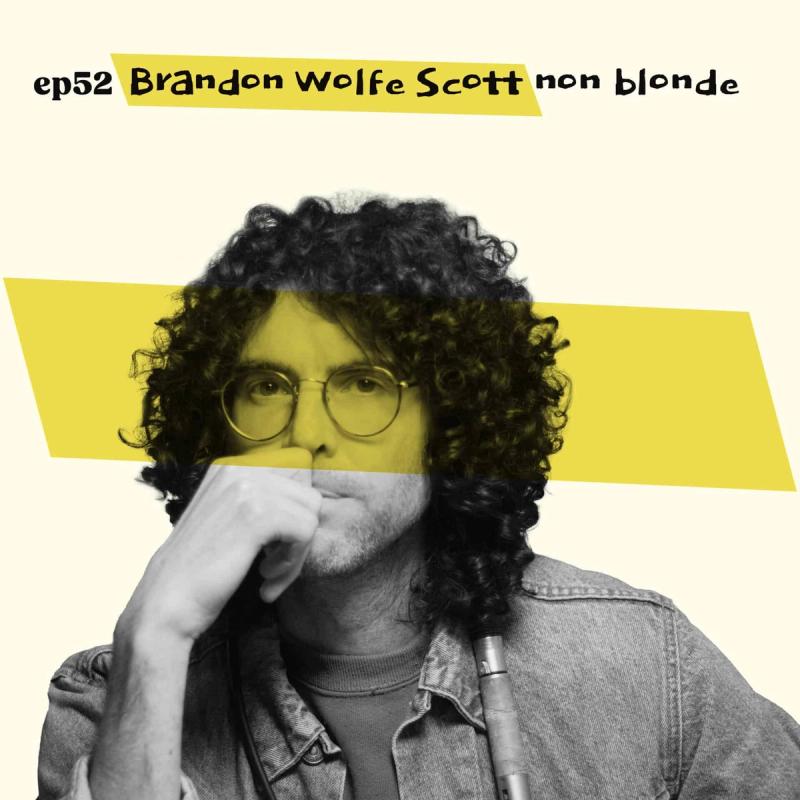
ep52
Brandon Wolfe Scott non blonde
Listen
About this episode
Brandon Wolfe Scott has spent two decades at the core of Canadian indie rock, balancing his role in Yukon Blonde with a lush, 1970s-inspired solo catalog. We pulled back the curtain on the industry's harsh learning curves - from surviving the grind of 250 tour dates in a single year and predatory management to building a self-sufficient home studio model that puts art first.
Brandon also details the vital grassroots energy reshaping Vancouver’s live music scene at Green Auto, where an all-ages DIY community bypasses corporate promoters to champion emerging artists. We explore how visual arts and film staging fuel his songwriting, along with the vulnerable creative surrender behind his solo EP, Pressed Flowers - collaborating closely with MOONRIIVR’s Gavin Gardiner and Champagne James. From opening for Dan Mangan across BC island halls to navigating veteran status, Brandon offers a remarkably candid look at artistic resilience and longevity.
Show notes
showhide
Brandon on Yukon Blonde, solo music, and building a sustainable creative life
Brandon talks with Glen Erickson about balancing his long-running role in Yukon Blonde with solo work, how a busy Canadian indie career has evolved over 20 years, and what it takes to keep making music without burning out. They also discuss the Vancouver music scene, trusted collaborators, and how visual art continues to shape his songwriting.
Feature moments
- Brandon reflects on early acclaim, touring momentum, and the burnout that followed.
- He explains how Yukon Blonde rebuilt its team and made the band more sustainable.
- Brandon and Glen discuss Vancouver’s music community and why Green Auto matters.
- Brandon shares how collaboration helped shape his solo EP Pressed Flowers.
ep52 Brandon Wolfe Scott non blonde
released October 22, 2026
1:32:01
https://brandonwolfescott.bandcamp.com/
https://www.instagram.com/brandonwolfescott/
https://www.youtube.com/@brandonscott1984
hosts: Glen Erickson, Alexi Erickson
AFE: https://www.almostfamousenough.com
AFE instagram: https://www.instagram.com/almostfamousenough
AFE Spotify playlist: https://open.spotify.com/playlist/1o1PRD2X0i3Otmpn8vi2zP?si=1ece497360564480
Chapters
00:00:00 Introduction
00:03:11 Balancing solo work with a full-time band
00:05:09 Why Yukon Blonde stays the priority
00:07:28 The awkward middle stage of a music career
00:09:10 How longtime fans respond as the band evolves
00:11:25 Early acclaim, CBC Radio 3, and what success felt like
00:13:26 Touring, burnout, and writing solo songs
00:16:13 Mismanagement and hard lessons
00:18:23 Rebuilding the team and making the band sustainable
00:20:43 Vancouver bands and scene connections
00:23:17 Flaming Lips as an early creative influence
00:24:20 Growing up in Quesnel and finding a path into music
00:27:23 The long runway to becoming a solid band
00:28:23 Women, Calgary’s indie scene, and musical peers
00:30:07 What’s thriving in music and why Green Auto matters
00:33:15 Green Auto Fest and DIY infrastructure
00:35:17 Shape and Space, visual art, and film-adjacent work
00:38:42 Creative control over art direction and album visuals
00:41:02 How the solo records differ from Yukon Blonde
00:43:14 Slide guitar, harmonies, and Beatles influences
00:47:09 Pressed Flowers and letting go of control
00:48:11 Collaborating with Gavin and James
00:52:28 Playing live with Dan Mangan and testing new songs
00:54:29 Why the solo project has stayed EP-based
00:58:30 Post-fame with Alexi
Almost Famous Enough is a series of conversations centered around the music industry, pulling back the veil on what it really means to “make it”. Our podcast features guests who know the grind, who have lived the dream, or at the very least, chased the dream. Through these conversational biographies, truth and vulnerability provide more than a topical roadmap or compile some career advice; they can appeal to the dreamer in us all, with stories that can teach us, inspire us, and even reconcile us, and make us feel like we made a new friend along the way.
Transcript
showhide
ep52 Brandon Wolfe Scott non blonde
Glen Erickson (00:00) Did you ever wonder how so many authors have Amazon number one best sellers? You know, like a little trademark, Amazon number one bestsellers, like this sticker.
Glen Erickson (00:10) Did you know it's common practice to acquire free or cheap promotions in hyper-niche, low competition subcategories, a few hours of a day to hit number one for that afternoon, and subsequently get the bestseller screenshot that they can use in their bios forever? Even if it gets them maybe like $20 in royalties at the end. Did you know it's fairly common for like a fine art illustrator?
Glen Erickson (00:39) To gather a few hundred thousand likes per Instagram post, but who also can't sell 20 prints for 20 bucks?
Glen Erickson (00:48) Did you also know that podcasters will often get their biggest spike on their launch week and then use their peak.
Glen Erickson (00:57) Chart appearance, such as air quotes top 10 on Apple Podcasts,
Glen Erickson (01:02) as a badge for the continuation of their podcast for years and years and years.
Glen Erickson (01:08) It's because these vanity metrics become the primary toggle for attention, for the millisecond validation needed to get a click or to get a listen or to get a response.
Glen Erickson (01:20) It takes vulnerability to get past that and discuss financial precarity of needing second jobs still, being broke even during a headlining tour,
Glen Erickson (01:31) as a way to pursue an honest, sustainable career.
Glen Erickson (01:36) Brandon Wolfe Scott is a Vancouver-based singer-songwriter, producer, and multi-instrumentalist, best known as the guitarist and co-songwriter for the Juno Award-nominated indie rock band Yukon Blonde.
Glen Erickson (01:49) Alongside his work with the band, Scott has cultivated a distinct solo trajectory that follows a more introspective, 1970s-inspired folk-pop through organic arrangements, intimate storytelling, and he's an artist who has survived.
Glen Erickson (02:04) The extra day jobs,
Glen Erickson (02:06) the manager ripping them off, money losing tours, only to find a greater sense of purpose through meaningful collaborations in various forms of authentic art and community. My name is Glen Erickson. This is almost famous enough. Thanks for spending your time with us. This is Brandon Wolfe Scott.
Glen Erickson (02:41) That's all right, man. That's all right. where are we where are we capturing you right now, Brandon? Okay. Like home home time here, like home stuff. Sweet. Sweet. well
Brandon (02:46) I'm in Vancouver. Yeah. I'm at home, yeah. I am, yeah. Yeah. And unfortunately I
Brandon (02:55) can't use my nice mic or anything fun here. boy.
Glen Erickson (02:59) It's all right. It's all right. that's what the that's what the AI tools are for later, right? So we'll figure that stuff out.
Brandon (03:04) That's right. We'll put to work. Yeah.
Glen Erickson (03:08) anyhow, this is our first time ever meeting. It's really nice to meet you, Brandon. Yeah.
Brandon (03:11) Nice to meet you, Glen, yeah.
Glen Erickson (03:13) Appreciate you taking the time here and talk about some stuff and career. Like obviously well, not obviously, to me, or maybe for some people,
Glen Erickson (03:24) I have the familiarity was being part of the band Yukon Blonde for the better part of the 2000 tens and on and
Brandon (03:32) Totally.
Glen Erickson (03:33) and quite familiar with, you know, a lot of the bands that have kind of come out of Vancouver's pretty rich indie rock scene. And yeah, so some people might know the name of that band, not necessarily put two and two together. And I think that's something you probably encounter a fair bit when you strike out on a solo.
Glen Erickson (03:53) career, I presume, is like how how are we gonna or are we gonna are we gonna even choose to tackle that one or are we gonna make that part of our promotion strategy? How how have you you've been doing this now since twenty sixteen, making solo records, how have you
Brandon (04:10) Yeah.
Glen Erickson (04:11) have you l just let the publicity people make those choices or or how's that work for you?
Brandon (04:15) Well, I I don't
Brandon (04:17) I don't mind being transparent with being in a Yukon blonde, you it's it's it is a part of my past and it's what I do now and yeah, it's it's very much a part of what I do. So I I don't mind having that a part of my solo thing as well, you know.
Glen Erickson (04:32) Yeah. Yeah. so
Brandon (04:34) It's totally.
Glen Erickson (04:35) that band and this is a good distinction I think always to make like when you're talking with somebody about their solo work and their solo career that they you're developing. I think the assumption right away is like is UConn blonde over or did you leave UConn blonde or stuff like that? And for everything that I've known, like none of that's true. So I guess
Glen Erickson (04:59) My v my immediate curiosity is like what what is the relationship to the band still and how the band is still moving forward and how you're moving forward?
Brandon (05:11) Yeah, it's definitely definitely not over. We had actually our our busiest summer of festivals this year.
Glen Erickson (05:18) Wow.
Brandon (05:19) which was incredible. Yeah, we were jam-packed every weekend flying somewhere across Canada. So it was it was really I was very grateful for that. And we did a record last October actually, so that was our seventh full-length record.
Glen Erickson (05:35) Yeah.
Brandon (05:36) so we're very much still a band.
Glen Erickson (05:39) Yeah,
Glen Erickson (05:39) very very much. So is that is that
Glen Erickson (05:44) At this point in your career, because you've been doing this a while, is that easy easier, maybe is a better way to clarify thing to navigate or balance as a better word for you? Have you sort of figured out that kind of thing? Or does it always every album cycle present some sort of a challenge to make decisions?
Brandon (06:08) with doing my solo project you mean kind of thing? Yeah. Yeah.
Glen Erickson (06:11) Well balancing both things where the overlaps
Glen Erickson (06:14) are might happen and
Brandon (06:16) For sure. It's definitely it hinders me booking things because the band will always take that's always the first thing. It always takes most precedents. So yeah, I I have a hard time committing to like booking tours when I really would love to do more solo tours, obviously. But we'll
Glen Erickson (06:36) Yeah.
Brandon (06:36) get, you know, we'll get we'll get a couple offers in where I'll have to like, shoot, I I guess I that occupies that time, but
Brandon (06:43) It's also my job, so it's okay. You know what I mean?
Glen Erickson (06:46) Yeah, yeah. Yeah, absolutely. I think that might be a curiosity for a lot of people always, right? Is like does one always stay as like, well, that's my primary like commitment, you know what I mean? And is the does it force the solo work to be secondary or does that ever, you know, become a
Brandon (07:05) It it makes it a s it's slight
Brandon (07:07) slightly secondary for sure and it is always there. and like I mentioned, like the band is it's my job. It's like my best friends and we we take it very seriously. So it's like that is that's the thing. But yeah, finding the balance and like I kinda know where our record cycles usually hit. So right now, like we just finished our summer festivals. I've got some months off, so I'm going for it right now with releasing
Glen Erickson (07:31) Yeah.
Brandon (07:32) music, you know, and I kinda planned it that way.
Brandon (07:34) I saw a small hole in the schedule, it was like, okay, sweet, I can put my foot down there.
Glen Erickson (07:40) Yeah, yeah, I j I I've had a conversation with an artist named Sean Burns and he's the bass player in Korb Lund's band now for the last four
Brandon (07:50) yeah.
Glen Erickson (07:51) years. And so but he had been, pursuing his own music for well over a decade before making that choice. And yeah, it was interesting from that perspective how that made a pretty immediate shift for him in priority. And obviously the Korb gig,
Glen Erickson (08:09) He's out playing all the time and that probably puts a little more predictable money in the bank, which makes that an easier decision about which one to make primary for sure, right? so
Brandon (08:20) Yeah. Yeah. Of course. Yeah, like
Brandon (08:25) UCon yeah. You can UConn is my like primary like yeah, it it funds my life, you know, and it's like we put a lot of energy
Glen Erickson (08:31) Yeah.
Brandon (08:32) into it and I'm proud of that. And my solo career isn't quite there yet. So until it is, you know, UConn's gonna take
Glen Erickson (08:39) It won't it won't be a challenge
Glen Erickson (08:40) if it doesn't have to be a challenge. Yeah, I think that was
Brandon (08:42) Yeah, exactly. Yeah.
Glen Erickson (08:43) the same story. I had a good conversation with a a more emerging person right now. It feels Juliana Riolino in last my last season here. And she
Brandon (08:53) Mm-hmm.
Glen Erickson (08:53) had been on the touring with Daniel Romano for years, and it sh her experience
Brandon (08:57) That's right.
Glen Erickson (08:58) was it kind of came to that head, right? Of like my own career started taking off and she had to sort of start to make decisions, which is different than
Glen Erickson (09:08) you're a founding member with UConn Blonde. That's a very different context and and and such as as just sort of being a hired gun and making those choices, I'm sure. But yeah.
Brandon (09:19) Yeah, I think
Brandon (09:20) that's the main thing is I'm very invested in the band, Jeff
Glen Erickson (09:23) Yeah.
Brandon (09:24) Graham and I have been playing together for twenty years, so it's it's just an extension of my body, you know what I mean?
Glen Erickson (09:30) Yeah, I was looking at that just last night, Brandon, like that it goes all the way back to forming Alpha Baby together. Is that two thousand five and like two thousand six
Brandon (09:40) Yeah, yeah, it's a lot.
Glen Erickson (09:42) putting music out? So this is twenty years of releasing music in your life. Is that is that, you know, that that weird sort of thing that happens to people in life in all walks when you quote unquote are getting older.
Glen Erickson (09:58) Is it weird to think that you're very much a veteran? to say twenty years of releasing music and working full time at doing so, like that makes you a veteran in the Canadian music scene? Is that a weird sort of jacket to wear?
Brandon (10:08) Yeah.
Brandon (10:13) It's it's a funny f yeah, we're a heritage act.
Glen Erickson (10:18) You're gonna get some CBC weekend s little spots for heritage music. Yeah.
Brandon (10:22) Yeah.
Brandon (10:24) it's funny we we played with Sloane for the first time ever this summer. I'm a huge fan. You know, the band has always been a big I
Glen Erickson (10:32) Mm.
Brandon (10:32) mean, Sloan's a huge influence on our band, certainly with like the rock and roll aspect and the Beatlesy vibe that they have and they're all writers, blah blah blah. but we were talking with Chris Murphy after the show and he's like, you know, guys are kind of in that awkward stage of your career where you're not you're not my age, where I think they were fifty-eight, almost sixty.
Glen Erickson (10:51) Mm-hmm.
Brandon (10:51) And he's like, you guys are still somewhat young, but you're too old to be cool. And you're not old enough to be a heritage
Glen Erickson (10:56) Ha ha ha.
Brandon (10:58) act, so you guys just have to wait those eight years or so until you can be like
Glen Erickson (11:03) Okay.
Brandon (11:03) in your early fifties and then you're you know, people will come calling for those heritage shows.
Glen Erickson (11:11) Well, and what's the circuit, right? either you're even older than that and you're like honeymoon sweet playing the casinos or
Brandon (11:21) Yeah, yeah.
Glen Erickson (11:21) or you're doing what Sloane's doing too, which is a good point. I mean, that's kind of a funny place to be in for sure, I think. Like I think it was last year the Grapes of Wrath came through and they were playing
Brandon (11:33) yeah.
Glen Erickson (11:34) you know, they were trying to play a lot of the little the small version of Soft Cedars.
Glen Erickson (11:39) it's just it's weird when you're I I'm sure you're having experience with fans who have known you like from album one as Yukon Blonde and they're still coming out to shows and you know, their aging and their perspective on music and do you find do you find that there's a gravity towards the earlier version of Yukon Blonde with a lot of fans? Or is there
Glen Erickson (12:08) a real openness to the band continuing to evolve and stuff. This is just this comes up in my conversations with people who have been doing it quite a while a lot. So I'm curious what your take is on that with your
Brandon (12:20) Mm-hmm.
Glen Erickson (12:21) with your group and career.
Brandon (12:23) Yeah, we we approach it like we're a new band every record, pretty much. we reinvent ourselves. We've never really s pigeonholed ourselves to a certain sound. We've really experimented. We love experimenting, we love all music. So it's
Glen Erickson (12:38) Mm-hmm.
Brandon (12:39) that's what keeps it interesting for us. And you know, as long as we can keep it genuine to you know, we're not gonna make you know, something different like too too crazy, but it's always like reinventing ourselves. So it's like
Brandon (12:53) This last record, I we noticed a lot of college kids came out all of a sudden, who we hadn't met. They
Glen Erickson (12:57) Mm.
Brandon (12:57) didn't know our previous records. They knew the one we were touring, which was really cool. for whatever reason they found it. I don't know. But it's I don't know. I think it varies. That you always meet your diehards who've been there and they, you
Glen Erickson (13:11) Yeah.
Brandon (13:11) know, br some some of them bring their kids now, which is crazy, you know. So
Glen Erickson (13:16) Yeah.
Brandon (13:18) yeah, it's I think it's varied. It it really does vary.
Glen Erickson (13:22) Yeah. Well, I promise I'm not gonna keep asking you a hundred questions about Yukon Blonde when we're talking about your own music coming out right
Brandon (13:29) Totally okay though.
Glen Erickson (13:30) now. But I it's obvious that it's not a separation. It's pretty you know they're pretty in sync in your blood. So I guess one of my curiosities and this is just goes to the career of an artist, which is what I really love to talk about, especially in Canada, you know, kind of the career part.
Glen Erickson (13:52) you guys had that that certain version of success really early. and when you think of that it being around the time of 2010 to 2012, 13, the height of CBC Radio 3 was like had peaked right then. all the lot of the changes in the industry started,
Brandon (14:10) Mm-hmm.
Glen Erickson (14:12) putting the writing on the wall for some of those changes. But it was really like the powerhouse curator, and you guys were
Glen Erickson (14:19) one of the darlings of Radio Three for a little while coming out of the gate I felt. And you know, and you get, you know, a Juno nomination, you know, for I think it was for Tiger Talk. you know, and the Polaris long list things that go with it, and you win a Sirius XM prize, which is I think usually nice because that one actually has money attached to it too. and
Glen Erickson (14:47) And and that happens within the first couple of records. And that usually creates a a version of disruption, I think, in artists where you start off with an expectation where you just kind of want to be doing this, right? And then you are getting all the offers and you're playing gigs and you're doing it and you're quite happy. And then
Brandon (15:10) Yeah.
Glen Erickson (15:11) acclaim and some notoriety that you
Glen Erickson (15:14) Can't predict what that looks like. most of us hope for it at some version of fame and and at least acknowledgement. And then that happens. And I'm wondering how that played out for you. Because, like a lot of other bands, like that doesn't keep happening for the next 10, 15 years, right? Usually there's some point where there's
Glen Erickson (15:36) some nucleus cluster of everybody paying attention and these little accolades come in and then you just keep going. And I'm just wondering what that experience was for you. It seems to be a common Canadian experience with a lot of bands.
Brandon (15:50) Sure. Yeah, when it was happening too, it didn't it didn't feel like wow,
Glen Erickson (15:57) Mm.
Brandon (15:58) It was like we'd already been playing since like two thousand five together and touring all the time. so it was exciting to like you know, I think I remember playing CMW when we were
Brandon (16:10) granted the be buzz band to see that time in Toronto and
Glen Erickson (16:14) Yeah.
Brandon (16:15) when that started happening it was it was exciting because people were coming to our shows finally, which was great.
Glen Erickson (16:20) Yeah.
Brandon (16:21) But yeah, I I don't I think it just happened in a gradual manner where it wasn't like, wow, we're so successful. we never ever
Glen Erickson (16:30) Yeah.
Brandon (16:31) felt like we were like blowing up. I don't know.
Glen Erickson (16:34) Yeah, well that's a good point.
Brandon (16:36) But we did tour a little bit harder than we should have. And that's I had to quit the band right after we did get nominated for the Juno's because I was incredibly burned out. And
Brandon (16:50) Unfortunately, we were mismanaged as well. And we had to kind of like I had to take a step back. I was really I was bummed. We weren't seeing like the back end of our efforts, you know. We weren't I was struggling, had to like get a job, and I wasn't really happy, you know.
Glen Erickson (17:08) Mm.
Brandon (17:09) And at that point, that's kind of where I started just writing my own songs, you know, just for fun to find the fun in it again, because we we were just on the road for like
Brandon (17:19) Two years straight. I think we did two hundred and fifty shows in two thousand eleven, whereas like I wasn't really having a great time anymore. But because of all those tours, it like yeah, we we gained an agent, we gained you know, a label. You you get all the things, right? You work
Glen Erickson (17:39) Yeah.
Brandon (17:40) towards your your goals and we we kinda started to tick them off a little bit, but yeah, I it unfortunately burned me up.
Glen Erickson (17:46) Yeah, that's the common trajectory.
Glen Erickson (17:48) And I mean I I appreciate you sharing that 'cause I think like that that is the picture sometimes that what k is you know an industry of perception and attention. And so yeah, when people are slinging around that, you know
Glen Erickson (18:08) Obviously it's gonna your writers are gonna put it at the front of every bio and and all these things, but nobody knows what's really happening, behind and two hundred and fifty shows in a year for a band is ridiculous. that usually is the guys going around and playing solo acts at like small clubs or wherever they can play are racking
Brandon (18:26) Mm-hmm.
Glen Erickson (18:27) up two hundred and fifty shows like for a band to do it like that's such a crazy number. I can't imagine not.
Glen Erickson (18:34) burning out i i'm not gonna ask you to reveal details at all brandon but i
Brandon (18:39) Yeah.
Glen Erickson (18:39) always hope i always hope with what i'm doing here that younger emerging acts and bands are listening
Brandon (18:47) Yeah.
Glen Erickson (18:48) and trying to glean learnings from people
Brandon (18:53) Yeah.
Glen Erickson (18:53) and i'm curious what mismanagement looks like in the way that you were talking about just like what what kind of thing can happen that like
Glen Erickson (19:02) you pay pay score.
Brandon (19:04) Yeah, we were just we we
Brandon (19:05) were just very naive and young, you know, like we were you know, I was probably twenty six, twenty seven and you know, it's exciting when you finally get like an American tour with a really, you know, a good opening slot in America so you're playing to people and it feels like something's happening. and then you start coming home because like
Brandon (19:27) All your friends think that's really exciting. You're playing in the U wow, you guys are doing all this cool stuff. And then people start coming to all your Canadian shows because you're doing well in other countries. And so we found ourselves playing the Commodore to two sold-out nights and then no money at the end? that's crazy. So we knew there was like a disconnect happening. And at the time,
Glen Erickson (19:45) Yeah.
Brandon (19:45) like we didn't really have control of our bank accounts. We didn't know where the grant money was going. We didn't know, you know, we had I don't know. It's just like
Brandon (19:55) We were we were naive and dumb, unfortunately. And got taken
Glen Erickson (19:59) Yeah.
Brandon (19:59) advantage of and and it's it is what it is and I'm I'm over it now. But and at the time, our manager was working really hard for us. we were working, we he did get us everything we were we were asking to get, which was cool, but I don't know. There's
Glen Erickson (20:14) Yeah. Yeah.
Brandon (20:18) we were just overworked, unfortunately, and yeah.
Glen Erickson (20:22) Yeah, well that's
Glen Erickson (20:22) a bit of a survival story then, 'cause I mean, I'm sure
Brandon (20:25) Mm-hmm.
Glen Erickson (20:26) you're aware there's lots that don't survive that kind of a thing happening. It can it can have the trickle effect of tension between band members, you know, and all that kind of stuff. That some people just don't survive as a result of that kind of a thing. So that's a pretty good testament.
Brandon (20:43) Yeah. Well I think that
Brandon (20:44) was the nice thing is like, you know, I'm in a band with my best friends. We all knew something, you know, was kind of funky and
Glen Erickson (20:51) Mm-hmm.
Brandon (20:52) you know, it's not easy like firing people from your team, you know, and and feeling like, okay, we have no one now, you know, that's a scary feeling. but it's also like i it feels really good to hire a new team. And it and it
Glen Erickson (21:07) Yeah.
Brandon (21:08) took a while to do so, and in doing so
Brandon (21:11) I think we put out our best record, which was called On Blonde in two thousand fifteen and some of our strongest
Glen Erickson (21:15) Mm-hmm.
Brandon (21:15) songs. And it was like we're okay, and
Glen Erickson (21:20) Mm.
Brandon (21:21) we had control of everything. And I don't know, we were just smarter with our decisions of where record advances were. We we started investing in studio gear. So we have a studio now where we don't need to go to a studio.
Glen Erickson (21:36) Yeah.
Brandon (21:37) things like that. We just shifted the narrative.
Brandon (21:41) And how can we do touring
Glen Erickson (21:42) Mm.
Brandon (21:43) in a non bloated way? And how can we yeah, just make our band efficient is the thing. So it's it's
Glen Erickson (21:49) Yeah. Yeah.
Brandon (21:51) just sustainable, and all the facets of money are getting smaller now, so you just have to make it sustainable and fun and yeah, keep your eye on the prize, which is the music bit.
Glen Erickson (22:03) Yeah, well I think that is valuable for everybody still trying to figure out what making a career in this looks like and sort of understanding not just the pitfalls that can happen, right? Like not just these obvious yeah, I'm sure it probably felt a little shitty for you guys because that's like there's a bit of a stereotype sometimes around the being taken care it's a bit of a trope, right? Being taken advantage by the manager and then
Brandon (22:29) Of course. It's so dumb.
Glen Erickson (22:32) And so but you get past that
Glen Erickson (22:34) and then I think figuring out the right things that are l more long term and sustainable is a really great sort of lesson to be able to share out of that. for people for sure. I mean, you guys came up at a time that was like I said before, like Vancouver maybe it sort of got its due, but I still kind of feel like it didn't get enough due.
Glen Erickson (22:59) in this country for becoming a real indie rock factory, I thought. And I had played a little game with Jody Glennum when I had her on last year. 'cause 'cause I knew it would drive her crazy. And I when they do these things with celebrities and they show them two people and they have to pick one and then they have to progressively it gets harder. So I was making her go through all these Vancouver bands, right? So I started like
Glen Erickson (23:23) Said the whale to Hey Ocean to Japan droids to New Pornographers to Yukon Blonde and Destroyer, Dan Mangan, Deer Rouge, like Zola's, Jasper Sol and Yip. Anyway, I started running through this and it it was excruciating for her because she's such a socialite that she loves all of you guys. But that's
Brandon (23:39) Right.
Glen Erickson (23:40) quite a mix to go through. I think I just have a personal
Brandon (23:44) Uh-huh.
Glen Erickson (23:46) curiosity. Like who out of that group did you play a lot with or and or just form
Glen Erickson (23:53) good connections with, or maybe I didn't list them. who in this scene was the buddies to come
Brandon (23:59) Yeah, for us it was
Glen Erickson (24:01) up with.
Brandon (24:02) for us it was Ladyhawk.
Glen Erickson (24:04) okay.
Brandon (24:05) Yeah. So it was like Darcy Hancock and Ryan
Glen Erickson (24:07) Yeah.
Brandon (24:08) Peters and those guys were like they were our our little rock and roll gods who were doing it at the time in Black Mountain.
Glen Erickson (24:16) Yeah.
Brandon (24:17) our bass player James toured with Black Mountain for a little while as their bass player. these were bands that we put on a pedestal big time.
Brandon (24:25) and loved the songs that they were writing and style and kinda their just their badassness about it life, you know? They're just they had that really like, I don't care about anything and just toured really hard and that's what we wanted to do.
Glen Erickson (24:43) Who was who was kind of that I mean, besides those immediate guys, who was the North Stars when you guys started? Like everyone kind of starts emulating, right? and I think what's interesting, and you can correct me if I'm wrong, it it appears to me on paper, on the outside, that
Brandon (25:01) Mm-hmm.
Glen Erickson (25:03) you deciding to kind of go and pursue some music.
Glen Erickson (25:07) these are the guys you fell in with pretty quick. You didn't go through three, four, five other bands before you landed with these guys. You you landed with these guys pretty young and got started pretty quick. Yeah, i if that's correct. who were who were you guys like trying to be like? what were you hoping your career could look like?
Brandon (25:30) we were all flaming lips pants. That
Glen Erickson (25:33) wow.
Brandon (25:33) that was our we used to really go gung ho with making self confetti stuff and having funny costumes as Alpha Baby and yeah be
Glen Erickson (25:45) Well that's right after
Glen Erickson (25:46) Yoshimi. That's gotta be within a year or two years of the big Yoshimi record, right? So
Brandon (25:49) Totally. Yeah,
Brandon (25:52) we would go we would go see them play and just be like, that's what I want to be. That's awesome. You know, like look how much fun they're having on stage and getting the
Glen Erickson (26:00) Yeah.
Brandon (26:01) audience involved and just putting on like charismatic shows like that and I don't know, they were definitely a big, big influence. certainly Yeah, that was that that was kinda like that's what that's what I would love to do
Glen Erickson (26:10) Yeah, that's pretty wild. That's a big one. I don't know why I didn't expect that one.
Brandon (26:16) and I don't know.
Brandon (26:18) We we
Glen Erickson (26:18) Yeah.
Brandon (26:19) we definitely scaled back on all the homemade stage antics stuff. It took ages like touring with garbage bags of confetti. It was so silly.
Glen Erickson (26:27) Yeah, wow.
Brandon (26:29) But it was it was fun to do for a little while.
Glen Erickson (26:32) Yeah. Well, things go all the way back for you. I'm curious a little bit, maybe you can fill in the blanks. you grew up in northern BC. I know Quinnell because I tree planted for summers to pay for school. And so
Brandon (26:48) nice.
Glen Erickson (26:48) I you know, I rolled around between Prince George to Chetwin to Quinn to Williams Lake and back all points north. But
Brandon (26:57) Yeah, nice.
Glen Erickson (26:59) and then you
Glen Erickson (27:01) kinda leave and have some goals and desires and you go to school and then you leave school and you meet some guys in Kelowna and you get playing. So how you know
Brandon (27:12) Mm-hmm.
Glen Erickson (27:13) in those points in there was it always like did you grow up with a lot of freedom and influence to just go and pursue what you wanted?
Glen Erickson (27:25) to do like that feels like a pretty free pursuit of your dreams.
Brandon (27:30) Yeah, I mean I was very
Brandon (27:32) lucky to have very supportive parents who, you know, were were nervous about me going down that avenue, but they were always supportive of the music thing. there was always music in my household, like my dad played guitar and my aunt was an amazing guitar player, still is, but you know, she doesn't do it as much as she used to, but it was always there and you know, unfortunately Quinnell is just such a small isolated town that it's you're just not.
Brandon (28:00) be playing music in Quinnell, you what I mean?
Glen Erickson (28:03) Yeah, yeah.
Brandon (28:04) You have you have to move eventually and do the thing. and it's scary doing that, but yeah, I don't know. Thankfully like all my friends who I did have through high school and things that everyone moved to Kelowna for some reason. And at the time around like two thousand three, four, five, there was just like so many people putting on shows and kids were going to shows and it was exciting. I th there was just
Brandon (28:28) You could pack out a hall of a thousand kids and then labels started coming up to Kelowna to sign bands. It was so crazy. And at the time, yeah, I was first year university at UVC and the band I was in at the time, they were a heavier punk band or whatever, but they were touring all the time and I got really jealous of being in art class with all these pretentious kids, and I was like, I don't wanna do fine art anymore. It's this is silly, so
Brandon (28:55) Yeah, it just made sense to go move to Kelowna and try try forming a band,
Glen Erickson (29:00) Yeah. And I mean it obviously worked out. Which is pretty great.
Brandon (29:06) Yeah, it
Brandon (29:07) it it takes ages though, man. It really does. It
Glen Erickson (29:09) Yeah.
Brandon (29:09) sound it feels like it's an overnight thing when you find your band, but so it's so hard to be like I don't know when you hear a band who's fully realized sometimes you're just like, That's amazing and it we were not
Glen Erickson (29:20) Yeah.
Brandon (29:21) that, you know, it took a long time to figure out where we wanted to go, what kind of sound we were going for. you know, it was
Glen Erickson (29:28) Yeah.
Brandon (29:28) it was it was very strange.
Glen Erickson (29:30) Yeah. The guys I played with, we would always hold on to this thing and remind one another that we had learned the lore of the national had played for ten years together before
Brandon (29:41) Mm-hmm.
Glen Erickson (29:43) they had that record that hit, you know, that really launched things. Like and and we
Brandon (29:47) Yeah, yeah. Yeah.
Glen Erickson (29:49) were always like ten years, like like that's the that's a long time to keep believing. And and it but it's also like inspirational in a lot of ways.
Brandon (30:00) Yeah, I I think it's very true though. it's it it usually
Glen Erickson (30:04) Yeah.
Brandon (30:04) takes eight to ten years to get kind of solid, you know? And the thing that like stuff sticks out in my mind is like this guy John Ray Fletcher took us on our first tour across Canada and at the time again he was kind of in the Ladyhawk crew, Constantine's crew.
Glen Erickson (30:19) Mm-hmm.
Brandon (30:20) just like someone we looked up to as a singer songwriter, and he like was grateful enough to like take us as his backing band, which was awesome.
Brandon (30:29) But we were on tour with that band Women from Calgary.
Glen Erickson (30:32) Yep. Yep.
Brandon (30:34) And talk about a band who was fully realized at the time was just like it blew my mind. And my god. It was just like watching Pat play guitar. It was so cool. They all had it all just their style was perfect. And I think actually that had a huge impact on our first record, the way it sounded. It was like, I
Glen Erickson (30:51) Mm.
Brandon (30:51) love the way these guys are playing guitars. This is a cool thing to try and,
Brandon (30:56) Emulate, I guess, is it it was it was very inspiring,
Glen Erickson (31:00) Yeah, they were at the top of the indie cred list for sure at that time. and it's funny what it does
Brandon (31:04) yeah. Yeah. Yeah. Make
Glen Erickson (31:08) for a scene, right? I feel
Brandon (31:10) Mm-hmm.
Glen Erickson (31:11) like just between them and Chad Van Galen, all of a sudden Calgary felt like an indie rock scene to go that
Brandon (31:18) Yeah.
Glen Erickson (31:18) needed needed to be inspected, right? As like who else is coming out, you know.
Brandon (31:23) Definitely.
Brandon (31:23) Yeah, Chad Van Galen, so cool.
Glen Erickson (31:26) Yeah, so so avant garde, which is like we just don't have enough of that anymore.
Brandon (31:33) Yeah,
Brandon (31:33) he seems like I've I've never met him but he seems like you just a far out artist. It'd be it's awesome.
Glen Erickson (31:40) Yeah. I'm sorta curious, like, for a guy who's been doing it for twenty years and been able to have, you know, the the ability to see a lot of places of the world, see a lot of bands, see a lot of particularly in Canada, the amount you've probably played within these borders, seen where scenes like that have sort of like bubbled or half bubbled or
Glen Erickson (32:09) even started to blow up around different things. I'm curious what you're seeing right now, because it's such a different time in music. The opportunities to cut your teeth in venues, you know,
Brandon (32:23) Mm-hmm.
Glen Erickson (32:23) has that kind of leg of the industry is so drastically different than it was 15, 20 years ago. The recording part, the getting your music in front of people,
Glen Erickson (32:36) such a double-edged sword with technology now. The access is there, but the
Brandon (32:39) Yeah, but
Glen Erickson (32:41) the attention part of it is just so ridiculously difficult. I'm just it's so hard for bands and so hard for scenes to emerge. So I'm just curious if you have observations of what you've seen where things are happening really well or really cool or what part of the industry there is thriving.
Brandon (32:59) Yeah, of course. I recently started working at this great venue in Vancouver called Green Auto. And I you've heard about it?
Glen Erickson (33:07) We've heard about it out here. Yeah, yeah.
Brandon (33:11) good. Yeah, I mean I think it's the coolest thing that's happened to Vancouver, to be honest. And I just wanted to what I'll do anything there. I'll just like bartend, help out, work the door. I just want to be around it because it's fun.
Brandon (33:26) And I usually take the shifts that no one wants, you know what I mean? So it's fine. And
Glen Erickson (33:29) Mm-hmm.
Brandon (33:30) it's just been so eye opening and great to see that Vancouver has this blossoming scene of, you know, either young or old or anything. Like there's just so many bands. and some of which are getting signed to subpop now. Like Piss, this band called Piss just got
Glen Erickson (33:47) Hmm.
Brandon (33:47) signed to Sub Pop and they were doing, you know, tiny little shows at Green Auto until they got
Brandon (33:52) massive in Green Auto and then, other people start to hear about they start touring, blah, blah, blah. But it's great. There's just kids who are sixteen putting bands together and trying it out at Green Auto, And it's just formed this community that wasn't here before at all. I've lived here since
Glen Erickson (34:09) Yeah, yeah.
Brandon (34:09) 2009 and I've I will say Vancouver was really hard to get into just find your way in. I it's it's such an odd city and I think this finally did it.
Brandon (34:21) this kind of D U I or D I Y si scene, you know. D U I. Yeah,
Glen Erickson (34:25) Yeah, yeah.
Brandon (34:27) I just I just I just love it. And you know, it's it's very it's very underground, you know. it's yeah, it's it's so cool.
Glen Erickson (34:37) That's great. that's great. I've heard I've heard about it a number of times actually. And I feel like I really cause I get out to Vancouver semi-regularly, I need to make a point of just I think you just saying it the way you said it, Brana makes me be like, I need to just I should be just going, not waiting to see if there's something I wanna go see. I just need to be there. Do you know what I mean?
Brandon (35:02) Yeah,
Brandon (35:03) yeah.
Glen Erickson (35:04) that makes a lot more sense to me that I should be doing it that way and just make a point of it. So I'm going to. I'm going to. I love that.
Brandon (35:12) Great, yeah, you
Brandon (35:13) should. And every year, there's Green Auto Fest where it's a full week and we had two hundred and seventy five bands apply and we had to pare it down to like, you know, seventy-five or fifty and it would just be shows all day, three stages. It's amazing. So
Glen Erickson (35:30) Wow.
Brandon (35:31) I I don't know, it's it's something really special and and and Mike, who owns it is has done something really interesting, you know.
Brandon (35:39) And taking a risk because the city's on his ass all the time 'cause it's not quite up to code with the way you should do things. But it's it we're trying to keep it like a safe environment.
Glen Erickson (35:51) Yeah.
Brandon (35:51) things are gonna happen, but we've done our best and everyone's kinda just honestly volunteering and doing whatever they can do to keep the shows going and I don't know, it's just it has created something really cool and interesting, and and
Glen Erickson (36:04) Yeah. It's interesting though because you're naming all
Glen Erickson (36:07) of the components of other, you know, well-known and and this stuff is always talked about in the rearview mirror, and I get that, right? So it's different to talk
Brandon (36:17) Yeah.
Glen Erickson (36:17) about something that's happening now. But when you talk in the rearview mirror with anybody about other things, those are the components.
Glen Erickson (36:26) that that made it what it was and what people remember, right? That everybody in the scene pitched in and didn't even have to get asked because they saw the value. that is alone continues to just make something bigger. An owner who's willing to take risks because nothing new or cool happens by subscribing to the standard rules aro around you that were put in place. So that sounds pretty well.
Brandon (36:49) Yeah. It's also it's also
Brandon (36:54) it's also really nice not having to deal with MRG or Live Nation or all these like you know, just go in, you pay a small room fee and you can make money at the end of these shows, you know what mean? So it makes sense.
Glen Erickson (37:05) Yeah. Yeah.
Glen Erickson (37:08) Yeah. It totally makes sense.
Glen Erickson (37:11) I'm curious, I'm hoping can tell me a little bit, 'cause it pops up when the doing research on you, Brandon, about your interests in other artistic mediums than just music, which is being a a musician and a rock star really affords a lot of overlap into other visual mediums or art mediums. I'm curious what your hobbies and passions are in that area.
Brandon (37:36) Yeah, well I actually just started this business called Shape and Space, which my friend Jason Haberman, who plays in Dan Mangin's band, he's the bassist in that band. But I've known him for many years. He used to play bass in Yukon Blonde as well. And but he started this business in Toronto and he he rents art to film. And he found this little niche pocket. You know, he just like clears art and makes art and does really well in Toronto. So we started it here and
Brandon (38:05) We got our first order yesterday, which is really exciting. So
Glen Erickson (38:08) wow.
Brandon (38:09) it's kind of a a world I'm branching into and I don't know anyone in film here, and it's kind of a big brothered situation where you you really need to somehow find it's kind of like the music industry. You kind of have to find your pathway in, and I haven't quite got there, but anyways, it'll it'll we're playing the patience game. But it's been really nice to just dive in and do visual art again because I I did grow up doing that. My dad's an artist.
Brandon (38:35) it's it's kinda nice to Yeah, just get back into it and paint and stretch canvases and make make weird art and you don't have to be too precious about it because in the this could just be in the back of a movie and blurred in the background somewhere, you know. So you don't have to I just throw on C V C and start painting. It's really it's it's very comforting.
Glen Erickson (38:57) Yeah, yeah, that sounds great. Is that is doing that role like what what Jason's doing, I guess it's just a unique hybrid, right? Of somebody who sees different aspects of obviously the both the business and then there's an aspect of curation that has to happen, like with most art. and
Brandon (39:20) Yeah.
Glen Erickson (39:20) then and then creation also if you're involved in it. Is that
Brandon (39:24) Yeah,
Glen Erickson (39:24) Just a cool blend.
Brandon (39:26) it's a great blend. He's very good at the business stuff. I'm I've never been a good businessman and it it's that's always a learning curve for me and I'm not I'm like a I wouldn't say shy, but I don't like selling things to people, you know what I mean? So it's tough to
Glen Erickson (39:40) Yeah, yeah.
Brandon (39:41) it's tough to get over that hump, but I'll I'll learn to get there. But the creative aspect is is massive and it kinda spills over into the music 'cause it's like it's just fun. That's like I can
Brandon (39:52) make album art and stuff like that. It's it's it's cool. Get into photography and I really enjoy doing a lot of Super 8 stuff for music video things and Yeah, it there's all sorts of crossover there.
Glen Erickson (40:05) Yeah. Have you always been able to have your hand in that? I know that you guys have you've put out a lot of music that's been with record labels and sometimes that takes away some of the freedom of involvement in those other aspects. How much have you been able to be involved in your career in either creating album art or promotional things or even music videos like you mentioned?
Brandon (40:30) Yeah, actually we've had full quality control. it's the
Glen Erickson (40:34) Yeah.
Brandon (40:35) label's never been hindering in that sense, which has been great. so yeah, that's always kinda been on us as like how you want to represent the band and it always just has to feel genuine and I like reaching out to artists who, you know, seem cool and like you can kinda get on a you'll you'll learn really quickly when you're talking to an artist too, if you're gonna get on and
Glen Erickson (40:57) Yeah.
Brandon (40:58) For one one album we did called Sugie with Yukon Blonde. It was like I reached out to this woman in Tokyo and she did these really great animations of each one of our like home studios. And it was such a fun process watching her send these little updates of art and I don't know, I love I like that. Just kinda getting involved with artists and stuff like that. It's fun.
Glen Erickson (41:22) Yeah, I fully fully agree. I actually way back in the two thousands I made my own record. And I've always been an artist too. But
Brandon (41:31) Yeah, cool.
Glen Erickson (41:33) but I got my friend to make this one and it was like I never had somebody else do art. So to commission
Brandon (41:40) Yeah.
Glen Erickson (41:40) somebody else to do a painting 'cause you love their kind of style. It's
Brandon (41:45) Yeah.
Glen Erickson (41:45) a really weird, to step outside of yourself, right? It's like
Glen Erickson (41:50) Yes.
Brandon (41:50) Yeah.
Glen Erickson (41:51) It's a crazy experience and then r I think a really rewarding one as well. Probably
Brandon (41:56) It is. Yeah. even with
Brandon (41:57) my the record that's coming out on October, I I hired a a Nanaimo artist, Asami Watanabe, and I had bought one of her paintings.
Glen Erickson (42:06) Okay.
Brandon (42:06) And I kinda again sought her out and was like, Would you be down to try some I has a floral thing and I really enjoy the way you do flowers, would you be down to do a illustration of flowers and things like that? And yeah, it worked out great. It was awesome. Yeah.
Glen Erickson (42:21) that's cool. Yeah,
Glen Erickson (42:23) the island the island is full of really great artists on there, man. really
Brandon (42:26) Totally. Yeah.
Glen Erickson (42:27) great place to go. So I wanna I wanna talk about your music a bit, 'cause I love like you have this blend going on that I mean I've seen this done in different ways different times. Like you even mentioned Sloan before, who got, you know, kinda
Glen Erickson (42:45) Tagged pretty early once the first album went by and they stopped trying to make them grunge because of the the time when when that album came out and then they really kinda you know fell into the multiple songwriter kind
Brandon (43:01) Mm-hmm.
Glen Erickson (43:01) of more jangly altpop stuff that they could pull off and and then experiment. I mean you've been a co-songwriter with
Glen Erickson (43:12) The band all this time, and involved in songwriting, but it feels to me when I listen to your EPs over the years, like it feels very different to me than Yukon Blonde, right off the bat. And that doesn't always happen with people stepping off and doing solo stuff. So I think that that's pretty cool. It
Brandon (43:33) Right.
Glen Erickson (43:34) also has a real distinct evolution to me of
Glen Erickson (43:37) by the second EP, the lead track is just so so Beatlesque. And that can be such a pejorative in some circles. And it's just not to me listening to that song. It's just hard. I
Brandon (43:51) Okay.
Glen Erickson (43:53) think it's hard to allow yourself to step into your influences without
Brandon (43:57) Yeah.
Glen Erickson (43:58) just recreating your influences.
Brandon (44:02) Right.
Glen Erickson (44:03) And I'm just curious how that because it's it it's so clear to me in evolution through your EPs. And I'm I'm just because you have so much throwback, and anytime there's so much throwback influence in someone's music, I think some people just go looking for it rather than just listen to what's there.
Brandon (44:21) Mm-hmm.
Glen Erickson (44:23) I'm just wondering how that's evolved for you to be able to find a comfort where you're clearly
Glen Erickson (44:29) Allowing influences to come through, you know,
Brandon (44:32) Mm-hmm.
Glen Erickson (44:33) even to the degree where you probably have to go and think, like, how do I actually make that sound? You know what I mean? Like I never how do I make
Brandon (44:39) Mm-hmm.
Glen Erickson (44:40) this sound this way, either in the studio or through an instrument, or and I'm just curious what that process is like you for you to walk through your influences and get them out into these songs.
Brandon (44:51) Yeah, it's a good question. I think I think with my EP Burden on your shoulders and that titled track was kinda like the first song that spawned that whole EP. It was like I think I found what I was looking for in that song. And a lot of that being just like I I do enjoy playing slide. I don't get to play slide in the band that much just is because it doesn't really call for it. but I wanted to kind of dive into that world and
Brandon (45:20) yeah, I think it's just me experimenting and learning how to record is what it was. And the more I
Glen Erickson (45:25) Mm.
Brandon (45:26) get into it, the more I'm f kind of finding myself and obviously love the Beatles. Like George is he's my boy, you know. But yeah, you want to take pieces of it and make it your own and I hope I do that. and another thing is like is singing. I love singing and harmonizing and building harmonies and
Brandon (45:47) pads with your voice and I find that really interesting and so it's just yeah, I'm always just trying to make these massive choruses and I I I I really enjoy it. It's fun to build.
Glen Erickson (45:58) Yeah, I love the variety in it. I also found it this is always a fun experiment for me, because if I research somebody and then I research what people have already written about you, then I start
Brandon (46:09) Mm-hmm.
Glen Erickson (46:10) to see trends and patterns about how media writers like to pigeonhole thing or whether I try to determine whether somebody was just writing based on what he read somebody else wrote rather than form
Brandon (46:24) Yep, fair enough.
Glen Erickson (46:25) their own opinion and you know
Glen Erickson (46:27) And I love that you said George is your boy, because again, in the pejorative conversation that usually happens with Beatles influences, it becomes
Brandon (46:37) Yeah.
Glen Erickson (46:37) which which one you are. It usually becomes, right? John,
Brandon (46:42) Course.
Glen Erickson (46:43) John or Paul, and and so rarely George. And then when I hear like a little traveling Wilbur's in there, I'm like,
Brandon (46:52) yeah.
Glen Erickson (46:52) that's that's so much more George version into
Glen Erickson (46:56) that stuff. But the stacking
Brandon (46:56) Yeah.
Glen Erickson (46:57) vocal harmonies, I've a I'm a big fan of American band The Head and the Heart, who I think have
Brandon (47:04) yeah.
Glen Erickson (47:04) a certain sound to their vocal stacks. And I and I've heard that in your songs a lot. And so there's this sort of blend into what Americana has tried to do for the last decade. A lot of these bands I feel that
Brandon (47:20) Mm-hmm.
Glen Erickson (47:23) that have
Glen Erickson (47:25) a lot of pop sensibility. so
Brandon (47:28) Yeah.
Glen Erickson (47:28) I'm just curious, like what are all the different pieces for you? Do you feel like it's changing album by album the way you described with the band? Or do you feel like there's a thread, I guess, is where I'm going with this that you've been trying to still like,
Brandon (47:42) I see.
Glen Erickson (47:43) I'm trying to get somewhere. I'm trying to find something.
Brandon (47:46) Yeah, I think it's I think it's that. It's like I'm not trying to reinvent myself every album or anything like that. I am just exploring it further. yeah, just getting better songwriting, really. I just love classic songwriting and trying to make songs have depth, you know, like I can always be a better lyrical writer. That's something I always strive to be. I really enjoy co-writing for that.
Brandon (48:13) Factors like how can I get better at this? How can I get quicker at it? but yeah, in terms of style, I think it just changes from what I'm listening to all the time and I'm always discovering like older artists anyways. Like I I just do love a certain time period and the way it sounds and
Glen Erickson (48:30) Mm-hmm.
Brandon (48:32) yeah, I think it I think it'll be a revolving door but with that stuff. Like I just I don't does that make sense?
Glen Erickson (48:38) Yeah, yeah, absolutely. you have a new EP coming out, Pressed Flowers on October first.
Brandon (48:43) Mm-hmm.
Glen Erickson (48:44) I've heard that song that you've released with the guys from Moon River, which I'll talk about in a sec. But what in the process of making this EP, what which of those areas do you feel like you've grown the most in that shows up the most, the growth that shows up the most in this one?
Brandon (49:03) Well, on this this E P in particular is me letting go because normally I'm r I'm, I'm producing, I'm mixing, I'm doing the whole darn thing and this was nice to just let Gavin and James do their thing and trust them and that was great. And I kinda needed to do that for this, to just to feel like I was doing something different.
Glen Erickson (49:23) Mm-hmm.
Brandon (49:24) I was also in just like a really dark period in my life where it was nice to have friends around and make music with
Glen Erickson (49:30) Mm.
Brandon (49:31) friends, you know?
Brandon (49:32) I n I really needed them, so it it was it was a good therapy session and a and a really nice way to make music for a change.
Glen Erickson (49:40) Did
Glen Erickson (49:41) they come to you or did you go out to them and spend the time?
Brandon (49:45) Well, Gavin I've been friends a long time and he's been mastering all my records. He did mix slow transmission as well. So we've had this kind of like shorthand and w you know, we know each other's aesthetic. I've known him for years. We've toured a lot. I used to tour this band Wooden Sky. So I know Gavin really well. And it just made sense that he's like, Man, we're coming out to play some Moon River shows. We should let's do some writing, you know? And it just it just worked out. So they just like literally stayed at my place for a few days after their show and
Brandon (50:14) You I was showing them some ideas that I had and we just picked them apart and it was very organic, it was it was really nice.
Glen Erickson (50:21) Hmm. Yeah, I find okay, so I was actually supposed to I had to reschedule. I actually have Gavin scheduled to have a episode with. I was supposed to have met with him already this last week. but
Brandon (50:32) awesome. Wicked.
Glen Erickson (50:35) we rescheduled. He's got some family things he needed some time for. But he it's
Brandon (50:39) Fair enough.
Glen Erickson (50:40) funny 'cause like so you're releasing this record on Victory Pool, which is Jesse Northe
Brandon (50:46) It is, yeah.
Glen Erickson (50:46) who's
Glen Erickson (50:47) a an Edmonton expat who I worked with
Brandon (50:49) Yeah.
Glen Erickson (50:50) and the last thing I recorded personally I I recorded with Jesse. He's like such a great guy and and I was I
Brandon (50:54) did you? Amazing. that's great.
Glen Erickson (50:56) was the chair of the Alberta Music Association the and he was working with them for a long time. So we go a long way
Brandon (51:03) Okay.
Glen Erickson (51:03) back that way and I'm so proud of all the work he's doing out in Toronto and building a life for himself and a good community.
Brandon (51:11) Yeah,
Brandon (51:11) yeah.
Glen Erickson (51:12) And he he's the guy who had last year was like, You should talk to Gavin. He used to be in the wooden sky. He's in this man Moon River. And then
Brandon (51:20) Yeah.
Glen Erickson (51:20) I'm like, Yeah, I was a big wooden sky sky fan. it that'd be great. And then
Brandon (51:24) Hmm.
Glen Erickson (51:26) and then I lined up talking to Peter Dreams and he's
Brandon (51:31) yeah.
Glen Erickson (51:32) and he's an old Emmetton boy and he's and he comes back
Brandon (51:34) That's right.
Glen Erickson (51:35) through
Glen Erickson (51:36) And invites me to the show, and of course, Moon River's backing him on that whole tour. And
Brandon (51:42) Great.
Glen Erickson (51:43) and my mind's just kind of blown, right? I'm like, these guys are great. Like Champagne James, like his guitar playing just absolutely leveled me. Like at the at
Brandon (51:50) Mm-hmm. man. Crazy.
Glen Erickson (51:53) my age, I'm still like, I have a new guitar hero who I want to be like.
Brandon (51:58) Uh-huh.
Glen Erickson (51:59) because I just loved his control and mastery of
Brandon (52:02) Mm-hmm.
Glen Erickson (52:02) his sound that way. And
Glen Erickson (52:04) And it's crazy how they keep showing up here because I had on Jacob Borofsky from Winnipeg, who just released a record made with those guys too.
Brandon (52:15) Yeah, he's great.
Glen Erickson (52:16) yeah, so he's sprinkling himself like all around my life. We better have a conversation soon. But I mean, the friendship thing, I I love that you pointed that out because I feel like it would probably for you go without saying that influenced
Glen Erickson (52:33) this record as much as just the musicianship, having that influence on you shaping what you needed to shape. Would that be accurate?
Brandon (52:41) Yeah.
Brandon (52:43) Absolutely. Yeah. Like feeling comfortable around people is is is the thing, you know. Like I'm like I said, I'm kind of a shy, insular person normally in my day-to-day lifestyle. And letting people in is really hard for me. But with, you know, Gav I my shoulders relax and it's it's easy with him. You know what I mean? And that's
Glen Erickson (53:01) Hmm. Yeah.
Brandon (53:04) that's awesome. And I got to
Glen Erickson (53:06) I read that
Brandon (53:06) know I got to know James as we were working and it was great to see how they work.
Brandon (53:11) And it's so quick, and he's obviously an
Glen Erickson (53:12) Well yeah.
Brandon (53:13) amazing guitar player. And so it's yeah, it's just like a nice learning curve for me too.
Glen Erickson (53:20) Yeah. I had read that you feel like your songwriting is very personal private. you're the type I'm guessing that wants everything finished before you show anybody a song.
Brandon (53:32) yeah. Yeah.
Glen Erickson (53:34) does that get challenged in in a situation like this? Yeah.
Brandon (53:36) It definitely Yeah, it definitely
Brandon (53:39) does. And like I get married to parts as do tons of writers, I'm sure, you know, and you that's the thing. I just had I just needed to stay out of my way and and trust the decisions that were being made and that that's I think that's healthy, you know?
Glen Erickson (53:50) Hmm. Yeah.
Brandon (53:53) And it also it just made it better. So it
Glen Erickson (53:56) Yeah.
Brandon (53:56) was good. It was good for me.
Glen Erickson (53:59) Yeah. And so I know that you were out playing shows already for this. I think I think I love that you got to play some shows with Dan.
Brandon (54:08) Yeah. Yeah, we're currently in the middle of it. We have more shows this weekend and yeah, it's been great.
Glen Erickson (54:11) Okay. Is this is this the
Glen Erickson (54:13) run where he's like playing some of the smaller centers and stuff? Just is this the run? I s I've seen a couple of like different runs for him booked. And some of them were
Brandon (54:25) Yeah.
Glen Erickson (54:25) like going back to smaller towns that he probably hasn't played for a while. Is that what this run is about?
Brandon (54:32) It is, yeah, we're playing all these little shows on the is well they're not little, but little
Glen Erickson (54:38) Yeah.
Brandon (54:39) islands. We're on all the BC Islands, so we've been playing like Bowen, Salt Spring, Pender Island, and it's so cool. But y yeah, I mean talk about community. All these little towns have such amazing promoters and they obviously love Dan 'cause he's the best. And but they're like big halls. We're packing these huge shows. It's so great.
Glen Erickson (55:00) Yeah, yeah.
Brandon (55:00) I'm so grateful to play for his audiences and yeah, it's been a really fun run.
Glen Erickson (55:07) that's cool. Is there so you said you have like a few months so you get the record out, the timing is great. Is is it literally just play as many shows as you can, do as much promotion as you can in a certain span of time before the band machine kicks back up again?
Brandon (55:27) yeah. And I I've already started like I've got most of them full length finished already, so I'm excited about that too.
Glen Erickson (55:36) Mm.
Brandon (55:37) it's just kind of always I'm always working at it, you know. I think that's the thing is I know what songs will work for the band, I know what songs I'm gonna keep for myself 'cause they're usually personal. but yeah, I I do wanna use my time wisely in the next few months here for sure and
Brandon (55:52) try and do a bunch more shows 'cause it's it's really rewarding for me to play these songs live, so it's fun.
Glen Erickson (55:57) Yeah. Yeah. is there like I mean you just sort of tipped your hat actually, like so there's you're you're working on a full length at some point. I think it I got this right, right? It's been all EPs at this point since since twenty sixteen.
Brandon (56:14) It's so silly. Yeah, and I think that's
Brandon (56:16) like because like, you know, we usually do have a a record coming out and I'll be like, That's good enough if I don't I won't finish this anymore, so let's get it out now. And kinda happened with the Moon River things. There was a few other songs that just weren't quite there, but I knew if I didn't put this out, I probably wouldn't put it out. So
Glen Erickson (56:33) Hmm.
Brandon (56:34) it was kinda like, Let's just put out the four songs, it's gonna be fine. You know what I mean?
Glen Erickson (56:37) Yeah. Yeah. Okay. that's cool. I mean I I think it would be great to see a full length at some
Brandon (56:45) Yeah.
Glen Erickson (56:45) point too. Maybe maybe it becomes a little more concept album or something fun. I don't know. Like
Brandon (56:50) Exactly. Yeah. No, I'm really
Brandon (56:52) I'm really proud of the some of the newer newer songs that I've been working on and I'm excited to get them down. I've been testing a few on this this run
Glen Erickson (56:58) Yeah.
Brandon (56:59) with Dan, so that's been nice.
Glen Erickson (57:01) that's great.
Brandon (57:02) Yeah.
Glen Erickson (57:03) That's great. Well, I appreciate your time, Brandon. This has been a lot of fun for me to figure out a little more about your story and obviously kind of how you've kind of arrived at where you're at now and what that career looked like. yeah, I appreciate just the insights in there too. I think there's a lot to always learn from everybody who's been able to spend some time.
Glen Erickson (57:27) doing this and and I I'm sure it's felt like different things at different times. than just for me to say it must feel like a privilege to have been able to have a full time gig with the band in Canada for as long as you've had.
Brandon (57:41) Absolutely, man. I I never
Brandon (57:43) take it for granted. It's it's the coolest thing ever.
Glen Erickson (57:46) Yeah, which is pretty awesome. And I love that they're still focused on new music and experimenting in new things and I find that really inspiring. So I just yeah, thank you for your time and and telling your story a little bit and talking about it and I'm looking forward to diving into the music a bit more and maybe catch you when you come come through the center of the country where where
Brandon (58:11) Sound
Glen Erickson (58:11) I am.
Brandon (58:12) sounds good, man. Yeah. Yeah. Well thank you, Glen. Thanks for having me.
Glen Erickson (58:12) I'm not super sensitive, but that'd be great. Okay.
Glen Erickson (58:17) Yeah, you bet. appreciate your time. Thanks, Brandon.
Brandon (58:20) Absolutely, thank you.
Glen Erickson (58:31) Okay. Hi guys. We're on a limited time frame. Because. Because you saw two spiders in the basement. And now I'm done being here. And now we're ready to abandon the space. Not that I saw two spiders. Let's we need to burn the whole basement down now? Yep. Well, listen, we saw one spider and then the second one is somewhere and and missing two legs. Yes. So it's a six legged spider and any second it's gonna crawl up into your pants or up into my shirt.
Glen Erickson (58:59) Well don't say up into my pants. That's what they do. No, they don't. Now I don't want my hit legs hanging off the couch. Why do you think I'm sitting the way I am? Yeah. I haven't done crisscross applesauce in a long time. I've tucked all the holes on my clothing. Now I'm gonna really hurt. It's gonna hurt. I'm because I have to sit like this the whole time. Okay, stop looking around and let's like focus, like commit to the bit here. Okay, I'll walk in. Okay. Hi guys, welcome back to Postfame.
Glen Erickson (59:30) Today I'm scared. Post fame with Alexi, episode fifty two. Glenn don't discredit yourself. I'm just wallpaper. episode fifty two, Brandon Wolf Scott of Yukon Blonde. I really like that name. I don't know why. His name? Because he uses Wolf or Yukon Blonde. Yukon Blonde. No offense to him. I also like his name, but I really like Yukon Blonde. It's just like
Glen Erickson (59:58) I don't know, it scratches an itch in my brain. it's just it's not like catchy. Yeah. It's unique enough where you remember it. You know what I was really proud of? What? Because his name is so long, I didn't know how to fit it on the post? To fit it on the artwork. 'Cause I always have like how I do titles, right? Yeah. So then I'm like, I'm gonna have to find maybe just like one word or something.
Glen Erickson (01:00:27) so and so's awesome. that kind of thing. Yeah, yeah. So I was like literally brainstorming on the computer from the themes of stuff of the conversation and some of the ideas weren't too bad. And then all of a sudden it just hit me. And I was so proud of the title of this episode. Well, I called it
Glen Erickson (01:00:50) Brandon Wolfscott non blonde. that's pretty funny actually. He's not blonde. UConn blonde. No, I know. He's solo. It's him non blonde. Yeah, I know, but I'm saying he's also not blonde, so it's you were hoping it would be a double entenre. But it's not. No, I Yeah, I didn't care about the double entrench. Sorry. Missed opportunity maybe. But it's pretty good. I get it. It is pretty good considering I knew I was up against a wall. So I kind of came out of it pretty good. Yep, I mean. You're just looking under that.
Glen Erickson (01:01:20) Device the whole time for that spider. Also, this is gonna be so difficult. Okay. Okay, let's just talk about the things that we wanted to talk about, which were cool. So what were you what were you saying you were gonna bring up about the sheet? well no, I was just gonna say like my one of my most interesting talking points about it. So I mean there's there was obviously all kinds of conversation with him around Yukon Blonde, and he was very generous because I kind of wanted to talk about
Glen Erickson (01:01:50) what the music scene was like when that Vancouver band was like. Yes. Boston was when a lot of them were. And he was gracious and talking about it but to it's all part of the whole timeline of his career too. I really like how it showed something that's been a theme on a few episodes lately, which is this concept, and this is how I wrote the introduction about you know when you just have this
Glen Erickson (01:02:19) These signals that are out there that it's like we think that, that band's made it. you go and look at how many Spotify listeners they have. But then you hear these stories about someone who goes viral online or has all these Spotify listeners, but the promoter can't even book, you know, a small room with them. Yeah. Cause people aren't buying the tickets. And and so I had looked up like what are this similar sort of like fake signals in a way for other kind of art mediums and stuff. So I found all that kind of exploration cool.
Glen Erickson (01:02:48) But the other related to that is just that he is really a diversified artist in a lot of ways. the time he spent, or he is currently found a partner and that they basically like curate art to go into movies. yeah. They go and find cool art to send to like to put in indie films and stuff is like a real cool niche thing to get into. Yeah, if you love art, like incredibly niche. Yeah.
Glen Erickson (01:03:18) But to find your way into it seems really, really cool. And I love talking often to artists because they have to find their niches. Well, not just it's not that they're just finding a side hustle. Because there's always the lore of how long do you still have to have your day job or still work at Starbucks when you're not on tour or something. Or you've made it. But what I see more from the band's artists that are in a longer career is that they find
Glen Erickson (01:03:43) something other that they love because they aren't just making music all the time. Right. And so they find some other passion project that they came in and turn into another source of income. talking with an upcoming guest that I just recorded with who who started basically his own like during the pandemic online music course. That has really taken off. And anyway, I think all that stuff's really kind of cool about how they do that. But
Glen Erickson (01:04:13) The more particular one is that he also worked at this place that I had heard so much about in Vancouver called Green Auto. Mm-hmm. which is like this version of a storefront during the day, and then they've become a cultural music space. In the evening. That's not a traditional music venue, but it's literally become like
Glen Erickson (01:04:37) The cultural hub. You know what I mean? in Vancouver. It's Like that's where you can discover. Yeah. And like he wants to support it so much, he just takes bartending shifts and stuff. All the time. And he'll like, he said he volunteers for like the shifts nobody else wants because he just wants to be there and be around it. Yeah. Which I love. Yeah, which really says something. Anyhow, like the thing that I thought you might find interesting is just the concept of grass right roots DIY.
Glen Erickson (01:05:07) spaces as culture calling it cultural resistance. when like things like Live Nation are taking over all the performance venues. And but it's not just that, but then the corporate entities try to position themselves as the cultural taste makers. Yeah. And I think that you've seen this for generations, that a lot of the time like people don't want that. They don't want
Glen Erickson (01:05:35) And there's been lots of cliches. I've seen it in movies and TV. We read about it all the time, about the whole people refusing corporate takeover. Yeah. In in areas that they don't want the corporate stuff. Or and that's when the whole label of like you're a sellout, if you you know, kind of sign up for it thing. But I love this idea that just they they call it cultural resistance. In other words, like
Glen Erickson (01:06:05) We're not gonna let the next things be developed and fostered and cared for under the big corporate venue or the because, you know, that kind of stuff. You know, and Vancouver is a bigger city, obviously, in Canada, for a place that I think to more authentically happen, which is pretty cool. Yeah. I mean, I was also thinking about it too, as like a little bit of a both and for lack of a better term, in the sense.
Glen Erickson (01:06:32) And just follow my train of thought here is I have friends. That's so nice. Who listen. I have friends who they like music, but music is just something they listen to and they work out. yeah, that's most people. Yeah, that's shocking to me sometimes. Gen pop people don't love it the way I love it. No, that's what I mean. And so I have quite a few friends who are general population music listeners who only benefit from
Glen Erickson (01:07:01) Live Nation, having big people come to Roger's place and celebrate. That's all that they were gonna listen to. They wanna only see they wanna to see Daniels user. They wanna see ASAP Rocky. They don't they don't see anything wrong. But I don't think it is wrong to an extent. I think it just needs to be in my in my brain, I see two different worlds. I see gen pop music and artists, where certain artists are more
Glen Erickson (01:07:28) tailored towards or just naturally have become tailored towards the general population or just such a large audience and popularity that they're now past a threshold and it's just kind of to people's benefit that they are under like Live Nation and go sell out Rogers. And then I see this like other world and it's not inferior or to like me who's I would like view as actually like superior, but it's like not. It's just like a different world. Yeah. Is the like
Glen Erickson (01:07:58) culturally resisting that because if that world was the only world, then yeah, you just diminish so much culture and like yeah, like local scenes, like live music, like just all the things that you and I love. Yeah. And so then there's this like second world where it's like artists, like and listeners and people who like don't want that need to resist it so that the two worlds can still
Glen Erickson (01:08:28) exist and coexist. But it's hard. I d like I think it's hard when the population who's fighting for that and wanting that and part of that second world is a minority. Yes. Right? So I don't I don't view it as like a I don't know, I think for a long time you're bang on. No, I know by the way. But I I viewed it for a long time as that first world I described is kind of like the enemy. You know, I'm like
Glen Erickson (01:08:56) they're they're like harmful really, but they're not. It's just like not what I love. And it's not doing my world justice when it starts to impede on it. Well, let me frame it for you a little further then. Because I think you're exactly right. So they become the enemy when it becomes just about business and not culture. And I think that's why we're talking about it as cultural resistance, right? Because
Glen Erickson (01:09:23) You have to form a cultural resistance when there was a culture that the corporate entity appears willing to do what capitalism is willing to do, which is like crush every opponent in the name of success, right? For your own cause. Yeah. And so if corporate music and the and the business of the industry is willing to crush the little guys, right? So that they
Glen Erickson (01:09:52) can have a monopoly on markets. What they do in the meantime is crush the place where usually the culture and the scene is built. And then I look at it this way is that like what you were talking about is like they both should be able to exist because the people who, you know, get to a place where they can actually sustain and and
Glen Erickson (01:10:20) And own an audience the size of millions, you know, thousands upon thousands, let alone millions almost. They need like that level of size corporate management that knows how to do the business, knows how to do all of this stuff, right? So and they have the deep pockets that it takes to front the money for that machine to even start rolling, right? To then earn the money back, right? The same way as like.
Glen Erickson (01:10:50) I may know how to sell some kind of art or things, but I don't know how to do the big level of things. And I would I would have to sink so much money to even get started and I can't handle that risk. That's what corporate business does. Anyhow, that stuff is great for you're right, for all of that stuff. But what you need, because it's not just business, it's also music, it's art, it's culture.
Glen Erickson (01:11:17) You need the second tier, you need the third tier, you need the fourth tier to have a healthy place to grow. Dan Mangan has talked a number times about we need a healthy middle class. Yeah musician. Well didn't think about which is a lot of the people we've talked to on this show. For sure. But I even think of the f you say the fourth tier. It's like I remember going to the spotlight, whatever.
Glen Erickson (01:11:41) I forget the name, Spotlight something. And they've just it's just been basically open mic night or Frank's pub just has open mic night. Yeah and it's like, yeah, there needs to be the community pub that's like has a culture that's been cultivated where people who have like fifty followers on Instagram and are trying to be musicians are hitting up the open mic night because that's how everyone starts, which is why it needs to end that tier. I also was thinking about this in relation to a different art form like cinema.
Glen Erickson (01:12:11) And I like thinking about a conversation I had about Metro, Granot Theater. And like to me, that place is like, you know, 10 out of 10. I always want to watch a movie there. I love like the culture. I love the community and everything it's about. But I have friends who have been and then they like reflect on it and they're like, I really didn't like that. Like that's just so not my thing. And I'm like, this is my other thing. Like, you know, the Cineplex is for people who want to go and sit in those big comfy chairs and
Glen Erickson (01:12:39) buy the popcorn and watch the movie the day it comes out and then there's people like me and a lot of my friends who want to see the smaller films or the films like a long time after they were out or just like the small little indie films, whatever at Metro, even though they're in the like uncomfortable chairs and the like popcorn is coming from a machine that like only serves one big at a time and it's from a volunteer. You know what mean? But it's the culture. And the some will understand that.
Glen Erickson (01:13:08) I think they go together, right? Is that the people who really appreciate the output of a hundred million dollar investment into a movie are obviously gonna also appreciate the experience of it when they're sitting in these big recliner chairs and all that stuff and they have the special sound and then maybe the glasses and all that stuff. You know what I mean? they're in for that whole elite experience that it takes a lot to produce that entire thing.
Glen Erickson (01:13:38) versus you said the people who want the other aesthetic. Which is grassroots. It makes sense that because they appreciate maybe f some foreign films or low budget films. In other words, they appreciate some finer aspects of story or even just like they call it photography in movies, like a director of photography. But you know what I mean? Just just the visuals, the the color treatments, the costume. Like some people just
Glen Erickson (01:14:08) It's as much about those details as it is anything else. And that appreciation also goes along with appreciation of like I like watching it in this old renovated theater. I love watching it in a place that makes me think of the way movies used to be. Or so all those things come together with people who logically often will have the same appreciation. And you're right. And like that's a different aspect of some culture. Yeah.
Glen Erickson (01:14:37) Yeah, and this happens. And I fell I find really in the music scene, there could be so much more conversation still around, I think, the idea of the middle class musician, like a guy I wouldn't mind having a talk to, and I ran into him at Folk Fest, Scott Cook. Mm-hmm. Talked about him a couple of times. An emitting guy that I've known for a couple of decades now, who's the true troubadour, like he at one point when he was younger, was had this book that he was willing to share with me.
Glen Erickson (01:15:07) Of contacts all around the world to book shows. Yeah. And he would just go and he would play like 300 times a year and just be traveling around the world all the time. And a lot of those nights are just that he's playing for his like room and board for the night or his meal. And other times it's better or whatever. But it all comes out in the wash for him and it's been a career. And like there's a space for a lot of those people.
Glen Erickson (01:15:35) And I think what's important to me about cultural resistance is when we just don't allow a capitalist version to intrude so far past the business of it, which we need to start to trample on the culture of it and how important it is to have places, like you said, like every town needs an open mic.
Glen Erickson (01:16:00) night. It needs people that like it and will support it. It needs a venue owner or a place where someone will take the time and effort because they're not probably making a bunch of extra money to go and set up their own little sound system every night for it type thing, you know. And then they need the people who are brave enough to come out and do it and are trying it and ever and you know, everybody gets their start type thing. Because the big corporate machine, I mean
Glen Erickson (01:16:30) They're not going to be investing in those people at that level. No. It's like too wide of a net. And even we've had lots of conversation about how much the music scene has changed in 30 years that the big labels used to have so much budget around just discovering new talent. Totally. And now, I mean, I'll never forget all the way back to when we were in the band. and we're driving around in a van, and Rob saying to me,
Glen Erickson (01:16:59) Cause I was running my own indie label and stuff. And he was like, so why would we bother trying to get signed? Cause that's what every band was trying to do at the time. He's like, in order to get signed, you have to have achieved this much success on your own. And if we can work hard enough and achieve that success, what do we need them for? the only thing we need them for is to try and get us into the big next level of like arenas or blah blah blah. You know what I mean? And we have to sell our souls to do it.
Glen Erickson (01:17:28) pretty much. And and he had a great point. And yeah, that that middle gets trampled, I find, by the business of music. And so I love the idea that a place has like come to life like this in Vancouver. And I wish every you know city and kind of had one of those. And at different times a lot of them really, really do. Like there was a time
Glen Erickson (01:17:58) In Emmett, where the Black Dog was like on White Ave was just such the place to be. And if you got the Sunday afternoon like open stage thing, or you know what I mean? Like you knew that the room was gonna be full. Like everybody was there and everybody figured out who the next were like, ooh, we need to watch that one. Like because you probably saw them play at Black Dog or something. So yeah.
Glen Erickson (01:18:28) Yeah, I was also thinking too, I was like doing this academic paper on resurgence. You're bringing academics. No, well listen. Anyways, I was just doing this huge project on resurgence, but in a different context. But I was thinking about it in like a music, this scene and like this conversation context. And it was just so interesting 'cause like part of my like project I had outlined for the community I was like discussing, like
Glen Erickson (01:18:57) Basically I use all this literature to create five questions that you could ask when looking at something to see if resurgence was happening or if it was like not, right? And I was just like thinking too and I'm like the five questions I had aren't applicable, but like, you know, small rewordings or changes could make them applicable to the music scene. And it's just so interesting 'cause like you you hit a certain point with something. And so like what I was talking about, like was like
Glen Erickson (01:19:26) Colonialization and indigenous community and Western dominant educational systems, but you hit a certain point with something such as music, where you hit a point and something larger has taken over, which is like the capitalistic society and way of running music now. And then there's two different perspectives with re surgence, and one is like I think what a lot of people
Glen Erickson (01:19:55) commonly think and feel and see in media, which is the system has to change. How do we change the system? How can the system be better? and it's everything's about the system. And with, with certainly governance and stuff, it's like the state, but with music it would be like like with capitalism. But then you like go a layer deeper
Glen Erickson (01:20:21) And actually thinking about what's realistic. And then the other perspective in literature is like, well, no, like resurgence has to come from the community it originally came from. Because whatever took it over isn't gonna change. Like you can't expect that large entity who took it over because that was their goal to all of a sudden go back on it. And you're kinda silly to think so. And I agree with music, like, you know, capitalism in music has only like boomed.
Glen Erickson (01:20:51) And it's gained so much and its power keeps growing. And for anyone to think that that is what needs to change, I think it's a little bit silly because it's like not that realistic anymore. Yeah. so then it's like, you know, how does research in just from a community happen? And I think that's exactly like the discussion here is like, you know, it's like if what you want back to like resurge is the middle class, anti capitalist.
Glen Erickson (01:21:19) having that community back, having that culture back, it's like it needs to come from the people. And that can only happen with what you you said. you need the people to host open mic nights, you need the people to book the small artists, you need yeah to show up to local shows. it's all of that that's part of active resistance, resurgence, whatever you want call it. And it's just like I I just find it so silly when people like even like I've done it before too. Like when I come on here and I complain about like
Glen Erickson (01:21:46) Spotify and corporations and this and that and what it's like taking away from the scene. And it's like, well, I only feel like valid to say so because I go and I attend live music and I I do the work, And I think so many people are aware to the fact and then they don't act on it. And I'm like, it's like practice what you preach, get involved, be part of the resurgence if you want those two worlds to still exist. Yeah. Yeah, I think
Glen Erickson (01:22:13) The idea of resurgence to me from what I've often observed just culturally is that if you yeah, well, you started off by saying people ask about when something will change or how you make it change the system. And I rarely see systems change. I usually just see new ones grow and take over. Yeah. You know, and I you you know, obviously I grew up deep in like
Glen Erickson (01:22:43) church, religious, kind of Western civilization, Christianity. And it had deep, deep systems. And I was like many who would like question them and provide my own version of resistance. And and I think I did come to a point with that too where I realized like I don't think like you're right, the big machine never goes backwards. No. It's always going forward on its own. It just
Glen Erickson (01:23:13) You just kinda have to start a new movement and start a new thing and let that grow and you can't you just can't yeah, you can't change the old one. No. But even like how like I I've seen a lot of people be like, you know, like Ticketmaster and Live Nation, these big corporations, they're like, well they should like book small artists to like they should find ways to like have small artists like say like
Glen Erickson (01:23:41) have book their big shows but then have a program or something when they're booking small artists. And it's like, I don't know, I saw this quote when I was like doing my indigenous pedagogy research and it like, why would you expect a colonial state to fund decolonization? And I think it's like, you know, you can swap out the words where like, why would you expect this capitalist corporation to fund a bunch of artists in like a culture that's like
Glen Erickson (01:24:11) Wanting to take down capitalism. But I can explain why you would. Well, yes. Well, I mean, it's not like an easy just yes. I said, but but there's like there's there's so much power packed in those terms these days. totally. That it's a difficult one to like get out of if you allow yourself to use that. But I look at it this way is I mean, the last thing you said is like why would you fund the ones who are basically, you know.
Glen Erickson (01:24:40) anti cap you if you're capitalist why would you fund anti-capitalists well and and you can give reasons well because but people can't that's making just a sweeping assumption that they're all anti-capitalists which is funny because they're not everybody wants their right to make their own living their own way which is actually what capitalism is yes but let me so let me just remove the capitalism concept let me just explain why a corporate entity would invest in
Glen Erickson (01:25:10) The middle class or the lower tier. Think of it like professional sports. If professional sports take seriously enough that they are responsible for creating the talent that will be on the ice, the product that will put make people buy tickets and be in their seats, right? For sure. They would dry up if they just only invested in the
Glen Erickson (01:25:37) Top players all the time everywhere. Instead, they've built a system, a financial system where their budgets involve scouts at all these levels. And they build their own farm team, tier two, in order to invest in what come. So I'm saying like roughly, just let me finish. Roughly in that model, like the big corporate record labels, the whoever's.
Glen Erickson (01:26:06) Could be in, the agencies, all this stuff could be investing. And in some ways some of them do, but it could be investing in those groups of people who just need the support, right? To be able to grow an audience to that level. Anyhow, that's all. No, I'm not disagreeing with that. That was not my that wasn't my point. I couldn't so anxious to get in there, so I thought you were gonna Well, no, I'm saying I could for sure list
Glen Erickson (01:26:36) Ten reasons why I think tick Ticketmaster, for example, a huge corporation like that, should and could have programs like that. So that yeah, Ticketmaster is not gonna do that. Well, I'm just saying, these big corporations, I'm saying that's one that people know. I'm just saying these big corporations that are able to book these huge scale artists. I'm saying I could list reasons why big corporations would definitely be interested in, yeah, funding the middle class so that they have more people in the future to book these huge performances for. I wasn't arguing that.
Glen Erickson (01:27:05) I'm just saying if we've seen these big corporations exist for as long as they have and not be, then we shouldn't rely on them. There shouldn't be reliance on them to all of a sudden do that when like resurgence is all of a sudden like wanted. Yeah. So to be clear, like there's a big difference between Live Nation and Ticketmaster, and they get lumped in sometimes. No, yeah, Ticketmaster was the wrong one. They just sell the tickets. Ticketmaster Live Nation is the booking.
Glen Erickson (01:27:35) Yeah. So and they are trying they're actually trying to confront Ticketmaster and sell the tickets themselves also and take that power out of Tmaster's hands. But for sure, Ticketmaster feels pretty evil. without being able to think of a reason they're not. But the others who do have stakes in who they're fronting the money for, right? Live nation, you know what I mean? If you're
Glen Erickson (01:28:05) If you're booking a tour for a big band, you should have stakes in that industry. Yeah, they should be trying to take care of the entire pipeline, I guess, and the culture of it, especially. Yeah. and I know we could probably just run down a whole bunch of branches, but we probably don't need to. I agree. But we could. We could, but I like what you had to say. thanks. That's good stuff.
Glen Erickson (01:28:35) Anyhow, yeah, I think that this doesn't get I'm sure people are yapping in back corners and stuff to each other about these things. And obviously there's always pockets in every little artistic community of the people who are the real big resistors. You know what I mean? Who would be willing to paint poster board and march with signs if the it came to type thing? there's that group everywhere and then there's Well even talking about Spotify and Apple Music.
Glen Erickson (01:29:03) there's apps that you can still there's people who made apps specifically so you can still have apps where the artists are getting paid the full amount. Yeah. those type of people Well even who are on the extremer end. The band camps of the world still exist, right? And the sound clouds still exist out there in the Yeah. But in like yeah, you're right. Like there's ways that it
Glen Erickson (01:29:31) Patreon was built for that kind of a thing in a lot of ways. you know, there's ways and means for sure, if people were wanting to, but yeah. We're all just consumers is the problem. It's really hard not to be. Really hard not to be. but now I just a little motivated. I'm like, I want I wanna create I wanna create a green auto in Edmonton of some sort again. Yeah.
Glen Erickson (01:30:01) I'd love to have just that But cafes are hard enough to make money in the daytime. You need something that has a little more of a guarantee. Like what? The other thing is that what I love is is this green auto. I love it being a place that's not like a cafe to a music like place has been always pretty What are they in the day? Because then you're still serving drinks and stuff like that. And yeah, I'm just saying it's like any, I just kinda want something cool. Whatever it is.
Glen Erickson (01:30:31) Turn your work your actual workplace. I've thought about that everywhere I've gone and everywhere I've worked. Did you know that? I think about this all the time. When I was at one of our leadership things in the Chilliwac radio station, I said to the president, I was like, You guys have these little stages in most of your stations in the in the bigger towns and cities where, because they used to do like little live podcasts.
Glen Erickson (01:30:58) Performances and fans could win tickets to come watch the band on the radio perform at the station, stripped, unplugged. And they hardly get used in a lot of them now. Some they're sort of having a resurgence. But yeah, I just said to him, like, you could turn this into like booking the people who do like house concert y tours and stuff. Except that the problem is they don't connect to the actual radio fans, so it's like, why would they do it? And I'm like
Glen Erickson (01:31:27) Just because it would help the scene and be cool. Anyhow, it just takes so much to convince people. Anyhow, we could go on forever, like I said, and we got things to do. So thank you for having me on your this was longer than I wanted to be in Spider Zone, just so you know. Yeah, we gotta get out of Spider Zone because I just I feel it on this brown couch. Well, you gotta feel it on your legs soon when the No, it's on the couch.
Glen Erickson (01:31:52) Okay. Thank you. Bye. Bye next time. Bye.