published : 12/04/2025
In this engaging conversation, Terra Lightfoot shares her journey from Halliburton, Ontario, to becoming a recognized musician in Canada. She discusses her early influences, the transition from classical piano to guitar, and the importance of community and connections in the music industry. Terra delivers meaning insights such as the significance of kindness in building career relationships. She also shares insights on her first record, the leap to full-time music, and the collaborative nature of her career. Glen Erickson and Terra Lightfoot explore the nuances of gender perspectives in guitar playing, the fluidity of musical expression, and the ongoing journey of redefining success in the music industry. Terra shares her personal epiphanies about happiness and the importance of taking breaks, as well as her creative process behind her new album ‘Home Front’. The discussion also touches on the reactions to her latest work and the challenges of live performances, emphasizing the need for balance and authenticity in the music world.
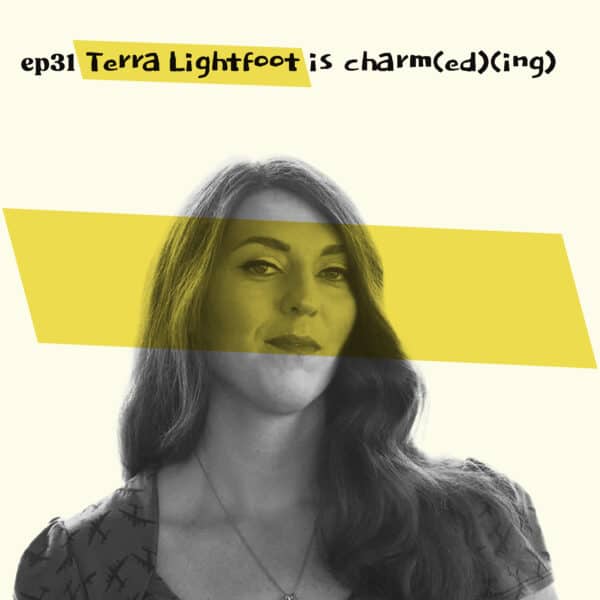
ep31 Terra Lightfoot is charm(ed)(ing)
released December 4, 2025
1:36:50
In this engaging conversation, Terra Lightfoot shares her journey from Halliburton, Ontario, to becoming a recognized musician in Canada. She discusses her early influences, the transition from classical piano to guitar, and the importance of community and connections in the music industry. Terra delivers meaning insights such as the significance of kindness in building career relationships. She also shares insights on her first record, the leap to full-time music, and the collaborative nature of her career. Glen Erickson and Terra Lightfoot explore the nuances of gender perspectives in guitar playing, the fluidity of musical expression, and the ongoing journey of redefining success in the music industry. Terra shares her personal epiphanies about happiness and the importance of taking breaks, as well as her creative process behind her new album ‘Home Front’. The discussion also touches on the reactions to her latest work and the challenges of live performances, emphasizing the need for balance and authenticity in the music world.
Key Takeaways
Sound bites
“We’re all on an even playing field.”
“I was losing big parts of myself.”
“Taking a break is not bad.”
Guest website: https://www.terralightfoot.com/
Guest instagram: https://www.instagram.com/terralightfoot
Guest youtube: https://www.youtube.com/channel/UCBUk6guA6llVgZujqA6Xz0w
hosts: Glen Erickson, Alexi Erickson
Almost Famous Enough website: https://www.almostfamousenough.com
AFE instagram: https://www.instagram.com/almostfamousenough
Almost Famous Enough Spotify playlist: https://open.spotify.com/playlist/1o1PRD2X0i3Otmpn8vi2zP?si=1ece497360564480
Almost Famous Enough is a series of conversations centered around the music industry, pulling back the veil on what it really means to “make it”. Our podcast features guests who know the grind, who have lived the dream, or at the very least, chased the dream. Through these conversational biographies, truth and vulnerability provide more than a topical roadmap or compile some career advice; they can appeal to the dreamer in us all, with stories that can teach us, inspire us, and even reconcile us, and make us feel like we made a new friend along the way.
Chapters
00:00 Introduction
03:17 Conversation with Terra Lightfoot
04:33 Canadian Geography and Life in Halliburton
10:40 Musical Beginnings and Influences
20:23 Early Career and First Record
26:23 Breakthrough Moments and Touring
33:00 Challenges and Overcoming Stereotypes
36:48 Reflections on Guitar Playing
39:04 Incredible Guitarists and Gender in Music
39:29 Creating an Even Playing Field
40:15 Fluidity of Gender and Guitar Playing
42:33 Personal Success and Validation
43:33 Early Musical Influences
46:24 Defining Success and Personal Growth
49:05 Balancing Work and Well-being
55:40 The Longest Road Show
01:01:11 Creating the Album ‘Home Front’
01:06:57 Covering Treble Charger’s ‘Red’
01:16:49 Post-Fame with Alexi
ep31 – Terra Lightfoot is charm(ed)(ing)
[00:00:00] It is not very often I get to geek out about something I love with strangers. Well, it’s not often I get to do so with my friends much either anymore, let alone a stranger. How rare is the opportunity to connect with someone you don’t know around something? You both not only love. But have shared understanding of historical context or nuance influence.
I’ve shared these rare moments over my love of Screenprinted Band posters over the band, Buffalo Tom, over growing up in Rosetown, Saskatchewan, over the level of snobbery needed to be a logo designer with taste. I don’t know if I’m always presenting myself as a very open human. To strangers, to people on the plane or in a lineup?
I’d like to think I do, but then I am pretty sure of when I intentionally don’t. So maybe I miss more of these rare human experiences than I should. I should really [00:01:00] work on that. Terra Lightfoot is an artist originally from Hamilton, now the quieter country of Halliburton, Ontario. But sometimes an artist gets some distinction like when they are really.
Good at guitar or something on their own right, and it clearly becomes a signature in their sound. And guitar players like to geek out. About guitars. Not all guitar players, but a lot of guitar players. There’s a little dance at first, you know, to see what level the geek is, or if there’s any overlap, and then it’s a full on rabbit hole of brands and years and amps and tone to the styles and influences and decades and eras.
For maybe the first time on this podcast, I started to go down a rabbit hole with Terra. I wanted to. I felt it, but we were strangers really. But inside the shared experience of the music industry. And [00:02:00] we could find some shared passion for an instrument as well. But then in reflection, I realized there were actually multiple rabbit holes.
I could have gone down with Terra. What kindness as a practice in life, regardless of status, really looks like. How to get off the hamster wheel of chasing pictures of success that don’t actually make you happy. It was a podcast episode that could easily have been a flight between Toronto and Edmonton sitting and chatting in our seats in order to get it all in.
These are good moments, human moments. Terra Lightfoot is a good human, and while it seemed her guitar playing, led her way into her successful career. However defined as an artist, I can’t help but feel being an incredible human. Might have done more of the leading. My name is Glenn Erickson. [00:03:00] This is almost famous enough.
Thanks for spending your time with us. This is Terra Lightfoot.
Glen Erickson: Uh, I appreciate you taking the time, Terra. We’ve never met, we’ve never met before. I have seen you play here in Edmonton. My good friend Steve Derpack, uh, often promotes your shows when they come through and has always been a champion of you. So I remember, uh, watching a show at his invite, quite a, it’s a number of years back.
This is pre COVID probably for sure. So it feels forever. Steve is fantastic. He’s a great guy. But I’m really excited about this. When I was talking to publicist Ken about all of this, I, uh, I jumped at the opportunity. So I appreciate you having, uh, an hour or so outta your, outta your day for this. so you obviously, this usually surrounds promoting a, a [00:04:00] new album and a new record, which I wanna be able to talk about with you, especially ’cause it’s. of a shift where it seemed like the trajectory had been going a bit of a change in just style, theme, all of those things. Um, but what I often like to do is sort of like trace a little bit of timeline to get to where, how you got to where you’re now, and just sort of the thing that’s always not as fun for you as an artist, which is have to say the same stories over and over because you assume you might be talking to a new audience.
So you have to say some of this stuff. So I totally get it. But why don’t you start by just giving us a little Canadian geography lesson for a second though, about where Halliburton is in the, the Ontario Tundra.
Terra Lightfoot: Uh, well, it is the tundra. Can you see the snow
Glen Erickson: I do see some snow back there. Yeah. Yeah.
Terra Lightfoot: there’s, there’s a lot. Um, so Halliburton is sort of, if you were going to Huntsville in Ontario, you would get off the [00:05:00] highway and drive for an hour into the forest. That’s Halliburton. Or if you’re in Peterborough, you would drive two hours into the forest and that’s Halliburton.
Or if you’re in Toronto, you drive two and a half. Yeah. Whatever. Whatever you want.
Glen Erickson: just keep going north ish into the tundra is the way it works. Or, or a little off. ’cause like I feel like nobody does the drive anymore. Like the, the, the Sioux Sudbury Drive. Like everybody just goes through the states to get to Toronto. Now, coming from the West, ’cause I’m a Westerner. Right. Um, but it’s more accessible in a sense like that, that curve highway.
Right. That kind of goes over and around
Terra Lightfoot: Yeah.
Glen Erickson: is kind of like the quicker jump off. If, if that was part of your regular circuit. Is that
Terra Lightfoot: Well, here is the deal with, of course we don’t like to go through the states all the time, but we have when we go to Wisconsin. And that is extremely beneficial ’cause it’s such a chill drive, so relaxing. but to [00:06:00] get to my house, like honestly, we’re not that far from Toronto, although we do get a blanket of snow where Toronto does not, which I love because it, you just feel like you’re in a different place.
Glen Erickson: Yeah,
Terra Lightfoot: completely removed from where I used to live in Hamilton. Like it’s a, a different growing zone for vegetables. It’s, that’s my main, one of my main markers of success is a vegetable growing zone. Um, joking. Joking, but, uh. Yeah, so it’s, it’s, it’s a different landscape up here, although it is not super far north.
Like my grandparents, I grew up visiting them in North Bay, which is like four hours from Toronto or five, and uh, that’s a bit of a hoof, but where I live is like the perfect, perfect medium.
Glen Erickson: But this is the great Canadian thing. Right. So you’ve obviously been all over the country an awful lot, in your career as a musician. So I think one of the interesting things about the landscape is like I grew up in Saskatchewan for a long time, which is really only inhabited.
In the bottom third and the bottom on the [00:07:00] top half considering how flat and everyone knows and thinks of Saskatchewan, then you go to Prince Albert and North and it’s just Forest and the Churchill River running through it. And um, it’s like a whole different world. And I feel like that’s just, so Canada and Ontario obviously has a, a couple of like, such distinct landscapes to it, so that’s a pretty cool little move to get out of the city but not be too far from the city.
That also feels very Canadian, maybe also. Well that’s not just Ken. Well you said Wisconsin, it feels very bon of air too. So, um,
Terra Lightfoot: Is he from there?
Glen Erickson: that kind of move, he is a Wisconsin guy and then he, of course his breakthrough record was out in the woods in a, a cabin that an uncle or grandpa owned or something.
I’m losing the story, but something like that. There’s some relativity I guess is all I’m saying. But, is this a, is this, um. Is this a, a veteran musician move to like get to a point in your career, do you think [00:08:00] to, and then you sort of don’t feel like you have to be so deep in the heart of the industry that you actually feel comfortable enough to get away from it and move somewhere.
Terra Lightfoot: Well, as a Hamiltonian, a proud Hamiltonian. I will say that I spent the first part of my career, like I moved to Hamilton when I went to university from not too far down the road, like 15 minutes down the road, uh, from the town I grew up in. And, uh, you know, like being in Hamilton and spending all my time in my twenties making my way, uh, in the music industry just within that city was a thing far removed from Toronto.
And then when I started touring. Everybody in Toronto was like, oh, well you kind of have to be here when things are happening. You know? That’s, that was the message. And uh, I moved there for six months. I, uh, started playing basketball. I was already playing basketball weekly with these guys, uh, that I knew.
[00:09:00] But for much music, it was a whole thing. Anyway, I go to the game in Toronto, there’s a lot better and bigger guys playing basketball in Toronto there. And I immediately sprain my ankle. I end up with my leg up in Toronto in this terrible basement apartment for six weeks, and that is where I write the record.
Uh, that brings me on tour to the rest of the world. That got me like, signed to Peck in, that got me all these wonderful things. And then I immediately moved back to Hamilton because it was such a terrible, like, personal experience. But, so for me, I’ve never ascribed to a need to be present in any one place, like living there to be part of a scene like.
Glen Erickson: Yeah.
Terra Lightfoot: Because I just, I, I think that some of the best people in Canada are not living in Toronto that are making music. You know, Winnipeg is like a hotbed,
Glen Erickson: Yeah. I just, I just met with, I just interviewed Begonia and uh, Alexa. So, and, and Boy Golden Liam [00:10:00] earlier, uh, on the season too. They’ve always just been a hotbed. But I love that you actually said that, Terra, because we, that’s become a trope in Western Canada. Like tho that rhetoric out of Toronto and the industry itself.
So to hear that it’s like also just down the road in Hamilton, which in the scope of Canada feels like it’s literally next door, like bedroom community. What? It’s actually not, but Western Canadians would think it’s, um, pretty a lot closer than it actually is. Um, which is, which is something I want to get to talking to you about, but let’s go back a little bit further.
Okay. Because, I have an interest. I don’t always ask people how they started and, and like right back to the beginning. ’cause then you always hear that I started singing when I was four years old story, which isn’t everybody’s favorite, but, because you have a reputation as a musician, not just a singer performer, like your guitar playing is like part of the identity so strongly.
I end up having a great curiosity about how that started. Obviously I’ve read [00:11:00] some things online about you already and having a great aunt who was a guitar player in a band and giving you a first lesson. So as a guitar player myself, I’m curious about that evolution, about how, was that always a curiosity or did it, was it just sort of like, your aunt is gonna give you a lesson now and you’re like, oh, okay, and then it turned a light on.
How did, how did the guitar become sort of a thing for you?
Terra Lightfoot: Well. I was revolting from my classical piano lessons. Uh, so I started, this is the classic story, my grandmother, who you can see in that picture, uh, in that photo, she’s playing on a via train. Uh, that was her job in the
Glen Erickson: Wow. Yeah.
Terra Lightfoot: so she was the entertainer. So cool. Uh, also had seven kids, powerful woman.
Um, but so I was like destined to play the piano. That was supposed to be my
Glen Erickson: Mm-hmm.
Terra Lightfoot: And by the time I’m 12, I’ve been doing piano every [00:12:00] week for seven years. And I just, I feel so bad for my parents because they always would, they’d basically have to force me to go to the lesson, get in the door, sit with the teacher, play like the whole thing.
Like it was all I, I, uh, like a golden retriever puppy did not want to go. And, uh, so then my mom got me a guitar at a garage sale and I was like, oh, this is a thing I can do. Let’s do that. And then I got into punk rock. through high school. I had friends that wanted to hang out after school and play guitar.
And I spent every afternoon, all night, like falling asleep with my guitar. Like, and that is when I really wood shedded between the ages of 12 and 16, 17, I guess. Um, that was all I would do,
Glen Erickson: Yeah. And who are you listening to?
Who are you emulating? Who are you? Like, this is what I need to sound like.
Terra Lightfoot: so in the days of [00:13:00] HMVI was so excited because I could go and pick different things. So there’s a band that I don’t ever know what happened to them, uh, called Zucker Baby that I picked up. I don’t know where they were
Glen Erickson: that Ben?
Terra Lightfoot: know nothing about them.
Glen Erickson: They had cool record covers, though. I can still see it in my
Terra Lightfoot: Yeah, like Semisonic, that’s a classic. That was a good one.
Um, I was listening to No Effects as one does, but then I also was able to go, ’cause I was in the jazz band at school, so I was listening to Billie Holiday, I was listening to Chet Baker, uh, this kind of varied musical approach. And then I was also doing the classical thing still with the piano and my, and my grandmother.
Um, so I had this really kind of wild, uh, all over approach,
Glen Erickson: Yeah.
Terra Lightfoot: but the guitar became my like wild sort of outlet and I think that’s why it became my instrument of choice. And
Glen Erickson: Yeah. The rebellion thing’s funny, but I mean, I, so I carried this like, and it’s [00:14:00] not a resentment, but I, like my two sisters were forced through all the piano lessons and I watched the incredible power struggle in the World War going on in my house over them for years. And then I was the youngest third child and a boy.
And so my mom was like, do you wanna take piano? Well, of course. I said, no, thank you. And so she didn’t make me, which then became a regret later to have that foundational theory. Right. Whether I played piano or not. I’m sure for you, the crossover of theory and all the things that you were probably able to apply quicker kinda gave you a bit of a headstart, I’m presuming in that way.
Um, although you weren’t applying that at all, if you were emulating No effects, riffs and just probably a lot of downs, strum and, uh,
Terra Lightfoot: Yeah.
Glen Erickson: and such. And, and were, was it like straight into electric guitar pretty early? Like were you having to like figure out tone and pedals and things, all that stuff that kind of immediately [00:15:00] your world opens up to when you do that?
Terra Lightfoot: Yeah, I mean, I was so lucky. I don’t know if there’s a guitar store in, in Watertown now where I grew up, but when I was a kid, that’s where you could go, you could get pedals, you could buy, I bought like a sixties k bass and rode at home on my bike with my friend, with no case. Like, just like one handed bike riding.
Like that’s the kind of stuff I was doing at like 12 and 13. Um, but there was also lessons there. So that’s where I learned, uh, power chords. That’s also the teacher. There was a drummer, Pete, this great guy. I know him like personally now we’re buds. But, uh, he was teaching me some punk stuff and that was exciting too.
But I think like, you know, my first lesson there, I remember the guy saying, ’cause I, I, I, I had no. Sort of root with guitar playing. I had nobody teaching me anything. So my first lesson, I’m kind of plucking away, but not really that well. And he says, why don’t we just stick to rhythm? [00:16:00] Don’t you don’t work on the fingering stuff yet.
And so I carried that thought with me into my early twenties and I never attempted any guitar solos. And that is, you know, it was definitely a regret. Um, and I realized the error of that as I progressed in my musicianship. And now of course I really value that kind of guitar playing, like being able to do a solo or improviser.
But those were things that I didn’t focus on at first. And so I think I had a different,
Glen Erickson: Hmm.
Terra Lightfoot: bass than a lot of guitar players who start with the milli milli.
Glen Erickson: Yeah, I mean, that’s so interesting, Terra. Like, I had the exact same upbringing. I’ve never talked to somebody who spelled their story out the exact same way I would. So I’m finding that really interesting. ’cause I, so I took it through high school and this was the late eighties, early nineties, so it was, I had nothing but head bangers with GNR shirts and quiet riot shirts and the black with the white half sleeves.
And, and we all only [00:17:00] had classical guitars to play on in the school, and they had all carved like slayer logos into them with their pens and stuff.
Terra Lightfoot: That’s terrible. I love
Glen Erickson: And I know it’s amazing. And I was like, uh, I was kind of closeted because I was, I was still into the heavy stuff. I love playing the riffs or whatnot, but I was like secretly getting into like U2 and the unforgettable fire and like, like that sort of influence of courting and stuff.
But I never soloed either. Like, because all those guys were just trying to rip solos on the nylon strings. And, um, and I didn’t know what I was doing. It’s amazing. It was like, the pictures in my mind still are hilarious. Like, um, and it was an oversimplified teacher who didn’t know a thing about guitar, but they were offering it in school.
So we would mock the whole process by
Terra Lightfoot: Oh,
Glen Erickson: playing, um, like what, what’s the big, um, oh shoot, the Big Kansas song. Um, carry on My Wayward Son. Um, I think [00:18:00] or something. So we were playing the thing and I was doing a little like. Notating or whatever, but we were standing on one foot on a chair while we were doing it just to make a point that this was over easy of what we were being given to do.
But anyhow, that whole, that whole formation process for me, like I didn’t learn the soloing either and I regretted it ’cause I got into bands later and then I didn’t come out as a front man ever, and I really wanted to, and it was a lot more effort. So, uh, I never heard somebody else express it similarly.
Um, were you getting into bands and all that kind of thing in that process, in that normal way? Or was that hard for where you were and located? Was there a lot of access to,
Terra Lightfoot: yeah, there were a lot of bands. I had, uh, my band in grade nine was called the Imperial Order Daughters of the Empire, which is a name that we picked from the dictionary.
Glen Erickson: Wow.
Terra Lightfoot: but, you know, I was in a band with some guys as well. I remember, I, I missed practiced once. Uh, ’cause I went out with [00:19:00] my boyfriend after basketball practice or something, and they fired me.
They were like, you’re, you’re cooked. You didn’t come to practice. That’s it. And I remember thinking like, my world is ending. It was so horrifying. But yeah, there was, there was always a band to be a part of. I took a little bit of a break between 18 and 21. I mean, I was in university, so I was studying. But, uh, then I kind of started writing songs, like writing songs seriously, at 21, um, and playing more in Hamilton.
And, uh, yeah, it wasn’t too long before I was making my first record.
Glen Erickson: And was that McMaster
Terra Lightfoot: Yeah.
Glen Erickson: before I make an assumption is, I’m trying to think. Is that the only Hamilton institution? Maybe it is.
Terra Lightfoot: think so.
Glen Erickson: It’d be pretty hard to exist alongside McMaster, probably
Terra Lightfoot: yeah, I don’t
Glen Erickson: city, the
Terra Lightfoot: oh, there’s Mohawk College. Sorry. That is, that’s the jazz. That’s actually the jazz school, which I did
Glen Erickson: Oh, there you go. Exactly. You would’ve been playing, playing [00:20:00] your guitar much higher up if you had, but, um, um, okay, so you, you, you moved into the more pursuit of songwriting and the whole thing kind of after that little gap of studying and stuff, which is sort of blending into what you talked about, your incident in Toronto and then writing a record and it’s kind of that whole first record.
So here’s one of my big curiosities for you, which is like, that very first record was put out on Sonic Onion, right? So how did you make that connection? Because like back then we kinda only had a couple, a handful of like reputable indie labels in the country that you had tried to get attention or, or stuff.
So how did. How did that connection get made? That the very first thing you make ends up on a label.
Terra Lightfoot: Yeah, I mean if we really zoom out, I worked at Long and McQuaid in
Glen Erickson: Okay.[00:21:00]
Terra Lightfoot: and I made friends with a lot of like pals of course, but people that came into the store as customers and one of them was Pete Hall from a Northern Chorus, which is a Hamilton band. Um,
Glen Erickson: group.
Terra Lightfoot: yeah. And so Pete needed somebody to move into his house.
He had a four bedroom house and he needed an extra roommate. And so I ended up moving in and we became buds and he was like. I think we were jamming. He was playing drums on the songs I was writing and then he kind of made all the connections for me. He was like, we should go to the gas station in Toronto and make a record with Dale Morningstar.
So we did that. Uh, and then he was like, we should call Sonic Onion. And I would not do it ’cause I was so deeply afraid of rejection. And eventually the guys in the band said, if you don’t send this record to Sonic Onion, then we will send it for you under another name. So it’s your choice. And so then I did it.
Glen Erickson: that’s a, that’s a power play.[00:22:00]
Terra Lightfoot: It was a major power play. They were great. They’re all my great friends still. And, uh, yeah, Adam Melnick, Kim Malcolm, Dave Dunham played with us for a bit from Chore. yeah, wonderful musicians. And so that’s, that was the connection. And then, a couple years, I think it was two years after that, then we started, uh, the next record with Gus Van Gogh.
Yeah.
Glen Erickson: yeah. So from the outside perspective, Terra, that seems like a big leap also. So, number one, there’s a leap of, uh, I mean, just because there’s, there’s people with the same story that you have in every town and city across Canada, right? Uh, who are like. Aspiring musician, like sort of different paths, but a lot of, I think commonalities where you, you build at least the momentum off, the validation maybe of your family or your peers or, or some small nucleus group that at least makes you keep going.
And then at some point you sort of branch out. [00:23:00] And sometimes I just always have this curiosity of did the branch out happen? Because it always ends up looking like a big leap for people in their story, in their timeline to go from the nucleus to all of a sudden, um, in there. And you gave me a hint of it there when you just said, well, zoom out.
I worked at Long & McQuade, so there’s a, I’m making a guess early as we talk about your timeline, that there’s a lot of really good natural friendship, community networking, just skill in your personality and character that has probably built a group around you that is like, continue to open your opportunities. I, I mean, tell me if I’m wrong or not, but it, I’m gonna make a guess because you just, when I read your stuff, you have so many collaborations. You’ve played with so many people. It just, that stuff doesn’t just happen because some guy in an office said, you should do this with so and so. You, you build like, this is the world we live in, right?
The industry we live in. You make those connections yourself.
Terra Lightfoot: [00:24:00] Well, I will say one thing that really affected me at the very beginning of my touring career in Hamilton, I was playing. In a country band called The Dinner Bells, and we were playing Dan Landis’s, uh, festival in Water down at Christie Conservation, what was it called? The Greenbelt Harvest Picnic, I think.
And Laua told me, he was like, you know, you meet the same people you do going up the mountain as you do, coming down the other side. And so that sort of changed my entire approach to how I should treat people if I want to have a career, because I, I need to be kind to everyone in, in that case, right? I don’t want to meet somebody and sever a connection because I was not feeling like being nice.
You know what I mean? We, there’s so many opportunities like that throughout our day. You can choose, either be kind to [00:25:00] somebody, kind to the cashier at the grocery store. Not, and I know we don’t always have the power to bring out our best selves, but I, I did try my best in that regard.
Glen Erickson: And I mean that coming from a guy like Land Wa, it’s got a land pretty hard obviously too, like Oh my God. Right. But I mean, I,
Terra Lightfoot: as the Bible, you
Glen Erickson: yeah,
Terra Lightfoot: oh my God, whatever he says.
Glen Erickson: that guy, yeah. Anything that guy says I would’ve followed too. Um, speaking of unforgettable fire and, and such, I mean, that also aligns with what I think is usually the number one rule of being a musician, which is don’t be a dick.
So it seems to line up
Terra Lightfoot: Wonderful rule.
Glen Erickson: So help me with the jump from first record to second record, and, and all of a sudden you’re working with Guess Van Gogh and kind of putting out a real deal record, for lack of a better term, at least the way indies would feel about it.
Right. Rather
Terra Lightfoot: Yeah.
Glen Erickson: you, I mean, you’ve obviously been playing for [00:26:00] a while and playing shows, and you’ve got a few years of building some things up and working towards that before a record like that comes out, but that’s still pretty quick in an early trajectory for people in this country, I find. Um, how did that, how did that sort of come together?
Was that just more connections or just things kept opening for you?
Terra Lightfoot: Yeah. I mean, there were more connections. So Sonic Onion had history with Frank Black, so when Frank Black came to Hamilton, he ended up, or I ended up opening for Palon Francis for my first record release. So that’s a big. Moment that I got to hang out with Charles. And like again, we had like the most amazing chat and time together in Hamilton that night.
I’ll never forget it. It was a wild, it was a wild one. It was so fun. Uh, but I learned a lot from him as well as somebody that I deeply respected his career and his personhood and all that stuff. Uh, but so first record comes [00:27:00] out, I’m completely disorganized as a human. Uh, you know, just starting my foray into the music world.
I was still walking dogs. I was still teaching music. Right. And I guess basically what happened is Monster Shuck and Whitehorse and a couple other people connected me with Gus Van Gogh, and they said, you should work with her. And eventually we met for lunch. And at that point my label went with me and they were like, okay, it’s gonna happen.
You have to. Go away for four weeks. And I was like, well, I can’t walk dogs or teach music. And they were like, you have to just, you have to take a month off. And so I had to like make that in Incredi. That was the call. That was the leap. I was like, okay, so I’m gonna have no income for an entire month. I’m gonna go make a record and I’m gonna pay the band and do all these things.
It was an exorbitant task and that was the [00:28:00] moment. And then I never ended up going back to those jobs after that, which is
Glen Erickson: yeah. That’s definitely, yeah. Well, I mean, that’s definitely the moment, and I mean, that’s the moment I think the aspiring musician. Is scared of, doesn’t know when it’s coming. A lot of people aren’t prepared for, can’t make that choice. Don’t make that choice, right? Like they, they try some other option that feels safer than, than, you know, financial destitution and risk over, you know, one thing or one event.
So, , I love how that’s a common thread. Like, and that’s, you know, that’s part of why I’m doing this podcast here. I’m trying to draw threads through people’s stories that I think are really interesting. And I think that’s one of them is that there’s these moments where it’s like, I have to sink or swim, jump the cliff, do whatever I, you know, this, this moment comes where you make that choice and it’s pretty foundational.
So that’s like 25th, [00:29:00] 20, is it 2015? That record about? Yeah. And then, and then. Your story looks like a, a very, that, uh, fits more into the common Canadian trajectory, I think, where you’re obviously become a bit of a road warrior and start playing shows all over, which, you know, in Canada alone, before you even start leaving it, you know, you have to drive so far to get to another club.
But at least at that time, even, well at the 2015, some of those classics were starting to close. So it probably was a little bit harder by that point to kinda just be able to hit those classic venues in all the main stops across the country. Right.
Terra Lightfoot: honestly, that first, that first year of putting out, every time my mind runs wild, I had, there was nothing scheduled and I had no agent as of the first day of release for that record. Not one thing. It was like no festivals. ’cause I had no agent, so [00:30:00] nobody to book the gigs. And we had talked to Paquin and it just didn’t, you know, like they came to a showcase and they were like, you’re really great, but like, we’re not interested in signing a new artist right now.
And I was like, okay. sad.
Glen Erickson: we just say we know is not true. Like, that’s just the line, right?
Terra Lightfoot: Well that
Glen Erickson: they’re always signing a new artist if
Terra Lightfoot: they might be, it wasn’t me at that on that particular day, let’s say. Um.
Glen Erickson: not shade on Paquin, because that’s the business. I get it. Like they’re great people, but
Terra Lightfoot: yeah. Well then they’re looking for some, you know, a specific thing in a specific moment. But, so I’m going into this record, nothing’s happening. I go out in Hamilton, I party hard with my buddies, and I wake up on one morning and I look up my phone and it’s a message, uh, for my manager.
And they’re like, Hey, you’re playing at the Horseshoe with La wa tonight. And I’m like, oh, what? Because I think somebody dropped off his CMW show or something.
Glen Erickson: Mm-hmm.
Terra Lightfoot: So I get my [00:31:00] stuff together, figure it out, get down there, and it’s like one of the turning points, that’s the TSN turning point, where pecan comes to that show and they’re like, we’re in 100%.
We love this. What can we do? Let’s book you your first festival. And then in the fall I go out, I get a tour with my friends and longtime supporters, Whitehorse, um, they bring me out and at the end of the White Horse tour, I get a note. You’re opening the Blue Rodeo tour next year.
Glen Erickson: geez.
Terra Lightfoot: it was just like, bam, bam, bam, one thing after another, and then it was just done.
It was like that nine months was, that was such a a, a turning point really. And then it was just like, you have a career now, you’re fine. Go ahead. Enjoy your life. Go, go tour
Glen Erickson: Those are, those are some big dominoes to fall in a row like that for, for you, for anybody. Um, okay. That’s ki like, that kind of puts you right in the middle of like taking off to where you’re at. So.
Terra Lightfoot: Yeah.
Glen Erickson: Before [00:32:00] I get to just like making some new records and what you’ve learned from a couple of those things.
’cause there’s a couple of cool moments that I’ve read about you that I wanna ask about. But here’s the thing I wanna ask you particularly about Terra, because, so you, by that point, you’ve established obviously who you are to, like, you have the full team now, you know what I mean? Sort of assembled. You don’t have to go back to some, any version of a walking dog or the,
Terra Lightfoot: I loved walking dogs,
Glen Erickson: I’m not saying you didn’t love it, I’m saying the, the what do I have to do to keep paying the bills?
’cause music doesn’t pay the
Terra Lightfoot: Yeah. Yes.
Glen Erickson: And you have two things and I love to hear how people have overcome things. There’s two things that, from my assumption only from the outside would be big things to overcome and that you’ve probably had to deal with your whole life and talk to. In every press interview, you know, C, B, C, you know, brand new podcaster, all of [00:33:00] them.
Um, number one, your namesake you’ve probably had to deal with all the time. And number two, being a quote unquote female guitar player. Like two things that aren’t terribly fair and probably have been points of conversation all the way through. And so I have a curiosity, not just about I, I guess in the middle, I’m curious how some of these things are affecting you or whether they’re not affecting you at all or whether they bother you.
’cause I just, I’m so curious about how they’ve probably hung with you. Like I read an article last night from, I can’t remember how many years, I forgot when I read it on Americana uk. They literally asked you about being a female. Guitar player and you handled it a little tongue in cheek, but with grace, obviously in your answer, um, or at least how they wrote it, who knows how they edit, I dunno how they
Terra Lightfoot: yeah, yeah, yeah.
Glen Erickson: it’s it’s a, it’s a bigger online press, but, so like the, first of all, the thing about the namesake to Lightfoot, I mean that’s the [00:34:00] equivalent of having the last name Cash and playing Americana in, in the States. Right.
Terra Lightfoot: Totally.
Glen Erickson: I guess my, my point of interest question, ’cause I can make all kinds of assumptions about what it’s been like just to get asked that over and over and over again ’cause you’re a musician, but I’m wondering, do you have any story or instance when someone has just made some massive assumption when they’re like, introducing you somewhere or said, you know what I mean?
And some sort of grandish foot in the mouth assumption about, about that.
Terra Lightfoot: Oh yeah, it happens all the time. So when I went to school, like when I went, started going to kindergarten, it started. So every time the teacher would do attendance, if it was a substitute teacher, they’d go, oh, Lightfoot, are you related to Gordon? And
Glen Erickson: Oh, wow. Yeah.
Terra Lightfoot: no, I don’t have, I don’t know anybody named Gordon.
But moving on. And I didn’t know that Gordon Lightfoot was a musician. I didn’t know anything about that as a young child. And then my mom [00:35:00] started explaining to me. It’s this musician and no, we’re not related to him. So in the convenience store, we’d go to buy milk and they’d be like, it would be, they’d know my mom and they would ask the same question like, everywhere we went, it didn’t matter.
And uh,
Glen Erickson: I
Terra Lightfoot: so I was just used to it. And then
Glen Erickson: So you’re, yeah. You’re seeing it in your parents and everywhere. It’s not just you. Yeah. Okay.
Terra Lightfoot: And at this time we really weren’t connected with our Lightfoot family in Scotland, so I couldn’t come up with the actual truth, which is the Lightfoot are from outside Edinburgh, and that’s where our name comes from.
It’s nothing to do with Gordon Lightfoot. but there’s been so many times, I mean, like I get messages all the time being like, uh, well, especially when Gord was alive, like, tell your dad X, Y, Z or tell
Glen Erickson: Oh my God.
Terra Lightfoot: Y, Z. And you know, I’m friends with his actual daughter and she gets a different. Brand of that kind of thing, uh, being his kid.
But it’s like, and people also thought her and I were the same person. [00:36:00] So that’s been a really funny piece of both our careers. ’cause she, uh, her name is Meredith Moon. Um, and my name is Terra Lightfoot, but she’s actually the Lightfoot in the, in those terms, you know what I mean? She’s actually
Glen Erickson: percent.
Terra Lightfoot: kid. So it was really fun.
As soon as I met her, I felt like Kindred spirit. We understood each other. She’s an amazing, she has a new record of too, actually. It’s really good.
Glen Erickson: Yeah.
Terra Lightfoot: but yeah, so the name thing after a while just gets, you get used to it.
Glen Erickson: Okay. Um, yeah, that was just my curiosity ’cause I can imagine all the other stuff, like, I’m just, I’ve always thought like people must have really put their foot in their mouth sometimes with that
Terra Lightfoot: Always.
Glen Erickson: uh, which I hope would at least provide you a little entertainment for having to suffer through it all the time. the other part, which is always fascinating to me is the, the need for some man, to reference you as a female guitar player. Um, which again, I can make [00:37:00] all the assumptions about how long you’ve had to put up with that from the minute you picked it up and were playing it probably in high school and all that.
So, What I actually am curious about is if you have had any sort of, whether you’ve just sort of reflected or thought, like is there anything that a woman would bring to guitar playing that it’s different than a man in your perception?
Because I, I, I literally realize, like it runs out for me. I hit a, I couldn’t, I wouldn’t be able to even conceive or understand, right? Like a way that a woman might be able to influence your style because this is all about style, right? This is the joke about female or male guitar playing. Guitar playing is just about finding your own style so that you give a voice to your skills and it has to be you and it becomes your own.
And that’s really what, that’s when you feel like a guitar player is when you feel like you have your own signature on [00:38:00] it. And that’s what it’s about. And I’m just wondering if you feel like, is there any in your reflection. Actual difference between how you might approach it to me that I’m not capable of channeling through my guitar the way that you might be,
Terra Lightfoot: I don’t know.
Glen Erickson: because I’ve never thought about it.
This is a very recent thought.
Terra Lightfoot: that’s a very interesting, I mean, when, when you were, when you were asking the question, I was thinking about. Uh, some guitar players that I know that are so fantastic and recognizable across timelines. So like Sister Rosetta Tharp. You can hear, you can hear it a thousand miles away.
She sounds like her. Uh, Madison Cunningham is another one, and she’s an amazing guitar player. Somebody that I met more recently. Uh, two awesome guitar players, actually. Nilly Broch, who plays with, uh, Danny Elman in his band. I think she’s amazing. [00:39:00] Crazy metal guitar player and she plays in death clock, like, you know, the TV metal band. Crazy, crazy guitar player. Marissa Paternoster from Noun. Uh, also incredible guitar player. And these are just people that I’ve tho those two I met last year at a, a benefit that we did. Um, but that sort of opened my brain in terms of like what people are doing, uh, with the guitar these days. But I mean, is there a difference between men and women picking up a guitar?
I don’t. I don’t think so. I think that we’re all, this is my whole goal is to make it the same, is to, to make it so there’s an even playing field for us all, and we can all start from the same spot and go, what are you gonna do with it?
Glen Erickson: Yeah.
Terra Lightfoot: matter who you are, in my opinion,
Glen Erickson: No, it absolutely doesn’t.
Terra Lightfoot: know? You know what I mean?
Glen Erickson: Yeah. Yeah. I, and like I said, like honestly, like I didn’t, that’s a question that I didn’t give a lot of thought to. I need to make sure that that’s really clear. I just wondered if anybody else had ever thought like there might [00:40:00] be a different
Terra Lightfoot: yeah.
Glen Erickson: that somebody might bring.
Differently,
Terra Lightfoot: Yeah.
Glen Erickson: um, but we’re like,
Terra Lightfoot: by case. Case by case. Because Sure. There’s, yeah. I mean, I can think of a couple.
Glen Erickson: yeah, but I mean, think of the world we’re in, right? Like we all have a better understanding of the fluidity of gender,
Terra Lightfoot: Yeah.
Glen Erickson: you know, you just take that into account and right off the bat you’re like, well then
Terra Lightfoot: Yeah.
Glen Erickson: guitar playing lands somewhere on a spectrum too, you know,
Terra Lightfoot: I mean, like, if we’re talking about gen like, uh, norms of, of things then, like Nelly’s playing is a, but she’s the top shelf of anybody in the world. I don’t know anybody faster than her. Like, she’s crazy, crazy good. And like, that’s, that’s not a trope that we’ve grown up with, that women are fast and furious,
Glen Erickson: you’re right. Like,
Terra Lightfoot: know?
And so she’s really doing a thing that I was excited about because it’s just [00:41:00] nice to
Glen Erickson: there was.
Terra Lightfoot: it.
Glen Erickson: If there was a metaphorical locker room of rock and roll like there is in sports, like that would be the thing that gets stupidly made fun of in a male patriarchal locker room for
sure.
Terra Lightfoot: yeah, yeah, yeah.
yeah.
Glen Erickson: roll of like, but they, but they don’t play fast or whatever. I mean, I’ve, I’ve known of, um, the artist Lindsay l who came outta Calgary now Nashville based, who’s like now playing on Shania Twain’s, like Vegas tours as her league guitar player who’s like, worked very hard and had to fight all of these, you know, sort of stupid tropes as well.
Terra Lightfoot: Yeah.
Glen Erickson: all the way and has like a fantastic soulful. Style to how she plays that she also makes very melodic, which is very cool. I definitely feel like it’s more a product of environment. I don’t know if you’ve ever thought that through as far as guitar playing. ’cause when you hear all the guitar [00:42:00] players tell their story in magazines or on interviews, like as a kid, I just ate up all of the much music.
I wanted them to talk to the guitar player ’cause that’s what I did. But they always talked to the singer. But um, and it felt like so much was, came out of their environment, right? Like the styles that were, what was around them, what were they rebelling against, which even goes back to you rebelling against your classical piano, um, upbringings.
So I think that’s probably a far more interesting point that people should be taking at this point. Um, you’ve been, you’ve been referred to by some pretty heavyweight programs and people in the country as one of the top musicians in the country. How does that. How does that feel? Are the, have you had moments, have you had moments where you just felt like, I shouldn’t smile too big?
’cause I might be on camera, but this is like, so amazing, this person just like, that’s gotta feel really validating. I think a lot of artists, let me put it so I [00:43:00] should frame it how I’m thinking about this, which is a lot of artists are just, they’re, they’re getting the feedback and the validation just for the product they put out for the records or the songs and, and the sort of the holistic view.
but certain artists have this ability to also shine as an instrumentalist, as, as something else in their craft is particular inside of their arts. so has that been important to you? Have you felt like that’s a, a part of who you are? Actually, before you even answer that, let me ask you this. Going all the way back playing guitar as a teenager, like that.
Was the guitar kind of leading you into music, or were you always songwriting and singing at the same time? Was it always a blended thing, or was the guitar kind of the lead at first?
Terra Lightfoot: Oh yeah. I think I wanted to be, the other thing I would do as a teenager, I’d fall asleep playing air drums. I wanted to be the drummer or the guitar player. I didn’t, I didn’t care about being the singer. Uh, I was quite bashful, you know, [00:44:00] and about singing and, uh, super scared of it. And, and in front of crowds and everything like that.
Like even at family parties, it would, my parents, I forget what my parents used to do to get me to sing. ’cause I just wouldn’t, it was a terrifying experience for me, you know? But playing an instrument was fine. That wasn’t a big deal. Um, so yeah, I mean, I’ve much enjoyed hiding behind my guitar for sure.
Glen Erickson: But then, yeah, I guess in turn. I can, I’ll make some guesses then that, the way I started that question off that then that must feel very validating to get that kind of feedback if that’s how you kind of what led you into all of this in the first place.
Terra Lightfoot: And I mean the, I mean, my network and my, what would you like? My community of people that I’ve become friends with because of my music is insane. Like, the people that I get to call friends as a result of what I do is staggering. It makes me feel [00:45:00] so happy. And, uh, yeah, at the end of the day, that’s what I love is like, is making, I have tons of people that have come to shows that have become friends all over the world, and that’s also such a wonderful piece.
So like, I think that that’s definitely a version of success that I, that I am proud of.
Glen Erickson: Yeah. Okay. Well then let’s, um. I could end up going down a rabbit hole and talking about guitar with a guitar player forever. So, um, I know I was gonna talk to you about Veronica because I, I have a, I have a epiphany. Sheraton Hollow Body Semi, semi hollow body that just became, ’cause I don’t think, I don’t think every, every guitar I think comes outta the factory different, right?
They, I think they have personality. Like I played an sg in a studio that I fell in love with and then I bought three and I could never get the same feeling back as this one I borrowed to play in the studio. And my Sheridan’s been the [00:46:00] perfect companion to my amp. Like, so it just became my sound. Like I’ve had a jaguar over the years that all black that tried to challenge for my affections, but it couldn’t quite do it.
So, so I was gonna chat with you about that a bit, but I’m gonna move on from that because, uh, just respect time and stuff as well. But, but I love. Guitar players and talking guitars sometimes, but maybe not. Everybody else wants to hear me talk about it. but I love what you just said about success and defining success, because one of the most interesting things I read about you is where you talked about a moment in the Swiss Alps, I think it was that you had a kind of a, an epiphany moment of some meaning and stuff.
And I just remember the line was something along the lines of like you were sort of being shown that the version of success that you were chasing maybe wasn’t the right thing for you or something needed to change. And I’m wondering if you could tell me a little bit about what that moment was like and what that meant for you.[00:47:00]
’cause this business is like so wrapped up in a narrative that we create our, for ourselves about what success is. So I’m really interested in what that moment was for you.
Terra Lightfoot: Yeah. I mean, so I guess at that moment, the, the moment in the Swiss Alps, it was the Austrian. Mountain range. I don’t know what it’s called. Uh, but I was there after my first Juno nomination and my first Polaris, uh, prize long list. And those are things that I’d been striving for. As soon as I knew what they were, I was like, oh yeah, that would be good.
And my management really wanted that. Like, you know, it was a thing that it would be good for the whole team, for the band, for everyone. And so it wasn’t just for me, it
Glen Erickson: on the vision board. It’s on the vision board of most people in the country, right?
Terra Lightfoot: yeah. And it’s like a marker of success that can help everyone in the whole group. And so you’re like, wow, that would be good to get that. And I got it. I got, well, I got the nominations anyway. And then I was [00:48:00] like, what? Am I not a different complete person or do I not feel amazing about this? ’cause I got what I wanted.
And you know, like, isn’t this the thing that I was chasing for? And now that I’m here, what does it actually mean? And, um. I mean, at that time I had worked so hard to get those things that I was losing big parts of myself. I was losing my family connections. I was losing connections with my friends, like with myself.
Uh, I would come home and I, I couldn’t do anything for like three or four days and then I’d have to leave again because I’d be so tired. You know? It was like, that to me wasn’t hitting. It was not the thing. And so when I got up there on that mountain, I saw that tree and it was like not perfect. It was not, you know, it was not big.
It was the only thing growing up there, but it was growing and that is what I took from it. It’s like, okay, I’ll figure it out. I can [00:49:00] make myself happy with all these things ’cause I wasn’t happy with it, you know? And you think you’d be happy. Um, and so now of course I’ve found this, to me, this secret is having, uh, taking care of yourself first. Taking breaks. So in this, in this wonderful business that we’re all a part of, it’s like scheduling time off. Uh, it’s not jumping from one tour into the next one right away, or if it is, then you’ve made a clear picture of when you’re gonna have time to take a break and you end up with more energy and you end up being happier to do it all.
Glen Erickson: mm-hmm.
Terra Lightfoot: and you’re more effective. You know, it’s like, those are not things that I thought would help at the time. Uh, I thought taking a break was bad. I was like, that means I’m not working. That’s bad. And truthfully, it’s the opposite.
Glen Erickson: yeah. I mean, that narrative probably gets informed by a few things, right? Which is bad [00:50:00] probably is the combination of. A little bit of fear like that when I, if I take my foot off the gas, then it can all go away in a, like, overnight in a heartbeat. So fear is in inside of that. And also bad being how many people you might let down ’cause you built this team to trust that you’d be successful.
And then they’re telling you, you need to go do this thing. And you might have to tell them I need a break. Um, would be a bit of a scary thing. Um, um, what, what I had written down was, uh, a curiosity that I had was so, well, first I’ll say so it’s nice that you made that really clear that that redefinition of success really had a lot to do with happiness, which I think is a, is a, a great universal point beyond music.
You know, about people who kill themselves for a thing and how, how common in the human story it is to get the [00:51:00] thing and then not. Feel anything, let alone happy, uh, about it. Right.
Terra Lightfoot: Totally.
Glen Erickson: Um, I’m wondering, in your experience, are you able to name what some of the thing, like what did it look like before that moment about what chasing success looked like?
I mean, you just alluded to maybe being a bit on the treadmill of, of thing to thing, but I’m wondering what it sort of looked like before and then what it started to look like after when you had to start making some different choices.
Terra Lightfoot: Yeah, I mean, I remember a moment I was lucky to bring my, my buddy along, uh, Sam Weber, who’s a wonderful guitar player. He lives in Portland, but he’s from Canada. Uh, but he came along with me when I was opening for Bruce Coburn just for like moral support and friendship. And that was a great choice. It was like, okay, I’m gonna bring my friend and this will be, you know, more, kind of more fun, but more peaceful and I’ll be sort of connected with someone.
And I remember we were sitting down to lunch on [00:52:00] the first day of the tour and like somebody sent me the cover of, uh. Hamilton magazine, which is obviously a magazine from Hamilton, but I was on the cover and it was this great picture of me with an interview and I showed it to Sam and I was like, when did I do this?
Did you know this was happening? Did I tell you about this? I didn’t know this was happening. And so it was these big kind of things, these big, uh, pieces of success that before I would’ve been like, oh my God, this is amazing. I can’t wait to see this. And they were just blowing by me, and I’d be lucky if I saw them.
Like I was in Guitar Player Magazine. I don’t have a copy of it. I don’t know when it came out. I don’t know anything about it. My dad sent me a picture of the, of the pages of it, and it’s again, a nice picture of me in the Guitar Player magazine. I don’t have it. And, and so those kinds of big moments were just going by me.
And, uh, now I feel like I have a more. Just a more, you know, [00:53:00] like home front, this record, I had two amazing months of touring in Europe, uh, being treated so well by promoters. Um, like an easy travel schedule, days off time to explore Matt Anderson and I went three days early to Ireland to just go hang out and, and uh, you know, listen to Irish music and tour around.
And then we started the tour. Like that’s what it looks like when you have that, it’s not a big investment. Three days in a hotel before your tour isn’t a huge amount of money, but it’s something that changes your approach to the whole next three weeks,
Glen Erickson: yeah,
Terra Lightfoot: you know?
Glen Erickson: yeah. Well, I totally know, like, when I was most active in a band, I. I’m so grateful for the, they’re my best friends, the guys that I played with, because they somehow had this already built in and I probably wouldn’t have, ’cause I was a go, go, go. I did all the business stuff. I probably would never have stopped to smell the roses, but they would drive back [00:54:00] from Beast, from Vancouver to Edmonton and insist on going through Penticton and the South Long way so that we could stop and overnight on the beach in the summer in Penticton and enjoy, you know, we would enjoy the proper parts of Canada.
We would spend more money to stay in the Sylvie Hotel on English Bay in Vancouver. ’cause that’s where Blue Rodeo was when they wrote one of the albums and we
needed to get the, the, the juju from them.
Terra Lightfoot: Yeah.
Glen Erickson: yeah, so I totally know what you’re saying. ’cause like I, I, I credit those guys for building wellness before we even use that language,
Terra Lightfoot: Mm-hmm.
Glen Erickson: uh, into the way that we.
Moved and, and lived and breathed as a band together. So I totally get that. How long, like we all know, like an epiphany, never. Like we don’t walk off the mountain and then immediately our habits change. How long did it feel like it took you to start to really [00:55:00] like, get that narrative sort of rewritten in your head and start to change the way that you were thinking and making choices?
Terra Lightfoot: Honestly, it’s still happening every day. ’cause it’s something that we have to sort of fight against. Uh, you know, ’cause it’s still, it’s still back there. It’s still saying work, work, work. If you’re not working, but you just learn to kind of say, okay, yeah, I hear that, but here’s what I’m gonna do. And it’s just, it’s easier I think, um, to say.
That I need time or I need this extra moment here, or, um, I’m not gonna say yes to that opportunity right now, but I’d love to later or,
Glen Erickson: Yeah.
Terra Lightfoot: you know, I, I haven’t done my longest road show, which is my, uh, touring review, which features the best band in Canada and the best artists in Canada who all happen to be women or female identified people.
Glen Erickson: Yeah.
Terra Lightfoot: And I haven’t done that, uh, ’cause I haven’t had the mental capacity, but next year [00:56:00] I’ve built it up and it’s gonna be, it’s gonna be great ’cause I’ve had the time, uh, to organize it all and make sure all the music part, you know, the music direction of it goes off without a hitch. And so it’ll be
Glen Erickson: that, is that still gonna be with Lindy and Begonia, Lindy Ortega and Begonia? Are you gonna have to change
Terra Lightfoot: I might, yeah, I’m, I know the band. I know who the band’s gonna be. It’ll be Ana Rudick and Danny Nash on drums. And, uh, I don’t know about all the different artists that are gonna, it’s date dependent, right?
Glen Erickson: Yeah, of course. Yeah.
Terra Lightfoot: I’m super excited about it. But this is something that I’ve been building up to. And so I have that excitement instead of like, the first time we did it, I had one day, uh, of rehearsal and then we just, we were in it.
It was insane. It was crazy. And I’d flown home from Vancouver the day before, like it was too much.
Glen Erickson: yeah.
Terra Lightfoot: so these are the things we learned.
Glen Erickson: well, let me, let me ask you this question then, [00:57:00] because I think, uh, I think aspiring artists listening would probably commonly say that’s a lot easier to have that epiphany and redefine success after you’ve got success,
Terra Lightfoot: Oh, yes.
Glen Erickson: right. But I totally buy what you’re saying, and I, so I’m curious what the advice or how you spin the advice of like, no, you can actually make those choices and make.
These kinds of like changes and you’re not going to, you know, it’s not gonna rob you of opportunities. Like, how do you, how would you perhaps spin that to somebody who’s, you know, a little skeptical about getting off the treadmill so hard at the beginning?
Terra Lightfoot: Well, I mean, I was one of those people, I remember texting Max from [00:58:00] Markels. ’cause we’re both from Hamilton, we both went to the same university. And we were talking around the time that the Junos were in Hamilton. This is before I had a record out, um, to be nominated or anything. But I remember asking him something and he was like.
Maybe, no, we were playing basketball. That weekly basketball game, we’re going full circle. He’s a wonderful basketball player, by the way. Insane
Glen Erickson: who knew? That’s
Terra Lightfoot: come on. Oh man. Um, but I think it was like Juno’s announcement day and somebody was like, oh, max, you know, congrats on your Juno. And I was like, yeah, that must be amazing.
He’s like, eh, I don’t really care. I’m like, how can you say that? Like, to people who don’t have what you have, you know? And he was like, it’s, it’s just something, you know, you get there and it’s not a big deal. You just have to keep working. Like, it’s simple. And, and truthfully, I kind of, I was a skeptic, but I remain, I, I’ve been proved wrong.
You know?
Glen Erickson: yeah,[00:59:00]
Terra Lightfoot: It’s,
Glen Erickson: because you can’t know the meaning until you experience the meaning. Right? Like, so for you to know why he can say it’s not a big deal. It’s ’cause he, he puts it in a place with everything else that has meaning and definition,
Terra Lightfoot: he’s also a super humble, sweet guy, and he, you know, uh, Kels have been nominated so many times. He’s like, yeah, it’s kind of embarrassing. Like it’s, you know, like
Glen Erickson: time. I think they’re nominated every time.
Terra Lightfoot: yeah, but he’s so, he’s so sweet about it. And to him, he like, it’s almost like he doesn’t want to be recognized for it in some ways or something.
Like he’s, uh, he just doesn’t act like it’s a big deal. And that is what I took from him, for sure.
Glen Erickson: Yeah. okay. I alluded to before saying that I’m making an assumption that you’ve done a really good job, just whether it’s part of your personality or character or the efforts you may make to be [01:00:00] really good at building a network. Of people that ha create a lot of opportunity or like, it’s, I just wanna say that that’s becoming more clear as we talk on and on how, like, I’m gonna, I’m gonna say this, I’m gonna make sure I explain it after, so it doesn’t come off the wrong. You’ve had a, a somewhat charmed life in the Canadian music scene. It feels, but I’m not saying that in the sense as in like, oh, you just got lucky because anybody who’s been in the music business long enough knows that there’s no such thing as like riding luck all the way through all the way to the top.
Everybody needs a little luck, but it takes being true to who you are, working hard every day, being kind to every person like you already noticed. So, but on top of all those things, I think it’s really cool then to sort of see. All these charming moments that have happened in your life to get you where you are, like, uh, [01:01:00] cool people speaking very cool things into your life, is like such an amazing blessing.
I can’t even imagine. So that’s, that’s, that’s been very enjoyable to hear. let me talk about Home Front then, and let’s just talk about your new record, which I was gonna ask earlier when I was guitar geeking about how the changes of how you play and learn new things might change how a new record comes out, uh, since it’s the main sort of source of your, uh, inspiration.
So, um, maybe that ties into talking about home from which seems maybe potentially equally influenced by a stylistic choice to, to approach the record differently, but also geographically very clearly, uh, in the title and in a lot of the subject matter. Um. So tell me about when that started brewing. Like how long back did that kind of record start brewing for you to make?
Terra Lightfoot: I’d say, I think in 2020 or [01:02:00] 2021, like pandemic times, it was sort of like
Glen Erickson: Okay.
Terra Lightfoot: back to not playing with the band. Right. So all of a sudden I’m back with my classical, I love classical guitars. I find them so peaceful and they sound so nice, but it’s something that you just sort of sit around. Yeah. I just love them.
Like it’s, it’s so nice, such a nice sound.
Glen Erickson: But can you rip a solo on a nylon string is
Terra Lightfoot: only if I’m playing slayer.
Glen Erickson: question.
Terra Lightfoot: Yeah. Oh my gosh, that’s so funny. but yeah, I think it was also about like, uh, playing the style that I had grown up playing, like the finger picky stuff that I learned in my early twenties. Uh, like on hummingbirds hum I’m doing this finger picking thing that I would never do live really like, or with an electric guitar with the band.
But there was an opportunity for that song to sit at the end of the record, and it was like a live take. And, um, I also, like, there’s no, uh, heavy vocal editing as [01:03:00] there often has been on my records that I’ve done with Gus. Uh, which is a normal thing. It’s like a very normal approach to modern music. We edit the vocals, we try to beat our best take again and again and again.
And you sing it like 12 times. And on home front it was just John in his studio, like next, right next door to this office. And, uh. know, it, it was so cozy. He’s my husband. I’d love him to death. And he’d be like, okay, do you feel like cutting a vocal? I’d be like, yeah, and it wouldn’t be perfect.
Glen Erickson: Do you feel like some orange juice, do you feel like a wok? Like, which are we gonna do here?
Terra Lightfoot: yeah. And, and that, that approach was so awesome. And it’s something, uh, so unlike all the studios that I’ve been to where there’s so much pressure, like when I recorded at Royal Studios in Memphis for Consider the speed, I was like getting in the vocal booth, uh, where Al Green recorded and like Anne Peebles, and you’re supposed to sing into the same [01:04:00] microphone and it’s supposed to sound good.
Like what? No. And so
Glen Erickson: for it, and you need to get these takes done by X amount of time. Yeah. All those things. That’s a lot of
Terra Lightfoot: all those things. And so that’s all going through your mind. And here you’re just looking out the window and your husband’s going like, do you want a glass of orange juice? And you’re like. This is pretty cool.
Glen Erickson: Yeah.
Terra Lightfoot: but I think part of it too was like in the mixing or editing process, John and I would sit together and I’d be like, I don’t want that changed.
Like, just leave it. And there were a couple moments, especially where he was like, are you sure? I’d be like, yeah, it’s all good. ’cause I want to present something like different and real and yeah, just a picture of the house, you know, about the peacefulness that I’ve found. Uh, and I wanna share it because it’s changed me, you know, on a deep level living
Glen Erickson: Yeah. Was um, because the songs obviously sort of like dropping back as far as the [01:05:00] layering, the instrumentation, the, the approach in general, did that open the door to sort of flowing a little more into very slight but noticeable like genre E overlaps, like the things that feel a little more, you know, Americana, but the countryside of Americana, like.
There’s a couple of songs, you know, that even have a little shuffle, um, you know, towards, you know, and then things that just feel like maybe an acousticy version of a, you know, it could be a rock song or something. So
Terra Lightfoot: Mm-hmm.
Glen Erickson: was there a freedom to just do however they came out? Um, completely. Is that like, rather than I need to sort of mix it up or any conscious decision?
Terra Lightfoot: Yeah, I mean, John, so John and I produced it together and we both had different ideas of how things should be done, but his only really strong point. Fully produced red. Like he was like, this is my idea. I think this should be the groove. I think we should call Bill and [01:06:00] get him to do a vocal. And that was that.
And I was like, great. So much direction there. But on the rest it was sort of like just flowing with whatever we felt and like whatever we could get done, honestly. ’cause we had a deadline, so it was like, it has to be done by this time. And we were headed to Seattle and to visit his family. So it was like, we gotta get it done, so let’s just like, if this song is finished, let’s cut it.
And that was sort of the approach. And it was like, are we using acoustic? Are we using piano? And it was just instrumentation decide and then get a good performance. And that was nice. ’cause normally you’re like, what, what radio station are we writing for? And you know,
Glen Erickson: That sucks. Oh, that’s soul sucking. Yeah. There’s nothing better than feeling like someone’s giving you the freedom to say, let’s just get the good performance, and when it’s done, we’re done. We don’t have to do 12 more like we know when we have it. So it’s a great feeling. Okay. We, we have to talk about Red [01:07:00] because, I’m older than you.
Um, I think you were only eight years old when that first version. Came out, I was all over it. Right away. I was just, I was just like hungry for indie music in Canada,
Terra Lightfoot: Mm-hmm.
Glen Erickson: you know, because, uh, I mean, that’s in 1994, Treble Charger put out Red and on their first version on the, on that record, and 1994 on the heels of the Seattle grunge sound, you know, in Canada, I felt people tried to turn that first Sloan record into a, a version of something that would be equitable with the Seattle sound.
In Canada, Treble Charger was coming up, loud guitars in their performances. I think they were under the same pressure all the time. but I fell in love. That was like the song for me. And I, I moved to Edmonton in 1996 and between 96 and probably 2001, I probably saw every Treble Charger show. When they came through, [01:08:00] I was a fan and that was.
That was the song for me. That’s the one that still lives on playlists to this day. So I was like, obviously very excited to see that you made a cover and then when I found out you actually recorded with Bill, for that song, which was really, really cool. So how long had that brewed in your life and how old were you when you, ’cause you were only eight when version one of that came out.
How, how old were you? Like where did you discover that song that it became something for you?
Terra Lightfoot: I think I was around 12, 11 or 12 probably when, uh, my one cousin let me watch Days to Confused all of a sudden my mind opened up into
Glen Erickson: that’s way too
young for days to confuse
Terra Lightfoot: was like, whoa, so great. Um, but, so then it opened me up into all these different bands and so I think I heard it back then, but I wasn’t like
Glen Erickson: Yeah, that’s late nineties for you then. So that’s still the, the [01:09:00] heart of trouble
Terra Lightfoot: Yeah. But you know, I, I think I saw the music video and everything, and then I met Bill because, uh, we have mutual friends, uh, from the band Don Veil. And so it started like, you know, I used to spend Christmas with those guys. It was like such a sweet little tradition. ’cause we all lived in the same spot, uh, in the same little town.
But, uh, yeah. And then fast forward, I played s Saint Marie and I would always keep in touch with Bill if we were driving that wonderful highway, uh, from Winnipeg down onto Toronto. We’d call Bill and be like, what are you doing? Because he had a cottage inst St. Marie. Um, and we’d always go swimming there.
And so this time I was like, Hey, do you wanna like, play with us? And thinking like, what could he play? Why don’t we just play red? Um, and so my band backed up, bill, uh, and it was awesome. It was so cool. And I was supposed to take the second verse. He was so excited that he just sang through it. I mean, it’s like muscle memory, right?
’cause he, toured for so many [01:10:00] years playing that song. It wasn’t normal for somebody to jump in. So, but it was awesome. It was like, yeah. Canadian heritage moment,
Glen Erickson: yeah,
Terra Lightfoot: for me and the band. Like we just had such a blast with him.
Glen Erickson: That’s amazing. That’s, um, you see, you can ask a question sometimes there’s a guy in my seat and you just don’t know what the story’s gonna be, and then you deliver a great story like that and then it just makes it even better. So, I’m so glad I asked about it. that was a great, they were a great band, I think really influential.
I don’t know that they get talked about enough. I think for what they were a part of was, was the band, the Killjoys out of Hamilton.
Terra Lightfoot: Yes. Yeah. I know Mike and Jean. Yeah.
Glen Erickson: Okay. That was another band that I used to see every time in that same era, every time they came. Through town and then it just all of a sudden struck me that I thought Killjoys was also Hamilton
Terra Lightfoot: big shiny tunes? One, were they on big shiny tunes?
Glen Erickson: They were on one of them for sure with um, I Today I Hate Everyone. Was [01:11:00] that song they had on it?
Terra Lightfoot: Raven Drool. I don’t know.
Glen Erickson: Oh, second record.
Terra Lightfoot: Maybe.
Glen Erickson: Yeah, I think that’s second record. Uh, they did a cover of The One That I Want from the Grease soundtrack, like their semi punky style. That was incredible Live. I always wanted to hear a recording. Never got to. so how are you feeling like now, like you obviously have released tour dates and everything and the album’s just been out, so I’m always curious to ask ’cause the world just sees a new album come out and they think this is you right now.
When it’s been you brewing as I sort of spoke to it like for a long time. And it’s a change. So I’m wondering how you’re feeling about it being out and reactions and responses and, and all of all of that. How has that experience been so far?
Terra Lightfoot: I think it’s nice because I think there’s a lot of, there’s a lot of people that come to shows that like those [01:12:00] quieter moments and like, we tend to deliver a loud rock show. Like every night I ask Eli like, what do you wanna do tonight? We should play something quiet. Or like give, you know, give people, give their airs a break.
And he is always like, I wanna rock. I’m like, me too. Like it’s a tough, it’s a tough world, but you know, when you’re in the energy of live performance, I’ve never been one of those people that can sit and play something quietly for an hour and a half, like. It’s just not my, in my wheelhouse. So this has been an interesting, like I can’t wait to play in Hamilton on Friday.
Um, ’cause we’re gonna play the whole record front to back, so I’m gonna have to sit there and play quiet stuff
Glen Erickson: For a long time.
Terra Lightfoot: for a long time. And, uh, but I’m excited because it’s like, it’s an opportunity to try something different. And I always learn, you know, you always learn so much, um, from trying different things obviously, but.
This’ll be a big one. And I’ve been work workshopping the songs [01:13:00] on my own. And with the guys, we did a big tour in Sweden and I just went out with Matt Anderson, the UK and Europe, and I played some of those soft songs like I played Counted On You from the record, which was quite, you know, it’s like it’s a vault, but people were like loving it and it’s so quiet, like it, you could hear a pin drop.
It was wild. And that gave me some encouragement because normally those aren’t the things about me that are celebrated. We celebrate the, the Thin Lizzy part or the AC BC part and not the quiet stuff. So that, that’s nice.
Glen Erickson: Yeah. And people. You make an assumption, people are walking in with what the press has pushed, which is exactly what you described, the loud parts, the things that you kind of had some identity built upon, uh, to get there. And I think it takes a while, doesn’t it, as an artist, especially like rock and roll artist, to learn that the audience actually needs a breather [01:14:00] sometimes.
That, that we don’t, I don’t want a breather, but they actually like an ebb and a flow to a performance. It actually draws them in. You watch the greats do it and how they can like, like the hip maybe who are some of the greatest live performers. The way, even in a song that they extend for nine minutes, they can take everybody right down. And the payoff of course is that they’ll bring them right back, uh, bring ’em right back up. So, uh, but yet it still takes us so long to learn
Terra Lightfoot: I know. Yeah. I.
Glen Erickson: yeah. Thank you so much for your time, uh, like this has been fantastic getting to know you and your history and kind of all the things that have gotten you to where you are now.
And, very excited to see sort of what’s next in the future of like your career. Like you have about, I think five Studio album, well, I guess six, including your, uh, Self-Made one, which isn’t on Spotify, [01:15:00] your, your first one, but plus a studio album or a live album, sorry, that’s on there. Um, which is a
Terra Lightfoot: That’s a lot.
Glen Erickson: it’s a lot.
It’s a great library,
Terra Lightfoot: of albums.
Glen Erickson: you’ve got, it sounds like you still have more inspiration and, and ideas and growth ahead of you, um, which is pretty cool. so thank you for the time sharing all that. I really appreciate it. And joining me and having a chat. And I just wanna wish you all the best and I, um, look forward to, uh, tapping dirt pack on the shoulder for, you know, a, a freebie.
I’m just kidding. I’ll pay for my ticket. Um, and to see next Terra Lightfoot show. Or if you bring the, I don’t know if you bring the review. Do you bring the review show out
Terra Lightfoot: I thought you were gonna say bring the riffraff and I was gonna
Glen Erickson: Oh, no. Well, I don’t, I don’t know your guys well enough to, to call them riffraff, but, um, do you bring, do you bring the, um, the other touring
Terra Lightfoot: the longest road show. Uh, I [01:16:00] don’t think we will in 2027. I don’t think we will, but we might, you know, it would be something that I’d like to do in the future and that might involve also tapping in some, some, uh, more western like Midwestern Canadian talent.
’cause there is so much.
Glen Erickson: Yeah. Well, your friend Begonia, she can, um. She’s got get, she can get you going from Winnipeg and on,
Terra Lightfoot: She’s got some pipes. I’ve heard. She’s got pipes.
Glen Erickson: she’s probably getting busy too. Like people are really liking her new record.
Terra Lightfoot: She’s amazing. She’s the top of the tops and such a good
Glen Erickson: incredible. She
is. Um, okay. Thank you so much.
Terra Lightfoot: Thank you. Bye Glen.
Okay, and we’re recording. Good Morning America. Where did that one have you been like sitting on that? You’re like, I’m gonna throw ’em off. No, that was, oh, okay. That was pure improv [01:17:00] actually. Thanks for giving me theater lessons when I was a kid. You’re welcome. Yep. Um, I think that’s why I’m funny. That’s, you think because the theater lessons you became funny.
Yeah, he paid $5 every week and like now I’m a funny person that set me up really well. Was it like you just showed up and then handed some guy $5 and then you gotta be part of that theater little class? Yeah. And then I had a fake show. Isn’t the class, it’s like right beside where I work here? Yes. Oh, I do remember that.
There was some weird kids. Some came outta the front door. Weird. At the end of your lesson, can I just tell a quick story just ’cause I, everyone I’ve ever told this to last, we were doing an improv sketch and that place was just like weird. Like it was just like we rented that place, but. And doing an improv sketch.
Lindsay and I were still relatively new to the whole like improv theater community in Edmonton and there was a couple kids that were weird. Anyways, one of them was in a scene and in this scene was like the door knob and this really weird girl and I’m gonna name drop [01:18:00] ’cause she’ll never find this named, named Petra.
Oh, her name was Petra. Oh. She was like five one. Like, like ginger, like redhead girl, like very, like, did not speak often, but when she did like just the weirdest things came out. But like thought she was mute for a long time because like she like refused to like speak during the scene. Like actual words?
Yes. Like, just like, but like not like as a condition, just like chose to be anyways, during the scene, her chosen condition. Yeah. Okay. During this scene, um, Lindsay and I were on like a total terror. Like, we, like thought we were being so funny. She goes up to the guy being the doorknob. Grabs both sides of his head and twists like as hard as he could.
As she could. And he fell to the ground and then the lesson ended. ’cause he was like injured and his parents had to get called. And Lindsay and I, you know, we were upset about not him. The fact that our rule got stopped. Because you were on a, yeah. You were on. Because we were on a tear. Yeah. And I was like, man, [01:19:00] that’s crazy.
I thought there was a kid in that that always looked like, you know, the kind of. Kid who would wear his winter jacket all the way through. Yeah. You know what I mean? Just not take his coat off. Yeah. There was definitely a couple of those. Yeah. Um, man, that was, that’s interesting. But people paid to watch us take in.
Yeah. That’s crazy. I know, I know. I know exactly what you’re saying. Um, man, well, congrats on being funny. Thank you. And congrats to me for. My $5 a week investment. Yep. Um, life lesson to all the parents, young parents listening. Um, so, uh, episode 31, winding down season two. Yeah. I might add, uh, conversation with Tara Lightfoot.
Uh, Tara, um, this was like the first conversation I’ve ever had with Tara. I think we’ve talked about this a couple times before where I’m starting to enjoy. People [01:20:00] you don’t know. Yeah. Yeah. The whole, you know, the whole approach to it and the whole preparation. And then actually, um, ’cause part of preparation, you build up, you build up a perception of the person that you’re gonna talk to.
Mm-hmm. Right? In the same way that maybe in a simpler way, like just listening to an artist Yeah. For a long time and watching maybe some of their videos or things online, and you’d build up a perception of. What they might be like if you were to meet them. Mm-hmm. Um, and the same thing happens at another level when you like read articles that they’ve been interviewed or had conversations in already, or just what people are saying about them.
But it’s always a little different on the other side. Well, it’s also, I think you also like it, this is my speculation, uhoh, because when, no, it’s not a bad thing, but when you’re like doing it with an old buddy or someone like you have a pre-established relationship with. Like you’re perceived already, you know?
Mm-hmm. But like [01:21:00] when there’s a new person like you are going into that having not been perceived yet by them, by them. So you can kind of like frame yourself in a manner that like coincides with almost famous enough and like the parts of your personality that you pull while interviewing. And like you, like, you know, like, ’cause ’cause when you talk to someone, like for example, like, I guess like the we pull episode, like the, you said that was one of the best, like, I’m not saying it’s a negative thing, but it’s different because you’re talking to them the way you talk to the guys.
Yeah. And you know how they perceive you already like Yeah. Saying that was like the best for me was a different version though. It doesn’t, that’s what I mean, like the best, like it’s not comparable. No. But even like people you, you know, like, even like Dan. Yeah. Like, you know, you know, going into that you’re perceived well by him, whereas like someone else, like you have to put in that work and like, and frame yourself in a certain [01:22:00] way.
Well, I think you enjoy that. You’re very sociable. Yeah. What you’re getting to is the thing that I sort of joked about with Begonia, which is, um, I’ve sort of started to think about it and frame it like, I’ve just been flirting my whole life. Yeah. Like, yeah. It’s like, I call it flirting because I’m like, I’m trying to influence their perception of me in a positive way.
I want them to like me. I don’t necessarily want them to like me, like me. So flirting is a bit of a, you know, it’s just a silly way of saying it. Yeah. Good call. Um, anyhow, so I, all that is prefaced to say again, like super enjoyable conversation. Yeah. I loved that. Tara hit on. I think I, you know, I was talking to you about the core, when I get a core message that aligns with the podcast, one of the core messages or reasons for the podcast about what success actually means and redefining success and being able to articulate it.
Mm-hmm. Uh, so I really [01:23:00] enjoyed that part of the conversation. Um, I got a little. I got a little dicey, I went into a little dicey territory by, with the woman comments. Yeah. With pulling up, you know, just the fact that this is a, a burden that she has to bear through every interview. Mm-hmm. And at the risk of being, just by saying, so bringing it up in another I interview.
I like when you first said that to me, I was kind of on the fence of like. Was that a good idea? Yeah. ’cause it’s like, it’s a very fine line I think of like you framing it as like commentary on the fact that everyone brings up. Her being a woman guitar player. Yeah. Like I want to have an objective conversation, but subjectively I’m inside.
You’re bringing it up. I’m inside the world of another interviewer. That’s what I mean. I’m like, it’s a fine line of like, are you one of them or are you commenting on them? Yeah. And I was very aware that I was rolling the dice and I wasn’t sure. And you’re a man. And I’m a man doing it. And normally I would actually [01:24:00] profusely apologize for that when I bring those up.
But I somehow being around, somehow I skipped that somehow through, I was trying to actually talk to her. Guitar player to guitar player. Yes. Right. Is what I was trying to get at was like, don’t just tell me again what it’s like to be a female, quote unquote. Mm-hmm. And the, and the absurdity of that question, but it’s like, tell me what it’s like being a guitar player and then like, obviously a part of that is Yeah.
For her experience being a female. Yes. But I, I want, but I think we all that’s can make our assumptions about that, centered around that. Yeah. So I was trying to go. A layer past that. Right. Which is like, we don’t need to talk about the absurdity of that, that trope that gets thrown around. Yes. I said, can you just tell me a little bit about whether you think there is actually any part of like how a woman would approach, because there’s a lot of things in the world, you know what I mean?
That are the exact same activity. Mm-hmm. That. [01:25:00] Y you know, depending on, again, this whole spectrum conversation, you know, the, the how much presence of what we would probably define as quote unquote femininity versus masculinity would have itself imprinted on the activity. Yeah. Um, but there was just too many hairs to split in that and know she was.
Awesome gracious about talking about it, and I was thankful that she just thought about it and then said, no, I don’t think there is a difference. And, and I, and I admitted that I said this, like I kind of, this is a little bit off the top of my head, so. Mm-hmm. So then I was thinking about it and I’m like, yeah, this is actually the point about how gender fluidity and the, and the spectrum ness of it actually relates, relates to.
Actually what I would want to get at, which is like the expression of guitar playing and how you try to imprint yourself and create a style is really what it’s about. Yeah. When you [01:26:00] pursue it, it’s gonna fall at different, it’s more about that. Yeah. Anyhow else. Yeah, and that’s probably coming more from like nurture from how, where and how you were raised in your worldview and all this kind of stuff.
So. It was a rabbit hole that actually I opened up that I would actually love to think about more was, but I had to stop myself in the middle of the conversation from That’s not what people were there to listen to in the episode. You were like, this is about to be a three hour episode. Yeah, it could have been, but uh, didn’t need to be.
Anyhow, she’s very gracious. She had some great things to say, so I’m really thankful, um, that the conversation went the way it went in a couple of places and, but I love that that’s something to think about and I love that. She brought up a couple things to think about, like even just bigger than music.
Just the, the, the pervasive notion of relationship [01:27:00] building and how, you know, a lot of people could just, um, diminished the concept of like success via. Relationship building mm-hmm. As like, oh, it’s, it’s not what you know, it’s who you know. Yeah. But that’s, that’s not fair because there’s just some real, like nice human truth to like, good people can succeed because they’re good people.
Right. And because people want them to succeed. And when you build a good community and when you’re kind to people everywhere you go and you’re really good at building. Connections and relationships. Like those people are gonna want you to succeed. They’re gonna want to help you. Yeah. And you, you know, that should be celebrated, not like, yeah.
Anyhow, that’s kind of some of those things that I was left thinking about afterwards, which I like it when there’s things that are bigger than just music that mm-hmm. That [01:28:00] are just really nice. Get your thinking. Human moments. Yep. Um, real quick, we can just have a super fast. Uh, Spotify RAP came out. Yes, we are excited about Spotify rap.
It’s like my personal Christmas just coming out today. We’re recording this. The night before posting. So, yep. Uh, everybody by saying Spotify wrap, they will know that anyhow, if they’re paying attention. Uh, so this is just a little promo plug for us to say. Next week is episode 32, and that will be a wrap on season two.
Mm-hmm. Just before Christmas and New Year. And so season two finale will be next week. And then the week before Christmas, the 18th of December, we are going to have a special post fame plus episode post fame plus. Very good. Thank you. Thank you. You’re sharp. And we are going to just do a quick review on our Spotify wraps and, and, [01:29:00] and stuff.
So that’s why I was thinking I shouldn’t. Don’t go look at my Instagram stories today. Did you already? I looked at some, but I also like, I can’t because I realized I posted a bunch of stuff and then I was like, oh, but we should have maybe, well, I only posted one thing on my close friends, and you’re not even on that, John.
What? Yeah. Okay. This is a big revelation for everybody. I’m not, everybody tells me how wonderful they think it is that we do this together and how sweet it is, and now they’re gonna be like, because you don’t wanna see that, that’s boring for you. No. That means that you’re posting weird or inappropriate things that you don’t want your dad to see.
That’s all that means. Don’t see what I posted today. Just wait. No, I don’t. Now I’m worried. Well, first of all, no. Well, first of all, I showed you my story the other day. It was about people using AI on essays. And then, okay. Don’t look too hard. But look it, it’s just the playlist of it made for me. And I said, putting this John on repeat.
Oh. Because it’s all the songs I listen to. Okay. Isn’t that so scandalous of me? Why are you making me feel so old? What is it? What do you mean by John? [01:30:00] Because like Blake, if it’s not the name John, I grew up where that means it’s a man who just purchased a prostitute services. What? That’s what the slang term was.
That is for a dude that got arrested or awful is someone who uses it. No, John is like just another, um, way of like referring to like anything basically. Like if, like if you were like if on your laptop and you needed like a password, I could be like, pass that John over. That makes no sense. But for guys, it’s like, good for you guys.
You’re referring to like the, like object. Listen man, every, every object is a genre. Well, any, it’s like the, the, the topic that you’re discussing anyways, not let’s back on track. Focus on your story. Okay. And I didn’t post intentionally on my public story. Um, good. Yeah. The only people I’ve talked to about it were some people in my class and the.
Um, front desk worker at the gym this morning. Okay. So here’s what I will tell you without [01:31:00] giving anything away, okay. What I will tell you is that in my five top songs Yep. Where we assume that they’re probably not songs from this year, a lot of the ones, ’cause we just keep playing some of our favorites.
Yeah. Solid three of the five are songs that were for sure in last year’s. Okay. For me. Two, were not, both of them actually surprised me. And the two that aren’t are one and two really. So interesting. Also, the artist that they said was my top album. Mm-hmm. Listened to by minutes. Very interesting. Which we’ll have a conversation about.
So I’m happy that there’s interesting things to talk about, but did you like, my question is, did you like the new little inclusion with these listening reports? Okay. Like the biggest day in, in, you know. Your, you know, what your, like your loudest day or whatever that you would call it or whatever, stuff like that.
Yes. I have two things to say. My first one is regarding that also. This is gonna be a 20 minute episode [01:32:00] and you said, let’s make it five, but do this. I’m a ya. Um, okay. The little files. Yeah. I, I’m Snoopy, I love to know things, so I, I have to be a fan. Like the two that I have saved were like biggest music listening date.
Like love that me and a bunch of like people in my class were showing that and like, not to get too much into those ’cause we’re gonna have an episode. Yeah. But like my, I love that it tells me like how many minutes, how many tracks, how many artists. Like I love that. And then the other one was like, biggest indie folk day.
Like that kind of stuff. Oh, I had the same, um, I don’t love and indie rock my in. Okay, but did you love the way AI actually wrote you a little story? No. And name dropped like tunes and pretended like you started doing this and then you did that. You know why? Because I’ve been pretty on my anti AI grind.
I, I know. But so then I was like, no, because they have such cool, like designers and people on their team who do. [01:33:00] This. Well, it’s a nice style. The whole thing’s a, I like the style, I like it, but like, so that’s a person I think. I don’t think AI made that style. No, that’s what I’m saying though. I was like, it could have been pure, it could have been, uh, it could have, you know what, but I still enjoy it.
Also the friend I was talking to, his biggest music listening day was awesome. It was just like banger after banger and it was my birthday, but we didn’t know each other yet, and I told them that’s why. Okay. You wanna know One of the tidbits about my two of my days, like my most nostalgic day and my biggest music listening day, I think are both when I look at the playlist.
Days that I made some funky choice at work. ’cause I’m off the one who plays Yeah. At work. That’s funny. If I’m at work for like nine hours, you’re like, and I’ve been playing it and then it’s like the day you let the nineties soundtrack from sunrise, noon to midnight. Well it’s, that was the day I specifically, I know for a fact.
Anyhow, do wanna hear my funny tidbit? Yeah. Um, and it’s the only one that, ’cause it doesn’t [01:34:00] matter. I said this last year, so. And I said this in the car this morning, every single year since 20 18, 20 19, whenever we started focusing on these. Mm-hmm. I’ve had the same top song and I was like, guaranteed I’m not having it this year.
Because I like didn’t listen to it as much and I didn’t, but it was my top song again, guess how many plays. I had on this one song on the year. Oh, I don’t know. It’s always a ridiculous number to me. 789. Yeah, that’s a lot of plays. And you know what? I don’t sleep to the song anymore and yet. And yet. ’cause last year that number was in the nine hundreds and it’s ’cause I, I sometimes fell asleep to that song on repeat.
Yeah. And I thought I was so well bathed. Nope. And I, that was on like that little playlist I posted on my close friends under each song. In the playlist, it shows you how many lessons you had on the year and everyone regretted how awesome my playlist was and only commented on the fact that the top song had that many.
And I said, people need to stop perceiving me [01:35:00] and my psychopathic repeat behavior because they’re missing that my music, they’re only is awesome. They’re perceiving because you go around telling everybody about your Spotify wrapped. I do not. Well, how else would they know? Because they come and ask me.
Yeah. Okay. I actually did not bring it up today. Okay. Other than with you, because you love to know. I don’t know if that’s, I can believe that it is. You didn’t bring up your Spotify wrapped at all. You were, people came to me the first, you were talking about it to the, to the. A person behind the gym desk this morning.
She brought up this morning. She brought up, she brought it up? Yes. I, I brought it up to you. ’cause I said, oh, my workout just got interrupted because it came out. And then I said, do you know why? And then you bluntly ignored me and then I didn’t, I didn’t even hear what you said. No, you bluntly ignored me.
And then she put her hands up and went Spotify wrapped. Yeah. You were down. And then we, then we went a girl gab ses. Yeah, because my, she was like, wow, that girl just got like shunned by her father. Time for me to leap in. This is why you’re not my close friends story, by the way. Oh. [01:36:00] Well, he shun me at the gym.
Well, we’ve, well, we closed, we put a bow on all of it then by, yeah. Wrapping that part up. Anyways, everyone should get really excited for that episode because Yep, we, we’ll, it’s pretty awesome. Compare some notes. Yep. On some things and some surprises. I’m gonna write some predictions I have for yours. Oh, that’d be good.
And then, we’ll, I want you to like, send me some of your screenshots and we’ll like put a couple of our, like our lists on the. Not before we read the episode. This not before. Oh. When we do it. Okay. Yeah, because sound good. It’s a static. Yeah. Okay. Cool. Cool, cool, cool. Okay. Goodbye. America. Dog’s looking at us.
We need to get off before she picks up. Yeah. ’cause she’s like, it’s bedtime. Okay. Okay. Bye. Goodnight.