published : 04/09/2026
Fresh off her Juno win, Mariel Buckley joins the podcast to pull back the curtain on the reality of being a successful indie artist in 2026. We trace her journey from Calgary “rent gigs” playing country covers to recording in Nashville with Ruston Kelly’s producer, Jarrad K.
Mariel is refreshingly candid about the “stubbornness” required to maintain her artistic identity in a business that loves labels. We discuss the intentional production shifts in her music – incorporating indie rock and synth-country influences – and the personal reckonings that fueled her latest record. Beyond the music, Mariel reflects on overcoming scarcity mindsets, the power of sibling harmonies with her brother T. Buckley, and why “making it” is less about viral streams and more about earning the respect of her peers and heroes like Kathleen Edwards. It’s an honest look at the hustle, the heartbreak, and the ultimate recommitment to the craft.
We catch up with Juno Award winner Mariel Buckley following her big win for Contemporary Roots Album of the Year. We dive into the grit behind the glamour – from the “grateful tired” of life on tour to the evolution of her indie-alt-country sound. Mariel opens up about the pivotal choice to skip Nashville session players for her own band, navigating industry gatekeeping, and the raw vulnerability of songwriting through major life pivots. It’s a masterclass in artistic integrity.
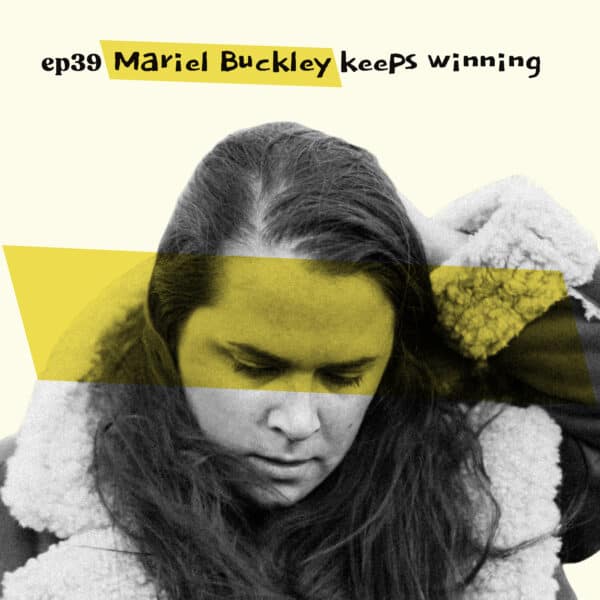
ep39 Mariel Buckley keeps winning
released April 9, 2026
1:31:57
Episode TL;DR:
Featured artists mentioned:
Matt Anderson, Kathleen Edwards, Rose Cousins, Donovan Woods, Jason Molina, The War on Drugs, Ruston Kelly, Leeroy Stagger, William Prince, k.d. lang, Lucius, The Staves, Haim
https://www.marielbuckley.com/
http://www.instagram.com/marielbuckley
https://www.youtube.com/channel/UCTBPYHl4E-O_Cjqn_uQcTXw
hosts: Glen Erickson, Alexi Erickson
AFE website: https://www.almostfamousenough.com
AFE instagram: https://www.instagram.com/almostfamousenough
AFE Spotify playlist: https://open.spotify.com/playlist/1o1PRD2X0i3Otmpn8vi2zP?si=1ece497360564480
Almost Famous Enough is a series of conversations centered around the music industry, pulling back the veil on what it really means to “make it”. Our podcast features guests who know the grind, who have lived the dream, or at the very least, chased the dream. Through these conversational biographies, truth and vulnerability provide more than a topical roadmap or compile some career advice; they can appeal to the dreamer in us all, with stories that can teach us, inspire us, and even reconcile us, and make us feel like we made a new friend along the way.
Chapters
00:00 Introduction
04:57 Meet Mariel Buckley
10:14 Juno Win Aftermath
15:55 Touring and Genre Roots
23:09 Finding Her Sound
30:08 Sibling Harmonies and Collabs
37:19 First Co Write Breakthrough
38:07 Studio Debut With Leroy
38:59 Touring To Level Up
39:56 Pandemic Reset And Therapy
41:35 Synth Country And Fallout
43:32 Vending Machines Recommitment
50:59 Writing Anvil In Nashville
01:07:04 Defining Success And Closing
01:15:51 Post-Fame with Alexi
ep39 – Mariel Buckley keeps winning
Glen Erickson: [00:00:00] If this is your first time listening to us, or if you haven’t just figured it out by now, this podcast happens from the city of Edmonton, in the province of Alberta, in the country of Canada. And if it’s your first time or you haven’t figured it out, I’m not like on the young half of life anymore. I’ve lived a little, it comes up once in a while, and the unique marriage of those two things is that when I was very young and very impressionable, Edmonton was a great focus in my life, thanks to the incredible success of our sports teams, the Oilers of hockey, and at the time Eskimos for football. It’s 1980 and the football team is in the middle of a five time championship run in the CFL.
Hard time seeing that ever happen again. At the exact same time, the Edmonton Oilers had just joined the NHL from a startup hockey league called the WHL, and they were all the rage with their young phenom Wayne Gretzky. And the lore of Gretzky is of course, much better known. [00:01:00] Whether or not it’s your first time listening to us or not, it’s not a hockey podcast.
Gretzky went on to lead the Oilers to four Stanley Cups in their first decade. Edmonton went on to win another couple years after he left town. Five cups between 1984 and 1990. That’s pretty impressive for pretty much any city anywhere involved in professional sports, and it was my city. I claimed as mine, even if I lived somewhere else here and there.
I had that pride long before they posted these City of Champions signs on the entryways to all four corners of this town. The city decided to really lay stakes down on this idea that we were winners and they had the receipts, but we all know how time goes and time went. Soon. We were living in a city that had no champions, not for a very long time.
Not at all. They looked pretty bad for as long as they looked. Amazing if we’re being honest. That’s [00:02:00] the thing about winning. It happens, it stops happening. You hope it happens again. And then the rest of us make our judgements with either a micro or macro view. You don’t get to choose. I am not sure how to make the crossover from professional sports to music.
So let’s just do the little time warp thing and start talking about Mariel Buckley. I really got to know Mariel when she was winning a hundred thousand dollars prize in the Project Wild Program. I was a part of running here in Alberta. That’s a big win, especially for a musician. A lot of people talk about how losing shapes character, not so many people, talk about what winning.
Does for it. If we really want to drill into this, we could talk about the very large gap between air quotes, winning and air quotes, winner. Experiencing winning now and then doesn’t necessarily make you a winner, but let’s bring this back to Mariel. Mariel Buckley is a [00:03:00] Calgary born singer songwriter, easily floating between the classic Canadian genres of roots and Americana and a little bit of country, and a little bit of folk, and a little bit of all of it at the same time.
By the time she released her first album and started her trajectory towards her second driving in the dark in 2018, she was already on her way to winning. Nobody goes from Zero to winning. By the way, with that album, Mariel was already receiving industry recognition. And moving closer to things like the very coveted attention around the Polaris Music Prize long list charting on national folk roots and blues charts, and landing coveted spots on the major touring acts coming through the country.
By this time, her third album was out everywhere I used to be, and she captured both breakout artists of the Year and Roots Artists of the Year at the Western Canadian Music Awards. Let’s just fast forward, Mariel just walked away with Canada’s biggest prize at Juneau Award in her category [00:04:00] for Contemporary Roots Album of the Year for her 2025 album.
Strange Trip ahead. I think this is what being a winner looks like. It’s a bunch of micro wins that probably feel a lot bigger to the artist because you have to suffer so many micro losses just to get to them. And by the time that macro win happens, that Juno, the applause and the surprise and the pats on the back become a strange mix of, it’s about time and WTF.
Then you wake up tomorrow and you start all over again. But as a winner. My name is Glen Erickson. This is Almost Famous Enough. Thanks for spending your time with us. This is Mariel Buckley.
I.
Glen Erickson: How are you? Bucks [00:05:00] Buckley, Mariel. Unbelievable. Where are you right now?
Mariel: I’m in Calgary. I’m, uh, at my brother’s house in Calgary,
Glen Erickson: you’re all the way back.
Mariel: yes.
Glen Erickson: I didn’t know whether you might be staying out in Ontario or had other things to do out there or something, you
Mariel: no, no. I, I mean, I’m coming Edmonton in a couple days to start rehearsing the band for my Europe tour, but, no, I’m in Calgary for a couple days, seeing some family and taking a, taking a breather.
Glen Erickson: Yeah. Well, I mean, family is a nice thing after such a monumental last couple of weeks, well, I, I’m gonna guess you need a breather, period. 2026 seems to have come, like flying outta the gate for you. Is that accurate?
Mariel: Totally. Yeah. And I mean, you know, I, I would hesitate to like, complain about it just because I was a lot of 2025. I was like, I really wanna go on tour and I really wanna put the music out and, you know, and now it’s all happening and I’m like, I’m tired, but I’m also, it’s the grateful, tired, you know, the one.
Glen Erickson: Yeah, a hundred percent. Okay. You and I haven’t seen each other since. [00:06:00] Oh, folk Fest. We ran into each other Folk fest, but was that not even this folk fest, or was that like a year before?
Mariel: Oh, that would’ve been 20, 24 even.
Glen Erickson: No, really?
Mariel: I wasn’t up last year for it, so I don’t think I
Glen Erickson: Yeah, you’re probably right. Then you introduced me to your partner who I hadn’t, hadn’t met before at the time.
Mariel: My, yes, My,
former partner now, but yes. At the time, that’s right.
Glen Erickson: yes. At the time, which, I just remember feeling so flattered. Apparently was a big fan of the We Pool and then you gave this like, glowing introduction and I was just like, to be honest, my takeaway from that Mariel was like, holy shit, I just didn’t know that you are such, You were really generous to me and I’m like, oh, Mariel really likes me. That’s really felt really nice.
Mariel: Oh yeah. I mean,
Glen Erickson: That was my takeaway. It was, uh, that’s so shallow. I’m like pandering at validation here, but, we don’t get to see each other as much after, for example, going all the way back to like 20 18, 20 [00:07:00] 19, having such an intense when you were part of the Project Wild thing.
And then I’m in your face all the time for the better part of a year. And then, then not so much for a long time afterwards. I’ve always had this great admiration for you and respect and so I’m so excited to get to have this conversation with you, especially, you know, with a bunch of your recent events.
I just feel like there’s some really palpable things to talk about, but then a bunch of things I would’ve always wanted to talk about. So hope you’re up for it.
Mariel: Yeah. No, and I mean, the respect is entirely mutual. I wasn’t just gassing you up like I’ve always appreciated your like directness and Yeah. Kat was a very big fan of the wheat pool. I am also a fan. We opened a show for you in
Glen Erickson: I know you did. I had to go back, no, it was 2019 actually. I had to go back and look
at Instagram is where I had to go find, and there’s a photo of you playing and you brought us a pedal steel player with you
Mariel: I still play with him today. That was my first gig with
Glen Erickson: Oh, really?
Oh, that was [00:08:00] your first gig with him. Okay. So I, I know I’ve already told you this before, but you did a, a cover of Springsteen’s Tougher than the rest with, and that was like, that’s like one of my favorite songs that’s in the echelon of 10 for me, which takes a lot at this age to get into that. And that was the most haunting version I’ve ever heard as it should be for like, if you’re not gonna sound like Springsteen and do it your own way, there was no perfect, more, perfect version. It was beautiful
Mariel: Oh, thank you.
Glen Erickson: that was exciting. Like we, um. Uh, you know, I don’t know whether I had ever told you, like we, like I got to make a lot of decisions for the band, so to speak.
Like, not that any other guys weren’t giving input, there was just a lot of the business things that they never gave a shit about. Right? And so they gave me a lot of leeway. I loved it. And one of the things when we even started doing reunion shows, ’cause our first one was in 2015, uh, and we had Postscript, who our drummer Stefan, [00:09:00] that, like, Steph from Postscript is like his niece or something related. And, but it was important to us, important to me, like, for representation, for lack of a better term. You know, I think it’s just the amount of female talent out there that doesn’t get, uh, the kudos they deserve. All these different versions of representation, recognizing that even in a reunion thing, we knew we were gonna sell out our venue. It’s a one, it’s a one-off, but. Yeah, anyhow, it was really important and you were like top of the list. So when you get your first choice to say yes for those things, and the best part is like, I always want to pick somebody. I’m like, we should probably be opening for this person instead. so that always feels really cool.
So that was a real little magical night, so I know, I can’t believe like we’re talking about something now, seven years in the past. Can you believe that? Like, that’s
Mariel: No, my brain cannot even fathom how fast and [00:10:00] also how slow time seems to move in this job.
Glen Erickson: Yeah, a hundred percent. Okay, let’s jump right in because there’s so much to talk to you about. but I appreciate the time, like rubbing each other’s backs here with some compliments. That’s always feels really sweet.
Mariel: start that
Glen Erickson: so you’re literally coming off of. A very exciting thing, which is winning a Juno Award for the Best Roots album.
I don’t know if they call it Contemporary Roots album. I don’t remember how they properly title. these, oh, they do call it Contemporary Roots album. Do they have a non-con contemporary roots album category?
Like a traditional okay. Yeah. Okay. Uh, well then that makes a whole lot of sense. but that’s a big win.
It’s a big win for an indie artist, obviously, right? You don’t have the power of some of the biggest machines in Canada and or even North American music behind you that’s driving this. So I think everybody feels like it’s a win when an indie artist wins. It’s clear anybody who watches social media and is tapped into a [00:11:00] circle that overlaps with your circle, uh, how excited your community was for you for winning that award. Um, huge, huge amount of feedback and kudos online from all kinds of people. people that I didn’t know you are friends with, people that I’ve already had on the show here that, now I realize that you’re friends with, which I, I love when the world gets smaller, uh, again for me all the time like that.
So I don’t wanna ask the stupid question about how it felt to win. I think we all know how it feels to win. It feels not real and incredibly poignant at the same time. Right? but how does it feel like when you’re walking off and then you are getting responses, you’re getting text messages, you’re seeing people online, you see the people that’ll come outta the woodwork that are so excited for you.
What was that experience of winning
Mariel: Well, I mean, you’re totally right. Like I think the, the actual act of winning is a pretty hard to pin down feeling because it’s, it’s, it’s [00:12:00] a lot of things. It’s, you’re very grateful obviously, and you’re happy. But I think a lot of artists particularly, I mean I’m sure you know what I mean, but struggle with imposter syndrome or the immediate feeling of like, Ooh, do I deserve this?
Or, Ooh, am I taking up too much space or whatever. But, um, for me, the greatest measure of success, uh, and the easiest way for me to track if I’m on the right path has always been, My peers. So when you receive comments from people, other musicians particularly that I really respect, that means the most to me.
So that has been the greatest part of this whole, experience has just been hearing from people that, you know, were heroes of mine, who now I consider friends and mentors, from peers, from colleagues saying like, you deserve this. You’ve worked very hard. Um, you know, I, I think deserve is a tough one because I know a lot of artists who deserve things that they don’t have.
But, um, also recognizing that I have worked very hard. Um, and it’s, it’s okay to be, [00:13:00] to be happy about that. So, um, yeah, very, very stoked to hear from all the pals for
Glen Erickson: That’s awesome. Like, so tell me, can you, can you name somebody that you were maybe a little surprised, like that it was like, oh my God, that person just reposted my story or said something or, or is there, was there any that were like, wow, I didn’t realize they even had me on their radar or any of that kind of a situation?
Mariel: in some ways, no. And I think the coolest part about it is that like, so for instance, I just did that big tour with Matt Anderson, and when I was in Halifax, I had a day, um, before a show, and I wrote a song with Rose Cousins, who’s I’ve been a fan of for years. She’s like massively incredible to me. Um, and pretty much ever since we met in Halifax and wrote that song, she was just on my team.
She was just like, I want you to win. I think you’re the best. She kind of introduced me to Donovan Woods, who was at the songwriter circle at the Junos. He also said, I hope you win. I’m on your team. [00:14:00] Huge. Donovan Woods fan. Um, I met Kathleen Edwards after my last record came out. She came to my show in Ottawa.
She’s given, you know, we’re now friends. she was one of the first people to, to send a message. It just, it’s like there was nobody surprising in that. I know these people a little bit, but. Um, if I think about it, sometimes the magnitude of these, these people that I just admire and respect so much now have made space for me in their, in their thoughts and in their, you know, it’s, it’s really cool.
It, it’s like, it’s a bit overwhelming, but, um, yeah, tons of very cool, very cool people. Yeah.
Glen Erickson: I can imagine. I saw like a repost from Tom Power and I thought,
that’s gotta feel cool. ’cause that guy, like, he sees 300 people at all different levels of careers a year. Right. Like, or more. And, and so yeah, I would feel like being on that guy’s radar, I’m like, good for her shit. Like she’s got like that guy’s attention too.
Like,
um, it’s just a big cross section. That’s, that’s pretty beautiful. [00:15:00] I, I, I totally hear what you’re saying. It’s gotta feel so validating, having people that you write that you would consider heroes like, uh, and even you just dropped in there like Kathleen Edwards came to your show like that. That feels as big a win, at least for me.
If Kathleen Edwards had come to my show, like we won’t talk about just my plain old giant man crush that I’ve had on her forever as like the queen of like indie alt country in this, in Canada forever. Yeah. It would feel so validating for sure. Just that would feel as big of an award to, you know, I make the joke.
I mean the joke is in the name of the podcast, right? This con the concept of like pursuing this quote unquote making it concept, um, that feels like to me what would feel like a marker as much as, uh, an award win sometimes is the, my heroes came to, to watch me play. So you, you dropped in there that you got off tour with Matt Anderson too. We’re gonna jump all over the place. I [00:16:00] can tell this right now. Um, just ’cause there’s so much, And, and like, so Matt’s like very well renowned world-class blues player and singer. I found it interesting right off the bat that your new record, you know, both the press that’s out there and some of the things you said hint towards you trying to drag in some of your indie rock influences into all of the country roots stuff that that was, uh, apparently there from the beginning and then you end up on a big tour with a blues guy.
So I’m wondering what it was like playing those songs or playing that stuff to his audience. What was, what was that experience like? Did, was there some new things to learn inside of that?
Mariel: I mean, you know, Matt and I have known each other. He took me on my very first US support tour in 2023. We went down and did like 23 shows in 26 days in 14 states, and it was just me and him and, you know. He’s a, he’s a very accomplished songwriter as well as a blues musician, kind of. He toes the [00:17:00] line between like blues roots country and folk pretty well.
And when I play by myself, which I was, ’cause I was supporting him, my songs me with an acoustic guitar. It all kind of sits in this similar realm.
Um, the indie rock stuff, the janky indie twang stuff that I love, like the Jason Molina and the, you know, MJ Leman influences that stuff. All I consider more of like a production ad or like when I have a band, that’s where I will put more attention to, like building those sounds.
But when it’s just me, uh, playing the songs as they were written, they kind of always translate in that folk bracket because that’s, that’s just how I write songs I think.
Glen Erickson: Yeah, I, oh, I mean I think that happens for a lot of artists, right? This whole, when it becomes the stem and the acoustic and the song and strips away, you lose so much of what a lot of people get hung up on the genre defining parts of it. And I think that, and I’ve said this a couple times with talking with people like, and I don’t know whether you agree, it feels [00:18:00] like, and maybe I’m in a silo for this, ’cause we’re all Canadians, but it feels so Canadian to me compared to every other, like sort of what I would tag to other countries or areas of the world, right?
This whole, everybody seems to come from this like Gordon Lightfoot, Johnny Mitchell, like. of, you know what I mean? Like the best songs should be able to come back down to just you and the acoustic guitar in this
country. Right? Like every tragically hip song should be able to be played just on an acoustic and get everybody singing the anthems.
Like it feels like that’s part of the ethos for us. Is that, do you feel like that, let me ask you a question about it this way. I’d be interested in your perspective, do you feel like that is a help or a hindrance in some ways? Whether you feel like, I can’t stray from this, or whether it feels like I specifically, when you go into the studio with a new record, I have to break, I have to break it out of this thing so it doesn’t all feel the same.
I have to add [00:19:00] new instruments or like, I know you had, you had talked about after the previous record, you know, the stuff that Marcus Pecan had brought more atmospherically to your music like that happens in the studio. Do you feel like that’s ever a struggle to get out of that or it’s comfortable?
Mariel: No, it’s, I, I enjoy it a lot. I think it’s, I would say it’s like neither a help or a hindrance. I think, when I’m crafting the song, you know, now as I’ve been doing it a lot longer, I’m more interested in how can I do this in a more interesting way. Like, how can I, you know, I have a high-strung guitar. I have a guitar in open CI have one in open DI have a baritone, acoustic, I have a high strung acoustic.
and all those things are tools for me to find maybe a vocal melody. and then building production elements, like, I’m very hands-on with that stuff. And I, I like doing it. So it, it doesn’t really feel, You know, as if the way that it starts kind of ever holds it back from becoming what I want it to be, or, or has it all sounding one note [00:20:00] because I listen to so much music that I’m kind of always excited to make the next sound or find the next sound.
And uh, like you were saying before, I, I think every songwriter that I like, or at least every good songwriter in my opinion, has a similar-ish like trajectory through music. Like as a young person, a lot of us are like, oh, Bob Dylan is a guy that I should listen to. And when you hear that as a 16-year-old or whatever, when your journey sort of starts, that’s just, I think innately what we start to do is mimic those like choppy acoustic chords.
And so I think for a lot of people, the, the evolution is, is very similar. Even if we all branch into these different genre pockets, like I would say you could put five very different artists in a room and we would all be able to sing a Neil Young song. And I think that’s. That kind of is what’s important about songwriting is that it is able to be brought back to those, those roots.
Glen Erickson: Yeah, so those roots for you. I mean, the stuff that gets reported around online a lot [00:21:00] is like country and rodeo influences, and I’ve always been interested. I’m like, ’cause in all the time I knew you, I’m like, I never heard her talk about the rodeo or other people talk about the rodeo very much. So somebody, is that where somebody just like latched onto something and then the internet algorithms just kept spitting it back out?
Mariel: Well, I mean, honestly, kind of like, so I’m from Calgary obviously, like the Stampede was a big part of my stuff growing up. But and when I started in music, like long before we knew each other before I moved to Edmonton. I was playing. So Calgary used to have a very active live music scene when the oil boom was happening and there was a lot of happy hour gigs.
So like the old Mikey’s Duke joint, the Blues Can, and the Palomino upstairs used to have these like four or three hour slots where you could go and just play covers and they would give you like 500 bucks or 300 bucks. So I would pay, I would play these rent gigs, you know, every week. And I would go and I would play, like I did quite a lot of, like Loretta Lynn and [00:22:00] I did some Patsy Klein and I did, I started doing pretty country stuff, but very quickly I was also doing Townsend’s Aunt and Neil Young and these kind of more alt leaning, things.
And you know, there were some hats that I wore that may have led people to be like, oh, she likes country and rodeo. But you’re right. Like to some extent, I think people are always trying to. Put stuff in a box and make it make sense. But the rodeo thing, the country thing, I don’t know if it’s just ’cause there’s pedestal on all my records or, or what, but it’s, it’s maybe more comfortable for people to put me there.
But you’re right, like I’m not, I don’t think of myself as that country really.
Glen Erickson: yeah. Well, I remember with the We Pool when some people would label it. Like when they wrote about it, they would call it country rock. And it’s just funny, like it’s just another stupid pocket. But that one I kinda railed against because you know, a bunch of these dumb bands from Southern US were being called Country Rock that I didn’t wanna be associated with maybe.
Right. So [00:23:00] it’s funny how. Yeah, the subjectiveness of a label can make you feel even when you’re the creator, when you shouldn’t give a shit, but then you might give a shit. But, so I’m kinda curious because I find this interesting for people who are in up and coming in their career, and I know the further you get away from that, the less you end up talking about that, you know, where you’re at with your career and stuff. But when people are up and coming and those are like the only gigs available, like you called it a rent gig, so that’s like a big deal for somebody to be given that kind of gig regularly trusted with that amount of time to be paid. Like at that time, you know, 500 bucks a gig, you know, would still, they probably haven’t even upped that in 15 years.
But, but still, like that’s good, decent money for that kind of a thing, but then you can feel railroaded into, ’cause when you play. You’re playing to get a response, right? You’re trying to connect always, every artist. And if you’re just playing those kind of shows and you’re like, well the Patsy Klein [00:24:00] stuff really resonates with the audience at this venue who’s willing to pay me the 500 bucks?
And then you start to maybe believe like that’s where your pocket lies. It’s very confusing when you’re up and coming and then you start to introduce some town vanzant and then maybe the Patsy Klein lady doesn’t, you know, clap so much after your songs and then you get confused and, but then it’s a different response in a different venue.
You, you’ve become very distinct and I feel really retained here character right from when I knew you from that first main release that you made up till now. Like I feel like it’s very recognizable. Understandable. It’s very you. So I’m wondering when it was that you discovered what the thing was that worked for you.
Mariel: I mean, that’s a, that’s a great question and I think it important to think about, um, because as much as I am further away from the start, obviously than I have been, but I do think about that time a lot because that development period of like playing, you know, for an hour at a time by myself to just [00:25:00] get better.
’cause I was really green, like I didn’t really play very much until my early twenties. I had other full-time jobs I dropped outta high school. So I was chopping away at it a lot. And that evolution you’re talking about, I think is, is really necessary for, for young artists to go through. Like, it was really important for me to be on stage playing whatever for a little while so that I could just get comfortable changing shapes and being good and learning to sing and learning to accompany myself.
But then when I was. Better. And I started to see, I don’t, I don’t like doing this song anymore. I don’t care that this lady isn’t responding the same way. I don’t care if I have to now get another job so that I can play the songs I want, or maybe the songs I wanna write, or I don’t wanna talk about this anymore.
I’m not a 1950s housewife who’s worried her husband is cheating. You know, I think it’s, it, you have to pay attention to yourself. ’cause I, I, at a certain point, I was like, this is not making me happy and I do this [00:26:00] because I love it. And so I need to find a way to do it so that it makes me happy. So then I, I stopped playing the money gigs and I thought, I’ll make money another way and I’ll work on making art.
and I don’t know why that, that made sense to me. Probably. I have an older brother who’s an art, a musician and artist,
Glen Erickson: Yeah. so there was a bit of a path drawn for me. But, you know, I I very, it’s a very early age if I don’t wanna do something. It’s very hard to get me to do it. So I think at a certain point I was just like, I don’t wanna do this.
Mariel: I need to find a way to do this in a way that I love. And I think that’s important for artists to do, even though it’s, it can, you can bump up against a lot of different stuff.
Glen Erickson: So your stubbornness served you well, even though in other areas of life it might not serve you well, but
I’m sure, I’m sure in the business it can definitely help you not get swayed. I’m, I can fully relate to that. I’m like, uh, I’m sure some of the people close to me are the ones who like it the least.
[00:27:00] But it’s also served me very well in a lot of ways. So you mentioned your brother and I think that obviously. Has had a lot to do with how you got started having, just being able to see somebody else take a shot Right. And, and believe in themself enough to start to do this thing. you guys seem really, really close right now.
I’m wondering if you were really, really close back then. ’cause you were a lot younger and, you know, it doesn’t always happen that way, you know? what, what was it like when you were starting out and watching him kind of already going down this path?
Mariel: I mean, so for starters, Tim and I are almost seven years apart, so he’s seven years older than I am. So in a lot of ways, um, growing up we were like only children, um, instead of like siblings who would argue. So we never really had an argumentative relationship. He never picked on me. I was too little and I was a girl.
Um, and he was always trying to include me in stuff because my parents were gone a lot. So he would just be like, come hang out with my friends, come play my [00:28:00] guitar. And when he started to play, it’s interesting that you ask about that period because although he was very encouraging and we, we got along just fine.
I think there was a part of me, especially in my early twenties when I, I wasn’t good yet. Tim’s always been very naturally gifted and he pr he started guitar a lot younger. He practiced a lot more. He’s a better guitar player. He’s a better musician for sure. I think there was a, a fair amount of envy and difficulty with me being able to accept how good he was because I was not at all close to that level yet.
And I really wanted to get there. And I think I was also like, do I wanna get there because I wanna get there? Or do I want it because he’s so good at it? ’cause I’ve kind of grown up my, grown up my whole life, mimicking him, in one respect or another. Now, of course, I’m old enough and he’s old enough that we’re totally different people with wonderful skills and accolades all our own.
and I see that’s such a young person, insecurity. But we were still very close. But I remember at the time just, just really struggling with [00:29:00] how incredible he was. And I think feeling like, oh, I’m just, I’m never gonna be that good. Um, and I think I used to pick on him a bit for it. Not in a, not in a way that anybody would fault me for necessarily, but I would, I would make fun of him for being handsome and good.
And. In hindsight now, I sort of, I sort of feel bad because he is all those things, but he also worked really hard to be those things and all he’s ever done is support me. So we’re, we’re very close now, which is great.
Glen Erickson: That only feels like something a sibling would do is like, I’m gonna get under your skin by telling you how damn handsome you are. Like, oh, you’re so fucking handsome. Like, that’s pretty great. I, as you obviously know, I was in a band with brothers and witnessed such a thing on a regular basis, which is great.
And, and for reference, by the way, your brother Tim Buckley, who goes under the performance name is t Buckley, and has made some incredible music of very, as you said, very gifted songwriter, very gifted singer. I’ve enjoyed seeing the occasional [00:30:00] more frequented seems, I don’t know if that’s accurate, collaborations between the two of you, uh, with some time, which I think is always a lot of fun.
Actually, I’ll throw this in now. I was gonna maybe do this later, but, I thought this would be fun because I just referenced like obviously, uh, the band that I was in had siblings. you guys are starting to able to do some more stuff together. I know you were playing things for the Juno Award festivities that were going on and he joined you playing that.
It was, I saw some of that stuff online and it just sounded so good. and I’ve just always like, loved, loved the sibling harmony. I feel like there’s just this natural, I mean it’s a hundred percent true. Like there is a something to a sibling harmony that just cannot be replicated. Even like like my favorite harmonies harmony act right now is probably the band Lucius Right.
Mariel: Oh God, so good.
Glen Erickson: who are just incredible and to the point that they fool everybody that they’re sisters ’cause they [00:31:00] like dress matching outfits all the time and, and stuff. Incredible harmonies, but in the world of sibling harmonies, I thought we could play a little game about, uh, identifying who are your favorite sibling harmonies in, in history.
Have you, how, how quick is the recall for you to give me like a top three that you think are like sibling harmony acts?
Mariel: I could give you two right now and I would need to think about the third. But absolutely the Louvin brothers, I think that would be like impossible to leave them out. The sort of very Christian upbringing, um, 1950s and sixties. Country duo like tragic story, but their voices together are two of my favorite of all time.
Um. The Everly Brothers. Another really great example of that kind of classic, incredible blend. There must be more. I know there’s more, and of course you’ve put me on the spot and I’m drawing a blank. There [00:32:00] are so
Glen Erickson: I was, I know, I was, uh, well here’s, here’s the thing. Mariel is, I feel like there’s not as many as I thought. I thought this would be a real easy dive. I mean, there’s these obvious ones like the Beach Boys,
Mariel: Oh, sure. Yes, of
Glen Erickson: three brothers out there and they, Everly Brothers, like probably top of the list all the time.
People realize that ’cause the harmonies are so well known. I think part of my Google search was being handicapped by, that it just kept interpreting as siblings in a band. Like the Gallagher Brothers don’t count. It’s not like they’re known for their
harmonies. or anything like that. Um, yeah, so I think Anne and Nancy Wilson of Heart was one
I had thought Of But, and then, but I was, I was digging for recent ones and I found this a little bit like interesting ’cause um, uh, the Heim is the other one that I think more of, a more recent act that I came up with. Have you, are you familiar with the staves? Okay. That’s like a sibling harmony act [00:33:00] also, which, I think they did a, a good long tour for a while with, um, the War on Drugs also, which ironically so has Lucius.
But, um,
Mariel: Well, the
Glen Erickson: yeah, so
Mariel: course,
Glen Erickson: yeah, I was gonna say like the other ones. So, they got talked a lot about by Begonia when she was on the podcast with me ’cause she’s so close to them. Um, and then I just released an episode today with Mia Kelly, uh, from Gatto Quebec, and she was saying, oh, I should recommend you other fun new people to be on your par.
And she have you come across a, a singing group, like traditional singing group called the pairs, like
as in a pair of two, but the pairs.
Mariel: recently I got turned onto them. I don’t remember how, I think it was like an Instagram ad and I was like, oh, this sounds awesome. Are they related or are they just singers that are good
Glen Erickson: Well, I need to do a deeper dive. The, it seemed like they are like, it’s like family singing, grew up [00:34:00] singing gospel stuff. But I should, so I’m gonna leave that one as a wild card and not hang my hat on it. ’cause I actually can’t answer that.
Mariel: Fair enough.
Glen Erickson: But, but the, uh, the Mariel and Tim Buckley Harmony is probably one of the favorite ones I’ve heard in recent while. Have you guys ever thought about, you probably get asked this a lot, like recording more together, like putting actual like project de stuff other than
you did the Tragically Hip cover, which was great, but that seems to just get talked about once in a while and then held off on,
because you have a lot going on.
Mariel: well, we both do, right? I think like Tim’s got two kids that are seven and nine and his own music career. He’s, I think he’s getting ready to do another album in the fall. But right now, plan as it stands, the plan is for us to do, uh, to get in the studio in late 2026, early 2027 because, um, we’re both kind of at a point, I think, it makes sense and we, we really want to do it.
We’re both at a point [00:35:00] where it’s like, okay, we’re excited to do this together. Now we’re both at a similar enough skill level that it would be really, really fun to sort of, uh, take a run at it. So it is in the works. and we are working on lining up our schedules, which is challenging, but I think now more than ever, we’ve got, we’ve got it kind of slated away, which is great.
Glen Erickson: Okay. That’s awesome. I think everybody would be really excited to hear that.
I think it would be a pretty great thing. Um, so I was talking to you about some of the influences I wanna, I wanna ask you about just your evolution between your records, right? So. I wasn’t super familiar with your first one when you came into the project.
The, the Project Wild thing. And I had heard your name a lot. You had been doing a lot, especially around Alberta up till then, uh, and the driving in the dark record that you had out. So between that one and then the 2022 record. You know, which kind of got you on the long list for Polaris. You know, some, some big, [00:36:00] big, steps that you hope, like if our careers are a trajectory, which they feel like so much of the time, you know, that that would probably, I assume, feel like a big stepping stone, uh, moment as well as some of the nominations and then this current record winning a Juno.
But I’m curious about the evolution. Like I’ve heard you talk about the influence that your producers have had, like the producer you chose down in Nashville. Um, for this one, for Jarred K and and and stuff. I’m just curious, what do you feel like were like, can you pinpoint the pivots between each record?
Mariel: Oh yeah, I mean, absolutely like the first record that you’re talking about driving in the dark. Um. You know, I’d kind of done some, some putts around Alberta recordings, but I, I wanted to do like a real record and actually what kickstarted that one was there, there was this, uh, this program that Alberta music and Saskatchewan Music and Manitoba [00:37:00] music all did, where they booked a songwriting retreat at Fort White just outside of Winnipeg.
And I was super green and I drove to Winnipeg for the first time. And I wrote Driving in the Dark with, um, grant Davidson, who’s an artist by the name of Slow Leaves, one of my, one of the only people I still co-write with and one of my favorite people to write with. He’s a genius, I think. And, um, this other gal from Saskatchewan, Valerie McLeod.
And we wrote that song, it was my first ever co-write. And I remember thinking like, oh wow. Like I didn’t know I could write a song like that. That was the first song I ever wrote that I thought feels like, Me, this feels very, uh, like I’m painting a very clear picture of who I am at this time. And that was, that was really important because it kicked off a writing cycle for that record that allowed me to sort of go into, I had just heard Kathleen Edwards that year, like I’d never heard Sailor until I was about 25.
And then when I heard it, my brain exploded and I was like, [00:38:00] oh, I can be vulnerable and angry and. Pissed off and sad and all these things that I have been for a lot of my life. So I then kind of wrote this batch of songs and then Leroy Dagger, who is a, a friend of mine, approached me and said, I really wanna do this with you.
He had just won the Peak Performance project and built a studio in Lethbridge. So he brought me down, picked a band, uh, like Russell Broune, played guitar on that as Jan Arden’s old collaborator, um, at just an incredible group of, of musicians. And we went in and made my first kind of real studio band record.
pretty well live off the floor except for a few vocal comps, um, and some, some guitar stuff after the fact. But. That was such a wonderful experience and you know, there, if you listen to that one and then everywhere I used to be, which came up 2022. I think what you’re saying is there’s a huge jump artistically and even just like mature maturity wise, and I think that’s common with lots of artists.
There’s five years between them or four years. But I [00:39:00] also think a big part of it was that, uh, that first record came out and it gave me the chance to just start playing live all the time. And I with a band by myself. In different kinds of rooms with different kinds of sound. Um, and I just, I just played, I played all the time.
I did my first solo tour out to BC and I did like a brewery tour that I booked myself. Um, brought a little Bose tower speaker and just played again, more, covers more of my own stuff. Um, I got a couple of support opportunities way back when I did some shows with Katie Lang that were a big opportunity, uh, right after that.
And I just worked like, I just, I kind of took the same attitude as when I was playing my country covers and was just like, I need to go and workshop now at this level that I’m at. and then by the time Project Wild came around, we were really ready. We had been really hitting the pavement pretty hard and had a good show, and had the songs were kind of really dialed in.
Then after that came out, or after we’ve kind of won that [00:40:00] project and I had this surplus to sort of make the record, I wanted to make, uh, the pandemic happened. And I was like, oh man. Uh, it, it sort of forced me to look at a lot of things that also weren’t working about that, that album and the cycle after the fact.
I changed up my, my band, which was a big growth thing. I think you, you know, anybody who’s worked in this job, you know, you work with people and then you don’t work with them anymore. and the pandemic gave me space to sort of, you know, for lack of a better term, everything in my life changed in about five seconds flat.
I sort of ended a five year relationship, got rid of my entire band, and had to write a record, a new record. Mm. So then I, I moved to Edmonton. Everything is different. It’s the pandemic. I’m sitting in my house in Edmonton with my new partner and I’m like, I have to write this record. And so much has changed.
I’m turning 30. I think like anybody who’s hit a new decade also knows that feeling of everything is fucked. And I [00:41:00] have to, I have to go to so much therapy and I have to figure my brain out right now. I’d been kind of in a cycle of like abusing alcohol and drugs in various kind of intensities throughout my twenties and my teens.
I was really depressed. I needed to get on some medication. I went through all of that and wrote everywhere I used to be in the process, which was crazy that that record was a lot of just me in my office. After therapy being like, fuck, I guess I’ll talk about this now. Fuck, I guess I’ll talk about this now.
Glen Erickson: Hmm.
Mariel: um, grinding it out, for lack of a better term. Um, but I was also listening to a lot of the war on drugs and I was like, man, it would be cool to do a synth country record.
Glen Erickson: Hmm.
Mariel: so then I, I got Marcus to come and make that one in Calgary. Um,
Glen Erickson: cool thought. Like I love that. That is the thought that crossed your mind after listening to the War on Drugs. I absolutely love that
Mariel: well, the War on Drugs to me is basically just Bob Dylan with a crazy rhythm
Glen Erickson: hundred percent. [00:42:00]
Mariel: The way that he writes and sings. I’m like, oh, like, this is just a Bob Dylan song, which is what I love about them. Um, I think he’s so cool. So then I made, yeah, then I
Glen Erickson: delivery, right? Like
Mariel: absolutely like, and actually like, uh, Troy of Ultimata also has that, that same kind of seventies singer songwriter delivery that I just love.
Um, I just saw them play last night and they’re so good. They’re always so good. So I made that record and then, uh, obviously like crazy run with that. It came out at a month later, I had to stop working with a manager in a, a pretty catastrophic way. So I, I went on these tours and I just lost a load of money.
Like, I was just like so screwed and on my own and so stressed out and I was like, I have to quit. I have to quit. I found somebody new about six months in, who I’m still with now, uh, the woman that I work with, and that, that was just a crazy time also. ’cause I was like, okay, I’ve worked through my personal stuff, kind of.
I [00:43:00] now have this big project that’s starting to get me to a level that I wanna be at, and everything is on fire. That’s no idea what to put out first. I’m, I’m so in debt. Um. I’m meeting all these heroes and these people I look up to, but I, I feel like I can’t show up for any of it because I’m so stressed out.
And that kept going until kind of 2023, right? That record came out in 2022. I had a couple years of touring and festivals and working, but it didn’t really slow down. I didn’t really know how to handle it, and I was struggling to catch up, and make it make sense. And then at the end of 2023, my partner, who you met at Edmonton Folk Fest in 2023, I guess it would’ve been, you know, she said, I, I really wanna have kids.
I wanna have a family. I wanna do, you know, I wanna do life this way. And I had just come home from a tour in Ontario where I made no money. I was like, oh my God. I had to, I have to think about that. And I’d already been thinking about it, but I very quickly realized like, I, that’s not what I want. [00:44:00] Um, and so we split up,
At the end of 2023. And then I wrote vending machines on the couch of our apartment before I moved out. and that was kind of the catalyst to me being like, okay, I’ve doubled down on this career as an artist. I’ve gotten a lot, I’ve lost everything again, am I sure this is a good idea? No, but it’s, it’s like vending machines to me is the song that sort of says like, I’m making this choice because it’s the only choice I can make at this point.
it was like a recommitment to the, to the craft. And then Jarred, who’s Rustin, Kelly’s producer, and I’m like the biggest Rustin Kelly fan. he was like, I would love to work with you. And I was like, okay, I have to go find the money to do this. Um, I do have like a, a label here, but they’re, they’re a smaller label at a Winnipeg and um, you know, so they were willing to help and we got all that going and.
Then I made this record and I, one of the things that was most important to me on this recent record was that I wanted my band from Edmonton who’d been working with me to come [00:45:00] with me to Nashville. I didn’t wanna hire Nashville players, so I brought them down and, um, they crushed it. Like they smashed it.
It was a great experience for us to be in the room together. And, um, all, yeah, all of these songs are songs again about going through that whole confusing process of turning 35 and being like, okay, I’m not gonna have kids. I’m not, I don’t own a house yet. I’m still on the road. Um, I, you know, you’re losing people.
It’s, I think it’s a very universal, ex relatable thing, even if you don’t work in this job. You know what I mean?
Glen Erickson: Yeah. I mean I, there’s a bunch of things in there I wanna ask you and talk to you about, but
like, on that note, on that note, because I’m like, I’m in my fifties now and I’m confronting this regularly and what I’m really confronting, ’cause my therapy has been A DHD related and now a year into it, we hardly talk about A DHD anymore.
We’re talking essentially about everything that I misunderstood about myself [00:46:00] and. A lot of that is fueled by like, I thought I was a certain way, this is who I am. And my inner narrative, right, was all of, a lot of like, a lot of us just shit talking ourselves like, like the worst person who could ever talk to me is, is myself, right?
But realizing a lot of these things were shaped by who I assumed I was just in my natural character. I was born this way or whatever, and then having to undo those things. But in the middle of that is the narrative and sort of what jumped out to me, what you were saying is like having to confront these assumptions about what life was supposed to be like.
Right? Am I sup? Like is there something wrong with me? Am I missing out on something in a, in a catastrophic way? If I don’t have the house, if I don’t have this like nest egg, if I don’t have my RSPs, if I. You know, I’m in my thirties, like, what if this picture of this stereotype picture that I’m gonna have a family, [00:47:00] I’m gonna have this like thing around me that is supposed to last until the very end type thing.
And, and yeah. All those narratives and all those pictures, you don’t realize how deep they are. Right. Um, and how much work you have to do to undo them. So was was the album very much the therapy through that for you? I don’t even wanna make the assumption that like, yeah, I wrote the album and now I’m all better and I’m, and I’m fine.
I think that’s the wrong assumption we make with our heroes and artists sometimes. Right. It’s like they worked it out in their songs, everything’s okay. Um, do you, do you feel like it was. album itself was a help, like a step up through that, or perhaps did it feel like it just cracked the door open to like a whole bunch of more that I’ve got to work on on the other side of it?
Mariel: I mean, it’s kind of both, right? I think, like all the work that I do as a songwriter, and I think a [00:48:00] lot of my favorite songwriters do, it starts for me, it starts as like a, an exploration to help me process what I’m thinking and feeling. And then eventually the songs take on a life of their own and they kind of change as they’re played for people and as they get out.
and in the process of playing them and listening to them and, and hear having people listen to them, then you are suddenly thinking about them in a new way and opening a door to all kinds of other crap. so it’s both, it’s, yeah, it was incredibly helpful for me to move through that stuff with, with this, these songs.
And now I have all these other questions that I have to answer, which I will probably write more songs about, right?
Glen Erickson: And giving it away to people. You hear a lot of artists say this repeatedly, it’s a two-edged sword, right? there’s a beauty in watching it just become other people’s, like their own interpretation, their own ownership. But something as like everything you described, the everything I used to be record, like the way you described everything that was happening around that.
Like, does that [00:49:00] feel like a bad photo album to revisit right now in your life, or does it feel like one that you’ve made peace with?
Because you have
Mariel: Oh, no.
Glen Erickson: that every time you pull that song out in a set, you know?
Mariel: No, I mean, I’m so proud of those songs and I’m so proud of that record and what it did for me and, and to be honest, the, the way people connected with it, you know, songs like Hate This Town and all these sort of like, really. Harsh kind of looks at growing up feeling like an outcast. And, um, as much as there was so much crap going on around it, I also got through all that.
Like I still have the career that I have because I, I kept working and I met wonderful people who invested in me again. And I think it proved to me that if you stay the path and, and write the songs and play the songs and allow people in, then you’ll end up where you’re supposed to be. It’s, it is a bit of a game of blind faith, but as much as I sort of paint myself as like, you know, it’s so hard and you’re [00:50:00] always an underdog, like there is obviously a very strong through line of me believing in myself.
Um, I’m not very good at accepting it or, or even really noticing it, but I wouldn’t still be doing this if I didn’t think I could do it right. And that is the thing that will keep no matter how bad something was, it will just keep me returning to it all the time.
Glen Erickson: Yeah, you can’t be, you can’t be faced with certain ultimatum type of choices like you described were happening for you and have to make that choice without having the right kind of confidence and belief in yourself. you know, which I, you know, I think, you know, is how we slice the bread in this business so often of who sticks around and who, who doesn’t.
And I like talent, talent always matters, but honestly like the ability to ride it out maybe matters more, to having
a career. Right. I mean, you’re [00:51:00] talking about like a lot of heavy things that you’ve gone through. You’ve wrestled with obviously heavy subject matter. You alluded to the choice that was kind of confronted to you of like having children, not having children, like a massive life choice. that made its way out, I think, into the song Anvil on the new record, which you co-wrote. I’m curious about this with Robbie Heck, when you were in Nashville, who, the minute I saw that, I was like, I know that name. I just know that name. Robbie Heck has a song on one of my oldest playlists. It’s my sad, saddest song playlist that I only share with one friend.
And we’ve been building this playlist since about 2010. And, It’s a song called Over You with Caroline Spence, which I think is maybe one of the saddest sounding feeling songs I’ve ever heard.
Perfect songs to me are when the subject matter, the tone and delivery of the voice is so perfectly aligned, right?
That you just, it’s bulletproof. Like the sentiment is like [00:52:00] intact. A hundred percent. And that’s one of those songs. So I’m wondering how he brought that song out, whether you just showed up with some of it already written, whether you just had the idea whether somebody who’s obviously so skilled at tapping into, you know, difficult emotions and bringing out a song that doesn’t sound tonally like it’s as heavy as what you’re talking about.
So I’m just curious how that entire song got to come to life.
Mariel: Well, I mean, first of all, Robbie is the best and I’m so glad you were aware of him before because, um, he also introduced me to Caroline in my time in Nashville, who I’m also a huge fan of. And those two, I think are some of my favorite songwriters of all time. So working with him was really cool. But, it was my first time doing a co-write trip to Nashville and Liam from Soan actually was like, you should write with this guy Robbie.
And I was like, okay. So I, I had gone out for drinks, uh, the night before I was meeting him, and I came home and I ha I like immediately got into this happens a lot where I’m gonna go [00:53:00] into a right and I’m sort of like, I should come with something ’cause I don’t like to start from nothing. Um, and I was laying in bed and I was like, man, that word anvil is a crazy word.
It’s like, it’s such a great visual, it’s. Obviously heavy. Um, and then I think I came up with traffic at a standstill on the edge of where you’re coming into town. In my stomach there’s an anvil. And I was like, oh, that’s cool. Like about a bad conversation, right? I kind of left it alone and then, but I had the melody of that and the pre-course, like duh.
Like I sort of had those pieces and I was like, okay, this is a great starting point. So he came over the next day and, um, he’s so awesome. He is so like, easy to hang with and he kind of like laid on the couch and was like, what are you feeling? I was like, well, I, I split up with someone a while ago ’cause they didn’t wanna have kids.
Do you wanna write about that? He was like, he’s like, yeah, my girlfriend really wants to have kids and I don’t think we’re gonna stay together. They, they ended up splitting up, I think. I hope that’s not an
Glen Erickson: Oh wow.
Mariel: I’m sure he would tell you that. it was, it ended up just being both of [00:54:00] us having this like very similar experience
Glen Erickson: Yeah.
Mariel: and then being like, okay, let’s craft this, this tune.
So we kind of just built the song. It only took us about. Two and a half hours. Um, and then after the fact, my manager, who I love was like, it needs a bridge. So I wrote a bridge. but other, I mean, he was a, a treat to write with and, and just like, so patient, uh, you know, he just had so many good suggestions and, um, yeah, but really it was just about, we were really just both on the same page at that time of life,
Glen Erickson: I love that your manager said you needs a bridge or the way they come in and they’re like, you need a pre-course.
Mariel: you know? And most of the time I hate that, but she’s so, she loves songs and I trust her, so I was like,
Glen Erickson: oh, that’s great.
Mariel: And she was right. The bridge kicks ass. So she was right.
Glen Erickson: okay. I have two what I consider a little more direct, harder questions. I don’t think they are for you. Um, and you identified already at the start you said that you appreciated that I’m direct, so I’m gonna take that liberty. [00:55:00] Um, the first one specific, I’m gonna hope my A DHD rim members, the second one.
So, um, the first one, just since we’re talking about subject matter. the vulnerability that it takes to, you know, go into a song right with a stranger and say, this is the heavy thing in my life. And to be willing to explore that. I mean, I remember when I made a solo EP and I decided to explore dark feelings, you know, the people who were surprised in my life and were like, you’re such a happy guy.
I don’t understand it. And it felt like I hate being misunderstood and especially if I was being vulnerable, right? So, I just always recognize how difficult that can be, especially that you’ve always been. Very outspoken and very like, like I’m not just talking on a, as a platform thing because artists are given platforms or given the right to [00:56:00] speak into people’s lives just by writing songs and having them listen.
But just, I’ve just been around you casually in social circles and you don’t hold back. And, I know you’re giving me the face, but like everybody who knows you loves it. it’s not, it’s not a problem or concern, but it can be. Right? Like, um, you’ve obviously had a lot of things to push back against.
You’ve obviously been an openly queer artist and in a world where we still have to talk about it like that, and you grew up in Alberta, that says enough by itself. Uh, those two things put together. you know, I think in the general experience of an artist, there’s uh. Female identifying artists are given less opportunity.
There’s, you end up feeling like you’re in a fight. some people speak up, some people don’t. They just feel like it’s better for them if they don’t say things. you’ve seen every, at this point in your career, now, you’ve seen every side of [00:57:00] the business quite candidly. you’ve also had the passage of time and growing up in the way that it can change us a little bit.
Sometimes soften us, sometimes harden us. So I’m curious, especially coming off winning a Juno. and getting more platform where you feel, I’m just wondering where Mariel’s evolved in her, uh, in your, sorry. Um, the part, the place that, that plays in your life still, whether that’s softened or, I’m just curious.
I just want to know a little bit about how you’ve grown and how you’ve evolved. ’cause I’m not putting a judgment on outspokenness either way, obviously. I just really am curious, like that’s a big part of who you are. And with all the things that have happened, where do you feel you are at with, with that part of yourself?
Mariel: No, that’s a, that’s a great question and one that I think about a lot because, you know, as you say, I do love to, I do love to poke the bear and, uh, that will probably never change. I find a, I find a great deal of joy in, um, [00:58:00] making people who should be uncomfortable. Uncomfortable. And there are still a lot of those people in the world, and I don’t plan to stop doing that.
However, my approach has changed significantly and the way in which that I wanna engage. Age with people has changed, and also my energy level has changed. You know, I’m, I’m 35. I’m, I’m not interested in being in a fight all the time. if anybody wants to ask me what my opinion is, I will tell them every time.
but I’m not, I’m not going to yell it anymore. I’m, I’m simply going to state it and be okay if someone doesn’t agree. And that’s, that’s a crazy evolution for me because as you say, you know someone, there’s lots of folks who understand that if you’re a minority of any kind, you, you understand bumping up against lots of barriers and, um, ceilings and, and what that can do is create.
A, an assumption that everybody is out to get you. and b, it can put you on guard to, yeah, to again, to sort of like [00:59:00] make these suppositions about how people are gonna think of you, what people are saying behind your back, or if you know, and it can create some really unhealthy narratives that if you’re not careful, can take over your brain.
And that’s something that I have to work exceptionally hard at. there was a, a period in my career not that long ago, um, and this, you know, pre Juneau win and all that, I had done a lot of work on it. I’m very proud of the progress where I was just very competitive. and with myself always, I’ve been very competitive with getting better, but with other people and not to their face, not going out, being like, I’m gonna, you know, but other artists would get things and I would say, well, why can’t I get that thing?
Or other artists would win things and I would say, well, that’s not fair. And it, it comes again from a scarcity mindset that you get as someone who is told there’s not enough for you. There’s only enough room for X amount of queer artists and there’s already one. So it’s a systemic problem, but it’s also a personal problem that [01:00:00] I eventually, I turned, I think it was like a couple or three or four years ago, I sort of said, this is not good.
My brain is inundated with these thoughts of like, well, if so and so got this, I can’t get that. And, I have to, I have to learn to be genuinely really stoked from other people and my peers because that’s how this whole thing works. Everybody great in this business that I’ve met has been someone who has turned around and helped the next person in line.
And that’s the kind of artist I wanna be. I don’t wanna be negative and shitty about people that are fighting the same fight are making great art. It’s, you know, so on the one hand, yeah, like, I, I am still gonna yap about. The, the political things that drive me crazy about my province. And, um, certainly there will always be those things, but the, the, the things that I wanna publicly get on a high horse about these days are really different.
And what they are mostly now is elevating other artists, I think, that are doing great work. Um, because I know what [01:01:00] it’s like to be forgotten and I know what it’s like to not be acknowledged. And, um, for me, the, the greatest gift that I’ve ever received is other artists and, and people like you and community members just saying like, you’re doing a great job.
So, um, mostly my biggest, you know, evolution, I guess, is that I still have all my opinions and I’m still very outspoken, but my outward approach has been a lot more positively leaning and it’s made me a happier person and you can’t really argue with that.
Glen Erickson: I can’t argue with it. by the way, that’s very well spoken. I really appreciate that
answer to that question, and I can’t argue with the fact that you’re a much happier person. It’s very noticeable. And um, I think even just to say whether we’re on a podcast or not, between you and me, it’s been a real joy to see. what I would hope from anybody that I appreciate and care about, which is that they would, you know, evolve and mature and, and, and lean into, you know, the more happier, [01:02:00] peaceful, like, sustainable life giving parts of, of, of our days. And, and so, uh, I’ve definitely seen that in you by the way. Um, I remember, it’s funny, like I said, we just released the episode with Mia Kelly and, and in the little post segment with my daughter, she asked me like, ’cause she was so young and has done so much already.
She’s like, she was a little nervous to ask me the question ’cause she didn’t want to throw anybody under the bus, but she was like, did you see any like gaps? Were there anything noticeable? You having been around this business for so long and then her doing the things, did you notice any gaps or, I guess she was asking, you know, anything that she’s maybe shortsighted. Despite all of her young success and, and I didn’t have any specific things, I think I just realized that I had a natural reaction because of everything I’ve learned or, or think I know to project onto her this concept of like, um, you know, any version of whatever I might see. It was a [01:03:00] projection. It would be a projection.
It would be probably a, it’s, you know, I love that you’re into the universal, like the songs just come to me. I’m gonna hop in my van and drive across, and she’s just very tapped into the folk. I would call it almost like the old school, like hippie version of folk, but in a very modern world and way, which I think is great. And then, because I know how razor thin the margins are in this business to keep it going to, to have a career, I’d be like, that’s great, but just watch out for this and you have to be really intentional about this. And I might like project all these things in there without knowing like maybe she’s already great at that too.
And I just see the, the, the cover package. So all of that little story is to say, when I knew you going through the Project Wild program and I kind of got to see you in circles with your peers and, and I only knew then like a sliver of the things you already talked about, you were probably going through then and starting to go through into that next record and [01:04:00] pandemic hitting, you know, on the surface.
I remember feeling like, I love your confidence. I love that you’re outspoken. I always remember thinking, I just wish she could, I. Soften it a little bit so she doesn’t piss the wrong people off when opportunity comes knocking. Right. And like, and not even, and I realize that like, that sounds really easy for a person with so much privilege as me to say, ’cause I don’t have doors to kick down all the time to tell somebody else to soften anything.
But it came from a place of like, I just, of me projecting of like, I just don’t want you to miss chances, that’s all. ’cause I really believed in your talent, but it’s really hard to know how to navigate that. So all of that is to say, to know that that was like my only assumption of you then. But then to watch how you’ve navigated things to, now I’m going back to the big friendly back rub, uh, that we had at the start of me just telling you.
I don’t have any stakes in your life or career to say I’m proud of you, but I feel really proud of you, Mariel, to have navigated things the way you have. [01:05:00] Um. And to get it all the way to the point where you win a Juno, where, you know, if somebody had met you six years ago and was like, you know, if Mariel keeps being outspoken or like not putting up with shit where she needs to put up with shit, she’ll never win a Juno. And then it’s like, fuck that, fuck them and you did it anyhow. So I think that part’s amazing. I think the other part that’s amazing, I just want to tell you and just sort of call out in all of this is you said you took your band down to Nashville. everybody will tell you not to do that, still to this day, right? Because you wanna go down to, if you’re gonna go down and use a Nashville studio at a Nashville producer, You know, the assumption is that your local band can’t keep up and won’t make a record that’s at that level. But all of this is changing and we, and people say, it’s all changing. You don’t have to move to Toronto.
You don’t have to move to Nashville to have your career. The only way that that becomes true is people who prove it. So I just wanna say kudos also, because that’s a [01:06:00] huge thing in our business, I think to now win a Juno on their record that probably a lot of people would say, that’s not the way you’re supposed to do it, and you did it anyhow.
So that’s pretty awesome.
Mariel: Thanks, man. Well, and they’re Edmonton guys and they were ready to do it. They were, you know, we, we talked long and hard about I could buy session players, so you need to be ready. I, I want, you know, I want your best and blah, blah, blah. But like, I didn’t need to tell them that they were so excited to do it and they
Glen Erickson: but you, but you did hold that over them. Like, just so you know, you’re
replaceable. I can.
Mariel: No, God. But I was like, you know, it’s a big deal. I was like, treat it like a big deal. I’m treating it like a big deal. And to honest, it was Jarred who said, the best record we can make is one where you are the most comfortable.
So if your band is gonna make you the most comfortable, I want you to bring them and I will be happy to work with them.
And not only was he happy, he was like so good to them. And that I think also made a difference ’cause they felt taken [01:07:00] care of and like they were in a positive environment.
Glen Erickson: That’s awesome.
I love that. Okay, one more big
question for you. we’ve talked about it a bunch. You just win a Juno, I, I like to make jokes with people, like how, you know, is the phone ringing off the hook the minute you walked off the stage? It, it isn’t always right. And, and like, how, how soon does something that big make things change or stuff?
What’s interesting to me, and I’ve talked to like Dan Mangan about this, because when he won a Juno, it was for like the breakthrough or the best new artist. And he had already like, made two records and like, and become the indie darling of Radio three, you know? Then there’s like this whole other world of the business before you’re acknowledged, you know, that the Junos represented, you’ve had this career already.
You’re in a career that’s, you’re just gonna keep doing it and you didn’t need the Junos to change what you’re doing obviously at all. But you’ve hinted at some of the stuff all the way along in our conversation, Mariel of like 23 dates with Matt Anderson through the [01:08:00] states. And you know, you get into some iconic venues in your life, you’ve been able to meet some of your heroes, write songs with your heroes.
Like, you know, you get song placements on things that are like blow your mind or you win these awards. This is part of the real deep question to me of every episode on my podcast is like what it means when you feel successful. Like when do you feel successful? Do you feel like you’re still waiting for the other shoe to drop? Do you know what I mean? Like, all these things have happened. Like when are the 10 million streams and the 1 billion streams or the viral hit, or whatever the thing is that makes you feel successful. And again, that may be hints back to these old narratives, that we choose to believe or not. But I’m wondering like, where does that bounce around in your head these days about where you’re at in your career?
Mariel: Yeah, I’m, well, I mean, it’s, it’s two things. That’s a great question. and it’s one that you get asked your whole career, like you need to learn to define your version of success is one of the first things. I feel like [01:09:00] you said it to me in 2019, or somebody said something like that to me. And, um, there’s two parts to it for me.
The one part is something you already said that made me feel really good about myself. So thank you. Is that, growing into the kind of person that I can be proud of and that can help other artists who are going through their twenties or tough stuff. That’s, to me, if, if other artists in this business look at me and say, that’s a person who will.
Stick up for other people who will always speak on someone who’s doing a good job and who makes great art. I’m successful. I’ve, I’ve done it. That’s it. in a more feasible and practical context, I’m pretty close to being able to like, I mean, not gonna like outright buy a home, but I can almost pay my rent and all my bills from my music, from passive income and touring.
There are still a lot of bills to pay and I’m not trying to say that like I’m making money ’cause I’m not. But I would love to get to a place where selling 400 tickets in [01:10:00] Canada in a bunch of markets is a, not, is a non-issue. Where my team and my band can be in a position where we get to record something every couple years and see a return from it.
Um, where I can mentor and write songs with other people where I can still access heroes to write with, um, and where I get to enjoy my life at whatever. I, I don’t have grand dreams about a special car or anything. I just, I love the idea of like having food in the fridge and, and being able to have my friends over to make them dinner and then being able to go on tour.
but really what it is for me is, is people respecting the work and the integrity of, of who I am and, and the kind of music I make. ’cause that, to me is, is worth pretty much everything.
Glen Erickson: Yeah. Well, I mean that’s sort of where this question stemmed from, if I’m really being honest, is that you have the respect of like so much of the industry and your peers at a lot of different levels and you have critical [01:11:00] acclaim, if you wanna call it that throughout. Obviously there’s just a lot of things that sort of speak up for you.
I think a lot of artists sometimes then will struggle with like, yeah, but my Spotify numbers, you know what I mean? Or some outside force makes you feel that way, but it’s ingrained in all of us too. It’s like, and like you even said, like it really comes down to sometimes like, yeah, it would be nice if this was also packaged with financial security or stability, or at least some version of like future sustainability instead of a constant hustle.
and how we define that I think is really important. I appreciate that you brought back in there, you know, the idea of like getting to a place where you feel like you can do something for the people behind you and, and, and kind of the reach down and bring people up and, I think that is a pretty definable characteristic about success in my mind.
yeah, there’s just a lot of different ways people will hang their hat on all of that. I’m just, I appreciate that response and knowing sort of how you look at it. [01:12:00] It’s, it’s a difficult one for
sure.
Mariel: tough, man, but like I look at, you know, my very dear friend Li Prince is like one of my favorite people on planet Earth and he, he and I have very different careers, right? Um, he. Is constant. Like he was one of the first people I saw after I won, and he was weeping because he wanted it for me more than I wanted it for myself.
And I think he said to me, he was like, this is you getting to take the moment for all the work you’ve done. And, and he has a kid and a house in Winnipeg and he constantly says the, the greatest success to him is his son being happy. And he, I, I think he means that, ’cause even though we have such different careers in terms of our, you know, visibility or whatever you wanna call it, um, he finds a way to be truly happy with every opportunity and every everybody who connects with his work.
And I just, I really look up to him that way because I think he’s just got a really holistic approach. And I think it’s the one that wants, that also allows you to do it the [01:13:00] longest.
Glen Erickson: Yeah. Yeah. I love William. he was scheduled with me and then had to cancel. So if you want to
just remind him about getting
back to get online with me, I really wanna have that
conversation with him. Um, that’s funny. well I really appreciate you taking the time with me, Mariel, like, um.
I just think, yeah, I just think that there’s, so, like I could have talked to you easily for another hour and kind of gotten more specific with a bunch of things for sure. But you’ve, you know, at this point I just know that you’ve kind of seen so much and done so much and you have, I don’t like thinking about it like trajectories anymore or climbing rungs, as if like these are such predefined routes. ’cause they’re always changing. Like even you are talking about, you know, success.
Like if it was certain tour numbers or certain streams, like the problem is somebody else is moving the needle on those every couple years in our business. And so we end up not getting [01:14:00] to control these factors that we were shooting for anyhow. But, But you’ve been able to sort of sustain growth, which I think is just the way I would wanna put it.
And that can become different things, is you go, one of my favorite conversations, well that was who you mentioned already. Leroy Stagger, uh, has such a great perspective on that. And yeah, I just appreciate the growth and I appreciate that you kinda wear it on your sleeve. for the rest of us, it’s motivating to me.
It’s inspiring, I’m sure to very many people. And hopefully it’ll even give somebody that extra something that they need when they have the calamity of, you know, personal relationships and failed tours and things all happen at once and they don’t know what to do either. Uh, I really hope that that’s meaningful for them. So I think that there’s just so much more, so some version of another shoe is gonna drop for you. I’m completely convinced, I was convinced about it seven, eight years ago. I’m still convinced about it, so I’m looking forward [01:15:00] to seeing when it happens for you.
Mariel: Thank you, Glen. That’s very nice of you. That, that’s very sweet.
I have a lot of nice things to put in my pocket for a rainy day after chatting with you. That feels good.
Glen Erickson: Well, you deserve it, so I’m glad, uh, fill
those pockets up. It’s the best. Okay. thank you so much for your time. Um,
Mariel: thanks for having me man. It was
Glen Erickson: gonna hopefully catch you and, and get to see you play live. I wanna feel that golden voice again in the room myself, ’cause it’s been a really long time. So looking forward to it.
Mariel: too, buddy. Let me know and I’ll, you can come for free.
Glen Erickson: I’ll pay. I want you to be able to have, you know, those things you talked about someday. I got no problem paying, but I appreciate
Mariel: All right. Fair enough. Thanks buddy.
Glen Erickson: Okay.
Alexi: Is it going?
Glen Erickson: It’s going. 3, 2, 1.
Alexi: Okay.
Glen Erickson: You didn’t see it?
Alexi: No.
Glen Erickson: Oh.
Alexi: Welcome to Post fame.
Glen Erickson: Post Fame with
Alexi: Alexi. [01:16:00] Thanks for joining me today.
Glen Erickson: You’re welcome.
Alexi: Today I have Glen Erickson on founder of Oh,
Glen Erickson: okay.
Alexi: Almost Famous Enough.
Glen Erickson: So I was gonna say, you’re progressively inching this farther, but then you just like took a giant leap right there.
Yeah.
Alexi: Yep. I appreciate you. You obviously listen to my segments. I appreciate that.
Glen Erickson: You’re welcome.
Alexi: Um, okay, so I have two points for us today. are you ready?
Glen Erickson: I am ready. I
Alexi: just wanna make sure you’re comfortable.
Glen Erickson: I’m like a BR.
Alexi: I don’t know that one. Always
Glen Erickson: be ready.
Alexi: Oh, wow.
Glen Erickson: I don’t
Alexi: see, I told, I just told Justling and you just told me one.
Okay. First of all. I’ll give context to the listeners. Okay. So Glen Erickson, my current guest, he makes little, um, cheat sheets for me now for each episode called Talking Points for Alexi.
Glen Erickson: Yeah, not something a guest would do, more, a different role, but that’s okay.
Alexi: But that’s okay.
Glen Erickson: Continue.
Alexi: And there’s just a couple little things that I could talk about if him and I need to talk about some [01:17:00] things that I don’t already have in mind.
And
Glen Erickson: before you do this, are. Is there any point where you’re gonna call out? The fact that my talking points reveal that I like profiled you to that CPT.
Alexi: Don’t jump the gun here.
Glen Erickson: Okay. Backwards then.
Alexi: Okay. Yeah, that’s exactly what I was gonna talk about right now. Oh,
Glen Erickson: oh no,
Alexi: because, okay.
Glen Erickson: Okay.
Alexi: I’m gonna read this verbatim.
Glen Erickson: No,
Alexi: because, no, because this is crazy.
Glen Erickson: Listen, I’m just trying to help, right?
Alexi: No, this actually
Glen Erickson: was, I’m feeding the machine so it can give us some things. I don’t because you’re really busy.
Alexi: I don’t know. Listen, first of all, I’ve listened to,
Glen Erickson: think of it like a run on sentence when I start something, no. And then I’m like, I think it needs more information, and then I just.
Start typing and then afterwards,
Alexi: no, because you
Glen Erickson: fed it. I decide not to overthink it and
Alexi: just let it happen.
Glen Erickson: Okay,
Alexi: but listen, if, if I were to feed AI a profile but myself, there are some things I would never expect it to pop out about me, and for some reason it didn’t. Listen to this one. The vulnerability [01:18:00] of the pivot.
Mariel mentions moving to a new city, ending a long-term relationship, and changing her entire band at 30. Alexi might appreciate discussing the courage it takes to blow up your life to ensure your art remains honest.
Glen Erickson: Oh, I have no idea why I would say that.
Alexi: Hello?
Glen Erickson: I don’t know why I would say that.
Alexi: Oh, and then, okay.
I don’t know why you radicalized me, but the scarcity mindset in the arts. How she discusses the system, uh, systemic pressure on queer and female identifying artists to compete for limited thoughts. Alex could discuss how this relates to a broader feminist critique of the music industry.
Glen Erickson: Well, I said something in there that you, like,
Alexi: you called
Glen Erickson: me appreciate feminism.
No, no. I didn’t call you woke. I, I made a simple point
Alexi: you said, I want, I’m blowing up my life.
Glen Erickson: I didn’t say that.
Alexi: You
Glen Erickson: said No, it’s, it, it’s trying to make a point. First it’s grabbing, talking points without you, right?
Alexi: Hmm.
Glen Erickson: A whole bunch of them and then [01:19:00] it’s choosing ’cause I said four every time. Yeah, I said four.
So then it’s choosing four that it thinks it can, for whatever reason, draw a line between the couple of like bullet points that made about that. No, the only reason you’re
Alexi: saved is the number three when it says Alexi, who enjoys discovering new sounds?
Glen Erickson: The very first thing I said about you is you enjoy discovering new music.
Alexi: Oh, could lead a chat on why genre label. Yeah. You know what, number three saves your butt a little bit, but the rest, but
Glen Erickson: the very last one. Are you, are you not like, interested in like a
Alexi: pivot
Glen Erickson: feminism?
Alexi: Uh, that was number one, not number four.
Glen Erickson: Well, which,
Alexi: um,
Glen Erickson: ever one you read to me before that was that
Alexi: number four was the pivot.
She was blowing up her life.
Glen Erickson: No, the scarcity.
Alexi: Oh, the scarcity mindset. Um, no. I am interested actually.
Glen Erickson: Well, that’s the only thing I put in that word and it drew all of its own connections because it’s so smart.
Alexi: Yeah. I mean, I like [01:20:00] actually then we’ll go down that rabbit home. It says, I could discuss how the.
Oh, what, how it relates to broader feminist critiques of the music industry and how our shift towards elevating others is a form of quiet activism. I actually saw a reel on this the other day. It wasn’t related to music, but it was micro acts of like feminism. and it was really, really interesting actually because it was, there was, it was actually critiquing another video about how like this one lady’s micro acts were basically just kinda like.
Women, but putting down men in the process. And so this new wave was about how well wrong that is, but how feminism was never about putting down men. And that’s all about elevating other women. Correct. Which is correct, yes. Um, but yeah, it was like, you know, even small things like, um, if someone’s talking about like someone in a profession.
Such as like Doctor for [01:21:00] example, not being like, oh, like did your doctor say this or did he say this? You know, like micro could even be like assuming that their doctor’s a female in conversation or just like using like non-gendered pronouns when adjusting it. You know, just micro acts like that.
Glen Erickson: Yeah.
Alexi: Are you picking up what I’m putting down?
Glen Erickson: No, a hundred percent.
Alexi: Yeah. Anyways, but I think you could like apply that differently and like. The music industry, like with the whole elevating woman in conversation even, and you know what I mean?
Glen Erickson: Yep.
Alexi: It’s like you, you really have to work on, I think, reframing your own mindset around it and like identifying where you might have like bias and positionality and then like, you know, thinking about what you can do.
I actually was thinking about this too, like especially, the way you get like invites to things within the music industry and all that, like, I’ve learned a lot in my classes lately, but like positionality and I know like you obviously always strive to do better with like feminism and [01:22:00] your role within it.
Glen Erickson: Well, I just, I bought a t-shirt. That’s about it.
Alexi: I’m just saying though, you do try to work on that, but I’m like, I think a big part and like one of the easiest parts that’s like overlooked is like men who are in the music industry and have any type of like power, the easiest thing they could do. Is just before they enter spaces or while they’re in spaces, think about their positionality.
Glen Erickson: Yeah.
Alexi: In relation to like the space and the others in the space. ’cause I think a lot of men would, if they did that, realize that because of, you know, structures that are already in place, that if they think about their, like positionality in a space, they might realize that like maybe it’s a space where.
Men’s voices are like, actually put over women’s, but they might not realize that until they think about their own power in that space. And then like, oh, what can I do to, you know, adjust that. And it’s like, you know, letting a woman speak first or like giving them the stage [01:23:00] or you know, giving them their flowers.
Like there’s just things.
Glen Erickson: Yep.
Alexi: I don’t think it always, oh, what I was just gonna say is she just focuses a lot on women uplifting women, and I think that’s so important. But I think. Women do that. You know what I mean? I don’t think it’s uncommon to see that. I think like,
Glen Erickson: well, I mean, if I can interject, I mean, I’ve also heard a lot of conversations where women will say women are the worst to each other.
Alexi: That’s also
Glen Erickson: true about competing and feeling like they have to climb over one another, and there’s two sides to that coin. One is just this weird innate competitiveness that. I think just surprises people ’cause they think we should be in this together.
Alexi: Mm-hmm.
Glen Erickson: But the other side of the coin, I think is just a natural, when you feel like, and I think Mariel even indicated at one point, like there’s only like so many pieces of the pie
Alexi: Yeah.
Glen Erickson: That are sort of dedicated for [01:24:00] them. Like, it’s like if I’m competing in a category Yeah. There’s only one category for us. Like so who’s gonna get it? I mean, it’s really relative to the conversation we had with Aysanabee
Alexi: mm-hmm.
Glen Erickson: A few weeks ago too, where he was talking about, and I just saw a reel with him just today actually, I think, where he was being interviewed after winning at the Junos.
And he said, well, it’s, you know, that bittersweet where I was so excited to be like, yay, I win. And then it’s all my friends in the category. Yeah. So me winning means them not winning.
Alexi: Yeah.
Glen Erickson: Anyhow. Uh, but I agree, that’s what I mean. I
Alexi: think it’s like a both end, like I’m saying like a woman always do that.
I’m saying like, women can do that and should continue doing
Glen Erickson: that. Yeah. Yeah. It’s obviously gonna be super important, especially I think just like with any version of a movement, right? Mm-hmm. Where it’s like, how do we bring about change? You know, there’s all kinds of massive factors that probably women feel pretty powerless to change as far as like structure.
And whatnot. But
Alexi: yeah, when you look [01:25:00] big picture, sometimes it can be very discouraging.
Glen Erickson: Yeah. But every version of change is sort of starts with like, well then what are the things that we can do?
Alexi: Mm-hmm.
Glen Erickson: And the things that we can do, yeah. Should always start with like, we can always be proactive in elevating one another.
So yeah. It’s great and refreshing to hear somebody talk about it that way. The way that she does. Yeah. And, and, um. And she’s done a great job of it. Like, I can’t remember whether I mentioned it to her, but I know I was thinking it, um, about. She, like, I’ve seen a couple of social posts where like, she got asked, like even on the red carpet going into the Junos, they some, whether it was CB, C or someone else was doing a fun thing with people where they had a, like a fishbowl and then people would pull out a piece of paper.
Oh, it was like a question. It’d be like a question. Cute. And one of the, and it would be a common question. Mm-hmm. So then they could do a mashup of a few people answering the same question. Right. And one of them [01:26:00] was like, who should people be listening to right now?
Alexi: Oh. Mm-hmm.
Glen Erickson: And she said Juliana Riolino.
Alexi: Oh, cute.
Glen Erickson: And I had seen a reel with her maybe a week before, talking about her, like two favorite artists right now who happen to be Juliana Riolino and Ken Yates. Um, probably ’cause she just released a, or Ken just released a single where she’s featured on, yeah. But she was like really pumping the tires for, um, Juliana, which, you know.
Caught my attention Yeah. And warmed my heart as like the first guest of this season. And, um, and just to see that happen out there mm-hmm. And people be proactive, I think is, it’s like more than just like elevating, right? It’s like, like be willing to, for lack of a better term, even embarrass yourself.
Alexi: Yeah.
Glen Erickson: With it like you have, you have nothing to be. Ashamed of or afraid of, and what people think when you do that kind of a thing.
Alexi: Well, it’s like you’re never gonna [01:27:00] get put down for like,
Glen Erickson: well, people will like, people put people down for like being nice or good. They’re never gonna be
Alexi: rightfully put down.
Glen Erickson: Not rightfully though, a hundred percent
Alexi: boosting someone else up. Like that’s,
Glen Erickson: yeah.
Alexi: Yeah.
Glen Erickson: There will be always those people out there who will be suspicious, who will try to read between the lines and make things up. Yeah. But I’m saying is like every time you put yourself out there Yeah. You subject yourself to it.
And I think there’s maybe that little fear or apprehension. And so when, when you see somebody out there doing that, like actively, proactively mm-hmm. Elevating someone. Mm-hmm. You have to like extra applaud them because you know that they’re also overcoming that inhibition to put yourself out there these days.
Alexi: Yeah. Have you seen that clip on Instagram? It’s like, I’ve
Glen Erickson: seen all the clips on Instagram.
Alexi: Oh, I could tell. Check that screen time later. Anyways. Um, it’s like, I forget who it is. It’s someone like semi-famous. It’s some guy on a
Glen Erickson: almost famous. Or semi-famous.
Alexi: Semi-famous,
Glen Erickson: [01:28:00] because I’m starting a new podcast called Semi-Famous Enough.
Alexi: Okay, I’ll get him on. No, but it’s this guy, I’m totally blanking, um, on who it is, but it’s this guy and it’s like, what’s your hot take or whatever. And then his answer is,
Glen Erickson: Josh,
Alexi: no, but get out of here. It’s is my segment not yours?
Glen Erickson: Okay.
Alexi: Um, no, but his like hot take or whatever it was. And all he says is, he’s like, embarrassment is an under, is the underexplored emotion.
Then he goes on this tangent of why, and it’s like blown up. So it’s become a little bit cringy, but the message is still very like, accurate. I’ll find it for you later, but it’s true. I think it’s so true in this day and age.
Glen Erickson: Yeah. Well, you know, one of my favorite guys is Dax Shepherd.
Alexi: Mm-hmm.
Glen Erickson: On his podcast.
And one of the things he frequently explores and talks about is that he leans into feeling embarrassed. In fact, he actually loves it now.
Alexi: Yeah.
Glen Erickson: I think. Yeah, which is kind of interesting and there’s a bunch of reasons behind it. [01:29:00] But yeah,
Alexi: sometimes I try to embarrass myself and then it,
Glen Erickson: yeah. Well, I mean,
Alexi: feels really good.
Glen Erickson: And again, like I went through a real phase of that. ’cause I think it just, I’m trying to think of the right way to capture it, but. There was a certain sort of bonding of human experience when it was always with someone or just doing something myself and being willing to embarrass myself.
Alexi: Mm-hmm.
Glen Erickson: It just kind of made me feel like I got outta the box about the way our life and living is.
Do you know what I mean? Yeah. It was sort of like, you know, if everybody’s inside of the box and all of a sudden you just, you know, it’s like you take your whole school. On your school trip to the aquarium and every school takes their school trip to the aquarium. Yeah. And then you do the thing and you know, every year you’re gonna go to the aquarium and you’re gonna watch past all the big windows.
And then all of a sudden you see like Bobby in the water just floating by, waving to everybody. And you’re like, that kid’s living, living it up. Living his own life. Yeah. Well the same thing about embarrassing yourself. Like it makes, [01:30:00] so there was a time with like your Auntie Meg
Alexi: mm-hmm.
Glen Erickson: That we would like do goofy things and I just remember the one time.
She came back and she was like, yeah, me and so and so were walking in the river valley and we just decided to pee our pants to see what it feels like as adults. And so they just peed their pants in the river valley and then were like, it stings and this is terrible, and had to run back to their car with their pants peed.
I think that’s how the story went. That’s, but I admired her so much for it.
Alexi: Yeah. That’s incredibly real.
Glen Erickson: Yeah. Yeah.
Alexi: I like that.
Glen Erickson: Yeah.
Alexi: should I end our sig, my segment?
Glen Erickson: Good catch. well I was going to just say, did you want me to try to go and adjust the prompt? No,
Alexi: I actually, you know what?
Glen Erickson: On your, your thing,
Alexi: now that I’m thinking about it, actually I think it’s fun.
Glen Erickson: Do you want me to edit out where it says why it’s giving you this, this bullet point? No. Keep it. Which reflects your profile.
Alexi: Keep it and tell them, alright, I’m actually more feminist than that.
Glen Erickson: I’ll add, I’ll add more little details [01:31:00] in like, lactose intolerant,
Alexi: no or no, it’s worse than that.
Glen Erickson: It’s worse than that. Okay. Okay. Yeah, then okay.
Alexi: Say also that, I have a segment on my own podcast.
Glen Erickson: I could feed it the transcripts of all of our previous episodes. Oh,
Alexi: that’s scary.
Glen Erickson: And then, then ask it to make some assumptions.
Alexi: I’m scared.
Glen Erickson: Well, that’s how it works.
Alexi: Yeah. It is gonna come for me.
Glen Erickson: Okay.
Only if I prompt it to
Alexi: Oh, and you’re done. Well, thanks for joining me tonight.
Glen Erickson: Yeah. Thanks for having me.
Alexi: My, um, late night show.
Glen Erickson: Yep. That’s all I have to say is yeah,
Alexi: maybe if you are lucky, I’ll invite you back next week.
Glen Erickson: Okay, well, I hope I’m really looking, uh, my fingers are already crossed and my toes.
Oh, I’m
Alexi: so glad. Okay. Okay. Love you. Bye.
Glen Erickson: Love you. Bye.