published : 06/18/2026

Award-winning bass guitarist and multi-instrumentalist Lisa Jacobs joins the conversation to pull back the curtain on life as a successful freelance musician. From slinging bass on massive festival stages to working as a session musician in the studio, Lisa has navigated the Canadian music industry on her own terms.
We explore her dual career path, balancing the high-energy demands of touring with her profound work as a certified music therapist helping vulnerable communities navigate complex challenges. Lisa opens up about the reality of the hustle, breaking past performance anxiety, and finding sustainable joy in a relational instrument like the bass guitar. Whether you are an aspiring instrumentalist, a gigging artist, or a music lover, Lisa’s insights on creativity, industry longevity, and personal authenticity offer a masterclass in building a fulfilling life in music.
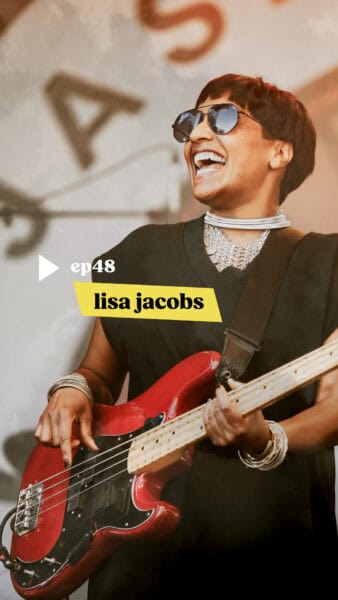
Freelance musician and multi-instrumentalist Lisa Jacobs joins me to discuss her diverse career as an award-winning bass player and a dedicated music therapist. We dive into the grit of touring, studio recording sessions, and how she balances the energy of massive festival stages with the quiet intimacy of clinical music therapy. Lisa shares her unique mindset on finding longevity in the music industry, overcoming performance anxiety, and the real definition of confidence.
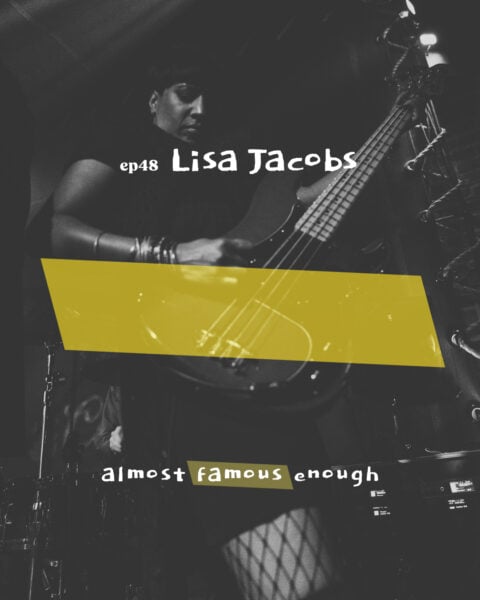
ep48 Lisa Jacobs finds little joys
released June 18, 2026
1:53:26
https://www.instagram.com/lisajuliejacobs/
Key Takeaways
hosts: Glen Erickson, Alexi Erickson
https://www.almostfamousenough.com
AFE instagram: https://www.instagram.com/almostfamousenough
AFE Spotify playlist: https://open.spotify.com/playlist/1o1PRD2X0i3Otmpn8vi2zP?si=1ece497360564480
Almost Famous Enough is a series of conversations centered around the music industry, pulling back the veil on what it really means to “make it”. Our podcast features guests who know the grind, who have lived the dream, or at the very least, chased the dream. Through these conversational biographies, truth and vulnerability provide more than a topical roadmap or compile some career advice; they can appeal to the dreamer in us all, with stories that can teach us, inspire us, and even reconcile us, and make us feel like we made a new friend along the way.
Chapters
00:00:00 Introduction
00:04:15 Catching up with Lisa Jacobs
00:06:44 Life as a Freelance Musician
00:09:42 The Dual Role: Musician and Music Therapist
00:12:43 The Power of Music Therapy
00:15:45 Connecting Through Music: A Personal Story
00:18:43 Finding Balance: The Performer and the Healer
00:24:34 Rediscovering Self: The Journey of Balance
00:31:40 Understanding Emotional Patterns
00:34:07 The Journey of a Musician
00:37:58 Early Musical Influences and Opportunities
00:41:06 The Freelance Musician’s Path
00:46:45 Finding Joy in the Journey
00:53:55 Authenticity on Stage and Off
01:00:01 The Value of Vulnerability in Music
01:03:22 Fashion Influences and Sisterhood
01:06:02 The Power of Personal Style
01:09:17 The Balance of Light and Dark in Music and Fashion
01:14:24 Confidence Through Experience
01:19:23 The Journey of a Musician
01:24:26 Embracing Opportunities and Personal Growth
01:33:04 Post-Fame with Alexi
Glen Erickson (00:01)
Episode forty-eight. The season three finale. The math has dictated sets of sixteen weeks twice a year. I didn’t make the math, just the equation. Forty-eight episodes. The previous forty-seven have featured thirty-seven guests I would consider one hundred percent active artists. Others appeared, you know, in a stage of industry or business, some having been full-time active artists previously. Yes, I’m struggling a little.
I don’t want to make hardline definitions at all, and I don’t want to exclude, but sometimes it’s necessary to get your point. And my point being, ten of forty-seven non-full time, current, etc., etc. artists have talked to us about the business, the ways they have found their way to what they love in the music business. But not one professional musician until number forty-eight. Finally.
I’m well aware that the premise of the podcast found in its name can be a two-edged sword, a backhanded compliment to some, or the perception of it, even the hint of it. And this for some feels conflicting. I was warned of it when I began. In the case of the professional musician, I mean I’ve always wondered if they, you know, landed there because they took a run at their own artist career and it didn’t work out. Or at least does that idea nag their conscience? Or are they just
worried about every time somebody brings it up, like me. But I know that’s not the primary story at all. Just like our most sports coaches, just players that never quite hit it big, it feels very undermining, right? I needed to talk about it. Lisa Jacobs is a bass player. I mean, you’ll find out she is much more than that. But for a good decade now, it’s been her first identity introduction.
To the larger mass of people her work brings her to. A multi-instrumentalist, a music therapist, but yeah, an award-winning bass player. When I was younger and less inclined to question my inherent sexist assumptions, I thought a female bass player was fascinating. Simply because it was typically a larger, heavier guitar and the strings were bigger with bigger gaps for what I assumed were.
smaller fingers, blah, blah, blah. I hope you hear the mortified apologetic self-deprecation of all those words. I’m sorry. But that’s obviously bullshit. So we move on. Lisa plays for numerous acts as the performing band in their studio work, giving creative direction. And not just anyone who hits her DMs. She is like recently sat in on such deep cut experienced Canadian stars as Jann Arden.
And Jill Barber. So what I’m trying to say is when I want to talk to a legit pro musician who didn’t go the route of selling their soul to be the rock star, but then considered that a miss, you know, that story, I knew that it was Lisa. On top of all of that, she is pure joy. Turns out that Joy was mined out of difficulty, which shouldn’t be surprising, but she doesn’t just carry a happy face or an infectious smile.
Everywhere she goes, which she does. She literally radiates joy. Like it’s high speed public Wi-Fi and everyone in her range immediately needs it. Yes, she admits to wondering if there could have been more in either path she has taken. So there are question marks in her reflection, like any of us have. But she sheds a joyous light for us on a life pursuing music as a foundation to giving her the best life and
Her in turn paying it forward to everyone she meets. My name is Glen Erickson. This is Almost Famous Enough. Thanks for spending your time with us. This is Lisa Jacobs.
Glen Erickson (04:15)
Okay, are we good?
We’re recording. Okay. Yeah, so thank you, Lisa. Like you’re in the middle of my little chaos myself here, which is that it’s like my first day of vacation and and and I and I was like telling you, I’m like, okay, I figured it out. I can like I’ve hot I’ve done an episode where I had to hot spot from my phone, which has a lot of
Lisa Jacobs (04:17)
I think so.
Yes!
Glen Erickson (04:39)
Data now the plans are all juicy. So I’m like, no problem, no problem. But then I didn’t stop to think that I’m in the Columbia Valley in the Kootenays and like the reception is shit everywhere. And I panicked yesterday, like hardcore panicked. So I literally did it. I yeah, whatever. I I found out I found where the cell tower, the TELAS Cell Tower is in town in Invermere BC, and I’m literally in a
Lisa Jacobs (05:04)
have it.
Glen Erickson (05:07)
Sobey’s parking lot across from the tower, which gets is hopefully getting me the best bitrate I can to do this thing. So but now I’m in a hot car and I had to turn it off because this stupid dash system keeps trying to take over the Bluetooth on our recording. And so I will I will survive. This is so worth it. This is so worth it. It doesn’t doesn’t even matter. Like Okay, thank you. I sincerely
Lisa Jacobs (05:24)
my gosh.
ignore the stretch the sweat dripping down your forehead starts to happen.
Glen Erickson (05:36)
Appreciate that. I’m gonna have a ring around my neck for sure by the end. It’ll look like the hardest working podcaster ever by the end of this, for sure. But Lisa, thank you so much for finding the time. I know we’ve talked about this like w last fall we were talking about this and you had a lot of life events happen and it wasn’t the right timing for you. And but I I have from the very beginning wanted to have
Lisa Jacobs (05:44)
you
Glen Erickson (06:05)
what I consider and we can talk about this, a career musician, right? on the show, and it was always you. Like you were the one I always wanted. So so we can talk about that label by itself too. But
Lisa, you are back in Calgary. That’s your home base, though I’m sure your life takes you all over the place playing music. You said you were just in Montreal.
Lisa Jacobs (06:30)
Mm-hmm.
Glen Erickson (06:31)
Curia
what was in Montreal? Was it work? Was it fun? Was it family? Is that where your sister
Lisa Jacobs (06:35)
was a vacation.
So my sister and I took our mom on a little girls trip. She’s never been to Quebec. So we went to Montreal and Quebec cities. So I just got back from vacation.
Glen Erickson (06:44)
I love it.
okay, perfect. So
I I wanted you on to talk about life as a musician because I’ve been primarily talking to artists, people who would identify right as artists, like the people who
are making the music and trying to make the career under their own name or in their band name and that sort of
Very understandable, very typical version of when I have this concept of people who like are trying to find a career in music or chasing the dreams that they had when they were young and what that ends up really looking like. And I’ve talked to industry people of all kinds. I’ve talked to the publicists, I’ve talked, you know, to you know, people in management and and people booking. Like I wanna talk to everybody and and my first introduction to you
you know, which is what I think you do a l f for a majority of your time, which is slinging bass for for other people, right? And and so our first introduction I think was well let me put it this way, like our first introduction was you playing for Kyle McKearney in the last installment of Project Wild, I think. as in like saying
Lisa Jacobs (08:02)
Mm-hmm.
Glen Erickson (08:06)
Hi, my name is Glen, kind of introduction. But I knew who you were before that because you’ve been playing for so many people in the country music community and for some things I saw with incredible producer and guitar player, musician Russell Broom, who also lends his skills out to a lot of different people too. so that’s kind of how I had my introduction to you. But I know that you sort of split your
Lisa Jacobs (08:17)
you
Glen Erickson (08:34)
career in a way as you are also a music therapist. So how do you
think about yourself as far as your career and being a musician? How do you how do you come at it? How do you talk about yourself to other people?
Lisa Jacobs (08:52)
Yeah, okay, so I would describe myself as a freelance musician. I, and I’m also multi-instrumentalist. So bass is my primary instrument and also what I went to school for. But I also play piano and guitar and I’ve gotten to utilize all of those instruments in a bunch of different capacities. And so,
Glen Erickson (08:56)
Okay.
Lisa Jacobs (09:12)
Currently right now, I play bass for a lot of different people and I’ve done that since I started playing bass when I was a child. And I’ve also had artist projects. I had an artist project called Jocelyn and Lisa and I played all three instruments and produced our little record and Jocelyn went on to have a really cool career and I music directed her band and played in her band and one of the songs we co-wrote together went
gold in Canada. That was years ago. And so I’ve done a lot of touring and that’s Jocelyn and Alice. Yeah. Yeah. She had her biggest hit was called Jackpot maybe 10 years ago or so. I’m not sure. And so I play music.
Glen Erickson (09:47)
That’s Jocelyn Alice for those who are wondering. Jocelyn Alice. That’s her like that performance name. Yeah. Okay.
Yeah.
Lisa Jacobs (10:05)
perform and record in the studio and music direct. And then I also, got my degree in music therapy. And so I work for this incredible company in Calgary called JB Music Therapy. And I’ve been working with them since I graduated from university, but I work as a contract physician and I have this sort of like magical relationship with them where Jennifer Buchanan who owns the company just sort of believes in me as a human. And so
She sort of just like watched my career as a musician and then also see what I do as a music therapist. And so she just kind of lets me take on the hours that are gonna work for my particular schedule. And it sort of really depends on how much touring, how much I’m in town in a way. And so I’ve managed to sort of like piecemeal a bunch of things together that really mattered to me. And it’s funny, I have always kind of just wondered if I would have…
gone further if I’d focused on one thing at a time. then, you know, if I’d just gone all in on music therapy or if I’d just gone all in as a bass player. And I think I probably would have when you kind of like single-handedly focus on one thing, who knows? But what I do know is that somehow my heart knew that I needed to be able to do both. I love being a performer and I love engaging in music in that way, but also…
Glen Erickson (11:28)
Mm-hmm.
Lisa Jacobs (11:29)
Being a music therapist has put me in contact with so many different kinds of human beings experiencing so many different kinds of challenges. I’ve worked with babies, I think my oldest client was 102, and I worked in the school system with kids with disabilities and autism and Down syndrome. I’ve worked in rehab centers.
Glen Erickson (11:43)
Wow.
Lisa Jacobs (11:53)
for people with acquired brain injuries. I worked in a maximum security prison in forensic psychology for a while. I’ve worked with seniors with dementia and youth at risk and all kinds of humans, women with multiple sclerosis who have lived these full lives and then just end up in a long-term care facility and can’t do the things they used to do before.
Glen Erickson (12:08)
Well
Yeah.
Lisa Jacobs (12:20)
have found music to be a way to connect with all of these people and allow, and so I am so fortunate to be able to kind of like have these multiple worlds and be able to use music in multiple capacities, which I think, you know, who knows how we know anything about ourselves really, but somehow I managed to figure that out and have been able to do both things for myself. like.
Glen Erickson (12:44)
Well that’s
Lisa Jacobs (12:47)
You know, I think at the end of the day, like, perhaps my ambitions on either, in either place haven’t gone as far as I really would perhaps wanted them to, or perhaps the world tells us to, but the combination of both and really getting to be able to be myself in both realms and then feed each other has really created a full life for myself. Which, I mean, what more could I really ask for?
Glen Erickson (12:48)
Yeah.
Mm.
Yeah,
well, a hundred percent. And like you’re well, this is the thing. Anybody listening to this is gonna figure out what I already knew, which is like you have the the best energy of almost anybody you get to meet on the street, period, let alone in this business. somebody who’s seen it all and still kind of carries that level of enthusiasm and optimism in their life is like incredible. But I wanna get to the I want to get to this concept.
I I love the way you just said it. I want to get to this concept of like go as far as maybe I could have or should have, or what go as far means. But before I get to that, can you like I know it probably is a lot of different things, but can you sort of in a nutshell break down then what music therapy is? Cause you just listed off like so many different places, which I I get the common thread, right? Is that you’re going into places where
Yeah, people are in difficult situations. They aren’t in like normal, regular sort of like self-sustaining, self supporting life situations. They’re incarcerated, they’re dementia patients, their long term care, their MS, their children with different things like so how does music therapy play into that or what do you bring to that and to those people? Like what like literally what are you bringing? Are you
Lisa Jacobs (14:27)
you
Glen Erickson (14:37)
Just showing up and playing them some songs. I’m I’m trying to like think through what my stereotype might be in my mind that I’m like making a random guess. but I’d love to know a little more about what that is.
Lisa Jacobs (14:42)
Mmm.
Yeah, sure.
So essentially music therapy is the study and practice of how we can like use music to accomplish specific goals. physical goals, cognitive goals, emotional goals, and a music therapist will go in and tackle some of these things, but using music as the angle in. And so music is stored in all aspects of your brain, which is like what’s very, very unique for it. And so
Glen Erickson (15:15)
Yeah, yeah.
Lisa Jacobs (15:18)
So like a physical goal for someone who maybe had a stroke and has lost mobility or is experiencing an injury or something, and they have to do sort of like repetitive physical rehabilitation. Well, just doing exercises can sometimes be rather unmotivating, but hitting a drum has a purpose and serves like sort of a function outside of just exercising and rehab.
It’s fun and it hits all these other centers in our brain that makes it a more enjoyable thing to do. And so we’re achieving a physical goal, which is to rehab the arm, but using a drum as the sort of like motivator. And then, I mean, people who have played music, songwriters or whatever, like…
Glen Erickson (15:51)
Mm.
Lisa Jacobs (16:07)
we’re using songwriting as a way to express and to write. And so as a music therapist, I might facilitate songwriting sessions. And the thing is, that you don’t have to be musically inclined to be able to engage in music therapy and it’s finding a way to take music and have it access all sorts of people. like sometimes I will take in songwriting sessions, people might just brainstorm words or ideas and then I, and they might tell me like a genre that they’re interested or if they want it slow or fast or whatever. And then
I might have an acoustic guitar and I will take their words and create it into a song and then play it based sort of on like whatever genre preferences they choose. And sometimes we are communicating using yes or no, or using like little like picture cards or depending on what their ability to communicate is. And so I’m constantly trying to figure out ways to like interact and connect. And connection is kind of like a through line for me in.
whether I’m performing or I am a music therapist. I’m always searching and seeking for that. And then I have a carload full of accessible instruments, tons of percussion instruments, little djembes, maracas, and shakers. And making music is so fun. I know that I’ve watched, I mean, part of the reason why I became a music therapist is because I didn’t always have words as a means to express what I was going through.
Glen Erickson (17:07)
Mm, mm-hmm.
Mm-hmm.
Lisa Jacobs (17:35)
playing piano for hours. Like I used to skip school and high school to play piano for hours just to deal with my life. And so I kind of like have always wanted to find a way for people to connect to that sort of like.
to that sort of like energy and like ability without, know, can deal with part of their lives without having to have the ability to speak it out. And so I’ve like all these instruments and like sometimes we just play music together. There’s something so incredible about sitting beside someone and not speaking to them, but being able to like communicate and listen and interact with just instruments, right? And so the same kinds of things that are happening in a band, I am just trying to facilitate this for people that
Glen Erickson (17:53)
Yeah.
Mm.
Lisa Jacobs (18:19)
might not be able to have a band experience. like, I will take that bag of instruments in and might have like a whole bunch of preschoolers and there is so much interacting and learning that’s going on, like patience and waiting your turn to play, listening, non-verbal cues, all these kinds of things that we need in real life and we need to learn in real life and have in real life.
Glen Erickson (18:43)
Mm.
Lisa Jacobs (18:45)
you know, managing even disappointment when you don’t get the rad drum that you wanted to play and you have to play shaker instead. Like there are so many meltdowns, but that’s a part of life, you know, not always getting to do what you want. And so the instruments are, and the music is there to kind of teach us. And it ends up being like the music making is the motivator and it is the reward. And so that is part of like, yeah, that’s just like a little, I mean, that was not a little synopsis of what I do, but that’s just sort of multiple pictures.
Glen Erickson (19:08)
Mm.
No, it was because I know how
I know for you that must there’s a lot, right? So no, I think that’s amazing. Okay. So tell me this one, ’cause my dad is diagnosed dementia. Our family’s kind of going through that journey with him right now. And, you know, the last four to six months have been kind of a real drop off point, like a noticeable one, like where most people go through those stages. So I I just have a great
Lisa Jacobs (19:18)
Yeah!
Glen Erickson (19:42)
Personal curiosity. How how do you use music therapy with a dementia patient?
Lisa Jacobs (19:49)
Well, like I said, because music is stored in a lot of different places, it’s stored in memories, but also in your emotions. so a lot of times singing familiar songs from like sort of like peak emotional times. like from our teenage years to like our mid twenties, like right around that, we really developed strong associations to stuff, especially music. And so, I mean, if you ask people, like usually their favorite band is from that era.
Glen Erickson (20:13)
Mm-hmm.
Lisa Jacobs (20:18)
of their life, the music they’ve most listened to, most know. They can like sing a guitar solo from a record they…
Glen Erickson (20:24)
It’s our it’s our
classic rock, right? Whatever that era was.
Lisa Jacobs (20:27)
whatever that era was for you, yeah. And so for people with dementia, I’ve had many experiences where they can’t remember their family member’s names anymore, which is very difficult to watch some people go through. But they can still sing songs and they still remember songs and it sort of brings up parts of who they are, they can remember parts of who they are, they have.
Glen Erickson (20:44)
Okay.
Lisa Jacobs (20:55)
These connections that maybe aren’t held here, but are held here that are still able to happen. So I’ll tell you a story really early in my career, actually, when I was immediately out of school. And I didn’t spend a lot of time with seniors, I didn’t really have grandparents, but I was working in this palliative care center. And there was this guy who was so vibrant and so full of life. And he was palliative care. And he was this vivacious man. And one of his favorite songs to sing that he would always request was, Me Out to the Ball Game. And he would have been.
maybe in his 90s or his late 80s. And over time there was just a decline, decline. And I’d come in one week and the nurses kind of warned me that he was like, it was coming to the end and his family was there. His mother and his, or not his mother, his wife and his daughter were there. And they had asked if we could do a little private session together because we’d been doing group sessions with the residents. And so his wife and his daughter and I,
Glen Erickson (21:24)
Mm-hmm.
Mm.
Lisa Jacobs (21:53)
We sat and the man who was like so full of life and so outgoing was just like really slumped over in his chair and just so not there. And,
I just started playing and I was like, actually his favorite, and we’ve been talking with it, I’ve been talking with his family and told him, his favorite song to sing for the last couple months has been Take Me Out To The Ball Game. I’m like, so we just started singing it. And I watched him lift up his head slowly and then kind of come and you saw the light, we all saw the light kind of come back in his eyes and then he just started singing along with us. And the four of us sang together.
Glen Erickson (22:19)
Mm.
Mm-hmm.
Lisa Jacobs (22:32)
And then we kind of like finished and then he went back and it ended up being, I’m sorry I’m telling a palliative story to you right now while you’re in the middle of going through all of this.
Glen Erickson (22:40)
No,
no, no. I asked the question. It’s completely fine, Lisa. I love it.
Lisa Jacobs (22:46)
And so we ended up having like this beautiful moment, this beautiful connection. We got to see this man in the way that he was for his whole life instead of who he was just right now in this moment. And I came back the next week and the nurses had told me that he had passed away later that day. And that was sort of like the last and his, their daughter had called to let me know that that was kind of,
Glen Erickson (22:56)
Mm.
Wow.
Lisa Jacobs (23:15)
her last moment with both of her parents because her mom passed away a few days later and that like moment while we were singing together
Glen Erickson (23:21)
wow Wow
Yeah, the last
family, everybody really present, right?
Lisa Jacobs (23:29)
was this really special like connected moment between them, between the three of them. And so, I mean, I don’t know what to do without any of that really as like a human, but I do know that, I do know that like we found a way to connect with each other and music was the path.
Glen Erickson (23:48)
Yeah.
mean you just said like I don’t know what to do with that as a human, but
I can only guess that in like quieter moments things like that have to like bubble to the top of like have I made a difference? Am I you know what I mean? Like what am I doing in this life? Like things like that have to make their way up and remind reminds you pretty quickly, like
Like you know, like did you you ha I have something like this thing happened. Like I was there, that can happen again. That’s just that’s pretty incredible. I think that’s really incredible. I would yeah. Those are great things. Like I have I just say it that way because I know there’s moments in my life that I know that I’ve been there to facilitate something for other people. And until I’ve gone through those moments, right? That kind of level of connection.
Lisa Jacobs (24:34)
you
Glen Erickson (24:43)
I can’t imagine not knowing what that would be like now, as if like my whole life was just there for me, rather than have things that I now have in my experiences that I know
were for others. And and that the outcome was more important for them than it was for me, right? To for to take away feels pretty special. so you feel
I did a little research on you, Lisa. I I did you you’ve done some interviews and some things before. You’ve talked to some people about your life and career. So I had read somewhere where you had talked about this balance. You had indicated a little bit before, the balance between this performing musician, primarily bass player, but and then the music therapy is this sort of balance of personalities inside of yourself and that balance of like
Lisa Jacobs (25:16)
. .
Glen Erickson (25:41)
what I sort of get to be
in control of versus, you know, and I’m doing what these other people need all the time, is that
Just because I don’t remember how old that article was I read, but is that still sort of the feel like the path you’re on that you’ve you keep these things that sort of like balance each other out, like they’re serving a different purpose inside of you?
Lisa Jacobs (26:06)
I think so. I think I just showed up on this planet always seeking equilibrium no matter what the situation has been. And that’s just what my heart is really hungry for. And so I think I love the large big moments. I love performing.
I actually discovered this during COVID, which is very embarrassing to admit, but I was like, I really like when people clap for me and I missed it during COVID. And I was doing this like online show and there was like three people there, cause it was like the videographer and the sound technician or whatever. And they clapped after we played a song and I was like, Like I missed the applause. And so, I mean, no one really wants to admit that they liked that kind of affirmation, but like,
Glen Erickson (26:48)
Thank you.
Mm.
Lisa Jacobs (26:58)
I’m just like, listen, why else would we do the scary thing of like standing in front of people, playing our songs, you know, even though like our original songs that like share our emotions about things and like put ourselves out there where we might make mistakes and people just stare at us. Why would we do that unless we needed like, unless we wanted someone to clap for us really. There has to be a reason, you know, like I’m like, that’s one of the motivating factors for me to get over my nervousness, you know, but
Glen Erickson (27:01)
my goodness.
Yeah.
Yeah, that’s kind of funny.
Lisa Jacobs (27:28)
But then there’s this like…
Glen Erickson (27:28)
Well, you know how many people
have said that first that first song is the thing that always gets a performer over their nerves usually, right? It’s yeah, the people respond and you’re like, Okay, I got this. I’ve done this a hundred times, whatever. So yeah.
Lisa Jacobs (27:42)
Totally, totally.
And then there’s this other part of me that I love the quiet. I love helping people. I like to understand people. I’m curious about how humans work and how to reach them. and the thing is though, is that like,
Glen Erickson (28:02)
Mm-hmm.
Lisa Jacobs (28:05)
That’s who I am as a performer and also who I am as a music therapist. And they show up and look a little bit different, but they feed into each other in really special ways. And they have informed each other. So like so much of who I am as a music therapist has been informed by who I am as Lisa the bass guitarist and the multi-instrumentalist who plays on records and all these things. Like it has shaped and created sort of a special niche in how I do and approach music therapy. And likewise on the other side.
Glen Erickson (28:33)
Hmm. That’s pretty awesome. I mean, so like I think that sometimes I I think that sometimes I mean I don’t know how old you are, I’m not even gonna ask, don’t worry. but there’s a version of ourselves like, you know, teens into twenties. Everybody probably has more extrovert on on the personality test show up.
Then is probably true just because it’s the height of our socialization period for a lot of people. but you know, and then it sort of like thins out and really find itself to be true by the time people are at the end of their twenties and going to their 30s. But I’m also learning at my age like that can actually change too. Like you aren’t a hundred percent the same thing your whole life, right? So, and you’ve been doing this a little while now, like this
I’m wondering if you feel like you get to exercise these dualities inside of yourself and they’re not that far apart and they feed each other. I mean, I love how you just described that actually. Have you felt like over time that balance has shifted or changed one way or the other?
Like you need more of the quiet now or you need more Well, let me put it this way too. Let me just quickly throw in the fact that the pandemic four years really messed everybody up d too. Cause even if you were like, Yeah, I’m at a stage of life where I need a little more quiet. Well, like nobody wanted that much quiet. all of a sudden and that much isolation. But yeah, ha has you have you felt a change in that shift, or have you just felt like you just keep getting to know yourself better and how to
How to do it.
Lisa Jacobs (30:27)
I actually don’t think I’ve changed as far as that particular introvert-extrovert balance is gone. I think my understanding of how it affects me has grown a lot. even when I kind of like look back at who I was as a child, I have the same tendencies as I do now. that it, and I really discovered it. I mean, I’ve been discovering basically the same thing about myself.
all the time over and over again. It’s kind of like what we’re not discovering anything new, we’re just rediscovering all the old things in new ways, I think. But I had taken like many years ago, I had taken this like, you know, quiz, personality test or whatever. And usually when I take those things, I always sort of like come out like.
Glen Erickson (31:07)
Yeah, yeah.
Lisa Jacobs (31:12)
just this really weird balance of everything, always. I’m like, am I just constantly gaming the system? Because you you figure out a pattern when you take the test, because why does everything come out pretty close? But I had done this one that I didn’t know how it was gonna work, and I didn’t even know what the test was really for. Anyways, it revealed at the end that I was 50 % extroverted and 50 % introverted. And for whatever reason, at that time,
Glen Erickson (31:23)
Yeah.
Lisa Jacobs (31:40)
that just hearing the percentage and the number really just like resonated with me. And I started to realize that oftentimes when I feel down or kind of like depressed or just moody or whatever, or just actually really down on myself as a human, it’s not because I actually am depressed, it’s because either I’ve been spending way too much time with people or I’ve been spending way too much time alone. And the antidote for my sadness
is actually quite easily redeemed by actually calling a friend and going for coffee, or by canceling plans and just staying at home and not talking to anyone for an entire day, which I’d already been doing since I was a kid. I was the kind of kid who would, sometimes my friends would wanna be like, you wanna hang out and go play tennis or do whatever, hang out, and I’d be like, actually, I’m just gonna like.
Glen Erickson (32:28)
Mm-hmm.
Lisa Jacobs (32:36)
stay at home and read a book, but I never told them that because that sounds so nerdy. So I’d be like, you know, like whatever, but I’d be sitting at home by myself reading a book, even though I had all these friends I could go play with, right? And that’s been very typical, but I think that the older I get and the more years I’ve just had practice at seeing like the routines and the different like patterns that have showed up that I think just the awareness and understanding of that itself has helped me tackle.
Glen Erickson (32:44)
Yeah.
Lisa Jacobs (33:06)
Tackle things that maybe aren’t so deep. know, like, actually I’m not depressed. It’s just that twice a year, I go through a desert period and I’m quiet and down and I just feel really sad. But that’s because I spent so many years watching November and February be really dark months for me. And it’s actually like, I just like let it be that instead of giving it tons of power. just, I’m like, I’ve lived a little really external life and now it’s time for me to be.
Glen Erickson (33:10)
Yeah. Yeah.
Mm.
Lisa Jacobs (33:35)
I’m kind of a piece of shit. So I just like let that happen for a couple of weeks.
Glen Erickson (33:40)
Good for you.
well self-realization is always beautiful. I think that’s really cool to hear. And I think a lot of people are doing a lot of things to try to figure out that kind of information in their life. So that’s pretty that’s pretty cool to hear. You so you being a performing musician, multi-instrumentalist, obviously I feel
I don’t know, would you call yourself do people throw the term studio musician in there as much as performing musician, or we just try to lump it all together or do we try to distinguish them? I know that you do both. so you’ve played on a lot of people’s records. obviously, like I said, like I know that you’re a part of Kyle McKearney’s touring playing band. I I’m assuming that you’re also playing on his albums in the studio. is that a correct assumption? I think so.
Lisa Jacobs (34:36)
Yeah, that’s true.
Glen Erickson (34:37)
I know you’re really well connected with Russell Broom, who’s so well connected in the music business too. And I’ve just obviously through socials I see it pop up that’s something he posts, and then I just see Lisa on her bass in the background bopping along. So you know it but I I fail to know exactly who like you would quote unquote call your roster right now. I and I I’m sure that you’re on call to a number of different
people that you are willing to like work for or play for. I know you have a standing kind of gig with the Calgary Stampine Grandstand, which is is just amazing, larger than life show. and and you’re the bass player for that. I know that you did like a long touring stint in the musical We Will Rock You as the bass player for a long time. And like that’s gotta be a pretty amazing gig to have done. Like that’s a
pretty grueling maybe even too like the scheduling and all that and but then just a lot of this playing for different people. So I wanna get to where you maybe lay out what that actually is for you right now. But but I wanna go back a little because I want to know how you got to where you are right now. And and here’s one of my things, right? Is that I I think there’s a lot of people who would be musicians who might like, you know
Have started playing for other people, all that kind of stuff. Like there’s so many different paths to this, right? And for a lot of people, like for me, for example, I was playing guitar. I always had the dreams of being the rock star as if it was like mine. I started writing songs before I knew how to play the instrument, but they were in my head, the melodies and the words. And when I started to play an instrument and I play guitar, and then somebody asked me to come like play in a band, that’s always the dream.
Right? Like that’s what you want to have happen. Someone asks you playing a band. Hopefully they’re cool. maybe you find out they aren’t cool and you find somebody else to go play with. You know, and I remember for me playing with like three different sort of people who were trying to make it around Edmonton. And I was like the hired guitar player, right? Like sometimes those guys would have to do like solo or duo shows as it as is so normal. but under their name I was kind of like
you know, spend two, three years as a consistent guitar player before I landed the guys that became my band and it was an us thing. And that’s the path for a lot of people. And so, but I’m curious what your path was. I know you got started playing music early. You were like, if the internet isn’t lying to me, you were playing with your dad in blues clubs or something at a very, very young age. I so I’m curious kind of how you
Obviously picking up and playing music early, having musical influence and family opportunities. How did that translate into was it like step by step to bigger opportunities, like in a pretty linear trajectory, or was it all over the place? How do how does Lisa get to who Lisa is right now?
Lisa Jacobs (37:58)
Hmm. So yes, I did. I started playing music when I was three. think piano was my first instrument. And then my dad’s a musician and I had discovered a bass guitar in our basement and was curious about that when I was about 10. I still play that same bass. It’s a 78 Fender Precision. My first bass since my baby. And then…
Glen Erickson (38:18)
wow.
Lisa Jacobs (38:25)
When my sister was 11 and I was 12, my dad kind of just like decided we were going to be in a band with him playing. And we’ve done some playing before, but then we played for the Calgary International Blues Festival and we were like on TV. And I played my first stadium show that year at Mawada Stadium that no other exists in Calgary. And I got paid and I was like, whoa, this is amazing. But also, you know,
Glen Erickson (38:40)
Wow.
Lisa Jacobs (38:52)
playing music with your dad has its own sort of challenges, but the nepotism was amazing. so that in and of itself created a lot of just like opportunities. And then I also played at church, which when I was young and still went to church and that created just.
Glen Erickson (38:58)
Mm-hmm.
What a what a training
ground, right? That’s like the best training ground, yeah. Yeah.
Lisa Jacobs (39:12)
Very much so. So many musicians learned from there.
And yeah, I was very, very fortunate. And I was the music director at one of the churches that I was at. And so I think that honestly, I would just go places and show up and play and people would see me. The music industry is super word of mouth. And so for a long time, that was very in-person.
Glen Erickson (39:36)
Mm-hmm.
Lisa Jacobs (39:39)
and then the internet showed up and you could post videos of yourself or whatever and so that sort of like kind of happened and people would just see me places and I would just kind of get gigs from that and sometimes those gigs would repeat a lot for a lot of years and then sometimes I wouldn’t be the right fit for a band or a project or whatever and it would move on but I did really consciously make a choice to be a freelance musician and not commit to any projects.
for a really, really, really long time. actually, and so I was like, I’m like a very loyal person, but making a commitment to say I’m gonna be in a band was really challenging for me, actually. I love the freedom and the diversity of doing a lot of different things. I love playing a bunch of different genres. I actually love playing in a lot of different kinds of places. So like, I still love coffee shop gigs. I still love sometimes, I still love like a,
Glen Erickson (40:11)
Mm-hmm.
Lisa Jacobs (40:37)
a corporate gig, don’t play them very often, but I kind of like love being in background music once in while. And then I also love being on huge stages and I love playing quiet shows where everybody’s listening to every single thing that you’re doing. know, like I’ve always just sort of liked a real variety of genre and styles of gigging. And so I kind of like didn’t really commit to a lot of situations. And so that was kind of like how I built my world. And then I did
Glen Erickson (40:52)
Mm.
Lisa Jacobs (41:06)
a project Jocelyn and Lisa and that was sort of like, you know, we like booked all the gigs and you know, sometimes we were like doing putting the PA system up and I made the t-shirts and made the posters and like, you know, we had to figure out all we did all of those sort of like guerrilla style things that people do and figure out how to market ourselves and all of that stuff. it was it was super fun. And I also really enjoyed that. But my heart is like
Glen Erickson (41:19)
Mm-hmm.
Lisa Jacobs (41:36)
I love finding new ways to connect with people. so like part of being a freelance musician is really, it’s like this weird thing where like I’ve hired for a gig. Like I was playing these classic albums live shows and they’re like based out of Toronto, you learn records note for note and then just play them. And so I was learning like these Zeppelin records and the guys in the band had been playing together for like 20 years.
Glen Erickson (41:55)
Mm.
Lisa Jacobs (42:03)
And then they just like hire the bass player. Like they decide to hire a local bass player, which is me. And you know, my friend Rish Shimizawa, he had recommended me for it. Anyways, I get on stage at the Jack Singer, meet these men, run a quick sound check and like we run maybe one or two songs barely just to make sure everything’s good. But literally on this like Jack Singer, it’s like a huge concert venue and it’s a sold out show. And like, I just have to be able to like connect and play with them.
and perform and make it feel like we have been playing for an eternity together. And that is a crazy ask. But I have done that in different kinds of capacities my entire life. And I love the challenge of that. It makes me learn music in a different kind of way. It makes me pay attention in a different kind of way. then when you’re like super rehearsed with the band, there’s like…
Glen Erickson (42:37)
Yeah.
That is crazy.
Lisa Jacobs (42:56)
Yeah, there’s just something else about that. And I like that challenge. And it’s crazy. It feels like so nerve wracking. But also, there’s a part of me that really craves that sort of wildness and challenge. So.
Glen Erickson (42:58)
Yeah.
Yeah, I think
I mean you’re expressing it as crazy, and I’m glad that you are, because sometimes a musician who’s comfortable with it would down would downplay what that is. Cause I think anybody listening who has even just touched a guitar or a an instrument would know how crazy that is that you would just go off and learn a thing and then show up with strangers, barely rehearse and expect that
That you’re gonna have this. And we’ve heard about it and we’ve seen it, right? Where like someone just steps in with the band, whatever. And but like that’s so that is so crazy that you would go, and then but I love that you framed it, which is the musician’s mindset of like, I’m gonna trick people into thinking that we’ve been playing together for 10 years. Like, because it’s not just like whether you play all the notes correct, it’s the way you play off of
Lisa Jacobs (44:05)
Mm-hmm.
Glen Erickson (44:07)
the other people to create the feel not just for how the song is supposed to feel, but how that group is supposed to feel. Like that’s the nuance of a musician, which is really next level. So thank you. You just subtly confirmed that you’re an absolute next level monster bass player for us, without having to say the words yourself. You see you did it perfectly and I’m happy to confirm it for everybody. I’ve seen it. So
Lisa Jacobs (44:12)
You You
You
Glen Erickson (44:38)
The other thing that’s interesting me in all of that stuff that you were just saying right there is y your ability to sort of do these things that you learned and your love of the diversity. I mean, I always I always think of like when you choose to be in a band, like a band, I’ve called it a marriage before, I’ve called it a family. Like there’s sort of like these similar dynamics that happen between people.
in things that sort of reflect those other sort of interpersonal relationships that that we all know. so I was dying for you to say you were like a non-monogamous musician because you won’t you won’t commit to everybody and you love all the different connections with different people and you just want to explore that. But that’s like I mean that has to be the essence right there of why you do the thing you do right is
Lisa Jacobs (45:20)
Okay. Okay.
Glen Erickson (45:33)
I mean, because going all the way to the very beginning, when you said, you know, maybe I haven’t taken either one of these things as far as I could, you know, and
and what that necessarily means, or I guess because we all define success differently, and that sort of hints towards what your sort of have a perception of what like the highest levels of success could potentially be that you could reach in your life. But I think we all know that.
The story is for a lot of people, the highest level of success ends up not being what we either thought it was, because it’s a picture in our mind that we’re just trying to see if we can make real. Or a lot of people have told a story about how they get to whatever that picture was and then they aren’t necessarily that happy. but the way you express joy in being able to connect with so many different kinds of people in so many different kinds of rooms.
in so many different opportunities and places. definitely sounds like you’ve found kind of a constant source of joy. Is that an accurate way to put it for you?
Lisa Jacobs (46:45)
Ooh.
Oh, I love that you brought that up. And it’s so funny because I was thinking the word joy right before you were saying it. I…
I’m a seeker of small joys and I have been cultivating that since I was a little kid where I will just find beauty and joy in tiny little things and the accumulation of that brings joy for me. And so I think, I think the world is weird, life is weird. Things are not always easy. You know, I had a fairly tumultuous childhood and
Glen Erickson (46:59)
Mm.
Yeah, yeah.
Lisa Jacobs (47:24)
Life is like always kind of like this. And I sort of knew that seeking happiness was like maybe futile for me because life is happening and not everything in life is happiness producing. But I knew that one thing that I could have control over was being able to find little joys and have that sustain me.
And so I’ve just been like doing that. actually, one of the things that happened when I was a couple years ago when I was charting a bunch of songs, I had all these gigs and all these things and like outwardly to everybody else, it looks like I’m doing like a lot of stuff and like really succeeding and I am. But I’m at home and I’m toiling over charting all these songs and I hate everything and I don’t feel good and I’m like so sick of this music and blah, blah, blah. And I was just like,
miserable, but I’m just doing the job and like trying to show up for the wonderful life I’ve created for myself, but I am in pure misery while I’m trying to these songs I’m so grumpy and I just had this epiphany I was like I can literally be doing anything and be miserable at it and be making actually way more money. So but I chose this life and I’m like why do I want to be miserable at it while I’m doing it?
Glen Erickson (48:31)
Mm-hmm.
Lisa Jacobs (48:50)
the things, like I have to learn these songs because that’s the only way I’m get to play them and be good enough to be able to play them. I have to like do the process of like learning them, which is sometimes not that fun. You just wanna be able to play and play with people like, and playing bass guitar at home alone by yourself isn’t fun. Bass guitar is a relational instrument. It is way better when you play with other people. And so, and I grew up playing in relational ways, you know, like I didn’t spend my entire childhood playing and learning an instrument quietly in my room.
Glen Erickson (49:01)
Mm-hmm.
It is, yeah.
Lisa Jacobs (49:20)
learned on stage with humans. And so I have a hard time just like struggling away. But back to the joy thing, I kind of just looked at it and I went, I need to find a way to find tiny amounts of joy in every aspect of what I’m doing. I don’t have to love it all the time, but like, I don’t, I want to be sitting here at home working on these songs by myself playing along to the record. Like I need to find joy in this moment. And so it’s been like,
Glen Erickson (49:34)
Yeah.
Lisa Jacobs (49:48)
a really strategic practice of mine to do that because I don’t want to live a miserable life. But misery loves to just show up and it’s okay. It’s part of like how things are happening. But I want to have like at least a tiny bit of an ability to exert some control over that. And so if that means that while I’m charting out these songs and then I have to learn them and I have to work hard at them that I can close my eyes and remember
Glen Erickson (50:00)
Mm-hmm.
Lisa Jacobs (50:16)
how much I love the music instead of my duties as a musician, which I have. And like, sort of have this like, I have this idea, like I’ve given a lot of talks to young people and I think that in the world that we currently live in, there’s this like, kind of like idea that if you find something that you love to do, you’ll never work a day in your life. And like, that sounds so magical and it’s like, totally not true at all.
Glen Erickson (50:21)
Mm
Yeah, it’s such
a it’s such a Disney theme.
Lisa Jacobs (50:47)
And I’m just like listen like that is so unrealistic and so much pressure to put on anything and I’m like I I have the like Lucky fortune of being able to do something. I love and I am passionate about as my job But also like it’s my job to like not every single thing that I do makes me happy I got to do a bunch of things so that I can eat food, you know, like
Glen Erickson (51:14)
Yeah.
Lisa Jacobs (51:15)
And that’s in anything that you do, when you have to do to be able to sustain your life, there are costs to that. There are sacrifices to be made and hopefully more and more of it is stuff that you really love. But here’s the truth, is I have watched people hit awesome success and they still hate some of the things that they have to do even when they are radically successful. And I have been playing shows that I dream to play and
Glen Erickson (51:26)
Mm.
Lisa Jacobs (51:44)
on stages that I’ve been dreaming about my whole life. And you know what I don’t want to do some nights? Put on makeup and go on the stage and like have to show up. You know, I don’t want to do it even though I’m, it’s literally my dream. And so I think that, wow, I just kind of went off on a really random tangent, but like, but like, yeah, so like the hunger for me is always just to like,
Glen Erickson (52:05)
No, I love it.
Lisa Jacobs (52:11)
notice small things and like delight in it. And so I’m doing that on stage. Sometimes I do not connect or enjoy the people I’m playing with. Sometimes I love it. Sometimes I don’t. Sometimes the audience isn’t that fun to play for. And so in those kinds of moments, instead of like not enjoying myself, I’m finding whatever it is that I enjoy. And sometimes it’s just like
in the notes that I’m playing and the way that I play them and express them on my bass. And I’m just like re-falling in love with my bass. Sometimes when I look out and just see the way people connect with music, that fills me with joy. And then sometimes it’s like, on stage is doing something that is so incredibly sick or me and the drummer have a moment where we do the exact same thing at the exact same time. And there’s just like these connections. And I’m like, that feeds my soul because I will say like,
Glen Erickson (52:41)
Mm.
Mm-hmm.
Lisa Jacobs (53:08)
pretty smiley person on stage. And someone was asking me about that once. They were like, how is it that you’re smiling all the time? And I’m like, here’s the truth. It’s like, I don’t always like love every moment of the things that I’m doing. And so, but I’m like, I never want to smile on stage and have it be fake. So I will find something that I love no matter, like, you know, and I’ve played gigs where I have been just like so sick.
Glen Erickson (53:10)
Yes, you are.
Lisa Jacobs (53:35)
and or have gone to like the hospital like literally after the gig was done and and have to smile through it because there were things about whatever I was doing that would bring me like that kind of like sustainable quiet joy and I hunt them like crazy person.
Glen Erickson (53:47)
Okay.
That’s a that’s
my god, that’s so amazing. you know, Lisa, I was I kind of wanted to ask you about that, but I didn’t know the right way to ask it without sounding like a dick. because like, how do you ask somebody like you are one of the most effervescent performers I’ve been able to like meet and observe consistently because it’s not just been one performance.
Right. Like you bring the energy every single time. And I get it. Like some people are this is part of being a professional musician or professional performer. Right. Like I even think to like grand old Opry days, right? Like those people, like they showed up every time. They have this sort of right. Like they put on the uniform and they’re away they go. and so there’s an element where like maybe I could believe that’s true for you a little bit because you’re such a professional and you’ve really learned it.
But but I’ve seen you offstage. I’ve seen you just with your friends. I’ve seen you just in setting up for a rehearsal. I’ve seen you just in the hotel rooms after. And it’s the same person to me. It’s the same person, right? That I see in all of those situations. So I have to believe, yeah, it’s more than just I’m a really good performer and I can, you know, every room and every night I can convince people that.
that I absolutely love what I’m doing right now or I’m not feeling like I need to go to the hospital and and trick people. But like, so that description is not only just incredible to hear, just to understand you better, but I think just even inspiring as a musician to think about that level of engagement and dedication with knowing where the value is, both for yourself and your own experience, but how it relates to doing the job.
Too at the same time. Like that, that’s a pretty amazing balance to strike. I also want to ask, like, I love little joys too, so I love that you said that. So I’ve in my life, people who know me know I’ve created an unending amount of little joys. like I see eleven eleven on the clock every day, and I celebrate it everywhere I go. I see streetlights go out almost every other day in my life, somehow, somewhere.
Lisa Jacobs (55:52)
I’m in there.
Glen Erickson (56:20)
And to me these are like my little joys now and I’ve but just been racking them up over time. Do you have like do you have like a little thing that just seems to be always happening in your life that you feel like it’s just for you? Like one of your little joys? Like the universe has created a little thing for Lisa?
Lisa Jacobs (56:39)
Mmm, you know what? I have always loved the moon even when I was like a tiny little kid. I didn’t always try it sunshine stuff I would draw like a nighttime scenes with a full moon in it and the moon was almost always covered by clouds Which is a weird thing for like a child to do but I just always have connect that And
Glen Erickson (56:49)
Mm.
All your teachers are so concerned about how Lisa’s doing. Yeah.
Lisa Jacobs (57:05)
My sister and I are for a very long time have had this thing where if it’s like a really beautiful moon, no matter where we are in the world, we text each other or like write each other or think about each other and like, we yell like moon, like the text would be like moon in all caps. And so that’s, it doesn’t have always be a full moon. It’s just that, that always brings me joy and connection. And then like you mentioned earlier, I was going through some family stuff. My brother passed away at the very end of September and
Glen Erickson (57:20)
Ha ha ha.
Mm-hmm.
Lisa Jacobs (57:35)
And now every time there’s kind of like a special moon, like I feel like my brother is there, you know? Like we just, kind of am like, hey Jess, when I see it. And so that’s, guess that’s been one kind of like symbolic thing that’s like really consistent for me. You know what, another thing that I would say, and then perhaps it’s a learned behavior, but I find joys in people’s like idiosyncrasies.
Glen Erickson (57:42)
Mm.
Mm-hmm.
Lisa Jacobs (58:05)
And sometimes people’s weird little behaviors are so annoying. Of course, all of us have weird little behaviors that drive everybody else crazy. But sometimes I try to see, it and see it as just this, who they are and how they show up on the planet and let that be joyful to me. I think that’s mainly I do that so that I don’t murder everybody.
Glen Erickson (58:13)
Mm-hmm.
Hmm.
Lisa Jacobs (58:31)
But you I wanted to say, just you kind of like maybe even pointing out that there’s a congruency between who I am on stage and who I am off stage. That is probably one of the biggest compliments a person or observations a person could have about me. I think that like, for me, music is a place where I feel like people can see me the very best and especially
Glen Erickson (58:57)
Mm-hmm.
Lisa Jacobs (58:59)
like younger versions of me, because I’ve worked really, really, really hard to like allow people to see more and more of me just in the day to day and for people to see more of who I am in these moments. But that was not who I was for a very long time. I was very closed off and music was the place where I was able to be the most vulnerable. So when people saw me play, they got to like really see me because my heart was really open and who I am was really open. And so I think
I think that I want to keep that sort of like vulnerability alive, you know? And one of the ways I do that is to try and have myself be an honest person while I’m doing this thing that is very performative. And while I’m doing and having to show up and like make people have a good time, even if I’m in absolute misery, you know? And so I think that a deep, deep value of mine has been that I
Glen Erickson (59:36)
Mm.
Lisa Jacobs (1:00:01)
have to find a way to be real in the middle of all of that. I really like that sort of my desire in the middle of the music. So it doesn’t even matter if I’m playing songs I’ve written, if I’m playing cover tunes. I play with so many artists, I haven’t written those songs. And so it’s all a cover tune in many ways. But how can I make that, how can my heart connect with all of that?
Glen Erickson (1:00:07)
Mm.
Mm-hmm.
Lisa Jacobs (1:00:32)
I work hard just to like have that be there. It’s like a value. It’s a value of mine that I want other people to also have, but it’s a value of mine.
Glen Erickson (1:00:36)
Yeah.
Yeah. No, I love that. I mean and and just that that way of it’s a choice, I guess is what I I’m getting at. That you know, deciding like this is the way it’s gonna be and this is what I’m gonna do and the value that I’m gonna bring to my life and seek for my life in those ways. I mean, even when you were talking a bit earlier about just the choices
you know, about how to be happy and what you’re doing. And like, yes, I don’t always feel like doing it, but this is how I do it and how I get through it. And it’s the thing and the joys. It it makes me think of like I don’t love all the quotes about chasing your dream or pursuing things that are out there. Most of them just they just sound too far over the cliff of where all of us kind of still live with some realities. And we want
I would rather have some version of an inspirational like go do the thing that makes your heart happy and and feels like it’s the truest version of yourself being shown to other people. I’d rather have something that’s checked in reality of who I actually am, if I’m gonna be inspired by some quote. I don’t know if you ever heard like this Jim Carrey did like some commencement speech thing where he talks about his dad. Did you ever hear that where he’s like
Lisa Jacobs (1:01:52)
Mm-hmm.
Glen Erickson (1:02:03)
His dad was like his dad played it safe, right? And he regretted his life and he was like, You can like choose the safe and stuff and you could still end up being shitty at that job. So why don’t you just go do the one like that that scares you? Like why don’t you go do the thing that like you really want to do and things like that? So it just makes me think of that, of like how many
times people check themselves on a choice like the kind of choices that you’re talking about that you’ve made for your life. also in there you’re talking about are you who’s the oldest sibling between your daughter or your daughter, your sister and yourself?
Lisa Jacobs (1:02:34)
Okay.
So my brother was the oldest and then my sister and I are 15 months apart and I am 15 months older than her. She was the greatest surprise that could have ever shown up.
Glen Erickson (1:02:54)
Okay. Okay. Okay.
my mind bounces around really fast. So while you were talking and you were talking about you drawing the moon and then clouds over it when you were little and I made a joke about your teachers must have got worried about you. Then I wondered if you wore black all the time back then, because I always see you wearing black now all the time, which would only lend lend to the concern perhaps of of of teachers. But then my mind immediately went to the fact that
Lisa Jacobs (1:03:15)
you
Glen Erickson (1:03:22)
Like you’re also so ridiculously stylish. Every time, everywhere you go, you’ve always got so much style. I can tell that you’re like proud and enjoy your style, which I think is awesome and it should be that way. And then I also have learned to know that like your sister’s like in fashion and designing things. And so I’m wondering before you tell me a little bit about your sister, because I’m curious, I’m wondering whether you feel like
’cause you were older that you really actually set the tone for fashion and so she’s just living the benefits of having an older sister like you, or if you actually have been influenced by your sister’s choices and work and what what inspires her.
Lisa Jacobs (1:04:11)
100 % Influenced like I mean, I mean, I’m feeling influenced by so many things around me But my sister is a hairstylist and she has been Dictating the fashion of my hair since we were teenagers and I am so grateful for her I’m open to a whole bunch of things and she is able to create so many things and she Lila she she’s a way more forward-thinker than I am and so
and she moves through things quicker than I do. So like, she’ll be over my hairstyle and it’ll take me probably like a month or two before I’m like, yeah, you’re right, we’re done with this. Like, me something new. Let’s try something new. And so she’s been a part of, a great part of how this looks. And then we’ve kind of, I mean, we’re 15 months apart. Like we’re basically like twins, you know? Like we have just been in each other’s lives forever. And so yeah, we
Glen Erickson (1:04:47)
Mm.
Mm.
Lisa Jacobs (1:05:06)
We feed each other’s ideas, we support each other. She doesn’t dress me. We have like kind of distinctions, but also we have like a ton of similarities. She has purchased me many bracelets along the years. You know, she picked up, she found this one for me when she realized I loved Bolo. I’m like really into Bolo ties right now. so she is a huge part of my story and I am a huge part of her story because we’ve just been around each other for all of time.
Glen Erickson (1:05:26)
Yeah.
Lisa Jacobs (1:05:36)
and have been encouraging and supporting each other’s ideas. She has this leather accessory line under the name Lila Jacobs. And I was there from the inception. She started it with these leather tuques and I was there from like where she made the very first prototype and I had watched all the changes and I wear all her creations. So yeah.
Glen Erickson (1:05:46)
Mm-hmm.
Lisa Jacobs (1:06:02)
The black thing is just like I don’t know a couple of years ago I didn’t always wear black all the time, but many years ago I kind of just like started to become really really attracted to it and then it’s just become like very Easy, I don’t have to think about too much because I have just this like look that I go to all the time and it’s interchangeable and when I go on tour and have to just take a carry-on I don’t have to like stress too much about what I’m gonna perform in I people love to like
curate looks and do all of that. And I love to look good, but I don’t love the stress of creating outfits. I just don’t want to be stressed out about it. And so I’ve taken kind of like, oh, dramas. I’ve taken kind of a Steve Jobs approach with less turtlenecks. But sort of like, I have a uniform-esque idea about how I dress, and then I just do that over and over again in variations.
Glen Erickson (1:06:37)
Mm.
Ha ha ha
Mm.
Yeah. Well, I mean, that’s refreshing to hear because like I mean, I was always the same way, but I always thought it was just because I was a dude and I was like, I’m just gonna pick this some version of the black button up with the prolize snaps that’s just a little bit throwback. Anyhow, yeah. I relate I relate greatly, but I like I
I leaned into the black for a lot, a lot of years. It’s only the last couple of years I’ve tried to like like my daughter got me to get a pure white pair of Adidas runners when all I’d wore was black Chuck Taylors for about about twenty two years. yeah. Well I yeah, I remember the time I decided we were gonna walk the entire Vegas strip for a day back and forth and you walk
Lisa Jacobs (1:07:36)
Hahaha!
my god, your poor feet.
Glen Erickson (1:07:52)
How many hours do you walk when you decide you’re going to explore Vegas? And I was in Chuck Taylor’s. Like, there’s like nothing between me and the concrete. Bad, bad choice. But I love black so much too. I mean, my fascin my fascination of black came from just loving, I don’t know why. I just always wanted I just was drawn to it. But then musically, you know, when I heard Johnny Cash talk about why he wore black and he was like trying to identify with the downtrodden, he put it.
which I thought was so well, I tried to imagine this in like the sixties, right? The late fifties, like like how counterculture this man from the south was like wearing black and then he articulates it as like, I’m doing this to identify with you know, these people. Like the marginalized of society, which for him a lot of the time since he still lived
Lisa Jacobs (1:08:42)
Yeah.
Glen Erickson (1:08:49)
So much in White America, I’m sure, was the incarcerated as he’s spent a lot of time. But regardless, just that choice. And he was always so inspiring to me. And I had already loved black, but man, the wind in my sails after that to be like because I’ve always tried to be this empathetic person. Like it just really resonated with me. So anyhow, I can always greatly appreciate, you know, somebody else who leans into their black wardrobe. So I think that’s I think that’s pretty great.
Lisa Jacobs (1:09:01)
Hahaha.
Hahaha!
I’ve got
a bit of the darkness in me.
Glen Erickson (1:09:19)
Yeah, but then you got all this bling,
like then you’re blinged out all the time, right? So it’s pretty amazing.
Lisa Jacobs (1:09:23)
Yes, okay, so you can see
the balance between the darkness and the light, right? Like even when I was a kid, like I was telling you about the moon, but like my favorite song to play on the piano when I was like six years old was this Halloween song and it’s an A minor. I can still remember, I can still play it. I can still remember the melody and everything. But like I’ve always been really attracted to like minor keys and low voices. like.
Glen Erickson (1:09:28)
Yeah, perfect.
Lisa Jacobs (1:09:51)
I love the cello and the bass and sad songs. I love sad songs so much, sad piano music. But then also, I’m just like, bring the funk, bring the party, bring me a big, giant bass line. I like, it just sounds like I’m saying I like all of it, which is true. But yeah, when you look at my two most played records, they’re literally polar opposites. Actually, one year it was.
Glen Erickson (1:10:00)
Yeah, me too. Me too.
Lisa Jacobs (1:10:21)
Brandi Carlile’s record, and then like, think Silk Sonic had made me come out the room, or like, it was Anderson Paak and like, Brandi Carlile. So like, singer-songwriter, killer lyrics. And then like, over here, Silk Sonic, Anderson Paak, not listening to the lyrics as much, but loving the grooves, loving the rhythms, loving how that all interplays. So like, I just, I’m constantly doing those two worlds.
Glen Erickson (1:10:29)
Yeah.
Yeah, that’s amazing. Yeah.
Lisa Jacobs (1:10:48)
In my fashion
also apparently, which I hadn’t really thought of, but you’re right. Like there is, I know there’s a lot of bling, but like it is really light and dark.
Glen Erickson (1:10:51)
Yeah.
Yeah,
it’ll you know, if you’re like like you said, like this value of being able to be who you are, like it’s gonna find its way. It’s gonna find its way. Even if you don’t notice it, it’ll find its way.
Lisa Jacobs (1:11:07)
true, and I also just
thought of something like black is kind of like that thing that like you it makes you like hide away almost like it’s not really flashy and bright and like sends you into the background which I like but also I am a very like flashy bright person that loves a lot of attention and so I guess I am just doing a mix of both of those things.
Glen Erickson (1:11:27)
Yeah, I mean, the truth behind it, like I said, I just think it finds its way. Like I I just you discover things retroactively, right, about your life, right? The same way that a musician might find retroactively meanings in their song that they didn’t know when they were writing it. I think in life we do the same thing. I think I realized being evaluative of my life growing up and sort of my situation grow up, I was like, I think I started leaning into black
Like I grew up in extremely religious culture, like evangelical Christian culture. That’s where I learned to rock and roll. And but everything like everything Jesus related was very bright. Like and and I realized that at the same time I got on my path to black wardrobe was my path of resistance against.
Lisa Jacobs (1:12:10)
Hmm.
Glen Erickson (1:12:24)
that whole world that just wasn’t making sense to me anymore. So I find it’s interesting how these things can even make their way out in fashion the same way they make their way out in our music, the way we play or write or any of that kind of stuff. it all really goes hand in hand. sometimes it’s just a choice. Sometimes it’s just like I like it. But, you know, so
Lisa Jacobs (1:12:45)
Yeah. Yeah. And there’s like, there’s
sometimes like, yeah, we exactly make a choice. And then sometimes we just are attracted to a thing and have no sense of it at all. And it’s so funny too, because I also think like so much of, well, so much of what I learn and know about myself and what even
say out loud to another person. It’s just like something someone along the way has identified about me or articulated about me. Many things I understand about how I play music and someone has told me because like it feels impossible to like identify so much of ourselves because we can’t see ourselves. I don’t know what I appear like as I roam through the planet, you know, and I feel like
Glen Erickson (1:13:10)
Mm-hmm, mm-hmm.
Yeah.
Lisa Jacobs (1:13:31)
I feel like 50 % of like how I’m roaming through the planet is like very well thought of and curated by me. And the other 50 % was just like, however life decided I was going to show up and I’m not in control of it, you know, like, I think about that when people say see me on stage and say what they say about how they see me when I’m playing and I’m like, yeah, I’ve been pretty mindful about a bunch of things. But also like, I don’t know why I
Glen Erickson (1:13:46)
Yeah.
Lisa Jacobs (1:14:00)
am the way that I am. don’t know where that all came from. It’s just how I showed up somehow, you know, like whatever charisma people talk about me having, like I didn’t sit down and come up with a plan of how to be that. And some people are really what great at crafting certain kinds of things, but I’m just like, I’m just like freewheeling it half the time.
Glen Erickson (1:14:06)
Yeah. Yeah.
Well, I heard I heard a conversation, I think it was on a podcast just this last week. you mentioned charisma, like they were talking about confidence in the same sort of breath as charisma. And they were talking about how much of it comes from the perception we’re we’ve we’re willing to carry about ourselves, right? That that the picture we have for ourselves is one that we’re confident in and then we act confident. If you wonder where confident people get it from.
Lisa Jacobs (1:14:44)
No.
Glen Erickson (1:14:52)
is because they’re willing to just like paint a picture for themselves and then just go with that. They don’t have to keep ref referencing it. And they especially don’t spend a lot of time in the mirror like deconstructing it in reality. Right. And I think I thought about myself and I’m like, yeah, I’m happiest and most confident and charismatic when I’m just going with this version of myself that I believe in.
You know, but if someone shows me photos of myself in a place or situ you know, a photo is an angle. A lot of them aren’t good. Some of them are great. Some of them time I’m popping. You know, like sometimes the light around a mirror will reinforce that confident picture for myself. And sometimes it does a terrible thing for me. And yeah, I think that yeah, I think that the way you were describing it, like, yeah, I think you don’t have to spend a lot of time
Lisa Jacobs (1:15:38)
Mm-hmm.
Glen Erickson (1:15:49)
evaluating where your confidence or your charisma comes from or like why I got to be like it’s always nice to learn about yourself and take check, but that’s not the thing that’s gonna feed what keeps it going, I think. and you know I don’t even know where I was going with that one. But that’s all right.
Lisa Jacobs (1:16:06)
No, I love that actually I have thought a
lot about confidence. I thought less about charisma because I haven’t considered how to like cultivate that or like make that happen. But the confidence thing I actually have a different take on it. I think that confidence is earned by way of being bad at something and then not being as bad as it. And then there’s this like thing that happens inside of us where we just like know.
it’s just developed and then we can show up in spaces that way. like at one time, and I’ve done this with like, you know, I work with people with disabilities, you know, and oftentimes there’s this like rah rah, you can do it, you’re so good. And it doesn’t matter like if they’re good at what they’re doing or not. And so I had this, I have this client with autism and you know, like he could just, he would do anything and people would just cheer for him. And I was like, wait, I think there’s a lot more like I want.
young man, this teenager, to like be able to play and like he knows, he knows when he’s gotten better at something. And so I started to like really teach him how to play music, like play piano. Like, and just we’ve been working together for a long time and like literally just the other day like he can play and sing Don’t Stop Believing on the piano and like the whole thing. But he did not start out like that and we had to work through a lot of hard things but I was like this man is gonna have a confidence in his belly because
Glen Erickson (1:17:24)
nice.
Lisa Jacobs (1:17:34)
And we talk about it where I’m like, remember when you couldn’t even play this and now you can play it. We did this instrumental version of Ain’t No Sunshine. was such a struggle for him. And now it’s his absolute, if I ask him to play something for Joy, he plays Ain’t No Sunshine, which we almost didn’t get through because he’s comping chords, he’s playing the melody and he’s playing the bass line. So it was very difficult to put it all together. But he has a confidence as a piano player, not because I told him he was good, not because I…
Glen Erickson (1:17:48)
Mm. Mm.
Lisa Jacobs (1:18:03)
praised him for whatever he was doing, but because he overcame and went from not doing to doing, and he can see the results of that, he can hear the results of that, and then he knows when people clap for him, they’re clapping because he’s doing something that he worked hard at and accomplished, and I think that’s where someone really gets confidence from. so, and then,
Glen Erickson (1:18:08)
Mm-hmm.
Yeah.
Lisa Jacobs (1:18:32)
That’s just like one side of it, I think. Some people just show up with confidence on the planet and they haven’t even done anything yet. So I don’t have a theory for that. But as far as being able to instill people with confidence, I think it really does come from like, you suck and then you don’t suck. And I think that’s really important for musicians because it’s like, we all wanna get up there and crush it all the time, every single thing and not be nervous. But the only way you…
or become a not nervous person on stage where it ruins what you’re doing is to like have the opportunity to play and be nervous and make a couple of big old failures and then like figure out some strategies over time. And so, you know, like as much as we all want to be like amazing at the get-go, we’re just not and we just have to like earn it.
Glen Erickson (1:19:23)
Yeah. Well that completely aligns with my belief system on that, by the way. And you almost said the literal words. So like I I get to like I get to work with people and teach them in their skills in the workplace, in different things with like digital media tools or whatnot. Anyhow, my my point has always been that confidence only comes from doing the thing. I’ve I’ve basically just said that.
expression over and over and over again is that confidence only comes from doing the thing. Nobody walks up to the thing and like if they call it confidence, right? It’s not confidence. It’s some other it’s some other chemical reaction inside of them that’s creating bravado, that’s creating something. But literal confidence only comes from doing the thing so that you know what the thing is and know what it feels like. You’ve been through it. And some people
It leads to building muscle memory. I also don’t believe in motivation, right? Like I think the motivation doesn’t actually exist. I think you just do the thing or you don’t do the thing. And the and what we consider what we consider motivating factors are just conditions that make it easier to make the choice or not. You know, and so it’s like I need to pump up music. Well, you’re just saying that the music is giving some chemical reaction that makes you.
Lisa Jacobs (1:20:29)
Hmm
Glen Erickson (1:20:46)
more feel like doing that thing, right? But all of it is just to facilitate the decision. And I think motivation becomes like less necessary the more you do the thing. Like I like going to the gym and exercise and that whole world is like the case in point of that to me. But especially us talking about becoming good performers or becoming a really good musician and where do you get the confidence to take big swings to
Try some things to reach out, to get the gig that you maybe didn’t think logically that you’re qualified to get. Like how do people take those swings? Like how does like like am I gonna try to play Zeppelin note for note or am I absolutely crazy? Well, maybe Zeppelin’s not that hard, but am I gonna try to play Prince? Note for But well, I was gonna say, or am I gonna try to play Prince?
Lisa Jacobs (1:21:37)
No, Zeppelin’s really hard.
Glen Erickson (1:21:42)
You know, no for note and and
shit like and then get up there, like, where do you get the confidence for that? Well
You had you just tried something somewhere and that one thing gave you enough of a starting point for the next thing, right? And I think that’s where a lot of confidence comes from.
We’ve talked for a long time and I feel like I could keep talking to you because there’s you have so many great takes on stuff. I absolutely love it. but we alluded to the fact that you like or I assume that you have some version of a roster that may change. I’m curious then, like right now in your life, sort of like I know I’m or do I just make the assumption that your stampede’s coming up in like a month? less than a month. Are you on the grandstand team thing for that again?
Lisa Jacobs (1:22:32)
Yeah, so I’m playing,
yeah.
They hired me again, so I’m in the Grandstand show for the Calgary Stampede, and then I’m playing a bunch of shows around Canada with Kyle McKearney and Julian Taylor also. I get to play with Jill Barber in the fall.
Glen Erickson (1:22:46)
Okay, very cool.
When did that start? I did see that
you played a gig, which I thought maybe just was Jill coming through Calgary. but you’re playing more shows with Jill?
Lisa Jacobs (1:23:02)
Yeah, I’ve done sort of, I kind of like get hired sometimes to do like Western Canada routes and stuff. And so a player to make it more affordable, a player will have like a band for Eastern Canada and then like pick players to kind of do the run around here. And so I work with several artists where that ends up being kind of what it is. And it’s been a really great way to play with a bunch of different people. And you just have to have like the kind of ego that’s cool with like, I get hired.
Glen Erickson (1:23:10)
Okay.
Yeah.
Mm-hmm.
Lisa Jacobs (1:23:32)
Sometimes, you know, I’m not the first call. I don’t even know how far down I am on the list, but I am a call and that’s cool, you know? And so being first call in situations is awesome and I have a couple of things where I’m first call and it’s great, but also there’s a ton of things that I am not the first choice for. it’s cool, like whenever some…
Glen Erickson (1:23:57)
Yeah, I don’t think
I don’t think the long I don’t think the list of like top tier charismatic female bass players is very long. I think that like you fit for a lot of people and I think just in Western Canada, like who’s great performing bass players? That list can’t be that long, Lisa. Like that cannot be that long.
Lisa Jacobs (1:24:23)
Hahaha
Glen Erickson (1:24:26)
I mean, Jill Barber is like more jazz stuff, right? A little more I mean it can it can be like the soft cedar, you know, you know, five, seven hundred cap or or even the smaller rooms she fits with. Like that must be a nice little venture out.
Lisa Jacobs (1:24:29)
Yeah, she does.
It’s so fun. So yeah, we get to do a little bit of jazz and then she has a couple folk records too. And she’s super chill. So she plays her guitar in her live show and that’s different. So we create different versions than what’s on her records, which happens with a lot of artists. Like their live sound is different than their record sound. And I love to be part of the creative process of like…
Glen Erickson (1:24:59)
Mm.
Lisa Jacobs (1:25:07)
making that happen. so, yeah, her stuff’s kind of a mix of like jazz and pop and folk and I enjoy all of that. But it is very fun for me to like go back to like my earlier roots and get to like swing some bass. Like I don’t get to do a ton of like walking bass lines anymore. I mean, I grew up playing in the blues and R &B world and playing lots of pop music. And nowadays I’ve been doing way more country music.
Glen Erickson (1:25:26)
Yeah.
Lisa Jacobs (1:25:34)
And that’s been super fun. I, you know, in the 90s, country music was happening and there, you know, you live in Calgary, it’s very hard to escape that. And we listened to it. I would just oscillate between much music, music videos and see, see empty music videos, right? And so, and so I kind of like.
Glen Erickson (1:25:50)
CMT. Yeah.
Well, Canadian
Canadian Country Music Association Bass Player of the Year award winner, so recognized for it as well. Congrats on those, by the way.
Lisa Jacobs (1:25:59)
Yeah.
Which is
super, which is so cool. you know, this is one of the things is there is on no planet where I would have ever thought I would win an award from a country music association for Canada for like being a bass player. Like I didn’t dream up so many of the cool things that have happened in my life. So many of like the people I’ve got to play with since the stages I’ve got to perform up. Like I didn’t actually like have that on a vision board for me.
Glen Erickson (1:26:22)
Mm.
Lisa Jacobs (1:26:33)
And actually I’ve always kind of lamented that about myself. I’ve wanted to be like, wish I was more goal-oriented and more of a dreamer and dreamed bigger and was more ambitious. And I don’t know, I just didn’t really show up like that or stoke those fires as much as I could have. And maybe a lot of that was fear. I don’t know. But what I have noticed over time is that I’ve been really open to what life has brought me. And I’ve said yes in situations
that were scary and I’ve said no, even though I probably should have said yes in some instances and have said no when it was the right choice, but I’ve been able to watch myself do things I couldn’t have possibly dreamed of and that has been, that’s been very cool, like super cool actually.
Glen Erickson (1:27:22)
Yeah, I think I think
staying relentlessly open is maybe one of the most ambitious moves a human can make. it may not look on the surface like ambition, but I really think that’s one of the most ambitious like I can only imagine that like managing your Google Calendar like is far more chaotic than like some of the most ambitious people I know.
doing all the things that you’re doing, I can’t even imagine, right? So my take is I I think that’s literally ambition to to stay that open and then stay that engaged with all of these different things and to be able to balance like so much opportunity with you know personal advancement, with feeling
Joy and maintaining joy and maintaining balance the way you talked about. Like these are this is a juggling act that’s not for the faint of heart, I think, which is like my take pretty admirable, pretty amazing. Yeah. Yeah. yeah, like I said, I could keep chatting forever, but I appreciate your time. I appreciate your time so much.
Lisa Jacobs (1:28:38)
Mmm.
You
Glen Erickson (1:28:51)
I think I think that you’re for sure I know you do a lot of teaching, like you’ve you’ve been able to do these bass camps with with jazz with Calgary Association, right? And you’ve done like a number of these different teaching camps and the way you pour back into people through the National Music Center in the past and and and so
Which I think is amazing because the larger point to me is like, I think that there’s such a focus on like when people play an instrument that they think like the only path is like for their own path of stardom or whatever, but but maybe don’t realize just how fulfilling and how much joy can be in being an incredible musician who literally like supports and makes the other things happen.
for for so many people, right? And being sort of that constant thread, yeah, I’ve always really admired that and I love hearing your story and would hope that people who are like, what do I do with this feel like, yeah, this sounds like actually an exciting path. I mean, I’ve talked with a couple of guests on the show who were like one guy, you know, who went to Berkeley
Lisa Jacobs (1:29:48)
Mm.
you .
Glen Erickson (1:30:13)
You know, and a another guy who went down and started like playing around Nashville, the way, you know, you start to learn from all the studio players there thinking
thinking that the only path for them was maybe this. And it it always got treated like a pejorative, you know, compared to the the big dream or whatever, and it’s not. And how fulfilling it is and how much you’ve been able to pour into other people’s life while finding your own joy in it, which is
Lisa Jacobs (1:30:31)
Mm-hmm.
Glen Erickson (1:30:41)
a really beautiful story. So I appreciate you taking the time to share it.
Lisa Jacobs (1:30:46)
Glen thanks for having me on your podcast and for all your patience while I was trying to decide if I ever felt like talking about myself. Which hilariously, I got back like I got back from Montreal and then immediately the next day I was like in a photo shoot and then had to do like an interview for this magazine and then and then and then today we were having the podcast and I was like, my god, like last night preparation. I’m like, I ended up actually just like
Glen Erickson (1:30:56)
That’s fair.
Lisa Jacobs (1:31:16)
picking up my guitar because I was feeling kind of down and you know, writing a song and like the entire chorus was like, I have nothing to say. And I just repeated that over and over again and instead of there being any even words for the verses, it was so funny because it was all just like melody because I actually literally had nothing to say and I was just like kind of worried about it. But I know because of life and having lived life that
just because I think I have nothing to say doesn’t mean it’s facts. It’s just like how I’m feeling in the moment. And I knew that because, you know, I’ve done a few things. so I knew with confidence I’d be able, I’d have like, you felt, you seemed so confident in just our ability to have a conversation. And so I was like, okay, I guess I’ll just be able to talk about something, hopefully. So thank you. It was really nice.
Glen Erickson (1:31:54)
Yeah.
Yeah, well the way yeah, well my
pleasure. I mean the way I’ve learned to frame this for some people who have similar sentiments is like you’ve already said it with your life. I just wanna do the job of s trying to pull it out of you a little bit t in your own words, you know, like but your life has already said so much. So the fact that we could just sit down and sort of unpack some of it and find out the why and the you know, what your perspective on it is, I think
Lisa Jacobs (1:32:26)
Mm.
Glen Erickson (1:32:38)
This is where the nuance of conversation is, where we get inspired by other people. And that’s what’s so important, right? So anyhow. you are definitely a joy. So thank you so much for your time. Yeah, thank you.
Lisa Jacobs (1:32:44)
Yeah, yes.
It’s been a pleasure. Thank you for having me.
Alexi (the Goat) (1:33:05)
so welcome to old school post fame with Alexi, episode forty eight, might I add.
Glen Erickson (1:33:12)
Forty eight. my camera’s shaking all over well my goodness, like make it stop. my goodness. I don’t know what’s going on. I’m in the mountains. Pardon?
Alexi (the Goat) (1:33:13)
Mm-hmm.
brother, you’re a mess. Do wanna see our special guest?
Do you wanna see our special guest before we jump to anything? she just fell asleep.
Glen Erickson (1:33:25)
I would like to see our special guest, yeah.
she’s a sleeping doge. That’s really cute.
Alexi (the Goat) (1:33:33)
Yeah.
So she will not be joining the conversation. But she tried to join the conversation during my final exam this morning when she barked at the camera that flagged me.
Glen Erickson (1:33:36)
I like that. She will not today.
Alexi (the Goat) (1:33:48)
So that was awesome. Yep. No problem. so you’re in the background. And here.
Glen Erickson (1:33:49)
Ooh.
Where where were you taking the exam?
okay. I’m in the mountains and the Wi-Fi has been terrible everywhere. but I’ve been here I’ve been here all week. So for today I discovered somewhat better signal in the clubhouse of the community center. so no, nope, never. And
Alexi (the Goat) (1:34:00)
Yeah.
I can I can tell.
Yeah.
Is no one ever in there?
Glen Erickson (1:34:25)
I already went and spent fifty dollars on puzzles for your mom and then discovered that there’s a whole bunch of puzzles in the shelf here in the community center clubhouse. well, right, but and then this episode was recorded at the beginning of my trip out here with our guest Lisa Jacobs.
Alexi (the Goat) (1:34:29)
I heard
No. What can you do?
Yeah.
Glen Erickson (1:34:51)
And it was recorded from the side of the Sobies downtown, which was like facing across the street, the closest telescell tower, which was the only way I could get decent enough reception anywhere. It’s just terrible out here to conduct a podcast. So yeah, I just decided to sort of pack it all together like this. And that’s the way it goes. Why not, right?
Alexi (the Goat) (1:35:03)
Right.
What’s going on?
Yeah, I know.
Can you do?
Glen Erickson (1:35:21)
Yeah,
episode forty eight is our season finale of season three, if you can believe it.
Alexi (the Goat) (1:35:27)
Yeah.
Glen Erickson (1:35:30)
You sound so underwhelmed. Okay. Anyhow, moving on from that, but it’s just it is what it is.
Alexi (the Goat) (1:35:34)
I was just thinking
Just had to pop
a little on. No, I was like I was trying to do the math in my head of like how many episodes per season we’ve had and then I realized how tired I am ’cause I couldn’t do that very simple division.
Glen Erickson (1:35:51)
That’s the thing that that tipped you off on how tired you were?
Alexi (the Goat) (1:35:54)
Yeah.
Just that.
Glen Erickson (1:35:59)
so I was gonna say one two sorry, one, two, three
We do sixteen episodes. I’m happy. With this is
Alexi (the Goat) (1:36:12)
Ish
Glen Erickson (1:36:17)
This is our
I this is a more equal, diverse
Alexi (the Goat) (1:36:25)
You know what, I was actually gonna say
Glen Erickson (1:36:25)
This is our eighth this is our eighth
female guest this season and
Alexi (the Goat) (1:36:29)
Yeah, that was one of the comments I was gonna make ’cause you sent me the podcast and stuff from this week and my the first thing I said in my mind was like, another woman ’cause there’s been quite a few lately.
Glen Erickson (1:36:43)
Ha ha.
Well, in
the first two seasons I set out and there’s like not to like call it out or two to horn. That’s not the goal of doing or saying anything about it other than it’s just you and me talking and you know that kinda that’s always been the goal is to first and foremost curate a guest list over a season so it has broad representation.
Alexi (the Goat) (1:37:00)
Yeah.
Yeah.
Glen Erickson (1:37:12)
of everything about people who are early in their career, late in their career, like gender representation, like orientation representation, like you know, all everything, right? So, you know, I wanna I wanna get all sort of aspects of the who the people are and make sure that it’s not just a voice that looks like me or us or whatever.
Alexi (the Goat) (1:37:17)
Yeah.
Mm-hmm.
Glen Erickson (1:37:38)
And it’s not easy sometimes. And it hasn’t been easy at the beginning simply because I’ve had to lean on people I know who then it becomes very apparent that the majority of them are people who look like me. So you know, just I had challenges the first two years. So I just it all of a sudden just dawned on me right now in the moment that I think I feel happy that even in this third season that we were able to sort of
Alexi (the Goat) (1:37:41)
Yeah.
Yes.
Glen Erickson (1:38:07)
make that happen and and sort of reach some goals that way. Anyhow, that’s all. That’s all I’m saying about that. regardless, everybody is so has been so impressive and so wonderful to talk to. you know, you know, and I think I brought it up in the podcast, or maybe we alluded to it, but I had been like trying to get Lisa on for a while and for a while last season it was just about scheduling at first and then she
Alexi (the Goat) (1:38:10)
Yeah. Fair enough.
Glen Erickson (1:38:36)
she referenced sort of her family tragedy with her brother, who’s her older brother, who’s, you know, died pretty young. anyhow, so then we just I just sort of like backed off completely, obviously. And so I’m just happy that it came back around and yeah, absolutely. Yeah.
Alexi (the Goat) (1:38:41)
Mm-hmm.
Yeah.
A timing work?
Yeah. Yeah.
Cute. I also like that you guys didn’t like make it not cute, but the podcast. I like that you guys didn’t make it about all of that either. Like it’s not just
Glen Erickson (1:39:03)
Cute.
Alexi (the Goat) (1:39:16)
Like you could have you could have talked about all of that longer than you you did, and I think it’s good that you didn’t
Glen Erickson (1:39:21)
Yeah, a hundred percent. I also just realized
you’re wearing a gray sweatshirt, which was sh making it not able to read your name caption that you entered when you entered the the chat here. I didn’t realize you’re Alexi, the goat. there’s something underneath. Goat, goat, goat. Okay. Okay, goat, goat, goat. I love it. Okay.
Alexi (the Goat) (1:39:38)
Do you see under it too?
Yeah.
yeah, see maybe this is why we record together usually because I need to press every button.
Glen Erickson (1:39:52)
Yeah, yeah. But this this was my my throwback to
season one. I like it. When you would be up in your room and you’d be s and you’d always be a little concerned about the the lighting and I didn’t know what I was doing and we were trying to tell everybody in the house they had to be quiet.
Alexi (the Goat) (1:39:57)
Yeah.
Yeah, I literally first season but first
season we always like I always like you bought me that little ring light attachment and I like would put the ring light on and face my window and like make sure I had a little bit of makeup on and then we maybe posted clips like three times. But it was like case
Glen Erickson (1:40:26)
Well, because you would never let me.
It was you. I would be posting clips from our chats every week, but you were like, nah. Anyhow, maybe that’ll change in season four. Maybe. We’ll have to talk about it. Okay.
Alexi (the Goat) (1:40:30)
I don’t remember.
Maybe you’re just a fan. Maybe I’m
gonna take over as content creator.
Glen Erickson (1:40:45)
Okay, okay.
Alexi (the Goat) (1:40:47)
Just kidding.
Glen Erickson (1:40:50)
I welcome it.
Alexi (the Goat) (1:40:51)
No. You’re distracting me back to the episode. what was I gonna say to you even?
Glen Erickson (1:40:53)
Do your best. That would be great.
Anyhow,
what were you gonna say to me? I no we didn’t talk at length about some of those sad things. We didn’t what?
Alexi (the Goat) (1:41:04)
We didn’t talk like at all about this episode.
You and I didn’t talk like at all. Like usually like you and I chat about the episode and like how it went and stuff before we record together, but
Glen Erickson (1:41:19)
You mean because I’m gone? Because we’re in physically different places. That’s why. We didn’t get to we didn’t get to do that. But I mean, that’s okay. That’s okay. We’re all right. But I mean, you knew who it was. That’s what I’m saying. Is that it was somebody you already knew that I like really respected and I wanted to talk to somebody who’s a musician, like a
Alexi (the Goat) (1:41:20)
Yeah, because you ditched me.
Yeah.
Glen Erickson (1:41:46)
Pro musician, not just like an artist trying to live the quote unquote dream. Like it just allows us to sort of spin off the dream a little bit, right? Like the dream doesn’t have to be being the rock star. Okay, sh okay, I’ll stop. I’m just saying, like that was kind of the point.
Alexi (the Goat) (1:41:47)
Yeah. Sure enough. Yeah.
Ugh. Take my point.
No yeah, I actually was gonna say that ’cause like I I heard her name obviously like through you like months prior to this episode being recorded. and like had looked her up and stuff and like refamiliarized myself with her. And like yeah, definitely like one of those people where like just like based off even looking at her like social media wise and just stuff, like yeah, definitely seems like on the more professional popular side, you know what I mean?
like established, I guess, is the right word there. but I found it interesting because it was like so many people who are like the guests we have on who are like quote unquote trying to make it and like trying to like build themselves to that level. Just talking about like all the work and like, you know, all their goals and stuff, and I found it interesting as like someone who’s kinda at that place, how she was actually like dismantling the
Glen Erickson (1:42:36)
Yep.
Alexi (the Goat) (1:43:04)
That whole like dream myth. Like, you know what I mean? Like dream drop with. Which is funny, because like you everything she was like referring to, like the cliche she was saying is not true. It’s like, if you love what you do, you’ll never work a day in your life. And like it’s just so interesting because like she was dismantling all that like dream myth. And then like everything she was like explaining is what we’ve heard.
Glen Erickson (1:43:07)
Mm-hmm. Mm-hmm.
Alexi (the Goat) (1:43:32)
from people as like their current realities who are trying to like build themselves up. which I just thought this like it was just an interesting take ’cause we haven’t really heard about that from that like side of things prior much. Other than like first episode Dan Dan mentioned it. And like more on the hustle side, but
Glen Erickson (1:43:38)
Mm.
Yeah.
Yeah.
Like just the talk about how like how much work it is and how it’s not maybe always what you imagined it was gonna be.
Alexi (the Goat) (1:43:59)
Yeah.
Yeah.
Yeah, and even just like she I forget her what she said, but it was just like the like like she was saying that she’s like really driven to make things like high quality, like the aesthetics of things and like talking about like she was talking about like the aesthetics of of what it is like to be an artist and like her actions and like the things you post and do and also like the inaccuracy of that being like their reality all the time.
Glen Erickson (1:44:20)
Yeah.
Alexi (the Goat) (1:44:33)
And like it’s not like a new take. Like you hear a lot of famous people, period, like not even just in music. explain that. But I never got that old of it ’cause it’s just such a good like reality of like, you know, sometimes you like go and work your job and you’re like, I wish I was like famous or doing this or that ’cause things would be so much easier and then it’s just like that nice little like slap in the face being like, Meh It’s not easier, it’s just different.
Glen Erickson (1:44:34)
Yeah.
Yeah, I just I don’t think it’s easier. And I think that that’s a myth that’s worth continuing to always revisit and dispel. Right. And I think hearing it from the people like who are quote unquote being successful doing it is why it’s so valuable. But I think it’s greater than just the music business, right? I think that that’s why I like that point. Is I think that idea of, you know, that yeah, like that quote.
Alexi (the Goat) (1:45:06)
Yeah.
Yeah.
Glen Erickson (1:45:28)
that she’s just kind of went after that like you’ll never work a day in your life. I think the sentiment to somebody there is it won’t feel like work because it’ll be something you love. But I’ve I’ve, you know, I’ve had to work at something I love for a long time and it gets tiring and sometimes you don’t feel like doing it. Like she just said, like, I don’t think there’s anything she probably loves more than playing bass with other great musicians.
Alexi (the Goat) (1:45:44)
Yeah.
Yeah.
Glen Erickson (1:45:58)
You know what I mean? And feeling the buzz of a crowd and doing all that stuff. And yet she said, I have days, I don’t want to put on the makeup or walk out there. But she does it. So it’s no different. I just think the difference there, I think it’s important then that we just maybe say what we really think it is. And I just think I think the difference is that, you know, f find something that you love doing
Alexi (the Goat) (1:46:06)
Yeah.
Glen Erickson (1:46:24)
And then it’ll just feel the work will feel worth it every day.
Alexi (the Goat) (1:46:29)
Yeah, I think it’s that reframing though of like it’s not like it’s not working. It’s just like it’ll feel a lot more rewarding if you’re in the right job.
Glen Erickson (1:46:32)
And maybe that’s not even totally true, but
Yeah,
I just think it’ll like sink in deeper. I think you’ll just like I just don’t think that you’ll end up in the same kind of ruts, right? If you know like you love it. I think it just creates a great opportunity to believe in what you’re doing to carry you through the tough times, maybe. I don’t know how you’d want to frame it, but it’s a different framing for sure. Yeah, for sure. And I think I think the thing that’s sort of like
Alexi (the Goat) (1:46:59)
Yeah.
Glen Erickson (1:47:08)
Subtly the thread through this whole conversation with her and what I sort of knew going in, and maybe I felt so satisfied coming out the other end of that conversation was that she has just this incredible persona of like this smile that just l is electric, right? And if you see some pictures, I don’t know if you said you went to her Instagram and you see some of her performing photos.
Alexi (the Goat) (1:47:14)
Mm-hmm.
Yeah.
Yeah.
Glen Erickson (1:47:38)
Like, and then she’s like that just when you watch her just talking with her friends and like you know what I mean? And just the whole the thread of like, yeah, she’s had some tough stuff to deal with in her life. She had a tough growing up, she had all these things. So she’s not just like I’m the happiest person by nature, but she seems to have tapped into being able to choose the joy side.
Alexi (the Goat) (1:48:07)
Yeah. Well she didn’t say she likes finding like small joys and I’m like that’s just such a good like show of character.
Glen Erickson (1:48:08)
of things more than the alternative
Yeah, I love it. I love that.
Yeah, you know, and I know at the last post fame we sort of like broke the third, fourth wall or whatever, and we’re talking about things we love about the podcast itself while talking, while doing the podcast. But I just love the moment when I know something really clicks between us. Cause you can go a whole episode of just asking questions and answering questions.
Alexi (the Goat) (1:48:31)
No
Yeah.
Yeah.
But it’s like a connection. Yeah.
Glen Erickson (1:48:47)
And feeling like you’re in a rhythm, that and that’s fine.
But there’s a moment where you say something, and that’s when it feels like we’re sitting across from each other at the pub at 11 o’clock having drinks. And I say something that I’m thinking, and I only got there because we’ve been talking for a while, right? And then it sort of unearths something a little more. And then I said something about joy. And then she was like,
Alexi (the Goat) (1:48:59)
Yeah.
Yeah.
Glen Erickson (1:49:17)
You know what I mean? just felt her energy sort of lift her out of the seat a little more ’cause it was something that she wanted, you know, this is what I practice from a long time. And it’s at the root of who she is. And just that feeling of like both coming alive a little bit around an idea and then and realizing it represented really who she was all the way through was maybe maybe the most satisfying part. But yeah. I thought it was for me a nice way to end off.
Alexi (the Goat) (1:49:25)
Yeah.
Glen Erickson (1:49:47)
This season. It just felt very just yeah, yeah. And I freely let us just talk for a long time at the start about the music therapy stuff, and and and that’s just a different side of a person who’s like a working in the music, you know what I mean? Like music, music of creates opportunity for their life as a
Alexi (the Goat) (1:49:52)
It was just like a very warm, like warm hug episode.
Yeah.
Glen Erickson (1:50:17)
the dog is up. She looks crazy right now. Is it the sun in her? Yeah, it’s she looks like so. Like when you’re don’t you think that when you’re with her, we’re talking about our dog right now. When don’t you think when you’re with her, she just looks like a normal, cute puppy? And when we take pictures or we have a video, and her eyes look like somebody just took two different eyes from two different dogs and just shoved them into her head. Like
Alexi (the Goat) (1:50:32)
And then you see a picture and you’re like, That’s a deep
Yeah, I literally sometimes
people ask what she looks like. And I’m like, it’s literally like a Frankenstein, like if someone sewed together a bunch of different dogs and then accidentally made a new one. Like, that’s the I feel so horrible because it’s like it’s like I’m describing my child that way. But I’m like, when people are like, what is she? And I’m like, it’s so it’s complicated and they’re like, What does she look like? I’m literally like mangled a little bit. Like
Glen Erickson (1:50:51)
It’s totally what it is.
That’s a great question. Yeah. What is she?
Ha ha ha.
Ha ha ha.
Alexi (the Goat) (1:51:11)
And it’s and then I show them and they’re like, Well yeah and I’m like
Glen Erickson (1:51:15)
I usually just start with like, you know what a whippet looks like? But make it just a little smaller than a normal whippet, but then stick the fattest head and like like not a whip it’s head on. Like give it a different head with a super thick neck. And then she can’t sit down. Yeah, make the legs extra long so she can’t even sit down right ever. She looks so awkward every time she sits down. She looks like she looks like when Will Farrell
Alexi (the Goat) (1:51:25)
And then make
Yeah. And then make the legs too long.
Yeah.
Glen Erickson (1:51:44)
had to sit down with the other elves at a desk in Elf. That’s what she looks like when she sits on the stairs. She’s like, I guess I’ll try to anyhow
Alexi (the Goat) (1:51:47)
Yeah.
And if she lets her
ears all the way down and she’s sitting it like legit is like the same shape as Dobby’s ears, yeah.
Glen Erickson (1:51:57)
Dobie.
Yeah. Wow. What a picture of a dog. Okay, well I I don’t I I don’t know what we’re gonna do for here between seasons. Like last year we tried to do some like post fame plus episodes music related. We didn’t talk about this at all, but we have time. We’ll see.
Alexi (the Goat) (1:52:02)
Yeah.
yeah.
Glen Erickson (1:52:27)
Maybe we’ll have a couple fun post fame plus and and stuff.
Alexi (the Goat) (1:52:29)
Maybe do some
we can do an un an ungatekeeping episode and we can share some of our favorite gate kept songs.
Glen Erickson (1:52:39)
Sure, we could do that. That would be fun. and then I have some ideas and so we’ll have to get together and talk about season four ideas as I do some podcast planning while I’m out here in the mountains. Okay. Okay, take care of the doge. I’ll be home in a few days.
Alexi (the Goat) (1:52:49)
Yep.
Okay. Yeah. Good for the tall man.
Okay, so we just returned.
Glen Erickson (1:53:03)
she’s back to okay. She was up and now she’s down.
Alexi (the Goat) (1:53:07)
Like everywhere
I’ve gone she’s on my hip.
Glen Erickson (1:53:11)
Yeah, she’s an anxious dog. Okay. Okay. Thank you. It’s nice to see you. Love love you. Bye.
Alexi (the Goat) (1:53:13)
Yeah
I see you. Bye.