published : 05/21/2026
Following the release of the deluxe edition of Total Cinema , Ken opens up about balancing family life with the realities of the touring musician. We trace his trajectory from Berklee College of Music to becoming a celebrated alternative singer-songwriter , detailing how limitations in vocal range actually unlocked his melodic creativity. Ken shares the logistical puzzle of utilizing regional backing bands before finding a cohesive live sound in a stripped-down trio.
We also talk studio production chemistry with Jim Bryson and Daniel Ledwell , a surprise duet track with Mariel Buckley , and his aversion to chasing viral social media algorithms. Instead, Ken advocates for grassroots audience growth and authentic storytelling , proving that immense patience pays off when constructing a sustainable career.
Canadian singer-songwriter Ken Yates returns to discuss fatherhood, touring logistics, and his signature sonic evolution. We dive into how he scaled back to a live trio format , his collaborative work with producers Jim Bryson and Daniel Ledwell, and how a late bloomer to indie-folk songwriting defined his unique guitar tunings and raw vocal identity. From DIY house concerts to upcoming Massey Hall performances with Kathleen Edwards , this conversation explores what it really means to cultivate a dedicated, word-of-mouth audience in the modern music industry.
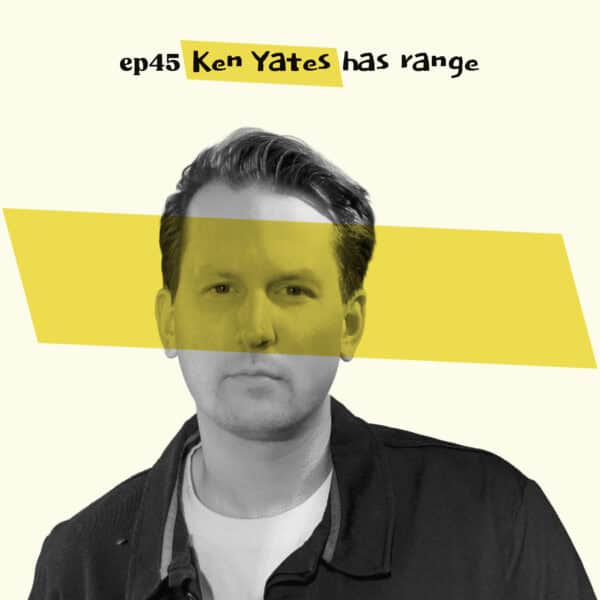
ep45 Ken Yates has range
released May 21, 2026
1:31:46
Key Moments
The Unexpected Trio Transformation:
Ken explains how a “logistical nightmare” of using six different regional backing bands across the country forced him to strip his live sound down to a trio format, helping him discover a live sound that he now prefers over solo performances.
The Nashville Vocal Accident:
As a self-proclaimed “late bloomer” who went to Berklee for guitar rather than songwriting, Ken reveals he originally planned to stay behind the scenes writing for other artists in the Nashville style. He only sang his own song for the first time because his lead vocalist fell sick before a performance, sparking his career as a frontman.
Embracing Creative Limitations:
In a highly candid moment, Ken admits he still doesn’t consider himself a traditional singer and doesn’t even sing around the house or in the car. He explains how having a limited vocal range actually acts as a creative superpower, forcing him to be much more inventive with his melodies.
The “Traveling Salesman” Burnout:
Ken reflects on the exhausting pre-COVID era of driving his Honda Civic to DIY house concerts and carrying a vintage briefcase of merchandise. While financially positive, he realized playing living rooms wasn’t building a sustainable, dedicated audience, prompting a massive shift in his career direction.
Redefining Success Outside of Fame:
Ken shares how “failing” to reach the mainstream metrics of fame and fortune for over a decade ultimately set him free. He reached a peaceful realization that even if his career never grew past its current size, he would still happily choose to make records because it fulfills him creatively and financially.
Dismantling the Tortured Artist Trope:
The conversation shifts to how fatherhood and aging have softened Ken’s perspective. He notes that he has actively stepped away from trying to be a “tortured artist” all the time, allowing himself to recognize when he is genuinely feeling good and simply enjoying being a dad.
https://www.kenyates.com/
https://www.instagram.com/kenyatesmusic/
https://www.youtube.com/channel/UCqkNO32U_cF0bQDmb79-PoQ
hosts: Glen Erickson, Alexi Erickson
AFE website: https://www.almostfamousenough.com
AFE instagram: https://www.instagram.com/almostfamousenough
AFE Spotify playlist: https://open.spotify.com/playlist/1o1PRD2X0i3Otmpn8vi2zP?si=1ece497360564480
Almost Famous Enough is a series of conversations centered around the music industry, pulling back the veil on what it really means to “make it”. Our podcast features guests who know the grind, who have lived the dream, or at the very least, chased the dream. Through these conversational biographies, truth and vulnerability provide more than a topical roadmap or compile some career advice; they can appeal to the dreamer in us all, with stories that can teach us, inspire us, and even reconcile us, and make us feel like we made a new friend along the way.
Chapters
00:00:00 Introduction
00:04:13 Getting Re-acquainted with Ken Yates
00:06:08 Parenthood and Its Impact on Music
00:09:04 Logistical Challenges of Touring with a Baby
00:11:56 Finding a New Band and Live Performance Dynamics
00:14:29 Transitioning from Solo to Full Band Performances
00:17:21 Songwriting Journey and Overcoming Limitations
00:20:01 The Evolution of Sound and Collaborations
00:22:45 Berklee Experience and Early Musical Development
00:25:28 Defining a Unique Sound and Voice in Music
00:28:19 Future Directions and New Music Releases
00:36:32 The Struggles of DIY Music
00:38:25 Finding Clarity in Sound
00:42:14 Personal Growth Through Parenthood
00:52:07 Building an Authentic Audience
01:09:48 Post-Fame with Alexi
Glen Erickson (00:02)
Okay, I’m gonna start off really big here, but then I’m going to, well, hopefully bring it all back down to something. In the infinitesimal possibilities of music, we often esteem or even expect the best expressions to always be the fullest expressions. The voices of Whitney Houston or Mariah Carey with impossible notes in power, or the 40 piece drum kit of Neil Peart.
The speed, also the swagger of Eddie Van Halen. I mean, but all those finger taps, right? Growing up, I was partial to the edge. In a high school guitar class surrounded by long haired metalheads wearing black three quarter sleeve GNR shirts, I was obsessing over the edges inverted cord structures combined with precision delay pedals. I had no interest in playing all the shred solos or being faster than the next guy.
because the edge made something that made me feel something in what others called a narrow lane. I’ll never forget in the Rattle and Hum Doc when they’re joined by B.B. King, who somewhat self-deprecates humbly that, air quote, I’m horrible with chords, then goes on to shine, of course, with a signature feel that usually only required three or four notes at most. Bob Dylan.
clearly skipped singing lessons. While he may be known for the absence of technique, some would also say being in tune, I tend to think it’s a far more subtle skill he zoned in on, which didn’t require singing all the notes with perfect pitch. It was the way his voice would lock in around an open vowel sound at the top note of his melody. The melody didn’t need a dozen notes to connect with you. The written words were so powerful.
And those open vowels would elongate and slowly slide off the register as you heard all the air leaking out of them. And then you felt the word become as important as where it sat in the line he just delivered. Ken Yates opens the track, Northern Accent, a bonus track on his recent Deluxe Edition re-release of his 2025 album, Total Cinema, with the line just passing through using just two notes.
delivered over shimmery chords floating on a slow head bobbing drum loop. They feel perfect. You expect all the feel of the story to pass through those two notes. makes surprisingly self-deprecating admissions to his own singing, first citing his lack of range as if he has carried the nagging narratives of what he lacks. Yet his gift is his precise ability to set a tone.
In a place his voice feels most convincing, most relatable, to deliver a line that makes me want to hear more. And like the Edge, ignoring the shred, or Dylan, ignoring the auto-tune, Yates ignores the range to develop a different gift, his gift, to listeners. And it’s pretty great.
Ken Yates is a singer songwriter, indie rock veteran now, who grew up in London, Ontario, studied in Boston at Berklee College of Music before settling in a town just north
Five full length albums and a decade into a self-professed slow burn career he claims is only getting started. Ken has found what many greats have found on their way to building deeply endearing legacies in their catalog.
that greatness is most often found in what appears to be our limitations. Having access to the full range of tools is perhaps less important as skillfully using the ones that get the job done. My name is Glen Erickson. This is Almost Famous Enough. Thanks for spending your time with us. This is Ken Yates.
Glen Erickson (04:13)
But so I used it to refresh my memory a little bit from the original transcript. But thank you, Ken, for joining me again. Have a chat on the podcast.
I guess the full transparency for anyone listening is we took a run at this last August and the and it was a great conversation and I was so happy about it after I mean I know I told you this right that I I was a big fan and to that point I hadn’t really like pursued people that I would say like I only knew just from straight being a fan of their music.
employed a lot of connections and different anyhow. So then the heartbreak that the confluence of both of us probably not having our best Wi-Fi days seem to just chop it up was so heartbreaking. But you being here and being committed in the to coming back and being so kind is a real big thing for me. So I thank you right off the bat.
Ken (05:11)
Yeah, of course.
mean, a lot’s changed since the last time we talked. So I feel like we were due for another interview anyway. no, it’s all good. I was bummed that it didn’t. I feel like my computer was about to explode on the last one. which it’s making some sound again now. So we’ll see if it makes it through, but that would be a tragedy if it didn’t work again.
Glen Erickson (05:18)
Yeah, very
Hahaha, that’s sick.
Okay, well…
Yeah, that would be a real tragedy. Just start to accept the signs from the universe maybe, I don’t know. if anything, then I get to have a couple of conversations with you and then I’m pretty happy about that anyhow. But a lot has happened, Ken. The biggest one that you had your first child, which is the subject of our conversation in August is you were expecting the child. Like literally any day now.
Ken (05:37)
Exactly. Yeah.
I
think we had her two days after I talked to you last. Yeah.
Glen Erickson (06:01)
was it? Yeah, okay. Because I remember,
I think Ken Beatty helped hook us up, my old publicist, publicist free. And I remember him saying like, yeah, he’s willing to do it. It’s just, you know, he might have to cancel because the baby’s coming. He’s just hunkered down waiting. I’m like, ironically, that’s not the thing that took things down. But that’s, that’s amazing. So
Ken (06:08)
Yeah, that’s right.
Glen Erickson (06:28)
Of course I’m going to ask you how it’s been. I mean, I’ve already seen some articles you’ve done since then, um, and sort of talking about, you know, the, obvious challenges to the touring life of a musician when you, uh, want to be at home and supporting that, that, that happening, like that whole first year, the whole first everything that’s happening. But, uh, I distinctly remember telling you the thing I told all the people when I find out when they’re going to be new parents, cause I have two is like,
that first baby experience, I’m always like five weeks, feels like chaos. And then somewhere around that time you wake up one day and be like, yeah, we got this. So I guess my first question is how long after baby number one came and the chaos descended on your house and figuring out these new schedules and not sleeping and stuff till you thought, yeah, okay, we got this.
Ken (07:22)
Yeah, I mean, I think you’re right. It was right around like six weeks where it started to feel like, okay, I think we, think we kind of know what we’re doing now. It wasn’t as bad as I thought. Like I definitely felt, mean, it’s, you really can’t prepare for the actual, like, you know, you can prepare as much as you think you can, but like there’s, you know, you just have to figure it out.
Glen Erickson (07:30)
Yeah.
Yeah. Is the what you thought
because of what everybody kept telling you and the everyone? Yeah. Yeah.
Ken (07:47)
Yeah, well, I mean, I think I was bracing for it to be the worst thing ever. And it wasn’t because everyone was just like,
that’s all they said was just like, you’re going to be in the trenches. It’s going to be like, you’re going to be exhausted. It’s going to be the hardest thing you’ve ever done in your life. So I think I just felt like I was like bracing for it. And then it turned out to be like, you know, a lot more blissful than I think I expected.
Glen Erickson (07:57)
Yeah, yeah.
Ken (08:08)
I think I was kind of like, just wanted to get through that the newborn phase, but actually ended up really, really enjoying it. I mean, we got lucky with a good sleeper. So we, we never like, we never got like to full sleep deprivation. Cause I know, I know a few parents who have been.
Glen Erickson (08:17)
Mmm.
Ken (08:24)
through it and that seems like torture. So I think that helped our spirits. The fact that we were actually getting a decent amount of sleep every night. So no, it’s been great so far. Yeah, we’re nine months in now.
Glen Erickson (08:25)
Yeah.
Yeah.
Well, mean, that definitely,
yeah, that’s a good stretch now. I mean, that’s always the thing that at least makes people more optimistic about having number two, how the sleeper one goes. So.
Ken (08:49)
Yeah, well, we don’t know about that yet, we, know, for, yeah, we’re the part of me is
afraid that like, you know, if the first one is an awesome sleeper, like what are the chances your second one is going to be great too,
Glen Erickson (09:01)
Yeah, the chances are never that good. I’m sure everybody’s telling you that too. I mean, so yeah, mean, that’s funny that you say that because like, obviously then there isn’t some elaborate plan. There isn’t some elaborate plan to this. I
Ken (09:04)
Yeah.
Glen Erickson (09:19)
I mean, you had said in the last article, I wrote it down actually, the record was planned, because I was asking you about all of this and Total Cinema had only come out in the year just a little while before. And you said the record was planned before the family edition was planned, which I at the time had thought interesting about how that just shows how the full-time…
career artists, like how much planning and how far in advance you have to think about recording and well writing and then for recording and then for releasing and then the cycle and all that stuff. that it exceeds the family planning. So the family planning hasn’t firmly squeezed itself back in there yet either. So.
Ken (10:06)
I mean, not
yet. see. Yeah. mean, like we sort of just come to the conclusion after a while that there’s no good time to do it. Right. So we kind of just we’re like, well, let’s let’s just do it and figure it out. And yeah, we’ve been figuring it out. I mean, I feel like last time I talked to you, I had, the record had just come out and I had two or dates booked, but no child yet. So I was like trying to figure I was trying to plan these two or dates around a baby that I didn’t even have yet. So I was kind of freaking out about
Glen Erickson (10:15)
Yeah, that’s very true.
Yeah.
Ken (10:35)
that
because I was like I don’t even know what kind of person I’m about to have right like you know it’s like you don’t even know that this thing that’s that’s not born yet so I was definitely nervous about that and and you know it was was a challenge it was a bit of a logistical nightmare we we did like a bunch of tour dates from November through to March and
Glen Erickson (10:40)
Yeah.
Yeah.
Ken (10:56)
Yeah, it was definitely stressful, but we made it work. And yeah, now I’m kind of at the other end of it. it’s kind of like, I think you definitely like, you selfishly think that a baby is gonna get in the way of like your career stuff. if that’s sort of what you’re, if…
like the important things you sort of prioritize and you figure out a way to make it work despite you know the logistical challenges so yeah we made it made it work we used think we used six different bands in in different parts of the country and yeah so we kind of flew back and forth and yeah we made it work it was good
Glen Erickson (11:22)
Yeah.
wow.
That’s, yeah,
that, okay. So that puts a little meat on the bones of when you say logistical nightmare of planning this, that sounds like a complete logistical nightmare of having to coordinate and rehearse and advance people. I mean, I hadn’t even noticed and I was curious, you know, whether you had sort of like regular people that will like be able to do what.
the kind of adjustments you’ve had to go through, whether they can do those with you at the drop of a hat, right? If you have like a regular band or not, that becomes a real big thing. was watching, you know, I was just looking over like what’s been going on in 2026 for Canon, your audio tree live recording had come out, you know, and it was just a three piece. So I found that really interesting. So I was like kind of deep diving all the way through it and
And I’m like, I don’t know, I just had this sense. like, I’m guessing these aren’t his regular players. Because it’s in Chicago. Is that one thing? I don’t know. I looked up the bass player.
Ken (12:30)
Yeah, well the good thing about the
yeah the good thing about this this the way the style of touring was it was kind of like an audition process for a for a more regular band and we ended up sort of stripping it all down to a trio just because just made sense with all the travel.
Glen Erickson (12:41)
Yeah.
Ken (12:48)
And ended up kind of finding like a thing with that. Like I think we kind of found like a live sound with the trio that really works because never know whether to add like if I’m to add a fourth member in the band, like I never know whether to add like a guitar player or like a keys player. Because I sort of like I kind of cover a lot of ground on the guitar and I don’t really know what to tell a lead guitar player to play other than like play some atmospheric sounding shit, you know. So it’s like.
Glen Erickson (13:02)
Yeah.
Yeah, well that’s always
the hard part, right? And I was gonna mention that, like, and your guitar playing is very full and it’s not, you know, you’re not working up, you’re not just playing like the three majors and the relative minor on the bar chord thing, you know what I mean? And putting a bunch of beef in your pedals to fill it up. You’re literally playing.
Ken (13:15)
Yeah, totally.
Glen Erickson (13:34)
I think, you know, a very full style of very like just the way you write, obviously the way you construct chords and movements and melodies inside of those doesn’t always leave a ton of room probably, you know, for a traditional lead or something. It tends to just be the way we layer things in the studio, right? That you would kind of tell somebody just play what was on the record, find something that was on the record to add on maybe at best, but.
Ken (13:58)
Yeah, well,
I think that’s the tricky thing is on the record. It’s mostly just me sort of like, it’s mostly kind of riff based and I’m kind of covering the melody of the riff and then it’s just a bunch of layered guitars on top of that. So it’s kind of hard. There’s not really like specific parts I can tell people to play. But so I really, mean, I really kind of enjoyed like figuring it out with the trio. it definitely, some of the songs definitely sound a little different with the trio, but there’s, there’s kind of a uniqueness to it that I, that I’m really liking. And I think I’m going to do more of
Glen Erickson (14:11)
Yeah.
Ken (14:27)
it
that way. But the cool thing about touring that way was, you know, I thought it was gonna be, I thought some of it might be a disaster because it was like, we would do four shows with one band, and then I would move on to a whole new band and we have to rehearse them right before the shows. Most of the people I had done some shows with before, so I wasn’t like going in fully blind, but
Glen Erickson (14:29)
Hmm.
Ken (14:50)
But still, I mean, it was like, you just start feeling good with one band and then you’d move on to the next one and start from scratch. But I feel like none of the shows suffered from it. Everybody was great. And so it’s cool to know that if I had to do it like that again, which I don’t know if I would fully do it like that again, it’s cool to know I can pull it off. I’ve got people on the West Coast now and people on the East Coast. And so it’s just nice to know that you can kind of plug
Glen Erickson (15:05)
Hmm.
Hahaha
Yeah.
Ken (15:19)
play like that. Now again, like I think I’ve kind of settled on few players that will hopefully stay the band and yeah going forward but yeah it was kind of a cool thing to realize is that you know and I didn’t lose all my money either which was great.
Glen Erickson (15:35)
Yeah.
That’s very great. mean, every artist kind of has their own personality. You know what I mean? I think they should develop like those personality tests like Myers-Briggs or whatever for specifically for artists. I think it would be really interesting. so it makes me wonder like what about that process was the hardest for you to manage?
Ken (15:53)
Yeah.
Glen Erickson (16:02)
you know, like having to work with so many different people might, you know, either just kind of wear you down or, or, you know, or sort of confuse or frustrate the explanation, musical explanation process, or, you know, is there, is there, what, would it be for you in that process that would make it feel really personally challenging?
Ken (16:25)
think the biggest thing for me was just kind of having faith that it was all going to be okay on stage. Because if you’ve only got one rehearsal the day before a show, or in some cases it was like the day of a show, you know, you can never get a sense in a rehearsal no matter how much you do rehearse in a rehearsal space, like how it’s really going to feel on stage. you just kind of have to have faith that the, you know, the, the
Glen Erickson (16:32)
Hmm.
Ken (16:51)
just like the stage will provide you with the kind of energy that it needs. there’s a little bit, there’s like sort of those variables that you can’t really like recreate in rehearsal that just kind of happened. It all comes together for a live show.
Glen Erickson (16:57)
Yeah.
Yeah.
Yeah, this stage
will provide, that would be a great mantra to take with you everywhere.
Ken (17:13)
Yeah, well, it’s just like that sort of like adrenaline
nervousness sort of like, you know, that that live music feeling, you know, it’s like the
the same feeling like you feel as an audience member when like when you hear like live drums or something, you know, it’s just like there’s a difference in the way you play as a musician on stage too that you can’t really recreate in rehearsal. So it’s like you just kind of have to have faith that it’s all gonna work even if it doesn’t feel well rehearsed. But I kind of realized that I think a cool thing about especially the new songs on the record, it’s like.
Glen Erickson (17:28)
Yeah.
Yeah.
Ken (17:46)
they kind of, you kind of can plug and play with them. Cause it’s kind of just like, you know, if I can just find a good, a good drummer who’s really locked in and like, he doesn’t even have to know the song, but if I can just, if he could just like play, play the beat the whole way through and know where to start and know where to end, feel like most of my songs can survive on that.
Glen Erickson (18:03)
Yeah, yeah.
If
he’s played four or five of your songs, he’ll know when to do the stops and starts probably.
Ken (18:11)
Exactly. Exactly. it like
there was kind of this like I thought every thought again like different bands I thought I would really sort of have a favorite for favorite band for each for all of these shows and but they all kind of seamlessly blended together which which is really interesting to me. So yeah it was interesting.
Glen Erickson (18:23)
Favorite band?
That’s great. Do
you have this, I’ve encountered this with a number of musicians in my life who have the superstition that like, you need the last rehearsal is supposed to go poorly and that means that the show is going to go good. Have you ever encountered that or held that superstition?
Ken (18:47)
I I think for me, it’s usually just like
the one rehearsal you have is going to go poorly and you just have to think that the show is going to be good. Yeah. Cause yeah, so far it’s like we pretty much get one quick one in and then we’ll figure out the figure out the Kings during soundcheck and just hope, hope it all goes well.
Glen Erickson (18:56)
Yeah. Yeah.
Yeah.
So, so last time we talked, you were talking more like you were probably just going to go on a run of acoustic shows and you were trying that out. And I don’t know if you were specifically referring to this sort of stretch that you just talked about or whether that was just more future tense in general. And I’m wondering if that is it, did that change or did something change? I know that that was part of, that was part of a conversation too, about just the economics.
you know, kind of going forward as well.
Ken (19:35)
Yeah.
Well, I think last time I talked to you, I was just kind of trying to transition from doing solo shows to doing full band on like for the full tour. In the past, it’s sort of been a mix of both, like some full band in bigger markets and solo shows and others. So I was really committed to doing full band for everything. And then, like I said, now that I feel like I figured it out with the trio.
now I don’t ever want to play solo again. It’s way more fun with the band. Sometimes I just feel like I can’t fully serve the songs when I’m playing solo. So it’s nice to just bring that energy with the band and it’s hard to go back now.
Glen Erickson (20:01)
Yeah, I totally get that. Yeah.
Yeah.
Yeah, yeah,
I totally bet. When you played solo, did you play acoustic or did you still play through your electric rig?
Ken (20:24)
No, I’ve
been playing solo electric for like, since like 2022, I think. Yeah, I kind of transitioned.
Glen Erickson (20:29)
Okay. I just can’t
imagine you doing it acoustic. Like your sound seems so locked in around that.
Ken (20:35)
Yeah, it doesn’t work, honestly. Yeah,
it’s tricky to… I mean, that’s kind of why I switched to electric in the first place, because I was starting to write in all these open tunings, in these low baritone tunings, and playing a plugged-in acoustic guitar in those tunings was just horrible sounding. So I knew I had to switch it up, and then I was playing a Telecaster with really light strings in that tuning, and that wasn’t working either.
Glen Erickson (20:54)
Mm, yeah.
Ken (21:03)
So it was Jim Bryson who I was making Cerulean with. And I’ve made three records with Jim. And he’s kind of the one who got me hooked on to, because he’s got a Jaguar in a Jazzmaster that he’s got those flat wound strings on. And so that low baritone tuning worked really well on his guitars, which are on, I’m playing his guitars on that record.
Glen Erickson (21:07)
Yep.
Ken (21:27)
I was kind of like, well, I need to kind of, if I’m going to do this live, need to, I want to recreate the sound that’s on, on that record. so Jim was a huge part in like getting me, cause I, you know, I had just played solo acoustic for like 10 years before that. so, you know, I hadn’t even like accumulated the gear in terms of like a pedal board and all that shit. Like I, you know, I didn’t really know where to start. So Jim kind of got me hooked up with all that. So.
Glen Erickson (21:34)
Yeah.
Yeah. Yeah.
So I mean,
this sort of all, I think, folds into your story, right? Which is, you know, I could pick into a whole bunch of those because they’re of interest to me, you know, as a guitar player, as a fan of Jim Bryson, the whole process of how you write and record and let those choices with your instrument do that. But also that, you know, your history, well, first of all, your history was like,
late bloomer to songwriting. So it’s not a surprise that you might’ve also been a late bloomer to like figuring out some gear stuff and sort of creating your own sound that way. That you went to Berkeley and that’s kind where you got started with music, but wasn’t sort of the typical, yeah, I was playing in bands when I was 15, sort of little Canadian story. It was a very different story of heading to Berklee you know, and working on that music degree.
So these kind of all fold in together to me about, you know, things sort of starting a little bit late, the way that you sort of have come to sort of discover your own sound, which to me now has become very, very signature. You know, even like, yeah, the Jaguar, I think on the audio tree, you were playing a Jaguar. Do you have a green Jaguar? Is that what you, or was that a, was that the Jaguar? Okay. Yeah.
Ken (23:05)
Yeah, the green Jaguar. That’s kind of the, that’s the main guitar that I’ve been playing. Yeah.
Glen Erickson (23:10)
So take me back a
little just and you know for everybody listening refresh the memory a little on you getting started even the choice to go to Berklee you weren’t necessarily songwriting or anything but you know with your instrument. A for you know I don’t can’t remember if I had asked you but I just was like that immediately hits me with like
Were your parents 100 % on board with that move compared to a move of going to a university or college that puts you on a perceived more stable career path than a music degree?
Ken (23:47)
Yeah.
Yeah, I mean, I think they were,
I think they were almost too on board. I think they thought like, you know, I’m, I’m, I’m going to be a star. So they were like, go for it. Uh, which in hindsight was, think, I think they didn’t know what they were signing up for, which is, you know, I’m like, what 15 years in now more than 15 years in just feel like I’m getting started now. But, but yeah, I mean, I think it was honestly just being completely naive and,
Glen Erickson (23:59)
that’s great.
Ha ha ha ha ha.
Yeah.
Ken (24:15)
I didn’t write songs when I was in high school. didn’t even really have any bands. I just kind of played guitar in the basement and thought I was hot shit. Because I had no comparison to anybody. I didn’t have a band or any. My friends weren’t musicians, so was just sort of sitting in the basement.
Glen Erickson (24:28)
What was,
Yeah, yeah.
Ken (24:38)
So it is funny just to think like, I think I just had the idea to audition and my parents were like, okay.
Glen Erickson (24:46)
And what does
the audition for Berklee look like? Because I know a lot of people who are great guitar players, they’re all probably self-taught, maybe had a couple lessons when they were 12 or 13, but then, and they become fantastic musicians and I bet most of them would be scared to death of thinking about providing an audition for an actual music college. What does that look like?
Ken (25:09)
Yeah, I mean, so you actually have to go down there to audition in Boston and.
Yeah, I think I brought, think I wanted to showcase like how, like all the stuff I could do. So I did like half an electric guitar performance and half an acoustic. And I think the electric guitar was like some sort of rock medley of like classic rock solos, which was probably, probably wouldn’t have gotten me in, in hindsight. And I think what did get me in was did a, do remember, do know Don Ross, instrumental acoustic guitar player? He’s from Ontario.
Glen Erickson (25:28)
Ha ha ha ha.
No, I don’t.
Ken (25:42)
But he, I mean, he used to come in and do do performances at my high school. So I had learned this Don Ross tune, which is kind of like a open tuning fingerstyle acoustic guitar piece. And so I’m pretty sure that’s what got me in. I don’t think it was the classic rock medley. It’s kind of crazy to think about in hindsight, like just how naive I was to to think I could even get in. then I’m sure my parents were like, what the fuck when when I actually got in.
Glen Erickson (25:58)
Ha ha ha ha ha ha.
Yeah.
Ken (26:10)
And then yeah, then it was just kind of like, it was the perfect kind of incubation space for me to figure out what the hell I wanted to do. Because at that point, was, you know, I went there and was just like, well, I’m not, not nearly one of the best guitar players here, not even close. So, you know, like, after a few years, you kind of have to pick what direction you want to go.
Glen Erickson (26:35)
Yeah.
Ken (26:36)
And I knew I wasn’t going to be like a session guy or, you know, even someone’s lead guitar player in a band. Cause I didn’t really have the skills for that. So I think it was just, my third year. That’s when you kind of pick a major.
girlfriend, who’s now my wife, went on exchange in Europe and I was, you know, super depressed and kind of aimless and took a songwriting course on a whim. you know, I think I thought that they were just going to like teach us stuff about songwriting, but they were like, you know, they wanted you to bring a song in. And I had not written a song at that point. So, yeah, all of that coincided to me trying to figure
Glen Erickson (27:14)
Yeah.
Wow.
Ken (27:23)
to write a song. And yeah, they were really bad for a while. I was kind of like just the quiet kid at the back of the class, like trying everything possible to not get up and play a song. And I think for a few, like for a few months, didn’t, you know, nobody even heard from me in the class. kind of just quietly sat back there and then.
Glen Erickson (27:24)
Ha ha ha.
Ken (27:45)
then I kept writing the songs, kind of started getting better and then I started to kind of play them for people a little more and started getting actual good feedback and realized like, maybe I’m not terrible at this thing. And then,
Yeah, then I kind of just found my people. I kind of found the songwriting kids and some of those people I’m still close with today. so I think that’s just where I found my first music community. Like I didn’t find it until I was 20. Yeah, because I didn’t really have like music friends growing up. Just, yeah. Yeah.
Glen Erickson (28:07)
Yeah.
But you were there for guitar, you know,
and songwriting, you know, then pushes you into a very short step away from performing because we usually want to play those songs for people. But you know, what I have never heard you really talk about then is, you know, your voice and, you know, were you immediately confident in your voice and how much a songwriter
Ken (28:29)
Yeah.
Glen Erickson (28:44)
ends up realizing, because I’ve seen a lot of songwriters who were guitar players and you can tell they would still prefer to hide behind their guitar playing. You know what mean? That they never let the voice take center stage. And was that easy transition?
Ken (28:58)
Well, still yeah, I still feel
like that. I still feel like I’m just hiding behind a guitar. I don’t really consider myself a singer still. I think it’s my weakest, my weakest skill in terms of like the performance.
Glen Erickson (29:06)
you
Ken (29:14)
I thought, I mean, when you take a songwriting class at Berkeley, it’s very oriented to like the Nashville style of songwriting, which is like, you know, you’re going to get in a session with a bunch of other writers and write for another artist. So I think I kind of intended to be that kind of songwriter. then, then I remember we did like, there was some sort of performance where it was like the songwriting majors would
Glen Erickson (29:21)
Hmm.
Ken (29:38)
would give a song to the vocal majors and the vocal majors would perform those songs. And the person who was supposed to sing my song had to back out because she was sick. I had to do it myself. So that was the first time I think I sang my own song in front of an audience. And it went really well. So I think I kind of realized like, there’s something, you know, there’s a unique, there’s a uniqueness to my own voice.
kind of spurred me on to actually pursue it as a performer. But really it was just kind of like out of necessity, know? No one was knocking on my door to sing my song. So I just kind of gradually performing them more and more and got a little more confident with the voice and got it to a place where I felt like, you know, I could at least.
Glen Erickson (30:13)
Yeah.
Yeah.
Ken (30:26)
serve the songs and but yeah I mean I still don’t still I still like it’s funny I don’t really like to sing like I don’t I don’t sing around the house I don’t I don’t really sing in the car like it’s not don’t really enjoy the
don’t think I enjoy the feeling of it, which is funny. Like it’s not, it’s not the way that I express myself. I think it’s just the vessel, the vessel for the, for the words, you know? but I think in some ways that, that, limitation because I, you know, I, I don’t have a, I don’t have a big vocal range and, don’t feel like I have a lot of like control over my voice. so that sort of dictated the songs, think.
Glen Erickson (30:47)
Yeah, I get that totally.
Yeah.
Ken (31:07)
which means like I think I have to be a little more creative melodically to because I don’t have the range. So I think it has, you it’s helped. I think it’s helped the songs over time. Just my limitations. And I think, I mean, I think that goes for any artists or like their limitations kind of define them, right?
Glen Erickson (31:12)
Yeah.
Yeah, you usually spend a good chunk of your career trying to fake your way around it and then you start to realize that when you lean into it, it’s where the actual character comes from that people identify with. mean, even to the point where, I mean, I find it funny you saying all this. I think what the appeal to me is, like,
Ken (31:36)
Yeah.
Glen Erickson (31:48)
this very sort of clean tone that you have in the range that you do have. I never even as a listener, I would never think of it as limited unless I was, you know, somebody who just sat there and preferred to judge like American Idol contestant that way or something. I again, to refer back to us watching that audio tree performance. And I think the thing that one of the things that stood out to me is that that live performance created way more.
variety in your tone because you know in a studio you’re cleaning a lot of things up and it comes off as very like very well produced very clean all the way through and yet I can hear far more artifacts in your voice you know just in a live performance like that and it’s actually very enduring and very appealing you can hear you know a lot of that kind of stuff
Ken (32:36)
Yeah,
was super sick for that performance. there’s a, there’s a, it was like, there’s that perfect blend of like, it was, it was just after it would have been like a disaster for me to sing. And just before like the illness had totally lost my, left my voice. So it was kind of that sweet spot of like, you know, the sexy sick voice.
Glen Erickson (32:40)
There’s always that.
Well, there’s a couple, yeah, there’s the sexy,
sick voice. And then there’s the, it also gives sometimes male voices, I find gives a little more mid, a little more low mid, sorry, a low mid to your voice when you’ve been sick, which is pretty cool also. So, I mean, interestingly along with this is like.
Ken (33:06)
Yeah, totally. Yeah.
Glen Erickson (33:16)
you’ve already got five albums out that you’ve put out. I know we talked about, in the first couple of records, you were again, the acoustic sort of based version of your songwriting, were winning folk awards out in Ontario. this almost like being…
pigeonholed into that you were a thing, again, that I remember you talking about, you didn’t really feel like that was you either. And it seemed like the move to work with with Jim, Jim Bryson was something that really was a catalyst to sort of breaking out of that. Getting to you closer to where you are now, like we had talked about previously, you know, the impact that Jim had on your
songwriting and then in the recording and just sort of establishing your own sound. We didn’t really talk about whether he helped you or worked on your voice part of it. We probably, I probably geeked out on guitar talk, but I was of course interested in your choice then with all that success to still make a change for Total Cinema and work with Daniel Ledwell out in Nova Scotia and that experience in his really unique recording studio.
You’ve released a couple of new tracks this year, not too long ago. I’m presumptuous to think that they’re leading to a new album or new music. Maybe not. you’re embracing the singles era of Spotify and such, but they sound very in step with Total Cinema. And I guess my curiosity is like…
Ken (34:34)
Yep.
Yeah.
Glen Erickson (34:53)
the influence of others on helping you continue to define your own sound. I’m wondering where you’re at with that right now as you obviously look towards the new stuff.
Ken (34:59)
Yeah, well,
those new songs were all recorded during the Total Cinema Session. So they were kind of songs that we left that Dan and I had worked on for the record last year or two years ago.
Glen Erickson (35:06)
Yeah.
Ken (35:14)
that I wasn’t sure if I eventually wanted to release, then you come around to them and everybody loves a deluxe version. So yeah, so those were kind of leftover from the record. So I’m still getting back into the writing for the next thing.
But yeah, mean, like Jim and I made three records together and we, you know, we talked after that and he told me like no one’s ever made three records with him. And, know, I wanted to do a fourth again, but it just kind of felt like I owed it to myself to, you know, just push the boundaries, not push the boundaries really, cause you know,
you know, Dan, Dan is a buddy of Jim’s as well. And, and, and he mixed, Dan mixed some stuff on Cerulean and on Quiet Talkers. So it wasn’t like this, this super sideways move working with Dan, but it just felt like I should try something different. And, yeah, Jim was certainly like,
Glen Erickson (36:09)
Yeah.
Ken (36:15)
huge in that development of like, you know, at a certain point I did kind of make a conscious choice to change things up. That was kind of during COVID and I just was like, felt like I had, felt like I had done like 10 years worth of touring and performing and
putting out records and just kind of felt like it didn’t really amount to much. I was making a living doing it because I was doing DIY shows, was doing house concerts. When you’re just playing solo with an acoustic guitar, the barrier to entry is pretty low. You can make some money.
Glen Erickson (36:54)
and you get a bigger cut.
Yeah. Yeah.
Ken (36:56)
you get a bigger cut, you know, you can get 25
people in a living room and you can make 500, 700 bucks. And for a while you feel like you’re crushing it, right? Like you’re, you’re like, I’m out here on the road. I’m making money, playing my own music. I’m carrying my little briefcase of March around and, and, you know, you’re a traveling salesman and you feel good when you’re
Glen Erickson (37:19)
Like
the vintage suitcase that you make sure you get so it looks cool on the table. Awesome. Awesome.
Ken (37:20)
the vintage suit briefcase, exactly. So it looks cool, exactly.
And I just got burnt out from that, because you realize you’re not really building an audience. You’re playing for music lovers, but they’re not.
your music lovers, you know, like they’re not, they’re not showing up to the, to the bar gig next year, you know, like they’re, they’re just there to enjoy the night, and not necessarily translating to an audience. So I really felt like I had just spent years feeling like I was working, but not really building anything. And, and I think the, the, the folkiness in the, in the records I was making at the time,
Glen Erickson (37:41)
Yeah.
Ken (38:00)
again, it was just, it was sort of what was available to me. It’s like going out with my acoustic guitar and my Honda Civic was the only way that I could make a living doing music. So I think that just translated to those kind of folkier records. So yeah, I mean, once I kind of had that time during COVID to really like, try to pivot and I had that experience with Jim.
Glen Erickson (38:07)
Yeah.
Ken (38:25)
after two records with him going into Cerulean, I think I had like a much clearer kind of vision of how I wanted things to sound, is, which was sort of a mix of both his and I’s taste. and then I think we, I think we really found something with Cerulean that, that was unique to, to me as an artist. And, and I’ve had kind of more of a sense of clarity since that record.
You know, like I never, every record I went into before Cerulean, I would have no idea what I would want a band to play or I couldn’t hear the arrangements or anything. I was sort of like at the mercy of the, producer to come up with those ideas. And so Cerulean was the first record where I was like, okay, I think I have a vision of how I want these songs to sound. And that kind of…
Glen Erickson (39:04)
Hmm.
Ken (39:15)
that kind of evolved into Total Cinema where I was kind of like felt like I could hit the ground running where I was like I think I found this sound that I like with Cerulean and I have this new batch of songs which are a little bit more up tempo and a little bit you know a little bit on the like
you know, they’re more bops, know. Like, Cerulean was a pretty dark record, but I had these kind of happier songs that had a little more tempo to them. so, Dan, I think, has more of an ear towards that kind of more radio-friendly kind of side. And I thought it would serve those songs well.
Glen Erickson (39:39)
Yeah.
Ken (39:55)
And yeah, but I do feel like that was kind of an evolution on Cerulean for sure. Just kind of like taking what worked with Cerulean and pushing it a little further, pushing the tempo, pushing the sounds a little bit. I got more confident as a guitar player too. Jim played a lot of guitars on a lot of lead stuff on the three records we did. And Total Cinema was the first time I actually kind of layered my own guitars on top of the original part. I would always come in with
Glen Erickson (40:03)
Yeah.
Hmm.
Ken (40:24)
with a riff or a part, but that was kind of all I played on the records. But Total Cinema was like, I got to kind of dig in a little more into my own guitar playing and mess around a bit more.
Glen Erickson (40:29)
Yeah.
Yeah.
Yeah, I think that’s really interesting to hear like your perspective being able to point out, you know, an evolution, you know, therefore includes a lot of differences and changes and growth and stuff. You know, because as a listener, like I was introduced to you with Quiet Talkers and by my really good friend Mike and both fell in love back then and we were the only two people in our
everybody, a lot of anybody who knew who Ken Yates was, right? Like, and, and he holds the pride on that one, because he knew first, and he introduced me and, you know, and at that time, and then just sort of following through, I hear an obvious thread that’s the same all the way through and, and
in the best way, right? Because the thing that I think I like the most in your music and the sound is the thing that has stayed consistent, even if there’s change or there’s growth and there’s influences of life that’s happening and producers or whatnot, as well as your own personal changes. So I think that’s a pretty positive trait going all the way through. I mean, you mentioned Cerulean being
a little darker that obviously, you know, was, you know, you’ve talked about openly before a real difficult time of how, you know, processing your mother’s passing and, know, through that whole time and you’ve talked about how you were able to kind of disassociate through that time and sort of process through the music, you know, and then it getting a little more difficult when you wrote the song, perennials for, for the total cinema record about her. then that becoming
very personal and difficult, you know, more difficult to disassociate from, especially performing live. So alongside the evolution of music, you know, I talked about or asked a little bit about, you know, just finding your own voice since you started as a guitar player, finding your own, you know, metaphorical air quotes voice through lyrics, through writing, through
inevitably allowing yourself to be vulnerable and be a little more personal. I think has my observation been real obvious thread through your music kind of going through. And I’m curious what your thoughts have been now becoming a father as it’s a thing that a lot of people have referenced, obviously changing perspectives on the world on themselves and inevitably shaping.
you know, the way they write songs, you know, I’ve, you know, famously, Dan Mangan’s talked a lot about existential dread before, but also the part that just his family and his becoming a dad has played in handling that in his life. And I’m curious how that’s impacting you and perhaps going to be impacting the music as you’ve, you know, gotten.
progressively more personal in your writing.
Ken (43:33)
Yeah, it’s funny. feel like everyone’s, everyone’s waiting for the dad record now. yeah. Yeah. Yeah. Yeah. Yeah. Totally. Yeah. I don’t know. mean, like, I think, I, I think that’s still got a simmer for a bit. Like, you know, I’ve got a couple of new songs that are, that are,
Glen Erickson (43:38)
Well, we talked about dad rock last time a little bit, but that’s a different thing than what we’re talking about here, I think.
Ken (43:52)
sort of geared towards becoming a dad, but I think I’m sort of trying to avoid that as like a heavy topic for now, just because it’s like, I don’t think I want to write like a whole record about being a dad. I feel like that’s the tendency to be, when you become a parent, because it’s so all consuming and it’s such a beautiful thing and you change so much as a person that.
Glen Erickson (44:08)
Yeah.
Yeah.
Ken (44:18)
you know, that it’s, it’s hard not to write about that stuff. But you also like, you realize that as a parent, when you’re talking to people without kids, and all you want to do is talk about your kid and you realize that they’re just like, they’ve just shut right down. Like they don’t want to hear about that shit. So, you know, I’m conscious of that.
Glen Erickson (44:31)
Yeah, yeah, totally. But I mean, was less,
I was less, I mean, I’m less assuming that you’re going to write specifically about your experience as a dad and more how just being a dad is maybe changing your worldview, which is definitely going to affect how you write, right? Even, you know, you know, some people just become
Ken (44:50)
Yeah, absolutely.
Glen Erickson (44:56)
more positive or something, or there’s just ways that you see a change in a person. I’m wondering what changes you’ve seen being a dad have had on you that might make their way out into the way you write.
Ken (45:08)
Yeah, no, that’s really good question. Cause I feel like that was already happening with Total Cinema, which kind of led to the decision to even become a parent in the first place, right? Like, I feel like you kind of have to get to this. You have to get to a certain place as an adult to even take on being a parent, which I think I got to, you know, through whatever, through, you know, just from, think, just getting older in life experience. just like, think, honestly, I think my career failing for so long,
Glen Erickson (45:16)
Hmm.
Ken (45:36)
you just kind of like get to this place where you assess what the goals were in the first place. I was just killing myself for over a decade for this music career that I don’t think I even knew what the goals were. think you’re just, think the bar, when you start doing this from a young age, the bar is just fame and fortune because you don’t know how else it looks.
Glen Erickson (46:03)
Yeah,
Ken (46:03)
So when it’s
Glen Erickson (46:04)
exactly.
Ken (46:04)
when it’s not going well for so long, you kind of have to redefine your goals, but also like nurture the rest of your life because because like you don’t want to be the asshole who’s just like fully career focused that, you know, isn’t kind of nurturing the rest of of his relationship. So I kind of then yeah, I kind of zeroed in on that, which is just like, what what do I actually want?
out of this, you know, career and, and if, if somebody told me today that, that nothing would change in my career from this day onwards, would I, would I stop playing music and making records? And, and the answer was no. so that kind of like set me free a little bit in terms of like, I’m already doing
I’ve already accomplished the goal, which is like, I’m already doing this for a job. You know, I’ve built an audience and, and it, and it sustains me financially and creatively. And, that was, that was the goal. And so I think I’m a little bit more at peace with that, which I think has translated to kind of being more.
grateful for things in my life, for people in my life, relationships in my life. And I think you do become kind of a big softie when you become a dad, right? You have this new capacity for love that you didn’t think was there. You can’t tell somebody that before they become a parent. It’s just something you have to experience. so I think I’m just a little less.
Glen Erickson (47:24)
Yeah.
Ken (47:37)
I mean, I don’t want to say less cynical because it could definitely still be cynical and I’ve definitely got some cynical songs that are going to be on the next record. I think they come from a different place of like, I don’t know, just, I think just I’m better at recognizing, you know, like.
Glen Erickson (47:51)
Yeah.
Ken (48:03)
when I’m feeling good. You know, think I used to just like wanna be the tortured artist all the time. And I think I can now kind of take a step out of that sometimes and just say like, you know, I’m just a dad now.
Glen Erickson (48:07)
Yeah.
Yeah.
Yeah, and you know, maybe other people learned this lesson earlier, but I feel like I tend to have more frequent connections with men, you know, closer to my age who have like lived a little around this very topic, which is there’s a point when you realize like, what you think is your identity.
isn’t like locked in for your whole life. Like your identity is allowed to change. And some people don’t know how to do that. No, they don’t know how to let that change. think sometimes fatherhood or parenthood is, you know, way of shaking you literally out of it. Because, you know, it’s just, it’s just a very
Ken (48:45)
Yeah.
Glen Erickson (49:04)
visceral experience of change from, you know, maybe less for some people than others, depending on their situation. But I tried explaining sad dad music to somebody not too long ago and realized that I tend to feel like I’m very articulate and somehow that topic, I just wasn’t able to get out what I wanted.
to express that there’s this like, they’re like, why is it sad dad? Like, why should they be sad? Like, why are dads sad? And I was, and I was doing a terrible job of trying to explain this concept of
You it’s no longer, as you said, it’s no longer cynicism. It’s no longer existential dread. And I was trying to explain this concept. And again, I’ve got kids who are like on the moving out of home phase. So I’m like, you fall deeply in love with these kids and every other relationship you have, you know, even as close as you might be with your spouse, you know, even other family members.
Ken (49:48)
wow.
Glen Erickson (50:03)
doesn’t have the same kind of ultimate connection like that nothing will ever change between what you have with your child, right? And there’s this sadness to, know, like just this whole like it’s overwhelming, it’s bigger than me. There’s this like weight to it that you’re responsible, that you feel so responsible for.
that you sort of like, you soften and you’re feeling the responsibility, you’re feeling the future for them on their behalf and all these things, but it is really hard to articulate, but it feels like I’ve been a fan of the National and the War on Drugs forever, it feels like, and maybe they’re the ones influencing me to feel like this so much, I don’t know, but.
Ken (50:34)
Yeah.
Yeah, I mean, I’m
right there with you. Those are my bands.
Glen Erickson (50:54)
But maybe
that’s where the Ken Yates records will start to fall in with those guys soon, or maybe.
Ken (51:02)
Yeah,
you never know. I don’t know. I mean, we were talking about this whole the whole dad rock thing, because that that seems to be kind of the description of my genre, I guess. But in and I feel like, yeah, I’m starting to embrace that.
Glen Erickson (51:18)
Yeah, that’s good. mean, you talk about audience. I always found this interesting. I think it’s an interesting thing. Like, A, how do you build an audience? Like, it’s so hard. Like, D, just do it. you know, just changing your music will find your actual audience. I think there’s this magic combination of like when you hit real authenticity and.
you know, also the skill to deliver it. Obviously, the skills outside of music we have to have nowadays to even connect and find people, right? All these things go into the sauce. You know, and you saying you found your audience, it makes me think of like a guy like Hayden in Canada, who, you know, his first record when he was deep growling and it was on the tail end of grunge and…
And then all of sudden he came back and he’s singing falsetto pretty much for the rest of his career and has a style he has not wavered from all the records he made. And 15 years later, he’ll come through Edmonton and he’ll still pack the same size of a venue out. Like that whole, an audience sticking with you is like super crucial to a career moving forward. So…
I’m wondering how you feel in 2026 about how do you continue to either grow that or just get the roots to go deeper with what you have? So much has changed in the business. What’s your feeling about that?
Ken (52:47)
Yeah, I mean, I feel like I completely started from scratch in 2020. feel like my entire audience, I mean, you know, like yourself, I think some people kind of latched onto a few songs from Huntsville and Quiet Talkers. And so the seeds of whatever kind of sound I was going to find were there. But Cerulean really like the audience pivoted.
And it kind of was like, there was a delay on it. Like Cerulean came out and it was very quiet. And then six months later, it seemed to be like getting passed around like college dorms and stuff. was, which was really interesting. It was like kind of like this really old school word of mouth thing, which, you know, like six years later, and I feel like that I’ve, I feel like I started fresh in 2020 and I’m only six years in now. Like it does feel like very new still.
But for me, it just seems to be, don’t know, man, like you, no one’s gonna be impressed by my social media numbers. It’s, you know, if a label was gonna try to take a snapshot of how I’m doing as an artist by looking at me on social media, they’re gonna be disappointed. But.
do genuinely feel like we’ve had this kind of word of mouth thing going on with the last two records. It’s been really cool. you know, like it’s not from any kind of, I think I talked to a lot of artists about this, especially people, especially artists that are, that are kind of further along than I am. And I always ask them, like, if there was a singular moment that really moved the needle for them.
And for the most part, their answer is no, it’s just a series of little things. And yeah, for me, I haven’t had this huge move the needle moment. It’s just kind of been people passing around the records to their friends. And a lot of them are musicians. A lot of them are songwriters. A lot of them are artists that I really love and respect. And so it hasn’t been from any kind of…
or industry accolades or viral moment or any of that. It’s just been like from other artists kind of saying like, check out this guy. So it’s been really cool. And yeah, it was really cool to see with, I think our last conversation, I was worried if people were even gonna show up to these shows that I had booked with.
with the full band and
Glen Erickson (55:07)
And.
Ken (55:08)
and they you know it was the best turnout I’ve ever had and and and and there was a different energy to the shows than there has been before like there’s there’s definitely seems to be seems to be something growing there which is really cool it’s a cool feeling and like I think I’m trying to tap into that more and figure out you know what’s working and how to how to keep pulling on that thread but
Glen Erickson (55:11)
Yeah.
Yeah.
Ken (55:30)
Yeah, but it’s cool. It’s cool to feel like it’s cool to feel like, you know, people are passing it around and, and, that they
Glen Erickson (55:39)
Yeah, I mean,
if you got pulled outside of this, you know what I mean? And these conversations were happening, you know, I’m pretty sure, right? You would be like, yeah, I’ll choose that path for growing a career because it feels so real. It feels authentic. It’s, you know, nothing was sort of manufactured along the way, right? It’s something you probably can own.
Ken (55:58)
Right, right. Yeah, I mean, it’s, it’s,
it’s hard advice to tell to a younger artist, which is like, take 10 years to find your sound. And then, and then just build from the ground up very, very slowly, and have immense amounts of patience. But be. Yeah, exactly.
Glen Erickson (56:08)
yeah, yeah, yeah.
Well, it’s hard now to tell somebody with the way the world is. But like,
like back when, you know, for me, like 20 years ago, like that was it. That was the only story, especially in Canada. The only story was go get your friends together, get a van, borrow a car and just start going, just start driving. That was like, this is the only way you paying your dues was the only way.
Ken (56:29)
Right. Yeah.
Yeah.
Yeah, absolutely. Yeah. But I mean, being in that place now is so nice because I do get to just enjoy every little bit of, of, you know, the, the, the accomplishments along the way, whereas like, I definitely wouldn’t have appreciated that at 22. And, so it is nice to be 30, 37 and
Glen Erickson (56:58)
Yeah.
Ken (57:05)
and still feel like things are growing and moving. So that’s a cool place to be. But yeah, I think.
Glen Erickson (57:09)
Yeah.
Well, I
I told you at the start, I’m a really big fan. I’m to try to do this and see if this works. I don’t know how this even works on this podcast, but just so you know, if they want to look at anything about social media and stuff, I’m going to see if I can share this with you. Can you see that? Or is it too small? That’s my Spotify wrapped, buddy. You were my top…
Ken (57:30)
Yes, yeah. there you go. Nice. Hell yeah. Amazing.
Glen Erickson (57:40)
Top album, 489 minutes, 489 minutes. Yeah, so, but I thought that was just kind of funny.
Ken (57:41)
that’s awesome. Amazing. Hell yeah.
Glen Erickson (57:48)
So the other cool thing, just so know, I just had on a guest who I love and Mario Buckley and then right while we’re interviewing is when you drop, it was the accompaniment to one of the singles as you released it, the duet version of Sidewinder, which was pretty awesome. How did that come about? How did you get connected there?
Ken (58:07)
Yeah.
Man, Mariel and I, think we’ve only met in person once, really briefly, at my show in October in Toronto.
We’ve been like just messaging each other. think like since, since like 2020, think we’ve just been mutual fans of each other. And it is funny. Like, I feel like, I feel like we’re like tight, but we pretty much never hung out. so it’s funny. Like, I feel like there’s just a part of like, feeling like I know her through her music and just feeling like she is just like my kind of person. I don’t know. I just like get this sense that.
Glen Erickson (58:24)
Wow.
Ha ha ha ha.
Ken (58:44)
that we would really get along. yeah. So, you know, we keep trying to, I’ve tried to link up with her when I was in Nashville and it didn’t work out. And so we keep kind of passing each other by and we try to get a hang in and we were trying to.
Glen Erickson (58:48)
Yeah, I agree. I’ll agree to that. I think so.
Ken (59:05)
trying to do some co-writing maybe, but I mean, I’m a huge fan of hers. I was so fucking psyched that she won that Juno. I just feel like, when I found her music, was just sort of like, this is everything I want from that genre, from the Americana genre. This is like, all the artists people send me that they say that I like, that I’d like, that I kind of…
Glen Erickson (59:12)
Yeah, yeah.
Ken (59:30)
I’m not into. Like I want them to send me Mariel’s records. Those are the records I want to hear. So I just, yeah, I just think she’s crushing it. think, yeah, think sky’s the limit for her. So yeah, hopefully we’ll hang out soon.
Glen Erickson (59:33)
Yeah, yeah
Yeah, that’s a great way to articulate it. That’s cool.
Yeah, I think that would be great
for you guys. Okay. I appreciate the time that you’ve given me. I’m so glad we’ve made it through. It looks like we’ll have made it through, which is just such a big win. I’m really looking forward to what’s coming up. I thought I would end, I told you at the start, I’ve started using some AI stuff to pull together my little research on people and synthesize. But then sometimes I do things like ask it like,
Ken (59:59)
Yeah.
Glen Erickson (1:00:14)
you know, if it’s got, if it’s citing like 15 or 20 different like articles on the web and I’ll say, go find me something that, you know, Ken has talked about that like only once or something unique or something, what’s hiding behind here. But then I thought maybe I need to fact check this. So I’m going to fact check a couple of the things that it told me here specifically about you. Okay.
Number one is that you are a diehard NBA fan, but you keep it quiet. Is that true? Well, okay, why do you keep your fandom quiet?
Ken (1:00:44)
That is true. That is true.
I just feel like none of my friends
are really like sports people. like anytime, anytime I make any sort of comment or even like look at a TV in a bar, they’re just like, the fuck up, dude. So I just feel like I’m like, I won’t be sports guy unless I’m invited into a sports conversation with Jim. Jim Bryson is a big, big basketball fan. we, we, we connected over that a lot, but yeah, I try to,
Glen Erickson (1:01:04)
You
Okay, okay.
there you go.
Yeah.
Ken (1:01:18)
I try to keep it quiet and less invited.
Glen Erickson (1:01:21)
That makes sense though. I mean, that’s a bigger thing, obviously in Ontario and out East, your access to basketball and its importance. Out West, still such a, you know, it just gets buried by hockey in every way. It feels like still out here and at least out here, even in the music scene, we can have hockey pools and you can find your fellow geek, sports geek inside of that. But that’s a little easier, I think, with hockey than maybe basketball.
Ken (1:01:46)
Yeah, and I was never really
into hockey. still like, I follow it loosely, but that’s not, so I can’t. I know, right? Yeah, I know. It’s true. Well, yeah, that’s why I never have sports conversations because I’m not, I’m not into hockey.
Glen Erickson (1:01:52)
Okay, that’s the one maybe you have to be more quiet about in Canada. Don’t tell anybody. Just kidding.
So when you were in high school, you were like, I didn’t have any like music friends. And then now you’re an adult musician and you’re like, I don’t have any sports friends. I’m just wondering what your friends are. How do you define your friends?
Ken (1:02:09)
you
It’s that’s a good point. Yeah. No, now they’re mostly music friends. Yeah, I found I found my music friends later in life. But no, I’ve got some I’ve got some non music friends in my life that are that I value dearly because, you know, you’ve got to have you got to have a little bit outside influence. But I wouldn’t I wouldn’t say many of them are sports fans. So, you know, I still don’t I still don’t talk a lot of a lot of sports in my life. Yeah.
Glen Erickson (1:02:15)
Hehehe.
Okay, they’ve come along with you then. Okay, you found them. Great.
There you go.
That’s all right.
It also, I found this thing that was saying a quote from you that said, I don’t even want to be recognized in my local food land, referencing how much you didn’t want any fame. I’ll have to look up the citation here. But yeah, so what is the aversion to, is there an aversion to sort of fame and being recognized or?
Ken (1:02:53)
I don’t know where that quote was, but…
mean, I think that kind of goes with, yeah, I think that goes with what I was saying earlier, which was like when I was kind of reassessing what I wanted out of this was like.
Glen Erickson (1:03:10)
that whole part of it.
Ken (1:03:19)
Again, like I don’t even want to be recognized by people in my town, not even like on a musical level. I don’t even want to be recognized personally sometimes. I’m kind of like, I definitely don’t want to be like a well-known person. I don’t, you know what I mean? Like I don’t want to be somebody that, yeah, we’re in a small town, north of Toronto. Yeah. Yeah.
Glen Erickson (1:03:28)
Yeah.
You live in the country, is that correct? Is that where you are? Yeah.
Well then that’s perfect. That seems to fit that preference. I guess that’s true. As long as, man, you gotta be the one, keep it quiet what you’re doing there then.
Ken (1:03:47)
Well, yeah, except that small town thing you do end up, you know, seeing the same people in the grocery store every day, but.
Yeah, well, think that I don’t
know where that quote came from, but probably somebody asked when I was gonna be playing in the area where I live and I’m like, kind of trying to avoid doing any sort of show close to where I live, yeah.
Glen Erickson (1:04:07)
Yeah. Yeah.
Yeah. And the last one is just that you are a huge outdoorsy type with your wife. That’s sort of your way of grounding yourself, coping with the world. Is that you’re an outdoors type?
Ken (1:04:18)
Yeah, that’s.
Definitely. Yeah. Yeah. Pretty, pretty crunchy in that regard. Yeah. I mean, I think it’s just like, I don’t know, I kind of, I kind of think of it as like a way to kind of nurture my creativity where I feel like it’s a part of the process. Like, I feel like I’m not writing and creating all the time. I’m like, I have to take breaks to go do other things to like,
inspire me, know, and a lot of, you know, a lot of that, a lot of that takes shape into like doing crazy, can you dress, like, try trying to completely get off the grid and not look at my phone and do the most extreme thing to my body so that I, I feel something when I return.
Glen Erickson (1:04:50)
Hmm.
Yeah,
I mean you have pretty good access to like all the lakes in northern Ontario. Is that the setting for those kinds of things?
Ken (1:05:19)
That’s
the usual setting. we did a trip right before we got pregnant. We went out to the Northwest Territories and did a big Northern trip up there, which was amazing. So I’m trying to branch further that way now, because once we got a taste for that landscape up there, like Yukon and Northwest Territories, I really want to get back up there. It’s amazing.
Glen Erickson (1:05:26)
wow.
Yeah.
Yeah,
when I was a kid in Saskatchewan, right around maybe grade 12, we did a trip to Northern Saskatchewan, which I think most people don’t realize Saskatchewan being known as the prairies, the top half technically is.
complete like wilderness in a lot of ways and the Churchill River runs through it and then there’s all these lakes and we did a canoe trip where we were portaging lakes and then camping and then on the last day dumped out on the Churchill and went back to whatever our meeting point was. It was epic. was crazy, know, just basically.
Ken (1:05:58)
Right.
Glen Erickson (1:06:16)
floating your whole camp with you and then putting it on your back and walking across to the next one and Yeah, so if you’re looking for a new adventure land there might be some some great fun in northern Saskatchewan for you
Ken (1:06:28)
I’ve heard, yeah, I’ve heard
Northern Saskatchewan is yeah, it’s pretty rugged. So we’ll have to, we’ll have to check that out at some point. Once the, once the baby gets, is ready to go on big trips.
Glen Erickson (1:06:34)
Yeah.
Yeah, once you indoctinate the kid into the
rugged lifestyle with you, that’s what has to happen.
Ken (1:06:45)
Exactly. Yeah, but I’m now I’m pissed.
I’m pissed about this whole like, I guess now like with Rogers, like or with with your cell phone plan, you now like can connect to a satellite, even when you’re like with with out of cell range. And I’m pissed about that. Because I feel like that that has been the last frontier where I like, I just can’t, you know, I have no connection.
Glen Erickson (1:06:57)
Yeah.
Just physically
get out of range, yeah. Okay.
Ken (1:07:08)
Yeah, and now
I feel like that’s being ruined by being able to just I know. Yeah, it’s true. Yeah.
Glen Erickson (1:07:11)
You’re going to have to switch cell phone providers just to find out who’s lagging behind and make a change.
So, I mean, we talked about at the start, 2026, you’ve finished some runs of shows, which has looked a bit differently. I’m sure with the young one, you released the deluxe edition of Total Cinema and some new songs in there as well. You have some performances coming up.
I think that I had read one from like, I think of note, just realized that some of them are all over. Like you have something booked in England and you have something booked in Nashville and you have something booked in Alaska. Is that true? Or you just did that one. You just did the one, yeah.
Ken (1:07:49)
Yeah, we just finished all those. Yeah, so I was in the UK
in February and just got back from Alaska last week. But yeah, I got a few things coming up. A lot of stuff that’s not announced yet that I can’t tell you about yet, but that will be really fun. Yeah, we just announced one with Kathleen at Massey Hall in Toronto in September.
Glen Erickson (1:07:58)
Yeah.
You do have one with Kathleen Edwards, though.
That
sounds like a great, great show to go to.
Ken (1:08:16)
Yeah, that’s
gonna be fun. That’s gonna be really fun. And we’re announcing one in Ottawa tomorrow. I feel like I can say that because this won’t be aired. But yes, we’re doing Ottawa as well the day after.
Glen Erickson (1:08:19)
Are you gonna get gym?
cool.
Yeah, I mean Jim does a lot of work with Kathleen. Maybe he’ll come out and he’ll play the solo guitar parts for you at Massey.
Ken (1:08:34)
Yeah, I don’t know. He hasn’t been, man, I mean, I would love that.
Yeah, I don’t think he’s been in the band on this tour, but you never know, especially for playing in Ottawa. Yeah, hopefully he’s around. Yeah.
Glen Erickson (1:08:44)
Yeah, who knows? Yeah.
Well, that’s awesome. That’s a lot of great stuff to look forward to. I’m glad to hear you’re writing things for the new record. And I can’t wait to hear, you know, specifically what comes out on that one. And, you know, I really appreciate you and you taking the time and chatting so openly and sticking through all the hiccups that we’ve had. It means a lot to me,
Ken (1:09:07)
I’m glad we
made it work. My laptop was getting hot in the first five minutes and I was like, shit, this is going to happen again. It seems like we made it.
Glen Erickson (1:09:16)
but we did
make it. Okay, I really appreciate you. Thank you for doing this, Ken. I wish you all the best and I hope to actually see you out on the road in person sometime as soon as it’s possible.
Ken (1:09:30)
Yeah, I’m going to try to get out west as soon as I can. yeah, hopefully we’ll see you out there. Awesome. Thanks, Glen Cheers.
Glen Erickson (1:09:34)
Okay. I’ll have my eyes open for it. Okay. Thanks again. Okay.
Glen Erickson (1:09:48)
You can’t see me though, I’m in chemo. Well that doesn’t make a difference in our… Well it kind of actually does. Good evening. Hello. Good evening and welcome to… Episode? No, you’re supposed to say post fame with Alexi. with Alexi. We’re never gonna get this. I’m just excited. We’re never gonna get it. No. Episode 45. Yeah, I think this is one of the very few times we’re recording after hanging out.
Already. You know what I mean? Okay. I just. see you and then we we pop into recording. Well, then that’s going to make everybody feel like this is like the only way we have a relationship. everyone. We hang out as friends all the time. Um, yeah. Ken Yates. Ken Yates. Uh. This is, am I wrong? That, okay, first of all, you did, you guys discussed that this was take two. A little bit. Yeah. Yeah.
was his episode not the one where we had to record it twice ourselves on the couch? What do mean? Like we did a post-swing for it? We did a post-swing for it. We didn’t? No, because I realized I couldn’t put the episode together. So, and I went back and looked, it was actually supposed to be episode 22. Yeah. Wow. Like a long time ago. And him and I both had…
enough internet issues on the same day that when I went back, they were just in the source file. were just chunks missing. know what I mean? Just like drop signal that like chunks would be missing from the conversation. I couldn’t patch it up to save my life. And so I was so disheartened. And the reason I sort of touched on it in there is like, um, I’m like a fan of Ken’s. I thought from the very beginning, I would love to be able to have him on and talk to.
Ken, he was one those guys that I sort of for a long time felt like only me and Mike Angus knew who he was. Like he’s the only person who would ever brought him up. know, not saying that Ken doesn’t obviously have a lot of fans and a great career, in my world, we’re, anyhow, everybody has that, right? To a degree. Like the people you think are kind of like, Oh, I’m cool for knowing them. They’re kind of mine. Yeah, totally. Anyhow, so.
And then he just felt, you may be, don’t know, it’s sort of, I think it came through a little bit in this episode, which is like, like I’m older, but still sort of like closer to relatable in like where he is in life and be able to talk about it and feel just kind of like two dudes that could probably hang out, which is always my goal. But yeah, I liked that. And I liked, I kind of liked
Well, I really liked the fact that because him and I had already talked once, felt like there was just a rapport immediately. the conversation felt so different that way, which I, which I really enjoyed. I just really liked the whole take on it. So I that went like best case scenario. Yeah. So I’m going to screw up.
more episodes with people that I feel like if there’s not going the way I want it, then I’ll like tank it and then be like, can we just do this again? And then all of sudden we’ll be just have like, we’ll So anything is really going to be awkward. Be like, actually I usually like going for like drinks with people before I interview them. yeah. That would blow up in my face for sure. But I’m thankful for Ken and to be completely honest, like I had obviously like told Ken I’d love to try to reschedule. Like this was last August. Yeah.
And it was like maybe February, March when he actually reached back out. And so I deeply appreciate that. No, I was just going to say like in terms of it being best case scenario, it’s like, I don’t know if I, I feel like for myself, cause you guys didn’t have like a pre-established relationship like you have with a couple of the guests, but it’s like, if I had- I knew everything about him and he knew Yeah, exactly. Yeah.
But that’s what I mean. I’m like, if it was someone I already knew and then the mistake happened and we had to re-record, it’s like, you know, just another conversation. But for it’s being someone you didn’t know, like there’s always that, like, I don’t know, even I was worried for you that it’s like that awkward kind of like, well, like, are we going to fall into like both of us just like, or one of us just trying to like recreate the conversation we had? You know what I mean? well, yeah, that would end up on me. Well, yeah, but it’d just be like a little bit awkward or just feeling like, you know,
the need to like cover the same things or like you have nothing to talk about. Yeah, I mean, I well, there’s nothing to talk about. know. But I know what you’re saying. And I did go back and like skim over the last episode and I still had my whole like notes page. Right. And what was interesting was that one of the very first things he said, well, a lot has happened since then, which kind of just set the tone for like, we’ll just start mostly with new.
Yeah, and there were lots of things him and I went over in the last one, like in his timeline. And I didn’t like, skipped over his sort of like timeline of how he kind of grew up and got into it. we like went really light on that. So yeah, so lots of that kind of stuff. I think it’s kind of nice though too, because I think there’s been so many times that you’ve like.
had episodes where you’re like, at the end you’re like, oh, I wish we didn’t talk about, you know, small section. little too deep in the weeds. Yeah. And so you kind of already had like a practice run with him. It’s true. Which is nice. You know what I like is that in the notes for the episode, that there’s a point that it’s just like, before I looked at anything else in any of this, I like just wanted to skim this and it was like the sad dad rock phenomenon.
And like this was before I even like looked at the episode and I was just like, of course that came up. Like, you know what I mean? That’s so you. I also based off just like the last, I guess few episodes we’ve had, I thought this point was interesting. It was saying, like just rejecting the social media grind. Yeah. Grassroots connection. And before I even read that point, I was thinking about how after you had done the original interview with him, how he like
personally, they said you should, you know, pop by a show. And then you came home saying that like, it was just like a fabulous show, but also that there was like kind of that like friend vibe and like the people who were there, like the energy was just very like, it was like the connection was good. You know, like you, I remember you saying like the vibe was really good and the people were good. And it made the show good. But I just found that really interesting because of his whole point about like,
Like, like, for lack of a better term, like networking, I guess, like word of mouth and like all of that. And it’s just really interesting to me because it’s like. The thing I hate like the most about like big concerts nowadays, like our Rogers we’ve talked about that we tried to avoid is like there’s just zero like connection, you know, the people in the seat next to you, you’re not going to talk to you, you’re to have your phone in your face all the time and one’s recording and it’s like.
very individual and like, I don’t know. Yeah. So on that point, yeah, like I, I sort of briefly talked to you on the weekend that I was really impressed with a major sort of Canadian band, Arkel’s, you know, just did this sort of, You’d call it a small mini Canadian tour because they did four cities, Toronto, Vancouver, Edmonton, Calgary, but in each of them they did
three different nights of shows where they did like a ridiculously small place. So in Edmonton they played at the Buckingham. then they did a medium place. So they played the 500 cap starlight room and then they did a bigger place and they played Midway, right? Which is probably like 11, 1200 or something. And they could have done an even bigger place. I think they just made that choice. Yeah. But so, and they did this kind of thing everywhere. rather than, and they’ve played Saddle Dome and
Rogers before. And then so I went and listened to their interview with Tom Power on Cue, on CBCCue and they talked specifically about that choice to be like, who says that you have to keep on this trajectory to more and more and more more? know, instead they were like, we want to get back to connecting with people. so to, yeah, I just thought it was brilliant. I it was brilliant, especially at this
time in the world right now to instead of using their clout to have bigger and Tom Power even joked with them like he had heard other artists refer to stadium shows as like musical theater. And Max from Arkell’s had said yeah in a smaller show he goes like in a big like you can’t do anything off the cuff you can’t sort of like do things to like
worked a crowd because you’re on lighting cues and all this kind of stuff. yeah. And yeah, so absolutely. Like to that point for sure is like this ability to still do things and play in a place where you can connect with people is pretty cool. Yeah. I find it interesting, like, because the like writing in the notes for this episode had called what? Nothing. Do you it? I had called that
old school, like in quotations. Yeah. And I just like find that so interesting because I mean, I think most of my generation was kind of, is still very much like the stadium, whoever’s popular, like phones out the whole time. But I think there’s a growing interest in like intimate shows. Like I know even like my boyfriend, like went to a couple of Roger’s shows and thought he just- so glad you didn’t call him your partner.
Thank you. my goodness. Get out of here. Anyways, but he just thought he didn’t really like concerts, you know, and then we started going. That’s they all were. Because that’s what they all were. And then we started going to like the Starlight and the Temple and the Aviary. That was the big one. The Aviary. He was like, wait, I love like this. Yeah. And just like the fact that like, especially in those places, like it is more intimate. You feel more connected like to the artists, but also like the people around you. Like there’s been more of like a community. It’s like more of a third space. Yeah.
And I just like find that so interesting because it’s like, it calls it old school, but it’s like everyone I know in my generation who’s experienced that now gravitates towards that and like prefers it. so I’m like, yeah, it’s old school, but like, I feel like it’s going to become new school. Like, you know what I mean? Yeah. It’s going to come back around. Yeah. It never actually really went away. I just think like, I think I’ve either told you or I know, I think maybe it’s come up in some
conversations with past guests, right? you know, having gone through like the eighties where all like popular music, like the gap was massive. Like there was no middle, right? So there was no, it felt like there was very little room to be an artist now, like these ones who could, that we would have 500,000 cap rooms.
Right? You either were playing a dingy bar or all of sudden you were supposed to be on the radio and playing arenas. Yeah. Type thing. Or the massive, massive rooms, right? The 2,500 rooms or the 5,000 rooms. So, um, and that felt like the eighties and then that felt like the nineties, like really sort of like democratize that whole thing with the grunge movement and the end and especially the indie movement, which came out of that. Yeah. And then.
You know, and then so much has obviously changed. Like that’s a lot of time gone by so much to change. And I felt like recently it felt like everything was going back to. Like people weren’t spending money going to small local shows. felt like they were willing to spend like $250 on these big arena shows. And I, and I just couldn’t get it. Like I didn’t get it. And that’s an age thing for sure. And experience thing for me. But so for you saying like what you’re saying, I think is really valuable that like for people to rediscover.
you know, why there’s a real value to that kind of show. And it doesn’t have to be at the expense of the value in a different kind of show. No. It’s just being able to discover what the value actually is and participate in it is really important. Yeah. I think it’s also what you said too, like with so many bands like going from like playing those tiny shows and then they have like this big blow up and then they’re like are just considered stadium size. Yeah. Like even like
at Midway, like Big Thief was there. And I’m like, you know, that place was packed. Like I’m sure they could have chosen a bigger place, but I think it was like that conscious choice not to. Well, they don’t choose it. Well, I’m saying though, like, but I mean, some get the chance to do, but most don’t. even like their agency or whoever, like, know, mean, like just like them as like a group is what I more mean. I find that one interesting on that point. So when a band like a Big Thief, right, who
is an
Men I trust. Men I trust. Big Thief is going to the juke. Big. That’s more cap than Midway, but it’s a soft cedar. You have to make a specific choice if you think that that’s the right crowd for you. So those are the things that come into play for a promoter too. But even like the Men I Trust one, it’s the same example I’ll say as I would have said about Big Thief. It’s like when you’re a promoter and you’re like…
I think they sometimes they don’t know how it’s going to land in cities that are way outside their circle and maybe they haven’t really been too much before. You know what mean? So like they are achieving a real certain level of popularity. Yeah, it’s just really hard to book. And I think it’s fun for us where we show up and you all of a sudden you realize, cause you wouldn’t have known, same way I probably could experience with Ken Yates, that, my goodness, these people actually have
So many fans in just our town, you know, like, and that’s kind of a cool feeling to also see so many fans of other people. It’s like for me. Who did I go see because I saw a bunch of Midway, but it was when I saw Silver some pickups. yeah. I was like, man, like these guys have like massively loyal following and it’s not like you hear them on the radio all the time and not since they’re like first.
couple records when they broke out, which are like well over a decade and a half ago. So I don’t know, for me, I get this perception of like they don’t have like some massive following. And then you get there and you see just like how many bodies are in there. Not just bodies, but like people you can tell, have like they know every word to every song. Right. That’s the next level. But that’s my favorite thing. Like, remember you took me to Noah Khan when I was only familiar with
him doing all the collabs really like I wasn’t kind of getting into it I was a little late to it and then to go to this show where it’s like the whole audience from from where we were like upper deck like drowning him out yeah which is crazy yeah to me so interesting too because I just like I watched his documentary and like they obviously I need to watch that oh you need to I cried oh it was so good um
But anyways, it was interesting too because you could tell like those are concerts. Side girl music. Yeah, side girl music. But everyone knew every lyric. Yeah. And it’s so interesting too because they have a few shots in there of like the audience and it’s like every single person, melding every single word. And it’s like not a one off. And I’m like, I love like, see that’s it. That actually is one of my like rare occurrences where I was like happy it was in Rogers.
Because the vibe that was curated because of that was really good, but it doesn’t justify like. No, I mean, you would get that swell in a 5,000 room, a 1,000 room. It’s just, put them into a. It was like him and his fans. Yeah. You get even a bigger swell because it’s super authentic for sure. Yeah. Same with like, I mean, like also scale of the artists, but like Zach Brian, like he played Rogers and every seat was filled and every person knew every lyric.
And like those are the rare cases where I’m like, yeah, like then the vibe is fine. Like that makes up for it a little bit, but I still just hate Roger. I hate the big. But what I really liked for Ken was him saying, and this was, I guess, relatable to what we were talking at the very start is that one of the tie overs of a lot has happened and we had had a previous conversation and there were a few points where it felt like we were kind of touching base on that previous conversation. One of them was.
that he had talked about, yeah, maybe in the new year, I’m just going to go out solo with, I’m to have learned just because, you know, the overhead costs of touring with a band and, and all that stuff was expensive. And maybe he needs to just learn to start playing some solo shows. And a lot of artists are facing that. And, um, and so we touched base and he, know, when he talked about, he ended up figuring out a trio arrangement, but then he had to like, then he had to like,
Rehearse like like five different bands in different regions or something, you know, and that was Challenging but it was also inspiring to him, but he really landed on the fact that he loved The trio because it’s you know smaller. It’s obviously in a quote-unquote lighter weight to travel with and to do and even play Create more space for each other in the sound but Yeah, just that he loved it. And then he said actually I was
worried about how those shows would do in some of these areas and yet he said they were all amazing and did really well. So that’s so good. Yeah. So I think that’s pretty cool. I’m happy for him. Sad Dad music to Sad Dad music, Sad Dad rock. Yeah. But we like it’s Dad rock and Sad Dads and Sad Dad rock. But I mean, he had sort of brought up like he, you know, some of the bands he likes, he was getting comparisons to.
that wear that label. I think one of the, think we basically got to discuss, like I have a different perspective on why it’s actually sad dad music, which is like, cause I don’t even know why some people label it sad dad music or something, but I, to me, it’s like this version of that sweet softened up man. Like, you know what I mean? So it’s like an absence of
toxic masculinity now it is like a later stage softened up man. Like when you see like a dad have a daughter and then it really softens Exactly, exactly. That’s what I mean. To me that’s where like why is it sad dad? like they’re intimate. Because it just seems like they’re it seems like they’re sad, right? Because they’re just sort of softened. They bear kind of a lot of the weight and responsibility of life. But they do it in a very sobering way, right?
And they kind of like, they’re looking for a place to place, to put all that emotion that they’re carrying and these bands bring it out of them and it becomes Sad Dad music. If that makes sense. So I think that’s kind of cool and I think Ken makes some of my favorite version of that. I wanted you and your buddies to make those t-shirts you were going to make when you guys went to your concert.
No, you mean when the Weepoole and when we all went to the… when me and some of the guys from work went to like… It was Rob. It was the National and Warren drugs together. And you were gonna make like Sad Dad Club like hats or t-shirts. Yeah, we were gonna make Sad Dad Club. I would wear one. I should still make those and just put them out there. I think you can those like print to order things.
Yeah, or use like Printify where it’s like you don’t print them in advance, right? You print them as they get ordered? Print on a mat? I want a Sad Dad hat. You want it to be Sad Dad Club? Yeah, Sad Dad Club. Okay. You know how many people make like running clubs and stuff and then they make the merch and everyone wants it? I’m a big merch girl. Till the day I die. Every like club I’ve joined or sports team I’m on. You just planted your flag on the podcast. If they have a t-shirt.
I’m wearing it. Like if they have a pin, I’m buying it. like it. Yeah. Okay. Well, that was awesome. Yeah. Thank you. Next time I’ll be wearing my almost famous enough Maybe you’ll wear it. on. Okay. Love you. Okay. Bye.