published : 10/15/2026
Relocating across the country brings a fresh perspective on geography, identity, and the Canadian music scene. Reflecting on a career that started with the 90s Halifax explosion and Thrush Hermit, we examine how indie artists build sustainable, lifelong careers. Beyond the stage, maintaining an analog recording studio, an indie record store, and a neighborhood bookstore creates an ecosystem that fosters community and artistic friction.
In an era dominated by rapid digital consumption, AI-generated content, and algorithmic curation, preserving authentic human connection becomes paramount. We dive into the economics of modern touring, the drive to avoid artistic stagnation, and why real-world experiences can’t be replicated by technology. Drawing inspiration from icons like Nick Lowe, it comes down to balancing legacy with creative restlessness—staying present, embracing life’s tangents, and making music that continues to resonate across generations.
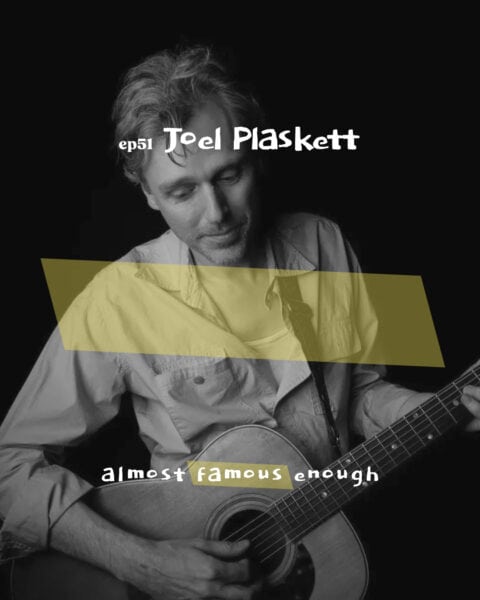
Joel Plaskett on music, identity, and the tension between analog life and AI
Joel Plaskett joins Glen Erickson for a wide-ranging conversation that moves from privacy and digital fatigue to the realities of sustaining a long music career. They unpack what it means to make art in an increasingly algorithmic world, reflecting on place, age, and the changing shape of creative work. Joel shares how his life has been split between Nova Scotia and Vancouver Island, why that tension remains creatively productive, and how honors like the Order of Nova Scotia and the Portia White Award fit alongside his local identity. The conversation also explores Thrush Hermit, the Halifax music scene of the 1990s, building a studio, and why he still feels compelled to make new work rather than settle into legacy mode.
Key topics
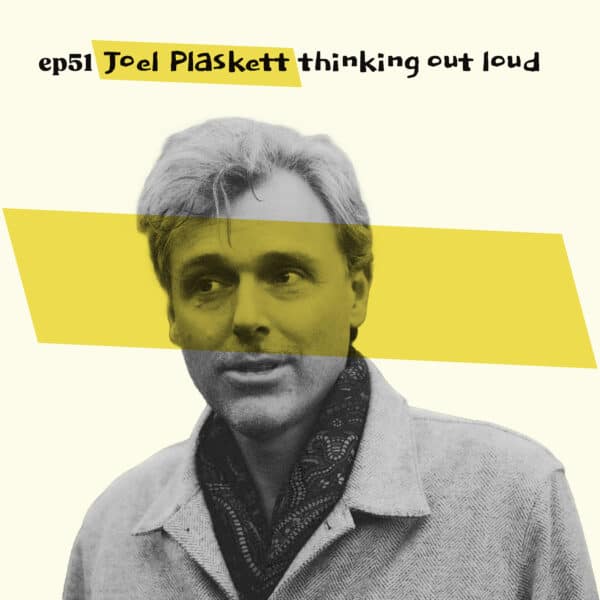
ep51 Joel Plaskett thinking out loud
released October 15, 2026
1:47:18
https://joelplaskett.com/
https://www.instagram.com/joelplaskett
https://www.youtube.com/@joelplaskett
hosts: Glen Erickson, Alexi Erickson
AFE: https://www.almostfamousenough.com
AFE instagram: https://www.instagram.com/almostfamousenough
AFE Spotify playlist: https://open.spotify.com/playlist/1o1PRD2X0i3Otmpn8vi2zP?si=1ece497360564480
Almost Famous Enough is a series of conversations centered around the music industry, pulling back the veil on what it really means to “make it”. Our podcast features guests who know the grind, who have lived the dream, or at the very least, chased the dream. Through these conversational biographies, truth and vulnerability provide more than a topical roadmap or compile some career advice; they can appeal to the dreamer in us all, with stories that can teach us, inspire us, and even reconcile us, and make us feel like we made a new friend along the way.
Chapters
00:00:00 Introduction
00:02:24 Moving to Vancouver Island and living between coasts
00:07:37 Nova Scotia, recognition, and identity
00:12:20 Turning 50 and finding a sustainable pace
00:18:45 Defining success beyond recognition
00:25:37 Building a studio, shop, and creative community
00:31:23 Restlessness, risk-taking, and creative focus
00:35:47 Burnout, aging, and digital saturation
00:38:31 Maps, algorithms, and the value of getting lost
00:41:12 Speed, communication, and Marshall McLuhan
00:44:26 AI, meaning, and the limits of efficiency
00:47:07 Imperfection, analogue sound, and making art human
00:50:14 The efficiency paradox and the cost of “more”
00:55:07 Making space to think instead of react
01:01:15 Thrush Hermit and the Halifax indie-rock scene
01:07:21 Touring lore, regional scenes, and early career lessons
01:15:42 Staying creatively alive across a long music career
01:19:12 Playing the hits while still making new work
01:23:10 Why long-form conversations still matter
01:26:35 Post-Fame with Alexi
ep51 Joel Plaskett thinking out loud
Glen Erickson (00:01)
Anyone who has listened to a random dozen episodes of this podcast is aware that I played in a touring band, complete with glory days tales of touring without the internet in our hands, GPS in our phones, and just a pile of maps under the seat or addresses scribbled on the back of Yahoo map printouts. It was a less prescribed era of navigation, usually involving heated discussions and flailing hands. Joel Plaskett knows that era really well.
In fact, a conversation with Joel feels more like the glory days of unrehearsed talking points, tangents, detours, and a general out loud version of thinking that feels closer to navigating without GPS than following anticipated points of connection. It feels like the ironic nostalgia of getting lost on a Canadian highway, confident in the ability to let the best parts unravel in their own time and surprise you at every stop.
Joel Plaskett, aka of the Emergency, aka founding member of early 90s indie breakout Thrush Hermit, is a multi-award-winning artist making a living at the lighter side of indie rock, steeped in East Coast Canadiana and a friendly, scene-centering charm in every corner of his past.
A career spanning over three decades has brought Juno’s, Polaris noms, regional celebrity status, and personal citizenship awards, but no false humility. He is probably best known through the accolades of his peers who unanimously regard him in the highest, kindest terms. Where some are taking the next exits to playing the hits on retirement circuits, Joel refuses the off-ramp.
And continues making new music and new connections while fostering the threads that tie a rich past to a tenuous future. My name is Glenn Erickson. This is Almost Famous Enough. Thank you for spending your time with us. This is Joel Plaskett.
Glen Erickson (02:13)
Anyhow, that’s not at all what I had planned for us to chat about, but it’s fun. It’s fun, man.
joel (02:14)
No. No, no, that’s all good. We dove right in. I don’t know. Are we
is
this is this are we recording? Are we is this live? Is this all right, yeah. Yeah, fair enough. Cool, cool.
Glen Erickson (02:19)
Yeah, I’m always recording. I just I always just start recording. It’s it’s totally cool, man.
you’re sitting in BC in where?
joel (02:27)
Yeah, yeah.
Yeah, I’m in Victor in Victoria. We’re not it’s outside of Victoria, on Vancouver Island, I should say. so
Glen Erickson (02:31)
Okay. Okay. And
joel (02:34)
yeah.
Glen Erickson (02:35)
and I thought I had heard and so I wanted to confirm that ’cause I I saw you at F Folk Fest in Emmonton this summer
joel (02:39)
Mm-hmm. Yeah. Yeah.
Glen Erickson (02:41)
and I thought you had said like you had made a move out there.
joel (02:44)
Yeah,
yeah. We’re we’re we’ve been out here for on and I’ve been on and off for a few years here. Some’s going to school here, still is.
Glen Erickson (02:52)
Yeah.
joel (02:52)
And and Ven Rebecca’s from Vancouver Island too. So while my musical community and my much of my livelihood is out east, so I’m traveling a lot. we’ve been hanging our hat out where our yeah, exactly.
Glen Erickson (03:02)
Yeah, opposite end of the country, literally.
joel (03:04)
I’m kind of a bit of a ping pong ball. I mean, my gig’s always been on the road, so it’s not a whole lot different. I’m usually going somewhere to play.
Glen Erickson (03:11)
Yeah.
joel (03:11)
But there
are I’m going east for, you know, a lot of the things that happen are on the east coast. So I go there
Glen Erickson (03:14)
Except that you’re a
a lifelong East Coast person, right?
joel (03:18)
Yeah, it’s a bit it’s
a bit of a l yeah. I mean it’s I I I’m a fish out of water out here. I’m enjoying it. it’s it’s different. Yep. Yeah, yeah. I’m fish out of I’m I’m fish out of in a s in a in a slightly different body of water. Not that I’m much
Glen Erickson (03:23)
Well, at least you still have the water. It’s not like you ended up in Regina or something like that, but Yeah.
joel (03:32)
of a swimmer. I’m not much of a fish to be honest, you know. I’m a land lover.
Glen Erickson (03:34)
Was it
was it like I don’t know if I want to use the word culture shock, but I just think living like your whole life and building it’s one thing to just people talk about, yeah, I’m from a place and I was always from a place and then I moved
joel (03:47)
Yeah.
Glen Erickson (03:47)
and it was really hard on me. I think that’s different than the conversation of like I built everything that has become my life in this place, right? Which is why
joel (03:55)
Yeah, in this place, yeah.
Glen Erickson (03:57)
it’s been hard for me to consider leaving Edmonton because by the time I
joel (04:00)
Course.
Glen Erickson (04:00)
moved here,
joel (04:01)
Yeah. No, I
Glen Erickson (04:01)
I built everything now. So
joel (04:04)
I don’t f feel like I mean, I don’t feel like I’ve entirely left Nova Scotia because I’m there a lot. So there is that. So and I have a lot to do when I’m there and I’ve got a lot of friends there. And I’m on the phone every day with with folks back home and whatnot, you know, ’cause a lot of my my business, my manager’s there, all that kind of thing. But
But it is different. It is a culture shock. It’s different out here. It’s beautiful. Obviously Vancouver Island, if you’ve been. and it it doesn’t feel as instantly sort of like I d I don’t I’ve I’ve I’ve got a nice small, you know, Rolodex of of folks I know and friends out here, so I don’t feel
and I’m and I’m spending more time with the family in some respects. I’m home or when I’m home. Now I’m
Glen Erickson (04:43)
Yeah.
joel (04:43)
gone. When I’m gone, I’m gone. But that was always the case. But weirdly, when I was home in Halifax, because my studio, there’s so many people in the community that I know, when I went out, I could sort of come back at day’s end or just and and be kind of like my social battery was just like gone, you know?
Glen Erickson (05:02)
Mm.
joel (05:04)
So if there’s a if there’s a and there’s there’s there’s pluses and negatives to both. I mean and and and
Glen Erickson (05:09)
Yeah.
joel (05:10)
on some in some ways being out of Nova Scotia for these longer periods of time has given me a just a different experience that I haven’t really had my whole li I lived in Nova Scotia my whole life. So this is the first time where it’s been like, no, we’re in a in a place. Now s you know, still we don’t have all our stuff out here. We’ve been kind of like, you know, we’re not we’re not fully dug in. but we’re
But we’re digging in and enjoying it. And I I have my my studio back east and the ability to go back and work there in the shop that I that I I
you know, in the building, Morley’s coffee and friction books, which I started and Taz Records who rents their they’re a tenant in the space. I got all these things and all these connections and all this work to do back east. But I’ve got there’s a really good team of people there at the studio and in the shop. So it’s it’s ticking along without me. It’s in fact it might be easier when I’m not there coming in like a hurricane going, What are we doing next?
Glen Erickson (06:03)
Yeah.
joel (06:04)
you know, so
I I’m just kind of rolling with it. But it is some days it’s like that’s going on. And other times,
Glen Erickson (06:12)
Yeah.
joel (06:13)
but there but there’s but I’m but I’m experiencing different things and and in in a in and and and to be to be you know the the other thing that I think is really important is my you know, my wife Rebecca who’s and she misses the East Coast a lot because she has some old dear friends there, but she is from the West Coast and has missed loves the geography and her folks are out here and
Glen Erickson (06:32)
Yeah.
joel (06:32)
They’re getting older. So we wanted to see be close to them as well. And I’m back
Glen Erickson (06:35)
Yeah.
joel (06:36)
east a lot. So I’m seeing my folks still almost as much as I did because, you know, I was traveling so much.
Glen Erickson (06:41)
Yeah.
joel (06:41)
So it’s not like on some level, well, it’s a little bit of a a challenge. and you know, one of the things I’ve been talking about, I I might have even said this from the stage, you know, I’ve I’ve been thinking about the kind of the the string across the country that’s always been there for Rebecca and I, even though she came out east, she’s missed the West and is from the West.
Glen Erickson (07:01)
Yeah.
joel (07:01)
And that string, I always kind of my my sort of metaphor is it’s like a string under tension and makes music. But there’s always been this like pull to both coasts, right? and and I I feel like it’s important for me to be out here. I actually feel like I’m seeing somebody in their natural habitat. You know, Rebecca, like,
Glen Erickson (07:18)
That’s really great.
joel (07:19)
you know, and so exactly.
Glen Erickson (07:22)
You don’t know until you do it, right? Like until
you’re there.
okay, so I mean, you make that move from Nova Scotia, but at the same time, in the last year or so, like you’ve you’ve been handed a couple of pretty prominent awards out in Nova Scotia and recognitions. The Order of Nova Scotia and the Portia White Award, which
joel (07:37)
Yeah. Yeah.
Glen Erickson (07:40)
are sort of both citizen.
Awards ones more for the contribution I think to the arts that I read and stuff.
joel (07:45)
Yeah. Yeah. I mean that was my
my my sort of trajectory is I feel like I’ve just arrived in BC, even though I’ve come and gone from it a few times. because I I I was living out east on my own for a little while for the first while. We came back one summer and I’ve spent probably half the year or more in Nova Scotia. So like I said I well I feel like I I’m sort of of two worlds. but that being said, yeah, those awards were an incredible honor.
and and to be recognized in Nova Scotia in that way means a lot. I I’ve spent my whole life there. I mean, it is who
Glen Erickson (08:18)
Mm-hmm.
joel (08:19)
I it’s made me who I am. and and you know, my whole kind of not my whole world is there, because that’s you know, my my family is a big is is also my whole world, you know. so so we’re out here, but but my my what my
My sense of being is very much tied to sense of place. And that place is j you know, Nova Scotia is the streets of Lunenberg are like burned in my retina, you know, and and
Glen Erickson (08:46)
Yeah.
joel (08:47)
and and it’s it’s sort of like i i it is the the temperament of the the culture there has kind of made me who I am, I think, in many respects. And so yeah, to be recognized in that way is really meaningful for me.
And continues to be. And I and I will say, because I was coming and going a bit from the West when those accolades came along, I was like, God, I hope I don’t, I’m not an imposter, you know. You know what I mean? Like like you know, I mean I was
Glen Erickson (09:12)
Yeah, yeah, yeah. I was wondering I was wondering how that would have made you feel, what that response would have been like.
joel (09:17)
I was still out there for the most part, you know, kind of coming and going a bit. But it but I’ve I’ve felt like this, like in this sort of almost no man’s land.
because I I’m I’m I’m I’m s I’m I’m I’m very much recognized as being from Nova Scotia. It’s part of my identity,
Glen Erickson (09:38)
Mm-hmm.
joel (09:39)
my public identity, right? And it’s part of what I talk about and sing about. And it continues to be like woven into the fabric. But so yeah, there’s this little bit of kind of strangeness when it comes to sort of having relocated
you know, for for f for family reasons and and and and you know, to experience something different too, which I think is kind of important. And so I don’t feel like I’ve like I I I you know I I it’s it’s kinda it’s kind of a complex emotion, if I’m to
Glen Erickson (10:07)
Yeah.
joel (10:08)
be on be honest. And I mean I’m sure anyone who moves feels it. I just I’d never I’ve never really it it it it the other th thing that’s interesting is like it it sort of gets down to the whole
question of like identity and how you sort of like when when you are tied to a place and when you’re and people know you as being from a place, but when you’re also a public person who it’s sort of like Bruce Springsteen’s Forever from New Jersey, but I’m not ex any I think he lives there,
Glen Erickson (10:31)
Yeah, exactly.
joel (10:32)
but I’m sure he lived in California. He’s been he’s been here and there, you know? And but you t you tie him to that to that part of the world because that’s where
Glen Erickson (10:39)
Yeah.
joel (10:40)
the sort of that’s where the grant that’s where his ground of of of identity is, you know? and so,
it and it just just happens to be a huge country. Like the distance between Victoria and and and Nova Scotia couldn’t be any bigger. but
Glen Erickson (10:53)
Exactly. Yeah, exactly.
joel (10:55)
but you know it’s yeah it’s it’s a bit of a trip. I’m just kind of rolling with it.
Glen Erickson (11:01)
Yeah.
joel (11:02)
And and we’re and we’ve been sort of feeling out. It’s been really great for our son, you know. he he he attended a really unique school and he’s continuing to do so. And now’s studying something else. And so
It it like on on a lot of levels it’s been yeah, it’s been it’s been kind of it’s been like a challenging rich experience. And I’m still getting a whole I was in Nova Scotia for most of the summer and I’m gonna be back there for a good chunk of November as well. So it’s sort of like I just keep coming and going. I have to I at some point, like in the in it, I feel like right now it’s a it’s like a year of a few years of just like, okay, trying to figure it out.
gig doing trying to figure out what the business of what I do is. Also like the music business is just it’s all live now. Like, you know,
Glen Erickson (11:49)
Yeah. Yeah.
joel (11:51)
it’s it’s been that way for a long time. I mean I and I have I have the studio and the shop back east, which is part of the ecology of what I got going on. but that’s not they’re not my
livelihood. They’re more like my base. You know what I mean?
Glen Erickson (12:04)
Yeah. Yeah.
joel (12:05)
and and and and they provide a a a bit of a livelihood for other people, which makes me happy. Like it creates a it’s it’s a scene, you know? and so I’m really happy about that. But I really I I kind of have to travel to do what I do. And I am getting older.
Glen Erickson (12:22)
Well, I mean
joel (12:22)
And feel feeling
like I kind of like I I got a couple I you know, I mean I got plenty more years of doing this. I have no I had no offer and no intention to stop, no retirement plan. But I am mindful of the fact that like I have to sort of navigate it w with the knowledge that I’m fifty one and that there’s like a pace at which I can that I had that has to be sustainable.
Glen Erickson (12:42)
Yeah.
And I think crossing fifty, like ’cause that’s a very recent thing for you and
joel (12:46)
Yeah. Yeah. Yeah.
Glen Erickson (12:48)
and when it happened to me just recently, not too long
joel (12:51)
Mm-hmm.
Glen Erickson (12:51)
ago, like it was a big point of me asking, like, Am I doing the thing that I want to do for the next leg? Because it just felt like a natural thought process, right? I think.
joel (13:02)
It it does
ha it does have a sort of big number attached to it, you know, in terms of like what we consider, you know, certainly midlife if you’re very lucky, you know. But beyond midlife. You you’ve gone beyond midlife
Glen Erickson (13:11)
Well you you look at the runway. Yeah.
joel (13:15)
to kind of like, okay, now like where’s the you know, and you can feel your body like my shoulder’s giving me grief and stuff from an old injury and it’s like you know, there’s all those kinds of things and none of it stopping me. And I mean I I feel like I I
I mean, music is just a way of it you know, it’s a livelihood, but by and large it’s sort of it’s kind of again, something I just feel compelled to do and I love performing and all of that. but
Glen Erickson (13:38)
Yeah.
joel (13:38)
but you know, there is the kind of reality of like going away gets harder.
And wanting to and the desire to stay home gets stronger, you know? And and other weather wa ways of playing music. I, you know, and and you know, despite all the tech of, you know, in in, you know, during COVID, all of a sudden there were these online concerts and those were kind of a weird, surreal experience. And on some level it was like, you can kind of work from home a little bit if you’re in this, you know, me but that that that doesn’t it doesn’t really work that way. You know, like people it’s we
Glen Erickson (14:07)
Yeah, it doesn’t.
joel (14:08)
there’s nothing like being in a room with people.
When it comes to making music. It’s there’s a transmission that happens. I mean, even this a conversation, which is fine and great online, but it would be different if we were in the room because there would be
Glen Erickson (14:19)
It would be a hundred percent different.
joel (14:20)
we’d hear the reflection of the the same room, right? We’d be talking in a in a in a in a way that would be sympathetic to the space that we’re sharing as opposed to in our own spaces, you know.
Glen Erickson (14:30)
And there’s a different energy
that you share, I think, that you just can’t replace despite how much, you know, you know, people who are used to talking a whole lot and stuff with each other can bring an energy to a screen for sure, but it’s not the same yeah.
joel (14:43)
Well and c and case Exactly.
And and we s we’re seeing the versions of ourselves, right? ‘Cause I can’t figure out how to turn off the myself. And so so, you know, we have
Glen Erickson (14:49)
Yeah. Yeah, exactly, exactly.
joel (14:51)
this like, you know, there’s even just that a different sort of form of self awareness, you know. and and
Glen Erickson (14:55)
Yeah. Yeah. I think that when
joel (14:58)
yeah.
Glen Erickson (14:58)
when I was hitting fifty, it was the first time I was like, I actually can see and think about sort of the end of a certain runway was there for the first time where I had never thought about it before, right? career wise.
joel (15:09)
Right. What what what was
what yeah, career wise, yeah, yeah. Yeah, yeah.
Glen Erickson (15:12)
Career wise, right? I was just sort
of like, I know where this sort of ends now. And that’s like in sight. And it was never in sight before. And it was a strange.
joel (15:17)
Mm. Mm. Yeah.
Glen Erickson (15:21)
And the other thing I started experiencing is like my parents and everybody, my maybe, you know, older siblings even like people
joel (15:29)
Yeah.
Glen Erickson (15:29)
were starting to talk about life more in the rearview mirror than what was ahead of them. And and like f so for you in a music career
joel (15:33)
Yeah. Right. Right. Right. Right. Right. Yeah. Yeah. Mm-hmm.
Glen Erickson (15:37)
that you’ve been doing
Your
whole life you’ve been doing music, you know, up you know, it to the point where you started as a career, being very much, you know, at only fifty considered an elder statesman by far in the country. Big simply because of how long most people’s careers might last. Well, you started Yeah, you had the lore
joel (15:53)
I’ve been at it a long time. I I I I and I started very young. You know, you know, I kind of I I walked out of high school into into a into a van.
Glen Erickson (16:00)
of like
joel (16:01)
Yeah.
Glen Erickson (16:01)
starting to play music with your friends in high school and walking out of that into an actual band that actually started into the business and and that propelled
joel (16:09)
Into a scene. Yeah.
Glen Erickson (16:10)
you into into everything. And so you’ve got a lot in the rearview mirror. In fact, so I I was looking over this and this is what I found really interesting about you, Joel, is like I’ve obviously known about you for a really long time. You know, you come out of one of the most significant sort of musical
Propulsions that ever happened in Canada, which is the
joel (16:30)
Mm-hmm.
Glen Erickson (16:30)
Halifax explosion of the 90s. And and I think what’s interesting is you’ve had a very busy, active, productive career. Like you’ve been very prolific in producing music in in different sort of iterations and and groups.
You’ve won a crazy amount of awards. I guess the bigger point I think about this, well I’ll even say like you’ve had the distinction of of having a group of very reputable, like loved Canadian artists create a tribute album for you. Like that is an incredible
joel (17:03)
Incredible. Yeah.
Glen Erickson (17:04)
rarity, along with like tons of awards in Nova Scotia’s music associations, in East Coast music awards associations up to the Canadian folk music awards and then the big
Canadian ones like Polaris being shortlisted and long listed multiple times, winning a Juno in the adult alternative album, and nominated multiple times both yourself with band. So everything to having the Queen Elizabeth like Jubilee medal, you know, an again a a a prominent Canadian citizen award,
And then my favorite that I found when I obviously do a little bit of research I didn’t know was Paul McCartney selecting you to be an opener when he
joel (17:44)
Yeah.
Glen Erickson (17:45)
when he showed up, which just would be a little personal tickle above most things, I think. So you have this breadth, not just of producing a whole bunch of music, impacting your scene by building literal places for people to work alongside you in the
joel (17:59)
Yeah.
Glen Erickson (18:00)
business of music. you’ve got the accolades to go with it.
Does it feel to you like I I’m gonna ask the hard, weird question to me, but the one that I’m always most curious about with artists because of
joel (18:16)
Mm-hmm.
Glen Erickson (18:17)
a common stereotype of our personality? Like, does it feel like you were like, I’ve had a really successful career? Or do you still at 51 be like, but I didn’t get to this, this, or this?
Like
these certain things weren’t checked off. Like, is there a point that you’ve that that’s still present or is there a point in your career that you were able to get past that thing that I think nags a lot of people when they’re always sort of chasing, you know, chasing after the golden something?
joel (18:45)
Mm-hmm.
I no, I feel really I mean, I feel really for fortunate in the sense that I’ve been able to do it for this long. I feel really supported by a community of people, both like in Nova Scotia, the local community, and then in a broader Canadian sense, as well as like the support of
My family, my wife Rebecca, who’s sort of put up with a touring musician for you know, kind of since we got
Glen Erickson (19:11)
Yeah.
joel (19:12)
going, you know, and all that, which is like kinda it’s th those are sort of the the things you don’t that that that that everybody sort of knows is that a lot of the time they’re but if you have that support it goes a long way.
I’ve had the good fortune of been having kind of forward motion and recognition. No off-ramp in my own mind for doing something else because I started it so young and
It never really occurred to me to go seek an alternative route. So it’s been a sort of there’s a bit of a kind of like, how am I gonna make this work as it changes?
Glen Erickson (19:41)
Yeah.
joel (19:42)
And a and a feistiness there, I think, to trying to kind of make that happen. But combine that with a team of really important people, like my manager Sherry, who, you know, on a day-to-day level, just like holds my world together and makes like that covers record that you mentioned was
her idea, right? She curated that as a surprise for me, you know, for my 50th
Glen Erickson (20:00)
Mm. Wow.
joel (20:03)
birthday. Like an incredible gift, really. So she made that happen, you know, so and and and all these great friends said, yeah, we want to sing one of my songs. And so, you know, I I got this kind of gift.
And kind of a dream come true, honestly, because I never really think of my songs as being like coverable exactly because they tend to write
Glen Erickson (20:23)
Hmm.
joel (20:24)
I tend to write with a degree of idiosyncrasy and the personal rolled into it, kind of a specificity maybe for and so I often don’t think I mean there are some songs that I think kind of go beyond that.
but even nowhere with you, it’s like mentions the Dartmouth Ferry. So, like I want Keith Urban to cover it so I can retire. But you know, we it’s gonna have to be like the Brisbane Ferry or something like that, you know.
Glen Erickson (20:46)
Yeah.
joel (20:47)
but is there a ferry in Nashville? I don’t know. But
Glen Erickson (20:51)
Yeah.
joel (20:52)
you know, I I so I yeah, as far as like a list of things in front of me that I wish I had done or that I’m
done yet. Like the thing is I don’t have an off-ramp. So I continue I I’m gonna continue to make things. I don’t really I get kind of when I while I am becoming more rearview mirror in terms of the older I get, the more there’s this catalog behind me, memories behind me, things that I can kind of reach and touch if I close my eyes, yet they’re further and further away in terms of the span of time, but they feel like they’re right there, you know?
Glen Erickson (21:24)
Yeah.
joel (21:24)
and I write with those things in mind, sometimes from where I’m at now.
And I do like going back to older things. But when I go back to like an old concert and go, I should mix this and put it out. All I hear are the mistakes, you know, and I have to kind of get past. often I find
Glen Erickson (21:37)
Yeah.
joel (21:38)
the rear view mirror more like I just start kind of judging or second guessing what I was just doing naturally in the moment at the time. And so I find it more interesting to stay in the present and and push towards the future of projects. And I think that in some ways has
ke kept me active in people’s minds a little bit. Because but I but I don’t know. But I I feel like I’ve been rewarded for my experimentation is the wrong word, but for I guess for at least the kind of restlessness. I’ve been rewarded for my restlessness, you know? and
Glen Erickson (22:10)
Mm, that’s an interesting way to think about it. Yeah.
joel (22:13)
and and and
And I and I and and that means a lot actually, you know, and I don’t I don’t want to take that for granted. I I I think a lot of people I see at my show my the ages at my shows are are are getting are are kinda getting wider and wider, you know. What happened I found was things were slowing down in the sort of like twenty fifteen to the pandemic even, you know. I was still drawing, e you know, but
maybe f during the teens, you know, my kind of the real attention on what I was doing was like Ashtray Rock three, those records kind of late two thousands. Into
Glen Erickson (22:48)
Yeah.
joel (22:48)
the and then and then of course, you know, everyone a lot of the fans are kind of my age at that time. Then they have kids and they stop coming to shows or, you know, like like or they get prof their their lives become more professional and they’re out out doing that. And so they kind of some some of those diehards sort disappeared for a while, you know.
And the shows were like still good, but you know, you didn’t feel like you saw all the same people, you know, you know, it wasn’t like i i it it and
Glen Erickson (23:11)
Yeah.
joel (23:12)
and then coming out of the pandemic though, what I found on the other side of it is some of these folks are now they’re they can go out again. Or their kids they’re coming to the shows with their kids. Or their kids are now like twenty, you know, and they’re they’re fans because they’ve they they were listening to me when they were five years old, you know. And so I c and then I and then I see folks who are older than me, like at a folk festival or something like that, you know.
and so I kind of I I I feel like there’s all all these ages there and I find that really cool. And so it’s making kind of this through line of of whatever my trajectory or whatever it is, you know, feel
really kind of like tethered in a lot of different places. You know, like I can feel the I can feel like, you know, the net, you know, kind of holding me. and and I
Glen Erickson (24:02)
At some point it stops
being a trajectory, right? I think from talking to a lot of people, it feels like at some point we lose
joel (24:06)
Yeah. That’s right. That’s right. That’s a good point. Yeah.
Glen Erickson (24:10)
when you’re in the career, you stop at some point being like, I’m not on a ladder to success
joel (24:15)
Yeah.
Glen Erickson (24:16)
anymore. I’m on a I’m on a like you calling it a thread that you can draw through all of these things. You’re you’re just more on just a regular journey, right? That you just show what you
joel (24:25)
Yeah, it’s a journey. And it will yeah,
and it’s and it’s a journey that kind of like goes forward and backwards and sideways. And and I mean and to be honest, like I mean I’ve chased things, you know, certainly had like a lot of
good opportunities like that Paul McCartney one or something. Like, hey, that’s a feather in the cap, you know? Like, and
Glen Erickson (24:42)
Yeah.
joel (24:43)
and and and I’ve got, you know, my manager Sherry is like, okay, let’s figure out how you’re gonna make a living, you know, doing this or how are we gonna get paid? You know, so she, you know, to have good business advice is sort of kind of crucial to be able to do it full time, right? You know, plenty plenty of people make great music and good art and can perform good shows, but a lot of people struggle to make a go of it.
And it’s not not easy. And a lot of my friends are j like who are kind of great songwriters. it’s a it’s a tough climate. It’s a tough and and
And and and I I can feel it there at the edge of it too. It’s not getting easier. Hotels aren’t getting any cheaper. It’s like how do you I do a lot of things solo, less with a band, you know, just because the world’s expensive and everybody’s getting older and all
Glen Erickson (25:25)
I hear that more, yeah.
joel (25:26)
of it. So it the same pressures exist, you know, in a lot of industries, but have a kind of acute feeling with musicians because much of the live the live work involves traveling, which is expensive.
And and and and the more people you wanna put on stage, the more ambitious you wanna make your show. The the more people you gotta be able to put in a room to to to shell out Doe to support everybody who’s on stage.
Glen Erickson (25:47)
Yeah. When you when
you started the bookstore and the and the when you this studio and all those
joel (25:53)
Yeah.
Glen Erickson (25:53)
things, was that was that an effort to sort of like you sort of said, like to shore up the income sources because now you understand more about the business and industry. I mean a lot of people sort of branch
joel (26:02)
No
Glen Erickson (26:05)
into industry sections with what they know to try to create income streams or
joel (26:09)
Right. I would say I
I would say no, no, that’s not exactly it. I I’ve always loved it started with the studio and I was running a little shack of a studio and I’ve always loved recording and so and I’ve always felt like some of the recording things I like working in studios.
but I realized a lot of the time I liked working in spaces that I could have the control of. Like I liked studios that were set up or functioned a certain
Glen Erickson (26:32)
Mm.
joel (26:32)
way. So there was the desire to have control over a space. and and then eventually kind of, you know, you get the bug for like cool equipment and you know, and I’m also an analog guy. So a lot of as studios get more and more digital, I was
Glen Erickson (26:44)
Mm-hmm.
joel (26:45)
like, I’m gonna need my own space, right? Because while we use the digital, I like the sound of tape machines. And if nobody’s got them anymore.
you know, then I gotta get them. Then and you and you know it’s that’s does it yeah, so so so the studio
Glen Erickson (26:53)
Then you need you need space ’cause collecting that stuff is big.
joel (26:58)
was kind of like a a practical desire to go, look, I won’t spend money elsewhere, I’ll spend it here. It’ll be an investment
Glen Erickson (27:03)
No.
joel (27:04)
and it’ll be a place to work. And so yeah, there’s a practicality to that. And it does build a potentially a a a a bit of a model for and that’s a commercial space that this that that people can rent.
But is again like the studio business is sort of it’s it’s it’s it’s it’s like another layer of, you know, it like making recorded music is a calling card for your live show, which is getting harder and harder.
to make money from because the expenses of the world. And so, you
Glen Erickson (27:30)
Yeah.
joel (27:30)
know, a lot of people are recording at home. They might go to the studio for a day. Like what would have like, hey, can we book in for two weeks is like, I want to make a record is like, can I come in for an afternoon to do drums that I’m going to overdub on at home? You know, like those are the kinds of the studio sort of and so, and I understand why. So it’s not exactly a hugely practical economic consideration, but it’s an important artistic one, which for me, in the bigger picture of what I do,
Kind of pays dividends in the sense that it it builds a space, a story, a sound, access.
All of these things. So even if you can’t quantify it on a yearly level, like this is how much money I saved, it’s like this is how much music I made, and this is how much music other people made by having access to a space. So for me, it’s not just my own creative output and input, you know, it’s other people bringing energy into that space, people that I can pro that I’ve produced or worked with, other people coming in to work with other people, and that fostering a scene in Nova Scotia, in Dartmouth, and all of it.
is just something that I think energy begets energy, right? And and and and so that I think is just like important for the things that I care about and for the community that I care about. But it’s also just important for me. Like I’m not I don’t wanna sound like I’m totally selfless in it. you know, sometimes I’m like, boy, this is kind of a challenge. And I but I have I do have one thing that I and I really gotta credit.
my parents and I think specifically maybe my mother, because she was sort of the more maybe trailblazing. My dad kind of is a little little more cautious or a little more sedentary is the wrong word, but he he doesn’t move as quickly. But I’ve always I’ve not been afraid to take a risk when when the opportunity presents itself.
usually it’s a bit of a calculated risk or I try to get some good advice, but there is a point where a lot of people go, Okay, I can’t take that on and I just go, I’ll figure it out. And there’s a little bit of leap of faith. And I’m I’m and I think I just I don’t mind that. The building was that, like the biggest one, like with the studio
Glen Erickson (29:26)
Yeah.
joel (29:27)
because and then the shop, to sort of finish the answer, I guess that’s a long winded one, but the shop came after the studio when the space in front of the studio freed up because the tenant left. And it was like, well what am I gonna do with this space? you know?
Because
Glen Erickson (29:40)
Mm.
joel (29:40)
I I bought the building, right? I’d wedged my foot in the door and gotten a mortgage somehow on this building in downtown Dartmouth, you know? And so when that space freed up, it was like I’m either gonna get a tenant or and and then it’s gonna be a thing, or we’re gonna make something up in there. And it’s like, well, what’s cool, what’s the coolest thing you can put in front of a studio? It’s like a record store, Taz. So I approached Taz.
And then the and a co and coffee, like this is what we need to stay awake, you know. So like let’s put the two things in there. And Chris, who plays plays bass in the emergency, he had his haircutting business in the corner for a while. So we were coffee records and haircuts. And now we’re coffee records books. We opened the bookstore in twenty twenty one. and
Glen Erickson (30:18)
Yeah.
joel (30:19)
so these were all ways in which like my interests could kind of and and the thing could kind of dovetail together.
Glen Erickson (30:25)
Yeah.
joel (30:25)
the economic model for it is still yet to be seen, but the commun
Glen Erickson (30:29)
Yeah.
joel (30:30)
but the but you know, like it’s but it’s I’m not turning a blind eye to it. There’s a really good team there, but it’s not that’s not the imperative. the the the mission statement is really to like like f foster like creativity and conversation and and and have work and workspace and be around stuff that matters.
You know, to me and to other and I think to other
Glen Erickson (30:51)
Yeah. The music the music
joel (30:53)
people too, you know.
Glen Erickson (30:54)
yeah, the music business has always been so entrepreneurial, right? Like there’s a big overlap to the
joel (30:58)
It is.
Glen Erickson (30:59)
concept of entrepreneurialism and so the ability, yeah, like I don’t know somebody who has what they could call now a career without
joel (31:08)
Mm-hmm.
Glen Erickson (31:09)
being somebody who was comfortable taking risks.
joel (31:11)
Well, exactly.
And and and to to and for me it’s always been a little bit of a j not jack of all trades thing, but my interests, you know, aren’t that wide, but they’re not so narrow that I’m just gonna do the same thing all the time. So I I learned to play shows on my own, play with my dad, other folks, duo shows, emergency
Glen Erickson (31:28)
Yeah.
joel (31:29)
band shows, bigger shows with the emergency plus more people, you know, and so
Trying to present the music differently was always a thing so that the concerts wouldn’t feel like they were always the same thing. But then in the context of say a studio or the bookstore, like these things all just sort of become places in which I can like focus some energy. Sometimes in a distracted way. Like the amount that I’ve taken on, I think sometimes can be hard on my
on the family, on my own kind of focus where I’m I’m now dealing with a bunch of things. And for my manager Sherry going, You sure you want to do that right now? Like you need to think about when your next record’s
Glen Erickson (31:59)
Yeah.
joel (32:00)
coming out. You know, like she’s a good voice of reason to go like, don’t overextend yourself. And I have overextended myself a number of times and continue to do so. It’s kind of the nature of what this business is now. but I am I’m I yeah
Glen Erickson (32:15)
That that need for novelty, is that
like that’s also super common in artists, as much as entrepreneurialism.
joel (32:20)
Yes, right. That’s right. Yeah.
Glen Erickson (32:22)
I’m at the age where I got diagnosed ADHD as an adult, like in the last couple years, and
joel (32:25)
Right. Yeah. Yep.
Glen Erickson (32:27)
now I’m like now I’m looking at my history of my relationship with artists and going, so much makes more sense now. So many with so many
joel (32:30)
We’re going right. Yeah. I mean c yeah. But it makes so much more sense. Yeah. Yeah. Yeah.
Glen Erickson (32:36)
of us, right? Where we were driven by novelty, like we got easily distracted by
joel (32:42)
Mm-hmm. Mm-hmm. That’s right. That’s right.
Glen Erickson (32:43)
Whatever seemed really exciting because we were
always involved in the need the the creative
joel (32:48)
For step.
Glen Erickson (32:50)
aspect was like this is what excites us, this is what triggers Exactly. Yeah.
joel (32:52)
And and and and the need for stimulation sometimes, like right. It’s it’s it’s like and and that there’s there’s a shadow to that for sure, you know.
and and and you can feel it as you get older and you can feel how you realize like it’s a weird thing, but there’s that point where when you’re younger, you kind of just go, There’s all these hours in the day, you’ve kind of got time for everything, and you never really I I I I I won’t speak for everyone else. I’m just gonna speak for myself. This is the way I felt, I think, when I was younger was
I just kind of assumed you could kind of just do everything. You know, like you that you know, you you that there wasn’t that you would just if you if that was if that was important, you would do it. There was never a trade off. You were never like,
Glen Erickson (33:26)
There’s no price to pay, you mean? Yeah.
joel (33:29)
if I do that, I’m not gonna be able to do that. Like I never really thought about those trade offs. Like, probably just
And that that’s probably a point of privilege and good fortune, really, you know, like I’d I’d had access, right? Not everybody has
Glen Erickson (33:41)
Yeah.
joel (33:42)
access. Not everybody has a family who says, like, do what you feel. You wanna make music? Let’s make it happen, you know. So these are, you know, I I I recognize that that that that’s that’s part of what’s there.
But there’s a point, I think, in my forties where I really felt like, I see the trade off now and I see actually what I wasn’t doing or what I wasn’t working on in terms of like balancing myself, like my physical. I’m not an exerciser.
I’m not a guy who takes great care of himself. All the things of like, you know, like in terms of my body, you know, I was gigging all the time, so I wasn’t even thinking about it. There were sweaty gigs, you so I can get my exercise on stage. Pandemic hit, suddenly I wasn’t, you know. And I was like, my God, and I’m out older, you know.
Glen Erickson (34:18)
Ha ha ha
joel (34:21)
and and so that trade-off suddenly, you know, and and the pandemic sent me pretty inward,
Glen Erickson (34:26)
Yeah.
joel (34:26)
you know. and it started even a few years previous to that, but it really kind of got, you know,
And and so with that came even a different like the record I released a few years back, one real reveal is very kind of quiet and made on a four-track set machine. And I kind of go back and forth between wanting to be out there and wanting to be to be in there, you know, like to be to
Glen Erickson (34:49)
Yeah.
joel (34:49)
be to to sort of and and that.
Again, that’s just part of like this cycling polarity. and maybe it’s just like chasing stimulation, you know, like and then getting maxed
Glen Erickson (34:59)
For sure.
joel (35:00)
out by by peop by by the pup the by the world. and then and then and then retreating, you know.
Glen Erickson (35:06)
Yeah, that sounds like a
similar path to me. It was just happening that I noticed it just before the pandemic.
I was calling it social anxiety that I was starting to experience. And then I
joel (35:16)
Mm-hmm.
Glen Erickson (35:17)
the pandemic happened and then coming out of it when I’m like, I need to talk to somebody about this because this
joel (35:22)
Mm-hmm.
Glen Erickson (35:23)
shouldn’t be harder at this stage of life. I should have figured it out and made it easier. And then I started to understand that I spent my thirties at a ridiculous cortisol level, which is essentially just like I can stay on top of the mountain
joel (35:35)
Mm-hmm.
Glen Erickson (35:36)
every day and night.
joel (35:37)
Mm-hmm.
Glen Erickson (35:37)
through
my entire thirties and I’d been doing it in my twenties too. And then your
joel (35:39)
Yeah. Yeah, yeah.
Glen Erickson (35:42)
yeah, your body and your mind pays that price because there’s a valley to every mountain. And you know, you don’t let people see it because you’re like you’re you’re
joel (35:49)
I exactly. Exactly.
Glen Erickson (35:52)
living on this stuff and then yeah, it’s it catches up at that
joel (35:55)
And and I think
that could be I think it can be age related and I think it can probably it’s probably existed since the beginning of time, but I think it might be that the times we’re in, which ha are increasingly like tech and v virtual interactions and and engagement and the way we get media and the way we read and the way we consume things now, or read or don’t read, listen, watch, all of what we’re doing right now making a podcast, you know.
that
That has a sat there’s a we’re really, really, really, really saturated. And we’ve been building in that saturation across the 2000s, right? Like the last analog era of the 90s kind of feels really quaint and like nostalgic. And I have rose-colored glasses for it because I was a young man and I’d walk out the door and I’d lick my finger and go, where are my friends? I’ll find them. You know, like they’re you the wind would blow and you’d find your friends somewhere at a pub downtown or whatever. Knock on a door, leave a message, whatever, hope
Glen Erickson (36:43)
Yeah. And you had to knock on a door to see if we were home.
joel (36:49)
for the best. So, you know, and anyone from that era has a kind of nostalgia for it.
And I feel for young folks who are kind of digital natives and don’t never really had that kind of fully analog youth, you know.
Glen Erickson (37:00)
Yeah.
joel (37:01)
but but I think even I but even but so I I feel the saturation and I feel like most of the conversations now about everything.
but especially like politics and everything that comes along. It’s all downstream from tech from the technology and from the way we’re getting it. I mean, and it’s always been the case. People get it from the newspaper, but a lot of time people are out in the world talking to each other in a space, getting their information that was right or wrong, you know, hashing it out. But now we’re sort of like getting it.
talk to us or watching a YouTuber speak to us or what have you saying, This is how I think things go. And you kind of get your information through this s second layer of of and that has sort of I think worn us all down a bit and also made us actually again I gotta be s sort of be mindful of the royal we like of the us, you know, but I I sense for myself a saturation.
and I
Glen Erickson (38:00)
Yeah.
joel (38:01)
and I sense it in people too, like a fatigue, right? And I think that fatigue built over the the kind of paradoxical or the strange thing that happened in the pandemic is while we both went in, but we also became so much more online. And we’re on the other side of that now. and it’s like or we’re we’re we’re we’re in the other side of that now. Like the way to say it. We’re not beyond it, you know. We’re if anything, we’re we’re we’re swimming, you know, like it
Glen Erickson (38:22)
Yeah. Yeah. Frog in or frog
in the kettle right now, for sure. Yeah.
joel (38:27)
We yeah, we it’s wild, you know. So
I I’m really I find that alone, you know, you got an ADHD diagnosis, for example, right? Like and and but it’s like the world is is putting a lot in front of us, right? You know, to stim and and so if you have an a penchant, which I do for like that kind of stimulation, like I get really I I’ve I was I was writing a you know, I was write writing something recently, I may post it on Substack just simply about how
We used to travel with a box of maps under the seat and find our way around. And I realized on a on a trip across the country when I was driving out here to the West Coast originally a few years ago.
I was using the phone to get me to like Boston pizza because I needed a gluten-free meal and I knew I could get something there and I was trying to make time. But I realized like all the experiences that we were having when we were young with a box of maps and just going into the weird restaurants and getting whatever the meal, not being fussy about anything.
That was the la the the the point of the the post. It might be up by the time this airs. Who knows if I put it up? But I’m calling it like you can always get what you want. Like we’re living in the Rolling Stones song in reverse. So it it
Glen Erickson (39:32)
Mm.
joel (39:33)
used to be you can’t always get what you want, but sometimes you get what you need. Now we get always get what we want. The algorithm delivers it to us. It knows our got our number. It takes us to the coffee shop for the coffee we like to the place that has like the flank steak with chimichuri, that everybody else in there is like the same income bracket and looks a bit like me and has a phone beside them on the on the
you know, like everyone’s kind of moving
Glen Erickson (39:51)
Yeah.
joel (39:52)
through a world where the algorithm, if you’re in that similar algorithm, you end up in the same place with people who kind of like Wilka’s on the stereo. I like them, you know. And so so you you you get what you want, but you don’t get what you need, which is the weirdness, which is the weird I walked in here, I didn’t know what to expect. I had a really bad meal, but I met a cool person or whatever, you know, and all of the
all of those things and I’m not saying those don’t exist but they’re getting rarefied and they’re g because I really think it’s so downstream from the technology. We’ve we don’t we we we we are being served what we want. It’s not always a good thing, right? And so yeah it’s a little as you know, yeah.
Glen Erickson (40:28)
There’s a deep irony in that. The the deep irony
that the globalization of the technology, the tools, the resources
joel (40:35)
Yeah. Yeah.
Glen Erickson (40:37)
are there to help create a more siloed life in a way where,
joel (40:41)
That’s right. Yeah.
Glen Erickson (40:42)
like you said, like we can end up in a place where everybody looks like us, they all enjoy it the same, they all arrive there probably
joel (40:46)
That’s right. Yeah.
Glen Erickson (40:48)
the same way we did.
joel (40:49)
That’s right.
Glen Erickson (40:50)
And you don’t experience the idiosyncrasies, the differences, the oppositions even in life
joel (40:54)
Yeah. Exactly.
Glen Erickson (40:57)
that are supposed to shape hopefully a bigger character.
joel (41:00)
That’s right.
Like friction is is like it is the way in which we move, right? It’s a requirement.
Glen Erickson (41:03)
Is is a requirement. Yeah.
joel (41:06)
It’s a requirement. It’s actually what allows you to start moving. Like too much of it and you you can’t get anywhere, but not enough and you don’t you don’t get anywhere either. You know, so you kind of yeah, all of those things are
kind of like churning around a little bit. And I
Glen Erickson (41:20)
Hm.
joel (41:20)
think, I think you couple that with getting a bit older. And you know, it’s impossible not to get a bit more philosophical. But it’s also kind of like I’m finding that there’s this speeding up that’s happening in terms of the way everybody, the expectation for communication. You know, if you’re booking a tour, things are happening. You gotta get you got to get in, you gotta get a hold on a venue a year in advance if you want to get into it because everything’s happening digitally and things are filling up. So you know you
even just like some of the technical aspects of what used to take a week are now expected to happen in six hours to some degree. And you know, and so you’re or if something happens, you know, I mean again you see the speed at which news travels or the speed at which anything travels is now like it’s instantaneous. And so
We’re all huffing and puffing. And then you get older and you’re like, God, I don’t know if I can keep this pace. And it’s like, it’s now a mental space. And so there’s not even a physical limitation to it. It used to like, Can I get to the bank in time before they close?
Glen Erickson (42:17)
Mm-hmm.
joel (42:17)
You know? Like there was a point where you could only do so many things in a day, you know? And and that’s slowly being not so slowly, but being kind of eradicated. I don’t mean to turn the conversation there. I spent a lot of time thinking about it. I’m a on a big martial
Glen Erickson (42:32)
No, it’s good.
joel (42:33)
Marshall McLuhan kicked the
Glen Erickson (42:34)
Hmm.
joel (42:35)
last couple of years. I’ve been talking about him a lot and reading his writing because I it’s quite prophetic in terms of some of the things that he saw happening in the 60s with electric speed and technology, and we’re living it now, you know.
Glen Erickson (42:44)
Yeah. Yeah.
joel (42:47)
so I I do think about that a lot because I really think it’s affecting everything. And there’s this frustration I feel with being so downstream.
You know, like like like being like, I’m not even sure where to get my information. I’m not sure if this is a conversation worth happening because there’s something above it that’s filtering it so aggressively that I’m not even sure if I should if I should get in the pool. You know what I mean? You know what I mean? I don’t you know.
Glen Erickson (43:11)
Well, because most of our human
existence we could map back one, two, three key points to the authoritative source when you talk about downstream
joel (43:21)
Mm-hmm.
Glen Erickson (43:22)
for almost all human existence, right? Like when
joel (43:24)
Yeah.
Glen Erickson (43:24)
most of it was tribal in very small places. So all the information came from a trusted source that was like probably even within your own family, one or two removed. And then,
joel (43:33)
Right. Yeah. Yeah.
Glen Erickson (43:35)
you know, you splinter that.
The way it did, and then like the Western civilization started to form the nuclear family and and it was much smaller. But we had these institutions that s replace that. Again,
joel (43:47)
Mm-hmm.
Glen Erickson (43:47)
this is like it makes a lot of sense to me that we arrive at a place that is so incredibly splintered. And now the fear isn’t unwarranted that right now we can’t even trace back the source. And that should leave us feeling a little ungrounded, a little unsure.
joel (44:03)
Yeah, well, I mean g i it’s
gonna get weirder if the source is sort of like AI quoting AI, right? Like at a certain point you’re not even sure. Like you know the in the inputs, the inputs,
Glen Erickson (44:10)
It already is.
joel (44:12)
right? Exactly. The inputs for AI were like human endeavors, and now they’re gonna be like other created
Glen Erickson (44:16)
Yeah.
joel (44:17)
electronic endeavors that are kind of it’s it’s there’s no reborous at a certain point. The snake eats its tail,
Glen Erickson (44:21)
Yeah.
joel (44:22)
you know. but but I mean that that said, like
I mean and I I so I do get kind I I I I I get worried I’m worried about it and it’s on every on the tip of most people’s, you know, but so many of the conversations are like AI, AI, AI and I kind of like I almost go, Okay, like yeah, I have an opinion on it. Talk about fatigue,
Glen Erickson (44:38)
Yeah, you talk about fatigue, yeah.
joel (44:40)
you know. And at a certain point, it’s like at a certain point, I don’t care if Suno can write a wedding song.
For somebody, it doesn’t matter because it can’t write it it it it it’s meaningless to me. Like it it it has no other than the repercussions of like the frustration maybe that somebody can’t tell the difference is is is in is inevitable, I s I suppose. But it’s just like it’s like and you know, like yeah and the point being like what does it mean? Like it means
Glen Erickson (45:10)
Yeah.
joel (45:11)
like the meaning, meaning is everything. And if if
So maybe, you know, McLuhan has this theory. I don’t know if it was his directly or if he’s quoting somebody else, but where he talks about how new technologies are
artists don’t use like new new tech doesn’t isn’t art artistic. It’s it’s when it beg becomes obsolescent. It once it gets obsolesced, it comes back as art. So, you know, like on some level, when something’s like fire like so if AI is like the the the conversation right now, it’s not making art.
It’s just making stuff. It’s making things. And it’s not even making stuff because it’s making like in in the in a creative space, it’s making a a digital version you can see or hear, but it’s not an actual, it’s not making it’s not actually making an AI, you know, it’s you would still need a machine to make the thing that AI designed. Like it’s not like it’s totally ephemeral at a certain point. It’s like code,
Glen Erickson (46:03)
Yeah.
joel (46:04)
right? It’s like giving you like, I see a picture. It’s like a dragon wearing a Toronto Blue Jays shirt, you know, like nobody painted it.
You could print it so it’d be physical, but it’s
Glen Erickson (46:15)
Yeah.
joel (46:15)
like there’s no at a certain point you zoom in on it, it’s gonna be zero, it’s gonna be like pixel, pixelized because it’s digital. It’s never gonna have the analog relationality of a painting where everything’s blurred together. It’s never gonna not be a bunch of squares put together. So philosophically, it’s always just gonna be binary and and eff ephemeral, I guess, for lack of a better word, or kind of untactile. Where am I going with this gun? I got him in the rant. But
But the yeah, I lost my train of thought anyway.
Glen Erickson (46:41)
That’s okay. Let me jump off of it though, because you’re getting at a thing that
I think is important to me in a conversation about art in this current age, which we were talking about at one point earlier in the conversation too. And
joel (46:49)
Yeah, that’s where I was kinda going. Yeah, yeah, exactly. Yeah. Yeah.
Glen Erickson (46:54)
I was always struck, there’s this quote by Brian Eno, but you talking about even like this is all pixelated, and it’s always gonna be pixels, not what analog does or looks
joel (47:02)
Yeah. Yeah.
Glen Erickson (47:03)
like. But even right now in the world of art,
joel (47:06)
Mm-hmm.
Glen Erickson (47:07)
like pixelization is becoming now.
A retro style because at one point in history it was considered
joel (47:11)
Exactly, exactly. So the that th that’s exactly. Yeah. Yeah. That’s right.
Glen Erickson (47:16)
a negative artifact that just couldn’t be perfected, right? In
joel (47:19)
Exactly.
Glen Erickson (47:20)
the medium. And Brian Eno has this quote. I don’t have it perfectly, but he talks about the sound of failure. That at one point the sound of of hiss on a tape or crackling in an amp or a singer’s voice crackling
joel (47:25)
Exactly. That’s right. That’s right. Yeah.
Glen Erickson (47:31)
up because it can’t contain the power into a mic is now.
seen so as desirable because it provided
joel (47:36)
Desirable. I I
Glen Erickson (47:39)
meaning in the human expression of trying to express what it can’t fully express.
joel (47:42)
That’s right.
I chased it on Down at the Kyber when we made that record. There’s a song. It was called Down at the Kyber because there’s an Irma Thomas record called Down at Muscle Shoals. And I was obsessed with her music. Still am. Incredible. But Down at Muscle Shoals, this Irma Thomas record, there’s this one song called Yours Until Tomorrow. And Irma
vocal performance on it. She’s obviously on like a tube microphone or a tube console, you know, like that they’re recording her through.
Glen Erickson (48:09)
Mm-hmm. Mm-hmm.
joel (48:11)
It she lays into the mic on the chorus of that where the distortion level is just like it’s blotto. Like you know, the whole thing just got crushed, you know? Yeah. in and the and my, you know, I always thought
The the the technology couldn’t capture the emotion, but in its limitation, it magically did because the distortion in a weird way reflected the intensity at which she was singing it. And so I was so obsessed with that moment. I I wanted to try to find we did a I tried to get a version of that. I was trying to get distortion on this song called Unconditional Love, which was under the influence of this Irma Thomas record. It’s on Down with Kyber. But it was literally trying to like make something.
Behave improperly because it seems so musically appropriate to me. And so maybe and where I was going, because you were when you were getting there with Eno, it’s like, and and I know he was a McLuhan head too, but it’s that same thing. Art comes back around, right? Like it uses the old technology and then repurposes it. So maybe, probably inevitably, with AI, as it becomes less of a thing.
There’s going to be ways in which it gets used and you’re going to go, that’s creative. look at that. There’s some somebody doing I think it’s probably already happening in the in the corridors or in somebody’s bedroom or what have you. I I
Glen Erickson (49:21)
Yeah.
joel (49:22)
I steer clear of it. I find the whole thing kind of
uninteresting right now at this juncture because it’s just so prevalent and it to me it’s a it’s a it’s a flattening agent, not it it’s not and and it’s not and ultimately it’s also
Glen Erickson (49:34)
Yeah. That’s a good way to put it.
joel (49:36)
dang I think it’s dangerous too. I mean I do think that it has to be like it and so but you know in an artistic space it just it just doesn’t hold a lot of interest to me. And that might just be because I’m clinging to like, you know, the last analog era of the 90s or what have you.
Glen Erickson (49:52)
Well, no, because in
the artistic space, all it provides is a level of efficiency. We went through this with computers already, right? It’s just computing. This is what I keep telling people. I got cornered
joel (49:57)
Exactly. This is it. Yeah. Yeah. Yeah. Yeah.
Glen Erickson (50:04)
at Folk Fest, I remember in the backstage tent by someone I know in the business here in the city, and they were asking
joel (50:10)
Mm-hmm.
Glen Erickson (50:10)
me, ’cause they know I work in tech industry and so they’re asking me my thoughts on this. And I said, listen, what I keep telling everybody is it’s it’s just another form of computing.
joel (50:19)
That’s right.
Glen Erickson (50:19)
Which they
railed against in the late eighties when MIDI took synthesizers to another level and we started digitizing sound and and and it was always just there to make us more efficient, not create a medium per se. But in this day and age, the exciting part to me is that I like that you use the word flattening because for everything that AI will flatten, people will not I just think human beings will then go and look.
for something that has a body to it in our art and that artists have a chance to lean into expressing the human experience even more potently.
joel (50:58)
Well, I think yeah, I mean it it may cause a reversal, you know. I mean that was the other that’s the other kind of like McLuhan and his son, Eric came up with the four laws of media. every new technology media enhances something, obsolesces something.
causes a reverse reverses when it gets to a certain speed or use, it’s actually starts to do
Glen Erickson (51:19)
Yeah.
joel (51:19)
the opposite. And then the other interesting one brings something back from the past that was previously obsolested. And you can kind
Glen Erickson (51:25)
Mm.
joel (51:26)
of look at any technology and see what it’s enhancing, what it’s obsolescing, what and those things are kind of holding. And it and so I think the thing I for me is we’re reaching a point where efficiency, the downside of efficiency is fairly apparent.
And it’s it it is you it is useful. obviously you don’t want total inefficiency, but if we don’t there’s somebody that I I kinda listen to now and then, Nate Nate Hoggins his name. He’s got a podcast called The Great Simplification. And I think it was through him or or or s or
to talking about what’s called Jevons paradox, which was like a a paradoxical kind of relationship to efficiency. Like, you know, you you make light bulbs more efficient, but now we end up with a world that’s like four times more lit, you know, because everybody can put cheap light bulbs at
can leave Walmart’s lights on all night because it doesn’t cost anything anymore. You know, the sign is lit
Glen Erickson (52:19)
Yeah, yeah.
joel (52:20)
up. So we you end up as soon as you make an industry more efficient, you open up for deeper exploration. And and and so it it you don’t just get less of it, you actually get more of it, you know. And so that we haven’t really I don’t think we’ve really reckoned with that one on a large global societal level, that that idea that like this push to make things more efficient that tech generally kind of is all about.
is like is opening this Pandora’s box of like deeper exploration. great, now I can do more. It’s like like you said, you maxed out. You you if you if you hit in your twenties and thirties, you go full tilt. At a certain point you kind of hit the threshold and it doesn’t hold anymore.
Glen Erickson (52:56)
Yeah.
joel (52:57)
The same the same thing is true for the planet, certainly. You know, infinite growth on a finite planet, impossible, you know. Further exploration, why?
Glen Erickson (53:07)
Yeah. Yeah.
joel (53:08)
You know, and this
isn’t till like I’m I’m not trying to show throw shade on your industry necessarily, you know, but like but there is a kind of but there is a shadow. Yeah, you should you could throw the shade. I can show all the shadow, you know. Yeah, yeah. Yeah. I
Glen Erickson (53:16)
No, I throw shade. You throw you can throw all the shadow on it. Like it’s paying my bills. It it’s not my lover, that’s for sure.
joel (53:22)
mean, and well look, I mean, look, musicians go out on the road, like my carbon foot footprint’s not small. So I’m not I I’m not, you know, there’s no there’s no clean way to live on the on the planet, right? exactly. Like everybody’s kind of complicit in some level, but there is this sort of this like
just forward, forward, forward at what cost. So that that I think I think on some level the role of art and music for me at least is is a is a is kind of an inflection point. Like it it can reckon with those things. But if anything, like it’s to take a s a detour to actually slow things down. Like for me that’s the most to go, hey, what if we said it this way or what if I sang it.
and didn’t hit it on the nose. So you don’t exactly know what I’m talking about, but you have to listen to it two or three times and form your own opinion about it. What would that do for you? You know, like what would it do for me to work
Glen Erickson (54:10)
Mm.
joel (54:10)
on that? Like when I s when I get in the space, the writing space where I can spend like a day or two or three where I’m just like circling an idea trying to find a way the words are going to tumble. Like that’s it’s it’s it’s it’s it’s in hugely inefficient, you know.
But it’s it’s satisfying and I actually think it’s kind of important and it’s not I don’t think it’s idle. I I I it’s not to say that I couldn’t be doing better things with my time in terms of like helping the world, but I don’t feel like but it isn’t lost time and it’s not it it is like I think kind of the more things you can take off the clock,
Glen Erickson (54:49)
Yeah.
joel (54:50)
the the the the the
Maybe the better things get, or at least the more, it’s just a breath between. When I was talking
Glen Erickson (54:56)
Yeah.
joel (54:56)
about with my friend yesterday, just about how the need to like respond fast or the feeling that everybody needs to respond fast is more of a reaction than a response. And so we end up with just constant reaction because there’s this feeling that like if I don’t hop to it right now, whereas like if you put a breath or you put a week or you put a month between you and an event.
Course, if there’s a fire burning, you gotta show up quick, you know, that deserves a reactive response. But
Glen Erickson (55:24)
Yeah.
joel (55:24)
with a lot of things, it’s like I’m trying to like hold my desire to have an opinion on it about immediately, you know, or or to feel like I have to know what it’s all about because I’m trying to
put a little bit more space between me and that and then I’ll then I’ll have like a you know and and and with anything like important, usually my opinion on it shimmy changes over time based on new information coming in slowly. anyway, that was a bit of a that was a that was a tangent. I sorry I I kind of got got going there. I’m thinking out loud.
Glen Erickson (55:50)
Yeah. Yeah, I agree. No, that’s all right.
no, I think all that’s really important observation. And I think, you know, to some people we might be two guys in their fifties on their front lawn shouting at the world about things, but I think it’s always
joel (56:05)
Yeah.
Glen Erickson (56:05)
important conversation to have, to share ideas and to be allowed to question things openly is
joel (56:13)
Yeah, yeah,
yeah, yeah, yeah.
Glen Erickson (56:14)
Important. Like even the way you were
what you were just describing is I’ve always been somebody who likes to think before I respond too quickly. And that’s becoming less acceptable, I feel, in the world. Like yeah.
joel (56:22)
My my yeah, my mo my my p
I have the I had the opposite where often I kind of think out loud. So even just there I was rattling on and I go like I I I’m I’m like like I’ll I hold ideas loosely, but I often have to talk them out. And so once
Glen Erickson (56:39)
Yeah.
joel (56:39)
you’re but once you’re talking them out in either a public place or online or whatever, then all of a sudden you can be really held to those ideas quickly. And I I I I think I
Glen Erickson (56:47)
Yeah, that’s what I mean more,
exactly.
joel (56:49)
And I and
I I think I think I think I’m trying to learn how to like put some space and actually really say what I mean. I’m not that great at that. Like I well, I I think I mean I think I say what I mean, but sometimes what I mean is like it’s like in real time. Like it’s not and so it’s not it doesn’t have the space in front of it that it needs. And I’m trying to learn that as well as
Glen Erickson (57:08)
Yeah.
joel (57:09)
and and also and also have a looser grip so that if I am thinking out loud, I just go like, that’s what I’m doing. And I hope I hope.
Glen Erickson (57:18)
You have to
announce it. Yeah.
joel (57:18)
People and I hope people I hope people can read that intention
as being like exploratory as opposed to like even if it sounds like a an exclamation, like I’m making something like a really but I I I tend to try to hold those things loose loosely, you know. you know, especially the more as I get older. Like when I was younger, you know, you’d be like, This sucks, you know, like you could just definitively say I hate that. And I still have have those feelings. I might even still say it. But
I kinda go like, yeah, but and and, you know, like it’s it’s I’m not g it’s I’m not a hell I’m gonna die on unless it’s really, really, really close to my heart,
Glen Erickson (57:52)
Yeah. Yeah.
joel (57:54)
you know. Yeah.
Glen Erickson (57:55)
I like that. Okay, well I mean we’ve had a we’ve been able to chat about things I love chatting about for a long time. I don’t want to keep you forever. But let me no, no, I like that. Like I’ve it illustrates
joel (58:03)
No, I appreciate the the interview. I don’t know it was a bit of a rambler, so I don’t know if you we w whether we were t we were we were talking music a whole lot, but you know
Glen Erickson (58:11)
exactly what was at the end of the conversation there, which is like the freedom to explore an idea should be the freedom to go down a tangent, even if
At the end, you’re gonna probably pull back from the majority of a of a branch. You know, you don’t wanna feel like you’re gonna be held to that forever, but you should feel like I should be able to go down that path, right? I should be able to have that
joel (58:32)
yeah.
Glen Erickson (58:33)
freedom to think that way and allow someone else’s ideas to take me a little further in a direction.
joel (58:39)
Agreed. And I think like that the I think for me, maybe and maybe maybe it’s always been this way, but I feel it more and more the last like ten years or what have you, is that like I’m really operating at tangents, like and to the point where I can be almost I I can almost get frustrated with myself because I can hear myself veering off.
Glen Erickson (59:00)
Mm.
joel (59:01)
You know, like I’m doing in this conversation now and then. And I’m like, but I’m also kind of like, but there’s something there because that maybe even just to take it back to that sort of like tether, like that web that has supported me with friends and family, but it’s memories. It’s like a it’s like a tethered web of like connections. And then once you’re tap and when your connections start and your interests start dovetailing into different places,
Then some sometimes you start pulling them together in weird ways. And sometimes in ways where I like I’m like I’m not articulating what I want to say yet. Right now I’m just like, I’m kind of risk I’m I’m telling you about Marshall McLuhan’s four laws of media because I it’s on my mind and it makes sense. But I don’t know if I’ve made enough sense of a connection to connect it with what you’re saying, but I think I am. So
Glen Erickson (59:49)
Yeah.
joel (59:50)
I’m I’m I’m experimenting there. But there’s just something about it might be just like,
getting older, but also seeing like how deeply connected things are. And actually I think a lot of important things and discoveries happen when people connect things from different disciplines. And that idea of like a generalist, like someone who pulls things together. We have a lot of specialization going on in the world and not a whole lot of like crosstalk generalist sort of things. Like what if like, you know, we applied philosophy to, you know,
the science of you know, like what if we look at this science through a philosophical lens, like these kinds of things that were
Har for like that there was a lot of that happening at other times. I don’t know that there’s as much of that right now. So I actually kind of think conversations like this are are rich for that reason because they’re they can you can just you have to allow that exporting. It might be boring for other people to listen to. Like somebody’s probably going, Joel, you’ve said the same thing twelve different times.
Glen Erickson (1:00:44)
Ha ha ha
joel (1:00:46)
So I’m gonna rely on you to edit me really well and make this tidy little you know, half an hour or whatever it is, you know, by the time that settles, you know. But
Glen Erickson (1:00:54)
Yeah, no, I get it. I get it.
well, I mean, the last thing I want to just ask you and talk to you about quickly, just as far as your career, because we alluded to how you’ve picked up this sensibility of all these things, obviously, by having the career you’ve had and the freedom just explore, which is being an artist, your own thoughts and perspectives and stuff and express that. But I think you have this unique place I started touching on at the very
beginning of our conversation of like your history. you you have this I think unique in the sense of like musical lore where your high school band turned
joel (1:01:29)
Yeah.
Glen Erickson (1:01:29)
into a thrush hermit, which became like one of I it maybe it’s debatable, debatable for you from being someone who was in the scene from Halifax. From my perspective out here,
Out of that whole scene it was it was Thrush Hermit and Sloan that really were kind of the vanguards of what happened in a Halifax explosion of you know, I think people hoping that it was gonna be Seattle, you know, and a little
joel (1:01:54)
Yeah.
Glen Erickson (1:01:55)
bit of that was attached to the sound, but it was also greatly just attached to wanting to have a scene that developed a lot of bands that had this kind of stuff. And I mean the number
joel (1:02:05)
Yeah.
Glen Erickson (1:02:05)
of bands that came out of that,
I had to go and find a good list. Like some of our favorites, like Eric’s Trip and Julie Dore and and the Inbreds, Super
joel (1:02:12)
Great. Yeah. Yeah.
Glen Erickson (1:02:15)
Friends, like some like incredible stuff along with you and Sloane. And you go through this experience, you’re signed to Electra, which
joel (1:02:24)
Yeah.
Glen Erickson (1:02:25)
is funny. I listened to this other podcast. This is a tangent, I’ll make sure I come back, but I listen
joel (1:02:29)
Yeah.
Glen Erickson (1:02:29)
to this podcast, like sixty songs that represent the nineties, and then he’s
joel (1:02:32)
yeah. Yeah.
Glen Erickson (1:02:33)
gone into the two thousands and
He
was just he has these long intros that seem like they’re not connected to who he’s gonna talk about. But
joel (1:02:41)
Yeah.
Glen Erickson (1:02:42)
he was talking recently about all these bands that would get indie. it was an episode on Spoon, but he was talking about all these other bands that went through this process of like these three steps of like when they got really popular and then they started to blow up in the middle step and they got signed, and then the third step when they had to create their indie career after that.
joel (1:03:00)
Yeah, yeah, yeah,
yeah.
Glen Erickson (1:03:02)
And
he kept tying to all of them, kept getting signed by Electra, which I found so ironic when I was like looking through
joel (1:03:05)
Right, right.
Glen Erickson (1:03:07)
the the history of you and that, you know, Thrush Sherman got signed to Electra as part of that.
joel (1:03:10)
We Yeah, yeah,
yeah. A guy named Darren signed us. He and Seymour Stein flew up to Halifax, because he was there we were two sort of presidents at Elector at the time, I think Seymour and
A woman named Sylvia Rowan, I believe, and Seymour was the kind of the the guy had signed us, you know. Darren who worked under him signed us and Seymour came up and we had dinner with him at the Five Fishing and he was telling us story. He’s like, I had lunch with Brian Wilson last week. It was like awesome, you know, kind of old old school music conversation. It was great. But we were in the right place at the right time. Sloan t to their credit, brought a lot of their friends along for the ride, us included, put out Hermit’s records early on on
Glen Erickson (1:03:50)
Yeah, by starting their label, yeah.
joel (1:03:50)
and took us on the tour.
And you know, Sloan, Grant Lawrence said this to me recently, because he goes, are Sloan like the band that has or like the basically the only band, one of the few bands now.
that has all the original members that like, you know, when you think about it, even like U two when they played Vegas, I don’t think they had the drummer, Larry or whoever was with them, you know. So so, you know, like Sloane
Glen Erickson (1:04:08)
No, no, he’s he can’t really drum anymore. So yeah.
joel (1:04:11)
are like like an intact band, you know, who keep who haven’t taken a hiatus right from the start.
Glen Erickson (1:04:15)
Like right from the start. Yeah.
joel (1:04:17)
They’ve not had a diff a member swap out. So, you know,
It was really a really fruitful scene, right? And it was like and Halifax was a very special place, continues to be. But at that time it was cheap rent, like it’s getting developed and like those those the things that fostered
Glen Erickson (1:04:32)
No, yeah.
joel (1:04:32)
that scene would be harder to find.
in the economics of of of of the world and in of Halifax to this day.
Glen Erickson (1:04:40)
Yeah.
joel (1:04:40)
so I think that but it but that being said, that spirit isn’t gone. And I think in some respects a lot of people are looking back to the nineties right now. A lot of young folks are really on a kind of nineties tip, which is cool.
Glen Erickson (1:04:51)
They really are. Yeah.
joel (1:04:53)
And it’s n it’s kind of nice to to see and I and I do think maybe like it is sort of of course there’s always this rear view mirror thing happened in the nineties. We were looking at the sixties and seventies.
But the nineties does sort of represent the last kind of anal of the analog era before all the information landed online. So it still kind of holds a a touch of mystery, I think, in a way that may, maybe, maybe that’ll continue to exist. I don’t want to be, I, you know, I think being too, but it does feel like the digital world is that world in which the Ouroboros, the the the kind of the the the recycler starts.
you know, kind of accelerating and and
Glen Erickson (1:05:31)
Yeah.
joel (1:05:31)
so I kind of it’s it’s hard to get a purchase on whether or not the last twenty-five years will have the same kind of potency.
Glen Erickson (1:05:44)
What’d you say? Leg
legacy or yeah.
joel (1:05:46)
legacy or nostalgic potency. Not that nostalgia’s
a good thing. It’s not like I’m not it’s not like nostalgia is always good. You know, I just mean it’s might not have the same what cultural currency. Or maybe it would be maybe it would would in different ways. Like I don’t know. I’m I’m
Glen Erickson (1:06:00)
Yeah.
joel (1:06:00)
too close to it and I’m I’m too much, you know, I but I do think that there’s something about that relationality of pre-internet life that is is kind of
feels really important to rekindle as as much as
Glen Erickson (1:06:14)
Yeah.
joel (1:06:15)
of that as we can and maybe maybe the speed at which we’re moving and the AI stuff is gonna actually kind of bring us back to that because it it there’s a point where it just people, you know, it’s like really? You know, if you can’t trust anything online, you’re just gonna like eventually go, maybe I won’t maybe I won’t find it there. I think there’s that’s already going on in certain quarters. I just would
Glen Erickson (1:06:34)
Yeah.
joel (1:06:34)
love to I just love to pay my parking with a coin again, you know, like
Glen Erickson (1:06:38)
Yeah. Yeah. I mean,
that’s where the rubber really hits the road, right? Is is I don’t want to install another app because I’m in another city and I have to park my rental car. that that part really sucks. But so
joel (1:06:50)
Yeah, you know, it we’re we’re we’re in it, you know, so yeah, yeah.
Glen Erickson (1:06:54)
you your career you know, so this run of like these are the guys in high school to this band, you experience
joel (1:07:00)
Yeah.
Glen Erickson (1:07:01)
this thing that
really is like somewhere in the fulcrum of everyone’s rock and roll dream, right? And you experience it in your way, you were gonna say something. Go ahead.
joel (1:07:10)
Well
the well the her I was just gonna say the hermit I think I’ve made this point before, but it felt like we well, we were never that successful. We were I think we may be even perceived as more successful than we were. We signed to Electric, but it didn’t work and we broke up by
Glen Erickson (1:07:21)
Yeah, that’s totally fair.
joel (1:07:22)
the time we were twenty-five and we’ve you know, but we we did we did all right, you know, but it was like we had a run run at it. But we felt but we all traveled the states together at the age of nineteen twenty.
in a little half size school bus that we had kitted out and renovated and were sleeping in the, you know, with no air conditioning. Just like we were we were r like roughing it, but enjoying ourselves. we felt like we were in the Who and we weren’t and we weren’t nobody like the Who are huge, you know. We but but it felt
Glen Erickson (1:07:47)
Yeah.
joel (1:07:48)
like we had those same experiences that those bands had, which was like young, they were young and out on the road for the
Glen Erickson (1:07:53)
Yeah.
joel (1:07:54)
first time. And so like we we experienced a collective
tri journey together where like when me and the hermit guys get together and we chat about you remember when we were in Texas and those old folks running the gas station
Glen Erickson (1:08:06)
Yeah.
joel (1:08:07)
gave us t-shirts or whatever, you know, like just that shared early memory is really special. And while we may have not had the full success, I’ve been successful on the other side of it. I learned a lot from that. I’ve I’ve managed to like carve out a a a space
Glen Erickson (1:08:22)
Yeah.
joel (1:08:22)
and a name for myself and and and really re like
or not reap, but really feel the the like the love from the community and the the accolades that you’d mentioned, the awards and stuff, which are really, you know, it they’re really nice big pats on the back, you know. but it was a right time, but it was all part of that
Glen Erickson (1:08:42)
Yeah.
joel (1:08:43)
feeling of like when you’re doing something, you’re doing it for the right.
Not the right reasons, but you’re you’re in it, not knowing where it’s going to take you. And that I think is like for me, that’s that’s why I don’t feel like I’m st I’m still searching for new avenues to take it back to your initial question, still searching for like new creative ways of being, but I don’t feel like it’s not like a, it’s not, it’s not this like kind of immense hunger for some sort of like recognition. It’s just more like a
Glen Erickson (1:09:10)
Yeah.
joel (1:09:10)
desire
desire to continue to participate in the unfolding of
Glen Erickson (1:09:15)
Yeah, what’s really relatable is like I spent a good number of years in a touring band. We had our run of we’re in the last golden era, I feel like, of like you know, ra the wheat pool. And the and like we’re out of Edmonton.
joel (1:09:25)
What was the band? Okay, yeah. where were you? Are were you Alberta or where were you? Edmonton, yeah.
Glen Erickson (1:09:33)
we’ve our closest claim to fame with Halifax would have been the guy from Hero Hill was a huge fan and and
joel (1:09:39)
yeah.
Glen Erickson (1:09:40)
And we were all yeah, Brian yeah he
joel (1:09:40)
Brian. Bru you’re talking about Brian? Brian I went to high
Brian and I were in the same grade in high school. So I know Brian well. Yeah. He’s a great guy. I’ve been seen him in years. Good for him. Yeah. Hey Brian, if you hear this.
Glen Erickson (1:09:45)
really? He’s such a great guy. He’s such a I think he’s crushing it at TELUS NOW or something. but he yeah,
he had he made right near the end, he made a Gordon Lightfoot tribute thing that we had done a a song for as well. Anyhow, like
joel (1:09:57)
Yeah. Okay.
Glen Erickson (1:09:59)
you know, like seven, eight years of just Radio 3, like gr that’s how I got to know Grant Lawrence and he was such
joel (1:10:05)
Sure.
Glen Erickson (1:10:06)
a big supporter. And but I
You you talked about essentially what you were saying is like you were in a van feeling like the who, but really what you were experiencing was like we’re living the lore of it all right now. We’re living we’re
joel (1:10:19)
Hey yeah, yeah.
Glen Erickson (1:10:20)
living what all these stories and all you want when you’re seventeen, eighteen, nineteen is
You want to be part of the fabric of this woven history of what music has created in this, in our in our world and what it did for you. You want to be a part of it for the for everybody else. And you f and then when you feel,
joel (1:10:38)
That’s right. Yeah. Yeah.
Glen Erickson (1:10:39)
you know, and I got to have enough experience in it, you know, make music that touched
joel (1:10:44)
Yeah.
Glen Erickson (1:10:44)
people so that they’re coming to our reunion show from across the country 10 years later, you know, to see it. Like
joel (1:10:49)
Yeah, yeah, exactly.
Glen Erickson (1:10:50)
then you realize.
I got to be part of the fabric of this thing is really what
joel (1:10:54)
That’s right.
Glen Erickson (1:10:55)
you’re experiencing and
yeah.
joel (1:10:57)
And and
I think I think I think one of the things that I think’s really important and and I think people recognize, but maybe doesn’t get written about in the same way unless it’s sort of somebody really diving into a scene is just how how regional things are and how even just
Glen Erickson (1:11:14)
Yeah.
joel (1:11:15)
small regional success or attention or decisions,
are really, really important. I mean and more and more so when people say like we should eat local, you know, or whatever, you know, like these kinds of things where in music’s I w I that’s why I love Irma Thomas, because she’s from New Orleans and it the music was produced in New Orleans and it sounds a certain way because Alan Toussaint was working on it and, you know, Earl Palmer was playing drums. You get into the regionality of a scene. Memphis had a way of being like so Halifax had
part of the nostalgia for Halifax for me, a part of the the the j actually maybe the the joy of having been part of that scene is for a while there, it
Glen Erickson (1:11:51)
Mm-hmm.
joel (1:11:51)
really had like kind of a sound and it was like a scene that had that regionality that drew people.
interest. But that happens everywhere. And maybe even if it’s not a a city scene, it’s just a neighborhood scene or it’s the one venue where cool stuff was happening for somebody. And it and so like the those points are like points of light and also points of like that connective fabric that you’re talking about. So you experience it, I experience it. I think one of the things that’s given me the longevity that I have maybe I’m just again I’m thinking out loud.
Is that people recognize that in my story and they hear me almost reference it because I do kind of write about where I’m from, but also about the people that I knew and the old days and the streets and stuff. And that’s a that’s a hallmark of some of the writers that I looked up to who have who have who have done those kinds of similar things. But I think part of the reason I’ve had that, I’ve been able to sort of get that local kind of.
grounding even as I’m sitting here on the West Coast talking about East Coast, you know, is that is that yeah, I’ve I’ve I’ve kind of been, you know, I’ve I’ve held on to that feeling. Like I I know it. And even when I’m somewhere else I know know what it is and and I think it’s really,
Glen Erickson (1:13:10)
Yeah.
joel (1:13:10)
really important. And so I I
I I th I think maybe that’s what what some people maybe that’s like in the way you talked very kindly and glowingly about my own place in some sort of national fabric, you know? it means something to me. But I also in hearing you describe it, I feel like you’re recognizing that in me. And that’s maybe what other people are seeing too. and so I I’m I’m very grateful for that. Yeah, yeah.
Glen Erickson (1:13:36)
Yeah. Well I
mean I think you’re right about that, you know. And I think you were right what you said about Thrush Hermit, like there’s a lot of people who
Sometimes you walk away and you’re like people had a perception of something being more than it was, right? It’s that’s part of the lore sometimes too. I mean, I knew f us from being from Edmonton, we would only tour in eastern Canada because it killed you to tour in western Canada and drive eight hours and and we could do the four one stretch and have fourteen shows in two weeks, right? So but
joel (1:14:03)
Yeah. That’s right. That’s right. Yeah. Yeah.
Glen Erickson (1:14:08)
we would come back to Edmonton and create this lore that we’re like making it. and we
joel (1:14:11)
Exactly. Exactly. Yeah.
Glen Erickson (1:14:13)
were like, No.
No, I just played Fog Lounge to four people and like slept in the van outside. It sucked shit. Yeah. Yeah, it sucked shit, man. Like, but but
joel (1:14:15)
Yeah. I I think I played fog to I think I played Fog to Four a couple of times too, yeah. Yeah. Yeah. Yeah.
Glen Erickson (1:14:25)
I guess where I’m going with this kind of as a last question is like, you know, identifying you talked about Sloan a bit. We talked about some of the other people that came out of that scene. Talk about you having 20-plus year career and iterating
through
joel (1:14:37)
Yeah.
Glen Erickson (1:14:37)
Thrush Hermit and then.
joel (1:14:38)
Mm-hmm.
Glen Erickson (1:14:39)
Yourself, or like you said, sometimes it’s you and the emergency. You’ve got like a discography through these different variations, but you’ve been very productive. You know, Sloan right now is at a point of career because of the things that happened for them, and sort of the magic of what happened for them, even you saying four of them staying together, that they’re they’re into the like that circuit right now of like.
You know, th they’re getting that sort of legacy circuit, right? Of the places they play. They don’t have to make another record, right? They’re sort of like, you know, we joked about you we yeah, we joked about you
joel (1:15:03)
Yeah. Absolutely. Yeah. No. Yeah. They’re April One. Yeah, you know. Yeah.
Glen Erickson (1:15:10)
two before too, where everyone was like, they can stop making new music now because everyone just loves their old stuff and they could just
joel (1:15:14)
Yeah. Yeah.
Glen Erickson (1:15:16)
do that for the rest of their life, like the stones or whoever. And
joel (1:15:19)
Yeah.
Glen Erickson (1:15:19)
and but you’re at a place where you sort of alluded to you’re not there’s not an off ramp.
You come out of the same time of them, you’ve had a super productive career, all kinds of like like nominations, like anyhow, the point is like you’re still making new music, you’re still like thinking about what’s my draw, you know, do I need to do it solo, do I do a band at at this stage. So I’m just curious about what that feels like for you in a retrospective, to be like, is this just natural or or
joel (1:15:46)
It Yeah. Yeah. It
it f I I I’m I I don’t I don’t while I complain now and then about things that are in front of me or frustrations that I have about, you know, business or the world or whatever, I I you know, I don’t really have any I like I like what I do. I
feel like I’m able to do it mostly on my own terms, you know, with the occasional
Glen Erickson (1:16:11)
Yeah.
joel (1:16:11)
compromise. I think, but I do think like, you know, while Sloan could rest on their laurels, they continue to make records, but they also can’t totally rest on their laurels because I know what the economics of being a successful Canadian
You know, Canada
Glen Erickson (1:16:25)
Yeah, in
joel (1:16:25)
has a cap, like unless you’re internationally big, and I’m not. Like my my career is in Canada and I’ve gone to the US and toured it a bunch in the Hermit days and the early emergency days, and I’ve done UK and Ireland and stuff. None of those would be I would be go and I’d play to some expats who’d probably fly to my closest Canadian show. You know, like I go down there and burn money to play
Glen Erickson (1:16:46)
Mm-hmm.
joel (1:16:46)
to some Canadians and it would be, you know, fun and I’m not saying it’s not worthwhile, but
most of the livelihoods within the f framework of Canada for me. And I would imagine that that’s mostly the case for Sloan too, although they have they have more of a US draw than I do. but the but the reality is is like you kind of can’t there the there isn’t an easy off ramp unless you find some other way to to
Glen Erickson (1:17:08)
Yeah.
joel (1:17:08)
do it. And so for me, like part of the trick is to keep it enjoyable for me, for myself, to keep me in the game and to keep me not wanting to look for an off ramp. I’m like
How what am I like when I what how am I gonna do this? What can I do a little differently? what’s a different venue? Like sometimes I think, should I go out and play the same venue, show up once a year, build a festival or have a thing like you see Alan Doyle goes out and I I think he kind of he goes, This
Glen Erickson (1:17:33)
Mm.
joel (1:17:33)
is what I’m gonna tour and he does it and it’s very and I kind of I I’m a little envious of that. Like it’s gonna be September every year is gonna be this. Like I’ve not had that. the I I’ve not been able to kind of like lock like this is how I’m gonna do it.
You know, and this is the schedule by which it’s gonna work for the next few years, partly out of a stir craziness and partly out of like I think, you know, I I the the the change is part of what keeps me in in the game, you know. So I don’t know that
Glen Erickson (1:18:00)
Yeah.
joel (1:18:00)
I w I don’t know that I want that, even though on some days I do, because I’d like I’d rather have things get a little simpler, a little more secure. But I also kind of know I’m in a business that just simply isn’t secure and I’m in an artistic.
And art by nature ha has to like you know, it it
Glen Erickson (1:18:17)
Yeah.
joel (1:18:17)
the the the presentation change is part of what keeps people if your livelihood’s tied to people coming into a room, you wanna give them I I guess maybe I you know, but maybe I should just give what they want and go back and play old stuff. Like that’s probably what they want. But on some level I feel like if I want to show up with the smile on my face or feeling like I still want to be like, here’s a new one that matters to me. Check it out, you know? So don’t know.
That’s a bit of a ramblant answer to your question, but yeah.
Glen Erickson (1:18:42)
No, I think that’s a great
point because I think, you know, just talking about the stage of life and career you’re in, I think most artists always probably encounter this. And that idea to me is like it sounds on the surface like people just want you to play the hits. But I
joel (1:18:58)
Yeah.
Glen Erickson (1:18:59)
think what people really want is for you to make them feel something. And and playing
joel (1:19:03)
Exact yeah.
Glen Erickson (1:19:04)
the hits isn’t necessarily
it it might generate a little surface level it’s it might generate some of that feeling, but as
joel (1:19:12)
Yeah.
Glen Erickson (1:19:12)
an artist, you know how to curate a performance, an interaction. You need all of it to make them
joel (1:19:17)
Yeah.
Glen Erickson (1:19:18)
feel something.
joel (1:19:19)
And I I like singing my best known tunes. Like I I enjoy singing nowhere with you for the folks that are there and and there’s rarely a show that goes by that I do it. So it’s like by and large, I’m
Glen Erickson (1:19:27)
Yeah.
joel (1:19:27)
I’m determined to deliver some of those moments. I just want to make sure that it’s not exclusively that. I one of the guys I really have all have admired for a long, long time, and he’s sort of, I think, been sort of the the one of the north stars of like how to age kind of
gracefully, but also kind of coolly, you know, is is Nick Lowe, and who’d written, he’d produced the early Costello records, but wrote the big hit, Cruel to be kind, and he wrote What’s So Funny About Peace, Love and Understanding, the Costello covered.
Glen Erickson (1:19:56)
Yeah, so he was one of the
guys in that sixty songs that represent that episode that I told you about, about getting signed to Electra. Yeah, yeah.
joel (1:20:02)
There you go. There you go. Right. So so Nick
Nick Lowe, you know, but his albums starting like w in it when he’s in his late 40s into his early 50s, like The Convincer, which I’m not sure how old he would have been, but it would have been about fifty, it’d be about my age when he made The Convincer. They’re maybe a little bit older. Is such an incredible record. Like I think he kind of gets his early stuff is great. and the stuff with Rock Pile and all that, but he continues to make cool records.
I met him a couple of times and he was just so my dad and I played on the same stage at Mariposa when he was playing there with Lost Straight Jackets backing him up. And I sort of I said, Nick, you know, do you, you know, selfishly, do you produce records for anybody else anymore? You know, like I kind of just wanted to like I would love to have Nick Lowe produce something more, you know, because I just think I think he’s got got impeccable taste and I’m sure he’d bring out something cool. But
he was like, no, Joe, what I do’s very rehearsed now or something, you know, he kind of he kinda talked his way around
Glen Erickson (1:21:02)
Yeah.
joel (1:21:03)
or, you know, but he was just so he was just so kind of effortlessly cool and
And and and settled, but also his his performance was amazing. He got out with lost straitjackets who were wearing wrestling masks, right? Like they had and and he’s in a and Nick’s in sunglasses, like cool kind of aviator ray bands and a black black pants with dress shoes and a white shirt, playing his acoustic, like big jumbo acoustic. And he gets out with a squirrely sound at Mariposa, just kind of like they’re dialing it in. They can hear the P PA kind of feedback, and he just hits the note.
bang on like and and he go and they did like cruel to be kind or one you one of the they come out with one of the old songs, not that, but one of the early,
Glen Erickson (1:21:45)
Yeah.
joel (1:21:45)
early hits. And he nails it and he’s got these guys like playing like it was still kind it was still punk rock. And yet it was so smooth and pro and seated
Glen Erickson (1:21:56)
Yeah.
joel (1:21:57)
and he knew exactly who he was. You know what I mean?
Glen Erickson (1:21:59)
Yeah.
joel (1:22:00)
anyway, I really look up to him because I think of like someone who’s kind of I still await his records.
I still await Gillian Welsh’s record. She doesn’t let me down. And she keeps and she takes so long between the records. Like, you know, like you you know that by the time a record comes, it’s dialed in. I’m way more like, I’ll write it, throw it into the world. But you know, I I kind of await, I await their records because they’re they’re older than me. They’re making music that really, really matters to me.
And it keeps getting bad I think it I think I think I think they’re still knocking out of the park. And so I kind of I I look at them as as as folks to follow in terms of making music as I as I get older, in a way that matters. So yeah.
Glen Erickson (1:22:40)
Yeah. Yeah.
I love that man. yeah, I this has been really fun for me. I appreciate the time that you’ve
joel (1:22:46)
Yeah, it’s been a pleasure, yeah, yeah.
Glen Erickson (1:22:48)
taken to talk about it and sort of like get perspectives on a ton of things and sort of just sort of see where you’ve where you come from. Yeah.
joel (1:22:54)
Yeah, so fruitful conversation. I enjoy it. I I I haven’t I haven’t
you know, I don’t I I I I I I do in interviews now and then, but not all the time unless it’s a record cycle. And so I you know, I apologize if I meander and rattle on a little bit, but it’s also kind of like I’m I I I enjoy I enjoy talking and I and I I like the questions that you’re you’re asking and yeah, yeah.
Glen Erickson (1:23:15)
Yeah, man. Like
I I I didn’t do this to s I know there could be a path to this if I just latched onto everybody’s record cycle and promotional and just sort of the new version of a talk show circuit.
joel (1:23:27)
Yeah.
Glen Erickson (1:23:27)
But yeah, I I’ve chosen just I’m interested in the long conversation concept of a podcast where you can actually arrive somewhere and you didn’t necessarily it’s not necessarily somewhere you thought
You were going to, but this is what could happen if you and I were to meet at a pub in a restaurant and talk.
joel (1:23:43)
Exactly.
Glen Erickson (1:23:44)
And that’s what I prefer to overhear. So
joel (1:23:46)
Well, I I
think I think it’s one of the upsides of the era that we’re in where I was complaining about certain things earlier. I think the kind of podcasting deep dive conversation piece. you know, well it can you know, there’s still some you know, well you feel free to edit me. Well while I still think probably it needs some editing a lot of the time. There is something nice about hearing that freeform exploration that mm mm the
then the radio channels and the more the larger kind
Glen Erickson (1:24:17)
Yeah.
joel (1:24:17)
of mainstream things just can’t really get into. And there used to be times when they could. They were there there I feel like that that but podpa podcasting and YouTube has kind of replaced that. And so the deep the deeper conversations seem to often be happening in in in in in places like this, you know?
Glen Erickson (1:24:34)
Yeah.
joel (1:24:35)
in a way which so I’m I’m appreciative of that and I kind of enjoy that. I mean I felt I feel like it’s the and as somebody who travels, you know, I I like listening to like somebody you know, that that’s when I’ve listened to a lot of the kind of conversations and podcasts
Glen Erickson (1:24:48)
Yeah.
joel (1:24:48)
and the kind of you know, get it get into stuff. So yeah, man, it’s been real real really enjoyable. It does, yeah. Yeah.
Glen Erickson (1:24:51)
Yeah, I agree. It’s all got a place. But I appreciate it. Yeah. Well, I appreciate
a lot the taking the time and just getting to know you and all this kind of stuff. So it’s been real pleasure, man.
joel (1:24:59)
Yeah, I hope we get to I’ll see you again in person.
Yeah, it’s I sorry and sorry to stood stood you up a week ago, man. That was yeah, yeah.
Glen Erickson (1:25:06)
it stuff happens, but but like yeah,
I mean and I appreciate you saying yes. I mean, I accosted you in the way you’re not supposed to necessarily do, like wait in the line when you’re meeting fans after a folk fest performance and tell you that I you know, and I you know, I did the dirty tricks of being like, I’m a friend of Grant Lawrence’s and but I mean, you know, it’s
joel (1:25:24)
Great. Yeah.
Glen Erickson (1:25:26)
the way things work in the business, but I just
joel (1:25:28)
no, it was it was it was any friend friend of Grant’s a friend of mine, but also like yeah, I
I it’s nice to be asked to be honest. Like I you know, I and and you know, a as we we started the conversation mentioned and how I’ve been out out west, a bunch. And so I get a lot of kind of
I you know, I I it it being out here’s giving me a little bit of a different perspective on on on who I am and what I do, but also if I was rattling on a little, so so I’m spending more time sometimes like when I’m here and I’m not on the road, I’m not in that like social mode. So then like I do have a conversation like this, it’s like,
Glen Erickson (1:26:01)
Yeah.
joel (1:26:02)
okay, man, I got a few things to talk about. I’ve been reading a lot, you know. Yeah. Yeah. Yeah. Yeah. Yeah.
Glen Erickson (1:26:04)
Yeah. Well yeah, you’re not just like I’m promoting a thing, what is my media training? All that you can
let all that go for a little while. It’s kind of nice.
joel (1:26:12)
Yeah, I’ve just b yeah exactly.
I’ve just been like re you I’ve been I’ve I’ve had my, you know, head in books and stuff. I’ve been reading a lot and stuff. So I end up kind of just kinda following my nose. So thanks for that. Yeah. Yeah, great, man. Okay, man. Pleasure talking to you. Take care.
Glen Erickson (1:26:20)
Well, better timing for me, so cool man. Okay. Yeah,
you too.
Glen Erickson (1:26:35)
I will eat the meat. I and sorry, I’m Goody. You were what? I told you I’m I asked if you’re ready and then you’re just reading a text out loud. That’s not ready. You said then you like vehemently said born ready. Counts down to five and you’re so long that I just got caught up. Sorry, I’m popular. Episode fifty one and we’re like still so unpolished.
Could you imagine if like episode 50 happened and then after that we just start slowly turning on each other? No, I can’t imagine that at all. Why would you say that? I think it’s pretty funny. Why would I turn on you? I don’t know. If we started having big fights on camera. No big fights. Okay. Episode 51. Joel Plasket. Yeah, I was excited for this one. You were? Well, because we had talked about it quite a bit.
When it was happening and real sad. You haven’t cut me off to say like welcome to Lexi’s sorry thing. And then well because I instant call out you do it. Instant call out right off the bat. Yeah, I okay. It’s okay. Welcome to my show. Yeah. Do wanna do wanna know what I was gonna talk about? Yeah, I do. I’ve been waiting to find out what you were gonna talk about. For all one minutes we’ve been recording. Yeah. Right. so there’s like the notes. We talked about the notes before.
That my father and guest Glenn Erickson makes me notes. In case I don’t have a lot of good talking points, which happens sometimes. and then sometimes you just love the way the notes come out. Yes, and today that’s more than what the notes are about. Yes, and today that’s the case, but the opposite. Because the software used to make the notes, you fed you fed it at the start of all of this.
Like profiled you. Yes, you profiled me. But which was like accurate in the beginning. But since then, I think every time you fed it new stuff, it’s gone like further and further down an uncorrected rabbit hole of like who I am. And so like I was reading today’s and it’s like know exactly what you’re gonna be upset about. Well, it’s there’s a few, but it’s like I’ll read this one and then I’ll say why I’m like, come on. It’s called The Human Soul of Art versus AI Slop. Jolyn.
Glenn discussed AI generated music and content, noting how f ta tech funds artistic expression, and then goes to say, Alexi can highlight how true feminist and social justice movements rely on human vulnerability, lived experience, and authentic storytelling that AI can never replicate. In what world am I coming on here at nine PM at night and starting to go into how feminist and social justice movements rely on human vulnerability? That’s just that’s just not happening.
Okay. Well, I mean, I didn’t tell at what time of night we tend to talk. Okay, regardless. I just This isn’t like welcome to Alexei. Welcome to my like political tangents. What I need to do is like feed it more evolving context about you. Yeah. So it doesn’t think that everything has to be through the lens of the fact that you’re like a a pretty like strong feminist. Okay, but here’s the issue. The one above it.
So accurate. It says Joel discusses how like algorithmic curation serves us exactly what we want, stripping away the friction, surprise, and serendipity of organically discovering new music, hidden coffee shops, or niche books. First of all, thank you for calling me awesome and niche and cool and indie. But that’s also so true, and I agree with that point one thousand percent. So I’m like the swing and the miss are so strong here. Yeah.
Okay, well, I mean, the underlying point here is that it was interesting that he and I just got right into these a rather long-winded, but like kind of cool conversation about AI and its place in the creative process and in our creative worlds and particularly obviously the music industry. And and I even had to like edit. Like we we You guys yeah we literally turned the thing on.
I asked him about, you know, because he had to sort of switch some browsers around because he doesn’t typically use Chrome, which is of course favored by these platforms. And then that just started a whole rabbit hole about like the tech into the security and trusting things into the AI and to I was like really into just getting his opinion and sort of hearing somebody who was willing to really talk openly.
Yeah. About all that stuff. So I was kind of really there for it and just kind of let it let it roll for a while. Yes. it’s interesting the point you said that was a good point that you agree with completely, especially the part about it like flattening. Yeah. strips away strips away so how did the phrase go? stripping away the friction surprise and serendipity. I serendipity. So I mean I was listening to another podcast with a guest
Who’s like, who talks and writes a lot of books about human relationship and stuff like that? Cool. Like a psychologist who is evaluating human relationship and connection. And, you know, their objection was specifically related to people’s using of more AI-generated like friends, like AI friends or things like that. Or even just
amount of people who are just have said on surveys and this is the other part is that I never trust where the sample size of survey is. But you know, whatever the particular satisfaction some people originally felt with just they’d rather talk to their AI than humans. But then other results talking about how people it results in even greater loneliness. Yes. After anyhow, but the the
The thing about the friction that because of the removes the friction, and they were talking about human relationship and how much you actually need friction between people. That’s the dynamic, right? That kind of creates depth and understanding about how we’re all different and what you know and challenges our own way of thinking. And you can’t get there without encountering friction. And then I was talking to somebody else, and we were just both sort of.
saying something similar and then they referenced the fact that like you can’t even start moving without friction. Do you know what I mean? Like even to take a step requires that your foot has to push off against something the ground or something to even generate movement. Anyhow this these sort of concepts of what it means to be people or human. And when it relates to art, I found it interesting, yeah, that it kind of pulled that same expression out.
Yeah, that’s a hill I’ll die on any day. I was also saying too, like I was having a conversation with my friend, because we’re both on like Spotify. And I was saying how I was calling it like my dry spell of music discovery, because I was like, I haven’t discovered or like, I don’t know, like I haven’t had a moment where I’ve like had a ton of new music. Or like usually around this time of year, especially like back to school, October, fall, like I kind of
find a new groove within music and I make like a new playlist and it kind of like inspires a few other playlists and that becomes kind of like the strong foundation of like what my like music listening that winter looks like. And I was like, I’m in such a dry spot. Like I feel like since like before summer I haven’t done that. Like I found songs and artists, but not like the genre or the the the groove, the vibe.
Yeah. And that’s kind of just going back to last falls, like what I made last October. And he was the person I was talking to, he was like, like whenever I feel like I need more new music, like I just hop like the Spotify DJ, or I just like search like their pre-curated playlist, like based off like vibe titles. And like I go down those rabbit holes. And I was like, No, like I wanna stay in my dry spell then. Like I wanna like find it organically. Like to me, like
The you’re not g like I don’t I’m not gonna find the same amount of like joy and like pride in myself from like finding these like new artists and grooves and whatnot if I just like have them at the snap like at the tip of my finger. You know what I mean? Like if they’re always available, then like there’s no joy in them anymore. Sure. I was thinking about this though, the day two is I think there is what
feels at this point to me a little bit of silliness when I have to remind myself like why are we why are we blaming the we like we’ve begun to blame the platform for the fact that we can’t find new music. Right? Because we’ve chosen Spotify because of the obvious reason, which is we get the majority of the released music in the world at our fingertips for only like
Pennies a day. Like we’re not having to buy. Yeah, okay. But we’re not having to pay for every piece of music that we listen to, right? And like that’s obviously revolutionary in the world to how it’s always been. And you know, but then this whole thing about algorithms has kind of overtaken the conversation. And then now it’s funny how the circle comes around and all of a sudden people are blaming the machine for the fact that we can’t.
Find new music, it’s replaced the more human experience. I mean, it it didn’t set out to destroy it for us. It just set out to satisfy one particular like desire or need in a marketplace. And I guess the reason I’m saying that is it, you know, for me, I just have to go back to, yeah, I remember when I was releasing music or when I got through periods where it’s like I never wanted to go into a, you know, a big record store.
anymore like HMV or Sam the Record Man or these ones because then I felt like they didn’t understand my music and all that I saw was all the popular hits that were on the radio were all at the front of the rows and they were just pushing that music. And I c you know, it was harder for me to find new music that I would want. Yeah. Because I wasn’t represented in this mainstream or the thing that most commonly got pushed. Anyhow, and so I would start to blame
The record stores as if they’re responsible for curating. But the truth is they were one part of a whole bunch of things that would curate how I could what I would listen to and where I would find music. And so I don’t know. There’s just a little bit of I guess the devil’s advocate in me plays the part where I say, like, I’m always trying to ask myself what my responsibility is in all of that. Yeah, that’s what I was gonna say. Is like, A, like I’ve
benefited from it and I’ve enjoyed so many aspects of it. And it’s also like the algorithm and the curation being there doesn’t remove the fact that like no one’s taken away my ability to like go to the Blackboard music store and sort through CDs. Yeah. And no one’s taken away my ability to go into a music store or go into a friend group and ask about new music. Like it’s I think people’s like reliance on it. Yeah. Or it’s optional. Even like look up
What I w what I personally, and this is my own bias, which people do is look up like a venue that you like in your town that you feel comfortable in where you’ve seen some good shows and look at what’s coming up. Look at some names, look at some dates that are available, go and check out whether it might be something you could be interested in. You know what I mean? And then just go and that’s how Eric and I found Coyote. Yeah. Because like we went to a like little vintage clothing market and then he was
no, he was playing on a stage maybe at the temple or somewhere. And then nah, maybe before that. Anyways, kept seeing him at little shows and then finally picked up the name. And then like rabbit hold from there. But also like really, really like him. and like have chatted with him on the street in front of the Aviary. You know what I mean? Like Yeah. But it’s like, yeah, like my algorithm wasn’t never gonna serve me his name. But like that’s not a fault of the algorithm.
Yeah, like I’ve never found an up and coming local artist on Spotify, right? Taylor Grace, I saw at the farmer’s market. Yeah. And then at Folk Fest Side Stage or something. Yeah. That wasn’t like my like not really my type of music. But there’s been a couple times, right, where you’ve noticed that I’ve said something about I’ve seen a name through some other channel and then found out they were like Edmonton or Alberta based and then surprised.
But I shouldn’t be surprised because if I don’t stay really plugged in to the sources that would give me those names, and only rely on something like a Spotify, well then of course it it’s not that machine isn’t geared to point me in the direction of all these other opportunities. And you have to like stay plugged in. And I think that that’s
I’m on a soapbox, so I’m gonna step off of it now. I was gonna say I’m not gonna get into more than rhythm because my AI soapbox will go. yeah, because it’ll get mad at you and then it’ll also get start really tanking your cause it’ll know. It’ll know Lexi. I don’t want it to Yeah. So I I had also going all the way back to the start, really looked forward to the conversation with Joel. Obviously. Yeah.
Yeah. Not just if people are coming on here and not being authentic, but he’s very like is what you said, like as soon as it started, he just jumped in and there was no like hesitancy or like there was no moments where he would, you know, he’s not like a very like, I’m saying this, and while I’m saying it, I’m thinking about how it like reflects on like me as a person, how I’m gonna be perceived as an artist. Like just like chatted from the heart. Yeah. To a degree where, you know, I mean, what’d be fun, and I don’t think he’ll terribly mind if I say like
‘Cause at the end he was like, feel free to edit this. Cause he’s like, I think I just ramble. And that’s what I love so much is that literally I started the episode, like everyone k like heard, like with him saying, you know, are we recording? I actually cut out like twelve minutes prior. Yeah. From just us Yapping. Like turning the thing on and just going into a chat.
Which I’ve kind of it fifty episodes, I’ve been waiting for that to happen. I’ve been waiting for a conversation to get that far. Maybe it was twelve minutes down. Like that far down the road before, I guess says, Are we recording? Yeah, Is like do you know what I mean? Is this thing like like are we just chatting as buds right now? Or is this just a Yeah, and I’ve you know, I’ve said this multiple times. I say it to you all the time. My personal goal is always that I’ll get off a call and then feel like I’ve just made like a new friend. Mm-hmm. And
you know, stage of life and a lot of similar shared experience. Obviously we’ve I felt a lot of like relevance and kinship to our our conversation. But you’re right. The the relaxed authenticity that he had was really enjoyable. just really like I’m at home on a Sunday afternoon kind of thing. Like the other part I had to cut out was him like banging on the wall because he could hear like his
family using a microwave. That’s really funny. And he’s like, just a minute. It’s driving me crazy. So he like had to get up and go and ask them politely to and you were like relatable. Yeah, I’m like, that’s totally fine, dude. But yeah, it just kind of added to the entire thing. And I guess the reason I really enjoy that is because I have an arm’s length observation of him for 20 years. Mm-hmm. Right?
And who he is and all that kind of stuff. So to be able to meet him, what I love is actually the fact that it takes all of that and just like gently just throws it away. Yeah. You know what I mean? So all of that like perception based on all these outside sources.
Which would create a perception for me, can all just now it’s like meeting a friend’s friend, like a musical friend. Yeah, that’s a good point. And you’re like, I’ve seen you on social media and I’ve heard about you from other all these different perspectives. And then you meet them and you’re like, Wait, I like them, but like I like them because of the relationship like we just established. Yeah. Yeah, I think you’re you’re describing also a thing that they’re calling a parasocial relationship now. Like you see somebody so much on social media that you feel like you have a relationship with them because you know the goings on and stuff like that.
So there’s some similarity in that part of it too. But anyhow, so that kind of made all that enjoyable. And y he just was willing to kind of really go down some rabbit holes. but also just he talked a lot about the the early nineties like Halifax explosion of indie music, which was one of the big ones, you know, in Canada that are kind of like pillars, I think, of the timeline of
How music has evolved in Canada and even indie music across North America. So and he was like right in the middle of that. So yeah, just his humility and ease in talking about it was really enjoyable for me. And if other people were really into that at the time, I hope that that might be fun for them to kind of see a little more perspective on what happened back then, which is kind of cool.
Historian. Yep. Okay. Okay. one quick thing. no. No. Why are you saying no? I’m gonna talk about this a few times because you have to in this business, even if it feels icky. Isn’t what I wanted to say last time? Yeah, so if you have to feel icky to self promote. Why are you saying that you then okay? Hi guys, welcome to Post-Fame with Alexi on November twenty first at the Aviary. My father’s Edmonton, Alberta.
All of my four dads are playing at the Aviary and having a little reunion. Are you guys calling it a reunion show? We aren’t. well I’m calling it a reunion of my four dads show. And so The Wheat Pool is playing and they’re playing a lot of old music and a little new music. And if you don’t come down, I’m gonna find you and cancel you on the internet. And that’s what I’ve decided. There, now it’s not a self promo. Thank you. I appreciate that.
Yeah, we aren’t calling it a reunion. I’m calling it a reunion. You’ve heard me talk about my band a million times. Well, the band has been playing together for a little while out of just the love of the game. Of the game, of hanging out together and playing. Even creating some new music, which is super fun. And thought about, you know, strapping the guitar straps on again. And then we’re not calling it a reunion show because our friend
Steve Derpak, who’s the promoter. His company, JCL Productions, is having its twentieth anniversary in November and he’s doing a series of shows and really wanted us to be one of the main shows in his series of anniversary shows. So it’s a collab. Yeah, I don’t want a reunion over top of his anniversary show. It’s an anniversary J C L anniversary show. Here’s the thing. Like we’re writing some new songs. Like what if there’s more than one?
Show true potentially in the future. I don’t want to lock it down to like this like one and done thing. So okay, then it’s reunion, not a reunion. We will talk about it multiple times because this is one of the few platforms I have to be shameless about it. yeah, I’ve got that in there too. I like that. Okay, thanks everybody for listening. Thank you, Joel. Thank you. And see you next time on. See you next time. Bye. Bye.