published : 05/28/2026
Winnipeg has always birthed phenomenal musical talent, and singer-songwriter Jacob Brodovsky is the latest artist to capture that distinct prairie magic. Ahead of his performance at the iconic Winnipeg Folk Fest, we explore the sonic evolution behind his brilliant sophomore album, Tell the Kids We Tried.
Recorded live to tape alongside elite indie musicians, the record leans away from over-labored production into spontaneous, raw folk storytelling. We unpack the unique reality of songwriting groups, the impact of mentorship from indie legends like John K. Samson, and the delicate dance of managing a release cycle while staying grounded as a parent. Jacob opens up candidly about confronting imposter syndrome, navigating unexpected professional transitions, and why real creative community is the ultimate antidote to the volatility of today’s music business.
Jacob Brodovsky uncovers his journey as a singer-songwriter from Winnipeg’s rich music community while discussing his highly anticipated new album, Tell the Kids We Tried. We dive into the grit of indie songwriting, the creative liberation of tracking live to tape, and the power of local music networks. From navigating imposter syndrome to balancing family life and finding his authentic voice, this conversation is an honest look at building a sustainable creative life in today’s music industry.
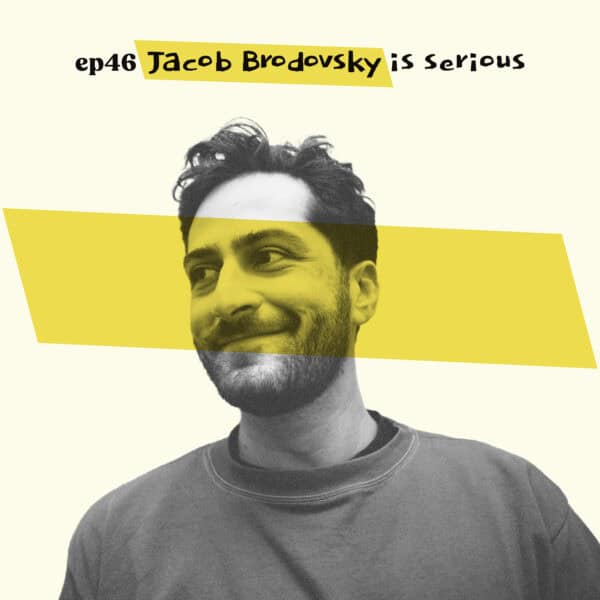
ep46 Jacob Brodovsky is serious
released May 28, 2026
1:31:47
Key Highlights:
The Power of Creative Accountability (The “Song Every Week Club”): Jacob highlights how a strict, high-accountability weekly writing circle in Winnipeg forces creators to bypass the ego and tap into a raw stream of consciousness.
Navigating Toxic Industry Pressures vs. Authentic Balance: The discussion tackles the “toxic bullshit” narrative that artists must sacrifice everything or quit their day jobs to be taken seriously. Jacob and Glen advocate for a healthier, realistic approach to balancing real life while still making award-winning art.
The Vulnerability of “Brutal” Editing: Jacob opens up about his relationship with mentor John K. Samson (The Weakerthans), who agreed to edit his first record on the condition that he could be “brutal” with a red pen. It’s a great lesson for all creatives on checking your ego at the door and treating songwriting as a long-term process of refinement.
Spontaneity Over Perfection (Recording Live to Tape): Moving away from an album that was labored over for years, Jacob’s new record was arranged in a room in three hours and tracked live to tape. This highlight celebrates the magic of capturing spontaneous, flawed, and honest musical moments that can’t be easily fixed in post-production.
Community as the Ultimate Antidote: When unexpected professional and personal transitions hit Jacob, the local creative scene “scooped up” his family with gigs and immense support. This highlights the beautiful, reciprocal nature of a healthy music ecosystem—taking space when it’s your turn to promote, and pumping everyone else’s tires when it’s not.
http://www.jacobbrodovsky.com/
https://www.instagram.com/jacobbrodovsky
https://www.youtube.com/@jacobbrodovsky
hosts: Glen Erickson, Alexi Erickson
AFE website: https://www.almostfamousenough.com
AFE instagram: https://www.instagram.com/almostfamousenough
AFE Spotify playlist: https://open.spotify.com/playlist/1o1PRD2X0i3Otmpn8vi2zP?si=1ece497360564480
Almost Famous Enough is a series of conversations centered around the music industry, pulling back the veil on what it really means to “make it”. Our podcast features guests who know the grind, who have lived the dream, or at the very least, chased the dream. Through these conversational biographies, truth and vulnerability provide more than a topical roadmap or compile some career advice; they can appeal to the dreamer in us all, with stories that can teach us, inspire us, and even reconcile us, and make us feel like we made a new friend along the way.
Chapters
00:00:00 Introduction
00:03:07 Introduction and First Impressions
00:05:00 The Importance of Reaching Out
00:08:09 Musical Roots and Identity
00:11:04 The Role of Community in Music
00:14:00 Exploring Jewish Camp Experiences
00:17:04 The Value of Summer Camp
00:20:02 The Journey to Becoming a Musician
00:22:27 Recognition and Bittersweet Success
00:23:40 Navigating the Pandemic and Personal Struggles
00:25:37 Imposter Syndrome and the Artist’s Journey
00:30:12 The Changing Landscape of the Music Industry
00:34:09 Creating a New Album: Inspiration and Process
00:38:08 The Joy of Being a Solo Artist
00:40:17 Writing from Experience: The Birth of New Songs
00:47:40 Collaborative Creation: The Making of the Record
00:50:12 Influences and Inspirations in Songwriting
00:53:58 The Importance of Editing in Music
00:56:22 Community and Support in the Music Scene
01:05:30 Navigating the Future of Music and Personal Growth
01:10:52 Post-Fame with Alexi
ep46 Jacob Brodovsky is serious
Glen Erickson (00:00)
I remember standing at the back of the artery in Edmonton, Alberta during the Western Canadian Music Awards conference, watching current buzz band The Deep Dark Woods run their set to an oversold room of enthusiastic head bobbers. I was there stalking the talent buyer for South by Southwest, who I heard and presumed would be in attendance. I was going to attempt to schmooze an introduction, a conversation, act interested, not desperate.
Name drop my band and imply that we’re ready to make him look good if he brings us down this year. And he, in kind, implied that a band who is clearly all in like the Deep Dark Woods definitely had his attention. Whoops. Fast forward a year or two and I’m in the basement of the Fairmont Hotel in Toronto, Ontario for Canadian Music Week. My band was present playing showcases and I was out making meetings, dropping demos.
Trying to act important but not desperate, meeting with record label presidents in fifteen minute speed dating like rituals, and fielding a familiar question lobbied back from my pitches of whether a new band of men in their mid thirties who still had their day jobs should be taken seriously enough to warrant a meeting. Ouch. Jacob Brodovsky has likely felt the same whoops and ouch as I did.
A lifelong musician and songwriter and enthusiast who has floated through every adjacency to being an artist for perhaps more time than actually inhabiting the role of the artist. And if you define being an artist by the notion of legitimacy, by numbers, deservedness, by criteria that determines if you are really serious about the career, you can understand creative imposter syndrome much better. Because everyone is hedging their bets, which is valid.
But when artistic legitimacy is communicated as immediate marketability, the word serious tastes very sour. Jacob is a singer-songwriter cut from the literal cloth of cleverly loose but deceptionally intentional songsmiths with a cutting tenor range and sharp instinct for a punchline, like his heroes in Death cab for Cutie or The Weakerthans.
Raised in the richest indie culture neighborhood of Winnipeg, Manitoba, Jacob pushed his dreams to the forefront once, almost gave it up, but has come back with a perfectly aligned album of deep indie gold, Tell the Kids We Tried. The album is serious. Because now more than ever, Jacob is serious in all the ways that an artist is truly legitimate.
My name is Glen Erickson.
This is Almost Famous Enough. Thanks for spending your time with us. This
is Jacob Brodovsky.
Glen Erickson (03:07)
first of all, hello. I guess I I don’t know if I even properly said hello while we were chatting there. nice to meet you, Jacob. yeah, first time. You are are are you in Winnipeg right now? Where where are you? Okay. And and so right off the bat, just to make sure I see your name and I think I’m gonna say Jacob Brodofsky or Brodovsky. Which which way is it?
Jacob (03:09)
Mm-hmm.
Yeah, likewise.
Jeff Brodowski.
Glen Erickson (03:35)
Keep it keep it light, not a not a hard bro. Okay. Not a hard bro. has anybody pulled the yeah, I guess there’s a couple of places I could have spun that one off.
Jacob (03:37)
Yeah. Not a hard bro.
In i in name or in personality.
Glen Erickson (03:50)
so you’re in Winnipeg. this is our first introduction and honestly this is my first introduction to do music so this is always really fun for me.
Jacob (03:57)
All right.
Mm-hmm.
Glen Erickson (04:00)
So a bunch of points of interest for me to chat about. But the very first one, I wanna chat I wanna chat about, which I think is kind of cool. So you had actually reached out to me on Instagram and I’m a total dick who didn’t reply. But it it you know how it goes into the requests thing? And I don’t know they’re there for a long time. so what’s interesting to to me is that
Jacob (04:20)
To the requests. Yeah, yeah, totally. Mm-hmm.
Glen Erickson (04:31)
the day after Ken, your publicist, had had reached out to me, that the day after or even that night, I actually went in to the Instagram requests and then there your thing was. so then I felt really stupid about that. But so I wanted to say right off the bat, Jacob, normally I would try to respond to those. I I don’t intend on being that guy. And I w I should say to everybody, like Instagramming, DMing
Jacob (04:41)
Hmm. Mm-hmm.
no worries.
Glen Erickson (05:00)
People if you want to talk to them or appear on their show or meet them of of whatever the version of in this industry, I think it’s totally cool. And I and sometimes people throw a little shade on on just straight up just hitting somebody up, right? And I don’t know why. I think it’s I have you had have you had success? Yeah.
Jacob (05:17)
Yeah.
Yeah, I don’t I’m I’m pretty shameless about it. Totally, yeah. yeah,
I I also have my own radio show, so I ha like that that I book guests on, so I often just DM people. yeah, I think you gotta ask, you gotta be polite about it and you gotta be you know, follow up maybe once but then leave it if no one’s responding. But yeah, I mean it took me a long time to sort of really understand that like actually the only thing to make anything happen for yourself is to just ask and send emails and and do the thing. As long as you’re as long as you’re gracious and polite, you know.
Glen Erickson (05:28)
Yeah.
Yeah.
Yeah, well you said that maybe the golden rule that I’ve kind of landed in there too, which is like the more important aspect is knowing when to leave it alone with somebody, right? So I last summer, about this time, I went after George Strombolopoulos. Just as like I was on vacation and I was like, I’m gonna, you know, I was planning my season two out, and I’m like, I’m gonna see if
Jacob (06:00)
Yeah, yeah, yeah.
yeah.
Glen Erickson (06:17)
Big swing. I’m gonna see if George would want to talk to like a grassroots guy because he’s always been kind of grassroots dude. And then he responded. Like I DM’d him on Instagram and responded. And then he asked if I could if I want to go tomorrow. Well, I’m on vacation. I don’t have any of my gear with me. I couldn’t do a thing. I was scrambling. I was gonna go down to the local, like, whatever the radio shack is now, source, whatever, in the town that I was in to see if I could buy a anyhow, it didn’t pan out. It didn’t work out.
Jacob (06:23)
Is it?
Yeah.
Mm-hmm.
Glen Erickson (06:45)
So if you’re gonna DM, I guess the the other tidbit I’d pass around is like also make sure you’re prepared if you get an answer. Lesson learned. so you have new music coming out. Jeb, I want to talk to you about that. I’ve been sitting and listening to some things, but right off the bat, just to sort of catch up a little more on who you are and where you came from.
Jacob (06:53)
Yeah, totally.
Glen Erickson (07:12)
Your website introduces you as three things. You’ve already introduced yourself as one of those. a radio DJ. Obviously, you’re a musician, whether you call yourself singer-songwriter, or what easiest thing it is to sort of translate yourself with in the music world. and then also a Jewish camp, not counselor, manager, ex ex-Jewish camp director, which plays into your storylines lately.
Jacob (07:33)
Ex ex Jewish camp director. Yeah. Yeah.
Glen Erickson (07:41)
But those are three very interesting ways to introduce yourself. I guess the first question is which one of those do you feel like k what what came first? Which one of those were you first?
Jacob (07:51)
I mean I’ve been obs
I’ve been in love with music for a very, very long time. I was actually I I’ve got a video I’ve got a song coming out next week and I I I was putting together a video for it. of like old home movies and there’s just like there is an obnoxious amount of footage of me singing as a as a two or three or four year old. So definitely musician. I think it it’s taken me a while to come around to
Glen Erickson (08:09)
Ha ha ha
Jacob (08:16)
figuring out how I wanna sort of exist in the world as a musician, as a quote unquote like artist. but but yeah, definitely definitely identify to that first and and foremost.
Glen Erickson (08:29)
Yeah, I mean that would be I mean if you ever, you know, applied for American Idol, then you would have all this backstory gold, I guess, if you had all that video footage. They love that stuff, right? So when did when did the DJ thing happen? And the reason I ask out of interest for that is like I think I’m
Jacob (08:37)
Mm. Yeah. Yeah.
Glen Erickson (08:53)
Well, I’m making an assumption maybe people think of campus DJs the way I do, which is a lot more transitory. It’s not like a permanent job, although I know th so some people, it’s a volunteer gig. And I know some people, you know, I’m in Edmonton and there’s people who have had a show on CJSR here for like a couple of decades, you know, and you’re right, it’s volunteer. So it doesn’t feel as much sort of a a longer term or a deeper level commitment. What part of that
Jacob (09:02)
I mean it’s certainly a volunteer gig, yeah.
Mm-hmm.
Mm-hmm. Mm-hmm.
Glen Erickson (09:22)
you know, kinda has enough roots in you to make that part of your identity that you love or what what is it about it?
Jacob (09:31)
I mean, I’m just really big into community. I just really I really think that that’s kind of the antidote to everything right now. And so I mean the the the CKUW thing I got into in twenty nineteen. I was working at a diner as a server and one of the line cooks had just gotten a new job as the program director to QW. And so he was he was hanging out at the bar one night after after he was working and
I was sort of saying how I’ve always wanted to have a radio show and I had this idea for a show. my show is called Let’s Play DJ. So every week a different guest on comes on and they choose the music. And we listen to like seven or eight songs together and just talk about them. And that’s that’s the show. It’s like an hour. We listen to tunes and we talk about them. We talk about songwriting. and so I was like, I’ve always wanted to do the show. And he’s like, great, do it. And so he sort of forced my hand a little bit and set me up with a time slot. And and I’ve just kind of stuck with it ever since. It’s kind of been like a really nice
constant for me. I’ve you know I I’ve sort of had various relationships with my music career. Sometimes I’ve been really in it, sometimes I’ve been really not. Like I have two kids, so I’ve definitely taken time off to to be a dad. And and but the the d the the radio show has always just been really grounding a really a really nice way to sort of stay connected to that world. and it’s and just a great way to hang. I love I it’s like when I whenever I’m you know like meeting new songwriters or musicians the
my favorite way to get to know someone is to hear what they like to listen to and sort of like nerd out on music together. So it’s just like a nice it’s just a nice way to to spend time.
Glen Erickson (10:56)
Yeah.
So is it is it weekly?
Jacob (11:02)
Paper. Yeah. It’s not I don’t I don’t lately I’m not as I’m not as productive as I should be, but generally I I do weekly September to June.
Glen Erickson (11:04)
Okay.
Is that that seems like that would be maybe difficult to fill that many weeks with like people. is that a challenge? Booking?
Jacob (11:18)
Sometimes I mean sometimes
I I I mean there’s Winnipeg’s so so rich with me with musicians and songwriters. I’m pretty lucky I’ve got a pretty wide network of folks that that I know and it’s it’s a really easy pitch. Like it’s a really like most musicians or artists are pretty down to to talk about songs they like for an hour. so it’s a pretty easy ask. And so I yeah, I do it so go back to what we were talking about before. I do a lot of Instagram DMing.
Glen Erickson (11:26)
Yeah, yeah it is. Yeah.
Yeah.
Yeah.
Jacob (11:46)
And like cold emailing people’s managers or whatever. you know, s I record it live when I can, but often I record it over Zoom like this. And and yeah. So I I’d probably average more to closer to like thirty, thirty ish episodes a a year. But yeah.
Glen Erickson (12:01)
Yeah, that’s pretty amazing though. Does it
ever get like does the playlist ever get like super diverse in a way that’s hard to like string things together and you’re like, shit, no one’s gonna I’m gonna lose everybody because they’re listening to like who knows what?
Jacob (12:11)
totally.
I mean, that’s kind of the beauty of college radio, is like there’s
no expectations. You could, you know, you turn on CKW at any point of the day, you could hear like country music, pop, singer-songwriter, and like weird experimental noise, you know, to like industrial crut rock. Like there’s, you know, anyone tuning into college radio, I think, kinda knows what they’re in for. And and to me, like the interesting thing for me, like as a as a host, but also as a listener, is is
Glen Erickson (12:20)
Yeah, exactly.
Yeah.
Jacob (12:40)
Those are my favorite episodes when it’s like a folk artist who’s like, you know, exclusively listening to experimental jazz and and like and sort of hearing how that how that commutes for them.
Glen Erickson (12:46)
Yeah.
I was listening to a podcast, maybe it was yesterday or the day before, on the Pushkin Network with Dave Grohl in his studio. And and they he was just talking about I don’t know what he was he’s talking about the guys that he’s lucky to have had in his circle all this time, right? Like Pat Smear.
was a hero of his and now he’s basically he’s like, now I just get to hang out and he’s you know, he’s my friend for all this time, which is amazing. And then I don’t know why where it came from, but you talking about that made me remember he was trying to get the interview, he’s like, guess who Pat Smears favorite artist is? And then the guy’s trying to like get some hints and stuff and then he’s like, you’re never gonna guess. It’s Mariah Carey And yeah, so y you could end up in a conversation and you should never
Jacob (13:13)
Mm-hmm.
Glen Erickson (13:41)
predict or guess what somebody’s gonna come in with. Right? Have you had let me think of some good Winnipeg folk, like begonia has has begonia been on? Do you remember do you remember do you remember what her what kind of playlist she was bringing in?
Jacob (13:51)
Mm-hmm. Yeah. Had Alexa a couple of times.
she’s done it a couple times. She did it once. like we’re buddies. So sh but she the most recent one we we recorded in our in her kitchen. We had a really fun time. I’m trying to she played a song by an artist named Saya Gray that I really loved. but yeah, it was cool. We were listening to she was mostly playing songs of like music that she was listening to when she was recording her most recent record. so so it was kinda cool. We sort of like talked about the pr yeah, the process and she spent a lot of time down in LA at that point.
Glen Erickson (14:13)
Okay, yeah.
that’s a cool way to to think about and talk.
Jacob (14:29)
and so we were kinda l talking about that. But yeah, it’s it’s different every time and I s I try to give as little direction as possible.
Glen Erickson (14:29)
Yeah.
Yeah. Cool. Okay, so the third part of the the triumvirant there is as you has sort of clarified now ex Jewish camp manager. I grew up in like the the typical Christian camps, you know, the summer camps, and and summer camp to me was like, you know, I d
Jacob (14:45)
Mm-hmm.
Glen Erickson (15:02)
I’m I wanna know I’m I have this personal you know personal curiosities and at at risk of losing my music listeners. but my personal curiosity of course is around I grew up at the Christian camps, you know, especially as like a teenager. They were really good at, you know
You go for a week of these intense activities, intense social interaction, incredible lack of sleep. The food is usually a bit subpar. There’s usually a number of interpersonal crises happening between people at that age group. and they let you go through all of it.
you know, and then hit you at the end with the big heavy emotional Jesus movement to try to get you to make a decision and and and and obviously you know the you know my understanding would be that the Jewish community is out isn’t out there fervently trying to convert everybody from hell and stuff. So I’m wondering what you know what Jewish camp looks like in the in the summertime for a for a teenager.
Jacob (15:52)
Right.
No, not at all.
I mean every
every camp’s different. so the camp that I ran, I was the executive director of a camp for about five years. I went there, I worked there for ten, I attended for twenty-five, I c you know, grew up out there. it was a Jewish community camp, so it’s really non-denominational, non-movement base. It’s really just like a camp for everybody. we had non Jewish kids, we had Jewish kids. you know, the difference was, you know, we rested on Saturdays, not Sundays, kind of thing.
Glen Erickson (16:28)
Hmm.
So it was
like just summer camp, like you could drop the Jewish. Is this you guys ran it?
Jacob (16:38)
Summer camp with the j with the it’s summer
summer camp with a Jewish twist. Like, you know, you sing you sing you celebrate Shabbat, you sing the brachas before before meals and stuff. But like, you we did kidney trips, ropes course, kayaking, all that sort of thing. And I think definitely and I I yeah, I think I think summer camp is like it’s a really beautiful, really beautiful way for young people to spend their time. You know, if if it’s if it’s run properly. I think some of the things that you described I might I might not
Glen Erickson (16:43)
Yeah.
Yeah. Yeah.
Ha ha ha
Jacob (17:06)
think so great about. But for us it’s like, you creating a safe space for young people to explore their identity, to be themselves, to feel like they belong, to be part of a community, and make sure we’re teaching people to be kind and and to care about each other and and and to also like give a shit about the environment. And and sort of, you know, like I think that’s something we tried a lot to do is drive home. It’s like we’re you know, we were on an island in in Lake of the Woods, this really beautiful part of northwestern Ontario.
Glen Erickson (17:16)
Yeah.
Mm.
Jacob (17:32)
And we talked a lot about like like look around, it’s beautiful, but like, you know, it’s it’s not gonna be here forever if if we don’t if we don’t care about this stuff. And yeah, like do you notice it’s really smoky this week. It wasn’t like that ten years ago, you know? but yeah, I it’s really you know, one of the founders of the camp, you know, his his he was a social worker in like the seventies or sixties and his his philosophy was like developing the individual within the group, which I I really like. Sort of the idea of like, yeah, you know, we develop like leadership and
Glen Erickson (17:40)
Yeah.
Yeah.
Hmm.
Jacob (18:02)
And and like self esteem and all those things, you know, through group work, through through, you know, trying to like solve problems with your friends.
Glen Erickson (18:08)
Yeah.
Yeah, I love that. I mean, I obviously was like tongue in cheek casting a pretty saucy shadow on the on the on the on that experience. But the flip side of that, you know, me saying like, yeah, they take advantage of all those sort of aspects of you know, exhaustion and activity and blah blah blah. But the truth is, like, there’s a great value for anybody we as adults become very keenly aware of.
Jacob (18:17)
Mm hmm. I mean there’s lots of camps like that. Yeah, totally.
Mm-hmm.
Glen Erickson (18:40)
If you could spend a way unplugged, a week away unplugged from your regular life, then you create capacity inside yourself to like really drill in and maybe focus on some things that could really be of value that you could take away. Right. So the opportunity to to use that is like pretty exciting.
Jacob (18:42)
Surely. Surely.
Sort yeah.
Yeah, when I used to, you when I used to try and convince parents to send their kids, I used use the the anecdote from like when I was a kid. I remember I was seven. You know, camp is such a great way to like learn how to be independent. I remember when I was seven, sitting at the at the breakfast table and it was like pancakes for breakfast and sort of like looking around and being like, I’m gonna have to I’m gonna have to cut up these pancakes by myself. And I I’ve never done that before. you know, it’s like that’s that’s like a like a like sort of a in a nutshell, like, you know, that’s what camp to me that that that’s some of the most valuable parts of camp is like.
Glen Erickson (19:18)
Yeah, yeah.
Yeah.
Jacob (19:26)
ki you know, in a safe way kids sort of get to try things out and like take risks and and sort of test out independence and and what that feels like, you know, ’cause for a lot of kids it’s the only time they spend away from their parents.
Glen Erickson (19:38)
Yeah. Yeah, it’s very true. so let’s let’s let’s jump back to the musician part. You said like you have always been interested in music, obviously. Probably like most of us, you know, at some point you go from you know, like you said, you’re always going around singing, you have all this footage of you singing.
Jacob (19:46)
Sure.
Glen Erickson (20:02)
You know, you start to like put something on it, you start to hang something on it at some point. You like you wanna actually create something, you know, get those feelings of creating something, get those feelings when someone else hears something you created. Puts everybody on the trajectory, right? Of some sort. so how did how did that start to formalize for you to that point of realizing that maybe I could
Jacob (20:12)
Mm-hmm.
Glen Erickson (20:31)
do this, maybe I understand how people get this done. Maybe people are gonna like when I sing. like when did that sort of point happen, right? That kinda gives you the kind of the the wind in your wings to to really start thinking about it and doing things about it.
Jacob (20:51)
question. I I mean it’s it’s almost more of a compulsion than anything else. I I started my first band when I was twelve. I started writing songs when I was tw or when I was eleven. I started writing songs when I was eleven. Played in I basically have like always you know having like some sort of like musical outlet that also involved performance has kind of just been like a a a constant in my life since I was old enough to make that happen for myself. I joke with my with my friends and like my partner, but it is true. Like I, you know, I’m sort of a I have a bit of an attention addiction.
I like being on stage. I like I like being in front of people. And so music has always just been like a really great outlet for that. songwriting has always just sort of been a thing that’s that’s felt very you know, I’m not like I’m not like a virtuosic guitar player of e in any way. I’m I I’m I’m okay. You know, and I’m I’m not I’ve never been that interested in like practicing to be really good. but songwriting has always been like writing lyrics has always been something that I’ve I I’ve sort of come back to and and
Glen Erickson (21:24)
Yeah.
Jacob (21:49)
you know, it doesn’t really feel like work when I sit down to write. So I just kind of focused on that and and when you want to write songs, it’s just sort of like by by extension, you want to have an outlet so you can play and record and perform those songs. And that’s sort of always been the thing for me. you know, I didn’t really become like a quote unquote solo artist until twenty nineteen when like my last band kinda called it quits. And I really resisted that for a long time. But I I’m kind of grateful that I took my time with it because especially putting my own name on it, it’s sort of, you know
I’m I’m glad I didn’t sort of create an artistic identity for myself when I was younger and stupider.
Glen Erickson (22:28)
well I mean that’s interesting to me. Like because you obviously you like you won an award, the Canadian Folk Music Awards, twenty twenty four. The English they have a nice discernment of that. between of that distinction for the Songwriter of the Year Award, which must have felt like
Jacob (22:37)
Mm-hmm.
Mm-hmm.
Glen Erickson (22:49)
Must have felt like a million bucks then if if you’re getting honored for the thing that you are choosing to identify the most with of all the kind of, you know, hats that you wear to be an artist.
Jacob (23:02)
felt great. It was it you know, at the time it was bittersweet ’cause at that point I’d kinda given up on music. I wasn’t really planning on on making more music and I didn’t have any gigs on the books. I didn’t have any songs written. I was sort of like kinda just hanging up my hat and being like, Well I’m a dad now, I have a job. Like, you know I you know, shot my shot and I’m I’m content. I mean I wasn’t really but I was convinced trying to convince myself that I was.
Glen Erickson (23:26)
Yeah.
Jacob (23:27)
So so now it was actually kinda bittersweet when that award came through. But yeah, I it feels amazing to be recognized like that. I it was absolutely shocking to me. but but yeah.
Glen Erickson (23:41)
tell me a little more about w going through that phase. I mean that’s also kind of end of the pandemic. You released your first record in the pandemic, right? Twenty twenty two. is that I love you, I’m sorry? I what’s the right way to I love you and I’m sorry, sorry. I mean I’ve experienced this a whole bunch, right? I mean I went through this and I
Jacob (23:58)
Yeah, I love you and I’m sorry. Yeah.
Glen Erickson (24:09)
sometimes feel if anybody got a peek inside, they’d be shocked at the stage. I’m still going through it of I had played in a band for a really long time, always been a musician, always everybody knew I was always pursuing that dream. took a couple of little shots at making my own stuff. I never got I mean there’s a combination of things that happened for me. I didn’t get maybe overwhelming feedback. And
you know, people don’t probably realize just how crushing that is to s maybe deal with because what you really want is, you know, somebody to just you just want somebody to just hang a big big green light in front of you and make it easy. And then you put all you know, you put your soul into something and then it still doesn’t feel clear. And that’s difficult. And I had I had children and I would you know, I had quit jobs to freelance and
Jacob (24:53)
Mm-hmm. Mm-hmm.
Glen Erickson (25:07)
build my own career so I could also be at home and raise them. I was deeply invested. felt a very strong responsibility to the family of not just effing off and and trying to like be in music all the time. but it it created this wrestling match that was almost unbearable inside for me. So I’m just wondering what your experience was like that. And you throw the pandemic issues of like what’s the point anyhow feeling we all had in with that. I can’t imagine but
Yeah, how did you how did you kinda go through that and wrestle your way through that?
Jacob (25:41)
Yeah, I think
I I think wrestle is a really good word.
Yeah, it’s I mean similar to you, I think. Like I, you know, I I have always sort of you know, I would say until about six months ago, I would have never considered myself like really trying with like all my might to make music happen. I was always like I was doing it, I was writing songs, putting out records, booking tours and all that stuff, but I also had another thing. I was also like running a camp or I also had another job. and I was very you know, still to this day I have very, very, very intense imposter syndrome.
I’m like so lucky to be surrounded by some of my closest friends are wildly successful musicians. And like you know, in Winnipeg, like sort of our community. Like I was, you know, I was at my friend Liam’s house this morning, working on a mix for something, and like he’s taught you know, the the this is like Boy Gold that like the song the things that he’s that he’s dealing with, you know, as an artist. It’s like he’s telling me about sort of like calls he’s on or whatever, and it’s just it’s crazy, you know?
Glen Erickson (26:25)
Mm-hmm. Yeah.
Boy Golden, yeah.
Jacob (26:42)
And but all these people that I know, like Leem’s a great example of that, like they have been spending a hundred hours a week since they were 18 on music. Whether it was like practicing or writing, it’s like they have been all in their entire life. And I was never I never felt like I was all in. I never I never allowed myself to be, I guess. And so and so yeah, so during the pandemic and and when the record was coming out, you know, to I I I really allowed myself to like write this narrative.
Of like, well, you know, I finally made my solo record, I finally did a full length. I like it, I’m happy with it. I got to make it with some people that you know I used to that I still consider to be like heroes of mine and some of my favorite musicians in the world. And you know, I sold a hundred and like you know, I did a little bit of touring and went got to go to Europe a couple times and stuff, but nothing really changed. And now I have a now I have a little baby boy and I have a stable job and
How how can I justify trying harder? Sort sort you know what I mean? and so and so and and again, I think at the t I had convinced myself that was okay. I I think it wasn’t. I think that, you know, the resentment I had for myself for making that decision kinda like oozed out of me in in in different ways. But that yeah, it’s sort of like it it’s just like it was just hard to justify at the end of the day.
Glen Erickson (27:47)
Yeah.
Jacob (28:08)
You know, being a being a musician writing s especially doing original music, it’s I mean it’s one thing if you can if you can be like a hired gun and like play for other people, like that’s a job. That’s a vocation. Like that’s you know, that that’s a that’s that’s a meaningful way to make a living. but if your only thing is like writing songs, which is which is mine, you know, and I sort of like, well, how could I justify spending all my time doing this or spending more money, you know, when I could be like putting that away for like, you know, buying diapers.
Glen Erickson (28:33)
Yeah.
Yeah, I
mean I yeah, I fully relate with that and and the and the idea and the notion that like how do I, you know, do I how do I convince myself it’s worth working harder or something? And I kept convincing myself, like so I worked I worked like nobody worked, right? Like I worked all hours of the night. I and I did all these things that were adjacent because I had like you peers who were involved and and
Jacob (28:55)
Mm-hmm. Mm-hmm.
Glen Erickson (29:04)
So I started my own record label. I, you know, I started promoting shows. I started managing some people. I started being a publicist at times. I was on the on the boards of the everything. So but you know, the adjacency never ever scratched the same itch as as doing it. And the working hard, yeah, and I and I it did. A hundred percent, it makes it worse in a lot of ways. And and I c and I found out that I could work harder.
Jacob (29:11)
Mm-hmm.
No. No. In some ways it makes it worse.
Mm-hmm. Mm-hmm.
Glen Erickson (29:32)
And I found more time to work harder. And then I started to realize that came at the sacrifice of some things that I had to question if I was gonna sacrifice. And then it became really clear to me that really it was about, you know, whether I was willing to work as hard or whether I was actually willing to risk. Because all it really comes down to is the sacrifice that you eventually have to make to jump off the cliff, right? And and and to trust
stuff which is really hard. And I think you know, and I I just I drill into this topic only because I think a lot of people have some variation of it and it’s worth talking about that the the imposter syndrome is like in our heads it’s extremely toxic. I mean it gets talked about just as a condition normally around
Jacob (30:12)
Mm-hmm.
Mm, mm.
Glen Erickson (30:27)
But in our own narratives, it gets really toxic, I think. And I think it’s important for people to realize that there is a version you can get to of accepting that not everybody is the full time sold out. I’ve been in bands since I was fifteen and this is all I’ve ever done version, as if that’s the only authentic version of an artist, I guess, right? And it’s it’s not.
Jacob (30:47)
Mm-hmm.
Yeah, totally. And I I think that idea is becoming
it’s I think it was for a long time. And I think I think it’s becoming more and more acceptable. As being an artist is be is less and less, you know, financially stable or or viable, I think it’s becoming you know, I think for a long time the quote unquote industry really only took you seriously if you if you were fully in it full time. And I think more and more people are trying to ch starting to challenge that. And I think it’s a really good thing. I think it’s a really healthy thing.
Glen Erickson (31:08)
Yeah, yeah.
Yeah, well that
was enforced by the industry by literally the rhetoric of because I remember being in conversations with people and they were like they wouldn’t take our band seriously if we hadn’t like all quit our jobs. You know? And it’s and that’s kinda that’s kind of toxic bullshit, right? Is that you’re telling everybody like you have to go and make these kinds of
Jacob (31:38)
Totally, totally. Yeah. Yeah. And it’s like
Glen Erickson (31:49)
very dire life changing decisions before we’ll even consider you worthy of our time.
Jacob (31:54)
I think it’s I think it’s
both. I think it’s both. You know, I had a conversation with the artistic director of Winnipeg Folk Fest and when I was, you know, heavily lobbying him to to book me. and the first thing he said is just like how serious are you? Like how much time are spending on this? you know, like how how in are you? And I I r I I don’t think that’s an unreasonable thing for him to ask. He has like a very limited s amount of slots.
To you know, to especially for local artists, and there’s a ton of people that want the slots, and it’s like, I get it, like you only want to book people that are like that are actually doing this, that you know. but but at the same time, yeah, it’s like when I I I think if everyone in the industry operates that way. One thing for like a slot is a f at a festival, I think it’s another thing for like you know, funding or for for yeah, for like you know, label deals or
Glen Erickson (32:24)
Yeah.
Yeah. No, I think that’s a great distinction, Jacob. I think anybody taking the risk and reward of their own job seriously would ask the right questions about whether, you know, if they’re gonna take a risk on you or or put any investment in you, they wanna know that you’re good for it. but yeah. Which is slightly different than creating
Jacob (32:59)
Mm-hmm. Yeah. Exactly.
Yeah, and they you’re and they’re gonna make the most of it, right? ‘Cause like otherwise they’ll just give it to someone else.
Glen Erickson (33:14)
a standard implication across the industry of like you have to kill yourself for this thing or else we won’t accept you, which you know, has traditionally lived in some pockets also. But I mean that’s yeah. Yeah, that’s interesting stuff. I I do think it is to write a different time right now, which is a lot better for people, you know again, I think that’s sometimes where the adjacency comes where people
Jacob (33:16)
Yes, yes. Yes. Yes. Yes.
Surely.
Mm-hmm.
Glen Erickson (33:42)
start working in the industry to pay the bills while they keep trying to you know, pursue the thing and then some of them just get sucked back into just doing in the industry. And but that’s just kind of been the way, right? But that way is definitely changing. I’m gonna say this I’m gonna say this right now ’cause I was thinking about it while you were talking about that, which is interesting because you were joking like I only sold a hundred records and but, you know, you
Jacob (33:48)
Yeah. Yeah.
Glen Erickson (34:09)
Found your way back again to making another record, which I want to talk about with you right now. And but I reserve this kind of a comment like for almost never. I should just preface to say, and especially I find it of interest because I didn’t know who you were before. Winnipeg, you tell me an artist is from Winnipeg, and I’m always gonna immediately give them the benefit of the doubt and listen. but
Jacob (34:34)
Mm-hmm.
Glen Erickson (34:37)
I started listening to the pre release copy of your new album and I’m gonna just go right out there and say like this is a record I think everybody should hear. Like, like I I just wanna say sincerely, I’m not just blowing smoke up your ass ’cause we’re talking live right now. there’s things that I hear in there that are the foundations and the components of some of the the
Jacob (34:49)
Well, it’s very nice.
Glen Erickson (35:05)
greatest acts that I’ve listened to over time. Like specifically that I immediately heard Benjamin Gibbard’s voice in a lot of your delivery of Death Cab for Cutie. And then even like it’s still fresh because I just got out the car with it. Your song Lack Thereof, I was like listening to that and I’m like, man, even the shaping, the shaping of this melody sounds deathcab to me. And the delivery, and you have a very like, and you have a high tenor
Jacob (35:07)
Mm.
Mm-hmm.
Glen Erickson (35:35)
That sometimes you get soft on the edges with and flutter on a couple songs, more so on your last record when I listen to some tracks, but you’re leaning more into the sharpness of the edges on that vocal delivery. That sounds like Ben Gibbard, or what I’m sure you’ve heard a ton, being from Winnipeg, of John K. Sampson fellows, so of the weaker then’s. And I literally, for anybody who’s listening who has any and like those bands have deeply impacted so many people.
Jacob (35:46)
Mm-hmm. Mm-hmm.
Yeah. Totally.
Mm-hmm.
Glen Erickson (36:06)
it’s not it’s not like Jacob, it’s not the knockoff version of I’m trying to sound like those. It’s to me like it sounds just so like just pure. like anyhow, so I, you know, before we even just get into talk about it, because it was on my mind and I don’t mind saying it, like I this is like a and I want to talk about your recording of it and stuff, but it’s like
Jacob (36:19)
that’s very kind.
Mm.
Glen Erickson (36:34)
it’s layered so incredibly well, like the guys from Moon River. yeah, so like Gavin and Champagne Champagne James. Yeah. obviously they’re incredible. I had I had watched them play with Peter Dreams on their tour last summer and had Peter on the podcast and and like James’s playing is should be better known in this country as like
Jacob (36:44)
Champagne James.
I agree.
I agree. Otherworldly. Yeah.
Glen Erickson (37:04)
like epic, like
yeah, it’s not just you know when you see skill get executed effortlessly, but then you realize that it’s l all being driven by taste, which is like a whole nother like how does somebody have all of that happening at the same time so impeccably all the time? anyhow, so every song that I’ve heard so far is like delivered
Jacob (37:13)
Mm-hmm.
Yeah, totally. Totally.
Glen Erickson (37:33)
On that record with just what feels like a perfect choice of layering and depth and stuff. So I guess before we even get into the record, being a solo artist, deciding I’m gonna take another run at this, how do you handle like I just made this incredible record, and then how do you handle the now what do I do with it? You know, do I have to tour a band because I only want it to sound like this record now? How do you how do you approach
Cet heading into the release of a record, you know, what do I do with with this great thing that I made?
Jacob (38:08)
I mean that thank you, that’s very, very kind. I really appreciate that. especially now that you know, you’re you’re one of the few people that’s heard it, so I’m I’m it’s relieving to hear that it resonated with you. how do I appro you know, I I just ask a lot of friends, really. And I just I I I don’t think there’s a right way or a wrong way to do anything anymore. I and I think it’s kind of all relevant. You just have to decide. you know, I’m doing a bunch of touring this summer and playing a lot of festivals.
Glen Erickson (38:18)
Ha ha ha.
Yeah.
Jacob (38:37)
I don’t I’m not playing a single festival with a band, full band. Most of the festivals I’m playing, I’m doing in like trios or quartets where it’s like one guitar and harmony and like three voices. I to me, I that’s the that’s like the joy and the excitement of being a solo artist is you get to there is no there’s less of an expectation of what you’re showing up with. and and I think that’s exciting to me. Like I w I I want
Glen Erickson (38:46)
Mm.
Jacob (39:06)
To me, for someone to come discover me at a festival playing like hard you know, hardcore a hardcore folk set, like not, you know, there’s lots on the record, there’s synths, there’s guitar pedals, there’s you know, there’s there’s very few acoustic instruments really. but to me it’s a folk record and the songs are folk songs, and to be able to present those that way and then have someone buy the record and then listen to it and have get a completely different experience, like to me, as a listener, that’s what I look for when I find when I find an artist. So that’s sort of what I’m striving for. Like I think, you know, the test of a
Glen Erickson (39:34)
Hmm.
Jacob (39:36)
a good song and I’m not saying I’d I achieve this, but I think the test of a good song is you should be able to dress it up anyway and it should and it should still translate and make people feel things. And so that’s kind of what I’m what I’m trying to do. Also, bands are just expensive. Yeah. Yeah.
Glen Erickson (39:45)
Mm.
yeah, that’s the other part right now, right? Like the idea of like
touring with a bunch of yeah, like there’s just such an overhead to the people and this stuff. so the new record that’s coming out July, July 10th, I think. Tell the Kids We Tried, which is a fantastic sentiment, for an album title. And you know, even even if I hadn’t read some of the pressers, I would have figured out after about four songs that
you were writing from what sounds like a place of existential dread, or at least choosing to exercise it in in your songwriting. makes me think of a couple of like Dan Mangan records a lot where he’s tried to go through the same process and he talks openly about it a lot. so just I I think what’s interesting is yeah yeah
I want to know more than just the presser I got to read, obviously. Like the idea that you something had happened that you’re now calling it a a an ex-Jewish camp counselor or camp manager and and some of the things you were going through and just the way you were looking at the world with bringing kids into the world. But you know, I read that the songs kind of even preceded some of that and then just sort of fulfilled themselves. So
Jacob (40:44)
Sure. Sure.
Yeah.
Glen Erickson (41:12)
That’s it, that to me is very curious right there, because you know, you know, whether we know it or not, there’s like a thread running through our our lives that we end up being able to connect sometimes later in time, which we you know, I find so interesting the way songwriters discover that in their life and their songs at different points in time. So just tell me about about how this unfolded then, like between choosing to write write the songs and
Jacob (41:24)
Todo lo
Glen Erickson (41:41)
you know, and and going through some pretty monumental life stuff along the way.
Jacob (41:46)
Yeah.
Yeah, I and it so it’s interesting you picked up on that, you know, so generally speaking, my rule with writing is like you can’t really write a song about an experience until you until it’s over and until you’ve like sort of processed it. at least that’s sort of how I feel when I when I sit down to write a song. But w what c what sort of happened with this record, I had a whole batch of songs prepped and ready to go. We we demoed a bunch of them. Some of them stuck around, like songs like you know, kids and and Beneath It All.
And and a couple others had been around for a while, but most of the songs on the record actually were only written two to three weeks before we tracked them. and that was because I’m in this songwriting exercise group called Song Every Week Club with a bunch of us in Winnipeg. We all do it together. usually every every December, January. Yeah, Liam’s in there. Yeah, a bunch of us are in there. because it’s just we’re we’re all we all need motivation to write. Or not we don’t need motivation, but it’s
Glen Erickson (42:37)
That sounds like a Liam thing.
Jacob (42:47)
We we hold each other accountable through this thing. So basically the idea is our friend Natalie from a band called Slow Spirit, which is like an one of the greatest bands in the world, she usually administers it. And we all get on the email thread and you know it’s like, okay, Tuesday night before bed, everyone has to submit a brand new song. It cannot have existed beforehand. You have to s write a song this week and submit it. It doesn’t need to be finished, it doesn’t need to be polished, but it needs to be something. And if you don’t submit it by the deadline, you’re out.
And then after the dub
Glen Erickson (43:16)
Yeah, so Liam
talked about this with me. I’m remembering it now that if you don’t submit, you that’s the thing, you don’t get to come and then that sucks. And so it motivates you to write.
Jacob (43:19)
Okay. Yeah. Yes.
Yes, and so and and and you don’t you
you don’t get you don’t get the the playlist with everyone else’s songs. And so and the rules are very strict, like you know, you cannot show each other’s songs to anyone else. Like it’s it’s very like private because, you know, you’re you’re it writing a song and sharing it immediately with, you know, your friends and peers is like a very scary thing to do. but I think it’s also a really great exercise in humility, which I think is another reason why Winnipeg is such a strong music scene right now, because there you know, there’s so much humility in our music scene. but I’m I’m
Glen Erickson (43:29)
Yeah.
Jacob (43:54)
Digressing. So
Glen Erickson (43:55)
Well that
it protects the sanctity of that moment too, right? If of of of what kind of your feedback will be. So
Jacob (43:58)
Totally. Totally.
Totally. And so and so I ended up writing and so when you’re writing a song on a deadline like that, you don’t really have time to think about what you’re writing about in the same way. It’s not y it’s there’s not as much intentionality. It’s much for at least for me, it’s much more just like stream of consciousness. You’re just kinda like tapping into your subconscious and like and going and kind of like letting your pen do its thing. and so I think for that reason I wrote a lot of songs that were sort of picking up on what was coming.
Glen Erickson (44:11)
Mm-hmm.
Jacob (44:28)
Because sort of the writing was on the wall a little bit in in the community I was working in and just the world in general and sort of the tone of of of the world and and also how I was feeling and and thinking about the world and and and things that were happening. And and so for you know, a lot of songs on the record, like Lack Thereof and and older two, past mistakes in a lot of ways, you know, they sort of talk about that in a in a very like sort of run around sort of way, and then fast for yes, we made the record in January, fast forward to April.
and you without getting into it too much, basically the the day my kid was born, my phone started blowing up because someone had taken screenshots of me liking Instagram posts, promoting a concert in Winnipeg that was raising funds for the Palestinian Children’s Relief Fund. And you know, in certain corners of the Jewish community, that is like a really unacceptable thing to be doing. and so I essentially resigned
Glen Erickson (45:15)
Mm-hmm.
Jacob (45:27)
about a week later because the harassment that I was and my family was experiencing, both like online and also like in person, was just like it was like this is not nothing is worth this. And also like I don’t think there’s anything wrong with, you know, raising money for kids. I think I said to one person sort of like, you know, my job is to as a camp director is to treat, you know, three hundred children like they’re my own.
Glen Erickson (45:36)
Mm.
Jacob (45:56)
And care for them like like they’re my own. And so I you know, I’m not gonna apologize for extending that to every child. and not picking and choosing. So anyway, so while I get off my soapbox. So basically and then so when all that kinda happened, I I was you know, we were mixing the record and it was sort of like, this is what that song’s about, you know. Like this is this is what was going on. But it really only happened that way, I think, because
Glen Erickson (46:02)
Yeah.
Mm.
Jacob (46:22)
all these songs we just kinda and again this is credit to Gavin and James just like really pushed me to like, you know, throw caution to the wind and just like lean into like brand new material and let the band arrange it in the room in the moment and hit record. And so I think, you know how this record is different from my last record is my last record is like labored over for for out for years. And the songs were written over like a five, six year period. And so it’s everyone’s first record. Exactly. Exactly.
Glen Erickson (46:46)
Yeah, everyone’s first record is their greatest hits, right?
Jacob (46:51)
You know, and and I really like, you know, labored over every note and every measure, and every overdub. And this record was like the exact opposite. It’s like, let’s get in a room, I’m gonna play you the song on an acoustic guitar, let’s spend three ish hours arranging it, and then we’re gonna hit record on a tape machine and and and and track it. And it’s a it’s the tape, so we can’t even fix stuff afterwards even if we want to. You know, and
Glen Erickson (47:13)
Yeah. Well you can,
but if my god, it’s a pain in the ass. No one can afford to split tape, yeah.
Jacob (47:17)
Well yeah, you can, but I can’t I can’t aff I can’t afford to pay someone to so yeah, exactly.
So and so yeah and and so yeah, and I think again, like a lot of the production choices and stuff, we just kinda leaned into the spontaneity of it and it was a really fun way to make a record. but I think that’s
Glen Erickson (47:32)
Did you have equal
did you have equal say in your arrangements? Like there’s three of you primarily. W was it very democratic?
Jacob (47:40)
Yeah. I would say even I would
for the most part, I would even extend that to Jason and John who played on the bulk of the record. Jason Tate, who plays drums with Bahamas and the Weaker Lands, and and John Barron who plays with William Prince and Begonia. it was really the five of us in a room in a circle for for seven days, kinda c just like kind of taking it apart and putting it back together. I think
this is another Liam quote, but I asked Liam about the role of a producer because I’d never s worked with a producer before, and Liam’s produced a ton of records. and he’s very good at it. And he said, you know, a producer’s job is you know to advocate very hard for their ideas, because that’s why you hire a producer is for their ideas and for their, you know, for them to put their stamp on it. But they should also know that at the end of the day, it’s the artists’ songs. And so
He’s like you he’s he sort of he’s like when I work with an artist, I always say I’m gonna advocate really hard for my ideas, but I’m not gonna like die on that hill. You know. and and that’s sort of how it was with Gavin and James. They’re, you know, big advocates and and you know, invaluable input that they brought and like the record would not be what it is without them and and I I was a it was a truly joyous experience working with them. I mean, the the only reason why the record was made at all was because Gavin essentially forced me to.
Glen Erickson (48:38)
Yeah.
Jacob (49:01)
like Gavin Gavin and I had known each other because he had masked for my last record. And so two summers ago he texted me. He was like, Hey, are you working on any new songs? I’ve got this new thing. We’re trying to find some like production clients and wondering if you’d be interested. And I Nah, not really. I’m not really doing that anymore. And he’s like, Well, do you have any demos or anything? Like just send me something. So I sent him a couple tunes. And he basically got back to me and said, If you can like fly yourself to Toronto, you can stay with me for free. And me and James would just like to spend a couple of days in the studio with you. And just no no pressure, you know
Just the three of us. And if you like what we did, then maybe we can make a plan and and work something out. But really just like just to come for fun. And so I went for like thirty-six hours because I wasn’t gonna let my my I had like a two year old at the time I was gonna leave my wife alone with him for too long. And and and then and then after that, we did that for for a day and a half and then they took me up for lunch and they were just like, We really want to make this record with you and and let’s figure out a way to make it happen. And so it really was thanks to them that that this happened at all. And so
Glen Erickson (49:53)
Mm.
Jacob (49:56)
You know, I felt very beholden to them in the studio too. That like they were I they’re being incredibly generous with their time and and their expertise. But it ri it really did feel like a like a like a group effort. Like it was sort of like you for that week we were we were a band.
Glen Erickson (50:12)
Who are who are who’s your influences? I I guess there’s two ways to ask that because you you even mentioned how you came into your first record, and I think a lot of people I’ve said this a number of times on my podcast of you know, we all sort of especially when we’re early, we’re mimicking, right? With our songwriting is with sort of the first sort of baby phase of that.
Jacob (50:33)
Mm-hmm. Mm-hmm.
Mm-hmm.
Glen Erickson (50:38)
until you start to find your own voice consistently, but we still end up having influences. So I I’m just kinda wondering who are your influences, you know, maybe they’re still the same ones around songwriting or maybe s particularly like who you were listening to, similar to your you know, with Alexis’ story of who you’re listening to when you went into that.
Record ’cause you you said you you like you ditched the majority of a batch of songs and decided to run with these more recent ones, which could get heavily flavored by, you know, a number of things you might be going through. I’m I’m curious who that was or what that was.
Jacob (51:02)
Mm-hmm.
it dep like it changes. my number one I mean you named them like Deathcab and the Weaker Dans were two massive bands for me in high school. And I think I think there’s something about the bands that you discover when you’re first discovering your own music taste that they those they kinda don’t go away. It’s kind of like in your DNA. and I mean for me, like Deathcab is huge but like the Weaker Thans, in my opinion, are like one of the greatest bands to ever exist. And I think John Sampson is one of the greatest songwriters alive and
Glen Erickson (51:44)
Yep. Agreed.
Jacob (51:48)
I’ve been fortunate enough, you know, he’s become a very dear friend of mine and a a mentor to me and and which is you know a a mind fucking itself. I hope I it’s okay that I swear in here. but so you know so so that that those are my number that’s my number one always. and you know, if I can write a song half as good as John, I’m I’m very happy. Outside of that, you know, I listened to when we were making this record, you know, I was listening to like Charlotte Cornfield.
Glen Erickson (52:00)
Yeah, absolutely.
Hmm.
Jacob (52:21)
Laura Marling, the Weather Station. and then like, you again, like like Wilco is a huge band for me and always has been and always will be. I actually I’ll pull up. We have we made a playlist, me and me and Gavin and James of like references when we made the record. They put some cool stuff on it too. Sparkle Horse, Kevin Mormy, Twain is a huge is a I was listening to a ton at the time.
Glen Erickson (52:45)
Did you say Kevin
Morby?
Jacob (52:47)
I said Kevin Mormy, but I meant Kevin Morby, yes.
Glen Erickson (52:49)
Yeah, so I was just
listening to him yesterday and my partner was like, This sounds like the weaker then’s and I was like and I hadn’t put those two together, so that’s kinda cool.
Jacob (52:53)
Cool.
Yeah.
and like you know, Big Thief. I love Big Thief. And then locals. Like I I love Begonia, I love Slow Spirit, I love Field Guide, I love Boy Golden, you know, Dominique Adams, who I’ve written a ton of songs with and she’s all over the record. You know, I’m hugely influenced by her. I think she’s a genius. we’re so lucky in this in this town to have so many incredible songwriters. and you know Madeline Rogers, another one, and a dear friend Leith Ross.
Glen Erickson (53:02)
Okay, yeah.
Jacob (53:30)
so yeah, kind of all over the place. Honestly at the time too, I was huge into Boy Genius when we were making that record. I frigging loved that band. so kind of all over the place. But influences, yeah, I I just think people that write from a real place and and I think I think in a lot of with a lot of artists, first record’s always great. And then you can always tell when an artist when an artist’s ego starts to grow in because it comes out in their songwriting.
Glen Erickson (53:37)
Yeah.
Jacob (53:58)
And and I I artists that are are able to avoid that are usually the ones that I that I’m drawn to.
Glen Erickson (54:04)
Well, I’m interested if you can articulate the way what you mean by that. Like for me, I think quite often it’s most obvious with songwriters. There’s songwriters who like to be a little bit clever. I mean, I think even in your music you you tend to favor being a little clever. And how could you not, if you’ve listened to The Weaker Thans on repeat for a long time, right? Like like for me the greatest line
Jacob (54:19)
Mm-hmm.
I go for the chuckle.
Mm-hmm. Yeah.
Glen Erickson (54:31)
Maybe ever, right? Which is like, I don’t know what I should do with my hands when I talk to you. You don’t know where you should look, so you look at my hands. Like, un in a song, like unbelievable. But so I think that when someone starts to take themselves too seriously, like the things get a little too clever. They get a little too shticky or or stuff like that. I’m wondering how you think about, you know, people getting taking themselves too seriously.
Jacob (54:37)
When I talk to you, you know where she so you look at my hands? Yeah. Yeah. Yeah, it’s the best.
I agree. I also th for me it’s about editing. And that’s the one thing that John has taught me and and has been s and is so good at is editing. It’s like a song is never finished. That like every syllable should count. Every syllable has to be important. When when he like I asked him basically to like edit my entire record, my first record. And he said he would on the one condition that he was allowed to be brutal.
And so he would, you know, he would come over, he would have printed my lyrics out and would have just have like red pen through stuff. And it was so valuable and of of course it’s like your hero. It’s like man, yes, anything. but it was so valuable and I never really thought about that. I’d I for me it was like I read a song, third verse finished, great, it’s done. I I wrote the song. and for him it’s like no no no then you spend, you know, eighteen months refining it and editing it and strengthening it. And I think that’s why his music is so good. and so that’s
Glen Erickson (55:37)
Yeah.
Jacob (55:56)
But I think I think when you when you lose that, when you when you think that you are so good that you don’t need to be edited or you don’t need to you know ask f peers for feedback or accept criticism, I think that’s when you start to lose it. And I think you you can hear that in people’s songs when you you could be like, that would like you know, they’re not getting away with that and think they are.
Glen Erickson (56:17)
Yeah. Yeah.
Yes, I think y I mean it’s interesting, like and and not in a name droppy way. Like you even talked about so many people that have played on this record coming out that essentially that but you didn’t, but it’s just that they’ve all played for everybody who seems to really be breaking out right now out of a Winnipeg, like begonia Boy Golden, William Prince, like these are like people who are like
Jacob (56:31)
Yeah. Not in a name droppy way.
Glen Erickson (56:47)
winning the Juno’s and getting the top awards and and getting recognized and and I mean it’s all sort of shifts and cycles along. I mean Winnipeg’s had a number of strong seasons of this over the last couple, few decades, which is amazing to be a part of the fabric of that. I think is I I’m curious as you kind of go into this
Jacob (56:49)
Mm-hmm, mm hmm, mhm.
Glen Erickson (57:12)
quote unquote cycle, even though it looks different in today’s day and age of you’re gonna release a record and then everything you you know it goes from creating to marketing, right? At and and again, like you love attention, so I’m sure that’s not completely intimidating for you if you don’t mind s you know the the attention game a little bit. It can be a little soul sucking for some people in the music business, but other people it comes a little more naturally. But I’m curious about the shift for you, if you can just tell me. I guess it’s the one other big
Jacob (57:21)
Sordy, sorry.
Yeah, yeah, totally.
Glen Erickson (57:42)
Thing I’m just curious about your story. I mean, you talked about what happened with your community and the Jewish community around the camp and having to resign because, you know, it it it sounds to me even like your stance wasn’t even like a hardcore, like pulpit type stance. It was more just like
Jacob (57:51)
Mm-hmm.
Glen Erickson (58:08)
I just did a I just did a normal decent thing which indicates what I believe about the world.
But when you decide that you’re just gonna stand on it, then you’d make choices. Y your community changes and and your community changing is really, really difficult. I mean, like I used to work in a church. Like my dad’s a preacher, I grew up in the same vein. I thought that that’s where I was headed. I loved people too. I started to work in a church and after like five years, I couldn’t do it.
Jacob (58:20)
Mm-hmm.
Mm-hmm.
Mm-hmm.
Mm. Mm. Yeah.
Mm-hmm.
Glen Erickson (58:46)
anymore and and at that time this is a long time ago but like in the churches wouldn’t give women any position of authority. They wouldn’t everybody was trying to force me to get ordained as a minister, but they wouldn’t ordain women and I was you know that wasn’t the only thing. It was also the treatment of homosexuals and homosexual rights among other things. and I left and I was shocked how quickly the community left me.
Jacob (58:46)
Mm-hmm.
Mm-hmm.
Sure. Yeah.
Glen Erickson (59:15)
Right. It was a real shock to my system. Like, cause I had you have such built in community just by having the job. And and you can mistake how meshed those two actually are or not until you make a choice to leave and everybody and it feels like everybody leaves you. And and and fast forward for me, like my experience in music was.
Jacob (59:15)
Y yeah. Yeah.
Yes.
Glen Erickson (59:41)
I was in a band that was touring around the country and doing really well and critically acclaimed a couple of records, you know, seven, eight years later, then it ends, and I think I’m just gonna roll into the next thing. It doesn’t roll. The community doesn’t feel and I haven’t talked about this one very much because I’m always, you know, maybe right or wrong, afraid of shooting yourself in the foot with people you’re still involved with. But you feel a little bit.
Jacob (59:49)
Mm-hmm.
Mm-hmm.
Yeah.
Mm. Mm-hmm.
Glen Erickson (1:00:09)
Abandoned because you’re not doing the thing that they all cared about so much anymore. So I’m just curious for you at your stage of life, and like you’ve gone through some of this stuff. you talk about how great the music community is there, but you know, heading into like the energy and the vibe and the stuff you have to get behind sharing your music shamelessly. how does the
Jacob (1:00:21)
Mm-hmm, mm-hmm.
Glen Erickson (1:00:38)
How does community play into that for you now? Is it a place of like emptiness that you’re or or have you found something else or or some new things that’s kind of giving you the supports you need to go into that?
Jacob (1:00:52)
I mean I mean, yeah, I think it’s such a good way of putting it. You know, I left the community and then I was s surprised as how quickly the community left me. I think that yeah, I I can identify with that very strongly. for me, the music community and the creative community in Winnipeg just like and not just me, like my whole family, my wife and my kids, they just scooped us up. you know, we were at Folk Fest last summer backstage, you know, my my
Glen Erickson (1:01:13)
Mm.
Jacob (1:01:18)
Two month old was just being passed around. You know, like it it it really it was it was such a I’m getting emotional just thinking about it. Like it it was just such a a beautiful time. We we felt just very held and very supported by the people here. people we knew well and people we didn’t. but just like, you know, really like and people were throwing me gigs, like it was just like
We felt very held by the community here. And and it was our first time being in Winnipeg in the summer in fifteen years. You know, so we’d never really been around for the f for festival season. And so we just got to hang out with our friends every weekend and bring the kids, you know, and like it was it was beautiful, it was awesome. And so it i in many ways it was just it was just reinforcing what I kind of already knew, which is like these are my these are our people, you know, and and and we all care about the same thing. And so with the r when you talk about the rollout of the record, to me it’s
Glen Erickson (1:01:44)
Mm.
Yeah.
Yeah.
Jacob (1:02:13)
It’s all about community. It’s all about playing with each other, different, you know, different configurations of bands, trying to include as many people as possible. and I think the thing that we that a lot of us in town kind of understand, and we talk about this a lot, is it’s like, so now I’m in a I’m in a season of of self promotion. So I’m I’m taking a lot out of the community, right? But that’s only okay because I’ve spent time contributing.
And once my release cycle is over, I will go right back to just like trying to pump everyone else’s tires as much as possible. and so as long as we’re all sort of continuing to continuously reciprocating that and being mindful of that. And also like being mindful of just like I mean, you know, I’m like a straight white dude singer-songwriter, like I’m not, you know, I’m I’m you know, I gotta I gotta be also be be aware of how much space I’m taking up and and and making sure I’m leaving room for other folks that whose voices are much more important than mine. But I think if you’re cognizant of that
cognizant of that and think a lot of us in town are, that’s that’s sort of where things work. because it doesn’t feel like I’m stepping on anyone else to to have my own voice heard. It just feels like I’m like I’m asking for a leg up and then and as soon as I like say my thing, I’m gonna like get right back down and let someone else have a turn.
Glen Erickson (1:03:30)
That’s pretty great. I mean, I sincerely hope though that like you get a pretty good leg up. I mean, I don’t know what the plan is to sort of break out past the circles you’ve been able to saturate up till this point. But like I reiterate reiterate what I had said earlier, like I think it’s I think it’s a record that a lot of people should hear and I think a lot of people are gonna be able to a appreciate. Like there’s just
I use this word a lot lately. There’s an alignment to me when, you know, the the delivery of the the vocal feels like what the intent of the words is, because that’s not always the case on a record, and the layers of the arrangement sound like they were already
Jacob (1:04:15)
Mm-hmm.
Glen Erickson (1:04:24)
made s pre-made for just that exact sentiment and that kind of alignment doesn’t always happen. So I’m obviously gonna be pulling for you to get that out. I mean I know you you you obviously have Ken best publicist in the the world no offense to the other publicist friends that I have but he was my publicist so everyone knows why I’m allowed to say that but yeah getting him on board is
Jacob (1:04:36)
I appreciate it.
Yeah.
Nice. Yeah.
Glen Erickson (1:04:53)
Pretty great, pretty great choice going forward. I was gonna play a game with you. I thought that would be fun, cause sometimes I play games with people on here. And since there’s so much talent coming out, I thought I’d put a little pressure on you and make you play like fuck Mary Kill with like three different Winnipeg artists, but I’m not gonna do that at all because we just had this beautiful community sentiment and that would be the absolute worst to be like now I want you to like separate them into yeah, I’m not gonna.
Jacob (1:05:17)
Appreciate it. Yeah.
Glen Erickson (1:05:22)
I’m obviously not gonna do that. so what
Jacob (1:05:24)
Greatful.
Glen Erickson (1:05:31)
has this changed your outlook on what’s past this record with the music now? You said at one point, I’m not sure if I’m gonna can even keep doing this. Is has the process of making this record changed how you feel now about being in the game and and answering those music execs how serious you are about things?
Jacob (1:05:52)
Totally. Totally.
It really has. I think I think what I’ve learned in the I mean, when I set out to when I decided to make this record, you know, and you know didn’t have a ton of like grant support or anything really. I was really just kinda scrap trying to scrape stuff together and and do it myself. basically I I was I said to myself, I like, you know, I want to make this and ideally in a perfect world, this will generate enough whatever it needs to generate to justify making another one. I just like making music. I like writing music.
Glen Erickson (1:06:20)
Mm-hmm.
Jacob (1:06:21)
Going to the studio with your friends is the best thing in the world. I would love to be able to justify continuing to spend time and money doing that. It’s essentially and I would say I think that’s kind of already happened. Like I like, you know, playing Winnipeg Folk Fest this summer is like that’s that’s that’s, you know, top three bucket list of all time for me. Like that that is something I’ve wanted to do since I was old enough to know what it was. I’ve been going to that festival since I was one year old. And so like, you know, stuff like that. that that’s like
Glen Erickson (1:06:41)
Hmm.
Jacob (1:06:49)
I don’t want to use word like life changing because it’s cliche, but like r like truly, like, you know, like I wake up in the morning and be like, I’m like folk that like it’s it’s the best. and and yeah, and so I I think for me it’s like I, you know, I I work part-time as a as a consultant. I c I consult for other camps. I work for myself. I, you know, my schedule is very flexible. I do some tour booking for other folks. I’m starting my own kind of little camp camp thing with my partner.
Hopefully soon. and so I think for me it’s like I think having a I think what I’m learning is like I want to have a creative life. I want to live a creative life. I want to spend every day doing something creative. I don’t think I can feed both of my kids and pay my mortgage by just writing songs. And I don’t think that I am my mental health can can withstand the pressure of needing to do that. but
I think I’m s kind of figuring out how to supplement that. Like, you know, the camp that I’m consulting for right now is a all girls punk rock camp in California. That like it’s all of like their whole their whole thing is about like female empowerment and like getting more women into the music industry and like taking like teenage girls and putting them in bands. and they need some help with like camper recruitment and retention and sort of some staff training stuff. So it’s like I’m helping them with that, but it’s like I’m still in the world that I care about. and so I think just trying to figure out more ways to do that, like
Glen Erickson (1:07:49)
Yeah.
Mm.
Jacob (1:08:14)
Even this past weekend I was up north, I did like a songwriting workshop with a bunch of kids in in the paw with with some pals. And so I think I think there’s ways to do it and I I I’m s kind of I think since leaving this job, as great as it was and as much as I loved it, it’s it it has been liberating in a way as well. And so being able to sort of just have all my own time and and and w work for myself has been has been a really wonderful experience so far. Also hard and terrifying, but
Glen Erickson (1:08:40)
Mm.
Jacob (1:08:44)
But yeah, definitely like, you know, I got lots of touring on the books for the next six months and lots of festivals and and lots of plans for more. So it’s it feels nice to kind of be kicking the can again.
Glen Erickson (1:08:54)
That’s awesome. I mean it’s a real pleasure to talk to a music pursuer who’s like a dad first and a community support the music community guy second. you know, just ’cause I’ve
Jacob (1:08:55)
Mm-hmm.
Glen Erickson (1:09:12)
burned a lot of years off of my life d doing those exact same things. So I appreciate the open candid conversation allowing me to allowing me to pry in a little bit to the to the hows and the whys and and just figuring out a little more about your story and where you came from with this. So like I said, I’m looking forward to h seeing the record
Jacob (1:09:21)
Yeah, likewise.
Glen Erickson (1:09:35)
Come out, being able to share it with people and wish you all the success. And maybe one of those tour stops will be something I run across. I’ve I’ve been meaning, by the way, to get to the Winnipeg Folk Fest forever. I like little known fact, I actually designed that website about eight years ago for them. They’ve been running, they’ve been they just took it over and they’ve been running the same one. I don’t usually say that stuff out loud because
Jacob (1:09:53)
nice.
Yeah.
Glen Erickson (1:10:02)
Organizations usually like run their websites into the dirt after the and then I don’t wanna claim it was mine, but they’ve actually they’ve kept it pretty neat and clean. I have to I have to give it to them. but yeah, I’ve always been a fan of how they book their folk fest lineups too and would have always loved that. But so that’s an exciting thing for you. I think that’s early July as well, right? when that normally runs. So
Jacob (1:10:07)
Yeah.
yeah, it’s so the
the record comes out on the tenth and that’s the weekend I’m playing. So it’s sort of a a rec I’m I’m I’m doing the release kind of at the at the festival, which will be nice. Mm-hmm.
Glen Erickson (1:10:29)
how perfect. my god, that’s so perfect. Great. Okay,
well I wish you all the best, Jacob. Thanks so much for the time talking here and and getting to know you and hopefully it’s not the last time.
Jacob (1:10:38)
Thanks, Glen.
Right on. Appreciated the chat. All the best.
Glen Erickson (1:10:44)
You bet.
Glen Erickson (1:10:53)
What you don’t get to do that. Hi, welcome to Post-Fame with Alexi. How are you? Well, I’d be better except you waited until like we hit record to sound sweet, but before that you were totally dissing your old man. you literally called me an old man and suggested that
tired old guy who falls asleep at his computer all the time by seven o’clock. Happens sometimes. Isn’t true. It’s usually like by nine, nine thirty. And then I just plug through ’cause I’ll get a second wind and carry me through to midnight. See, and I just go to bed at nine thirty and listen to my body, so it’s gonna be okay. Your body doesn’t get extra work done when it’s sleeping. No, but I get more work done because I’m working three minutes. Do you think that’s true? Yeah, it’s ’cause I’m awesome. I wonder.
Welcome to my episode of forty six. Your episode of forty six? Yeah.
I wanted you to s I wanted to sing you the awes you’re awesome from Mr. D from Mr. D? Right there, but then I thought I’ll screw the lyrics. Sometimes I sing that to myself when I did something I was like scared to do. Like it’s in your head you just No, I sing it out loud. okay. Yeah. And I think very yeah, very soon into dating like my boyfriend was like WTF. Mm-hmm. But I also have a a chant I do, but we’ll save that for a different episode. Because you were singing it to yourself, not to him even? Yeah, he doesn’t get that chant. Only me.
Okay. Yeah. ‘Cause I’m awesome. Legit. Yep.
so do you want hear something? Yep. And this is my this is my only like it’s not even rude. This is my only like not positive constructive thought about your boy episode 46. Episode of 46. But when you guys started chatting, like right at the like, well, okay, the first like 10 minutes you were talking about music and like him as like an artist and his identity. Yeah. And I was like good stuff. And then right around the 20-minute mark, I was like
Are you guys gonna get back to music? ‘Cause you started talking because you asked about like ’cause he said he has the three parts of identity. Yeah. And then a third one was the ex Jewish camp counselor and like that whole part of his life. Yeah. And then you kinda, you know, took that rabbit hole, which like as you should, it worked in the in the grand scheme and as part of him. But there was just a moment where I was just like, I feel like we’ve been talked about music for a good second here, and I like, Is it gonna get back to that? I thought we were talking about bigger, more relatable
things. No you were, but I just you know what? Did we rabbit hole the details of camp too much?
No, I thought it wasn’t it wasn’t a bad thing. It was just like I just thought I was like listening to like a good podcast conversation. But it was the music. No, it was the I think it was the first time listening to like your podcast that like if you had played me that and I’d never like I was a first time listener, I might have just thought it was a good conversational podcast and not known. That doesn’t sound like a diss at all. It sounds like y you’re being nice.
I was it’s not a dis I that’s why expecting a diss I preface that this isn’t like a negative like this, this is just like a comment. okay. Yeah. But it was just interesting. I think it was the first time I’ve been listening and it was like that’s all I wanted to say. It was my first time listening where like I was doing, you know, I was sound bite that. This was my first time listening. We’re on episode forty six and it was your first time listening. Don’t do that. I’ll kill you.
Okay, I get it. Yeah, it’s just like there’s a moment where I was like, this is like it’s a good conversation. Yeah, I s I I mean I I’d have to go back and listen again right away, but I feel like
We were able to just touch on some larger like universal themes about like loss of community and what that feels like, not just yeah, music related, but it has so much to do and obviously tied into his yeah. Journey and and in the music community, but just what you kinda can go through and you don’t realize it as people.
You know what it felt like a little bit? This is such a good random very specific example. But it’s like it felt like the kind of like conversation that happens when like
It’s like I’ll put it into like POV but it’s like POV you guys are at like a mutual friend’s like birthday party and it’s your first time meeting and then you’re like the two people who are like you meet for the first time and get talking and then the two who stand by the drink table and talk through the entire party ’cause you’ve so much to like because you know share and talk about ’cause you’re the types that will like get deep with the stranger right away. Yeah. Yeah. So yeah, you end up off to the side the whole time. ‘Cause it was your first time talking to him, which at other times too like you could tell
I’ve always been that guy at a party. I know you have because you’ve talked about it in other episodes, Hussein. But like at the bar though. Okay. Anyways. Yeah, but it was I’m not gonna show this video. I haven’t shown a video of post fame at all yet. No.
And the irony is I was thinking before because is I was just testing out using a good camera. Yeah. And then I thought I looked pretty good. Plus the doctor told me I’m really healthy today, so I was gonna like flex for the camera. But then you just subtly adjusted your bra strap, I think. So now I especially cannot show it. Well, you didn’t look like I can fix my bra strap too. Well I know it’s the same movement. so then I’m like, shoot, I guess I’m not error sharing this one. Well you can’t anyways. You didn’t ask me before.
I know. Maybe someday soon though we’re gonna go to video. Ask me, man. We’ll talk about it. I know I’ll have to ask you. We can have an official meeting. Take me for coffee. We’ll have an official business meeting. Okay. Okay, did you have any other thoughts besides just the one that I thought was gonna be bad, but didn’t it turn out bad at all? Yeah, you know what? I had a couple and then I also as I do look at that that list. I’m gonna just say again then while you’re looking up for the list. Well you well you have it then, but sorry, I’ve had to have you get phone number.
Well go ahead. I was just gonna say, like I I blew major smoke up as we were end on on the podcast, which I don’t always do for people, because I was so pleasantly surprised by what I heard. Like and and it’s very biased, and I get that this is very biased, right? Which is Glen spent
ten straight years listening to Death Cab for Cutie Well didn’t think I was gonna pull up man. Huh? And yeah, so and and their plans record. Those two records basically spun in my top three for like ten years of the really two thousands like the aughts or whatever they call it. And and like the very first song I heard of his
It’s called Colorado Low and it literally sounds like it could come off the brand new Death Cab who just released a record. Plus what I was gonna pull up for the listeners was I found it
This has like such a small point. But I found it so funny that right before you recorded, you texted mom and I and you said, and I quote, the guy I’m interviewing is from Winnipeg and sounds exactly like a mix of Death Cab for Cutie and the Weakerthans And then when I got home and meet mom and I were like, how was it?
You were like, guess like we were talking da da da and some people that he listened to were Death Cab for Cutie Yeah, like were literally his heroes. I literally pulled like the two references were so deeply ingrained in his songs. Like the first four songs I heard. which were most of them not released yet, right? For the record coming out.
But it you know, it was it was this a combination of the choice in the music and the layering and the arrangement, you know, and the way the songs are written, the whole delivery of the lines to what would have to be there for the comparison, which is just the tone of his voice, right? Which is so just that whole thing was I was like I guess I just felt like this is more legit than I could have.
It’s not like somebody parroting or mix iting. Yeah. Mixing mimicking. I don’t know where that word came from. yeah, it was just so legit, like that was just on po and I’m like, I’m gonna listen I knew at the moment, I’m like I’m gonna listen to this record a lot. I’m probably gonna listen to it a lot all year.
Yeah, just someone doesn’t usually follow my lap that I didn’t know before or hear before and make me feel like I need to listen to this record more. Yeah. Like I literally I only have like the release link, which is like a private sound cloud.
And I’ve literally just been pulling up the website of that to listen to it. Yeah. Over and over. I kinda hope when you So it is a bias. I need to say it’s a bias, but just the way anybody with their own personal bias would tell all their friends, I just found a new record you gotta hear. Yeah. I’m telling all my friends, I got a new record that I think everybody should hear. Well that’s what I mean, like
When you were like kinda gassing him up right at the start and you were like, I don’t usually do this. I feel like that’s such like a cliche. Okay, well it was just so good that time was passing. Okay, thank you, appreciate it. anyways. but when you were like, you know, complimenting him and his work, there was like just a small part of me that I was like, I really hope he like has or is going to listen to it like a few other episodes, not just one.
To know like you’ve like legit don’t do that. You know what I mean? He probably thinks I like kiss everybody’s ass. Yeah. Because like if I was like a if I was like a musician and I went on a music focused podcast and the the host was like yeah I think you’re so great. no you’re just Yeah, I’d be like, Yeah, yeah, yeah, right. You know? But Yeah, yeah. No, I get what you’re saying. yeah, either way I just felt like it was important to do. okay, what were you saying?
This is what I thought of and then one of your little points touched on it. But it was to do with the song of Song Song Every Week club. Yeah. first point there. And even with like his own radio show and stuff, like between those two things, did you know he had so many like mutual connects with you? Like so many. Yeah, he like I saw
I mean obviously I do research. So in doing the research and pulling together past press and whatnot, it started to pop up. But sometimes half of that is necessary name dropping when you’re promoting a record. Like the people who played on this record are also the people who play for Begonia or William Prince or whoever. So that’s kinda normal.
But yeah, it sort of was on my radar, but it’s different when it sort of comes out in conversation that you’re like that like, yeah, man, we like run in the same circles, we would probably hang out with the same people. Yeah. Yeah. Do you think that’s why he DM’d you before Ken? You know what? I never asked that question. I because as soon as like when you were talking about the I didn’t think about that. When you were talking about the
His radio, and you were talking about like, have you had people from you know, where he lives and da da da and the first name was like Begonia and then you know you keep the emotion Yeah, and then also later then like yeah, Boy Golden and those people kept coming up. I was like, I bet
Because he follows them and probably pretty closely if they’re friends, you were popping up on his media. Like probably he saw you the first time, but then like saw you more than Yeah, yeah, a hundred percent. You know what I mean? ‘Cause ’cause he said like he’s shameless about DMing. Yeah, and if he’s in songwriting club. And if he’s in songwriting club, and so it’s like your name probably came up, he probably looked you up, and then I was thinking, like, and then, you know, as soon as it was a second time and it was like within his circle, people he songs write with, people he like maybe sees himself like on a similar level as. Yeah. I was like, I bet that’s what like
I mean not gave him the confidence. He said he’s pretty shameless about DMing, but I was like, I bet you that was like his like green light for like yeah, like, you know, this is an appropriate person to to reach out to. Yeah, a hundred percent. And And means you’re not getting shit on by people who are guests. Got a good ref going. Thank you. I and it also means I should remind myself to like take seriously when people send you a DM.
You know what I mean? And don’t write it off as like, you know, all the people making their first single ever wanting to get on a podcast and tell their story with it. So I was just thinking like the person DMing you, like it’s so hard to make a pitch. It’s so hard to make a pitch, but it’s also like A, like they already did half the work by like Yep.
you know, reaching out to you, like that’s the scary part. And it’s also like every time someone reaches out to you, I’m always like, you know, you like a year can make such a difference in an artist career like this. It’s like you could interview someone like tomorrow and a year from now they could be like performing for the Grammys. You know what mean? Just like especially with social media. Well, we’ve kind of talked about that indirectly as well, right? Which is I had always felt like one of my skills
Earlier when I was out on the road playing and when I was running the record label and when I was doing different promotion things. I just felt like I sort of had a good sense of
This is terri sounds terrible. But No, I was just gonna say I think I got that from you too. But I mean people had told me that too at different times. So I yeah, but anyhow, the the point is like with this, like
The people that I realized early, right? Like that I wanted to like even we just had like Jake Weldon up, right? Yeah. And he had been on my radar for a year. Yeah. And because I kind of knew something was special was happening and there was something special about him. And then like in that year he blew up at the same time we talked about Norline Hoffman who
You know, I very early in the pot like right out of the gates at the start of the podcast, I was like getting in touch with the publicity and management team and ’cause I remember you mentioned her and then after I went to Zach Bryan and she was the opener. Yeah. And then she popped off. Yeah, she just kept getting bigger and bigger tours and offers and then the ability to nail down it.
Time just kept doing like which is like how the business goes, which is fine. But you know, and then there’s just you and I have talked, like I think I always would want to reserve a portion of the show for people who are on their way up, not all for people who have arrived who or who are kind of
at the top on their way down or however they might describe themselves. But I’ve always wanted that equal balance. Right. And that’s even I even feel a bit weird using that sort of metaphorical language because
The way we’ve discussed at length on the podcast about what the trajectory or the journey of an artist actually is, not in all these terms of success, which is like I’m on the way up or I’m like climbing the rungs of a ladder or whatever you may. Yeah. I’m not comfortable with all those, but inevitably some people are early in the journey. Yeah. In different ways, either in just the amount of years they’ve put into it or the number of releases or the amount of successes they’ve had back, however we define those. So
Yeah, either way I just want people at all different stages. Yeah. And it’s easy to skip over the ones who on the surface might look like they’re early on and you and you feel a little more unsure about it because there isn’t enough evidence around. Which is kind of what came up in that conversation about like you know
what makes you a legitimate artist is that when somebody in that industry considers yet you’re serious now. Right? Yeah. And that whole conversation that’s kind of permeated this episode.
I don’t wanna be that guy. It is hard though, because like I was thinking even like I was thinking like a lot about that in the last couple of weeks ’cause it’s like, even like it just in in the framing of like this podcast, it’s like, you know, you would have no issue grabbing like a very small like starting out artist. But
I think for like ’cause like obviously like and this is what I mean. So like success is defined differently for like artists everywhere. And it’s hard because in terms of like this podcast, like to be successful enough to be on the podcast, I think it’s less about like fame or amount of records or all that, but it’s like, you know, they have to have enough to say to like fill sixty minutes. You know what I mean? Because I was thinking it’s like that girl we saw performing at Bountiful.
weeks ago and went for asside equals yeah and then I followed her on Instagram and seen that like she’s actually performed with school of rock at like School of Song School of Song ha I watched that movie recently school of song at Folk Fest and then like has had like a really cute like house gig and like you know she has a couple things like a couple shows coming up this summer that are like quite smart she’s grinding. Exactly but I’m like it’s just hard because like if you you know reach out to her
just to get a feeler of like, you know, her her story is or what she might be able to talk about and there’s not enough and then being like, you know, I’m not gonna have you on.
Yeah. It’s like a very difficult like line of like you don’t want to be the dictator of like who’s yeah gonna be able to like be featured or progress, but no, yeah, it’s more actually the flip side, which is I want to pay attention, read careful and rely on my experience to sort of know how to interpret what you see and what the signals and the output is. And I’m also wanting
You know, I sincerely want to be able to say with everybody that I would have in that sort of pocket of that down the road be like, see I told you so. Yeah. Right? In the in the best way, not in any sort of snarky you know, ego, you know, filling way. Yeah, just you know, that’s important to me. Yeah.
And and it’s fun, like I’m watching like I didn’t know Kelsey Main before she had been pitched to me and you know, she’s from Ontario country artist and and then had just a really great conversation and now follow her socials all the time and see her getting some bigger offers on some bigger stages after a year of working so hard releasing singles of one of the hardest workers on social media.
didn’t know who she was before and now I’m a f fan and I really think she’s gonna be successful and I think yeah, lots of things like that. I love being around. I think seeing people develop is always gonna be
My passion in all of this more than more than anything else. So Super cool. Super cool, man. Yeah. Okay. Yeah. Well, thanks for having me on Thanks for Postfame. Coming to Post Fame with Alexei for episode number forty six. I like the upstairs more than the downstairs. I like it too. I think we need to kick kick people out so we can just have a room. Yeah. Kick Mum out, send her to a different various appointments and make her Okay. Yeah, please. Yeah.
the dog eating the shoals while they’re here. Yeah. Brilliant. Okay, we’ll talk about video another time. Yeah. Okay, well I’ll see you for my episode number forty seven. See you for 47. Bye. Bye.