published : 10/08/2026
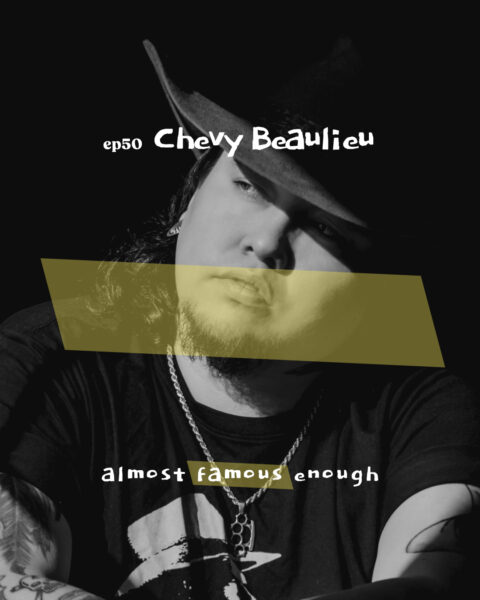
Northern Alberta country singer-songwriter Chevy Beaulieu sat down for a candid conversation about tracing his path from family band roots to landing a deal with Vancouver’s 604 Records. Growing up surrounded by traditional fiddle music and classic country legends, Chevy developed a deep respect for authentic songwriting. He shares what it was like funding his early work through diamond mine shifts in the North, navigating the harsh trial-and-error of indie demo submissions, and eventually connecting with a label team that embraced his genuine sound.
From blending 90s country, outlaw influences, and pop-rock melodies to honoring his First Nations heritage and northern upbringing, Chevy reflects on staying true to himself in a complex music industry. He also discusses his recent Horizon Male Artist of the Year win at the Country Music Alberta Awards, dusting off beloved regional covers, and what lies ahead for his live touring show.
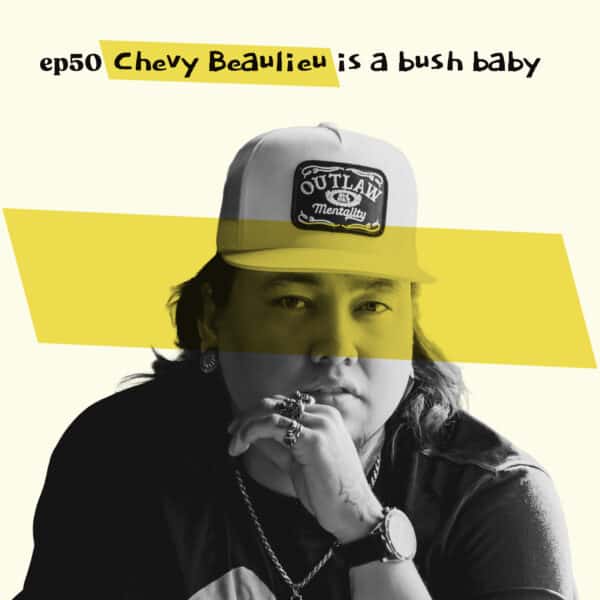
ep50 Chevy Beaulieu is a bush baby
released October 8, 2026
1:34:44
Chevy Beaulieu talks through the long road from playing family gigs in the Northwest Territories to signing with 604 Records and releasing his self-titled album. He also shares how his roots, his mixed background, and a wide range of influences shaped a sound that sits between traditional country, outlaw country, rock, and a little bit of everything else.This is a story about learning the craft first, then learning the business later. Chevy also gets honest about the frustration of being ignored by labels, the value of staying authentic, and why he believes “overnight success” is a myth.
Key topics
https://chevybeaulieumusic.com/
https://www.instagram.com/chevy_beaulieu_music
https://www.youtube.com/@chevybeaulieu2294
hosts: Glen Erickson, Alexi Erickson
AFE: https://www.almostfamousenough.com
AFE instagram: https://www.instagram.com/almostfamousenough
AFE Spotify playlist: https://open.spotify.com/playlist/1o1PRD2X0i3Otmpn8vi2zP?si=1ece497360564480
Almost Famous Enough is a series of conversations centered around the music industry, pulling back the veil on what it really means to “make it”. Our podcast features guests who know the grind, who have lived the dream, or at the very least, chased the dream. Through these conversational biographies, truth and vulnerability provide more than a topical roadmap or compile some career advice; they can appeal to the dreamer in us all, with stories that can teach us, inspire us, and even reconcile us, and make us feel like we made a new friend along the way.
Chapters
00:00:00 – Introduction
00:02:42 – Meeting Chevy Beaulieu
00:07:01 – Roots, Heritage, and Identity
00:09:12 – A Family Legacy of Music
00:14:32 – The Family Band and Learning the Craft
00:18:33 – Early Songwriting and Finding Direction
00:23:37 – Developing a Voice as an Artist
00:25:16 – Funding the First Record
00:32:13 – The Story Behind the Name Chevy
00:33:26 – Rejection, Demos, and Breaking Into the Industry
00:36:54 – Finding a Home at 604 Records
00:42:02 – Country Music Influences and Musical Identity
00:49:25 – Songs, Covers, and Country Music Legacy
00:53:24 – Signing a Deal, Waiting, and Building a Team
01:00:59 – New Music, Awards, and Life on the Road
01:15:08 – Post-Fame with Alexi
ep50 – Chevy Beaulieu is a bush baby
Glen Erickson (00:01)
What is authentic anymore, right? Maybe you’re part of the group that just doesn’t care. Be whatever you want, no one needs to judge what is legit for anyone else. Or maybe you’re in the group that still feels there are sets of unwritten rules or criteria by which we can determine someone’s authenticity and what that means and why it matters or should matter to everyone. Or maybe you’re in between on any given day.
The music industry has always found authenticity as an artist as one of its core debates. In a world where there could be a marketing machine making those decisions for you, or the opportunity to share a popular claim of I don’t care what anyone thinks about me, air quotes. But I think that sentiment often gets pushed up against expectation and perception.
Two very powerful ingredients in how accurately your external sources are judging you. You might not care, but their perceptions might influence others who do care about you or the who you care cares about you. The thing about our guest is that he takes great pride in all the things he has done for himself and done his own way. And isn’t that exactly how it should be? Isn’t that the most undeniably authentic approach to a music career?
To have a healthy perception of yourself and a positive self image? Chevy Bolux is an award winning Canadian country singer songwriter known for his authentic storytelling, powerhouse vocals, and hardworking blue collar roots. That’s the slick bio. Now for the authentic part. Chevy Bolux is a self made outlaw country singer, named after a truck his father coveted but couldn’t afford.
He learned the ropes playing in a family band before branching out, beating out full rock bands in a battle of the band competition, doing old standards on acoustic guitar, accidentally getting a song to become popular on Sirius XM radio before he’d even set up his royalties, and working for years in a diamond mine to bankroll his first album on his own terms without assistance. I don’t think anything more needs to be said about that.
or authenticity. My name is Glenn Erickson. This is almost famous enough. Thanks for spending your time with us. This is Chevy Beaulieu.
Glen Erickson (02:43)
Well, welcome to the podcast, Chevy. Appreciate you finding the time here and taking the time to chat. obviously this is our first meeting, so
and and connecting, even though I always like the fact that you’re an Alberta boy, like in the sense for me that I d like I used to be a lot more tapped in, I guess is what I was gonna say. And then so then when I hear about some people’s new music and where they’re going and their career and then I’m like, they’re right down the road from me. That’s pretty cool.
you to kind of discover in the same neck of the woods, which is pretty awesome. But so Xavi like I usually just like to like I dive in but then I I I like to have conversations just kind of like how somebody got here, how their kind of career is developing and and talk a little bit about that stuff if that’s cool. Sometimes I trace the timeline, makes it a little easier.
Chevy Beaulieu (03:40)
for
sure, man.
Glen Erickson (03:41)
Yeah, but let me let me start by making sure cause you must just have a great time with this, especially as you have to start to do more media and everybody trying to figure out your last name. And you know, I grew up in the prairies, you know, so I’m I’m thinking it’s Bolu is it or do you do the Liu even more?
Chevy Beaulieu (03:59)
That that’s close. That’s that’s
that’s closer than most people pronounce it. Yeah, ’cause
Glen Erickson (04:05)
Okay.
Chevy Beaulieu (04:06)
I say I say bo yeah, it’s more bollou. You get people
Glen Erickson (04:09)
Okay.
Chevy Beaulieu (04:10)
from out out east would be Bolier. and people up
Glen Erickson (04:13)
Yeah.
Chevy Beaulieu (04:13)
north would be or Alberta area, Western Canada, northern Canada would call it Bollio. It’s it depends on where you are. But I
Glen Erickson (04:23)
Yeah.
Chevy Beaulieu (04:23)
I pro proof yeah.
Glen Erickson (04:25)
I mean, we kinda grow up in Canada watching like a lot of hockey announcers not always pronounce Frenchish names great. So they’re like the bull you or they’re like bull ya. I’ve heard things like any, you know, like so you get these influences in my head of like I think it’s coming from hockey announcers like butchering the name, so then I’m like trying to correct
what I think the, you know, proper fr French thing is. So that’s cool.
Chevy Beaulieu (04:53)
Yeah, th
there is a boule you in in the NHL right now. What’s
his first
Glen Erickson (04:58)
Is there?
Chevy Beaulieu (04:58)
name? Yeah, I forget his first name. It’s from Quebec, I think. But yeah. But yeah, no,
Glen Erickson (05:03)
Yeah. Yeah.
Chevy Beaulieu (05:04)
it’s I I usually the best way to explain it is if you were to write it down you’d spell the word bowl hyphen you is the way I usually bull
Glen Erickson (05:15)
Okay. Yeah.
Chevy Beaulieu (05:17)
you, yeah.
Glen Erickson (05:18)
Yeah, yeah. Cool, cool. Okay. I’ll try and make sure I don’t kill that the rest of the way or like slip off on just something else. And I mean, you self titled your record, so you’re kind of putting it out there that people gotta learn it for sure. it
Chevy Beaulieu (05:32)
Yeah. Yeah.
Glen Erickson (05:34)
works that way. but yeah, you’re kind of right in the middle of having released, is it two, three weeks now of of your full length album?
That’s kinda out. Right now, three weeks. Yeah. And yeah.
Chevy Beaulieu (05:46)
Three weeks. Yeah. It’ll be a month pretty soon actually.
Glen Erickson (05:52)
And I mean that usually comes with you know, a certain amount of, I don’t know, like media things and, you know, either labels and publicists and agents trying to line things up for you. I’m wondering what that’s looked like.
for you and is is any part of sort of the stepping into an album cycle, so to speak, like now, new to you?
Chevy Beaulieu (06:15)
What’s this is pretty new to me ’cause the last I put out a an album on my own there back in twenty nineteen. Yeah.
Glen Erickson (06:22)
Yeah.
Chevy Beaulieu (06:23)
And I didn’t I didn’t have them all the press and everything backing me at the time. it it did alright. it was called Firecracker and compared to then and now
It’s a lot more work than just putting music out to serious and hoping for the best. Yeah.
Glen Erickson (06:45)
Yeah. Yeah.
Yeah, absolutely. Well, we’ll talk a little bit about that. yeah, I’d like to find out a little more as we go, kind of how you got to here and then about the album and and kind of where you feel like you’re hoping at least or that takes you. About how about I I’m really interested in people’s backgrounds sometimes too. So you
and it was fun because like I do a little research on people obviously and the fun thing about being Canadian is the kind of mixes everybody ends up as. So you’re like you’re treaty eight, so here in Alberta, like you’re you’re NFI with Treaty Eight, I see, like the Steen River area.
Chevy Beaulieu (07:27)
Yeah, I’m
I’m Salt River First Nations out of Fort Smith, Northwest Territories. So
Glen Erickson (07:31)
Okay.
Chevy Beaulieu (07:31)
right right on the border. But I have ties to all over the place.
Glen Erickson (07:36)
Yeah.
Chevy Beaulieu (07:37)
Yeah.
Glen Erickson (07:38)
So is it y you primarily identify Metis Cree or how what sort of stands out? ‘Cause I think it seems
like there’s a lot.
Chevy Beaulieu (07:46)
According
to the Fed to the federal government of Canada, I am a status Indian is what they is what they call me. That’s what the government calls me. But
Glen Erickson (07:51)
Okay. jeez, yeah.
Chevy Beaulieu (07:58)
I usually identify as basically Heinz fifty seven. I’m all over the place. Scottish,
Glen Erickson (08:03)
Okay. Yeah.
Chevy Beaulieu (08:05)
French, Cree, Chip, all over the place. Yeah.
Glen Erickson (08:08)
Yeah,
I mean so like a lot of people, you sort of sit back and you like, okay, yeah, so like my ancestors had no problem crossing lines to hook up. So you right?
Chevy Beaulieu (08:21)
Well, they think
of think of it like few generations back, like my great great great great grandfather one of the first bollus in the north there. They called him old man bully and he was the CEO of the Hudson Spay Company for a short time.
Glen Erickson (08:36)
Mm.
Chevy Beaulieu (08:37)
He was a Frenchman.
Glen Erickson (08:39)
Yeah.
Chevy Beaulieu (08:39)
And then on my mum’s side they’re Scottish. I mean her her grandpa her grandfather was Scottish.
Glen Erickson (08:45)
Okay.
Chevy Beaulieu (08:46)
So I don’t know very many
People First Nations people from my area that are six three, six four with green eyes. Yeah. Yeah. Mm hmm.
Glen Erickson (08:54)
It’s very true. Very true. Yeah, very true, man.
yeah, I mean that’s pretty cool. I mean, it it was interesting reading a bit of your background. Obviously, I think sometimes everybody wonders, you know, how did somebody come to music? Was it just like their love or was it a strong family influence? it’s pretty obvious, like you’ve got like generations of fiddle champions which
You know, i isn’t that far
Chevy Beaulieu (09:22)
Ali
Glen Erickson (09:23)
removed. Like is that your dad, did I read, and his his father? Okay.
Chevy Beaulieu (09:26)
No j no just my dad. My
my grandfather played. My grandfather played. He’s a really good fiddle player. I never got a chance to meet him. He died before I was ever got a chance to meet him, so but yeah my dad he’s a three time Canadian fiddle champion.
Glen Erickson (09:42)
And just ’cause I c I’m assuming other people might have the same curiosity as I do, how how did they determine fiddle champions? Like is there like regional playoffs and then and then you go to national? Like
Chevy Beaulieu (09:56)
Back
in the day the some most people they used to host like a Canadian Grandmasters and they’d all the best fiddle players in the country would go to that. They used to do the
Glen Erickson (10:07)
Okay.
Chevy Beaulieu (10:07)
Grandmasters championships in Nashville as well. I don’t know if they do that anymore.
Glen Erickson (10:12)
Hmm.
And do they just like play a song or they all have to play something similar? Do they like have a play off, like a a fiddle off right against each other? That would be kind of cool, but
Chevy Beaulieu (10:23)
The
format the format my dad was telling me back in the day ’cause this was back in the eighties, right?
Glen Erickson (10:29)
Yeah.
Chevy Beaulieu (10:29)
And he said they used to do a walls walsaj jig. I forget what else. It was there was a format to it. You did you had to have been able to play the best song you can play. Yeah.
Glen Erickson (10:38)
Yeah, yeah. Yeah had to show your chops in all the different kind
of common ways that yeah, yeah. That makes that makes a lot of sense. so how did I mean obviously like just because your dad plays fiddle doesn’t mean you’re gonna be a musician. I’m I’m wondering what was what was the musical environment for you growing up? Well like what was in the house? What was like, you know, was it like
The whole family kind of thing or did you have like some people it’s like their big brother or sister kind of had the record collection or the C D collection and then that influenced them. How did what was what was the upbringing in for you musically?
Chevy Beaulieu (11:19)
Well, I grew up listening to a lot of Texas Tornadoes and who else. Merle Hagard’s my favorite artist of all time.
Glen Erickson (11:26)
Okay.
Chevy Beaulieu (11:27)
My mom used to have one of those back when they used to do s box sets, we used to listen to them all the time. He had the old black box set of all of his hits. And a lot of fiddle tunes, Doug Kershaw, a lot of Cajun influence, Metiside,
Glen Erickson (11:42)
Mm.
Chevy Beaulieu (11:43)
real similarities to the fiddle playing between those two.
Glen Erickson (11:46)
Mm.
Chevy Beaulieu (11:47)
‘Cause both friends speak in and
Glen Erickson (11:50)
Yeah.
Chevy Beaulieu (11:50)
have some sort of ties to Acadian style music.
Glen Erickson (11:54)
Yeah.
Chevy Beaulieu (11:55)
And no, everybody played a little bit. My mom sang. My mom sang a little bit. My auntie Bobby used to be the bass player and singer for one of the singers for the family band. I got a cousin named Brian. He he wrote one of the songs off my last record. Well my first record.
And he hi everyone calls him Chooch. He was the guitar player on the band. And my brother played drums, my older brother played drums for the family band. Yeah, it was all it was all interconnected. I mean
Glen Erickson (12:25)
Yeah.
Chevy Beaulieu (12:27)
we were I was never too far away from music. Like I s I started out on drums and bass.
Glen Erickson (12:33)
Yeah. family bands are always interesting to me. So like cause I have like these big like you know kind of traditional Christian roots in small town Saskatchewan kind of upbringing. And so there was always like family bands that would come and
And they were like gospel bands, right? Like and it would be like, you know, because these these super traditional like Christian parents would have like ten children or something, and then they’d make a family band out of them. But what what is a family band the way it grew up for you, like where did where did they play? Like what what’s the I’m I’m just curious, what’s the environment that a family band forms so that you need to practice for gigs? What kind of gigs are we talking about?
Chevy Beaulieu (13:15)
It’s usually like a heads up sort of playing for most of the most of the time. No rehearsals. You just a y you’re at home just
Glen Erickson (13:22)
Always be ready.
Chevy Beaulieu (13:25)
learning learning the old standards.
Glen Erickson (13:27)
Mm.
Chevy Beaulieu (13:28)
And yeah, always being ready. We used to play a lot we played a lot of weddings and
Glen Erickson (13:33)
Mm.
Chevy Beaulieu (13:34)
weddings and tiny bars, First Nations gatherings, stuff like that, funerals. But
Glen Erickson (13:41)
Yeah, yeah.
Chevy Beaulieu (13:43)
You always gotta be ready. Everybody else just knows this we gotta make sure to know the songs that everybody else knows. ‘Cause I grew up playing around the high level area and Hay River Northwest Territories all over that area there in the north. And all the old standards mostly.
Glen Erickson (14:00)
Yeah.
Chevy Beaulieu (14:01)
You really gotta you really learn how to sing singing those songs.
Glen Erickson (14:06)
Yeah.
Chevy Beaulieu (14:07)
It’s very difficult to do and I I I wouldn’t regret
I don’t regret anything actually. It was it was such a good time in my life.
Glen Erickson (14:15)
Yeah.
Chevy Beaulieu (14:16)
Yeah.
Glen Erickson (14:16)
Yeah, I mean learning the old standards and s like having so many of them. that’s just such a different skill set I’m thinking about than a lot of people grew up with, right? Like, but then you see the people who could pick a guitar up and play anything around a campfire when people ask. You talk about the always be ready.
thing, I mean that probably plays through to a lot of things. So when did you finally join the family band? If you were younger and some of them were in it, were you in it right away or did you have to sort of, like you said, keep
Chevy Beaulieu (14:46)
I was about
Glen Erickson (14:47)
working on it?
Chevy Beaulieu (14:49)
I was about eighteen years old.
Glen Erickson (14:51)
Okay.
Chevy Beaulieu (14:52)
Around the same time as I started taking things a little bit more seriously with my music, but pardon me. yeah, I was around eighteen years old. I started playing playing more shows along the time there before I did even put my first record out playing all the little communities with my dad. My biggest show though
It’s just for me it’s my biggest show when I during that time. I got to open for Shane Yellowbird.
Glen Erickson (15:16)
Mm, mm-hmm.
Chevy Beaulieu (15:18)
Back in twenty twelve and that was one of the biggest artists at the time that I got the open for and Rest in
Glen Erickson (15:23)
Yeah.
Chevy Beaulieu (15:23)
Peace Shane. But yeah, other than that you just gotta keep playing. It’s the only way you get your chops, get your mileage. Yeah.
Glen Erickson (15:31)
Yeah. And you had
you had picked it up before you were eighteen. So what which like you just picked up a guitar, you started singing, what was what was the draw
Chevy Beaulieu (15:40)
Well
Glen Erickson (15:40)
for you?
Chevy Beaulieu (15:41)
I had I started playing drums and bass and I got bored of it, couldn’t get into it. I played bass on my dad’s first fiddle record when he st started doing his own recording at at the house. So that was that was a cool experience. I could say that I was on one of his songs.
Had
Glen Erickson (15:58)
Yeah.
Chevy Beaulieu (15:58)
no idea what I was doing.
Glen Erickson (16:00)
Yeah.
Chevy Beaulieu (16:01)
And then at about fifteen, sixteen I got my first my first guitar. It was
black Takamine G series. I still have it. I use it on stage all the time.
Glen Erickson (16:11)
Yeah. Yeah.
Chevy Beaulieu (16:14)
Those things are indestructible. I tried writing music. I went back to some of my songs from when I was a teenager and it’s pretty rough. Pretty
Glen Erickson (16:23)
Yeah.
Chevy Beaulieu (16:23)
rough. Didn’t know how to sing. All the country I was doing was trying to sound like Dwight Yochum and
Glen Erickson (16:31)
Yeah.
Chevy Beaulieu (16:32)
with the voice popping and everything.
Which I still do this day, but at least I know I’ll say somewhat
Glen Erickson (16:38)
Yeah.
Chevy Beaulieu (16:39)
s somewhat better now. But yeah, and
Glen Erickson (16:41)
Well, I mean that’s
how we all start, right? Is like emulating like pretty
Chevy Beaulieu (16:47)
Yeah.
Glen Erickson (16:47)
specifically something that inspired us, right? Yeah.
Chevy Beaulieu (16:51)
Yeah, no, you
need to you pick somebody that you really like. Like I I really loved John Mayer growing up and stuff like that, but like I some of the pop stuff. I grew up in the era where acoustic acoustic rock was really blowing up, right? So like
Glen Erickson (17:08)
Yeah.
Chevy Beaulieu (17:08)
around twenty ten to twenty twelve. So you had train and all those guys on the radio. I had a s I had a serious XM
radio in my truck that my dad gave me and so I was always listening to the different stuff or whatever whatever the girl I was hanging out with at the time like listening to and
Glen Erickson (17:25)
Ha ha ha.
Chevy Beaulieu (17:27)
saw us learn yeah and I yeah, I grew up in like the Justin Bieber era and stuff like that, so
Glen Erickson (17:35)
the influences that rarely make it out the when people ask us who our influences were so often was the girl.
Chevy Beaulieu (17:40)
Yeah, well I’m the same age as that guy and
I graduated in twenty twelve so it was all like all the girls were crazy over that guy. Anybody that was in the music or any teenager that was smart about it tried to emulate that kid a little bit. Well, I say kid, he’s the same age as me. But
Glen Erickson (18:01)
Yeah, yeah.
Chevy Beaulieu (18:02)
especially in high school. Like track and field and stuff I used to play
Glen Erickson (18:07)
Yeah.
Chevy Beaulieu (18:07)
some of
play some of his songs. Not too proud of it, but things you do when you’re a teenager. Yeah.
Glen Erickson (18:13)
Yeah.
we’re like picking up music like when you’re fifteen, sixteen and even trying to write songs. I mean that’s a kind of a different experience I’m learning when I talk to people like, you know, like were your teen years like pretty stable or were they pretty disruptive? There I mean I I’m always curious kind of what leads people to
want to start to express themselves in song beyond just emulating their people, like what kind of things are happening. Was it a pretty stable time or a disruptive time
for you?
Chevy Beaulieu (18:48)
When I was when
I was younger there I only really had two settings. I was either happy or sad. Which is funny ’cause emotions are all over the place. Everyone
Glen Erickson (18:57)
Yeah, yeah.
Chevy Beaulieu (18:58)
gets it, everyone goes through it. But I was just a big lover boy when I was a kid. And this one No, no, no. I got I
Glen Erickson (19:04)
That’s great. Were you the youngest, did you say? No, you’re middle ish or
Chevy Beaulieu (19:09)
got three older siblings, a sister and two brothers and two young and three younger siblings.
Glen Erickson (19:14)
Okay.
Chevy Beaulieu (19:14)
Two brothers and a sister.
Glen Erickson (19:16)
Yeah, okay. Yeah.
Chevy Beaulieu (19:18)
Yeah, one
they’re my half siblings on the older ones.
Glen Erickson (19:22)
Okay. Yeah, that’s a lot. so obviously like getting into music with a family band thing, like you know, you obviously you’re probably not getting resistance when you’re like, I wanna take this seriously. Like when, you know, either from your family or anybody, is it easy to assume that everybody was pretty supportive of
of pursuing music, even though it always, you know, is a pretty risky pretty risky pretty risky thing to try to jump into, especially like, you know, eighteen twenty, when everybody’s supposed to be trying to get their foot in the door on some sort of stable career or education or the typical path. How how did that play out?
Chevy Beaulieu (20:07)
I remember being a kid, like my dad’s from a different time. He was born in nineteen fifty two. It was a little bit harder for a native man to to excel in the industry that I am in. And he used to be a he was a little bit negative for the first little bit there saying that like native boys never make it in this industry, but he he comes from a time where it was very difficult.
Glen Erickson (20:33)
Mm.
Chevy Beaulieu (20:34)
And I I didn’t I never held that against him. And I I proved him wrong and he’s very proud of me.
Glen Erickson (20:40)
Yeah.
Chevy Beaulieu (20:41)
And yeah. What else was the rest of the question? growing up for trying to pursue music, I went to school for a bit. Never finished. I went to school for B of Applied Sciences at Medicine at College. Never showed up to any of my classes.
Glen Erickson (20:57)
Okay.
Chevy Beaulieu (21:00)
I think the first year I won
The Rock FM and Medicine at what’s that station called? I forget what station it’s called, but I did their battle of the bands with nothing but an acoustic and old old like sixties, seventies rock tunes
Glen Erickson (21:15)
Okay.
Chevy Beaulieu (21:16)
and old contraons. I was like I and then I remember being eighteen years old saying I like, I beat you I did a rock battle of bands, beat you guys with old contra
Glen Erickson (21:26)
Yeah.
Chevy Beaulieu (21:28)
They couldn’t get over it. I remember my buddies just this giving me shit about it too. I was like it was a good time. It was a it was a time
Glen Erickson (21:35)
Yeah.
Chevy Beaulieu (21:38)
where I needed the money. It was near the end of the year during college. I ran out, never went to school, never went to class. Yeah.
Glen Erickson (21:46)
Yeah, it runs out pretty fast.
Chevy Beaulieu (21:48)
Mm-hmm.
Glen Erickson (21:49)
yeah, but I mean these are kind of all the little puzzle pieces quite often, right? Especially when we look back. they may have meant one thing at that time, like making a little money, and then maybe later on it’s something that provides a little confidence, maybe, or
Chevy Beaulieu (22:02)
Mm-hmm.
Glen Erickson (22:03)
something that kind of helps you out.
Yeah, so I mean
There’s a little trajectory in there, and I guess having kind of read a bit of the story that I I could find about you online, I’m I’m curious I’m curious about essentially like you figuring out your sound or who you are, which everybody kind of has to go through. And some people go through that.
I think really early, like they just try a whole bunch of things right away. They put out a whole bunch of stuff. And other people sort of do it in the quiet of their room. Do you know what I mean? And they keep trying to evolve. But finding who you are is like I think maybe one of the most difficult things. And you can tell me whether you kind of had a sense always of who you were or you’ve gone through some evolutions. I’ve I’ve worked with
a few different like development programs, I guess you call them, for artists and musicians and watching people, you know, sometimes you can like hear somebody and then you can know like you can hear all the talent and you can also hear that it’s not the real full version of themselves yet. Like they’re still trying things on, so to speak.
So you kinda hitting that age, you know, eighteen and then twenty and and and this stuff, it’s not until a number of years later, right, that you’re
You’re starting to ship demos around to some of these people before you kinda landed the deal you did. So I’m curious about that in-between handful of years of you developing yourself. Were you just taking gigs anywhere you could get them, trying to find guys to play with? Or how are you how were you figuring out what you were gonna be?
Chevy Beaulieu (23:41)
I was still doing one off cover shows for a while. Hitting up songwriters rounds and stuff like that. Well I guess it wasn’t that big in in Canada at the time, songwriters rounds. And more like open mics. Did a lot of that. Did a lot of writing up until putting out my first record. And besides that it was a lot of but yeah, development, a lot things changed. I stopped listening to
I my listening patterns changed a lot. My songwriting style changed a lot because it finally clicked in my head. I was able to write two, three songs in a day. But I I was able to focus my emotions more than just letting it go.
Glen Erickson (24:25)
Mm.
Chevy Beaulieu (24:26)
That’s where I found the turning point when it came to songwriting.
Glen Erickson (24:29)
Yeah.
Chevy Beaulieu (24:30)
‘Cause if you can’t focus that it’s just it’s all messed up all over the place and doesn’t mean anything at that point.
Glen Erickson (24:37)
Yeah. Yeah, that’s a really good point. I mean, that’s seven years between graduating and then putting out that first record yourself, like your firecracker record in twenty nineteen. Was there was that kind of always the goal in your mind? Sort of that idea of you wanna be you wanna do this full time, that requires the the
the record label, building a whole team up of all that kind of stuff. Like how much of that was in your head about like knowing how to do it or was it just was it kind of just a dream hanging out there or or how was that playing out for you?
Chevy Beaulieu (25:16)
That’s how funny you asked that. I used to work at a caddy diamond mines as a process plant operator. I was there for nine years. And nine years ago I said I was only gonna be there for five to kick start my career.
And that paid for my first record, my firecracker record. And the whole pursuing music thing, the whole putting out that record, I just wanted to show people that I could write songs. That I’m not I’m not just a cover band guy. That’s why I put out a whole record by myself.
Glen Erickson (25:51)
Mm-hmm.
Chevy Beaulieu (25:52)
Which i it did really well for me. Like I had a couple of singles off that thing that paid off the records.
Glen Erickson (25:59)
Yeah.
Chevy Beaulieu (25:59)
I did that record with Stu Kirkwood out of Yeah,
Glen Erickson (26:02)
Yeah, I know Stewie really well. Yeah.
Chevy Beaulieu (26:04)
yeah, out of department he’s at department nine now. He used to be at he had his own st yeah. He had his own studio sound extractor. Yeah.
Glen Erickson (26:08)
Yeah, he had his own studio in the basement there, that thing, yeah. Yeah. Sound extractor, yeah. The name was
escaping me. Yeah, he’s he’s been a great guy around Edmonton here for a long time. Did you did you f
Did you know anything more than like I gotta write these songs and then find some producer guide to help me record them and then I’ll have an album? Did you know the whole like what it actually means to put an album together and get it out there and all the stuff?
Chevy Beaulieu (26:39)
If I did I would have put more singles out.
Glen Erickson (26:42)
Ha ha ha.
Chevy Beaulieu (26:43)
If I knew what everything entailed, if I knew
Glen Erickson (26:46)
Yeah.
Chevy Beaulieu (26:47)
that I had to register my songs for the royalty stuff, what I had to register my songs for the songwriting stuff, I had to I had no idea. It’s it was funny because
my first single off that record was called Key to My Heart, Key to My Chevy. And it was five minutes long and the radio edit was four minutes long. I don’t know who sent my song to Sirius XM. I don’t know I don’t know who did, but about three, four months later, my my aunt texted me and said, Is your song registered? Did you know that you’re
You’re probably gonna get some residuals from that that record that you
Glen Erickson (27:27)
Yeah.
Chevy Beaulieu (27:27)
put out. And I didn’t even know. I didn’t even know anything about submitting my stuff, registering, had n no idea what a heck it ISRC code was and stuff like that. I was super I was super green. I was just bar banded and from a bar band background basically.
Glen Erickson (27:47)
Yeah,
yeah. So you didn’t get really exposed to the business side in any way, other right? You were just kinda playing the music live and writing the songs on your own.
Chevy Beaulieu (27:57)
Yeah, yeah, that’s what I was doing. I had no idea any of that stuff existed. I had to learn I poked around, people they told me about these things and then I inquired on my own and figured out how to do that.
Glen Erickson (28:11)
Yeah.
Chevy Beaulieu (28:11)
Yeah.
Glen Erickson (28:12)
Yeah. I mean, I had alluded before that I’ve been involved in these development programs and I think that’s the exact reason is like the amount of times I’ve come across, you know, people whose talent keeps taking them places, but there’s no system out there to fill in those gaps for people.
unless we start creating better systems and better, you know, informal but somewhat like focused education and training for people to sort of help them advance their careers themselves ’cause, you know, it takes a lot to get there. I think that’s a fun story though. Like you know
It’s always fun
Chevy Beaulieu (28:54)
Very
Glen Erickson (28:55)
that you do the thing and the thing starts working out for you before you have a damn clue what it actually means for it to work out, right?
Chevy Beaulieu (29:02)
Yeah
yeah. I was just it was very frustrating. It was a very frustrating go. But like I said, I don’t regret any of it. It’s I I had to learn to do it.
Glen Erickson (29:11)
Yeah, you did it. You you did the thing. Yeah.
Chevy Beaulieu (29:16)
Like like you said, there’s artists out there that have a their talent is taking them places and they’re an independent artist, especially in like the indigenous communities. There’s a lot of talented guitar pickers, singers, songwriters that doesn’t
know about these things. Doesn’t know about the royalties of everything. Didn’t know that they could probably if they have enough following, they can make a career out of it. There’s funding there to keep your career going. I’ve
Glen Erickson (29:43)
Yeah. Yeah.
Chevy Beaulieu (29:45)
taught a few artists this about how to now that you have a po now that you have a website on Sirius you can submit your music to especially if you’re a country artist. There’s
Glen Erickson (29:55)
Yeah.
Chevy Beaulieu (29:56)
there’s a ways to do things now.
I didn’t know that those were there. Yeah.
Glen Erickson (30:01)
Yeah. And probably
especially like you alluded to there, the funding opportunities, right? Then you if you grow up thinking I just gotta work hard and get good so people will come out and and then that shit will start to pay my bills, like and then you don’t even realize that there’s opportunities for some support even, right?
Chevy Beaulieu (30:21)
Yeah.
Glen Erickson (30:22)
To like make it hopefully a little easier and not carry the whole weight yourself when you’re starting out.
But then you learn, I’m sure, the two sides of that coin is like how competitive that shit is too once you get into
Chevy Beaulieu (30:33)
Mm-hmm.
Glen Erickson (30:34)
it, right? Everything’s competitive. Yeah.
Chevy Beaulieu (30:36)
Yeah.
But there’s some like I was very prideful before. Like I f I wouldn’t take any loans for things. Or if I did I’d pay it off myself. I wouldn’t apply for grants.
Glen Erickson (30:51)
Mm.
Chevy Beaulieu (30:52)
I wouldn’t do any of the yeah, I didn’t want to do anything. I didn’t want any help from anybody. I wanted to learn it my way and working at a caddy, two on, two off.
Driving up and down, living in Hay River, driving to Edmonton to record that record. I didn’t I didn’t want any help from anybody at that time. I was very, very prideful. Say I gotta do it myself. I wanna do it the way my heroes did it, working hard
Glen Erickson (31:17)
Yeah.
Chevy Beaulieu (31:18)
and paying it for themselves. Cause they didn’t have the opportunities back then especially especially in the sixties. And but yeah, if
One piece of advice for any of the artists gonna be listening to this is all those grants, all the funding and stuff that are in banks, they’re just gonna sit there and the bank’s gonna make interest off of it. Like if it’s not being used it’s it ha it’s just gonna be there. Yeah. It’s not
Glen Erickson (31:44)
Yeah. Yeah, yeah. Yeah. Yeah.
Chevy Beaulieu (31:49)
very useful to anybody.
Glen Erickson (31:51)
Yeah. so I forgot to ask you to cause you said before you wrote that song and you had like you used the word Chevy in it. I actually did Google, man. I was like, is Chevy his real name? Like, and then the gr the great answer. So like your dad named you Chevy and he like
named a lot of your siblings with is that what I
Chevy Beaulieu (32:12)
Yeah, yeah, my younger siblings.
Glen Erickson (32:13)
saw?
Chevy Beaulieu (32:14)
Yeah, my younger siblings are Mercedes, Harley and Diesel.
Glen Erickson (32:17)
man, that’s so sweet. Love that.
Chevy Beaulieu (32:19)
Yeah, yeah, well it was funny.
The the way is the thing that it the thing is about naming your kids that we didn’t have a lot of money growing up. Like we we didn’t have running water when I was a little kid until
Glen Erickson (32:32)
Mm.
Chevy Beaulieu (32:33)
we moved into till we moved to A River from Steen for school. But yeah, he just named things they already named his kids after stuff that he couldn’t afford, so he just made his own.
Glen Erickson (32:46)
I love that. That’s a man, that’s a really that’s
Chevy Beaulieu (32:47)
Yeah. Yeah.
Glen Erickson (32:49)
a great hook on that, man. That’s so sweet. okay, I wanna then let’s like I find this really interesting too. So in that story of yours of like how you kind of got to this point of making your own record, and you starting to obviously you’re figuring out how to
register your songs, how to do these things. You’re spending some time online figuring that stuff out. You start shopping music around for a a couple of years, which is another process of finding out not just like how do I do it, like who are the people who will like listen to it, like all the different record labels at your disposal maybe to reach out to. But then the etiquette. You probably had to try to learn the etiquette of like
you know, people have put on there, don’t send us a C D and other people are okay with you sending them a C D and other people just want you to send them a link to a band camp or you know, all these different like ways and you’re trying to learn how to submit your demos and that’s like a soul sucking experience for most artists, right? Because that’s how you learn to deal with like not just rejection, but like the worst rejection is
like just getting no answer. what was that experience like for you, like really kind of going at it that way?
Chevy Beaulieu (34:03)
A lot of don’t even send you an email back. But a
Glen Erickson (34:05)
Yeah. Yeah.
Chevy Beaulieu (34:07)
lot of a lot of and a lot of don’t have a way to submit your music. So there was a few different people in Western Canada that I sent my music to. Some didn’t even some just said we’re not looking for new artists. I email them back. I’m just asking if my music’s any good. I just wanted
It’s
Glen Erickson (34:30)
Yeah.
Chevy Beaulieu (34:30)
very discouraging for new artists that know that they’re good enough, but you just say I’m not you just send one liners back. Didn’t even bother listening. List listen to the songs. I don’t I don’t care who you are. You just got time to listen to a song. Yeah, that’s br
Glen Erickson (34:45)
Yeah. Hmm.
Chevy Beaulieu (34:47)
anybody anybody out there like wanting to get into the whole label thing and it’s
It’s very discouraging if you’re sending your demos out if people don’t even listen to them. Yeah. It’s it’s not that you’re they’re not good, it’s just sometimes they think that they’re more too busy to listen to your three minute song. Okay.
Glen Erickson (35:08)
Yeah, and be honest, like I’ve spent a lot of time with these people in my lifetime at you know, conferences and that kind of shit. And that attitude you might make some assumptions is happening why somebody like dismisses
Chevy Beaulieu (35:23)
Yeah.
Glen Erickson (35:24)
things so easily, it’s like valid. They do a lot of these guys walk around with those attitudes, or they have the ones that I’ve met.
Chevy Beaulieu (35:33)
Too busy.
Glen Erickson (35:33)
And then there’s
and then there’s a bunch that break that stereotype and I think they’re fantastic and they’re important for the industry. And I’ve seen that too for sure. But yeah, there’s definitely a super disappointing side sometimes to the people calling the shots that you kinda wish would just kinda keep it real, like, you know.
Chevy Beaulieu (35:55)
Yeah, like I would prefer somebody to tell me that my music is no good than to just send me n nothing that have to do with the email I sent them in the first place.
Glen Erickson (36:06)
Yeah, yeah.
Chevy Beaulieu (36:07)
Like, I’d r I’d rather hear that. I c I can take it. I you can tell me one of my songs crap of like, okay, I’m scrapping that song or I’m gonna rewrite it or re record it. Like that’s artistry. That’s all suggest yeah, like
Subjective, yeah, but object but yeah, there is good people, really good people. The label that I’m with are are great, such accepting people. I got
Glen Erickson (36:33)
Yeah. So let’s talk about that for
a second ’cause like this is what’s so great is ’cause like a lot of a lot of people have the dream and a lot of people have shipped their music off, you know, to what like maybe for some people they gave up after
five or six and other people like tried two hundred times or something. But regardless of the number, like it’s still a bit of a crapshoot. And and yours ends up at 604 Records, which is a Vancouver-based Canadian label that was started by the lawyer Jonathan Simkin, kind of way back. pretty well known for being connected to like Nickelback, I think, and and those early days. But
One of his employees is the ones who listens through some stuff and hears your music. So was that like an immediate like that that person picked up the phone and contacted you? Or how’d how does that play out to somebody actually listens to your demo finally at a really good label and then you actually get a call and and things start rolling?
Chevy Beaulieu (37:42)
It’s funny, like it was a few months prior to me signing. They asked me to come down. I had no idea. I was totally oblivious to it. If they weren’t interested in me, I don’t think they would have invited me down. I didn’t even think about it. I was like, I’m gonna go down and hang out with some music people. I’m super excited to meet everybody. Didn’t think I was gonna get signed. Like it just went
Glen Erickson (38:02)
Mm.
Chevy Beaulieu (38:03)
over my head. Didn’t even think about it. I just thought I was gonna do an acoustic show for the office. And
Glen Erickson (38:07)
You d you didn’t
think you were in an actual tryout for the show. Yeah.
Chevy Beaulieu (38:11)
Yeah, I didn’t know that. I just went there and did my own thing. ‘Cause
and yeah, Emily Palak. Emily Palak, I can I’ll give it to her. She she pushed for my music. She said that your music my music was good enough and had I had enough merit and backing to be able to push my music through the label. And they’ve been doing very well for me and r doing a lot of
really hard work, especially her. Jonathan, great guy. I we always had always have good chats when I’m around. I remember him telling me that
You seemed like you had something to say. He said
Glen Erickson (38:51)
Mm.
Chevy Beaulieu (38:51)
that to me several times. I’m like Definitely. Like I said, I tried I tried working with some folks out of Alberta. Not to name names, but people said I’ll I’ll send them songs that were pitched to me and then I’ll tell them like I got big songwriters on these songs and all I’ll get it was an email back saying Are the do they fit you? Do the songs make sense? I’m like
I’m gonna I’m gonna be able to sell these songs and but that’s all they’ve they’ve sent back to me.
Glen Erickson (39:22)
Mm.
Chevy Beaulieu (39:23)
another label esque type of person to in Alberta here. Not gonna like I said, not gonna name names, but they did the exact same thing. They said we’re not looking for new artists, but that’s not what I asked. Like we’re I was ranting about earlier.
Glen Erickson (39:39)
Yeah, yeah.
Chevy Beaulieu (39:41)
But there are really nice people in this industry. I’ve met more great people than bad people so far in this industry. But that’s because I’m I’m a
no BS type of guy. I literally just what you get w from me is what you’re gonna get. And it it it helps. If you’re the same guy all the time, people don’t expect anything different. But if you’re good at what you’re doing, people expect something more. But which is the best mixture and the best way I could explain it.
Glen Erickson (40:18)
Yeah, and I’m gonna add to that from some things I’ve learned, because I really think that’s well put, that I’ve observed that the people who, you know, as you said, like a no BS guy, what you get is what you’re gonna get, and that’s consistent. And when that’s consistent, the music industry is full of people who feel like fakers and imposters, and some of them are l literally faking their way
through things and when the when you come up against somebody who’s like authentic all the time, like that’s a little I’ve watched it, it’s a little intimidating for some people, right? Because it just reveals their own insecurity, right? If when someone’s like that. And we’re just the music industry’s so full of insecure.
people and I just think it’s always interesting when somebody who’s pretty strong in their convictions kind of walks in the door, it feels even stronger, if that makes sense.
Chevy Beaulieu (41:15)
Especially like if you’re chatting about something or you can feel when someone brings something up to you that they said they didn’t like because you’re doing the thing that you are and who you are and being who you are. Like something about staring somebody right in the eyes is just you can you can see it behind it and that they’re just they don’t they don’t have the backbone the back up what they’re try about to try to say. That’s just like everyday life.
Glen Erickson (41:42)
Yeah.
Chevy Beaulieu (41:42)
Like I don’t like you you call it’s easy to call out the B S of how if if someone’s just there to get something from you. Yeah.
Glen Erickson (41:52)
Yeah. Yeah, which not to beat a dead horse is a has a good chunk of the industry is built just around that too, unfortunately. so I what I did find interesting is that the notes I saw were like that they kind of heard that old country Merle Haggard in you and they kinda heard that probably new
Country rock or outlaw-y feeling in what you had submitted to them. So I’m curious, like, because I had asked you before about finding your own voice and your own sound. I’m wondering, did you feel like you had a really strong sense of which version of country you were? Because
S people love country is becoming one of the genres that people love to like split with a knife into all these like micro versions of what kind of country it is now. did you
feel like you had
Chevy Beaulieu (42:46)
Lots of
Glen Erickson (42:46)
a good sense?
Chevy Beaulieu (42:48)
lots of sub genres in this in in the genre of country music. A lot of sub genres.
Glen Erickson (42:51)
Yeah. Yeah.
Chevy Beaulieu (42:52)
I am a little bit of everything. That’s how I was from the start. That’s probably how I’m gonna be till the end. But eventually I’m gonna start splitting them up into albums. The styles. Cause I’m I c
Glen Erickson (43:05)
Okay. Like take a focus on something for a while and
Chevy Beaulieu (43:09)
Yeah, ’cause I
Like I said, I grew up as a teenager in the the twenty tens and that was the height of Bro Country. I mean t t
Glen Erickson (43:18)
Yeah. Yeah.
Chevy Beaulieu (43:20)
twenty twelve you had twenty twelve, thirteen, fourteen, fifteen, you had El Dean blowing up at the time. You had Luke Bryan killing it.
Glen Erickson (43:33)
Yeah.
Chevy Beaulieu (43:33)
Which is like I was listening to some of his music and a lot of his music from his early years is way more country than whatever’s on the radio now. Like it’s crazy. And
Glen Erickson (43:43)
Yeah.
Chevy Beaulieu (43:45)
you had FGL, like the godfather the godfathers of of Bro Country. And
Glen Erickson (43:51)
Yeah. Yeah.
Chevy Beaulieu (43:54)
and I also grew up on Merle Hager, George Jones, Keith Whitley, Whelan Jennings, David Allen Coe, Johnny Pacheck.
And now I’m listening to the new age, like quote unquote outlaw style music that there’s kinda playing on the radio now. ‘Cause you get guys like Co Wetzel and the Texas stuff com yeah, all the stuff coming out from Texas. You got Corey Kent and those boys. And I really love that music too, because I have a big thing about the whole dance hall style music, two stepping tunes.
Glen Erickson (44:24)
Yeah, yeah.
Chevy Beaulieu (44:25)
‘Cause my family I got a lot of fan on my dad’s side.
My cousins bull riders and like I call half breed cowboys and stuff like that. But like I’m far from it. I’m just a bush baby. And like that’s the only way I can the only way I can explain it as
Glen Erickson (44:45)
Yeah.
Chevy Beaulieu (44:45)
a as a bush baby. Like I like I wear the boots so I don’t I like ’cause you could just wear them, resole them, they’re comfy.
You can walk out in water with them. Like I like out in the bush. I never had horses or anything. Cousins all road from my dad’s side. Wear a cowboy hat ’cause it’s easier to hear. My ears are blown out from shooting guns without earplugs. And that’s what my dad did. Like you wear a straw hat, old Bangora hat. And
Glen Erickson (45:15)
Mm.
Chevy Beaulieu (45:16)
you can use that for rubbing for for moose and stuff. You rub it on the willows and
You can hear a long ways when you’re wearing those hats.
Glen Erickson (45:24)
Hmm.
Chevy Beaulieu (45:25)
It’s more of a tool. And then
Glen Erickson (45:27)
That’s cool.
Chevy Beaulieu (45:28)
fashion tool. Yeah.
Glen Erickson (45:31)
Yeah. Yeah, I mean it’s funny ’cause what you just described was like your roots can’t help but work their way just into who you are, right, in all these different ways that who you become. And and that it was exactly what I was thinking about your music right before you said that, which is like
You’ve already identified like you were willing to sort of listen to what was happening in even pop music when you were young for a while, or whatever girl you’re with was listening to,
Chevy Beaulieu (45:59)
Yeah.
Glen Erickson (46:00)
or or that you’re like, you know, you listened to the phases that went through and now you’re listening to this other stuff that feels inspiring, but you’re the stuff you grew up on will always find its way in, no matter what you try. You try on anything new, right? Like that
the history part’s always gonna it it’s like as if you were like, Okay, I’m gonna start like I’m gonna start wearing like this sort of outfit or whatever. It’s like you’ll still probably pair it with with cowboy boots. You know? So
Chevy Beaulieu (46:31)
Yeah, I always wear boots, like
Glen Erickson (46:33)
so like that’s kinda like almost like your music feels like a metaphor too alongside of that.
Chevy Beaulieu (46:39)
Yeah, well like going back to it for the types of music. It’s yeah, there’s a lot of pop influence. A lot of rock and roll influence, like Georgia satellites, I used to listen to them a lot.
Glen Erickson (46:51)
Mm, yeah.
Chevy Beaulieu (46:52)
But then it’ll go to like the pop pop rock era of Canadian music. Like I listen I grew up listening to Glass Tiger. Like You take my breath away.
Glen Erickson (47:02)
You’re way too young for Glass Tiger. What the hell?
You must have had it sitting around the house. Yeah, that’s great.
Chevy Beaulieu (47:06)
Whoa Yeah. My mom my mom
I lust listened to a lot of that. I grew up listening to a lot of Elton John from like the real heavy rock years.
Glen Erickson (47:17)
Yeah.
Chevy Beaulieu (47:18)
grew up with a lot of ACDC and my my uncle Riel on my mom’s side, that’s my mom’s brother. He’s a big metal head. Big fan of the Big Four, big slayer fan. So I started listening
Glen Erickson (47:31)
wow.
Chevy Beaulieu (47:31)
to I started listening listen to metal
from that guy. I my my favorite metal band would be Anthrax and the so like like so getting on the heavier side, like I d I don’t think I’ll ever go that direction. But
Glen Erickson (47:48)
But
but for me, like I listened to you list all those things off, Chevy, and like I’m like because I’m thinking in the concept of how influences find their way in and and shape what you make afterwards. And I and everything you like, yeah, you covered like extremes on the spectrum of genre, like kind of well known people, but all of those were like very successful acts.
Because they all were really great at the hook, right? And like Elton John’s hook on the piano with a certain melody, especially the like you said, the 70s, kind of the more banger-out versions, the late 70s stuff of Elton John. I mean, that was the hook then. And ACDC’s hook was like those chunky riffs, right? Like just loose,
Chevy Beaulieu (48:39)
Yeah.
Glen Erickson (48:39)
chunky. They left the big gaps in there. They just loved the big, loose, chunky, memorable.
riffs and then you get like you’re right, like some of the more pop stuff. It might be more about the vocal hook, but they were all built on whatever like an anthrax, right? Sort of even like the it’s almost like that drum and that like the way that guitar speed kind of matched up to the drum. It became the hook of that sort of sound, right? Like
Chevy Beaulieu (49:06)
They all have the same foundation.
Glen Erickson (49:08)
Yeah.
Chevy Beaulieu (49:08)
It’s all similar foundations. Like some like the poppy more popular stuff, like you said, they’re drum based mostly for dancing and stuff. And same with same with metal, the ri basically the drums and the riffin. And everything, it it all all comes from somewhere else. Like I have the song called Hell If I know off the record.
And that’s like I call it Cocaine Country. And it’s it’s he one of the heaviest songs on that record.
Glen Erickson (49:41)
Mm.
Chevy Beaulieu (49:42)
And that that was very rock influenced and experience influenced.
Glen Erickson (49:47)
Yeah.
Chevy Beaulieu (49:48)
I had a really good teenage being a teenager growing up and then partying started and I don’t suggest it to people, but you gotta learn you gotta learn s you gotta learn somehow. Yeah.
Glen Erickson (49:59)
Yeah. Yeah.
Well, you also got a song called Alcohol You, which has gotta be as country a name song as as I’ve ever heard. You kinda nailed it on that. it is. Yep.
Chevy Beaulieu (50:10)
Yeah, I wish I wrote that one though. That was a very clever one. It’s funny, back to that song really quick.
I played with this guitar player for this this little mini festival. It was the Nashville Takeover. They were going all
Glen Erickson (50:25)
Okay, yeah.
Chevy Beaulieu (50:26)
over they were going all over the country here.
Glen Erickson (50:28)
Yeah.
Chevy Beaulieu (50:29)
And when I got there for rehearsal for the live performance of it, he told me
That since twenty sixteen when that song was written, he heard it all over Nashville already. Which is cool. That means everybody heard it already and nobody nobody wanted to cut it for some reason. And I thought it
Glen Erickson (50:46)
Yeah.
Chevy Beaulieu (50:46)
was such a great song. I thought it was so witty. Yeah.
Glen Erickson (50:51)
Yeah,
but you find that out about a lot of because obviously Nashville’s built on songwriters more than the performers, right? Like the w there’s so many songs just floating around with so many songwriters just writing every day f either specifically for somebody or just to a catalog that they kind of know which kind of artist they’re probably writing it for. And then yeah, you’re right, like some of these have these stories that they sat around for a really long time or or like the
You know, like the I Will Always Love You song that, you know, blew up when Whitney does it to the soundtrack of a movie. But that’s, you know, that’s Willie Nelson singing that song, or that’s like Dolly
Chevy Beaulieu (51:31)
That’s Dolly.
Glen Erickson (51:33)
and I mean and yeah, that’s the Dolly one, sorry, I was thinking of a different song with Willie. And then yeah, like these songs that have been around forever, you know, maybe someone cut it, maybe somebody didn’t cut it, and then they find a life later on.
it’s kind of a cool thing, I think, about the industry and about songs in general.
Chevy Beaulieu (51:50)
Well he
we lost like the last month here, we lost the first I’d call him one of the first country songwriters that people actually recognize as a songwriter, David Allan Coe.
Glen Erickson (52:03)
Mm.
Chevy Beaulieu (52:04)
And he wrote Tennessee Whiskey. I
Glen Erickson (52:07)
Yeah. Yeah.
Chevy Beaulieu (52:08)
could I I couldn’t imagine imagine the royalties rolling in from that song for that guy right up until the day he died. Like
Glen Erickson (52:12)
Yeah, that’s a that’s a monster. Yeah.
Chevy Beaulieu (52:16)
George did it and that was a huge song for him.
And then then Stapleton got a hold
Glen Erickson (52:21)
Yeah.
Chevy Beaulieu (52:22)
of it and that’s the first what diamond country record ever.
Glen Erickson (52:26)
And it became like a crossover, right? Like you heard like people who weren’t in the country know that song big time. So yeah.
Chevy Beaulieu (52:33)
Yeah. Yeah. Mm-hmm. I
still play I still play the David Allen Co. version of that song. George Jones style version of that song. It’s funny ’cause
Glen Erickson (52:39)
See ya? Okay. Nice.
Chevy Beaulieu (52:43)
I do when I go play a show at one of the clubs or something, I’ll start out with the riff from the Stapleton version. And then I’ll stop the whole band. And I’ll tell I don’t play it like that. I’m from Steen River, Alberta. We don’t do it that way, and then we start playing.
Glen Erickson (52:59)
Ha ha ha.
Chevy Beaulieu (53:01)
We start playing the David Allen covers and some of the kids don’t get it, but some of the really country some
Glen Erickson (53:07)
Ha ha ha
Chevy Beaulieu (53:08)
of the really country country teens in those clubs, man, they they really enjoy it. Yeah, they get it. They get it. Yeah.
Glen Erickson (53:15)
They get it? that’s good. That’s cool.
So you you got you signed officially with 604 in like March of 2024. And the record just came out like we talked about at the beginning, like three weeks ago here in, you know, going into fall of twenty twenty six. And this is a common thing, I think, for artists. Like, and I’m guessing for you, because just the way we talked about
kind of your process and that’s like seven years between Firecracker and and releasing this song, but like five years between your Firecracker self-made record and then you sign a record deal finally five years later. And that creates a lot of things in people. Like sometimes this very similar experience and sometimes it’s a little different. But I think the similar part is I think people expect everything to start happening faster.
but it’s over two years before that record comes out. What was that process like for you as an artist developing and kind of either having to learn the business or take your time and let someone else make some decisions for you? How was that?
Chevy Beaulieu (54:20)
I had a song ready to go. I was gonna release it in the spring before I signed. But they asked me to sign in the spring. And I had everything everything ready to go. I had my radio tracker and everything set up. And I was gonna put a s new single out there. I was kinda hoping I was gonna be able to put one more single out before I was signed. But it is a wait. It’s very frustrating. ‘Cause I
In between my first record and signing with 604, I was still putting music out. I was having singles there. I had that was when I first started working with Bart McKay.
Glen Erickson (54:58)
Yeah.
Chevy Beaulieu (54:59)
And I had song called Fairy Tales. what’s the other one? Move to Whiskey. what else did I put out there?
Glen Erickson (55:09)
Well there looks like you had a handful that were like letting you go, I saw it. If we yeah.
Chevy Beaulieu (55:13)
Yeah, letting you
go. That was written by Walker Tompkins out of Fort St. John.
Glen Erickson (55:17)
okay.
Chevy Beaulieu (55:18)
Yeah. There’s
Glen Erickson (55:19)
Yeah.
Chevy Beaulieu (55:19)
yeah, there’s a handful of them before I even signed with Six Four. But the it was the waiting portion that was very frustrating. And but I do I trust the process and they’ve been doing really good work for me. And my PR team works really hard. And Jess is great. She’s with Alicat.
Glen Erickson (55:41)
Yep. Yep.
Chevy Beaulieu (55:42)
Yeah.
Glen Erickson (55:43)
Yeah, I’ve always said that your PR I think it kinda goes underrated for people, especially earlier in their career, that think they need the agent and the manager and the label and your PR gets so much traction for you in an intention industry like it is. having a great PR is like priceless really, especially if they’re really good people like that. So yeah,
it’s pretty great.
Chevy Beaulieu (56:07)
Yeah, like like
she never like she just teaches me. She just taught me how to do the I did the training for a little bit. I got a little bit little bit of media training
Glen Erickson (56:15)
Some media training.
Chevy Beaulieu (56:18)
just just to get used to talking to people ’cause I don’t do very many of these interviews.
Glen Erickson (56:23)
Yeah.
Chevy Beaulieu (56:23)
And I will ramble on on one single subject forever and never make a point of the question they ask me.
Glen Erickson (56:31)
Well, that’s
what she’s there for then, man. That’s perfect, right? That’s great.
Chevy Beaulieu (56:36)
Yeah, yeah,
I just it’s nice having a lot of people that just wanted me to be myself.
Glen Erickson (56:40)
Yeah.
Chevy Beaulieu (56:41)
In a world that everybody’s trying to be somebody else.
Glen Erickson (56:44)
Yeah. Well I mean
I mean, you’ve lived your entire I think you’re over thirty now, thirty plus years of like you said, being a a big guy of, you know, indigenous heritage with green eyes. You’ve you’ve had to like wear that, you know, I am me and I’m not a bunch of other versions for a long time now.
Chevy Beaulieu (57:06)
Well
yeah, yeah. too I’m too I’m too pale skinned for one side of my family, too dark for the other side. It’s like it’s confusing sometimes. It’s a very confusing thing growing up with. Yeah. Yeah.
Glen Erickson (57:19)
Yeah. Yeah. I
I like yeah, I can’t like I can’t imagine what that’s like. Obviously I’ve never had that experience. I mean a good a good friend of mine who’s sadly no longer w with us. I don’t know if you ever ever knew Chris Dirksen, cellist. okay,
Chevy Beaulieu (57:36)
I know I’ve heard of the name, yes.
Glen Erickson (57:38)
and she passed recently and she was on the podcast too and talking about her
growing up and it was the same thing on one side of the family was ’cause her ’cause her mom was white and then like was like super unaccepting of of those things and then she would go to the other side and get like anyhow like yeah, just a lot of experiences that a lot of us wouldn’t sort of understand what that’s like, but it definitely has to, I’m guessing, thicken your skin as you grow up.
Chevy Beaulieu (58:08)
yeah, it
does differently like some people treat you differently than the others, especially on both sides, no matter where you’re going. It’s
Glen Erickson (58:15)
Yeah.
Chevy Beaulieu (58:15)
different, but like I am who I am.
I
Glen Erickson (58:18)
Yeah.
Chevy Beaulieu (58:19)
I n I know what I’m about.
Glen Erickson (58:21)
Well, I mean, that’s it just I think I mentioned before, you know, like the little puzzle pieces you don’t know are gonna be part of the puzzle pieces, right? When you get here. And I feel like in this industry, which can be really hard on people’s self image and and and value and so knowing and having a strong sense of who you are is probably one of the strongest characteristics to walk in every door with.
Which makes it for me not surprising that, you know, like these needle in the haystack experiences of some person listening to your demo at a whatever, like and then it working out, it’s less surprising when you hear somebody’s story, which is why I love to like go through someone’s timeline and hear their story, right? ‘Cause it’s way less surprising when you’re like, Yeah, if you’ve kind of grown up with a good conviction of who you are and a sense of what you want to do and be and and that always led.
It’s not surprising that things are working out, so that’s pretty
cool.
Chevy Beaulieu (59:18)
Yeah,
I’ve noticed in this industry. I grew up with my like my cousins are my best friends. Like I grew up with those boys and we grew up roasting each other really hard. A lot
Glen Erickson (59:31)
Mm-hmm.
Chevy Beaulieu (59:32)
of back in the forest. And you gotta learn to be witty when you’re hanging out with r other witty people. But I noticed like my mom used to say to me, I I think I pissed so I told her I I think I have upset somebody.
I don’t know why. All I did was pick on him a little bit, like I just roasted him a little bit, poked at him a little bit. She says, My baby, you’re not everybody’s from Steen River, not everybody has the same sense of humor as you do. And sometimes people think it’s left field or you’re being a butthole and you can just let live their life and maybe somebody else will like hanging out with you.
Glen Erickson (1:00:14)
Ha ha
ha
Chevy Beaulieu (1:00:16)
I I was like that’s great advice. Thanks, bro. I that’s what I was gonna do anyways. I felt
Glen Erickson (1:00:19)
Yeah. Yeah.
Chevy Beaulieu (1:00:21)
I felt bad for ’cause for roasting someone I just met and they got upset with it. But and you know it’s about s eighty five percent of the time they like me. But but like
Glen Erickson (1:00:33)
Yeah.
Chevy Beaulieu (1:00:33)
I’m not I’m not ch like if I didn’t if I didn’t like you I would not be poking at you a little bit. Yeah, like
Glen Erickson (1:00:39)
Yeah, yeah. That’s exactly it.
Chevy Beaulieu (1:00:41)
like that’s that’s one of the keys to friendship right there.
Glen Erickson (1:00:44)
Yeah. So the record’s
Chevy Beaulieu (1:00:46)
Mm.
Glen Erickson (1:00:48)
out and you know you got a single out, the other side I guess would be the current single that they’re probably pushing to r all the radio and everything right now. How’s that how’s that working out so far?
Chevy Beaulieu (1:01:00)
yeah, I just that
w that just dropped on Friday.
Glen Erickson (1:01:04)
Yeah.
Chevy Beaulieu (1:01:04)
And it was such a big song in the indigenous communities.
Glen Erickson (1:01:08)
Mm.
Chevy Beaulieu (1:01:09)
people people assume that I put out a Charlie Major tune. I’m like a really, really big Charlie Major fan. I love his music. He still has one of the biggest debut albums of all time, but that
Glen Erickson (1:01:25)
Yeah.
Chevy Beaulieu (1:01:25)
song in particular
I’ve parted that song so many times more than I can count. It’s it’s been in all the communities, everybody loves it. And Charlie knows it. Charlie knows the indigenous communities love And
Glen Erickson (1:01:40)
Mm-hmm.
Chevy Beaulieu (1:01:43)
it’s just just that song is one in particular that I believed that it was ready to the be dusted off and put out again.
Glen Erickson (1:01:53)
Get get some new skin on it. That’s pretty cool.
Chevy Beaulieu (1:01:55)
Yeah,
yeah.
Covers of songs that I really loved that
We’re really
I I’d say it was really ballsy to put those songs out.
Glen Erickson (1:02:06)
Mm.
Chevy Beaulieu (1:02:07)
And they’re really big songs. And I wanted to put out a song that not only sounded good that had some notoriety, but like a song that I knew I could sing. I’m
Glen Erickson (1:02:18)
Mm-hmm.
Chevy Beaulieu (1:02:18)
not pointing fingers with that comment, but like like the there’s some things that like there’s certain songs you don’t touch and like if you’re true to yourself about
The ability to sing certain songs great. If you’re not
I’d look into it a little bit more.
Glen Erickson (1:02:36)
Yeah. I mean I’ve always said it like
most people can try on the coat, man, but like the coat’s only gonna fit so many people. And so a lot of people sing and they think like I can sing that. I c I like I sound maybe I sound good, but it’s totally different than if it fits you. Like
Chevy Beaulieu (1:02:58)
If you can’t sell it, I don’t I don’t see why you’d play it.
Like it’s hard to do. I if you’re doing it for fun, right ahead. It makes you happy. I’m not judging you for that, but like pursuing this music thing as a career at that point, you gotta be able to sell the song. And like you said, you can you can tell. You can you can tell that certain songs that people put out, they’re not about it.
Glen Erickson (1:03:23)
Yeah. Yeah, man.
Chevy Beaulieu (1:03:24)
No.
Glen Erickson (1:03:25)
So you you also just won the Country Music Alberta Association and they have the awards for the Horizon Male Artist of the Year. Was that like
Chevy Beaulieu (1:03:34)
Yeah.
Glen Erickson (1:03:35)
a surprise thing? Was that a pretty cool pop up in your life or how does that affect affect you?
Chevy Beaulieu (1:03:40)
I had four nominations that night
Glen Erickson (1:03:42)
Yeah.
Chevy Beaulieu (1:03:43)
and they made me wait till the very end The
Glen Erickson (1:03:46)
Ha ha.
Chevy Beaulieu (1:03:49)
very last award of the night.
Glen Erickson (1:03:50)
You mean like the
first three went by without winning? I mean you had to wait? that’s kinda Yeah.
Chevy Beaulieu (1:03:54)
Yeah Yeah
yeah which is funny because I was also nominated for songwriter of the year and I honest I I’d
Glen Erickson (1:04:05)
Which would you have preferred?
Chevy Beaulieu (1:04:07)
I I would have preferred both. But no
Glen Erickson (1:04:10)
I could answer. Yeah.
Chevy Beaulieu (1:04:11)
Yeah, but to me like I to me if you’re a soul songwriter on a category that’s for songwriters
And you’re the only one on one song, I would have least considered that song over the rest of them. Like, I’m not saying it’s bad songwriting, it’s just it’s a songwriter’s category, and you put a song in there that you’re a soul songwriter with. Which is was surprising, but like it makes sense. I can’t I’m not complaining about it. just it it’s just an interesting concept.
Glen Erickson (1:04:46)
Yeah.
Chevy Beaulieu (1:04:47)
But the Horizon Male Artists of the Year, I put in a lot of hard work with six four the last year or so. And it was nice to be recognized from my peers in the industry in which I play a lot of shows in, like in Alberta here. And we’re the third biggest award show in Canada now. As I just found that I j
Glen Erickson (1:05:07)
Yeah, absolutely. They put a lot of work
into that. Yeah.
Chevy Beaulieu (1:05:10)
I I just found that out. I didn’t know that. Some one of my buddies
Glen Erickson (1:05:12)
Ha ha ha.
Chevy Beaulieu (1:05:13)
one of my buddies told me that. Like, did you know that we’re the third biggest award show in Canada now? It’s like
Glen Erickson (1:05:18)
Yeah.
Chevy Beaulieu (1:05:19)
w we’re just right after the C CMAs. No.
Glen Erickson (1:05:21)
Yeah. I
I mean I alluded before like you had to wait two years, but it’s not like you were sitting on your hands for two years. Obviously you’re recording and stuff, but they also put out a lot of singles leading up to this record, which would, you know, give reason why you’d get noticed in the notoriety for that award. Did they ever does anybody there explain to you because I don’t know the difference? Like the weird thing about that award show.
Is like, you know, in the Grammys, everyone’s like, what’s the difference between like the album of the year and the record of the year? Like nobody knows the in the Grammys, it feels like. But in this country music Alberta, they have like Horizon male artists of the year and female, and then they have just male artists of the year. It’s like they have
Chevy Beaulieu (1:06:05)
The way
Glen Erickson (1:06:05)
the same one. Did they explain that one to you?
Chevy Beaulieu (1:06:08)
I knew how that worked all the time. I like
Glen Erickson (1:06:10)
Okay.
Chevy Beaulieu (1:06:11)
Horizon is like the next rising rising stars of Alberta within the
Glen Erickson (1:06:16)
Okay.
Chevy Beaulieu (1:06:17)
within the province, within our industry. And the other ones are the Alberta artists that are already acclaimed. You got Kissel, you got Korb, you got Aaron. That’s
Glen Erickson (1:06:29)
Yeah.
Chevy Beaulieu (1:06:30)
Kyle Kyle McCurney now, he’s doing some great work.
Glen Erickson (1:06:34)
Yeah.
Chevy Beaulieu (1:06:34)
it’s
my buddy. He’s he I love that guy. What a great guy. He totally deserved it. He worked worked his ass off and I’m I’m really proud to where what’s going on with him.
Glen Erickson (1:06:46)
Yeah, he was he was in the final year of that development program I I mentioned that I worked with that he I think he took second place and seventy-five grand and he he was he’s a pure talent man. Like I I don’t I like telling this story, so I’ll take the moment to do it. It’s like having worked with that program for years and it’s you know, pretty selective group that gets into it every year. But I always wait for the moment to see when like
None of the showy stuff is happening. And it usually is like 2 a.m. after everyone’s been out together, and we end up back in someone’s hotel room. because we’re like at an event weekend, and the guitar starts getting passed around. around this select group of artists who are all very good. But every year somebody
stands out above the rest. And that year in the middle bed of the hotel room while the guitars are getting passed around. It had been a long night it looked like for Kyle. He was just kind of lying down with his eyes closed, taking it all in. And then he gets past the guitar and he doesn’t move. He stays lying down. I don’t know what he played even, but the second he started playing and singing, you were just like, Holy fuck, this guy’s another level.
Chevy Beaulieu (1:08:03)
Yeah.
Glen Erickson (1:08:04)
It was pretty impressive that night and I’m I’ve always admired his talent a lot, so that’s cool. Cool nod.
Chevy Beaulieu (1:08:10)
What
what a great yeah, he’s such a talented man. Talk about mileage. That guy was touring with his rock band for a long time too. Yeah, he’s
Glen Erickson (1:08:18)
Yeah, his rock and roll days, he’s got a lot of miles behind him for sure.
Chevy Beaulieu (1:08:21)
he’s I I I could chat I could chat about him all day. I love him. He’s one probably one of the most talented guys I’ve ever met and what an amazing songwriter, him and his wife.
Glen Erickson (1:08:32)
Yeah. Yep. Yeah.
so what’s what’s ahead for you now? I mean obviously you’re just in the baby stages of a new record out. is there like touring stuff being planned? Are you like being sent to like go around to the radio stations and do like radio spot tours? Like how is that playing out for you?
Chevy Beaulieu (1:08:54)
We got a we’re trying to book some stuff here. I I just I’m working with an agency now for booking and just get some shows here. ‘Cause it is late in the season and
Glen Erickson (1:09:06)
Yeah.
Chevy Beaulieu (1:09:07)
going in the winter is usually the slow time so it’d be nice to get some be nice to get some gigs there. I w I just came got home from playing at the Great Northern Casino in Grand Prairie. That
Glen Erickson (1:09:18)
Okay.
Chevy Beaulieu (1:09:18)
was my first time there. I did two nights there.
Glen Erickson (1:09:21)
Yeah.
Chevy Beaulieu (1:09:22)
Always fun time. I forgot how fun the places were. you couldn’t believe
Glen Erickson (1:09:24)
Go back to leaning on all those covers, man, to fill those sets, right?
Chevy Beaulieu (1:09:29)
how many songs I forgot. Like not
Glen Erickson (1:09:31)
Ha ha.
Chevy Beaulieu (1:09:32)
not on stage, but coming to that show. I that I gotta dust off a lot of covers.
Glen Erickson (1:09:39)
Yeah.
Chevy Beaulieu (1:09:40)
Mm it’s all country music though. It’s
Glen Erickson (1:09:43)
Yeah.
Chevy Beaulieu (1:09:44)
I didn’t realize how much of songs that I never played before knew or not never played before.
Haven’t played in a long time that
Glen Erickson (1:09:52)
Yeah.
Chevy Beaulieu (1:09:52)
I knew the lyrics to.
Glen Erickson (1:09:53)
They’re all locked in there. I used to play in a like what we called an alt country band in the two thousand tens, whatever, around in there. No, not that kind of alt, but
Chevy Beaulieu (1:10:01)
Like the Flying Burrito brothers?
Glen Erickson (1:10:06)
more like an offshoot of like Wilco or
stuff like that. But we would take at the White Court Casino, we would take an annual gig for like two nights or three nights. I can’t remember. And it paid so well compared to a lot of other
you know, gigs that it would it would basically pay for us to like book a tour through Ontario, just that one, you know, gig for a couple nights. And we had to learn so many covers ’cause we only had like one record out. So yeah, it’s crazy.
Chevy Beaulieu (1:10:38)
Yeah. Spe spe
speaking of stuff like that, like the clubs and stuff compared to the casinos, like if it’s the other other bands are allowing us to be paid the way we’re being paid for live shows. And there’s always somebody that’s gonna play for cheaper. And that that’s hurting a lot of the touring musicians.
Glen Erickson (1:11:04)
Mm.
Chevy Beaulieu (1:11:05)
That’s part of it. Like the five nights a week thing doesn’t exist anymore. Hasn’t existed for a long time unless you’re living in the States.
Glen Erickson (1:11:13)
Yeah.
Chevy Beaulieu (1:11:14)
Like it’s hard to do. Everyone’s stuck in what they’re paying people in the nineties and the early two thousands. It’s crazy.
Glen Erickson (1:11:22)
I heard Luke Combs on another podcast and telling his story and his story from like right out of high school with his band was finding a residency at some bar, right? Where they’re they’re on for the like trying to get like the th four best nights of the week, or like Thursday through Sunday or something like that. And and they’d they would do that for a long time. They would like that really built careers and I’m like, I haven’t heard of anything like that in Canada for a long, long time.
Chevy Beaulieu (1:11:50)
Yeah, ’cause even my dad, my dad used to tell me about being held up at different bars for months at a time. My dad played the gold he told me he played the Gold Rush Cafe for in Whitehorse for three months. And they liked him so much they held him for another three months. And
Glen Erickson (1:12:08)
Yeah.
Chevy Beaulieu (1:12:08)
back in the day they didn’t have cell phones, so they cell phones and stuff like that. They had to learn a new song every week.
Glen Erickson (1:12:16)
Yeah.
Chevy Beaulieu (1:12:17)
Your band gets tight doing that though. There’s a few
Glen Erickson (1:12:19)
yeah, yeah. I’m there.
Chevy Beaulieu (1:12:20)
places there’s there’s still a few places that hire like that. I think there’s a couple bars in Whitehorse that still hire for months at a time.
Glen Erickson (1:12:27)
Hmm.
Chevy Beaulieu (1:12:28)
Yellow Knife, Northwest Territories, the goal range does does three month stint, four month stint. And
Glen Erickson (1:12:34)
Yeah. That’s cool.
Chevy Beaulieu (1:12:36)
yeah, if your band wants to get tight and you’re willing to play for certain amount of money, it’s it’s
Glen Erickson (1:12:42)
Yeah, man.
Chevy Beaulieu (1:12:43)
good place to play.
Especially if you’re a country band, they love their country music up and yellow knife. Yeah. Yeah.
Glen Erickson (1:12:48)
Yeah, absolutely. Well, man,
this has been really great. I appreciate you taking the time and finding out kind of the story of kind of how you got to where you are. And like you it’s always funny when I have these conversations to me that like on paper, it looks like you’re starting out. Like in the in the categorical way that they define the Juno Awards, you could win the best new artist.
Which is probably funny to you in the sense of like how long you’ve been doing this to get here, right?
Chevy Beaulieu (1:13:21)
It’s overnight success is a myth. Doesn’t exist. N
Glen Erickson (1:13:24)
It doesn’t exist, yeah.
Chevy Beaulieu (1:13:26)
it may seem that way, like people are working really hard. As it comes to like even if someone’s not gigging, like if someone was playing for five years, you don’t know how long they were practicing in their bedroom or in their dorm or anything for the first ten, fifteen years before they even got the courage to do any of this.
Glen Erickson (1:13:45)
Yeah, that’s exactly it.
Chevy Beaulieu (1:13:47)
Yeah.
Glen Erickson (1:13:48)
Yeah, man. Well that’s really awesome. I appreciate like I say, I appreciate the time finding out more about your story and where you kinda got to. And I just want to wish you all the best with the new record. I hope that keeps kicking down some new doors and you keep getting to do the thing that you wanna do, man. That’d be pretty cool to see where it goes.
Chevy Beaulieu (1:14:09)
Yeah, it was really nice being with the with the label. He said that I had something to say and they were they’re very big on the artistic side and what the artist wants to do for their music.
Glen Erickson (1:14:21)
Yeah.
Chevy Beaulieu (1:14:22)
And which is nice. That’s I that’s the kind of support I needed. Yeah. But thanks for having
Glen Erickson (1:14:25)
Yeah. Yeah. It’s awesome.
Chevy Beaulieu (1:14:28)
me on. I really appreciate it.
Glen Erickson (1:14:30)
Yeah, I know. It’s been really good. really good getting to know you. And I just want to wish you all the best, man. Thank you. Appreciate it.
Chevy Beaulieu (1:14:36)
yeah, we’ve been chatting for a while now. Like I could have chatted all day man if you had nothing to do. Wait, let’s turn let’s turn this let’s turn this podcast into a four hour, five hour podcast.
Glen Erickson (1:14:41)
I get into that
Get up there with Joe Rogan. yeah, no worries. Like I get into rabbit holes all the time too, but yeah. Okay, well
Chevy Beaulieu (1:14:53)
Yeah. Like I I it
was good chatting with you.
Glen Erickson (1:14:57)
Yeah, I appreciate it, man.
Glen Erickson (1:15:08)
Except I’m following. Hi guys, welcome. sorry, camera on me. I can’t. you’re right. It’s me. It’s me. Hi guys, welcome back to my YouTube channel. That’s brutal. You know, I don’t like this because it’s just on me. No, well, I’ll fix it. See? Hi. Welcome to Welcome to my 50th anniversary show with my dad. I was I’m trying to live vlog with the camera.
I mean the irony is we’ve never video posted anyway. The irony is that you’re showing your age and you’re going to fit it right now. That’s not true. I just I’m not coordinated to think like my my movements are opposite. The way I’m holding my phone, if I want it to be This is why they made the selfie stick. If I want to bring the right side in, I have to go left. I get all that, but I thought it would be fun, even though we’ve never shown video how can I not get this right though?
Like how can I not figure this out, Lexi? This is why I have vlogs on my channel and you don’t have Sorry, everybody. But now we’re cooking ’cause we’re both in the screen and it’s looks like a live vlog. Like there’s a camera man. This is the part like in shows now, the trend, don’t you think, is to have like a professional camera and then they’ll splice in like hate the like the handheld apparently type feel. I don’t like
Cause you why they’re just going off dog with a blog when they’d switch to the blog camera. Dog with a You watched that with me on Disney Channel. that’s true. Okay. So episode 50. Episode 50 is a big deal. You’re just watching yourself. I am. You’re being self-absorbed. What if I look at the camera? You’re just looking at yourself. No, I’m looking at you right now. It’s just I’m looking at a flat like surface. okay, so episode 50.
That’s a lot. Fifty is a big deal. We probably should have like made a bigger deal maybe about it. But when it’s the start of the season, it doesn’t feel like the right time to end of the season, I’ll pop a confetti cannon on you. That’d be great. And film it like this. You could do episode fifty five because it’s like how old I am and it’d be special. You’re openly to sharing that. Listen, if I don’t accept these reality falls,
my goodness. All the age spots on my skin would tell me otherwise. You want to know my big thing right now? What? Go ahead. I was like at the gym doing my like exercise y things, warm-ups for the shoulder thing. And I noticed that like Okay, this might be TMI for people a little bit. So my whole life I had like this like.
Thicker curly hair, a leg hair. Okay. I’m scared where this is going. Well, somehow at this age of life it’s like thinned out. It’s like gone. It feels like I’ve been wearing like compression socks and it’s like rubbed the hair off. Stop. That’s the thing that I’m worried about because right down here on the bottom of my shin is like a big, it looks like varicose, like a big purpley vein like old people have. Like collagen and all the vitamins to get thicker skin and elasticity.
I have to take those vitamins. You gotta do something about that. I started adding fish oil in the mornings from my money. And then I’m taking magnesium at night. Like how many minerals do I need to put back in my body? In mine? I like in my vitamin organizer. okay. Well, in my vitamin organizer, there’s morning and night, and I think in morning there’s six and I’m showing my age and you have a vitamin or you have an organizer, a pill box. I have a pill box. Monday, Tuesday, Wednesday, Thursday. Okay. And it’s pink. Okay.
Well, some somebody’s an old lady trapped in my little body. Right, take my vitamins on time and they’re all organized. You’re an old lady. Yeah, and listen, when I’m fifty five my skin’s gonna look thick and beautiful. Sure, okay. only of I was around. I don’t wanna be around. Don’t get too old. Actually I’m not gonna say that’s gonna be a hot take. That’ll be like eighty
Why can’t I do the math on the We need to get a move because I have two things to say now. I just decided. shoot. Okay. Okay. Welcome to episode 50. Chevy. Bolie. Okay, French immersion. Well, I had to figure it out because it’s like I wasn’t gonna do it, so thank you. I asked him on the episode one, the start. I like that. Okay. What we were talking about, we’re just gonna jump right in. Because what we were talking about, gang, before is
Having someone on who’s at the start of their career. Yes. And has just kind of handed things over to a label and talked about the struggles of figuring everything out by yourself without assistance. And then kind of the weird gap of now handing it over and so like you’d like kind of struggle and claw your way through and then all of a sudden you hit a point and then you’re pampered, I guess. but not
pampered like the pampered in comparison. The irony is it’s extremely maybe awkward. And you hear other people later in their career, a future guest coming up, talk about how you assume that everybody is doing it right for you and has their best interests. Yeah. So we’re gonna get this perspective even of like what happens when you get signed to a record label from a few different people at different stages. And this guy Chevy is like, you know, this
He signed that deal and then had to sit for a year before his record came out. We talked a little about how hard that was. And that’s a very typical label story. Yeah. So he’s like learning right now that you know. Yeah. But you were saying like he was learn like he was having to like, you know, like learn how to like make content and like, you know, do all of the things, all of the aspects. Yeah. To get royalties for everything, yeah. And I just thought it was really interesting ’cause
And this is the other thing we were talking about, is the girl I sent you today, Frankie. I forgot her name already. yeah. Frankie Venter. Yeah. V-E-N-T-E-R Venter. she so she’s 19. The irony is when you sent me, cause it was just the little Spotify card. Yeah. In my text, so it’s small. Yeah. And from the glance while I was driving, it just looked like
An Olivia Rodrigo Gracie Abrams. I know. She’s just a petite brunette woman who’s yet very young. same style too. Lovely clothing. But I like so I went and found her Instagram because I found her through my my deep dark rabbit hole I told you I was going down, which is how I found her. Deep dark rabbit hole. That’s what it was. I’m wondering whether that’s what I unpacked today. The deep dark part of it or don’t do it. the dog here. You think she’ll bark again? Hello, sweet angel. Just ignore her and
anyways. But I was I think it’s so interesting because you can tell that this girl have did you click her Instagram that I sent you? No, I did nothing but listen and Spotify. Because I didn’t have a chance. Watch this. Get your live reaction to this. So she obviously is new and like having to do a lot of it herself. she has management now, but
I like the first thing I I’m like, wow, she has a lot of Instagram followers. She has 34,000, 34K. and I was like, wow, that’s like a lot. And like her Instagram has quite a few views. So I was like, that’s so interesting. Look how much she posts. Look, just reels on reels on reels on reels on reels on reels. Yeah. So many. So many reels. And you can tell she blew up right around here. And then just boom, like and she has
Like almost five hundred posts. And I’m like, well, that’s how you do it when you’re nineteen and like a new artist. You wanna know a little point about that? So what I’ve kind of figured out and learned is that I think what’s hard for a lot of artists that way. Yeah. Just specific to that. Is that what they will teach you is you have to like take this you could take the same
Content you filmed. Yeah. And come up with like three different angles to it, or even just titles or things, and then repost it three times. Right? Yes. And or make like one little bit that you’re gonna do, do a version of it for Instagram and do a different version for TikTok. Yeah. But then they they say just keep posting the volume. And the problem is most people don’t do it when they’re young because they think, I’ve only got like
150 or I’ve only got three hundred followers and I’m gonna piss them off. If I can’t like the people that follow me and support me don’t wanna see my content over and over and over again. Yeah. But the truth is the way the algorithms are working now is they probably aren’t seeing it over and over and over again. I’ve seen one of the three. Yeah. Or and because it’s amazing how many people aren’t. So what you’re trying to do is get enough out there that
Some people are seeing it and it’ll start to gain traction and all you know, it’s interesting because a lot of them just can’t A, it’s hard to produce that much content. B a lot of people aren’t willing to do that sort of thing that feels a little yucky to be like, I’m gonna do this ’cause they think they’re gonna offend and and lose all their followers when the truth is it’s been proven that that’s kind of the path to getting past your own bubble of of supporters out to more people. Yeah, it’s hard hard work.
But I just thought it was interesting. I yeah, I just really liked like I it’s weird. I like don’t have like a ton to say ’cause he covered it and it’s like a new perspective. Also just like not one I’ve thought about a lot. Right? ‘Cause we think about the start and the like kinda like a lot of people are like kind of past that. Like we haven’t really had anyone. Or the way I framed it for you, which is like it reminded me of the nineties version because he he clearly sort of
He didn’t really have connections to be like, what’s the right way to do this? So I remember I likened it to He didn’t have his dad over his shoulder with the college application. Yeah, it’s like it’s like I’m gonna it’s like somebody after you know they found out like some of his songs start getting played on the radio or whatever, they cause he sent them out or whatever it was, and then he had some person who’s like, You’re missing out on royalties, and then he’s like, What? And then he goes and f has to find the thing. Yeah. You know, and like all of those, like you start an application and then it’s like
You know, you need this thing too. And he’s like, Well, I didn’t know that. And then he has to find out what that thing is and then come back and finish. And that’s it reminds me of like just like university stuff too. Cause it’s so interesting, like like it’s like kind of the same. It’s a grind, right? Well, it’s a grind, but it’s also like, you know, it’s like, well, like I’m a student and I’m enrolled, but it’s like, okay, well, I wanna do like XYZ. It’s like, well then you have to book a appointment with your student advisor and then you have to find through all these things. Who’s my student advisor?
and now they only Nobody tells you the order that you were supposed to do a thing in. And the music business is so much like that. It’s like everybody And it’s just so disjointed. Yeah. It’s like when me and the band were going, we were under the same impression. Like everybody was going after everyone wanted the record label deal. Yeah. And then you thought like your manager or agent came out of that. And then some people started saying, like, some people we met had a manager already.
And some people didn’t have a manager, but they they got a booking agent already. And then the first person that we sort of landed on our team was our publicist, Ken. Yeah. Who I’ve talked a lot about on here. And I realized that at our early stage, he was like one of the best investments, right? Because it’s about at that stage about getting attention. Yeah. And that’s his job. Anyhow, so there’s like no order of operations to follow. No bed mass.
Yeah, it’s hard sometimes. And there’s things more now that people are trying to develop and I’ve been a part lucky to be part of some of them. Yeah. Develop development programs people can get involved in. But Okay, the question I had for you really quick. no. I have two things to say after. you do? Yeah. Okay, I’m gonna let you go to Well, I was just I wanted to ask I just don’t wanna derail that. You’re gonna remember what they’re okay. I just like you talked about going down your deep dark rabbit hole. Yep.
And I’m just sort of curious about how you are you want to hold it? Well, you don’t have shorter arms than me. How are you gonna get better? Okay, nice. I love the close up. Way to go. And now it’s my side pro no, don’t. I like this isn’t good timing for me to do this. my eyes look old. Daddy daughter. This is unfair to people listening. My question is about the deep dark rabbit hole and how people find I you’re driving me crazy.
How people find music now. Don’t do now it looks like I’m talking at something else. Like I don’t know why I let you know. No, how people find their music in general. Like you can get in a rabbit hole just inside of Spotify. I get that. Everybody knows about that. But I’m saying is like I find it’s harder and harder for people to get a new name, a new credibility thing, or even more so, let me put it this way like.
How do you find something outside of your box when all the algorithms are profiling you and just feeding you? Like, so for example, I was listening to a wheat pool record in the car today because I just wanted to hear some nuances of some certain songs. and then it started doing what it does and starts playing other artists. And all those artists were in the alt country movement of the late nineties, early two thousands. And you’re like, This is familiar.
And I’m like, well, you’re not giving me like it’s built to just give me the same. Yeah. I mean, I don’t know. Like the I’ll give you two answers and one of them will sound like an asshole and the other one I won’t. But You’re so comfortable swearing in front of me now. it’s ’cause of our mom. anywes the like I don’t know, like Spotify, I agree, like the algorithm, even like trying to find music or artists on Instagram, like I think that algorithm is the same way. Yeah.
I mean, Spotify when you go to like play certain radios or like find artists like this, there’s now a button to make it non personalized. though I don’t find that helps because non-personalized just means like pretty mainstream nowadays and they’ll just feed you like what’s popular. So I honestly feel like the the like I don’t know, the streamlined version for you, the algorithm version is like better. But it’s also like
Going and like finding the song and then like being willing to like listen to like the radio off of it or yeah. Go to the artist’s like other stuff or like scrolling, like I think one of Spotify’s best things is like you find an artist who might like a little bit out of your zone and then you can scroll and like there’s like a bunch of artists listed that as like similar artists or like view like listeners also listen to and like discovering those, like that’s how you go down the rabbit holes to get further and further away from. Well, I do feel like Spotify is a little more
pure that way because Instagram’s is all built off of marketing. Well, exactly. It’s profiling you in a way that it can then people can sell ads to you. Yeah. My other my Spotify. My quote unquote asshole version in the answer is like get off your phone. Like some of the biggest like things for me finding new music I have found is like genuine just like conversation with people or like
you know, going into music shops and like chatting up with like other people in there or like the people who are working or just like honestly like judging a book by its cover and like I’ve picked up C Ds just ’cause I think they’re like C D covers look cool and I end up really liking the album. Or you hate it and then you’re like, and then you do some Googling and find someone else you might like that’s similar. But like I remember I don’t know if you know the artist like Matilda Mann but you should listen. So good. But I remember in like grade
like end of grade ten or like start of grade eleven, like years and years ago now. Lindsay, my friend Lindsay put me on. And then and like at the time, like this artist had like genuinely no listeners. thank you so much for that forehead shot. but anyways, had like no listeners, very, very small artists. And then I was like, I probably would have never discovered this on my own and then decided I really like them. And then has she’s like gotten really popular, but I’ve also found so much music.
From like listening to her radio or like when I play her and it ends and then it just jumps to like similar stuff. But it’s like it kind of like digs a new hole in your algorithm that you can go down that you might have not been able to like have. Well, you know, you said like get off your phone or whatever, but it it I mean part of this is stemming from me talking about all the new music and it was in a rental car, remember that I was on.
I found a Sirius XM channel. On the radio, off your phone. That played the kind of music that I like. It wasn’t off my phone, it was in the vehicle on Sirius’s satellite radio. Not a phone, my friend. Not phone. So yeah, but I mean it just it fit my algorithm. That part is true. But it was a different curator. So different things were coming up that I some was familiar, some wasn’t. A lot more of it wasn’t. Yeah.
So yeah, even just changing that medium gave me a different rabbit hole. And it just kinda has had me thinking lately, you know, how do you discover people and all that kind of stuff? But Yeah. Okay, I’ll say my two pieces. Or just two statements. Number one statement is you mean like by statement do you mean like I’m not really allowed to respond? They just have to you have to put them out there. Well, you can respond. There’s just probably not a lot to say.
the first one was right before you asked me that question. There’s a face I made that was just absolutely wild and I’m just letting you know now you can’t put it anywhere. It’s cause I I just had a massage and I forgot that my feet got massaged and they’re really oily and they just like my toe just like slipped into my other toe and then I made a wild face. So that just has to be left. And my second comment is that we need to talk about your show and also I’ve already planned my outfit. So I need to tell you about that later as well. Okay, then we won’t, but I’m just gonna tell you right now.
That I had planned my outfit. And we need to chat about that later. Anyways. Have a good night. I’ll see you for episode fifty one. even though you’re abandoning me tomorrow, it’s fine. Goodbye. Just a day. Okay, well, thank you for the episode fifty. Yes, thanks for coming to my YouTube channel. Okay. You gotta wave goodbye. You gotta do the I gotta do the This
no, how do you do the heart? no, I’m not doing that. That makes me look nope. And I can do it, but I’m not going to. Yeah, that one I I could do it. I’m just not going to. Okay, bye everybody.