published : 04/02/2026
It’s not often you catch a touring artist during a “luxury” six-day break at home, but I managed to sit down with Gatineau’s own Mia Kelly just as she prepares for a stint at the NAC. Mia has been making waves in the folk music scene since her teens, and we trace her trajectory from self-managed indie artist to a CFMA-nominated powerhouse with a professional team behind her.
We dig deep into her creative process and the release of her upcoming album, including the “song taming” required to bring her folk-rock collaborations to life. Mia opens up about the nomadic lifestyle, living out of a Sprinter van, and the grounding influence of her tour mate Kim Churchill. Whether she’s discussing the specific magic of river surfing or the logistics of selling hot sauce as tour merch, Mia’s focus on intentional joy and authentic songwriting shines through. It’s an inside look at one of Canada’s most exciting emerging artists.
Canadian indie folk artist Mia Kelly joins the podcast during a rare break at her home base in Gatineau. We dive into her life on the road, her recent Australian tour, and her collaboration with Kim Churchill on the new single “Time’s Easy to Blame.” From winning Canadian Folk Music Awards to the meditative thrill of river surfing on the Ottawa River, Mia shares how she’s navigating the industry, building her team, and infusing her singer-songwriter journey with pure joy.
Hot Topics:
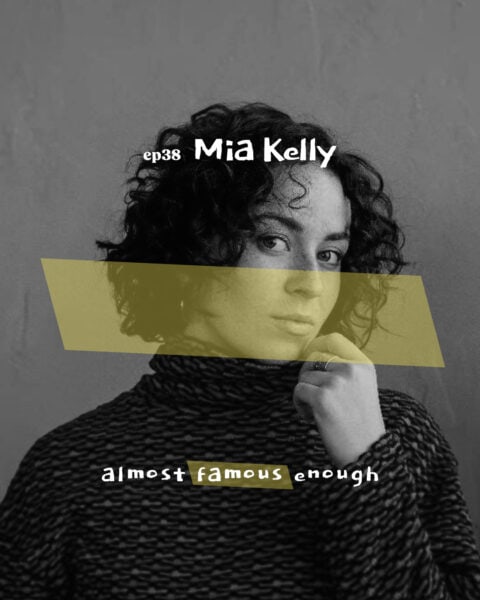
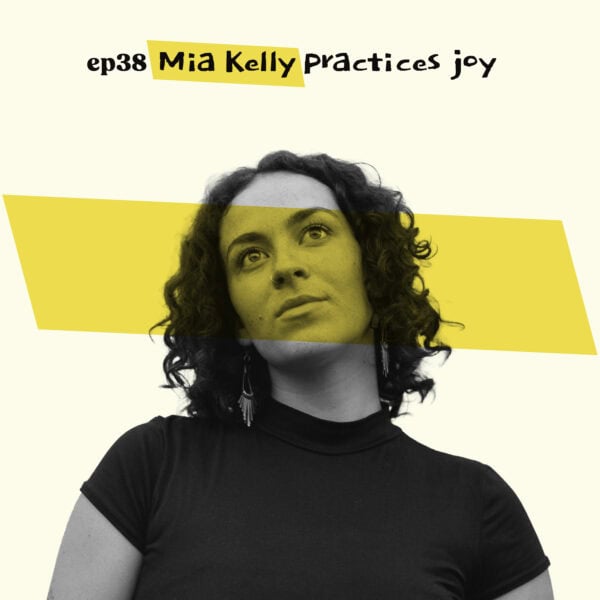
ep38 Mia Kelly practices joy
released April 2, 2026
1:31:30
https://miakellymusic.com/
https://www.instagram.com/miakkelly/
https://www.youtube.com/MiaKelly/
hosts: Glen Erickson, Alexi Erickson
AFE website: https://www.almostfamousenough.com
AFE instagram: https://www.instagram.com/almostfamousenough
AFE Spotify playlist: https://open.spotify.com/playlist/1o1PRD2X0i3Otmpn8vi2zP?si=1ece497360564480
Almost Famous Enough is a series of conversations centered around the music industry, pulling back the veil on what it really means to “make it”. Our podcast features guests who know the grind, who have lived the dream, or at the very least, chased the dream. Through these conversational biographies, truth and vulnerability provide more than a topical roadmap or compile some career advice; they can appeal to the dreamer in us all, with stories that can teach us, inspire us, and even reconcile us, and make us feel like we made a new friend along the way.
Chapters
00:00 Introduction
03:35 Meeting Mia Kelly
04:44 Touring Home Base
07:51 Living Near Family
11:34 Career Turning Point
15:52 Building Your Team
26:27 Songwriting Over Genre
36:40 Waves Vans And Kim
51:10 Led Zeppelin Fact Check
51:56 Tour Break And Awards Timing
53:25 Contemporary Folk Category Talk
54:30 Bilingual Identity And Songwriting
56:39 Peers And Validation Moments
58:52 New Record Inspiration And Joy
01:03:58 Cultivating Joy On Tour
01:07:38 Hot Sauce Merch And Hot Ones
01:14:50 Post-Fame with Alexi
ep38 – Mia Kelly practices joy
[00:00:00] There is something you might not know about Joy. It exists within chaos. We know it best in the context of its opposites. What it brings is full of meaningful alternatives to the empty attributes of angst and calamity. To be clear, life is full of micro calamities. Like if your life is full of giant calamities, you’re probably getting recruited for reality tv.
They love that stuff, joy, however. Seems to put people at a different speed than everything around them. Rooted in peace and confidence. Ambition doesn’t feel like it lives in the ecosystem of joy and peace. It’s go-getting sacrifice, hustle, or that’s how we’ve been spinning it the last few decades. Bono sings, it’s no secret.
Ambition bites the nails of success. It’s not a peaceful wordplay. But I’ve seen ambition of a different color when there is a foundation of peace, a deep well of joy. [00:01:00] I’m trying not to get too preachy, but here’s the thing. I respect this in. People admire it and feel drawn to it, and ambition for not just success or accolades.
You know, but to be actually doing the things that capture their attention, inspire them, and fulfill them. Mia Kelly is new to me, moving from seeing the name in places to seeing recent events and promos. To having her on the screen with me to discuss her career. The engagement was palpable. The ambition was evident.
The joy of doing all the things and getting caught in this wave of good things was evident. You’ll hear her describe these river waves and their geological premise for how they will keep you locked in place, riding it through time as the river rushes past at a regular life speed. I can’t help but think this is the metaphor.
For how she has been navigating life so successfully to now. Maybe another hour could have [00:02:00] revealed more tensions, hardships, some of the gaps of being young and trying to play this career game with more seasoned competitors. But I doubt it. She would’ve stuck with joy. Mia Kelly is a singer songwriter from Gat oh Quebec, a Canadian indie folk artist living the classic characterization of the unshackled spirit, chasing the muse and the good times, spreading the love freely from town to town.
She has released two full length albums on the cusp of her third big Time Rollercoaster Feeling receiving local and national awards such as the new Emerging Artists of the Year. At the Canadian Folk Music Awards where she’s now nominated for two more awards this year in 2026. What disciplines does a free-spirited van living, traveling, surfing, folk singer have?
You might guess the cliches, right? Yoga, meditation, journaling, hopefully songwriting, but the answer is joy. She [00:03:00] practices joy. It’s an ambitious discipline in the face of countless antagonists, but if Bono were to write a line about her, it would probably say it’s no secret. Ambition rides the waves of success, or something like that.
My name is Glen Erickson. This is Almost Famous Enough. Thanks for spending your time with us. This is Mia Kelly.
Glen Erickson: well, so thank you me for joining me and, uh, joining the podcast. This is, uh, an introduction. we sometimes, I seem to go, maybe it’s getting closer to a 50 50 number of people I’ve known in the past versus more and more being introduced to, to artists, which is really a lot of fun for me, uh, on the podcast so far as [00:04:00] things continue to go.
but I had been talking and working with Beth, your publicist on some different things and I think I, the, the quick intersection when I was just kind of looking over people. Also, the Western Eastern Canada roots probably thing has something to do with it as you’re an Eastern Canadian artist. Um,
Was where you’re at right now in this intersection with Kim Churchill, who I’m very familiar with because he’s frequents our folk fest out here. My, my daughter and I spend a lot more time geeking out over folk fest the last couple of years and, and that was always one she brought to my attention and always wanted to catch all of his shows.
So, um, that was an immediate thing to attract my attention. So there’s some fun things to talk about there, but let’s just, let’s just start Mia with, where you’re at right now. ‘ cause I know you’re on tour, but you’re on tour close to what appears to be where you grew up. So,
Mia Kelly: Yeah. [00:05:00] Um.
Glen Erickson: uh, so tell me about where you are right now.
Mia Kelly: Well, right this minute I’m at home and we have an absolute luxury, which is like unheard of on tour, which is six nights at home, like in my house.
Um, which is amazing. We have three days off. And then we kind of drove a little extra far two nights ago after the Hip Bonni show to make it back to gat Know, which is where I live, which is where I am right now.
And, uh, so we have two more days off, and then we have two nights of playing at the NAC in Ottawa, uh, which is just like 15
minutes down the street. And so it’s, it’s a bit of a luxury that we’re living right now. We get to, to really relax and spend time with my folks who live in, in that building right over there.
And, uh,
it’s,
Glen Erickson: Okay. Okay. Okay. You okay. So I know that you, you know everything that says you were like this, that’s where you were raised. Ano
Quebec. which for those who didn’t pay attention in their Canadian social studies [00:06:00] or anything, is just literally across the river. More or less from, from Ottawa, like neighbors, uh, to the closest to the closest degree almost really feels like to outsiders who come and visit feels just like the French half of Ottawa probably.
I’m sure that’s sort of how it gets
Mia Kelly: It operates kind of as like the twin cities, whereas just like
Glen Erickson: Yeah.
Mia Kelly: juris, like the jurisdiction is different and there’s a couple laws and like during the pandemic it was illegal to cross the bridge, which felt ridiculous. But essentially they operate as like one big city. And I live right on the river, like I can see it right now.
And um, yeah. And so you can see Ottawa like from across the river.
Glen Erickson: Okay. So in the West we’ve had a ridiculously, stupidly long winter where everything still feels cold and frozen and, and that river is like so famous in Canadian picture history, right. [00:07:00] Of, of people skating. All the way down that river for like forever.
Mia Kelly: That’s a different river. That is the Rideau
Glen Erickson: That’s different.
Mia Kelly: Yeah, this is the Ottawa River.
Glen Erickson: I’m confusing
Mia Kelly: of is the Rideau Canal, which is in Ottawa and very famous. And this one is also famous ’cause it like flows into the St. Lawrence, which flows into the ocean. It’s just like a
Glen Erickson: Uh, oh. Yeah.
Mia Kelly: And it’s made more famous by my love songs, my innumerable love songs that I’ve written about this river. But, but they’re different. Yeah.
Yeah.
Glen Erickson: Okay. I got you. So I failed my social studies right there, but I, I’ve, I do know exactly what you’re talking about. Okay. So all of this like lends into a whole bunch of things I want to ask you about. Obviously river and river surfing, which I read about and I found fascinating. but you’re right there at home.
Now, not a lot of people have their home where they grew up. Still number one. Number two, you like [00:08:00] pointed like out, like you’re pointing out the window across the street to where your parents live.
So not many peoples in their, in their young adulthood have a place that close to their parents. They usually try to get quite a bit away.
So explain that. You literally have a, a place like right.
Mia Kelly: well, here’s the thing. I haven’t, because I’m on tour all the time, um, I’m on tour, I would say like eight or nine months outta the year. And so when I’m back. It doesn’t make sense for me to like pay, rent or have an apartment in Montreal, which is what I would’ve done if I wasn’t perpetually on tour. And so my parents have this like, um, behind the house that I grew up in, we had, we had this like space that used to be like storage and a, a garage and you know, a bunch of it was just kind of a space and we’d call it the back. We’re going to the back. And uh, and then a couple years ago when music started taking a lot more space in my life, [00:09:00] um, my parents renovated it while I was away and I came back and they had turned the back into this space that I’m in right here, which is like
Glen Erickson: Hmm.
Mia Kelly: I’ve got a living.
It’s like pretty, it’s really small. It’s like, it’s my living room. And then right upstairs my bedroom. And then, I’m still like sharing a kitchen and a bathroom with my folks, but it’s like a little granny flat that I get to live in and it
Glen Erickson: it’s so perfect.
Mia Kelly: to tour. It’s amazing. It’s
Glen Erickson: Yeah. I can’t imagine a better situation. Yeah. If you’re spending more time away,
you know, and the terrible feeling, if you had that kind of a cost of living when you’re away more than you come home, a lot of artists start to obviously face that as their career starts taking off. So that’s a great situation.
Mia Kelly: Oh yeah. I’m pretty, I’m, I feel extremely lucky and my parents are really supportive and, and um, also, it’s like when I’m, if I’m home for that little amount of time, I would want to like sneak in a [00:10:00] visit to my parents regardless, you know? ’cause I
never, I would, I never get to see them. So it’s nice that home is also that.
And also it’s right on the river where I get to surf and it’s just all these great things and, and, uh, I get to deck up to Montreal and Toronto and visit some friends.
yeah. I love, I love it.
Glen Erickson: that’s pretty great. Uh, so a fortuitous for me to catch you on an in-between with a bunch of days at home in such a comfortable place. So that’s pretty perfect. yeah. So let’s, let’s talk a little bit about you. find out a little, like, I always struggle with this Mia ’cause I, I’m always like, I love doing a timeline a little bit, like a little breeze by like, how, how did you get to here?
But then sometimes I just wanna like jump right into where somebody is right now. So, because we’ve been talking about. Where you are right now and your family and all this kind of stuff. Let’s, let’s do the introduction both to me and any of my [00:11:00] perhaps Western Canadian friends who might not be as familiar with you, kind of,
Mia Kelly: for sure.
Glen Erickson: you know, if you tour that much, and I’m assuming you tour have toured a lot in Canada, like we all know.
you can go up and down the 4 0 1 with a show to play every night for a couple weeks. And in, in Western Canada you have to drive eight hours to the next city and you get about four of them, or five, five of them to hit and that’s it. So, a very different world as far as opportunities to play and get people to know who you are.
So,
um, so the things I read about you, you got started very early. One of those kinds of stories of playing music and even writing your own music and putting it out. But when did the jump happen for you? Between, you started making some music and doing some independent, like releasing an EP to, you know, that moment where other [00:12:00] people pay attention and start getting behind, you start offering you opportunities or solutions and you sort of know that there’s something there.
When did, when did that start happening for you?
Mia Kelly: I think mm, maybe four, three or four years ago. I remember this one moment where I had, um, my first record that I had made and I was applying for a grant. Um, and the grant, to get the grant you needed a, um, a local partnership. And so I went to the biggest like very renowned theater in Gattone. It’s, and it’s a huge space.
And I wrote a ballsy email to the guy who runs it and I was like, listen, I want you to be my partner and I can do like my album launch in your lobby space. ’cause they did like smaller little cabaret style, um, shows in the lobby space. And I remember being so nervous for that [00:13:00] meeting. he agreed. And agreed on the partnership and the partnership required like a financial engagement. And he was committing to like three or four grand. Just like, just because he really wanted, he believed in my project and really wanted to
support me. And I remember driving home and being like, I’m I’m gonna make this my life.
Like this is gonna be my, this is gonna be like my actual, and it had been a serious project for a long time. I’ve been doing shows since I was like 14, 15, opening gigs and, and here and, and there. And then it kind of started taking on a more serious edge at like 16, 17. and then at 1920, uh, when that first album, garden Through the War came out, it was like I had a bit of a team happening.
My manager had just come on board and she and I had been working together for four years now. Uh, but it was. It was like things were starting to like click into place and we were [00:14:00] still just getting the ball rolling. But it felt really exciting and I
remember that that day being like, oh yeah, this is, it’s not just me anymore.
Like people are, people are into helping me. And that felt, I remember that feeling really, really good and exciting.
Glen Erickson: Yeah. I mean, that’s a big step. I talk to a lot of people. Right. And I’m always curious about when that circle expanded from, you know, the validation, you know, which really is the only thing that makes most of us keep pursuing these things, um, is, is that, you know, happiness hit that we get, um, it happens within like.
If you have a good family, family circles for quite a while who are really supporting you and
Mia Kelly: Totally.
Glen Erickson: there and even when you play the coffee shops and nobody pays attention, they’re still there hyping you up and all that kind of stuff. And then there’s incremental growth I think a lot of us have shared before, but I’m always [00:15:00] curious again about when this starts to happen and I think a lot of young artists, and you’re still such a very young artist to have had a lot of things happen for you.
So I, this is probably relatable to a lot of the people you intersect with or come across who are trying to get their career going and are always asking the question like, how do I get these people to answer my emails? Or how do I, you know, what do I need first? Is it a manager or an agent? Are these sort of like career questions that take you past, I’m just writing songs and then I’m gonna go and try and perform them, but actually like build something.
So. You sort of just hinted at it, you know, inside of that story of that one thing that happened though, that with your first album that you put out,
Mia Kelly: Mm-hmm.
Glen Erickson: you started getting what we call a team. So how did, how did that start to come around? Was that you reaching out and [00:16:00] doing the fervent trying to get anybody’s attention that you really liked or respected or, or did people, did you get into some showcases where people could see you play?
How did those relationships start?
Mia Kelly: Yeah. I think I got really early on, I got some really good advice, which was don’t seek out. A team, the team will seek, like, when you’re ready, the team will seek you out. And I remember being like, okay, cool. I can just like focus on doing my thing and doing all, like, putting all the hats on and booking everything and writing everything and doing all the grants and all the things myself.
And I did that for long time I met my, my now manager of four years a conference, a music conference called Folk Music Ontario. And
she and I got connected her other artist that she manages, uh, who’s an Australian blues musician named Lloyd Spiegel, who’s absolutely unreal. He’s out of this world, phenomenal. And he a [00:17:00] stomp box on stage and I was like, I need to know what that is. And so I went up and chatted with him and he, he chatted. We ch, he and I chatted and he was asking me about where I was based, and I was like, oh, near Ottawa. And he was like, oh, my manager’s from Ottawa, like, I’ll leave you my stomp box when I leave the country.
’cause I have a, I’m sponsored by them and I’ve got a bunch of them in my gr in my garage. And I was like, oh, cool.
So I got this, I was an amazing thing. And I got the stomp box and then I had a meeting with his manager and then she and I got along and then I think she kind of had like kept an eye on my career over the last, over kind of the course of a year.
And maybe a year later in 2021 we had another coffee and, and um, and that was kind of the start of our, of our working relationship. But I think those kinds of things where you’re just open. And you show up in the spaces where the people you wanna be connecting [00:18:00] with are, and you ask questions.
And then for me, it’s always been that way where just things kind of fall into place and, and just showing up and, and being, I’m also a really social, social human, and so it, like connections are just a lot, like, they’re a lot easier. Easier, easily, or made.
Um, well, I just love a good
Glen Erickson: yeah. I’m getting that sense that you’re a pretty social person. It’s cool. I mean there’s, it’s interesting when you say it that way, ’cause. I mean, I’ve heard a lot of people describe it different ways. The whole idea of, you know, the team will find you, you don’t have to find them. that very, like the universe, you know, is for you or some version of this thing.
You know, it’s funny because in a lot of years in the music business, I find that that makes sense to a lot of people. And the all and the people, it doesn’t make sense to are [00:19:00] the ones who just can’t get anybody to reply to their emails. ’cause then it’s a terrible feeling to think the universe, the team doesn’t want me.
The team’s not gonna find me. And that’s, to be completely honest, that’s usually the sign that maybe I’ve had this debate with a lot of people. Maybe that’s the sign that this isn’t for you.
Mia Kelly: this isn’t me. And
Glen Erickson: that’s hard to tell somebody.
Mia Kelly: Totally. And I think that that statement where it’s like you don’t go find the team, the team will find you, doesn’t mean don’t show up in those spaces or don’t reach out. Like I think
Glen Erickson: Mm-hmm.
Mia Kelly: um, I was recently a mentor at this. I was part of this Australian festival and they asked me to be a mentor for their, like young, um, their emerging artists.
And so that was really cool. And so I did a bunch of mentorship sessions and like, my main thing that I was like trying to impart on these like young musicians was just [00:20:00] like, reach out. Reach out to artists you love. Reach out to their teams. Just like ask questions and don’t ask them four things. Like, don’t be like, Hey, do you wanna be my agent?
But just be like, Hey, like
Glen Erickson: Yeah.
Mia Kelly: people love connecting and people love giving you advice and people love, uh, community. And so if you’re able to foster that yourself and people wanna be a part of what you’re doing, and you’re obviously, you know, like. Reaching out because you admire what they’re doing or what their, their path is.
People are often way more generous than you expect them to be. And so
just showing up in spaces, whether it’s gigs or events or festivals or communities that eventually will give back if
you’re, if you’ve got it going on, you know,
Glen Erickson: That’s such really good advice. I love it personally. ’cause like, like there’s a large age gap between you and I, but when I got started I was in my early thirties and I did it the same way. I just figured out, [00:21:00] I figured out who are the guys that run all the, there’s three guys that ran all the venues, the cool clubs in Edmonton.
I’m like, I guess I just gotta start hanging out around them in bars, not asking them for gigs.
I guess I need to be friends. So the fact that that hasn’t changed, you know what I mean? In all this
Mia Kelly: No, totally.
Glen Erickson: to be hear people. Plus you’re terribly young if, since I’m on the young theme, um, it’s so cool to be out giving advice and getting opportunities to share your experience.
’cause you’ve had a lot of it already
to, to other people and to younger artists. So that’s pretty cool to get asked for that stuff.
Mia Kelly: I, I am, I’m honestly, when they asked me to be a mentor, I was like, I need to be mentored. What do you mean? But then they were kind of making the point where like, well, like, yeah, but you’re also a Canadian artist that’s getting booked at Australian festivals, and so you’re obviously doing some, like something’s going on.
And
Glen Erickson: Yeah. Yeah.
Mia Kelly: and I [00:22:00] was a part of those programs in Ottawa. Uh, there were festival, like the Ottawa Blues Fest a fest or a program for youth called Be in the Band. And I was in that. From like 11 to 14 and like that was super formative and really
like, really brought me on onto stages and into the professional world in like a
really beautiful mentorship way.
So I was really cool to be able to give back and, and,
Glen Erickson: Oh, that’s
Mia Kelly: and you, yeah. Yeah, it was fun.
Really
Glen Erickson: No, I think that’s great to hear. I think sometimes people, well, I know for a fact that people will make judgements on young artists that they, you know, if you’re 23, you’re 24, that you’ve supposedly only been doing this for. Three or four or five years when the truth is, it’s almost, the story is almost always that they were making other sacrifices.
’cause when they were 11 or 12, right? ’cause this was all they wanted to do. It’s always a longer history with people. When you see success, there’s way more under the so to speak. [00:23:00] yeah, I think that’s really, really cool that you’re getting those opportunities. Um, and there are a lot of them around Canada.
Like I really believe that I, like every city. I would sometimes like to just go and do a deep dive, like, you know, region by region, city by city to see how comparable all the opportunities there are for people to sort of like meet people, collaborate with people, get opportunities, get any of that kinda stuff I think would be interesting.
Totally.
so let’s, so. So all this kind of stuff starts happening for you. You start to get a quote unquote team together.
Um, and that’s after a first record, you start winning some awards. To go back to the validation thing, you won a Canadian folk music award for that first record, which is pretty big. Not a lot of people are gonna win a, like a national award for their first record out.
So [00:24:00] that must have felt pretty great. What, what sort of things were coming out of that for you? Was that how, I guess my question would be, ’cause you mentioned before about touring a lot and you kind of got on, get on the road right away with your career. Um, and, and this is like pandemic key era, if I’m not mistaken, uh, which is really challenging.
So I’m wondering how. Because that would have its own challenges. So I’m wondering how some of this, like notoriety and stuff, did that open doors for you or was it just like a nice thing to help your bio out when you’re trying to open some doors?
Mia Kelly: I think it’s, it’s a compilation of a bunch of different things. It definitely doesn’t hurt and it’s always like, it’s a nice kind of bit of credibility that you can apply
to a festival and you’d be like, oh, I won this thing. But being in these spaces at the [00:25:00] conferences or at the festivals since I was like 14 or 15 and people having really seen me grow up.
And so once I have an actual product to offer, people were really keen, I think, to help me. Share it. And so my, my manager got me some really great, um, support slots on tours. Um, and then I did my first ever like, co headline tour when I was 20. And, that was, yeah, it was just been really positive. And there’s a really gorgeous community of folk musicians across Canada that is like, when you join it, I think feels huge and overwhelming, but after you’ve been to like an event twice, you know, everyone and everyone’s really caring and uplifting and,
and, and I’ve had a really experience, a great experience, um, being a part of, of the, the folk music community in Canada so far.
And, um. Yeah, I think there there being a lot of opportunities [00:26:00] for, youth and a lot of artistic directors for festivals and stuff, really encouraging emerging acts. That has really been huge, uh, especially when I was like 18, 19, 20, uh, just getting those, those slots in festivals and getting in front of, um,
audiences, which helps obviously to, to where I am now, which is will help build to where I will be in five years.
And so
it’s all,
Glen Erickson: Was it always folk for you? Like always like Right, 14, 15 years old up to the 19, 20-year-old, was it always folk music? I know that’s a really broad thing and we can, we can nail down where you think you fit in that I would be interested, but,
but was it always that for you,
Mia Kelly: I think. It’s always been songwriting first and then genre second. And so like sometimes if you look, if you listen to some older Mia Kelly projects, there’s like some [00:27:00] straight up like bluesy or rocky or songs and then there’s like softer, quirky ballads and there’s, you know, it all kind of, it’s all super fluctuating.
And,
and I think it’s, it’s singer songwriter. ’cause I am singing and songwriting and genres kind of mean nothing and everything at the same time. It’s a bit of a
funny
Glen Erickson: percent. A hundred percent. Like, let, let me put it this way to you like, well, I think this is an interesting thing about, this is my Canadian observation is I think that we’re just like literally a nation of songwriters. I think it’s just sort of the DNA of what we’ve always been attracted to in our biggest sort of.
Name influence. People have like really made that, like going back to the sixties, seventies and on. That kind of has lived. So I find it interesting how prominent we can get into the overlap between like folk music and country music [00:28:00] in this country that really feels just this canadiana version of songwriter ishness where people just don’t feel constrained in, you know, feeling particularly influenced by blues playing on their guitar lately.
And somehow that shapes their, right, their, their songs a little more, or they were attending something and then some certain person really made them want to kind of get into some other vein of it. It, it’s all over the place. I, you
Mia Kelly: totally.
Glen Erickson: I think, so I’m cur like, I guess part of my curiosity for you is, ’cause you’ve, what I’ve heard is there’s.
It feels like that, it feels very songwriter ish. So it feels like you let the song, particularly in the last record before the one that you’re, ’cause you’ve released a number of singles leading up to your new one. Um, so I listened to some songs from the last one and then listened to these singles[00:29:00]
Mia Kelly: yeah,
Glen Erickson: and it definitely felt like you let, or choosing to let the song dictate sort of where and which version it goes to rather than to hone in.
Is that accurate?
Mia Kelly: I don’t think I’ve ever sat down and been like, I’m gonna write a bluesy tune today, or like, I’m gonna write. It’s just like I, I have no say about what or when I am writing, it just comes. Into my lap when it feels like it. And, I am, I’m not driving that. I’m not steering the ship there, it’s just I’m the, the, the funnel for whatever is is floating around. So I’m, yeah, I it’s just kind of nice that in the last few years it’s been like kind of a variety of, of of different things that can sometimes make a record feel, uh, less cohesive than a lot of other artists. Like, um, I think, [00:30:00] but I don’t really, I don’t really get in my head about that. ’cause it’s like the song is the song and,
and the story is the story and, and it’ll fit wherever it feels like fitting
on the record.
And if it doesn’t fit on, there’s, there’s been a couple songs that I’ve written that I’m like, maybe not on this record. Maybe I’ll save it for another one, you know,
but, but I’ve, I’m never. Trying to tame my songs into being a certain genre to,
I just kind of give them what I feel they need.
Yeah.
Glen Erickson: song taming. That’s an interesting way to think about
the process of, of writing or at least preparing for a record.
Mia Kelly: Totally.
Glen Erickson: so I mean, there’s two things I think that make a record sound cohesive or not, right? One is like what you were just talking about, whether or not those songs were kind of tamed for each other.
Um, or sometimes it’s your choice of players and musicians that you take into a studio, especially if you’re a solo artist, right? Not a band.
Mia Kelly: Mm-hmm.
Glen Erickson: the choice of, you [00:31:00] know, using the same producer and all the same players might influence how cohesive something sounds. So
now we’re, I’m, I know I’m jumping all the way up till now, but, but on the new record you have.
You had a, you know, you’ve been releasing singles
Mia Kelly: Yeah.
Glen Erickson: towards this, like since last year and like four singles that are all on what the upcoming record is going to be that have already been released as singles. And so I listened through them and there is some, you’re right, there is some differentiation that’s pretty clear in the approach
on a couple of them.
So were those all being recorded in the same place with the intention that they were gonna get on the full record? So was there that cohesion of all using the same producer and the same people in studio and things like that?
Mia Kelly: Yeah. So for the new album, um, and for the past ones as well, but I’ve always stuck with the same producer and, um, the same players. And [00:32:00] I, yeah, we recorded the new album, which comes out in May at a studio called The Tree House, uh, which is north of Montreal in Saint Del. Um. And it’s produced by Connor Sadel, who’s an amazing producer out of Montreal.
And he is done, he’s produced some of my favorite records and some of the records I’ve listened to the most in my life. And so it was really cool to finally get to work with him and to make
this record, um, with Connor and have some amazing players, um, on, on, the album. And, uh, yeah, I’m really excited about it.
It comes out in less than two months, and I’m like, I’m giddy.
I’m really
Glen Erickson: Yeah. I mean, it seems like you’ve been building towards it a long time. That’s a long time, especially when they set a date on it, then you’re always like, ah, and you’re not always the one in control of when that date is. I don’t know how much you had control [00:33:00] sometimes. Um,
but let’s, let me ask you then.
Going back to where I was going with that thought about your songwriting before, which I’m curious about is the most recent one, uh, let me make sure I say it right. Time’s Easy to Blame, which is featuring Kim Churchill who we’re on tour with right now,
um, is a very decidedly classic folk song. So was that, did you write that all yourself and bring Kim?
How did that song evolve? And I’m curious where it came from. ’cause that one is distinctly like for the, the old people in the front at the Folk Fest For sure.
Mia Kelly: totally. Um, it’s funny, that’s probably the oldest song on the album and we had tried recording that one for Garden Through the War, which is, um, the album I put out in 2022. And then we tried recording it again, um, [00:34:00] in 2023 for the album that came out last year
Glen Erickson: So you’ve been sitting on it that long.
Mia Kelly: Yeah. Yeah. It’s a song I wrote when I was like 18 or 19, um, about like growing up and falling in love and making mistakes, doing both of those things. And, um, and the whole idea of like, time’s easy to blame. It’s easy to blame being young, it’s easy to blame, like, oh, the timing’s wrong or whatever. And, um, I, we tried, I tried recording that song like four or five times with different people and different approaches. And then I, I had it kind of just like sitting in the pile of demos for Connor and I didn’t really think much of it and Connor heard it and he was like, is a, we need to like speed this song up.
This is a happy tune. We need to like get some fiddle in here. And I was like, oh, that’s a whole, like different take. And then once we took that direction, was like clear to me that I needed Kim’s voice. ’cause Kim is just like [00:35:00] pure sunshine and um.
And turn it into like a, a more classic folk. It almost has like an Irish like,
Glen Erickson: It does. I was gonna say that
Mia Kelly: to it.
Glen Erickson: it.
does. It’s a, it’s a almost,
it’s almost when they went down to the bottom floor on the Titanic kind of happy song down there. Not quite the crazy drunken dancing jig, but it’s the setup for that scene for sure. It was probably what was playing right before. Um. Oh yeah. I mean that’s, that’s cool.
I mean, it’s cool also to know that you sat on a song that long and kept trying. ’cause a lot of people, I think, would make the assumption that people stop doing that. Or some artists just live for like the current inspiration, right? It’s like literally it’s, everything’s about whatever they wrote right now.
Mia Kelly: Mm-hmm.
Glen Erickson: and that’s what they wanna release and focus on. So I think it’s pretty cool hanging onto a tune that long and keep trying it, and then [00:36:00] to have it finally land. I mean, I’ve heard this, I’ve heard this about a number of like, even like super well-known artists lately. Man, I wish I could remember which one I just saw.
Something’s telling me it’s like a Pharrell song. Oh, it was that, you know, Pharrell’s the happy tune, right?
Mia Kelly: Yeah, yeah, yeah.
Glen Erickson: Yeah. The story about Pharrell and Happy is he actually. He took a run at that song with like producers and labels for like six or eight years or something, and they kept saying no
before he actually got that thing to land and, and to get out.
So, I love, I love the resilience of it. I think that that’s pretty amazing. Okay, so this is where we can split off into so many fun conversations. ’cause I, I wanna know where you met Kid Churchill, but like, also like, just so you know, there’s like all these directions that are so obvious to go here, which, which is, you know, Kim Churchill [00:37:00] notoriously is like nomadic living in a van.
Like the things I’ve read about you, like getting a van, like you were living in a van when you recorded your record. Um, like adopting that sort of like, I mean, there’s a certain. Like stereotype of the folk musician that might be like that. You know what I mean? Like, which is amazing. Uh, there’s a good friend of mine, I don’t know if you ever come across him at a folk thing from Edmonton.
His name’s Scott Cook. big,
Mia Kelly: yeah.
Glen Erickson: tall guy with the big chops. Yeah.
And
Pamela now.
And so he’s been, he’s been living this life for like 20 years that I’ve known him. Right. He is like, uh, amazing. Anyhow, also, obviously there’s this intersection with Kim Churchill that way and with the little bits of surfing thing in there, it just seems so interesting that you guys are aligned when I sort of just look at who both of you are, obviously just through the Internet’s eyes, but so tell me the more personal side of like how did you [00:38:00] come across him?
Get to know each other, to the point where you can get him to come and sing on a record to going on tour.
Mia Kelly: it, it’s a fun little story. I have been a Kim Churchill fan for a long time. I’ve listened to, I have this distinct memory of going on my first solo trip and I was landing in India and I was quite like, I was. Six 17, I think maybe. And I remember having Window to the Sky, which is Kim’s, an amazing Kim Churchill song, and it was just like blasting in my ears.
And I remember being like, yeah, I can do this. Like, I’m feeling so adventurous. And it was just like really exciting. And so Kim is like, I’ve been listening to him for a very long time and looking up to his whole ethos, the whole living Noma and freely and also just like making the most out of life. and. He, he does all of those things beautifully and we have some friends in common. And so [00:39:00] two years ago Kim was in on tour in Canada and he was looking for, he did a call out on socials and he was like, I’m looking for local artists to come up and sing this one song. Um, please Come home that he does as a duet. And he was looking for people to sing it in each town. And so I reached out and I was like, I’m home. Miraculously, I’m home, while you’re coming through gao. So I would love to like hop on the show. And so that happened and we became great friends then and there. And then that summer we like kept running into each other at different festivals and different, just. Like our tours just kind of kept like weaving in and out of each other. And so he came to, my house and we went river surfing together and then he went and stayed with my grandparents and then we went out west and we were both out west. And so it was just one of those like
really easy friendships that from the beginning was easy because of just our personalities click really well.
And also we have a bunch of [00:40:00] similar passions and lifestyles and you know, our love for, uh, surfing and nature and living out of a van. And at the time when I met him, I didn’t have my van, but I bought it like two or three months later and, and uh, it’s been pretty gorgeous to be able to spend a lot more time with him in the last couple weeks.
And, we’re very similar and he’s a huge inspiration, just not only professionally but personally in the way he carries himself. He’s just a gorgeous human, so it’s been
Glen Erickson: Yeah, he’s clearly, he’s clearly figured some things out to do his career, the way he does it so well, and, and be successful. Um, so it’s, that’s pretty great. Opportunity to have that kind of influence, if
Mia Kelly: totally.
Glen Erickson: feel that sort of alignment. Was the van always on your radar, uh, and then seeing it done by him sort of just was the tipping point, or, or was it, was [00:41:00] it just like when you saw his lifestyle in the van?
It was just like, I gotta have this.
Mia Kelly: It’s funny, the van thing kind of came together really quickly. I think I’ve always. Seen it, and it’s kind of a cliche and I think it’s really, and I, I’ve always been up for adventures and I’ve always been, you know, someone who I go to do a lot of car camping and a lot of, of, stuff like that. And then this, I had this tour that was coming up and the price of accommodation just wasn’t making any sense.
And it, and it was like kind of ridiculous and stressful. And then, um, my grandparents were gonna buy, or were gonna rent a sprinter van that was all decked up in order to drive across the country one last time. Um, and. Because they’ve driven across the country like a ton and they wanted to do it one last time, but they’re in their eighties and they wanted it to be comfortable.
And so they wanted to the whole thing. And they were showing me these vans that they were gonna rent and they were gonna cut, spend a couple [00:42:00] thousand dollars on it. And I was like, hear me out. Why don’t you give me part of that money? I buy a decked dad printer van and it also gives me an excuse to buy like a really nice one ’cause my grandparents are gonna be driving it. So they drove it out west. I flew out west, picked up the van and drove it all the way across the can, the country on the way home. And they flew home. So they didn’t wanna drive both ways. Um, and so it ended up like working beautifully and it came together really quickly and I’ve had it for almost two years now.
And uh, I’ve been spending a big chunk of my time in the van and she’s the
best. I love it.
Glen Erickson: you know, I’m starting to notice and I love this like that, having a big sense of adventure. Also goes hand in hand with having a really good sense of where there’s an opportunity and being willing to jump at it, which you clearly are demonstrating, uh, multiple times, which I just think, I just think when people wonder like, how [00:43:00] did somebody get to be where they’re at?
Like lots of people are out singing in cafes and doing things. There’s just threads you start to see and figure out and just recognize how, you know, having that sense of, you know, spontaneity, but it was always sort of in the works in your mind of, of things. Um, when it comes together, you find opportunity, which is pretty great.
So the, the big, yeah. So the internet seems to like to note that that’s a big characteristic about, about you, about Mia Kelly, so, and about Kim Churchill and then you love river surfing.
Which I don’t know if everybody knows what river surfing is. I think it’s pretty self-explanatory from the thing in and in Canada, Canada’s not a surfing country, obviously.
We don’t have the classic surfing country, at least things. There’s totino well-known on the west coast, on the island. [00:44:00]
Mia Kelly: Yeah,
Glen Erickson: I think people would be surprised to find out that there’s like surfing right on the east coast. I mean,
Mia Kelly: there is tons of surfing on the
Glen Erickson: it’s a very different ocean, uh, on that side than on the west.
and then there’s this river surfing. So, so explain in a nutshell, river surfing. Do you just hop on and then just ride yourself down the river to a set point where you know you can safely get off? Or how, how, how does this work?
Mia Kelly: So, In terms of how many rivers we have in Canada and how many of them have river waves, it’s like pretty phenomenally lucky that I happen to live literally like steps away from a river wave. And, um, the river wave in, there’s a couple in Ottawa and the community here is really beautiful and friendly and welcoming and safety oriented. And, um, I, my neighbors during the pandemic were like, tour is canceled and school is canceled. So like, why [00:45:00] don’t you come? I had this one neighbor, Trevor, who taught me everything in the river and was really encouraging and um, essentially it’s a way that’s created by, the geology of the riverbed. And the current hitting these rocks underneath. And so it’s kind of creating like a, a constant wave that’s always there. And
you, depending on where in the river it is, you either paddle out, there’s one that is, um, my favorite called dessert wave, and it’s a 10 minute paddle out to the wave. And then you have to aim, you’re basically, you’re paddling upstream and the wave is behind you.
And then if you slow yourself down enough, you catch the wave and you’re facing upstream. And then you pop up and you get to surf on this wave facing upstream with the water rushing underneath you for as long as you can or as long as you want. And sometimes that’s 10 minutes, sometimes it’s 30 minutes.
Sometimes I’ve surfed like for an entire sunset and it is the most like
Glen Erickson: Oh my God.
Mia Kelly: beautiful
space to [00:46:00]
Glen Erickson: let me, let me break this down. So you’re not like going down the river. You are sort of more like in place in a way if you’re riding it properly. So it’s almost like these.
Mia Kelly: wave. Yeah,
Glen Erickson: It’s like these, where they teach surf centers, right? Where they produce water that does that, where you get up, I’ve seen it.
Right. And you’re basically on your board and they’ve got a system that’s like
Mia Kelly: like a manmade.
Glen Erickson: Yeah. Yeah. And you, you just kind of have to be able to stand up and then, and be able to ride it out and balance and adjust and then you just, oh my goodness. Okay. So that sounds really amazing. So my question for you, and this is like right off the top of the head, what’s the perfect river surfing album?
If you pop headphones in and you’re having this, like you were talking about these, if it, if it goes on and on and it’s perfect, you have a whole hour, like what record would you need to have in your ears for one of those perfect moments?
Mia Kelly: well, it’s funny because [00:47:00] I think one of the, my favorite things about river surfing is. It’s like such a form of meditation because I’m so far away from, um, my phone and I’m so far away from like, it’s just a beautiful place to think or to just like completely empty my brain. Um, and I do a lot of writing when I’m surfing to the point where like, my
sister got me like, as a joke.
She got me like a waterproof notebook so I could like bring it out onto the wave and like write my lyrics. ’cause so many
Glen Erickson: Why are,
oh, really?
Mia Kelly: so many times I will like, run in soaking wet with my like wetsuit on and I’m like singing into my phone. ’cause I’ve had this idea that it’s been like circulating. But I think, um, this album that I’ve been obsessed with for like two years now is Lee Beck’s, uh, uh, revelation.
Glen Erickson: Oh,
Mia Kelly: great to have that.
Glen Erickson: French Canadian singer songwriter boy. Good
Mia Kelly: He is the best. He is like, yeah, he’s,
he’s up there with the best in [00:48:00] my books. Yeah.
Glen Erickson: a great pick. That’s a really great pick. Okay, so Kim Churchill, Australian, very well known surfer dude. I mean, he just looks surfer dude. He’s got the
Mia Kelly: Yes.
Glen Erickson: he’s like he to a t He looks, he looks like Californian Australian surfer in the cliche way, I think.
Um, you are on this very long tour with him, which is pretty amazing. You started in Australia, which he just finished a little while ago,
which I thought was very cool for me. So my, my son is 23 and he just went to Australia in February. He’s taking school for two years. So I am getting quickly, educated on more of the nuances of Australian life and all these things as we speak.
But, so Kim Churchill. Has developed a really great reputation in Canada and all around, I think, um, is always on the road. [00:49:00] Similarly, as you said, I’ve seen him a couple of times at Folk Fest, and you’ve spent all this time around him. So I’m gonna play a little Kim Churchill trivia with you ’cause I thought that would be fun
Mia Kelly: Okay. Let’s do it.
Glen Erickson: for things.
So I’m gonna play Kim Churchill trivia. I got four Kim Kim Churchill facts and one of them’s false,
Mia Kelly: Okay.
Glen Erickson: so I’m gonna see if, if being around them, if you know these things. Okay,
so this one’s, this is, I’m, this is me throwing the softball up. Okay.
Tour or false. Kim owns three different camper vans on three different continents.
Mia Kelly: It’s the truth.
Glen Erickson: That is true.
Mia Kelly: truth.
Glen Erickson: Canada, Australia, and in Europe. It says he’s got
Mia Kelly: Exactly. I’m, I’m, we’re living outta one of them right now, so.
Glen Erickson: There you go.
Uh, true or false, he once ate, uh, Vietnamese fall for 23 days in a row.
Mia Kelly: I believe that because he was literally telling [00:50:00] me yesterday about how him and a friend were on this tour and they were obsessed with FA and they were looking for the best FA restaurants in every city. But also it might be like 22 days and you’re like lying
Glen Erickson: No, I wouldn’t do that. That’s cheap. That would be really cheap of me. It’s true. It’s true.
Mia Kelly: Ah, there we go.
Glen Erickson: out about him.
You got that one too. Okay. True or false, he worships Led Zeppelin and considers having dinner with bassist John Paul Jones, one of the best moments of his life.
Mia Kelly: I believe it. Yes.
Glen Erickson: I just realized that’s strangely specific. Again, I would have to be a jerk if I thought
Mia Kelly: you would have to. Yeah, exactly. I would be like. I mean, I, he’s not, he hasn’t told me about that, but I guess I’ll, I’ll have to go ask him about it when we hang up
this call.
Glen Erickson: Okay, well, I’m gonna leave, I’m gonna leave that one up in the air. true or false, he rubs Australian sand between his toes before each show to keep him
Mia Kelly: Well, that’s not true because I’ve been around him [00:51:00] for the last six shows and he hasn’t done it once. Unless he’s going to, he’s hiding in the bathroom and he has a bag of Australians.
Glen Erickson: That’d be so weird. Um, yeah, that one, I just made that shit up. That one
Mia Kelly: so good.
Glen Erickson: but, uh, I don’t, I can’t confirm the Led Zeppelin one because I don’t think the source that AI gave me was, um, as, uh, as great. But
anyhow, that was
Mia Kelly: hilarious. I’m gonna ask him and I’ll, I’ll let you know.
Glen Erickson: Yeah. Ask him about the Led Zeppelin fascination or if he had dinner with, with him.
Mia Kelly: well, the, the reason I believe it is because. Every night he does, um, a, the a Led Zeppelin cover
Glen Erickson: Mm.
Mia Kelly: And so I know he is a big fan, and,
um, so I
believe it.
Glen Erickson: context, clues. You’ve got them on the inside,
Mia Kelly: I got them. Yeah, totally.
Glen Erickson: okay, so you’re on this tour right now. You are in this [00:52:00] little break at around home, which is fantastic. Um, it says, and I looked it up, you’re also nominated for the last record you put out again at the Canadian Folk Music Awards, which are coming up in like Calgary, only like nine or 10 days.
Mia Kelly: Mm-hmm.
Glen Erickson: But your tour doesn’t get to Calgary until like the 19th or 20th or something of April.
Mia Kelly: I know,
Glen Erickson: So who’s, how did that, how did that tour directing not land so perfectly? And miss just by a little bit for you,
Mia Kelly: it would’ve been so good, I think
Glen Erickson: who’s gonna accept the word for you?
Mia Kelly: I, well, I think, um, I’m not sure if my manager Sarah is gonna be there, but I do know that my publisher, Vince is gonna be there. And so I have, we’ve had a conversation about if I win either of the two, Vince gets to go up and accept on my behalf, [00:53:00] which I think he’ll be
Glen Erickson: Oh, good.
Mia Kelly: if, if ever that happens.
Yeah,
Glen Erickson: Okay. Well, a I really like, that you’ve thought about it in advance. And I also really like, again, that, uh, a young person used the word chuffed. I think that’s pretty awesome too. Um, I just don’t hear it very much anymore. Uh, I should say for everybody. Yeah. Yeah. I should say everybody. You, it’s for.
Two awards, contemporary Singer of the Year. So there’s a funny thing in folk music that they, folk music would have a category for contemporary whatever that means, right? Like, um, it’s like the most mainstream version of folk. Is that what that is maybe supposed to mean? I’m curious. But
Mia Kelly: I don’t, I genuinely have no idea. Um, I think,
Glen Erickson: I grew up in like these Christian rock circles, like back in the nineties, and they would always have this term contemporary, like the contemporary. And it was really the most, like, they [00:54:00] really just meant the most like accessible radio friendly version of, I don’t know. I don’t know why that’s the only other place I ever heard this word contemporary used.
But you also for English song Ready of the Year, which is interesting. Is that interesting to you? I mean, that album, I mean, you’re. Bilingual, you grew up in Gao, Quebec. You obviously you have songs that are French.
Mia Kelly: Yeah.
Glen Erickson: it’s interesting that they have these categories. I think it’s pretty cool. Is it weird to be in the English songwriter of the Year award when you probably identify, I think probably pretty heavily French in your life.
Mia Kelly: well I do and I don’t. I think my mom is English from Ontario and my dad is Kiko and I went to elementary school and high school in French, but I went to EP in English. And I [00:55:00] have a rich and full life in both languages,
but I
Glen Erickson: straddled both sides the whole time
Mia Kelly: tot totally. And like I have, all four of my grandparents are still around and we’re very tight with all four of them.
And four of, or two of them are my French grandparents and two of them are English grandparents. And I just have, um. I am, I think as much anglophone as I am Francophone and,
uh, which makes it really cool. But I definitely have consciously made a choice to, uh, do, or it’s not even a choice. Like I said earlier, the songs just come out the way they want to.
And sometimes that’s in English, and sometimes that’s in French. But I’ve, I, I know that I have put out, you know, 80% of my material that I’ve released has been in English.
And um, and so I love playing and singing in French. And I will always at least have one or two songs in my set that are in French, just because it’s a huge part of [00:56:00] who I am. Uh, but I, because the album out of, I think the 10 songs on, to be clear, only two of them were in French. It is a. It’s a huge majority of, of English songwriting. And so to be up for English songwriter, even in a project that has two languages, I think is pretty cool. And,
and, um, yeah, it’s, it’s a huge honor.
And, and I’m up there with a bunch of my friends, um, who are also nominated, which is just so cool and, and honest and to be, to be seen by my community, um, like that is, is really special and validating, like you said.
Glen Erickson: Validating. Very validating. Well, I think it’s obviously it’s well deserved, but like you said, like, uh, I love that you made that observation. ’cause I think, um, on the inside, like the behind the veil of an artist’s life. Getting in those categories with people who are, you feel like are now your peers in your career is, [00:57:00] is a bigger sense of validation.
I think that, that maybe not everybody always knows is how an artist feels quite often about it. So,
um, that’s pretty great. I saw a guy, uh, a friend of mine, Kyle McKearney is in one of those categories with
Mia Kelly: Oh yeah, I know
Glen Erickson: an absolute, he’s yeah, he’s a
Mia Kelly: what? a voice that man, that man has such an amazing voice. I remember hearing him for the
Glen Erickson: I agree.
Mia Kelly: at Lunenberg Folk, or No,
Glen Erickson: hmm.
Mia Kelly: at a festival in Out East this summer, and I was like blown away. Yeah.
Glen Erickson: Yeah, we did, uh, we did this like music development program slash contest years, like during the start of the pandemic, it was like the last year we were doing it and he was in it. And my favorite part of this thing was always, um. The artists, we’d all just, like, everybody would just hang out together after shows, after events and
Mia Kelly: Mm-hmm.
Glen Erickson: rooms, like when we all [00:58:00] had hotel rooms.
And then everyone would converge to one hotel room and eventually the guitar would come out and it would be very politely passed around. And it’s, and it’s not to take away from anybody else’s talent that was in the room there who were all so talented and very diverse. But there’s, every time that’s happened for me, there’s somebody who just feels like effortlessly next level.
And that was Kyle. Like he was just lying on the bed like this with his like eyes closed as everyone’s playing. And then someone would just pass him the guitar and then he would just start singing something and then I’d be like, holy shit. He looked like he was asleep two seconds
Mia Kelly: yeah. Totally.
Glen Erickson: he is like, now I want to cry.
’cause whatever he’s singing. Anyhow, great talent. Um, so very good company, uh, that you’re in. So, okay. I have like a two questions left
Mia Kelly: Mm-hmm.
Glen Erickson: One is just about, with, with a new record and your [00:59:00] inspiration for it. And then the second will be one more quirky thing and we’ll just finish with that. But,
Mia Kelly: Okay.
Glen Erickson: so this record, and you’re so anxious for it to come out and like I said, like, uh, uh, compared to maybe how a normal album, normal in air quotes, rollout happens, like you’ve had a, a gapped string of singles that are actually on the record that you’ve released along the way.
so a lot leading up. I’m just curious sort of what inspired a lot of the record. Like I know you’ve talked a little about inspiration and how you just feel like you channel it and you’re always, but you seem to always be. Seeking it, if that’s a fair way to assume of what I’m hearing, because creativity and inspiration has a lot of different rabbit holes of conversation to go down.
But I’m,
I’m curious because you obviously been doing this from a while, since you were young, [01:00:00] you really started putting things out at a difficult time in the world, in the
Mia Kelly: Mm-hmm.
Glen Erickson: You’re at an age where you’re getting into your, you know, mid twenties and all this, like, a lot starts to just change for a person.
So inspiration, I think evolves. I don’t know if you feel that way. So I’m curious what inspired the rec record for you, and if you feel even in this process of time, since you’ve obviously written those songs a while ago and you’re waiting
Mia Kelly: Yeah, yeah,
Glen Erickson: you feel it evolving still.
Mia Kelly: yeah. I think, just because I’m not in control of the. When the songs come, I think cultivating a practice of like, kind of keeping that door open. And, and there’s a bunch of little things that I do in my every day that are like, I feel like I’m like stockpiling. I’m like a chipmunk with like, putting things in my cheeks for later on when I’m like in a songwriting mood. And so I have like lists of [01:01:00] words I really love and lists of expressions or sayings. Or maybe you’ll, you and I will be having a conversation and you have, you say something and I’m, oh, that’s great. And I go and write it down and I have just like, tons of lists. Um, but I knew that I wanted to make a record that was, um, more personal and also more joyful. I think I, the last two records gardened through the war. And to be clear, uh, we’re telling a lot of other people’s stories and we’re also, um. Some of my own as well, but, um, a lot of them were quite sad and challenging and, you know, overcoming challenges and grief and loss and, and those are all, and I, and I’m really proud and, and happy that those records were made.
But I, I think in general, I’m a really happy person and, uh, that wasn’t coming across on the records or in the live show. And it’s, it’s also, I think it’s, I think people disregard joy as being kind of a more [01:02:00] frivolous and like less, uh, important emotion. But I think it’s such a, it’s such a huge important, and. It’s such a, it’s the savior of the emotions, you know? And so I wanted to write from a place of like, love and community and creativity and joy and light. And there is a lot of heavy stuff on the album as well because there’s 11 songs and tons of stuff to go through. But I think I wanted to kind of highlight those juicy, good, fun bits.
And so there’s
a song about falling in love and there’s a song, um, that I drew from a book actually, that I was reading about creativity called Big Magic. And it’s the song is called Holy Grail slash Big Magic. And it’s a testimony to like the magic that is being an artist and creating and creativity
and how one moment there will be no song.
And the next there is a full fledged song that you have created and how just [01:03:00] ridiculously cool that is. And, and, uh, there’s. I kind of wanted to, I wanted it to feel free and wild and open, and I think we did a really good job. And I think, yeah, I’m really proud of it and I think it’ll be fun to translate live as well. So
lots of joy and lots of, uh, luck and privilege that I’m kind of de digging into on the album. and just knowing how lucky I am to have the people around me that I do and have the job that I do, and to live in the circumstances that I do, and being really aware of that, that’s something that I’ve been thinking about a lot in my personal life.
And so it just kind of seeps into the, to the songs.
Glen Erickson: Yeah,
I mean, that sounds very thematic inspiration more than the specific musical inspirations or the way that maybe some people would answer, which I think is pretty, pretty great.
Mia Kelly: Mm-hmm.
Glen Erickson: guess the obvious [01:04:00] offshoot I get from that is, I mean, we’ve talked about some of the things you love to do and that you’re adventurous, so how do you, how do you cultivate your own joy?
Then when you get busier and busier with this as a career, it starts to take over. Everything very quickly. and most people, I guess I’m, I’m building that a little bit off the assumption. A lot of people build their own personal joy off of other things, other hobbies, other activities or something. Uh, so I don’t want to completely paste it with that assumption, but I am just curious about how you keep cultivating joy in your life, if that’s a thing that inspires you or where you’ve been inspired lately.
Mia Kelly: totally. I think, um, well first of all, getting to do what I love is like. The biggest joy because it, it so, so rarely [01:05:00] feels like work. Like often I’m
sitting, you know, I have, I still have emails to answer and all the boring schlog that comes with any job. But like, I love getting to travel and getting connect to connect with people and getting to sing my songs on stage and getting to meet, you know, different artists and get inspired and not, like, I just, I, I could do it forever and I hope I get to, um, so choosing a career that like has, that just lights my fire,
is definitely a, a humongous one.
But also just like, making time for other things that aren’t music so that when you come back to it, it, it keeps feeling good and it doesn’t feel like a chore. So surfing, uh, taking surf trips, I’ve been in the last four years taking a, a bunch of surf trips when I have time off. Um. Then also having other hobbies that aren’t your job, like you said, are, is huge.
I do a lot of painting and I do a lot of, [01:06:00] um, cultivating of my friendships that aren’t, in my, in my relationships with my family so that they’re not suffering and I don’t feel like I’m, I’m kind of losing touch with everyone and this very beautiful job that is so nomadic can also be really isolating, um, because it’s such an atypical like
pace and, and there’s no physical tether because I’m living out of my van.
Um, and, and here and there and everywhere at the same time, which is gorgeous, but also can be really exhausting. And so kind of staying grounded and I’m learning a lot of that through Kim and his practices of, um, he’s, he does a lot of things to, to intentionally stay grounded and, and it’s pretty. pretty. beautiful to be kind of a part of that.
And I’ve started, um, running a lot in the last few years as well, which
Glen Erickson: Hmm.
Mia Kelly: is a really joyful thing on tour because it can get kind of weird and twilight [01:07:00] zoning when you’re just like, car venue, green room parking lot load in, load out, and then you’ve
been to the city, but you have no idea what it’s like.
And so taking like a 20, 40 minutes to to just go and run and, and breathe hard and feel good and
Glen Erickson: Yeah.
Mia Kelly: feel alive. Yeah. So
lots of intentional little things that add up to big to big
Glen Erickson: Yeah, that’s the word that was in my head, so that’s pretty cool. Like, it seems like you’re very intentional about a lot of these things, especially the relationships thing requires that obviously. So that’s pretty
Mia Kelly: Totally. Yeah. Yeah.
Glen Erickson: okay, well, I, I promise just one more question and this is the other one. So, um, I’m doing this new thing lately ’cause I’m like, my life and my work stuff, I just get, I’m just swamped with having to try and be ahead of the curve with AI and platforms and all of these things and, and, um.
So I use [01:08:00] all kinds of them, but there’s a couple of ’em that are great for research and it’s so fun to just have it pull out what it pulls out.
Um, so it consistently kept pulling out your love of hot sauce, which I don’t know if it’s because you talked about it in like article four years ago. I didn’t like deep dive all of the references, but it said that you keep one in your purse everywhere you go or something like that.
Um, so I was gonna, yeah, I wanted to essentially fact check, um,
Mia Kelly: I can show you,
Glen Erickson: the, the internet. You can, let’s see. This is a great exclusive then.
Mia Kelly: I have hot sauce merch, and
Glen Erickson: Yeah, that’s what I heard. And, and so that’s still part of your merch table.
Mia Kelly: Yeah, well, it’s actually dwindling right now. ’cause my, um, my hot sauce supplier is, I think they’re having some, some issues and so, we’ll
see. We’ll see. It’s, we’ll, we’ll see. But I
love
Glen Erickson: just found somebody, you just found somebody [01:09:00] to make your own hot sauce and you told them
Mia Kelly: well, so there’s a hot, so, well there’s a hot sauce company in Ottawa that rocks, and then, uh, they’re called Meow. That’s hot. And um, they, uh, I had a hilarious business meeting with the guy who runs Meow, that’s hot, where basically I like sat down at the DA or at the, at the, like. Counter and he had like 50 kinds of hot sauce and a spoon, and it was me and him and he was just like pouring them and giving me the spoon.
And I was
Glen Erickson: Oh my God.
Mia Kelly: mm. And then we were like sorting them into yeses and nos and maybes. And then I had my yes pile was like four or five hot sauces and then we kind of narrowed it down. And so it’s not like it’s Mia specific hot sauce, but he has all of these things that, and he makes them like, um, personalized for weddings sometimes.
And I was like, I’m gonna sell it as
merch. And he was like, that’s a great idea. So, uh, for three years now I’ve been selling Mia, Mia Kelly, hot sauce
Glen Erickson: that’s amazing.
Mia Kelly: Yeah,
Glen Erickson: I believe you like that. [01:10:00] Like I referenced that development program of Kyle McKearney before, and one of the challenges we always gave them every year, the different group of them was to come up with a unique merch, thing. So you would’ve done very well in that category already.
And so that though, there’s two things that gave me a visual of when you were meeting with the Meow guy.
Um, one is like the obvious. You know, I’ve seen things before where like the Kardashians are making their own fragrance line and then they have to sit there and like go through like 200 unique little scents or something. But, so instead you’re tasting little spoonfuls of hot sauce. It also made me think about appearing on hot ones, which, um,
Mia Kelly: I would love,
Glen Erickson: be like a dream for you.
I’m pursuing like, it would be
Mia Kelly: I would love, I think I, I think I would do quite well, yeah.
Glen Erickson: oh, you would probably kill it then. Have you had the bomb[01:11:00]
Mia Kelly: No,
but
Glen Erickson: eight?
Mia Kelly: no, I’ve never, but I have eaten a ghost pepper
when I was in, and a whole ghost pepper, which is kind of really. Ambitious and it was,
Glen Erickson: Yes.
Mia Kelly: um, it was an experience
and it went well. So
I think, I
Glen Erickson: the bomb off Amazon for my boy.
Mia Kelly: okay.
Glen Erickson: Two Chris, two Christmases ago, a Christmas ago, a year and a half, and it took like eight months before he ever pulled it out for us to try it. And, um, I put too big of a dab on my first chicken chunk and
Mia Kelly: Oh my God.
Glen Erickson: it does what it you see on tv. It hits you in a millisecond.
It hit the back of my throat. So it, um,
but it was also like kind of really exciting at the same time.
Mia Kelly: I would be excited to try. Totally.
Glen Erickson: yeah, I think you totally should, like, uh, okay, well that’s really fun. I think that that’s one of the coolest [01:12:00] little merch, personalized merch items. Every artist should have something that’s very like them and find a way to personalize something to share with other people.
So if you carried one around of your own, what for you is the perfect hot sauce for you to go with most things? And what is the perfect hot sauce to introduce other people?
Mia Kelly: Hmm. Uh, the Mia Kelly Hot sauce.
Glen Erickson: Of
Mia Kelly: I, I really am a big, I’m a big fan of hot sauce. It’s like flavorful. It’s not just like burn your tongue hot. It’s
Glen Erickson: Okay.
Mia Kelly: um, flavorful and add kind of a tangy. I really like a kind of a tangy vry hot sauce. Like a Valentina is one of my favorites. I really like Valentina. Um, but
also it, it’s also kind of fun. It’s a really fun thing when I’m traveling and I’ll just like get whatever local hot sauce, [01:13:00] um, in any country that I’m in and. I just have it with me and it can accompany any, any meal that I need that I think needs zing, uh, which can often be the case.
So, yeah.
Glen Erickson: Okay. That’s really fun.
Mia Kelly: Yeah.
Glen Erickson: Well, thank you so much for your time. I’m not gonna keep you longer, but this has been a lot of fun talking to you and getting to know you and your background and just your music too. I was really enjoying, I was on a plane yesterday and downloaded so I could listen to it all the way back,
uh, on the plane ride and really enjoyed it.
So the sad thing is you’re gonna be in my town in Edmonton on the 18th and I’m gonna be in Vancouver on that day. So the stars aren’t aligning super well for me. So I was a little disappointed about that, but I’ll still figure out a way ’cause
Mia Kelly: I’m sure well, I’ll be
Glen Erickson: you’re on the road a lot I’m
Mia Kelly: yeah, yeah, for sure. So I’ll be, uh,
I’m sure we will [01:14:00] cross paths eventually.
Glen Erickson: Yeah. But I wanted to wish you all the best with the rest of your tour and especially you know, that your publisher gets to feel chuffed and.
Received a couple awards for you coming up at the Canadian Folk Music Awards. So I best of luck with that. And then with the new record coming out, that’s always such a great feeling when you’ve been sitting on a lot of music for that long to finally share it with the world. So,
um,
Mia Kelly: wait. I really can’t. Mm-hmm.
Glen Erickson: best of luck with all that and I hope to cross paths and get to see you again sometime.
Mia Kelly: Yeah, me too. Thank you for having me on, Glen. It’s been
super lovely.
Glen Erickson: you bet. Thank you.
You have to say when we’re rolling. We are rolling. Whoa. Podcast is rolling now. Okay. I’m just gonna flash on my notes I have for you. Ready? You’re gonna What? Flash [01:15:00] at you? How many notes I have, Freddy? What a whole screen worth? Yeah. Is that what you were, okay. That’s what you were intending. And a flower emoji, by the way.
And a flower. I didn’t catch that. It’s too small. Oh, welcome to post fame. With Alexi. With Alexi. Yep. And this is episode 30. Eight a lot. Mia Kelly. Yeah. So some things to talk about. I obviously I’m interested in some of what you think. Yeah. Um, and then maybe some conversation around. Well, I don’t know. I guess I had two different things that I had ideas for conversation around, and one of ’em was about the Junos, the Canadian Awards, and somehow I feel like I wanna push that conversation maybe off again.
You didn’t line prepare so, oh, I didn’t let you prepare. Well, it’s okay if I just spread. It’s some things on you’s what you wanna do to me. Yeah. But it’s fun when I do it to you. I know. You think it’s fun. But sometimes it’s not as fun for the person who’s receiving. [01:16:00] I think you need to take your own advice.
I don’t even know. Okay. Okay. yeah, what did I think about the episode? What did you think about the episode? Okay. Is that the way into it now? I, I don’t, was bringing it on myself. I think that’s what you were gonna ask. Well, no, I don’t ever want to sort of ask it like that. Oh, okay. Then go ahead. I mean, I sort of told you already myself, like I, the thing that stood out to me right off the bat was just a real, like glowy energy.
Mm-hmm. And I thought the funny way that I was able to like. Demonstrate that to you is when I wanted to show you the little clip where she was talking about the hot sauce, except the audio cutout on the computer. So all you could see was how expressive she was. Yeah. And you can tell right away, which kind of drove my point home even more, is that it’s, I, you know, we’re not making video podcasts yet, so people aren’t gonna see all the time or experience kind of what I’m experiencing.
Mm-hmm. Some people come [01:17:00] through the screen. A lot better than others. Yeah. And she just, the minute we like logged in and were talking, it was like she had a way of just coming through the screen and being like really present, like, like in the room talking to you. So do you think that is because the just her.
About personality or do you think maybe it’s ’cause she’s one of the youngest that you’ve had on the podcast and like the younger generations are much more used to doing Zoom calls and all of that and probably feel a lot more comfortable doing it? I think, I mean there could be an element of that. I think everybody is the same, used to doing Zoom calls.
Thanks to the pandemic though, don’t you? Yeah, I just mean like, you know, in terms of like filming. Or like getting filmed and all of that. Like I would say someone in my generation is a lot more comfortable behind the camera. I will say the way I’ll especially agree with that contextually is when, because even like we started [01:18:00] this season with Juliana Rio mm-hmm.
Who’s not as young as Mia, but still very, still quite young, and especially very bubbly and all, you know, There. Yeah, you’re right. Like in the sense of there’s people who I can tell like the whole, like, how am I trying to put this? The tech part is never part of the equation. Mm-hmm. Like we just turn on, they log in and we’re talking.
Mm-hmm. Do you know what I mean? And other people, and I don’t know what I want to say. ’cause then I don’t want a former guest to think like, is he talking about me? But. I just think, yeah, like there it is just almost never even becomes part of the conversation. Although Juliana, we had a massive tech thing.
Yeah. But that was the internet connection partway through the start of it. But in general, like yeah, there’s, I think it was ’cause she was like bubbling. Its personality’s a combination. But I think a little of it was like, I don’t think it’s chance that she’s like, you know, one of the youngest. Like female that you’ve had on the, [01:19:00] the podcast.
And then she also happened to be like one of the most like, expressive and like comfortable seeming doing the call. Yeah. I, I’ve thought about this a bit ever since I said that to you. And I’m like, what, what is the thing? And I think she has the same thing. She also talks with her hands a lot. Yeah. But she had the same thing as Juliana.
The same thing as like when I talked to my friend Tamara or, or. Like when I go all the way back to Dan, Dan has this super disarming smile. Mm-hmm. Like, like as soon as he cracks it right off the bat, like you feel like you’re in with him. Yeah. Not everybody just has that natural ability. Mm-hmm. And I think she’s one of those people got that term that just makes you feel like you’re in with her.
Yeah. Which makes starting a conversation with a quote unquote stranger. So easy. Yeah, I think that that’s just an interesting observation and I guess in the concept of talking about people and [01:20:00] where they’re at in their careers it just makes me feel like, oh yeah, no wonder she’s done really well.
It’s not just that somebody is a self-proclaimed, like social Yeah. Animal, but that they also just have a natural thing that invites people in. Mm-hmm. Um, which is cool, like. Yeah, you meet them and then so much more. Makes sense. Yeah. I think that’s part of the real fun of me doing podcast. Well, plus I think, like it really seemed like right from the get go of the call, like her walls were down.
You know, like that’s also a very like hard thing to have as like a person. I feel like a lot of people just naturally don’t necessarily possess that. No, you’re right. Or even if they put the effort into like I feel like she just didn’t like she effortlessly. Yeah. Some people I has that like ability.
Some people I feel like I’m digging a little bit. I’m working the interview. Yeah. Yeah, you’re right. Whereas she was just like, she kind of hopped on and she’s just like, Hey, I’m an open book. Kinda energy. Yeah. It, it makes me a fan, you know, right off the bat too. I just, I I want to cheer for them. I’ll put it that way.
Like, I want to [01:21:00] like cheer on their success. Yeah. But the, uh, the hot, the hot sauce conversation was fun at the very end. Yeah. One of my questions Yes, actually this, the one I just asked you is off the dome, by the way. That wasn’t part of the, no, that was just off the dome questions. Yep. Off, off the dome.
Okay. But this, this next one relates because we’re talking about her age now. Okay, I’ll read you what I wrote. ’cause it usually, as I mentioned it too many times, I was very self-aware. Okay, well actually yes I did. The first thing I read was, oh, it was, oh, I don’t want to hear. I was so self-aware. I was like, what am I doing?
And I even said it again somewhere near the end and I’m like, what am I doing? I literally went, dad kept remarking on how young she is and how much she’s already done, but it was never like, it always followed with like that. It was an impressive thing. So it was good. But um. I was gonna kind of say, and I don’t wanna like seem like I’m comparing to other artists, but my question was like seen as you’ve talked to so many other artists, like where do you kind of think in your mind she ranks in terms of having her head screwed [01:22:00] on at the right age or like head screwed on?
Right at that age is I think what I meant to say by that. That’s a really good question, actually. Well, I mean, you probably got the sense like, because the amount of times I’ve mentioned it that I think I was just surprised, like she’s had a lot of experience mm-hmm. Obviously already under her belt. Um, so obviously like where she ranks for having her head screwed on Right.
For such a young age. Well, let me, let me frame it this way. Like, I knew Dan at that age. Yeah. Right. Yep. And while Dan for sure seemed like he kind of had his head screwed on right at that age mm-hmm. Uh, as far as like, this is what he wants to do, you know, figuring out the ways to do it. I don’t think that Dan had, maybe, and this is a bit conjecture, like I’m not completely sure, but yeah, I don’t, you know, like she definitely has a sense like.
She’s figured out a lot of things. Yeah. Like so [01:23:00] very much up there. Yeah. I don’t think like she’s like, she’s in this very like hippie folk free spirit kind of model, even though that’s not necessarily how she fully presents or the music fully presents. Mm-hmm. But that whole like nomadic van driving.
Surfing. It prevents, it presents a very hippie folk Yeah. Lifestyle, which would make you think, they don’t care about all the details, they’re not all in it. You know what I mean? Yeah. Head on the shoulders thing. I actually Okay that it’s very, she like, yeah. She very much counters what a lot of assumptions could be made about her.
For sure. Yep. My other question that was underneath this one. Um, now that I’m reading it back, it seems kind of rude. I’m like, I don’t know if I actually wanna ask this one. Is it like rude, like a backhanded compliment? No. Rude. Or just like, oh, this might insinuate just like in negative, this might insinuate negative things.
So I might just [01:24:00] move on to my other question. Do I need to read the question first before, um, or no? Are you just gonna skip it or are you gonna roll the dice? And just be a journalist who puts things out there. No, I’m not like that. Um, I’ll ask it. I, because I don’t think it needs to be negative. I don’t think it needs to be negative.
Um, but Okay. I’ll, I’ll try to rephrase it. Just say it with a little giggle and every Nobody will care. No, it’s just Kate. It was related to her age. It is like my like follow up question. Oh boy. But it’s like, are you gonna paint me in a corner with it? No. Okay, good. But it’s like. Obvious through the conversation that you’re very like, optimistic about where she’s headed.
Like, you know, seeing as she’s like very like mature. She knows what she’s doing, but like she is so young and some of the things that she’s done already. She was so young to be doing them. Yeah. That I was like from someone who is. Kinda on the other end of things. Like, I’m not calling you old, but you know, you’re welcome to.
Um, but, but you’re kinda [01:25:00] on the other end of the spectrum from her, I would say, in terms of like that kind of industry. A hundred percent. I was like, do, and this is why I’m like, it sounds negative, but like, do, do you see any like gaps? You know what I mean? Oh, I mean, that’s fair to ask. I mean like, yeah, maybe it feels like it’s unfair to call it out.
It’s not being mean, right? Yeah. It’s taking an opportunity to call out anything that’s potentially on the negative side of the coin. Um, but I think it’s a fair question asked since that became kind of a theme that I unfortunately rolled out. Do I see any gaps or just like, you know, you could see things potentially like going a certain way that Well, okay, well here’s the thing.
Like first and foremost, a music career comes down to songs. Right. So I think that she’s got that sense Yeah. Already, right? That it really comes down to songs. Like we had that conversation about the one song that turns out she had been sitting [01:26:00] on for the last five years or six years. Like she, she’s released two records and not been able to find its way onto a thing.
Mm-hmm. So. That sort of like personal, like discipline towards the song is mature. Yeah. So that aspect, not a gap. I guess the only thing, and I can’t say for sure that I saw it as a gap, but it does make me feel like there’s something about the. Hippie free love, sort of like, and I’m just saying it’s the alluding to mm-hmm.
In that current version of what a nomadic, um, sort of like, you know, the, God shoot, I just lost the word I wanna say, but the person that goes town to town and just sings for their meal Oh yeah. Thing from history. Right. And I referenced my friend from Edmonton, Scott Cook, who is. Away from Edmonton, probably 300 days a [01:27:00] year now.
Yeah. Like he’s got this and he’s been since the early halfway two thousands, like he had this huge book of all the contacts and all the places around the world. Right. He’s gone. Anyhow, the pitfall there to me is I start thinking like potential like, ’cause you’re asking me, ’cause I obviously saw optimism.
The pitfall I end up running into that is my projection though maybe of I see so much potential and I think, is this person just gonna miss it all for the good time or the easy, good time? Do you know what I mean? Yeah. Like and when you’re young. And I sort of tried to drill in a couple times to like, did you have to do these things to make these opportunities happen?
Or did they just keep sort of falling your lap like this feeling like, oh yeah, if I just the universe, I’ll just go. Mm-hmm. And take what the universe gives me, so to speak. And that’s the only part I sometimes worry about with somebody. And that’s not just related to being [01:28:00] young. Like you can be older and that could be just your philosophy.
No, totally. But I don’t know that it’s a valid. Gap observation. ’cause that might be a projection of just me spending so much time around like the business. Yeah. And seeing how people had to be so intentional. But she seemed to talk about like, what’s next a couple times too. So I think I don’t like, yeah.
I, I can see how that, if I stopped and thought about it mm-hmm. I might end up there, but I kind of don’t like, I think she. Does the right things. It just strangely goes hand in hand when people like do the right things. They’re good at the things they do, and then they get given opportunities. Mm-hmm. It just goes hand in hand.
Like her and I joked about the fact that, you know, the people who aren’t being given the opportunities, maybe it’s a sign. Yeah. And it sounds mean to say, but it’s kind of true and Yeah. Yeah. That’s all. Is that it [01:29:00] for your questions? That’s, yeah, that was, well, I had the What would you have done if you didn’t ask me that question?
Oh, well I had a backup. Oh yeah. But you’re not gonna say the backup now? Nah. Okay. It’s less interesting. Good curation of your own. Thanks. Uh, research the dog. The special guest. Yeah. I, yeah. Today like all the distractions, like, I don’t know why the little, like we have just the recording. Audio waves on the screen and it looks like ink blots.
Yeah. And I find it just a little mesmerizing. I know. I was trying to like, sometimes it looks like a tie fighter from Star Wars. Oh yeah. And I get excited about it. I was trying to look at you when I was asking my question, but I just wanted to see my voice make Yeah, like audio waves, like ink blots and mine sort of form thicker different waves than yours do.
It’s ’cause I’m petite and little because you’re just a girl. Oh, why not? Actually, yeah, no, you’re right. That’s cool. Um, well then, so the, I had the couple things that I thought I might talk about. The Junos being one. I’m gonna push that off. Good. [01:30:00] So I’m gonna push that off to next week and, and Easter egg specifically because week, because Easter’s this weekend.
Oh my goodness. Lexi, good call because it’s Easter coming up here and because the guest next week, um. It has specific Juno award ties, which we’ll talk about. That’s all. Yeah. awesome. and the other thing I was gonna maybe talk about was some of the themes that I was developing to do some blogging on the website.
So I thought I would just make the PSA that I’m gonna start posting some articles that kind of reflect some of the overarching themes that we talk about. On the podcast. I like that. And just sort of put some ideas and writing into the world. maybe it’s just for the Google machine to find new fans, and maybe it’s for people who actually care, so it doesn’t matter.
I’m a [01:31:00] fan. yeah, that’s all. I’ll put that out there. Maybe we’ll talk about some of those themes once in a while. Okay. And, and we decided that there will be another return hot Takes with Josh. With Josh in this season. ’cause he was just fun. Yeah. That’s all good chat. Thanks for post fame with Alexi.
Ugh. Appreciate you. Love you. Anytime, any week, anytime in the basement, any week.