published : 03/19/2026
The journey from Sandy Lake First Nation to the top of the Canadian alternative charts is a story of resilience, intentionality, and a bit of “innocent indignation.” In this conversation, Aysanabee pulls back the curtain on the experiences that shaped his signature sound—from listening to Bob Marley on a gas generator to the near-death experience in a mining camp that acted as the final catalyst for his move to Toronto.
We explore the profound impact of his grandfather’s stories, which formed the backbone of his award-winning debut, and how he navigates the weight of being a leading Indigenous artist in the modern music industry. Whether he’s sharing a stage with NHL alumni or stripping back his hits for his new acoustic album, Timelines, Aysanabee remains one of the most authentic voices in the indie scene. Join us for a deep dive into songwriting, stage fright, and the art of the project.
Aysanabee shares his journey from Sandy Lake First Nation to winning two Junos, exploring his musical influences, the impact of awards on his career, and the importance of authenticity and storytelling in his artistry. This insightful interview tells Aysanabee’s journey as an Indigenous artist, the influence of his grandfather, and the evolving landscape of music and identity. Discover how storytelling, resilience, and authenticity shape his career and creative process.
Aysanabee, Junos, Canadian music, storytelling, musical influences, artist development, Indigenous music, resilience, cultural identity, touring, songwriting, heritage
key topics
Aysanabee’s background and early influences Impact of awards on career trajectory Authenticity and vocal style in performance Aysanabee’s relationship with his grandfather and its influence on his music The challenges and rewards of touring as an Indigenous artist The significance of cultural identity and storytelling in his work Navigating stereotypes and expectations in the music industry
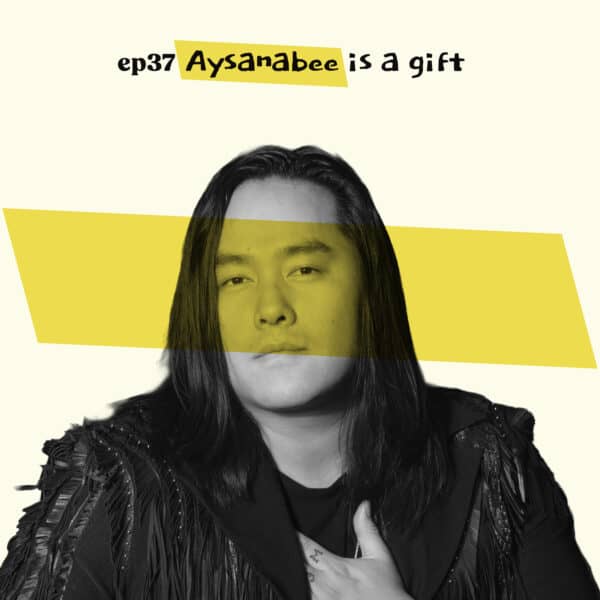
ep37 Aysanabee is a gift
released March 19, 2026
1:28:40
https://www.aysanabee.com/
https://www.instagram.com/_aysanabee_
https://www.youtube.com/c/Aysanabee
hosts: Glen Erickson, Alexi Erickson
AFE website: https://www.almostfamousenough.com
AFE instagram: https://www.instagram.com/almostfamousenough
AFE Spotify playlist: https://open.spotify.com/playlist/1o1PRD2X0i3Otmpn8vi2zP?si=1ece497360564480
Almost Famous Enough is a series of conversations centered around the music industry, pulling back the veil on what it really means to “make it”. Our podcast features guests who know the grind, who have lived the dream, or at the very least, chased the dream. Through these conversational biographies, truth and vulnerability provide more than a topical roadmap or compile some career advice; they can appeal to the dreamer in us all, with stories that can teach us, inspire us, and even reconcile us, and make us feel like we made a new friend along the way.
Chapters
00:00 Introduction
02:42 Meet Aysanabee
03:37 Folk Fest Formats
04:48 Juno Cup Hockey Story
09:43 Stage Fright And Banter
12:58 Off Grid Childhood Origins
19:08 Brother’s Music Influences
27:16 First Record Breakthrough
34:19 Juno Wins And Touring Reality
44:24 Grandfather Bond
45:40 Family Rock and Support
47:46 Recording the Stories
49:21 Healing Through the Album
50:59 Indigenous Artist Label
56:28 Racism and Progress
01:01:56 New Acoustic Release
01:05:03 Touring Costs and Love
01:14:53 Post-Fame with Alexi
ep37 – Aysanabee is a gift
[00:00:00]
Aysanabee: The scene with a boy on a bike is often a transitional tool in cinema. A cut scene. This is a spoiler alert by the way for today’s conversation, but I just needed to give it some more thought and emphasis. When the cinema is really cinema in, you start to notice even the care and emotions put into a cut scene within the apparently insignificant landscape,
or expressions, or activity, inevitably lies a metaphor, a hint, a callback. So you, the director needs to convey a greater struggle that took place in childhood, because so far, maybe the entire childhood has been a struggle, but they want to embed some lightheartedness. So use the innocence of a child, the lightheartedness of riding a bike.
Except this bike is a silly trick bike with no chain, which means he’s always pedaling hard, going up and down hills on dusty unpaved paths for 10 kilometers. It’s like an adventure track, but the child [00:01:00] endures the struggle with the same peaceful determinant expression of a child, taking a couple of back alleys, hopping a few medians to get to the circle K, four blocks away.
It is dusty. There are sudden obstacles close up on the feet, never breaking the hard push on the rusting pedals, some personalization on the bike, some sun peeking out of the clouds, some noises that startle him. Even in childhood, maybe we’ll learn that the protagonist pushed on through every struggle with grace.
Imagine the rusty tones and golden in gradient in the top half of the screen, giving away to a softer orangy glow as illumination aids. The transition of focus from the bike rider to the next scene, Aysanabee, is that peace. that grace. Strange adjectives for an alternative rockstar.
It’s not the first stereotype he has crushed.
Aysanabee is a Juno winning artist, [00:02:00] nominated again in 2026, possessing multiple top 10 charting singles, a number one on alternative rock in Canada, and embarking on a tour to support the release of a new stripped down album called Timelines. Technically, he’s very young into his career. But very mature in his balanced approach to his life, upbringing, successes, and opportunities.
My name is Glen Erickson. This is Almost Famous Enough. Thanks for spending your time with us. This is Aysanabee.
Glen: Uh, I like finding out who somebody is, like how they got to where they are right now from where they came from. So thank you Aysanabee, for joining us today. Been hearing your music and watching and following for a long time. My last interchange with you is, 2023 ’cause I’m in Edmonton, Alberta.[00:03:00]
So I both saw you at our folk fest that year which was pretty memorable. I’ll tell you, you played in 2023, you played one of the, your full set was that tiny little stage up on the half hill, if you
Aysanabee: Yeah. Yeah. Yeah.
Glen: And they never, I don’t know if you knew this, they never put the loud bands up there, but you were playing full band and it was drowning out some of the other things and I thought it was really awesome.
Anyway, I really enjoyed it. I was like, this is a fantastic mistake by the organizer organized. But I don’t know how you felt about that. I thought that there was a real energy. That year that probably carried through to you coming back here. Is that a normal, I guess, I don’t know how often you get into the Folk Fest world of festival invitations.
Is that pretty common for you, or is that an uncommon invitation?
Aysanabee: Yeah. Um, I, I’ve actually played quite a, quite a number of folk fests in, in, in Canada and in different parts of the world too. I, I think especially too, ’cause I [00:04:00] play in a lot of different formats, like I play with the band or I’ll play solo. So I think people see me in both formats, obviously. Like, I think when I play solo, I definitely lean into that folk style a lot more where I, I like have, I feel like I have the time and space to kind of tell stories, you know, it’s, it’s just me
Glen: Mm-hmm.
Aysanabee: So you, you kind of have that opportunity. Yeah, no, I, I think. The music I make can, can definitely lend itself to that as well. Um, I know they have me generally in like the alternative category, but I, I’ve come to kind of like that, I’ve come to, to love that category ’cause it is kind of this weird catchall, you’re not, you’re not as quite as like pigeonhole pigeonholed in a way.
Glen: Yeah. Okay. I’m gonna have to earmark that for later. ’cause actually that is a thing that I was making note of as well. So, but I want to grab the other way. In 2023, I was introduced to you, which was even more memorable because I love going, I love going to the Junos sometimes, uh, when I can. I like the big Juno cup that gets [00:05:00] played.
They had that, they had a hockey game in 2023 that you participated in, and they micd you up here in Edmonton. And it was so funny and so fun and you were so like free with yourself about, about playing and. I just, I think most memorably was you were just complaining about feeling outta shape while everybody, and wondering why everybody was skating so fast.
It was very entertaining
Aysanabee: Wait, was I, was I mic? Was I micd when I was playing?
Glen: for a little bit. They micd you up I think.
Aysanabee: I must have totally forgot about that. I hope I didn’t say anything.
Glen: No, there’s nothing, there was nothing negative about it.
Aysanabee: Oh man.
Glen: None whatsoever.
Aysanabee: man. It would, it would’ve been really real then because Yeah, I was, yeah. Sorry. Go ahead.
Glen: No, no. I was just, I was gonna say it was extremely entertaining. It really, it kind of made the whole thing. I mean, it’s kind of fun to watch that kind of a game. ’cause you have, I think Oilers alumni probably, I think maybe you guys were playing against, if I remember correctly. And, and, um, [00:06:00] I think the, the other interesting part was the, again, like smashing stereotypes.
The female half of the rec laws was playing the game and also doing very well, which was awesome to watch. Yeah. The most memorable part to me was, was, uh, was was your participation in the game, which was a lot of fun. Does that kind of a thing happen very much in your career or those kind of, those fun little one-offs where you kind of get to do something you would never get to do just because you know you’re in this business?
Aysanabee: That’s amazing. I love that. That was a summation. It was fun. Uh, it was, yeah, it was. Well I played pawn hockey growing up, right. So like, it’s funny ’cause like I still had to like, brush up on a ton of stuff ’cause we didn’t play with very many rules when, when I played on the pond with like friends. Like, it was, you know, and some, sometimes it got a bit like, you know, definitely a lot of illegal moves, I guess.
Glen: Yeah.
Aysanabee: But yeah, no, you
Glen: Not full gear, I presume either.
Aysanabee: No, no, it [00:07:00] was, it was just like gloves, skates, and stick.
Glen: Yep.
Aysanabee: You know what, it’s funny you should mention that I actually am doing a similar game in like tomorrow.
Glen: Really?
Aysanabee: Yeah, so I’ve been like, I, I just got back, I was playing in Mexico and I was like, there’s, you know, obviously not a lot of places to, to practice skating there.
So like, um, I got back, I got back and like this week I was like, man, every day I’m here I’m gonna get on the ice and just, you know, get, get my at least ankles where they need to be a, a little bit better. And, you know, I got back and like all the, all the ice rinks are just like caution taped off ’cause they’re all melting.
Glen: Oh my God. Yeah,
Aysanabee: So, yeah, there’s uh, um, um, I think it’s, it’s through like music counts and it’s like, uh, yeah. Musicians versus hockey players again.
Glen: yeah. These charity games, right? Kind of promotional. Yeah.
Aysanabee: Yeah, I honestly, that was a completely new experience for me. It’s like, I don’t, I don’t often go get to play with her, you know? NHL players, uh, that isn’t [00:08:00] something I, I am, I’m like, you know, I’m not that cool. But, so once in a while it’s like super sweet and, and so I, I agreed to do it again and like, I guess part of me has been like 2023.
I said I wish I was in better shape. I’m still saying that today
Glen: Here we are. Here we are. So is there any, is there any fun extracurriculars? ’cause you’re gonna be at this year’s Junos. I would, of course. Well, not just presume. I see you’re on some of the performance schedules. So is there any of the extracurriculars they try to do that you’ve been invited to or roped into?
However you look at.
Aysanabee: Yeah. Yeah. No, uh, it is, it was pretty, it was pretty funny too, ’cause I remember like, you know, I guess back in, I guess they, they announced the nominations back in January and like, you know, we, every time I’ve been there, I’ve been kind of, I’ve performed on the broadcast and so it’s been pretty busy this time.
I was like, oh yeah, no, like, I’m not on broadcast, so I guess it’ll be pretty chill and I’ll just like hang out and say hello and, but yeah, no, it, it seems the schedule filled up really quickly and [00:09:00] I’m, I’m doing something kind of every day, which, which will be fun. Like, I’m really, it’s, yeah, I’m really stoked to be on the, the Juno songwriter circle.
You know, that brings me back to the, the Folk Fest world of just being songwriters in the round. Right? So. Excited to be a part of that. I know like a lot of people look forward to that event. And Yeah, I always love it too. You just get to sit with like, you know, people who are doing really incredible things in the music space and kind of get to hear, like, I get to sit right beside them and hear the story like
Glen: Yeah.
Aysanabee: and like about how they wrote the song and why they wrote the song, and maybe some random tidbit you didn’t know, like something happened in the studio and then that made the song, you know, like you, you get like this cool, just really cool information about the song.
And then
Glen: already alluded to banter, you’re good at banter. Those are some of the best banter moments too, where you actually get this relaxed on a stool exchange with other peers. Yeah.
Aysanabee: Yeah. Most, most times I’ve been getting better at it. Like, I think it is wild [00:10:00] because man, even. I used to have such bad stage fright, and it wasn’t even that long ago. I think like pre pandemic, I was, I was just, I’d be so nervous to talk about the songs that I would just be like, this is the title of the song, and then would just move and play it.
And, and then I, I guess trial by fire, right? Like, so like I just, you know, you play so many times and you just start getting used to certain things. Um, you know, like I don’t, I don’t think that that stage fright has kind of gone away. I’m not even sure if it’s stage fright or just like this, you know, caring about the space you’re in, caring about what you’re doing and wanting to do good job and wanting to, you know,
Glen: There’s an anxiety that goes with performance when you care about it, right?
Aysanabee: well I think, I think about like, even heights, like I’m not the best heights person, but like I will go skydiving and I will go rock climbing just because, you know, you get this feeling that you don’t get from something you’re just comfortable doing.
Glen: Yeah. Yeah.
Aysanabee: So you just kinda learn to deal with that fear. And that’s like something I’ve just [00:11:00] come to learn about, just going into spaces that sometimes I might not feel or that comfortable to me.
But yeah, no, um,
Glen: Well that’s the tidbit right there, man. Like, like you talk about picking up tidbits, right? For people. I think people listening, like so often, people who come and watch you play, you are very comfortable on the stage. You appear very comfortable if you’re not feeling comfortable. You’ve done a really good job, obviously at like in this career.
It’s something you have to work on to be that comfortable and present, present that way. And I think a lot of people, you know, you just look up a artist and you just make a bunch of assumptions about like, everybody who’s doing it is doing it because they’re so comfortable with this, which is so not true.
Aysanabee: No. Yeah, yeah. I mean, some people, some people are, and it, this is a different space, right? Like it’s, you know, everyone’s different, everyone’s journey’s different. I’m, I’m nervous almost every time I go up there, and I, I’ve come to just love that actually. It’s the times that I’m not nervous that it weirds me out. Like that’s where I’m just like, what is wrong? [00:12:00] What’s happening? I, I don’t know. I just
Glen: yeah,
Aysanabee: tend to, tend to use that energy and the performance kind of, you know, I feel it makes the show better for me.
Glen: yeah. I used to get the nervous shits all the time before when I played in a matter of seven years in when I was playing. I would still get the nervous shits before I go on stage. But then I felt better ’cause I was a big hockey fan and I’d read about some of the famous goalies, I think maybe Gump Worsley, one of the guys who, uh, threw up before every Glen Hall, he threw up before every hockey game or something.
And he was like, A Hall of Famer played 20 years. Anyhow. Can you imagine throwing up every hockey game you play? But I, so let me. There’s lots of places I could jump in to talk with you. Obviously there’s things to talk about what you’re doing right now, which is, uh, a very sort of cool step or stage in, in what you’re setting out to do.
But before we get there, maybe if I can ask you questions about kind of how you got here and where you came from.
Aysanabee: Yeah, of course.
Glen: Which is of a lot of interest to me. And I think right off the bat, [00:13:00] one of the things I’m really interested is how, you know, got this bug. I mean, there’s lots of ways that people became artists and when they got the interest.
I’ll frame it this way, is that I’m interested in how you kind of accessed that inspiration and idea, particularly because your story comes from Sandy Lake First Nation, which is like a fly in community in Northern Ontario. You know, Canada’s got a great reputation for not having resourced those very well at all with basic needs, let alone, you know, education and the way music gets introduced and uh, all these kinds of things.
So I’m curious whether that’s where it started for you or whether it was a bit later in life where kind of music started to kind of grow for you.
Aysanabee: Yeah, it, it actually came a, a bit later ’cause like I was in Sandy Lake until, uh, until I was about five years old. And then my grandfather came up there, my grandfather came up to come check in on me because I was living with, uh, my [00:14:00] aunt at the time. And so he came up and he was just like, oh, where’s Evan?
And they’re, they’re like, oh, I don’t know. And so he like went around the res kind of looking for me and I just, you know, family just kind of wandering around, walking down some dirt road. And yeah, he just kind of, he’s like, well, you know what, someone should look after this kid. So he just like grabbed me and took me back to the paw Manitoba. And then I went to Winnipeg with my mom, and then we went to like Canora and then Dryden, and then, um, went to Thunder Bay, uh, for like maybe about a year before moving out in the, like north of Thunder Bay, kind of in the, out in a rural community. There’s a place called Caman Qua. And so we moved out there and yeah, like my mom had this idea of, of like, she wanted to live off grid and she wanted to have like a, like a hobby farm and, and solar panels and stuff like this.
So like, wanted to do that, but all that stuff is really expensive. And so we [00:15:00] ended up just having this plot of land that like, we moved like this trailer on. And so, yeah, like, it, it, it, like all, a lot of the stuff didn’t materialize, so we just lived in this trailer in the boonies with no electricity and no running water.
And yeah, so like, we had like a generator we’d put on at night. Like, I think, like we couldn’t even get like hydro electricity because like all the poles were too far away. Like we would’ve had to like, spend like hundreds of thousands of dollars to get like poles all the way up the road and then have to pay a hydro bill every month.
So yeah, like I, I kind of grew up there and like would go to, like, went to elementary, there was like a elementary school probably like 40 kilometers away. And I think my nearest friend was, was probably like 10 kilometers away. And like, for some reason, for some reason, I, I had like out in the country, I had a trick bike.
I don’t know why I had a trick bike.
Glen: Like A BMX trick bike. You mean with like fancy grips and [00:16:00] stuff or?
Aysanabee: Yeah, it was like just a, yeah. And, but so like no gears, right?
Glen: Yeah. Yeah.
Aysanabee: in the, in the country where there’s like all these hills and your nearest friend is 10 kilometers away, and I’m just like having to go on this trick bike. And so it was wild, like, so we would go and like play and stuff and, but then I would always, we’d always cross like this old rickety bridge and we’d eventually like start climbing it and like hopping off this bridge into the river.
But I guess like his dad was like really concerned about us just playing on this bridge and eventually like petitioned to have this bridge destroyed because now all these kids were suddenly leaping off this bridge.
Glen: wasn’t safe for
Aysanabee: So then, you know, this 10 kilometer bike ride suddenly turned into like this 18 kilometer bike ride to like get to my friend’s house.
And I, ’cause I had to go all the way down around this
Glen: on a trick bike.
Aysanabee: And so, yeah, I ended up just like, you know, hanging out at my house and yeah. You know, I tell the story of the three things I had, like this dune [00:17:00] buggy made out of a lawnmower, a bow and arrow, and then like eventually one broke and then like one got taken away.
’cause I, I flattened a tire on my mom’s van. And then it was like a guitar my brother had left behind ’cause he moved into the city to go to school and then just, you know, got an apartment. We all kind of moved out at a young age and, and moved into like these roommate situations. Yeah, so there’s this acoustic guitar.
So, you know, aside from just like running around in the forest and playing with my imagination, I would like just start playing this guitar and, you know, learn chords and then start, I started writing songs. I can’t even really recall what I, I had a crush on somebody at school and like, you know, wrote a song about it or tried to.
Um, so yeah, you know, I was just literally just, that was the tool at my disposal. That was the outlet, that was the one thing I had to play with growing up in
Glen: Yeah.
Aysanabee: this off grid trailer.
Glen: Yeah. That bike story [00:18:00] sounds, honestly, actually, it sounds like something out of a Cohen Brothers movie script. I, it’s just so, it’s a very vivid picture to me. I guess I get really curious about people’s influences. We often just ask the question like, who are your influences? But it’s not to me who, it’s almost like how did they become your influences?
Or, or, or why? Like, um, I recently talked to a guy and he’s very old soul for a young guy mixing very like, older, uh. You know, almost croner esque Roy Orbison with, you know, like alt country ’cause of current things. But, but in his story, he grew up with his head on a pillow with an AM radio under it, almost falling asleep to this sound.
So he, it’s not so surprising that it’s built in Part of my question about like, where you lived and whether you were incurring, you know, some of this like remoteness, even how you just described the distance between friends meant you [00:19:00] ended up at home more often than the typical, you know, maybe playground or you know, backyard kind of playing with friends thing.
What were you, what were you hearing that made you wanna write songs? Like what were you trying to emulate or recreate? I think that’s how a lot of us start. Like what was the thing that, that was sort of. In your life and whether that was coming, you know, from a big brother having, you know, a CD collection or, or how would that, how did that come to you?
Aysanabee: Yeah, it was, it was definitely a big brother, like, like you said, like we had that generator. So it’s like my brother used to mostly all his music with him when he left, but then there was Bob Marley, he, it was like Bob Marley greatest hits. And so I would plug those into like, when the generator turned on, I’d put on those records and just listen to reggae music.
And so I actually started by making reggae music. And then like, you know, I’d go into the city to visit my brother, and then I would start like taking more of his [00:20:00] music, you know, and so, and he, he kind of listened to like a, just a wide spectrum of all kinds of different artists. He’s like into a lot, a lot of different electronic music.
So there was like a lot of, you know, like Apex twin and, you know. All these different, like interesting kind of instrumental music. And then, you know, he liked hip hop as well, so I’d be listening to like, you know, MF Doom and, and the Wu-Tang clan. And he was into like, you know, all kinds of different kind of singer songwriters too.
I remember like even like, you know, even from some Canadian people, I remember having, like listening to like a wax mannequin cd. I remember, I remember Wax. Yeah.
Glen: like Kim go for a soda guy? Was that his band? I think that was his
Aysanabee: yeah, like he had
Glen: did I forget his name all of a sudden? But yeah. Yeah. That’s a crazy reference.
Aysanabee: Yeah. And like Radiohead, so I remember like kind of like, you know, just getting into my brother’s music and so it was [00:21:00] interesting. Yeah, I got into to Radiohead for, for a while too. And I always, I always find that interesting too because I think we both have a similar thing where we don’t like enunciate as well as we.
You know, sometimes we just shape words that sound a little more pleasant to the
Glen: Yeah.
Aysanabee: and so, yeah, I was kinda wonder about that. Sometimes I’ll, I’ll play a show and, and that that is some feedback I’ll get. It’s like, man, I love this one song, but I wish I could hear more of what you’re saying. And I was like, man, I wonder how many times Tom York has heard that.
Glen: Yeah. I’m sure at some point people figured out to stop asking him. I mean, I think that’s, well here’s, here’s my take on that is. I had a question for you, which is, I mean, there’s a long list. You know, I read your bio or I read some previous writings online about you, and they’re doing their due diligence all the time of comparing you to other artists or for the sound or, or something because you’re just trying to [00:22:00] classify to make you easier access for people.
But nobody has ever listed the very first thing I heard when I heard you sing, because I got introduced to you with nomads, like anybody else probably on alt radio, Sonic here in Edmonton and who have played the shit out of you, by the way, like they’re a great supporter. But I heard Tim Baker of, Hey Rosetta.
Immediately in that song, the whole song sounds like a, Hey Rosetta, I don’t know how familiar you are with Hey Rosetta and their catalog.
Aysanabee: Yeah. Yeah. I, I actually really dug here, Rosetta. And so it’s interesting too ’cause I have this memory of like, remember the Way Home Music Festival
Glen: Yep.
Aysanabee: and so like, they were the Way Home Music Festival was here for like, I think like three or four years. And they just had these crazy artists, like, I’m not sure if that’s maybe why they, like, went under, but like they just have the most insane lineups.
And I remember there was three bands I wanted to see this year, that year. And it was like, alt J Hey, Rosetta and Neil Young.
Glen: What an eclectic mix right
Aysanabee: And [00:23:00] so they all played at the same time. And I was just like, I was like, what? And so like, I was like, man, you know what? I should probably go see Neil Young. Like, I’m not sure. Like I, I feel like there’ll be more time to see the other two bands.
and so I went and I saw Neil Young and like, I remember being like, ah, ’cause he, he didn’t, he didn’t play any of like the hits. He, he was playing all his new record and like, it was still cool and like, he was like, like shredding and like extended solos as like one, one of the hits would’ve been a, a nice thing. But then, hey, Rosetta ended up like, not, like not being a band anymore. I was like, ah,
Glen: Shortly after. Oh yeah.
Aysanabee: But I did actually get to, I, I, I did get to see Tim play, I remember, and I met him too actually. Uh, I think like right out of the pandemic, like I, my career was just, just starting and I was invited to play the Super Crawl.
It’s like this festival in, in, in Hamilton.
Glen: Hmm.
Aysanabee: It was like [00:24:00] just fresh outta the pandemic and like, so it was very interesting too. Like it was a full day thing, I think like death from above was the headliner and like I was called into it ’cause like someone had gotten CO and they needed like a fill in. And so like I was available, we put my name for it and I got in and it was super wild.
I remember like, I was like, I think I was like the first of the day or maybe the second. ’cause it was wild. I remember, yeah, I was second. ’cause the first band was like this interesting San Scaping kind of, I don’t know, they had so many different effects. Like they must have must’ve been using like the microcosm pedal ’cause it was like kind of like very trippy and very psychedelic and there was like a trumpet and all different, like a couple of people just making a bunch of different kind of crazy intense sounds.
Um, it, I remember feeling kind of post-apocalyptic because like the pandemic just kinda was, you know, and like, so it was like this massive stage in this field. And then just like kind of hundreds of empty seats and this wild sound wall. And, [00:25:00] and then I played in like, there wasn’t even that much ma that many more people.
But then eventually, yeah, Tim played and I got to meet him and finally got to, to see him play. And he, like, I talked to him very briefly and I, I didn’t, uh, like I didn’t know he was from Newfoundland, so Yeah, he had like one of those really thick NFI accents as well, so it was like, but yeah, Tim Baker, I, yeah, fan.
So I can definitely see how that probably rubs off on me at Lee. You know, we’re a product of everything that we ingest, so I.
Glen: Well you talked about like not shaping your words, but I mean that’s kind of the charm, isn’t it? Like when I hear like. It’s classic on your nomads, but you have a lot of other songs. You do the same thing. And what made me feel resonance with a bunch of hey Rosetta songs is it’s not just the voice, it’s, it’s how you shape words.
It’s how you phrase things. It’s how you, you know, when you know I’m in this key, which means I’m gonna hit the high part of my register at this part, and [00:26:00] then that’s the part where my mouth is so open and you just instinctively learn how to sort of shape around that experience. Right. As a singer, I mean, vocal coaches will then try to either teach you or unteach you a bunch of that stuff later, but, but you know that, I think that’s inherent.
I mean, you talk about Tom York of Radiohead, but thank God, like no vocal coach kind of came near that guy. Right. For the same reason, but. I guess my observation of that is that like when you start singing, you sing in a way, and this is how I always felt about Tim Baker too, is, is I expect to feel something like you can, I think you just, we’ve heard so much music in our life.
I intuitively know, my brain knows where to categorize you, that, you know what I mean? Like, this has meaning, this has feeling behind it. Just because of the way you’re using your voice. I don’t expect your lyrics to be fluff and meaningless. I, you know, I expect if I were to see you live, that there would be some energy and, and some commitment every single time.
So I think all those things [00:27:00] get communicated behind that, which I think is pretty special. So it’d be funny to me if somebody wanted you to just enunciate a little bit better, not understanding as kind of part of the whole package. You know, this is, this is the whole thing. So, so. In getting to the place where you start putting your music out there, you sort of alluded to you’re making music, you’re writing songs, you’ve made some moves in your life to advance that you got invited to this festival to when you put out your first record.
I’m really curious what was happening for you at that time, because you had the experience where your first record, you know, started charting on Billboard. It went number one on Canada’s alt rock chart on CB, C, which was at that time still a, maybe still a pretty relevant chart in Canada for, for where music is being played and being understood and and heard.
So that kind of stuff quickly elevates you. Very few people, I should put it this way, get the experience of their first [00:28:00] song off their first album. Kind of getting that kind of acclaim and interest and then attention, which is what it’s geared to do for you. What was your experience with that? Was it. The quick imposter syndrome of people are talking to me like things are happening and, but you’re still doing the same things you were yesterday, but now you have a number one hit.
What was, what was going on for you?
Aysanabee: I think it was like a definitely combination of things, but like, because that was something I wanted this whole time. Right. Well, like I, it’s like, well, not that specifically. I wasn’t like, I need to have a number one song of that’s My Life Dream. Like that was the. It was just a wild thing to happen, I think.
’cause I mo I moved to Toronto, like to pursue music and then like, ended up going to college here and ended up like, working in journalism. Um, and so like ended up like, I was still playing and, and gonna open mics and setting up shows at, you know, the Rly and the Cameron house and you know, kind of hoping someone would kind of like, I didn’t [00:29:00] quite know how to like get into
Glen: Get discovered.
Aysanabee: Yeah. Yeah. So I just play shows and, you know, have fun and, and so I think, yeah, what was going through my mind, like, I remember when all this stuff started happening, it was just such a wild moment of, you know, when you are trying to figure out how to get somewhere for so long. And then like, when the pandemic hit, I was just like, you know what, like I have a good job so I’ll just, you know, I’ll just do music as a hobby.
So I like stopped looking for it. And it was just like, I approached music in a different way. Like, I was just like, you know what, like, I’m not gonna try and make, a product. I’m just gonna make like this stuff that’s important to me and that like, I art, that I just wanna make and tell stories that I want to tell.
And, and it was weird. Like it was, you know, so I, I just went and approached that record that way, and then all these things just kind of happened in these weird coincidences and then everything started to snowball, right? And so when all that started happening, and like, you know, I sent in a [00:30:00] performance video and then that led me to meeting the women at Ish day and then, and then getting the record deal and then like, you know, because the concept of the record was already there.
Like, I just thought it would’ve taken like many, many, many, many more years. Like I thought I was. But I think like when I, when I. Sign the record deal. Like it, I don’t know, it just made me work a lot harder and spend a lot more time trying to finish telling the story I wanted to tell. So yeah, all the, the radio stuff, like, that’s still super wild.
Like it is still something Yeah, it’s still like very surprising and very crazy to hop in a car or like go into a grocery store and be like, it’s, it’s me. Uh, I think like the coolest, I think I’ve one of, one of the moments where I was just like, man, I, I felt really cool leaving that situation was like, uh, I think it was probably like two and a half years ago.
I was playing, uh, riff Landia in, in Victoria and I went, I went like a day early and so the band was gonna come the next [00:31:00] day and I get outta the airport really quite late and a taxi driver picks me up and yeah, I load my guitar in and my bag and. We’re driving and driving into the city, and he’s just like, ah, so you play music?
And I was like, yeah, yeah, yeah. He’s like, so like, oh yeah, I’m a musician too. And you know, he started telling me about his project and you know, we’re just talk and shop and talking about like, um, what kind of music we make and you know, what instruments we play, you know, the, the whole thing. And, and he’s just like, well, that’s cool man.
Like, would I have ever like, heard, would I have ever heard any of your music? And I, and like, this is, it was literally, I was like, yeah, it’s, it’s it’s on your radio right now. And it was
Glen: No way.
Aysanabee: yeah, the coincidence of that. It was like, I was like, no way that this has happened. Like, I feel so cool right now.
Like this is, thank you to the radio station who made that happen. Like, I was just like, Ugh, that’s so wild. And, and it was crazy. ’cause we got to the hotel [00:32:00] and I was checking in and then my song was also like in the lobby on their radio. Like it was, it was like, that stuff is like always so cool. I mean, it’s still such like an incredible way to reach audience.
I still play so many shows and, and meet people after and like I, I like to be like, oh, like where did you discover the music? Quite a few people will be like, yeah, you know, I was just, I heard you on the radio and I shazamed you and Yeah. Saw that you’re playing or that’s how they got introduced to me and that’s how like they started following me.
Glen: Yeah. That’s crazy. I mean, for people who don’t know, it’s like a half hour ride from the airport in Victoria to downtown. It’s like a long ways, and you’re forced to have a conversation sometimes with your taxi or Uber driver, and it’s a long one if you, if you engage, you’re in for the ride for sure.
Aysanabee: Oh man, it’s, yeah. You know, in the, in the app it actually lets you check that. Now it’s like conversation and you can say
Glen: Yeah. In your Uber app? Yeah. Whether you want
Aysanabee: I never, I never clicked the none. I always feel like [00:33:00] that I would, I don’t know, I just like skip that part. I, I think I’d feel like really douchey if I was like, no conversations like, but there are
Glen: Yeah.
Aysanabee: I’m sitting
Glen: I know people that do though. I know people that do, and I think I’ve seen that you can like suggest like whether you want music playing, some people have put in or you can choose your music or something like that. I’ve, I’ve hopped in and they’ve asked me what I want to hear from music before and I’m like, I don’t, man.
This is part of the experience.
Aysanabee: Yeah.
Glen: Play your music. Tell me a story like, yeah, taxi drivers have some of the best, uh, or Uber drivers have some of the best pieces of conversation. I wonder if that was the queue in Victoria playing you shout out to the queue. ’cause I know people that run the queue. Um, that’s, that also by the way, is obviously amazing, right?
That that happened exactly the way you just described. So now I’ve got like two nuggets that I think I’m starting to be convinced you’re gonna, you need to sell your story to like a director to write the script. ’cause the, the writing round on the trick break for [00:34:00] 10. Now 18 kilometers was a great piece of a story and then that’s a great piece of a story too.
So I guess I’m gonna jump ahead, but, uh, I don’t know, maybe I’ll just not jump ahead. Quite yet because I, I, I feel like there’s a similar version of the question I wanna ask you of all of a sudden, two years later, well I guess I’m jumping ahead. Two years later, you win two Juno awards, right? And that’s not a lot of time.
I’m sure a lot happened in between, you know, so part of my first question was, you know, a big thing happens for different bands. I’ve seen it either that radio success, like you get a number one across Canada, you know, all these assumptions happen. Maybe it’s most often with your friends or the people you know, on a daily basis of like, oh, does everybody across the country know who you are now?
Or, this perception thing becomes really muddy for us, right? Because yours got a number one hit, but you might still be kind of walking around doing the same things you do every day. Uh, I’ve had some people describe it to me [00:35:00] as like a version of imposter syndrome. They’re like, well, I’m not making any more money on my shows and I’m still having trouble selling tickets for the next three, four weeks, or.
Or some people talk about how it immediately translates into a change for them. Similarly, that happens with something like awards, right? You hear a lot of the big, sort of famous stars talk about, you know, oh, awards are meaningless, or they don’t do anything. And I’ve had conversations with friends like Dan Mangan about this and, and some others.
You know, when he won his award and kind of where that sat, he was well into his career already when he got a Juno as the new artist, best new artist, I guess. So similarly, my question for you is, is like two years later you win this very prestigious thing. I’m wondering, and I’m wondering if other people would be interested to know, like what does that actually create in a musician’s life?
Like what, what traction does that give you? Does it open new doors or opportunities? Does it do things for you that translate maybe into more financial security, whether it be contracts or, [00:36:00] or things like. Like that. When you’re on that trajectory where what you’re putting out there is successful, how does that actually translate?
Or does it, or is there, is there a bit of a myth? I’m wondering what your experience has been with all of that.
Aysanabee: I mean it, I mean it’s, it’s like for different reasons, right? Like I can talk about how it affected me personally. and on the business side, I did, I guess too, like it definitely did open up some doors too because like, you know, we won it, but then we were, we were immediately trying to. Like we were setting our sights to try to get in, play more shows in Europe and play more shows in Australia and go cut outside of Canada.
So I think when we were going places and taking meetings and stuff like that, like being able to say that like we won the Juno and, and you know, it was like this history historic moment because like I, I had, you know, was the first indigenous artist to win either of either of those two awards. Yeah. It definitely helped in some, like, people just like maybe paid a little more attention during the conversation.
You, you know what I mean? But yeah, like [00:37:00] certain things happen I suppose for sure. Like, you know, I think if you, if you, you know, when the June of the uh, like fees go up and stuff like that, um, but you still really gotta do the work. Like at that point, like we were already like, I think. Before that happened.
’cause that was in 2023. I had started working with my agent staff two years before that. And so she was like, when she agreed to work with me, um, she was like, okay, like nobody knows you, so we get, we have to get you playing like everywhere and anywhere. And so we did like, like I think we did like over 180 shows that year.
And then the next year like did like over like 150 or something. Like we were playing everywhere and everywhere and like, you know, it was, it was just out there. And I loved it. Like I, I love, I used to love performing more than studio, but I think setting that groundwork and like building that relationship with audience.
’cause it’s like, at the end of the day, the, the awards can only do so much. It’s, it’s kind of on the artist to like, to make sure something [00:38:00] comes of it. Fans, an audience like that is where, where the career is really gonna land. So it’s, it’s just kind of like, yeah, I mean I’ve seen,
Glen: I mean, I watched some people, part of my curiosity about your experience is I’ve watched some people in the past have that happened and then their agent is now trying, like literally almost, it feels like the next day trying to book 500 cap rooms instead of 200 cap rooms or two 50 cap. You know what I mean?
That that jump that happens in kind of typical Canadian venues and then all of a sudden they’re struggling. So they went from feeling like really successful plus then this big tip of the hat to them happens, and then they start feeling unsuccessful, right? Because. You know, they’re playing in a bigger pond, uh, I guess is the way I’d look at it.
And that affects people differently, right? Some people, they love the challenge, and other people, they’re, they’re too soft to their validation needs or something. And it, and it starts to show, right? But I just didn’t know whether you kind of had immediate [00:39:00] changes in your career approach at the time, or whether it was still businesses as usual.
Aysanabee: I mean like, yeah, no, like it’s, it was like such a shock to win those awards, but I never looked at it as like, oh, I’ve won the award now I’ve won the game. And now I just sit back and en enjoy this sweet, sweet ride. Like, I think when I won it, I was just like, now the work really begins here. Like, you know, like it’s like now it’s time to kick it into a different gear.
Yeah. And as far as like the different rooms and stuff like that, like it’s, it’s interesting because like there are some places we play and then like the tickets move so well then there’s other places where it’s like it is still kind of hit and miss. Right. You know, I remember, you know, even on some of the, the, the tours, like, you know, we, we were like, there was parts of the tour where like the tickets almost sold out immediately.
And then there was some where it just, you know, I remember we were playing in Moncton and at the time I remember being like, oh wow, like, I’ve never been to Moncton. I was kind of like curious. I was like, like, why wouldn’t we play St. John? Like, we just [00:40:00] finished playing the Area 5 0 6 Festival like six months prior, you know, be good to go back and, you know, continue to cultivate those relationships that were made in, in, in, in that room.
And so never went to Moncton. And I remember like the tickets. We’re kind of like not really moving. And, and I remember like, we were out in, in like Charlottetown before that and I was out with like the drummer from this other band who’s, I was so about, I was like, oh yeah, I’m not sure. I was like, I think I just maybe have to keep coming back and, you know, earn the respect of these people.
He’s just like, nah. Yeah, sometimes it’s like a hit and miss. He’s like, you know, he was saying, you know, this band went through there and, you know, they, they had like 40 tickets move and then this band went through there and like, they had maybe twice that. And so like, I, I think we had like more tickets than both those other acts who were actually much bigger acts than myself.
So like, that made me feel a little bit better. I was like, okay. I just like, but the room we were supposed to play was like this bigger room. And so I was like, oh [00:41:00] man, like a hundred people in this space, like isn’t gonna like, feel that good. But then I guess there was a fire in the apartment above this space and it triggered the sprinklers and so like the, the damage the pa a little bit.
So we weren’t able to play that. And I think like, you know, uh, maybe some other, I feel like other teams might have just been like, oh, sorry, due to unforeseen circumstances, like we can’t come and, you know, to save face for, for maybe not being able to perform for as many people as they would’ve liked to.
But, you know, we kind of pivoted and we found like a different venue. We played like this little, this little arcade venue. And like, I mean, it ended up being one of my favorite shows of the tour, you know, like it, the tickets didn’t like move as well as we’d hoped. And like some people would’ve maybe just canceled it to save face and would’ve been like, due to unforeseen circumstances, we can’t make this work.
But it’s like, you know what, to me it was like, there’s like a hundred people there who wanna see me and there’s a hundred people who, you know, decided [00:42:00] to take their hard-earned money and buy a ticket and wanted to spend an evening with me. So like, we went and, and it was crazy, you know, like there’s this one moment where we went into like, you know, we went into the audience, we go into the audience and play one song.
I’m not sure if this one woman thought like the show was over ’cause she just started talking to me. And then like, we’re, we’re supposed to, we’re supposed to be playing a song. And I’m full on having a conversation with, with this woman who was just like, this is the first show I’ve ever been to. I can’t believe I’ve never been to a show before.
This is the best thing I’ve ever seen. And like, she was having like this spiritual moment and I was just like, my drummer was like, dude, we gotta, we gotta play the show. And I was like, oh. Like we’re, we’re having a moment here. I like, looked at this woman’s partner. I was like, how, how have you not taken her out to a show before?
This is wild to me. And you know, even at, at the merch table, I was meeting folks and you know, it’s like the, there’s this one guy and you know, he was this younger guy who, who’s just like, you know [00:43:00] what, uh, he’s like, man, I, you know what? I’m not gonna lie. Like, I actually, I didn’t know who you were. You know, I worked here and he is like, I saw there was a show here, so I decided to come and check it out.
He’s like, man, like, he’s like, that was one of the best shows I think I’ve ever seen. And ’cause like we, we brought, we had like a lighting rig, we had our own sound person. Like, we had all this stuff to put on this production, on this big, on this big stage that we ended up, you know, putting on here anyways.
Like, he was there with like all the records. Like he was, he was buying all the records and he’s, he’s like, next time you come through, I’m, I’m gonna bring all my friends to see this show. And it’s like, you know, that’s where it, that’s where it starts. Like you do, you’re gonna have really. Amazing shows where like, you know, 1600 people show up and, you know, and everything just goes with without a hitch.
And then you’re just gonna have like these other interesting moments that are like, maybe not as glitzy and glamorous, but like they are still very special moments. Yeah. Some places you just gotta go and you gotta keep going back and develop [00:44:00] and, you know, that, that one person is, is now gonna bring five of his friends next time I come, you know, like.
Glen: I’m wondering if I can go backwards a bit, ’cause I have a real, I’m really interested in the things I read just about the inspiration of your first record.
The name of it being your grandfather’s name, which I’m hoping it just is pronounced as it looks. Is it just pronounced like Watin or?
Aysanabee: Oh, it’s, uh, WATIN.
Glen: Watin, okay. Emphasis. Yeah. but I heard you talk about him a little bit earlier when you said he came and he found you just wandering around and he is like, someone’s gotta take care of this boy, obviously has had such a massive influence in your life that you were able to pay so much tribute or homage in multiple ways.
Not just one way, like naming the record, but the art and, and including his voice in, in things. Here’s the reason I wanna ask you about what your relationship was like with him, because I think what never gets talked about is how difficult men’s relationships are together. Fathers and sons or grandfathers and, and grandchildren are just men and boys, [00:45:00] or just men to each other.
that, that we still find a way to impart, you know, life lessons, but, you know, care and support in different ways. It doesn’t get talked about enough, I think, in the way that it happens so well that you feel like that we care so deeply about each other even though it doesn’t look always the same way.
So I’m just curious about what, what was it about your relationship with your grandfather that really like imprinted himself on you? Like what, what was it that he did for you that you know, are kind of the things that you just still are maybe so present in your life still, if that’s an an okay question to ask.
Aysanabee: Yeah, no, definitely. I, I think like for a lot of reasons, like my grandfather was definitely the rock of the family. You know, like I’d say there was like a lot of crazy dysfunction in my family. Like there’s a lot of every, everything. You know, like from, from like mental health to addiction, to, to, you know, a lot of, a [00:46:00] lot of things that impact like a lot of families in this country, but especially like a lot of different indigenous families, you know?
And so like, yeah, my grandfather being like, this place of stability, which you know, is really wild to me too, just like obviously didn’t think of it that much when I was like, growing up, right. And I was playing shows at bars underage, and he would like come and pick me up at, you know, one in the morning and drop me off at my apartment, you know what I mean?
Like, he was always very supportive, very stoic, very quiet. and, and so yeah, like he was such a steadfast, you know, pillar in not just my life, but in, in the life of lives of like, you know, all, all the family around him. And so like, it was. Like, you know, it was a beautiful thing to be able to kind of make this record and kind of honor that and like, but the thing is like, I learned so much in the making of this record.
Like, even though he was a pillar, and we are, we are together and like we, you know, um, we didn’t really talk about a lot of real [00:47:00] stuff, you know, like, not that it wasn’t real, but we didn’t like talk about a lot of the stuff that ended up in the album and a lot of the stuff that didn’t end up in the album.
You know, like all that, that, that year’s worth of conversation we had in 2020. I’d say we, we, in that year, I learned way more, more out in, in all the years prior. Like that’s the, the year I got to know him most and all the things that he had been through and all the stuff that he carried this whole time and all this, like all this stuff that, you know, I don’t think a lot of people in our family knew.
It’s just like my grandmother, you know. My grandfather’s cousins who used to, you know, like, and people who had similar experiences. Yeah, it was, it was such a.
Glen: Did it feel like a gift that you didn’t know what to do with? I’m wondering ’cause it just, the way you tell that like, like I, I had a pretty stoic grandfather who didn’t say very much, very respectful, very kind man. It wasn’t until I [00:48:00] was like a young adult and I went back with some friends, or I think maybe I took my girlfriend back to visit them and he started pulling out.
Maybe it was just to impress her ’cause she was fun and cool, but he kept, he started pulling out like all his war memorabilia and started telling stories and he never told any of us those stories as a kid. And now he was giving them to me. I just remember thinking, I just got given a gift that I know for a fact other people don’t have.
Kind of like what you were saying. I didn’t know what to do with it. Um, I was just wondering if how you sort of took all of that gift, was that things that you, do you feel like you need to move those into your music somehow? Or do you feel sometimes like you need to just keep those to yourself?
Aysanabee: I think like with the album that that was made, like, I feel like. A, a good, like his story was, was saved at least part of it and, and can live in this certain space, right? Like obviously I still have all these recordings and that’s just like, it is just great to have them just for like future [00:49:00] generations of my family just to be like, oh yeah, like this is where we came from.
And it’s like this archive of family history, right?
Glen: Hmm.
Aysanabee: Which is, yeah. You know, it’s just not, not having to worry about history being lost as much. You know, even though some of the history is quite dark and quite heavy, there’s still quite a few beautiful moments and, and. Yeah, I’m not sure if I’ll make any more albums with that, but like, I think the album that was created, you know, it was, I think the wildest gift was like my grandfather through the record, had come to this place where he was able to move on with his life and this got to happen before he passed away.
You know, like a lot of people who go, who end up going through the things that, like he did with residential school and with, with, you know, all the terrible experiences there, like, and making the record and like him giving me the blessing to put it out and then suddenly that opening up conversations with him and his people, all his friends and nurses and, I think [00:50:00] when people finally got to see him and like see all of him.
You know, him being able to talk about it, him being able to be heard, him being able to be seen, he got to this place in his life where he was able to like, let go of certain things that happened to him. He was able to find peace before he moved on. And like, you know, for the majority of, of of residential school survivors, like, I don’t think they’ll ever get that.
Like, it might be something that they carry with them to the grave, you know, like, so it’s like, that was like the wildest thing to come out of that record beyond like, you know, I, and I, and I, like I mentioned that too, like this whole last tour, that’s like a story I, I like, felt the urgency to tell just because like, I do get introduced as like, uh, with the Junos and with the accolades and stuff like that, but beyond that, like there’s this, that really wild thing that came from that record that was like unexpected and, and it just, you know, shows the, the power of not just the power of music, but the power of things that can come of just having dialogue
Glen: Mm-hmm.
Aysanabee: with each other.
Glen: I mean, [00:51:00] similarly in there, I think I want to ask you about, I’m assuming that a lot of places you go, not all of them, you probably also get introduced as an indigenous artist. So my experience, I grew up in this like very Christian background. The only music I was gonna play was Christian, even if it was Christian Rock.
And I learned very quickly, anybody who did that immediately carried the weight of this label that had less to do with the music and more about how they talked or how they dressed, or how they presented themself or who they hung around with. There was the weight of a lot of other expectations beyond the music, which seemed unfair considering it wasn’t even really a genre.
You know what I mean? It’s not rock or blues or jazz or hip hop. It’s, it’s something else. I’ve seen this happen with my friends in the queer community where they sort of get assigned the expectations as well to be a queer artist. I, I know you get introduced that way. All around and you don’t shy away from your history or your legacy or your stories, [00:52:00] and I think it’s really beautiful, but you know, there’s an expectation to it there.
And I guess I have a curiosity about how you handle that. If you still, you know, with your growing success and wider audiences or attention, whether that gets pushed on you even more or, or not. So I’m just curious what your experience with that, that label has been. I, I’m assuming it doesn’t always feel fair and I don’t know whether it’s something you care about it or not.
So I’m, I’m curious about that.
Aysanabee: Yeah, it, it, it’s interesting because like, I think there’s so many different ways that comes into play. Right. You know, I, I think. There’s, there’s some times where it’s like, eh, there’s this indigenous artist coming outta town, and you’ll see a comment and be like, is it gonna be political? It’s just kinda like, what does, what does that mean?
But also, um, yeah, maybe I, I think sometimes there’s this expectation and, you know, I, I enjoyed the idea of challenging that too. Like, it, it is, you know, when maybe people haven’t heard me before and, you [00:53:00] know, you know, their partner brings them out to the show and, and, you know, it’s like, oh wow, like this guy plays like rock music, or this guy’s doing this really soulful song, or like, you know, I’ve never seen anyone play the guitar like that before.
Like, and then it’s just like doing like, kind of, kind of breaking, breaking those stereotypes and breaking those, those, you know, those boundaries sometimes people might put into their minds. And so like, that’s always an exciting thing for me to just kind of go into a space and be like, oh wow, like this is, like, this person’s doing some real crazy things I wasn’t expecting, but I.
Yeah, I suppose there’s like maybe little isms that I, I’m even guilty of myself, you know, I like to have a beer once in a while, but like, you know, I still feel way about having a beer on stage because I’m an indigenous person. Right. And there’s the stereotype and there’s like, you know, there’s this, uh, example setting, you know, there’s a lot of First Nations in this country where they’re dry reserves, right?
Like, you can’t bring any alcohol on into these communities. You know, part of [00:54:00] that’s still in the back of my mind ’cause I know there’s like, there is a lot of, um, traumas and, and mental illness and, and people who turn to substance to, to kind of deal with that. And so, like, I kind of, like, sometimes, yeah, sometimes I’ll feel bad about like, having to, having a beer on stage, but like, because it’s like, you know, for me, I, I know like, it’s, it’s not a, it’s not quite, you know, it doesn’t affect me in the same way as it might a affect other people.
And like, I, I do kind of feel a certain way about like, you know, I don’t wanna.
Glen: Yeah, I mean, having a strong social consciousness. You know, most people’s day-to-day jobs aren’t gonna be affected the way you are. They aren’t being forced to make that kind of a decision based on their social consciousness the way you are because you’re on a stage in front of a bunch, a bunch of people, and you’re deciding whether you’re responsible for their perception coming out of that or not.
Right? And, and juggling what was very authentic, I think you shared, which was being aware of like historical trauma and [00:55:00] being sensitive about it, versus just a bunch of just shitty racist rhetoric that still gets thrown around. I don’t know, like, I think maybe you can tell me if I’m wrong on this one. I don’t think I am, but I’m, I mean, I’m, I grew up in Middle Prairie, Saskatchewan.
I thought that there wasn’t a racist problem. I didn’t realize later because I just didn’t see it. Just ’cause there was like hardly any indigenous people around. All I saw was racism on American television. There was no black people in Central Saskatchewan, small town. So I just was shielded from reality so I couldn’t actually make a good assumption about reality.
And then you fast forward to now, and I think a lot of people think, ’cause it’s talked about so much more openly in the public, they start to think like things are getting fixed or better. But I, I follow some indigenous creators on socials. They share things that they deal with every single day that get said to them online and, and in these places that are.
That would just make anybody’s, [00:56:00] you know, hair stand up on their arm. So I’m just wondering like, if you’re having to sort of, even in that kind of a simple personal moment of like, I’m really aware of all these things, what’s my choice gonna be? I’m wondering if you’re, are you feeling like not much is changing, is not much changing in your, you know, in your lifetime or especially the lifetime that you’ve been able to sort of be on a more public stage and sort of see how things happen?
Aysanabee: I mean there, there’s always still so much work to do. Right. But I think in the context of like going through my grandfather’s story and even the context of like my mother and her experience versus like my experience ob obviously I think generationally and because like I spent so much time in.
Interviewing my grandfather and you know, you know, and just experience things as they happened with my mother, you know what I mean? Like, things are, are changing like maybe slowly, but you know, in, in a direction that’s, you know, I think it’s getting better. There’s still [00:57:00] plenty of work to do, I think too, like yeah, I grew up in a lot of smaller northern communities and you know, especially growing up and Thunder Bay ’cause it was like Thunder Bay.
There was just like a lot of tension there because, you know, thunder Bay was the hub for so many flying indigenous communities where communities were like, there would be like, you know, 200 people living there and everybody knows each other to suddenly, you know, all these communities having to send their kids to Thunder Bay to go to high school and yeah.
So it’s like it led to just a lot of, uh. Misunderstandings, like definitely led to racism in some cases and violence and uh, uh, like there’s all different kinds of podcasts and stuff on that topic up there. But, so yeah, like I think I, I got to experience it from a pretty intense standpoint and like, so yeah, it’s a, it was interesting.
I, I, I think I had so many different experiences in, in, in experiencing direct racism, [00:58:00] experiencing my heritage as like a dangerous thing to like, yeah. Like, you know, reclaiming my name and, and being proud of who I am. Like, so like the arc has been crazy even within my own lifetime. Right. Like, I remember, I remember when I came here and, and I went to go to college and, you know, someone, one of my classmates was like, so what are you?
And I was like, oh, here we go. And I was like, yeah, so I’m OG cre. And, and they were just like, man, man, that’s so cool. Like, I have so many different questions. And like, it was just like such a wild 180, right? So it’s like.
Glen: Yeah.
Aysanabee: yeah, like obviously like there’s so much happening everywhere and like, I, I’m not privy to everyone’s experiences.
Um, but yeah, like I think, you know, within the realm I’m in, like there’s, there’s little beautiful moments that I see happening. Right. You know, I think, I think when I won that Gino in 2024, um, like, it, it, it was like the most indigenous [00:59:00] artist to ever be nominated. So like, I had asked them all, everyone to stand up during, like when I, when I was up on stage and it was like this crazy thing to kind of see all these different people stand up.
So yeah, indigenous, more indigenous artists are getting access and seats at the table. I mean, could it be better? It could always be better. Like, that was a wild thing to see. And yeah, even the tour I did last, like, it was just like, yeah, I, I asked like local indigenous artists to kind of. Come and, and share the stage with me at every show I did for like, the last two tours.
And so like, I got to meet like different artists from all across the country. Yeah. Like some people are just struggling trying to figure out how to make the music thing work. Some people, yeah. Like they’re are still still experiencing pretty intense like racism and, and stuff like that. But I don’t know.
It was, it was still pretty special to kind of build [01:00:00] that community. And, and, and I think, you know, like I’m not quite even sure how to approach it. Like I just play music and I tell my story and it’s wild to see even that have like a specific impact. I’ll go take my folk music style approach when I’m playing solo, especially, and I’ll play songs from every different era of my life.
And I’ll, I’ll talk about, you know, all, all the different places I’ve been. You know, I used to work in mining, so I, I talk about working up in the wilderness. I talk about falling through the ice and almost dying. And I talk about like, wow, my life almost ended working for this mining company. And that really sucked, but I didn’t, and so like, it was that, that near death experience was the catalyst for me, like moving to Toronto to go pursue music, you know?
And so it’s like, you know, I think when, when people start to get to know you and start to get to humanize you and start to see similar experiences within their own lives, they can like, you know, that that mystery gets shed and they can, you know, kinda see more, you know, you like, oh, this is
Glen: Yeah.
Aysanabee: this is a [01:01:00] human being just like me.
Glen: Well, that’s a great point. I think because, I mean, I led with it about being labeled as indigenous artists. And I think it’s just that, it’s that we use labels at the front end when we don’t understand anything else. Right. And we lose the labels when you gain understanding and you start to gain some interest or empathy or, or any of those things and get the opportunity to do that.
’cause like you said, you’re like, I just play songs. And then you have these stories to tell about your life. And yeah, I mean I think it’s just hopefully we’re moving more and more to where, you know, widespread we just adopt that without relying so heavily on that label at the front end of, of introduction with people and just allow them to be what they are and, and you to be, you know, I don’t know whether you like it, you seem to not mind it.
Uh, an alternative rock artist in Canada, Canada seems to have definitely labeled you. That way. So let’s pivot a bit here and to my last question for you, [01:02:00] and it is just talking about what’s next for you. ’cause you’re on April 10th, you’re releasing a new record timelines and it’s, it’s songs that you’ve already produced.
Is this the, is this the, uh, the old standard, this is my Unplugged album? Or is there a little more, what’s, what’s your sort of take and nuance on the stripped down version of past songs?
Aysanabee: Yeah, just, um, just, just cheating a little bit and re re-release an old sign. Try try to hit gold twice. You know, it’s, uh, it was, there’s two things. There’s two things, like one, that’s how so many people were introduced to my music. Like early, early on in my career. Like I played so many solo shows and it was simply because I just couldn’t afford to bring a band on the road all the time.
So like, I would like.
Glen: exactly.
Aysanabee: You know, it was wild. It would be like, it’d be like, you know, playing a band show and then, you know, you know, it, it costing a bunch of money and then having to play like two solo shows to make it all back and then to [01:03:00] pay for another band. So it’s like, there was so many times where I, I played so many solo gigs and like, that’s just how people got introduced to me.
And then, like, I never had anything, any acoustic stuff, recorded, any, anything for, for like fans to like take home and kind of relive that experience. It was just like, this, this live thing that happened whenever. And so it, it is really cool to kind of be able to offer people who want that, like for them to have that, to be able to kind of relive that experience.
But on the other side too, like it was really kind of good for me to even relive that experience. Like so much has happened in the last like.
Glen: Hmm. Yeah.
Aysanabee: and a half years that it’s like, I was always talking about like, yeah, you know, I’m just gonna sit down and reflect on this, this crazy thing that happened.
’cause like my trajectory, I, I wouldn’t be very, isn’t that normal? And I think through just like all these experiences I’ve had kind of made it a bit easier to kind of go through this whole process. Making, making a record, like an acoustic record [01:04:00] and having to revisit these songs and revisit who I was during that time, like kind of didn’t force me to take that time to reflect and,
Glen: Yeah.
Aysanabee: and kind of, yeah.
Glen: Yeah, that is the experience. That is the experience of the songwriter and performer, right? That quote, I’m air quoting. Regular people don’t have, which is you write those out of a version of yourself that might be 10 years old. Like unless you’re somebody who’s going and digging up your photos from 10 years ago and, and recalling who you were when you were graduating college or whatever that thing was like, that’s not a regular daily activity, but going out and performing your songs night after night, you’re sort of forced into this version where you kind of, you know, are sort of faced with who you were and sort of having to sort of retell those stories.
But I mean, I will say it sounds a little though, like, ’cause you’re going out on a pretty long tour right after the Juneaus with this release in April. So this is your chance to recoup for the last two and a half years by having a stripped down tour.[01:05:00]
Aysanabee: Yeah, I gotta be, I gotta put some money back in the bank. Yeah. No, it, it is wild. Like touring is a wild thing. Yeah. I think it’s, it’s interesting like putting on your own tours and like, I just really wanted it to be special too, right. So it’s like I, I put some production in it and brought like a really awesome crew.
Yeah. Like, I think it’s wild when you’re doing your own headline tours, you’re just kind of hoping to break even is like the goal. Um, but normally I think a lot of people end up paying out of pocket for their own tours. Like it’s, it’s, it’s a pretty crazy, weird, chaotic, beautiful thing that we get to do.
Like, you really have to love it if you don’t love making music, if you don’t love sharing and creating a space for you and your fans and you just shouldn’t do it. Because I mean, like, I haven’t like gone and I’ve been a little nervous to look at the numbers, but I’m assuming like the first tour costs me $40,000.
I’m assuming that last tour costs me closer to a hundred thousand dollars. Like, it, it is just like, like I’m lucky, we’re [01:06:00] lucky in Canada that we, we get grants to kind of help solve, like bridge that gap. But that, that, those numbers, I think are even after the grants come into play. So it’s like, but I, I kind of position myself in the way to do that.
Like, I’m not like a, I’m not like a, I don’t go out and splurge and I don’t, I don’t drive like a Bentley or anything like that. Like, so the fact that I had the ability to code and, and, and go and like create art and then be able to bring it to people and, and
Glen: Yeah.
Aysanabee: give them a show that I’m really proud of, like, um, you know, it’s, uh, I don’t really look at as much of, uh, a loss as much as, as is as, as it is an investment, you know, like. To create this experience for, for people, for you and your fans. And so that, and to keep wanting to do better every show and make it bigger. And the biggest thing is like, yeah. You know, like that was my first two big headline tours, and it was like being able to create that space and also make sure I’m paying my people good too.
Like, that’s, that’s another thing, it’s like session musicians in this country have a pretty tough, like, the [01:07:00] gigs are so sporadic and stuff, so I’m always pretty big on making sure I’m paying people like a living wage. But yeah, so.
Glen: So where are you? Where are you on the, I still love it so much scale, because you’ve kind of, you’ve had a look at everything so far in the business. People start to get a little jaded in this business. They start to air, quote, get too old for this shit. So where, where do you find yourself right now? Kind of looking out at, like, I’m getting into another quote unquote cycle on this, on the, I still love it.
Scale.
Aysanabee: Yeah, like we got that release coming out in April and we’ll be like going out and supporting that. But a lot of this year, like, like there’s quite a bit of space here and there, which I’m actually kind of pretty, pretty happy about, especially some space in the summer, which is, I’m actually looking forward to because I’m always writing in the winter.
Um, I am kind of curious of how writing in the summer will impact the way I approach it, but like I already have like a bunch of concepts in mind for, for working on a new record and like, I’m actually in the process of like, [01:08:00] well, writing a bunch of outlines and reaching out to people and collaborators and stuff.
Yeah. This is, this is, you know, I always feel like my best music is yet to come. Like I always think, I’m always trying to at least like one up myself and grow and evolve and, and kind of make sure I’m challenging myself. But yeah, I think bringing it back to the basics and kind of going back to, you know, all these experiences I had and combining journalism, combining music telling, um, stories that like, I feel like need to be told.
It’s a writing year for me. And then I’m excited to kind, I’m not
Glen: That’s cool.
Aysanabee: I’m not sure how much I’m going to dig into that. I don’t wanna leak myself before it even happens. Yeah. Like if, if I’m being completely honest, like, it was, it was interesting putting out this, this last record, ’cause like the last record was just this collection of songs from moments in my life over the last two and a half years.
So it was like, it was really tough for me to go out and like market this record, I guess. ’cause it was like, there was so much happening in the world that it, it felt really weird for me as [01:09:00] a person who cares about the world and cares about. You know, am I taking up space and being like, Hey, check out, check out this song about my, my feelings.
Like, it was like, and I know like people are like, but people, we need music too. And, and so it was like this weird position I found myself in with like, you know, you know, it’s just the state of things now. Like we, we, it’s gone are the days of just putting out a record and then you just go out and tour it.
Like you, you kind of have to, like, we live in this digital age where we do have to be like talking on our phones all the time and be like, Hey, what up? Check out my stuff. And so it’s like, I don’t know. I think all, all that, all these different elements, like how I felt marketing this last record and, you know, I think it’s really informing the way I’m approaching this new project.
Glen: Hmm. That’s great. Yeah, I mean that sounded, I know you’ve toured with Dan, but that sounded like literally word for word the way Dan talks about his existential dread of having to market himself and be a content creator now [01:10:00] to have a career in music and promote his, his music that he wants to connect with people around, but do all this other shit just to, to try and get there, but.
Aysanabee: I think, I don’t, I don’t, I don’t mind it as much if, if it’s just like, for me it’s just like, you know, is is it relevant to a lot of things that I care about? You know what I mean? So it’s like, um, yeah. ’cause it’s important now to approach projects from Yeah, it’s, it, I’ve, I’ve, I’ve approached a project before just in the context and then, you know, I approached another project where it’s like, oh, how will I create this live experience for the fans when we’re all in the same room together?
But now it’s like, you really do have to like, approach a project and being like, yeah, like what’s the context? How is this gonna come off live? But also like, what is this world that you’re building? What is this world that you’re inviting people into, and how does it all tie it together? And how do you tell this story?
And like, it isn’t just sonically now, it’s, it is like all the elements that you, you, you tell. So it’s like, yeah, I’m, I’m trying to look [01:11:00] at, I’m, I’m approaching it from a different way that doesn’t feel so icky, I guess.
Glen: Well, I mean, you sort of alluded there. I will just say one of the things I’ve appreciated about just observing your work and your career is, and attention to aesthetics. Even sort of, if I can pull that outta what you were just saying too, is that you show that you care about your, your, your aesthetics are so thematically strong all the way through your records and your career of what you’re, what you’re doing.
And I also, um, I love that you just said you approached them like projects. I think that’s getting lost a little bit in today’s day and age when people just can, I can write a song, I can put out the song. We’re starting to lose the plot. It feels a little bit about how people are telling stories and kind of creating milestones along their career.
So I really love that you’re approaching it like a project. I think that’s really refreshing. Appreciate the time you’ve given me. I’ve taken up a lot of your time. So I just wanna say thanks for the time you’ve taken to sort of tell your story and your [01:12:00] background and where kind of the music came from.
’cause I, I think your trajectory’s clearly not taking a dip. Um, you’re not, I don’t hear, uh, an ounce of jadedness in your voice in telling your stories, which is really awesome and refreshing as well. You have another two Juno nominations coming up at the end of the month here, which is awesome. So we’re pulling for you to, to win those, whatever the winning means, of course, for us.
But, um, I think the recognition is fantastic, uh, for the work that you’ve done, and I’d be really interested to hear what’s, what’s coming next. So I encourage everybody listening, you know, in Canada, you’re gonna be out on the road doing this, promoting this new collection of old songs in a new expression.
But I think especially just to be able to connect back with you the way that you felt you connected with people is a special approach to take that I think people will really love. So I’d encourage everybody to do that and to take a look into it. [01:13:00] But, um, yeah, I just wanna say thanks again for taking the time and being willing to, to answer some questions and, and sort of share your story, which I think is really great.
And, um, we’ll see if we can get it into the hands of the Cohen brothers or somebody similar, some great cinematic moments in there for sure. But yeah, just, uh, best of luck to you at the Junos and, and on the tour, man.
Aysanabee: Hey, thank you. Yeah, I’m really looking, looking forward to this year. It’s like, it’s a, it’s a good balance. It’s a good balance of, I don’t know, I guess they call it off cycle, is that what they call it?
Glen: Yeah, I’ve had this conversation with a number of people ’cause the, the concept of the cycle used to be so locked in, especially in Canada and the, the way the touring circuit was so well-defined, it was like an album wasn’t a clear 18 month cycle, you know, but the Internet’s changed that so much for us, I guess.
Right. So,
Aysanabee: Well, yeah, it’s like the land of singles you’re talking about. Yeah. I mean, yeah. It’s, it’s a, it’s a weird landscape. There’s no, there’s no right or wrong [01:14:00] way to make music or approach music. I think it’s just the end of the day. It’s just like, yeah, you and your audience, your fans are the only thing that keeps you going in this industry.
So it’s like, I think the way I’ve come to, you know, it just makes something that you believe in and that you feel super authentic and that you’re super proud of. It’s like, you know, and if, if you’re not super proud of what you’re doing, why, why should anybody else be? So, yeah.
Glen: Very true. Good point for everybody. Okay, appreciate you very much. Wish you all the best and um, I hope I bump into you and get to see you. Maybe you’ll rock the hill in Edmonton again sometime soon and we’ll run into you around here too. So thank you, yout.
Aysanabee: Uh, thank you so much.
Aysanabee: hi. Nice. See, welcome to episode 37. Actually, you welcome to post Fame. [01:15:00] Oh, am I Post fame with Alexi. So welcome to Post Fame with Alexi. Okay. Well, you need to get, you know, it’s not just with Alexi. Yep. Do I need to change the graphics? No, I don’t have that much to say. Oh, okay. Well, thank you for having me here.
Yes. You’re really welcome for episode 37. Of course. Uh, pose fame, um, with who was our guest? Did you do your homework? Yeah. A Abby. Yeah. Good job. Are you saying that because I said it wrong for like, the first six months that I ever? No. Oh, maybe. I don’t know why. Like, sometimes What did you say? I can’t even remember now.
I can’t remember now either. I’m so glad that I corrected it right outta my brain. But when I see like a three syllable name, this sounds so terrible and so like white. Um, but when I see a three syllable name. Yeah, I so frequently like, make the wrong choice. Do you know what I mean? Yeah. Like we, I remember to the point where I remember we were hiring somebody at work and she had a four syllable name [01:16:00] and I, and it’s sort of like, you know, the emphasis of the syllables for people.
You know, you can look at it like a pointy graph, like it’s up, down, up, down, and you know where to hit it. And I always seemed, yeah, I always seemed to go the wrong way. I remember. Working so hard with her because I like had to visualize in my mind it’s like up, up, down, up and like, do you know what I mean?
Like the way, yeah. And anyhow, so I had said a and Abbi’s wrong name wrong for a very long time until I had to like, you know, put my mind to it. That’s really funny. And then I put my mind to it and then it’s like, I can’t even remember how I did it wrong. So that’s a good thing. And I can’t either, so Yeah.
Yippy. Yeah, yippy. But yeah. you know, so very, um, okay, so my favorite, I, I’m going right to this thing right off the bat. So it, the thing that I thought about afterwards talking within a ace and Abey, uh, was IJI got so stuck when he was just telling his story [01:17:00] about. the, that he didn’t have a lot of friends around because they were like 10 kilometers away because of this place that they had sort of Right.
Pulled up on some land that they could only run a generator at night when they needed to. And you know, for him to see people, he had a bike that was a stunt bike, so it didn’t have a chain where, in other words, there’s no tension in the pedal, so you can’t generate more speed and more power just by pedaling harder.
Right. So it was essentially just like. The same, you know, like it’s, it’s such a, it’s such a movie thought to me, and I mentioned it and I know in the conversation with him, but it was such a movie, thought to me about this kid who’s like literally peddling up a big hill over all this terrain and just is sort of committed despite all of the, the drawbacks.
You know what I mean? Mm-hmm. Like this is like just that sort of like. I don’t know what the word is that I want. The, the sort of innocent, it’s [01:18:00] determination, but it’s almost like indignation. It’s like, it’s like a, an innocent version of like, I don’t really care. Yeah. About whatever the thing is. Like this is what I gotta do.
Yeah. And if that’s what I gotta do, that’s what I gotta do. And he just, and the reason I bring that up is because I think one of my favorite things, because this is another instance where you meet somebody for the first time in a conversation on a podcast that you’ve seen already do a lot of conversations.
Yeah. ’cause he’s had a lot of media. and then you start to get a sense of someone’s personality and character and the things that you really like and admire, of which mostly for him was, the, just striking a real even balance with like the things that were hard, the things that he looks back on, you know, how they affect him now.
Mm-hmm. Whether they even affect him that much Now. there was just an ease about it. Yeah. It’s not like he was, there was no version of him telling old stories, whether they were like pretty serious [01:19:00] things about upbringing or just lighthearted ones like that. Yeah. Where he, it looked or seemed like he was still wrestling with all this stuff.
Yeah. Right. And that sort of ease was really, really refreshing to me. Just he had a lot of confidence and he had a lot of. just, it seemed like peace things. I was just gonna say. Yeah. Like it’s, it’s interesting that he just comes off like he’s, he just has like a lot of peace, like as a person. Yeah. Um, but then also, like, I mean, and we don’t even have time to delve into the entire part of the conversation, but like, when talking about his grandpa Yeah.
Um, his grandfather, how, like the word, the word I would use to describe that kinda situation. But also like be peace or a synonym of peace, you know what I mean? so it’s just interesting that it’s like someone can both have the trait themselves, but also like give it to others through their work and their music.
Um, I think that’s, that’s a really big point is I don’t know that [01:20:00] everybody realizes that that’s what they’re doing and it’s an inevitability, you know, that you. You sort of like impose, especially the more tight you are with people, you impose these characteristics of yourself on others. Yeah. And, and yeah.
Like, yeah. I just think that’s like he even just passed that off just by listening. Yeah. Just by being a part of the conversation. So, I really like that. Yeah. And there’s a lot him and I didn’t even dive into all the stuff about his grandfather. It could have been like a three hour episode. Well, I mean, it was partially ’cause I wanted to respect that that was his first record, which is like four years ago.
Mm-hmm. Do you know what I mean? And I don’t want to just dwell on the themes, even though it’s a very successful record. It was a big breakout for him. Like very few people get a breakout. On a first record, right? Of, of like any level of start a superstar to just average musician. [01:21:00] Most people don’t get a giant breakout first record, like, like that.
So that it’s pretty amazing. And he just, yeah, that piece, but that humility with it. Um, just a sense that he, like he’s learned more than he is letting on. Mm-hmm. You know what I mean? Like there’s a probably a depth of knowledge that’s deeper than what he’s letting on. And also just a willingness to kinda both go along for the ride while working hard at his craft.
So just a nice balance of a person Yeah. To run into. Well, even like, there was one moment there, he was talking about like being anxious, like performing and Yeah. like, you know, like, I mean there’s two sides to that conversation. Like the first one, That relates to this is like, he can just, like, he was describing his anxiety, but again, he was like talking about how he was like using it, like, you know, like using it as like a driving factor.
Mm-hmm. And like, you know, using it as like a positive thing, um, which is such like [01:22:00] a, like therapist thing to Yeah, that’s a good point. Go and say, like, I’ve, I’ve definitely heard that in like, those kind of settings of like the, like, you know. There’s good anxiety and there’s bad anxiety, and like a lot of the time, it is how you frame it.
Like it’s a mindset thing. And so like even hearing that he sees like stage anxiety and his own anxieties as good anxiety for himself, like I think also kinda was that, that that point for me that I heard that as like, it really like sealed the deal on like, I’m like, oh, he’s, yeah. Like peace is the right word.
Like he’s really Yeah. In tune.
yeah, I, there was a lot that could have just slid into talking a lot more about definitely with him for sure.
Um, but. I’m looking forward to, I mean, I really kinda hope he wins some more Juno awards. Mm-hmm. I think that would be really great. That’s coming up really soon and I think he definitely deserves it. There’s just not even us thinking afterwards about his music. I mean, it gets played a lot on like [01:23:00] our sonic here in Edmonton, which is Right.
You know, the quote unquote alt rock station and yeah, the, I mean. I, there’s, it is kind of a guitar driven is, it’s just sort of, it’s, he still has that Canadian ish version of that in there and, but a mix of a lot more things obviously, but it’s, yeah, sort of has a bit of a lane to himself, I feel the way he’s.
Like he’s got his own thing going. Yeah. Which is kind of cool. And maybe I bring that up only ’cause maybe I didn’t give that enough thought even before talking to him. That’s fair. But yeah. Yeah. That’s fair. question for you. Yeah. Question for me. Like, I knew you were excited about this interview. I mean, you’re, you’re excited for all of them, let’s be honest.
But, thanks for saving the political Yeah. You’re so welcome. no, but I knew you were like, we were just talking about this one bef like right before it [01:24:00] happened. Yeah. just ’cause usually I don’t see you like immediately before you, you podcast. Um, so we were just chatting, but like was there.
Like I talked to you prior. Yeah. And you always have kind of like your, like your lanes that you imagine the conversation kind of going down, but you also leave a lot of room for the, like, the conversation to take itself where it needs to go. Yeah. but I was like wondering, like is there anything that came up in conversation?
Not that like surprised you the most, but like was there any part of the conversation that like you didn’t expect to come out of like. The podcast interview, like was there anything that like, I guess, surprised you is the right way to say it? Like about him or like the interview itself or? Yeah, I mean, that’s a good question.
I think, I think I told you afterwards. I think one of the things that just surprised me was, and may, this isn’t totally related specifically to how you’re asking the question, but That’s okay. In my efforts, we talked about it right before in my efforts to [01:25:00] do a little better at preparing. Mm-hmm. And steering a conversation, especially when I know some artists are very specific about they have this much time Yeah.
To talk, not to leave it super open and. And so I had prepared specifically for that and for him. And then the very first thing he almost said before we even hit record, um, was that, you know, some people, you know in these, give him like a handful of. Like they, they give him the questions in advance so he can prepare.
Right. And he doesn’t like that. He just kinda, and he, then he tells them that I just kind of wanna start and see where the conversation goes. And so I like that. So I, yeah, I like that. ’cause that’s generally how I’ve always approached it. Mm-hmm. And then it’s funny that his was the interview that I’m like, okay, I lemme tighten things up.
I gotta tighten things up this way and this way and this way. And then right off the bat it was just like, he’s like, let’s let, let it loose. Yeah. It was just, and I don’t know if it was serendipitous or what the thing was, but it’s like, oh, uh, you know, it’s like I needed [01:26:00] an outside force and it’s like my guest was reminding me Mm.
About sort of the thing that I feel comfortable with.
Okay. And I have a follow up question to, oh, okay. A follow up. Let’s not forget, this is posting with Alexi. Um, you might need your phone for this one though. Oh, what, um, come on. The, on the Spotify app that you just learned how to use properly.
but this is my question. I wrote it beforehand. That’s how prepared I am for my own episode. if someone hasn’t heard him yet, what song should they listen to first? And why? Oh, it’s gotta be his breakout hit nomads because, two reasons. One is like there’s a reason why it blew him up. Broke so fast broke.
Yeah. So I think it’s always important. Also, I think it really captures the thing. That is, to me, the most trademark about him, which is him and I talked about in the episode is his voice, right? Like I think there’s just a certain thing about his voice that it’s like I can be [01:27:00] not paying at all attention at all, sorry, driving and maybe sonics on the radio and that song will come on and maybe the verse doesn’t.
Shake me out of whatever I’m thinking or doing. But as soon as the chorus comes mm-hmm. I know exactly who I’m listening to. I love that. And the shaping of words and sound, especially just he’s got a way that he’s learned how to do it that I think is really trademark for him. Yeah. I love that. Yeah. Good answer.
Thanks. Yeah, you’re welcome. Oh, we’ve already talked with 18 minutes. I’ll, I’ll save this for the next time. Oh, okay. I was gonna, I was gonna pull out, um, some. I think it may, I don’t know. I’ve threatened to do social media segments on a few things that we talk about and then I never get around to it.
But, uh, I was thinking about another one. ’cause on the plane recently I was listening to some like old indie hits that to me were like really great or like really great albums that I remember. I listened to this a [01:28:00] lot. And there were ones that I never saw gain traction with a lot of people. Mm. Like I was usually introducing them to other people.
I thought maybe I should dig some of these things out and just shed some light on some. But I like that. Maybe, maybe not, but we’ll see if for another time, maybe episode, maybe next episode maybe I’ll put you on as well. Thank you. I appreciate the invitation every time. Yeah, you’re welcome. Okay. Thank you.
Oh, yep. That was posting with Alexi. That was posted. Thanks for, thanks for joining me, Glen. Thank you. We’ll see you next time. Okay. See you next week. Okay. Bye.