published : 12/11/2025
Eamon McGrath is a Canadian musician, songwriter, and author from Edmonton, Alberta, currently based in Windsor, Ontario. He has been active in the music industry since 2006, known for his prolific output and genre-blending style that fuses punk rock, indie rock, folk, and country. This episode features a candid conversation with Eamon discussing his 20-year career in music. McGrath delves into his DIY ethos, the punk rock mentality beyond music, and reevaluating success. He shares about enduring excessive tours, coping with substance abuse, and his journey to sobriety. Highlighting the Canadian music landscape, he emphasizes creating genuine connections with audiences over industry-driven metrics and forecasts a renaissance in independent music post-pandemic.
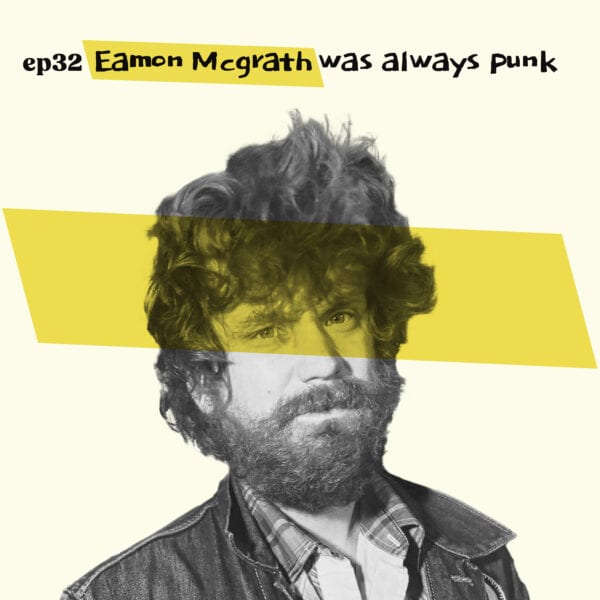
ep32 Eamon Mcgrath was always punk
released Dec 11, 2025
2:05:54
Eamon McGrath is a Canadian musician, songwriter, and author from Edmonton, Alberta, currently based in Windsor, Ontario. He has been active in the music industry since 2006, known for his prolific output and genre-blending style that fuses punk rock, indie rock, folk, and country. This episode features a candid conversation with Eamon discussing his 20-year career in music. McGrath delves into his DIY ethos, the punk rock mentality beyond music, and reevaluating success. He shares about enduring excessive tours, coping with substance abuse, and his journey to sobriety. Highlighting the Canadian music landscape, he emphasizes creating genuine connections with audiences over industry-driven metrics and forecasts a renaissance in independent music post-pandemic.
Keywords
Canadian music, punk rock, touring, music industry, authenticity, community, joy, curation, music career, DIY, independent music, live music venues, personal fulfillment
Takeaways
The Canadian music scene has a unique and challenging landscape.
Community and connection are vital in the music industry.
The modern music industry is unpredictable and fragmented.
The future of music creation is shifting towards more authentic experiences.
Eamon’s journey highlights the balance between art and personal well-being.
Guest website: https://eamonmcgrath.bandcamp.com/music
Guest Instagram: https://www.instagram.com/eamon_mcgrath/
Guest youtube: https://www.youtube.com/@eamonmcgrath4286
hosts: Glen Erickson, Alexi Erickson
Almost Famous Enough website: https://www.almostfamousenough.com
AFE instagram: https://www.instagram.com/almostfamousenough
Almost Famous Enough Spotify playlist: https://open.spotify.com/playlist/1o1PRD2X0i3Otmpn8vi2zP?si=1ece497360564480
Almost Famous Enough is a series of conversations centered around the music industry, pulling back the veil on what it really means to “make it”. Our podcast features guests who know the grind, who have lived the dream, or at the very least, chased the dream. Through these conversational biographies, truth and vulnerability provide more than a topical roadmap or compile some career advice; they can appeal to the dreamer in us all, with stories that can teach us, inspire us, and even reconcile us, and make us feel like we made a new friend along the way.
Chapters
00:00 Introduction
02:41 Eamon’s Early Music Journey
04:05 The Canadian Music Scene
09:03 Defining Punk Rock
19:49 The Evolution of the Music Industry
28:56 Finding Peace in Music
46:42 The Complexity of Artistic Journeys
49:40 Stages of Artistic Development
52:17 The Evolution of Music and Personal Growth
55:38 The Impact of DIY Culture
01:00:32 Navigating the Music Industry
01:07:30 Struggles with Substance Abuse
01:15:15 The Changing Landscape of Live Music
01:30:37 Reflections on Career and Future Directions
01:33:32 Choosing Optimism in the Music Industry
01:35:00 The Reality of a Musician’s Life
01:36:46 Maintaining Passion and Avoiding Burnout
01:38:04 Adapting to a Changing Music Landscape
01:40:30 Highlighting Inspiring Artists
01:43:36 Upcoming Shows and Touring Insights
01:46:20 Reflecting on Edmonton’s Music Scene
01:53:33 Post-Fame with Alexi
ep32 – Eamon Mcgrath was always punk
[00:00:00] “Punk is not really a style of music. It was more like a state of mind.” Mike Watt, co-founder of the Minutemen. ” All punk is attitude. That’s what makes it, the attitude.” Joey Ramone of the Ramones. ” Punk music is the sound of rebellion.” Bono. Of U2. ” The most punk rock thing you can do is to facilitate joy as much as possible.”
Eamon McGrath. Eamon McGrath has always been punk. If punk is something much more than a style of music, at its core, if every expression of a person reveals a devotion to the ethos of punk, not just a musical or stylistic expression defined as pop punk or hardcore punk, whether there are stage divers into a mosh pit or studded jackets and chains and pockets.
If remaining DIY, in the [00:01:00] face of every modern innovation is punk. If feeling sick of the status quo, the unchallenged notion or standard and doing something about it in your own life is punk, then Eamon is punk. I’m not an expert on punk, by the way. Not one bit. The rock music historians would make sure to expose that, but I’m convinced that punk was always about rebellion.
Bono went on to say that punk found its way into their music by allowing hope to permeate their laments. It was counterculture audacious, but it always stuck with me. Then along comes Eamon McGrath talking about facilitating joy out of the rebellion. Eamon is a Canadian Troubadour, a 20 year veteran of the DIY scene with one of the most excessive touring and recording histories you’re gonna ever discover.
He has chased the dream through dozens of albums, label deals in every [00:02:00] size and style of venue, solo or major tour support, and even written two books about it, which you should really check out. By the way, he has stood under the brightest lights and slept in the darkest corners, literally. And he hasn’t missed a beat as he continues on, and he stands to be one of the best chats about every topic in the biz that you’ll ever find.
My name is Glen Erickson. This is Almost Famous Enough. Thanks for spending your time with us. This is Eamon McGrath.
Glen Erickson: well this is fun for me. Eamon. By the way, because, I, I think we met
Eamon Mcgrath: I think I know what you’re
Glen Erickson: a long time ago. A long time ago. A long, long time ago.
Eamon Mcgrath: played in, for, for our listeners though, that you played in a band called The Wheat Pool
Glen Erickson: I did, yeah,
Eamon Mcgrath: for, for context. So I, I’m from Edmonton originally. [00:03:00] Uh, I’ve been playing music, uh, since I was 11. playing music professionally since I was about 18.
Glen Erickson: yeah.
Eamon Mcgrath: and I’m, I just turned 37, so, going on 22, like going on 20 years.
in this, uh, I, I, I used these, I used the triple, uh, in the biz, 20 years in, in the biz. Yeah, so so I’ve seen a lot of changes as you have, uh, and we’ve, we’ve rolled with a lot of hunches and we’ve adapted to a lot of, but I think you’re gonna talk about a show that we played together at the Black Dog one time, I’m assuming,
Glen Erickson: Yeah, I mean, well this is the thing is like, this is the thing about this industry that’s funny, but especially when I overlap with Edmonton adjacent people, which is the unfortunate amount of times I can say, I know how many times we’ve been in a room together and never sat down and had a real conversation, which always feels at this stage of my life, regretful, right?
Eamon Mcgrath: Well, well [00:04:00] it’s funny ’cause like, I think that actually speaks to like a wider sort of state of the. State of the Union or so for, for Canadian music in, in general, you know, ’cause because there was a long time when I was, when I was, when I first started touring, where I, I, and I still think I’m correct in this because I don’t think that much has changed in this regard, but I, when I first started touring, and I would, you know, as you have, you know, doing the, the Vancouver to Halifax through the, through Thunder Bay Drive, like the back and forth and the back and forth, um, which now is funny because as someone who’s actually toured internationally more than I toured Canada now, probably, you know, we didn’t even realize it when we were starting out, but we were, we were like, like on a regular basis driving, you
Glen Erickson: The hardest route ever
Eamon Mcgrath: in the world, like a,
Glen Erickson: in the world.
Eamon Mcgrath: a quadrant of the globe, you know?
So, so I think that it’s, it’s like I used to say, I used to joke when I was. Younger, like during [00:05:00] this time we’re talking about when we, when we played together back then, um, that ev every single person that was involved in putting together, uh, like a tour of Canada from, you know, Victoria to St. John’s, every single person involved in that, in getting those wheels turning literally and figuratively could, could have fit in, in my parrot’s backyard, in North Glenora in West Mount. And, and I still think that, like, I think that, that if I were to actually do that and, and like approach that kind of an undertaking, geographical undertaking, which I took for granted when I was starting out. ’cause it was just all I knew. But now if I was like, if I was gonna actually undergo that again, yeah, I mean it’d be like 35 people.
It’d be a great party. But so like all e everybody’s kind of connect, connected in this like spiderweb and so we all know each other in this like tertiary. Secondary way. And, and so there’s a lot of trust that kind of [00:06:00] gets, built up with each other because everybody’s sort of vouching for the, the, the person that is quite, quite, quite literally east or west of them, you know?
And, and, uh, and I still think that’s kind of the case. Like, any, any artist that’s sort of starting out that actually wants to understand what the true sort of rigors of touring are, would, would, would, would be, would come in contact with the same people that I know, the same people that, you know, regardless if it’s like a country band, a metal band, uh, you know, a, a soul, whatever, like can Canadian music is so, continues to be so great despite the challenges that we’ve all had to overcome in the last couple years.
Especially because no matter what style of music we make, we come at it from this, from this same perspective of just understanding. distance and time, you know, and it’s funny ’cause ’cause yeah, we played together. So like, we played together I think in like 2005 or [00:07:00] 2006 at this black dog all day Rager.
And I was in this band called The Wild Dogs At the time we were pretty notorious and I’ve, I’ve since really cleaned up my act. But in those days I was pretty outta my mind. And, uh, um, I remember, I remember the thing that really inspired me the most was, was, um, bands like SNFU in No Means No because of, because of the fact that they were great punk bands, but also the fact that they were so connected to music that sounded nothing like them, like Junior Gone Wild or Show Business Giants or, or Carolyn, mark.
And I remember there was also like, you know, there was this really great community in Western Canada, like Core Blunt even comes from
Glen Erickson: Yeah. A hundred percent.
Eamon Mcgrath: And, that really always spoke to me I think like, and so that sort of like. That sort of like bridging the gap between like the ferocious renegade punk rock of Iggy Pop and then like country music, uh, like a Ian, Ian Tyson or something.
To me, it just really made, made sense as a Canadian and it just fit so logically [00:08:00] into the cannon that I loved. Like, I was like, well of course this music sounds like this
Glen Erickson: Well, I love that you say that ’cause I, well, one thing is I’ve, I’ve always felt this is very Canadian too, like, so I love that you’ve immediately framed it like that because. There’s been, let’s, let’s, let’s use a little political language without making it political, but there’s this, the history of this country, at least in, I’ve lived long enough to feel like I’ve had a good sense of, it has felt for the most part until recent times very widely centrist.
Not just political views, but just
Eamon Mcgrath: Yeah.
Glen Erickson: in social
Eamon Mcgrath: Cul culturally, culturally,
Glen Erickson: it’s like very accepting, very overlapping. Like even the musical genre, Americana, I was like, I think Canadiana existed before Americana. Whereas there’s like folk and country and bluegrass and blues and all and rock and roll, like, all felt like they were part of this thing that if you didn’t want to label one or two of them together, you could put it under this [00:09:00] thing and it made sense.
Eamon Mcgrath: I completely agree. Yeah.
Glen Erickson: so I, and, and more relative to you, which was down the list of things I was gonna ask you and talk to you about was, You’ve carried this label of, uh, punk for a long time, which I think came outta your early influences, came out of a lot of your early records. You’ve obviously in a almost 20 year career spun all over the place with some like genre testing and, and, and just being free, obviously in your songwriting style and expression.
But, but punk to me is an interesting microcosm of the conversation that you just started too, which is like, what is punk? Is it just a style or is it like, I always remember people being super offended when Bono was claiming that they were punk, um, because he connected so well to the REamones and the spirit of a thing, not the
expression of the thing. Right. But it’s kind of true,
Eamon Mcgrath: you, you two opened for, for [00:10:00] dis they opened for, for discharge once. I mean, it’s, it’s a weird world out there. I I, that’s a good question because like in the, it’s weird. It’s, see that’s a, it’s a, it’s a code word that I’ve always used. Like to me, um, gram Parsons is a punk rocker, you know, the ultimate punk rocker.
And, I really do believe that in the trajectory of American music, I think that if Gram Parsons had lived long enough to. To, uh, hear black flag, he would’ve thought it was amazing. You know, I really believe that because I think that like there’s a very thin line between what, Otis Redding is doing with his voice and what Henry Rowlands is doing with his voice.
Like they, they are, they’re, they’re, they’re channeling, you know, sadness and anger and pain or whatever, into something beautiful and joyous. And that’s the essence of, like, to me, that’s the essence of the blues and soul music and, and country and like all of this music [00:11:00] channels, something dark into something bright, you know?
But the problem with, with, with the word, with the, with the word punk is that it’s, it’s being so co-opted by, by a, a faction of the music industry. That is, in my opinion, one of the most destructive forces. Which is, which is the, the what? The modern conception of. Punk is like all that van war tour stuff.
And it’s just, it’s just corporate budgets with, with a studded vest, you know? Which to me is like the, the most un DIY thing. ’cause you’re just, you’re so like not being yourself and you’re not doing it yourself. And so I, I, I kind of like, I’ve been trying to distance myself from, from using that word to describe what I do, but it’s also served me really, really well because I think that for, for people that, that understand what I’m saying when I use it, [00:12:00] like someone like you, you know, we can communicate so much in a crowded room silently with just a nod.
When I use that word to describe Gram Parsons and someone else knows exactly what I mean when I do that, but.
Glen Erickson: Yeah.
Eamon Mcgrath: For the wider audience and for marketing purposes. It’s just, it’s totally
Glen Erickson: marketing is, is the word, is like, marketing has essentially determined what the music industry is. So that’s, that’s kind of a baseline assumption. I think we can get, get out on that.
Eamon Mcgrath: exactly. And like, especially nowadays when, you know, you have to classify your record as something so that it fits into a specific category so that the algorithm knows how to chew and regurgitate it. You know, like it used to be, it used to be a way of, you know, like a record store to sort of direct people and program people now, like it is quite actually a way to [00:13:00] program people.
And so I struggle with it because. I think that there’s really no term that better describes what I do, but I also think that there’s probably no worse term that describes what I do.
Glen Erickson: Yeah. Well, I mean, I’ve, I’ve been wrestling with this tension and I, and it’s been fun because I’ve been wrestling it through. Conversations in a podcast. So that’s been really fun for me and it’s fitting the goal of why I even started. But, so in this instance and in this context, I’ve been wrestling through, the irony.
Like I said, that to me marketing is defining what the music business is. and but when you made a reference to the record stores, is that the history of music and how it spread was what on surface might appear like marketing, but it was really through the purity of this thing we, I would call curation, which is somebody who loves a thing.
It starts with somebody who loves something so much, they share it [00:14:00] to the people that they believe will also love it and that. Grows into a more functional, formal concept of curation. Like somebody is being anointed with good taste or a, a large knowledge to do this work. And they did it through radio because radio would attract people in and they would do it through record stores.
But because capitalism and the dollar is the bottom line, right? We have a history where those bottom line efforts would take over the purity of curation, I felt. And the beauty of one of the beauty of the spirits of what we’re calling punk is anti-establishment. And I think a lot of people would consider that’s at the core of whether or not they would agree with how they align
Eamon Mcgrath: Yeah, you’re, you’re dead. You’re dead. Right? Like, even like cur curation, iss a good word. I mean, a more pejorative term could be, you know, like a gatekeeper or something like where that’s, that term is used [00:15:00] really negatively to
Glen Erickson: Yeah. People don’t like that one as much anymore.
Eamon Mcgrath: So, but I’m gonna say if you think about, if you think about it, like in, in these terms, this is the way that I’ve kind of tried to, to, to, uh, to figure it all out is like, even if you go back as far as like, I’m not even kidding when I say this, and I don’t think this is a stretch, but like, as far back as, as Mozart, like if you watch the movie Amadeus, you know, you have the contrast of these two sort of parallel societies.
You have like the, uh, the aristocratic mon, you know, monarchy like the, the academic upper court where everybody knows how to read and read music and, you know, the Emperor France, Joseph. Commissions a piece, you know, commissions Mozart to make this, this opera, which, which ends up being Don Giovanni or whatever.
Like, that’s like arts funding, right? Like the, the, the, the established cultural hegemon of the time is [00:16:00] giving this artist, you know, permission, welcoming them into the, the, you know, the, the popular ruling class. And then there’s a scene in Aade where Mozart’s in an underground, bar room somewhere playing a harps score to making fart jokes.
And it’s like, that’s then the music, that’s for the, the underclass and the, the subservient, the subservient of, of, there’s this society who can’t read, maybe, who can’t read music or write music. So like in the Austro-Hungarian empire, you had the high courts of Vienna, you know, who were publishing literally all this, all this recorded music, written music.
And then you had, you know. People playing in a, in a, in a tavern somewhere. And we’ll never know what that music sounded like, but in the context of its time, that was the punk rock of its day, whatever that was. And, um, you know, and then you kind of go down the chain and, we have, you know, then you get to the Alan Lomax when he, you know, [00:17:00] traveling the US and documenting all these, all these, folk singers, Delta Blue singers before he came along and introduced that art form to the, you know, the established
Glen Erickson: Yep.
Eamon Mcgrath: that was the punk rock of its day and then, and so on and so on.
So, like, I think that it’s, we, we do need a new term. I think we do need a new word, but like, I sort of, and not in an el in an elitist sense, just from what I’ve noticed about my own ca career, I’m like the, the guy in the tavern, in the Austro-Hungarian empire that is, you know, like. The goal of any musician is to, is to play for as many years as possible, but it’s the means by which you do that and the means by which you achieve that goal that sets you apart from, you know, the, the dogmatic ruling class to like this sort of
Glen Erickson: Yeah.
Eamon Mcgrath: free spirited libertarian underclass.
And that, that’s the same paradigm. I think those two different, [00:18:00] uh, sort of parallel, parallel worlds.
Glen Erickson: Well, I love this ’cause we’re 16 minutes in and I’ve already felt like I’ve lost about four rabbit holes that I would’ve loved to go down in our conversation, opening up ideas. And maybe we will come back around to them if my A DHD is under wraps today. But, but let me ask you this. Well, actually, let me just say this really quick.
Um, I feel like when you were talking there about the Amadeus story, I feel like the pop culture reference would be the Titanic movie where, um.
Eamon Mcgrath: absolutely. That’s a great
Glen Erickson: you relate, if you relate to Leo, he goes, he takes the upper class girl, like under, under. And then they’re having a wild party with, with wild Celtic music, which is what was punk to them at the time, which was like not refined, which just came purely out of spirit and emotion and
Eamon Mcgrath: and play playing. Playing by ear. Like
Glen Erickson: plane by ear.
All of these
Eamon Mcgrath: instruments.
Glen Erickson: are on display, but in, in the pop culture sense, but in the real human sense, [00:19:00] a viewer is allowed to connect with that and probably cheer that on. And then at the same time, the same viewer is probably gonna deeply relate to the little chamber quartet that’s playing everybody out as the ship
Eamon Mcgrath: As the ship goes
Glen Erickson: in their, in their tuxedos and decide to stay with the ship and play this beautiful music. Um, because. Because ultimately the music is bigger than the labels or the context we try to put on it. So despite how different those worlds are, both of them had such significance, which
Eamon Mcgrath: And, and, and,
Glen Erickson: capture by the director
Eamon Mcgrath: and coexist. Right. And they coexist. And, and I’m not, and I’m not here to say that one is, is better than the other. I mean, like, I, I know what I wanna get out of what I do. I think I’m closer than ever before to finding peace with that because, you know, like I went through about 10 years where all I did was tour.
I spent my entire twenties in a, in a van. [00:20:00] And, thinking back on it now, living in Toronto and like always kind of chasing the dragon, putting out a record every 10 or 12 months, like quite actually like every year. And then doing, you know, like these mammoth tours and like, I toured myself to the point of exhaustion and like near death.
And, I wonder now what my, what my aims were. Like, I’m almost, I’m almost skeptical of my past decisions because I think that I was sort of like trying to achieve the same thing that, someone with like a more corporate mentality in music would be trying to achieve. But I was just doing it on a non-existent budget.
But I was like, I was like chasing the dragon. Like I wanted to get on, you know, direct support slot slots. And I was like, you know, I, the hustle was nonstop and now I’ve like totally like stepped back from it. And I would way rather make the same amount of money or more playing to less people because there’s so much more important things to [00:21:00] me at this point in my life.
you know, like playing to a room of people who are actually listening. you know, I’d rather do that than, than. Get some big support, opportunity and play to a packed room of people that don’t give a fuck.
Glen Erickson: okay. That’s, that’s a great pivot. and I’m just gonna be willing to lose some of the ideas I had as we’re talking because I know this is gonna be, uh, fun no matter where we go.
But this is like. This is why I felt like a conversation with you could be unique and I wouldn’t get certain things from other people. Like you have a story and a history, in this business, that is incredibly unique. and that reflection is really honest, so I appreciate it by the way. you know, having spent all those years, you know, being like the incredible world warrior first, I just wanna make a note that the very thing that you described, how you get exhausted by that version of chasing the dragon because you get exhausted, but the, the pursuit, right?
Uh, and I’m [00:22:00] making the assumptions and you can correct me where I’m wrong. It. It just gets fueled by a belief that you’ve seen it happen before. You’ve seen it around you. You maybe even seen it happen to peers, but you’ve definitely seen and read the stories of the people that were kind of your north star, your guiding light that you know, by doing this, you know, this will come someday.
Right. And especially, we started this whole conversation talking about the Canadian landscape actually being one of the hardest touring landscapes, but really shaped kind of in the fire, some incredible bands. And this ethic in Canada about this was the way that you built your career, right? Is that you had to drive, especially if you’re Western Canada, you had to drive eight hours to get to the next city of 300,000 people compared to like in the States or in Europe where you’re driving an hour and a half to get to a million or more, you know, a center and it shapes kind of who you are and starts to.
But it [00:23:00] can beat you down. But you expect that something’s gonna happen. You expect that something’s gonna happen. And so the way I’m framing this is, this is what weeds out most people. Like why is the Canadian music scene never been bigger or always had this tension of like, we need to really promote our artists and help them to compete with, you know, the American music scene and the big industry there and all the things that have come out of that.
Well, how about we just talk about the fact that what it takes and what we’ve seen as the ethic of how you do this beats and, and destroys people pretty fast. It’s very hard. And you have the unique position right now, 20 years down the road, despite your reflections, which I’d love to hear more about of you actually.
You actually lived through it, you’ve persevered it where most people have dropped off and died to be able to have that reflection. [00:24:00] You’re one of the few who’s even gotten that far down the road of doing that. And I think what’s interesting for me to hear you say the reflection of like, maybe I didn’t always make the best choices, and maybe some of the values that you’re learning right now are ones you wanna think about how to implement to keep going.
There’s very few people I feel I could call up to have that. There’s a few people I know who maybe have gotten more onto the mainstream machines, so there’s a bit more of a machine kind of floating them along. There’s guys like another Edmonton guy, Scott Cook is maybe the only other guy I know who’s like the,
Eamon Mcgrath: A road. Road dog. Yeah. Oh yeah.
Glen Erickson: dog, right. Who just, you know, he’s like 300 days a year out playing everywhere. They’ll let him just set up with his acoustic guitar and play and, that’s a story that most people can’t get to.
Eamon Mcgrath: there’s so much there. Like, like what you’re [00:25:00] talking about is a testEamont to how fast everything changes, not just now, but like the bands that I idolized when I was, when I was 15 or 16, who were like, pretty much for me, the ultimate, uh, band was the, was the Constantine. And I make, I’m pretty public about, about my love for the con, the Constantine.
but the, the Canadian music industry in particular, but the music industry in general is just like, I, I didn’t even realize how much it changed from the first time I saw the Constantine to the first time I started touring, let alone, uh, you know, between the first time I started touring to now, like even the three years.
I saw the band, the, the, that band for the first time and actually was able to go out on the road myself and, and make a living. There was, it was a totally different landscape, you know, like, I, I was too young to realize how quickly it had already become something else. And I, I think about that a lot. Like, for me, like probably the, the, [00:26:00] the, like I’ve had this kind of epiphany in the last few years after the pandemic and how hard it was to get everything going once everything opened up again and the like, that was a really hard stretch of time.
you know, and so it’s hard to not get like, wrapped up into this sort of like golden age mentality syndrome where, you know, I’d be like, well, the best time to be a Canadian musician was between 1995 and 2005. That was like the golden age. Uh, but that came with its own, Horrible side effects too. Uh, you know, like nowadays, you know, as cities get bigger and urban centers get more expensive and, um, more and more people move to smaller towns, Canada, Canada is easier to tour than ever, but, starting is harder than ever.
I think
Glen Erickson: Mm.
Eamon Mcgrath: like when I was younger, you just kind of, you just kinda did it. Like it wasn’t a, like, you just sort of drove, you picked a direction and drove. [00:27:00] Um, now, you know, and then, and then
Glen Erickson: And, and without, without phones that had a map on it for you
Eamon Mcgrath: like, it was just, it was, it was crazy and it was beautiful and it was wild and it was unexplored and like, but like, we’re still, we still don’t know what’s gonna happen. Like we still don’t know what’s around the corner, especially as Canadians, because like, we don’t know how it feels to live in a country that’s like.
Geographically closer together. You know, we still don’t know what that looks like. Like as a, as someone who’s lived in Ontario for 15 years, I mean, I, like, I, I can’t believe how, you know, you a 4 0 1 tour used to be something you did on a Thursday to Sunday. That was it. Now you could spend, you know, three and a half weeks tour in Ontario and never have a day off.
I mean, it’s just totally different,
Glen Erickson: Yeah.
Eamon Mcgrath: you know? so yeah, it’s, it’s hard, it’s hard to keep track of how much it’s changed and the changes have been so gradual, I think like that, that you [00:28:00] don’t even, uh, you don’t even really notice that they’ve happened at all until you think back and reflect on the, the timeline.
Like, I can’t, I can’t believe how different it is now. And so, so the, like, there used to be, you know, this very like concrete sort of input output equation where like. Uh, you, you know, you did certain things a certain way and you got a certain result, and now it’s just so abstract and it’s so unpredictable that I personally have just decided to not even bother anymore with any of the mechanics or the schematics and shit that used to matter.
Like you used to write a, a marketing plan and, and, you know, you’d time your tours to your record releases and there was these things called a cycle. Now, I don’t even, I don’t even think that matters anymore. Like I, I’ve been, I,
Glen Erickson: it doesn’t. I’m talking to a lot of people, like the concept of this 18 month cycle of an album release is like done. It’s
Eamon Mcgrath: It is all ancient and it’s all out the window, and it’s just, [00:29:00] now I’m at this point where like, uh, I just, I just wanna do what feels good. That’s, that’s all I want. And I’m sick of like, fighting, a battle. I’m never gonna win, you know, I’m. I’m sick of like, trying to rally the troops and like this, this like call to arms mentality.
Like, and again, going back to what you were talking about, about punk rock, like that’s like the number one thing with punk rock is like mobilizing your community to fight this eternal battle. But now I think the best thing we can do is just exist peacefully, like away from it all. Like I just don’t even wanna bother with it anymore.
And I think in doing that, uh, I probably found more artistic peace than I, than I did when I was younger, which is really nice.
Glen Erickson: Yeah.
Eamon Mcgrath: um, and it’s only when, it’s only when like the, the mechanics start to be, and the administration and the, the anal retentive stuff [00:30:00] start to become
Glen Erickson: Yeah.
Eamon Mcgrath: That, that i, that I get frustrated,
Glen Erickson: Well, I mean that, uh, so funny, like I, so I had an episode with your good friend Peter Dreimanus, and, he, he talked about having a kid. And he, the way you sort of just described, like maybe the most punk rock thing is like existing peacefully and bringing these things into the world as counterculture.
And then, he described having the kid and the things that he’s been learning. He’s like, maybe the most punk rock thing I can do is like, be a good dad and be there for my kid. it’s a, it’s this, it’s, yeah, it’s this seasoned perspective for
Eamon Mcgrath: I think, I think, I think you can, you, like the most punk rock thing you can do is facilitate, facilitate joy as much as possible. Like the, the feeling in and of itself is, is, is, is no, it’s not connected to any movement or anything. It’s just like what [00:31:00] Human being doesn’t want to be happy. Like there’s nothing, there’s nothing like inherently. Contrarian or something to being, to being in a great place. Like, but
I
Glen Erickson: but you used the word joy. You just used the word joy, which I’ve grown up figuring out a very clear distinction between joy and happiness. So yeah, which human doesn’t want to be happy, but I love the way that you’ve actually first said that like maybe the most punk rock thing is facilitating joy,
Eamon Mcgrath: yeah, like, like
Glen Erickson: cre.
It’s the stirring, right? Like happiness is, feels like a state. Joy is something that stirs
Eamon Mcgrath: and, and, and, and, and the work. And I think like now that the music industry especially is so decentralized and it is so, you know, every person for themselves and it is so fragmented and it’s just anarchy like more so than ever, you know, the, the, the, it’s, IM, it’s important to really have a sense of ownership [00:32:00] on the immediate work that you do within your.
Community and that work should benefit you and your community. Not like a, a faceless, uh, booking agent somewhere, you know? Or like, like a, a someone who works for a label that you’re on and you’ve never even met them. Like the there it used to be that it was like, you know, you had this feeling that you were working for other people.
And I, and I think one of the good things about this kind of post-apocalyptic Phoenix rising from the ashes industry that we’re in now after COVID, is that more and more artists are realizing that at the end of the day, they’re gonna be the ones that are still making records. And if you have this, this burning desire to do something and, and like, um, you know, there’s this work in your life that you have this hunger to do, then you’re the only person that you’re accountable
Glen Erickson: Yeah.
Eamon Mcgrath: And I love that. I mean, because I can, I can tour whenever I want. I really, I could, I I, I could have the whole time, [00:33:00] but, I had that narrative of the, the popular consciousness telling me that there was like a strategy to everything and that burnt me out just as hard as actually playing the shows, like feeling like
Glen Erickson: that the bottom line? Is the bottom line of that? That if you don’t do it. I mean, ’cause I, I’m guessing, I’m making an assumption here, Iman, that like, like sustaining a living is really hard in this business, right? And so if, you know, that narrative feels like it’s, it’s partially driven by fame and just the pursuit because we’re in an, an attention industry.
Um, but it’s also just driven when you’ve done it even for a short period of time. Like three, four years is all it takes before you realize, I could do all these pursuits for the attention fame, but I actually have to keep this machine running that will pay the bills while I keep [00:34:00] doing that. Is that more of the narrative over even the long period of time for you to be like that you kept doing it longer.
You did it longer than probably you wanted to have to do it because really like the most punk rock thing I saw about you. Looking over your stuff was realizing you don’t even have a fucking website under your domain name anymore. You let
Eamon Mcgrath: I don’t,
Glen Erickson: which is in the attention industry right now in like 2025 is probably the most anti-establishment thing that you could do, which I think was awesome.
But, that must take just a long time to let go because what you’re talking about is I just want to do things this way now for the feeling, for the, for this personal satisfaction for smaller people that would actually give a shit and not spend all these resources of your own energy and mental stability on the people who maybe you’ve learned never gave a shit anyhow.
Eamon Mcgrath: Mm-hmm.
Glen Erickson: How did, how did you [00:35:00] get there? Like,
Eamon Mcgrath: Well, yeah. Here, here’s an example. Like, okay. Like my partner Sheila and I run, we, we run cassettes records, which is a, a label, but also we put on shows, we book tours, uh, we record bands. We, we do, we do everything that you could possibly do to help. Music and artists that you love and care about and wanna support.
and you know, we’ve had a couple really like beautiful moments where we’ve done really small shows for really amazing songwriters or bands, um, with an affordable ticket price and a great intimate, cozy atmospheric venue. Uh, you know, that maybe like 20 people showed up to the, the show at, but the artist still made, you know, 500 bucks and like everybody was moved.
And then at the end of it, you just look at each other and you’re like, whoa. Like, why does it have [00:36:00] to be more than this? What else is there? And, and then it’s like, oh yeah, this is all it has to be. And, and because Sheila and I approach music as people that, you know. Lived in a world before the internet that, that like listened to vinyl and made mixtapes for people.
And like if you wanted to go see a show, you had to, you know, camp out, uh, in front of the record store to wait to get tickets. And like music mattered to us in this like, very labor intensive way. So we never just consumed music. Like it wasn’t something that we consumed, it wasn’t like going to buy ground beef at the grocery store.
That’s what it’s become. And, and that in turn has made it so that people that wanna go see a show are more interested at the opportunity of being in the presence of fame than they are at the opportunity to truly be affected by something beautiful. And I don’t need to go and try to, [00:37:00] uh, convince all these people that are never gonna give a shit about what I do, that I’m worth listening to.
I just don’t have to do it.
Glen Erickson: And maybe they haven’t been affected yet. This is what I wonder, right. Especially ’cause I’ve got a 20-year-old daughter who’s like loving music. She helps me on the podcast. We do this together. We go to Folk Fest every year. Uh, kinda raised her on it, so I’m loving that. She’s like growing into that. But it also makes me see how many people aren’t beautifully affected.
Like you said, like, and I, even this last year, I got really kind of taken aback by it and I realized that I, and this, this is the honest confession. ’cause what you’re talking about is where I see it even happening in me. Who’s involved in this business get disaffected by the way that it’s consumed. Like you talk about pejorative and the term content being the biggest pejorative around now, everything’s just content.
If it’s put online, it’s content. Music isn’t [00:38:00] content. It’s, it’s a whole different force. And I remember watching, I, I knew, and he’s not new, but because he is older, but a guy who’s blowing up now, Steven Wilson Jr. Was here and watched him do a thing where you’ve been around folk fest. Like if somebody has a moment where they command that whole hill,
Eamon Mcgrath: Mm-hmm. Yeah. That’s great.
Glen Erickson: powerful.
And then the next day it was, it started pouring rain in a, in a typical folk fest way. And this young new group that was just blowing up called Richie Mitch and the Coal Miners, um, what I could tell is like they were like every young band gonna save their big hit song. Because they were there off a viral song that had like a billion streams.
And then the next one is like not anywhere close. Right? So that song caught on. That’s why they’re there on Folk Fest. They know it. there’s a lot of young people there, which is awesome to see. It starts pouring rain and just ’cause I’m in the biz, I know that [00:39:00] they started playing the hit song early ’cause they knew they might get shut down.
but they chose to do it for everybody. That the generated joy and the effectiveness of all the people to be sharing that moment. Dancing in the Rain, the band was getting soaked. They played it anyhow. They just ripped through it. It was an incredible thing to be a part of, but it just, what immediately, what I thought of when you talk about like this affected, you know, this beautiful effectiveness of music on people.
I see what you’re talking about because I see where it’s happening even for myself, uh, in the way that we quote unquote consume anymore. And it also, what you said takes me all the way back to the early two thousands. I started my own label here in the city out of the same things, which is I knew how to do all those different things for people.
So I just started, I put a name on it is really where it just came from. Right. That’s, uh, the [00:40:00] DIY spirit, which, um, also made me think it’s really
Eamon Mcgrath: It’s like, it’s, it’s like, it’s like naming, it’s like naming your band, you
Glen Erickson: Yeah, yeah,
Eamon Mcgrath: totally.
Glen Erickson: yeah. Absolutely. I mean,
Eamon Mcgrath: mean the fi but but those, but those moments you’re talking about, I mean like, like, uh, uh, because of these really arbitrary and fake parameters that we’ve just created called followers or view counts or whatever, like, we’ve somehow been conditioned to believe that, uh, just because there’s more people at the magic moment on Gallagher Park Hill.
Uh. That somehow, that moment is like more magical than if there’s only 20 people there. And that’s just crazy to, crazy to me. Like, like, uh,
Glen Erickson: the same thing can happen despite the numbers
Eamon Mcgrath: and, and I, I’ve seen, I, I mean I’ve like, it’s like I know that this is happened to you too, where it’s like [00:41:00] you’re at a show and there’s only five people and you’re like in the corner in tears with some, you know, listening to a, a, a songwriter that no one knows.
And the fact that there’s nobody there makes that music or that, that moment so magical.
Like, so I think that, the whole system has just been like toxified, uh, people are, people are, are just distracted and like searching for something that’s not, in my opinion, worth searching for. Like, we live in like, like you said, an attention economy and it’s like, Everything’s become about volume. You know, like if you get a billion people to download your app for a dollar, you’re a billionaire. And I just think that our whole concept of, of value and cost as just a culture has just become like, it just doesn’t make sense to me. so yeah, I mean, for that reason, like, I wanna continue working to build, to bring like really true special moments to people that are gonna just [00:42:00] recognize ’em.
I don’t care how many people do, I just want people to know that there’s really great music being made on a small, local, regional scale. And sometimes that’s exactly what makes it so good, is the fact that, you know, like Ban, so like the Schmits were only banned for four years. I mean, that’s, that’s what, that’s what makes the ticket worth buying is because everything is fleeting and everything does have a cost.
And if it’s. If it’s not permanent and it took a lot of effort to bring it to you, then it’s, it’s, it’s valuable for its place and time.
Glen Erickson: yeah.
Eamon Mcgrath: that’s how I think about, about all, all of it. Now, I don’t, I don’t, I don’t really play shows I don’t wanna play anymore. Like I just that feeling of like grumbling and like throwing gear in the van because you gotta do some, you know, crappy gig to get yourself from point A, like point A to point B, or like, those are the [00:43:00] experiences that, that, that really, truly burn you out.
I think,
Glen Erickson: Yeah. Yeah. I mean, I, I’ve said this before, you referenced the band that I played in. I think one of the best gifts I was given, was to play with a couple of guys in that band who I don’t know how, but they clearly had already figured that out, that, you know, they were like, we’re gonna play the shows that we wanna play and we’re gonna take the extra day to make the nice drive and, and kind of fill our spirits back up.
you know, and, and go through the nice part of Canada, even though
Eamon Mcgrath: Oh man,
Glen Erickson: an extra day. And that kind of shit like made such a difference, um, to even surviving the seven-ish years that we survived. So,
Eamon Mcgrath: it makes you a better musician. It makes you better at bringing, you know, bringing the, the, bringing that moment to people. I mean, like, I, I, you know, I was like the quintessential, like, you know, [00:44:00] cross punk, like, I just refused to have a day off on tour. It would be like my, my personal record was like, I, I did 62 shows in 58 days in Europe one
Glen Erickson: Oh my God.
Eamon Mcgrath: fly date show that night.
You know, 62 shows and like nonstop. And then like show get up in the morning, fly home, sometimes go straight to the airport after like, I was like masochistic. And, I really thought that. I was like, who knows what I thought. I was like, I thought I was like this, you know?
Glen Erickson: Superman.
Eamon Mcgrath: Yeah. Like this punk rock preacher or something or whatever.
And,
Glen Erickson: Were you getting that narrative from the outside? Because people did start to talk about you in a sense of lore,
Eamon Mcgrath: I think I was, to be honest with you, I think I was like totally depressed and, uh, like not dealing with a ton of things I probably should have taken the time to deal with. And I was, I was using work as a, as a vice to distract [00:45:00] me from things that I didn’t ever take the time to, to deal with until I sobered the fuck up and, and did the work.
I what I, what I think was like, At the time was like a, a, a punk rock ethos, which I still have. was actually just the execution of this really destructive substance abuse problem that, that, uh, that sort of had music as like the, the wrapping of the gift. And I’m not, I’m not saying don’t go out and play 62 shows in 58 days.
Like I respect that insurmountably. I mean, like my, all the people, all the people that I, uh, look up to did that. And I think, and I’m really glad that I did do that. I, I, uh, think that like I did things that no one will ever take away from me. And I also want to be known as someone that works really hard.
But I just think like anyone that kind of grows up and gets smarter, you wanna, you wanna work smart, not hard. And that’s [00:46:00] really all it comes down to.
Glen Erickson: Yeah, well, you’re not gonna, you’re not gonna stick around and it sounds like you are planning on continuing, so that makes a lot of sense. Um,
Eamon Mcgrath: just, and I wanna be able to like, do my job properly if I’m gonna do it, you know, like, I am pretty stubborn and I have some very strict ideals that I will not stray from. And I don’t want the things that I love to be the things that kill me in the end. You know? Like I, I want those things to inspire me and I wanna like, I wanna, I wanna like, you know, grow them into something and, and flourish like a,
Glen Erickson: that’s a pretty huge statement. I think that might even be hard for some people to relate to that statement, even if, if they haven’t been down that road, that the things that you love could also destroy you because there’s lots of other factors and layers that you’ve built into your life that [00:47:00] that would do so.
Right. And I think, let me ask you this, ’cause like normally Amy and I actually start on people’s timelines in my conversations. It’s a nice framework. To sort of get their stories and, and find some common thread or some arc that is very relatable for everybody. And I even found when I was looking at your time, like I’m, I don’t even know what the fuck, where to start with you.
Um, because like there’s so much, there’s so much here and you’ve already alluded to it, so I love that we just kind of got rolling and I didn’t even bother to have to do that.
Eamon Mcgrath: Yeah,
Glen Erickson: but but you’ve already referenced it a few times and I’m sort of curious, I am also extremely curious how somebody gets to where they are right now.
’cause we’re talking right now, and I recognize that a lot of people listening won’t know all the backstory that you and I know. so I’m, I’m not gonna go all the way back now and start a timeline right now, I guess what I’m saying. But what I do wanna ask you is like, [00:48:00] what’s clearly obvious is that you were like all in, in this like long.
Like patchwork fabric of rock and roll history of artists who clearly this was all that they were ever gonna do. You said you started playing when you’re 11. You were basically a touring musician at 18. This was all you were ever gonna do and all to continue to do, which really fits that, that historical legacy of when we look at the, the, the patchwork of, of this business.
and you got into it and you have so many of the typical like stereotypical stories and sort of like the ethos just around you. Like, I know so many people that know you, right? And, and I will very quickly say, by the way, every person I know that knows you, loves you and always speaks so well of you
Eamon Mcgrath: thanks. It’s nice to hear.
Glen Erickson: And that you have so much respect in the Edmonton [00:49:00] community, like of the highest respect, like going all the way back to, you know, make a callback and a, and a bookend on this was that maybe one of the reasons I never struck up conversations with you is I might have even been intimidated a little bit.
’cause there was such a lure about that you were just this very confident driven, highly respected artist and for being a very confident, secure person as I am. Like it even challenged my own security probably to, to do that. But
Eamon Mcgrath: suffer from fucking debilitating Im imposter syndrome and just, just like everybody
Glen Erickson: we all do. Yeah,
Eamon Mcgrath: all do. And, and I think that really it just comes down to like, uh, I think that there’s these kind of like stages to artistic. Development. And, and I’m not, I hope I don’t sound pretentious here ’cause I am just as unsure about every, everything as anybody else.
[00:50:00] But I think there’s, uh, you know, you, there’s education, imitation creation, and then innovation. And those are the things that I think are the sort of the four fundEEamontal, like, points on the trajectory of any creative person. So
Glen Erickson: Hmm.
Eamon Mcgrath: um, you learn how to play your instrument, you know, and then you, you imitate people who
Glen Erickson: Yeah. You’re,
Eamon Mcgrath: it better than you do.
And then, by learning how it feels to play the music that you love, you create new original music. And then I think that there’s another stage after that where you actually, uh, invent and, and, and perfect the, the means by which the, the, the art gets made. So for example, like, uh, Jack White makes his own effects pedals.
Like, to me it’s like he went through all the, he learned how to play guitar. He, he, you know, grew up, saw the gories, learned how to play blues, punk, wrote great songs with the white stripes. And then he was like, [00:51:00] something is missing and I know what it is, and I’m gonna fill that blank. And that’s where the innovation happens.
And I think I’m like at the point where like, I know what it is that I wanna see from someone who I’ve trusted with, with, you know, finding an audience for my music and their respective market. So I just want to be able to do that for other people. Like, to me that’s like the, the next step is like, uh, facilitating those moments, those magical moments you’re talking about somehow.
And, and so in this weird way, the best thing that I could have done for my music was to stop playing it as much and, and try and like, give back and, and. Uh, just become better at, at like, you know, just administering something true. And I know it sounds so like hippie dippy and beaded curtain, and it’s like, I, but, and that’s not me.
Like, I don’t,[00:52:00]
Glen Erickson: Yeah. I don’t think anybody would think it’s you,
Eamon Mcgrath: but,
Glen Erickson: but what it does sound
Eamon Mcgrath: truth to that.
Glen Erickson: I know you’re feeling like you’re on the side of the coin where you’re like, oh, I don’t want to sound pretentious. You see the possibility of that. But just so you know, my side of the coin is this is really refreshing. To hear a guy who played this game really hard to the bone actually get to a place in your life and career where you can have that kind of perspective and that kind of like inner motivation is actually very, uh, positive.
Reaffirming all of it.
Eamon Mcgrath: I, that’s, I hope so. And I, and I, and I hope that it’s not coming across as like, as. Maybe I was guilty of before where it’s like, like, take the word, the word punk. Like I don’t wanna have this like elitism anymore, where it’s like, oh, I’m, I am a punk rocker, so I do it the the right way. And then it’s like, you know, join me or join us, or Gaba gaba, we accept you.
We accept you. One of us, like, I don’t care how bands [00:53:00] wanna do it anymore. I just want people to know that they, that there’s no pressure. And like, you don’t have to worry. And like, if you don’t have, if you don’t have 10,000 Spotify listeners, who fucking cares? Like, if you don’t have, if you don’t have 150 people at your show, who cares?
Like, if it’s gonna be fine. And all that matters is that, is that music keeps getting made and that people wanna hear it, and that the people that are listening are the people that it matters to. That’s, that’s it.
Glen Erickson: I, uh, I heard a friend the other night, I was at this thing and I was overhearing, ’cause a group of us were around and someone was talking about their new perspective. ’cause they’re like, they’re in their third late thirties and they’re single still and they’ve had to do all these swipe apps and swipe culture.
And, but they were talking about the fact that, What they hate about it the most wasn’t the swipe culture. What they hate is like, it’s completely just built on framing yourself by a set of [00:54:00] categories and criteria and, and presupposing that that’s how you want to find somebody else too. And they said, but they’re in their late thirties and they realize that they don’t have a set of checklists they wanna check off about ethnicity or age or weight or education or, or anything about a person.
They’re like, I just want to, I wanna find that person that I vibe with. ’cause I’ve figured out that I can vibe with people from all the categories and, but they’re locked into categories. And while they were describing this, I was thinking about the music scene, which is sort of what
Eamon Mcgrath: same exact thing.
Glen Erickson: about, which is you get to a point where when you’re younger, and maybe this is gonna sound terrible, especially if somebody thinks I’m calling them out for it, but.
In a more immature state, not in, not in the negative sense of immature that we use it, but just in the natural growth and evolution. Like you, you know, you go from young and not [00:55:00] knowing to older and knowing, um, you need the categories and criteria. They kind of help you. When I was a kid, you know, I was like this record label I found out, put out this kind of music by this band that I loved, and I would just go and listen to everything they put out because it was, it was a box that helped me find what I was searching for to a degree.
Until you get older and you start to figure out, you know, the things we’re talking about, which is like, I can find that stuff all over the place, anywhere. I just have to be open
Eamon Mcgrath: Well,
Glen Erickson: and let things pass through that aren’t for me, and then find the ones that are for me.
Eamon Mcgrath: I exactly like, I, I used, you know, we, we all did, we all used to fall in love with music that just kinda randomly punched us in the gut and didn’t matter what it was. I mean, like, uh, that’s one of the most, that was one of the greatest things about, about, about punk rock for me when I was younger, was the fact that like, you could have this term that [00:56:00] described everything from discharge through to the Replacements, to John Cooper Clark, to the fall, to, you know, like all these bands that sound nothing alike at all.
And the only thing that was similar about them was the fact that you connected with it so deeply and, and now people connect with things that just sound like other things they like, like, and that, that never even was a possibility when I, when I was younger, like, like you’d get recommended bands because.
You know, like if, you know, if you like the replacements, you should check out Husker do. But, it was that, that random sideswiped feeling of being like really affected by something that made me fall in love with it. And now, like, I can’t believe when people that are really into, uh, Spotify and stuff, I mean, and this is a 10-year-old discussion at this point, but it’s like I’ve never once ever done like a, uh, like a new music Friday or whatever the hell those were, and I sound so antiquated.[00:57:00]
But like, I never just wanted to program my brain. I was just something that was
Glen Erickson: Yeah,
Eamon Mcgrath: interested in doing. Like I was only ever chasing those moments that you’re talking about. That was the only criteria I ever had,
Glen Erickson: yeah. I mean, it’s always been funny, funny to me too, and, and maybe the other part about growing up. Is getting to a point, and this is what I think I would hope for everybody, is when you can release the power of perceptions, again, being in an attention business, but even just personally as a fan, we’re, and that’s what I love, part of our conversation, Eamon, is like we’re talking about what it’s like to be in the business and be a creator.
We’re also talking what it’s like to be a fan, which is, I think, a really cool parallel conversation happening at the same time. And that, you know, there was a while there, like the truth about me is like if you were to tell me I could only have one person on my wall [00:58:00] for the rest of my life, it’d be Johnny Cash.
Eamon Mcgrath: Mm-hmm.
Glen Erickson: I don’t listen to Johnny Cash. I almost never pull up his songs for his record. They’ve never been the thing that, that musically kept me rolling, but the man himself
and The, spirit of the man and, and the things he said and he stuck through to his, his vulnerability. To like literally live his mistakes on the big open stage and, and even the humility to allow himself to be loved for his mistakes, which I think is a deeper humility that I don’t even know if I’ve gotten to yet in
Eamon Mcgrath: it’s the ulti, it’s the ultimate way of owning, of owning your deci decisions. Yeah.
Glen Erickson: and his choice to wear black because he’s like, I’d rather connect with the downtrodden of the world than, and he was, and that was, that came out of a time when he was at the meteoric rise. He was the [00:59:00] hottest thing.
Eamon Mcgrath: Mm-hmm.
Glen Erickson: Um, and I’m like, that’s the kind of person I always wanna
Eamon Mcgrath: I mean, that’s, that’s
Glen Erickson: I’ve worn black ever since
Eamon Mcgrath: yeah. And, and, and I mean, and it, that’s a great example of those, like those two parallel approaches. Like he could have easily at the time just been like, you know. Chased radio singles and worn sequence suits. But you’re right, he, he wanted to,
Glen Erickson: Yeah.
Eamon Mcgrath: he wanted to, to, to be a voice of, of working people.
Glen Erickson: Okay, so, not to sound like, I’ve heard it lately, the kids calling like, glazing somebody, which I thought sounded interesting, but like, EEamon. You’re somebody who’s has like on a local level fit that for me. I just need you to know that upfront, um, like
Eamon Mcgrath: you very much.
Glen Erickson: your spirit to stick through all of this. and even the conviction that you’ve been talking about these things today is like, continues to be inspiring.
So I think it’s awesome. I should say thank you for that because I, again, like you talked at the very beginning about this weird ethos in [01:00:00] Canada, how there’s actually not that many people and we all essentially adjacently know each other. and so without really knowing each other, you’ve, you know, you’ve been sort of a, this is the kind of person I can very much respect and I would wanna be in this industry.
So for the sake of everybody else, I just wanna call out like what this career has looked like for you a little bit so people could see is that when you talk about you just want to, you’ve always just wanted to keep working and working hard and you’ve kind of stuck to this ethos. Here’s the amazing thing to me about, and I’m just interested on what your reflection, ’cause you’ve been talking about being in a more reflective state right now in your life and career, like your discography is like, I can’t count it.
And because it’s an impossible discography to count because
Eamon Mcgrath: I
mean, I don’t even know,
Glen Erickson: there’s, there’s a Spotify discography, which is mostly what we would call formal releases, for lack of a better term, which is massive, which they go all the way [01:01:00] back to 2008, I think, or 2009 with your 13 songs in Whiskey and light, which,
Eamon Mcgrath: That that album was, was, was of itself a, a compilation of, of songs from from
Glen Erickson: That you had had around Yeah. For a while. And, and you know, but your discography, like you had had things around and you were making things DIY before that, obviously even with wild dogs. And, and then if you go to your band camp, there’s these collections of records that you’ve made that have songs that appear on other things too that like, that you would never find on Spotify that were bonafide collections.
You know, and I love some of them that you are clear that it’s like I wrote all of these, like, and recorded them in the hotel rooms while I was on a tour. Or my favorite one was the one when you were on like, you know, a plane ride or trying to get back home on the holidays from hell.
Eamon Mcgrath: I can’t, I can’t believe you know that you’re totally
Glen Erickson: you, and you wrote.
I know, and you wrote this whole, so you basically wrote these [01:02:00] songs while you were stuck in airports and sleeping on the floors of things and, and trying to get back to Edmonton. And then you recorded them while you’re here, and then you’re back on a plane back to Toronto and, and so I mean, those collections kinda live, and this is what I love about DIY.
They don’t live on Spotify, they live on Bandcamp, and, and they could, uh, but, but then you have songs in there that like end up on other records or songs that you’ve released on there that were probably from the past, but you’ve pulled out like sort of original versions. So like the amount of discography you have.
In other words, I’ve talked to a lot of people and then they talk about different people who are prolific. Um, and I don’t know whether you’ve felt like that word applies to you or again, your imposter syndrome creeps up if somebody like me tries to bring it up. But. The amount of production that you’ve done, like besides doing, you know, 60 some shows in 50 days, which is one kind of a incredible excessive haul of performance and performance grit.
you are [01:03:00] writing and recording grit because, uh, let me just quickly call out too. Like, not everybody in this business like writes a shit ton of songs. Like some people write 10 songs and then that’s their record, and then that record lives for three or four years. And other people you hear about them, they’re like, oh, we had 58 songs and the producer made us whittle it down to 11 for this record.
And everyone who’s a fan goes, what happened to the other 40 songs? Like they wanna know, but you’ve got this discography that’s like 2008, 2009, 2010, 2000 12, 13, 14, you know, and then you’ve got like. 11 and I, I’m assuming this is pandemic isolation related, then you release technically 11 different projects in 2022. and some of them are a series of things and some of them are a collection of, you know, some of the raw stuff. But you, you have it all. You’ve made it all. You’ve created all, and you’ve found the [01:04:00] way to put it out there in this effort, which is like one thing to write, another thing to record, and then that massive thing that happens that nobody sees in between, which is decision making, producing workshopping with other musicians, packaging, deciding how to promote, doing all the work where you’re like endless emails or phone calls and thinking, what connections do I need to get this out?
Or like all that other stuff that happens besides just producing the art. And you’ve got this ridiculous. List. And then your most recent ones I’ve noticed on Spotify are like in collaboration with some other artists. A couple of them, like on a few, like, like it’s happened, you’ve recorded a few with some people multiple times, and so that’s kind of a new version of doing that still.
And then in between that you got like two books, which are like really [01:05:00] good books and ideas and executions for your career and what you’ve gone
Eamon Mcgrath: I’m not usually, I’m not very used to being buttered up like this, but, uh,
Glen Erickson: uh, well let me, let me, let me, okay, well, let me bring it down a little bit. What’s amazing too is that in the middle of that is like over half that career maybe I, I’m not sure of the timeline exactly, but Notorious excess living, typical rockstar, like destructive.
Like not just yourself, but the community of people you were in. It was very clear, like you like lived that
Eamon Mcgrath: de, I definitely pushed pushed it to the, to the brink.
Glen Erickson: while you were doing all of this.
Eamon Mcgrath: Mm-hmm.
Glen Erickson: It is just crazy to me, like this is just like one of the craziest things when I really sit and think
Eamon Mcgrath: crazy to me too. I, I, uh, I
Glen Erickson: I’m just wondering how this all happens.
Like is this a thing where you sit there and say, I don’t know how I [01:06:00] could have done it any other way? Or
Eamon Mcgrath: It is a multi
loaded
Glen Erickson: reflected on what the lesson
Eamon Mcgrath: yeah. Oh, yeah.
Glen Erickson: or how it happened?
Eamon Mcgrath: well, with the being, like being, being prolific or, or whatever word you wanna use, like, in the way that we were talking about when we were younger, like you just, you just got in the van and you picked a direction and you drove and you played shows because that’s just what you did.
that’s, that’s like it for me. And when it comes to making records and shit, like, I’m not trying to prove a point. I’m not trying to like, uh, win a contest. It’s like, it’s just like, I just this, like, I just, you know, I, I, when I, when I wrote a song, I would record it and when I recorded 10 songs, I would put them in a little CD jacket and sell them at shows.
Like, it was no equation. It’s just, it’s just what I did. Just, you know, just like, um, with like a lot of bands. Low lofi vans like Sedo or Eric’s trip or
whatever. [01:07:00] Um, stuff I love, but it’s like they just, they recorded on, on four tracks because it’s just all they had. Like, they, you know, like, they were just like, well, we can afford this, so we’ll get, and then it’s just funny how something that’s just kind of this inevitability in your own mind becomes like anesthetic.
Like it’s, that’s not ever
Glen Erickson: it’s very true.
Eamon Mcgrath: the goal. Like, you just, you do what you do and you, you, you know, you get, you have a method of working and it just one day it, uh, you know, you just got a lot of releases. Like, there’s really not much more to it than that. And like, uh, you know, for me it was just like I was, um, when it comes to the other stuff, like, I, I think that anybody that, that says that, you know, like booze or drugs or whatever hasn’t had an impact on, on, uh.
Like, art history is just a liar. I mean, it’s not, it’s just not true. I mean, I don’t think that the, the people that [01:08:00] did the, the cave paintings in, in Lascoe were, were not on some mind altering substance. I’m pretty sure that, I’m pretty sure that there was a shaman around or something
Glen Erickson: Yeah.
Eamon Mcgrath: uh, you know, I just, I just, I, I, without dwelling on it too much.
’cause I also don’t want to become one of those fucking, like, people that talks about being sober in every interview they do. But I definitely wish that I had done it sooner, you know? But at the same time, uh, and I know it sounds cliched and, and cheesy and stuff, but like, um, people that are, that are, you know, some, someone who’s really struggling with, with, uh, substance abuse problem or a lifestyle like the, the most shit faced you’ve ever seen that person, they might be closer to quitting than you’ve ever even.
Than you, than they’ve ever, than they’ve ever been. You know, like there’s no, there’s no right way. It’s just like, um, for me it was just a matter of like, it just [01:09:00] needed to happen ’cause I was gonna die and I never, again, it was just like, I never thought of the two things as, as related. Like, I, I just both, both, both things.
The prolificness and like, just the, the, the notoriety or infa, like being infamous for living that way were both things that I never ever gave a second thought to. Like I didn’t, I never had a, there was never like, like the, the, the, all the crazy stories and all the, the stuff that’s become kind of mythologized about me was, was never anything that I related to, like my philosophy on the creation of music.
Like, they were totally unrelated. It was just, I was just a, you know, self-destructive.
Glen Erickson: Yeah.
Eamon Mcgrath: animal. I mean, there wasn’t a lot of intellectualism there. I’m so, I’m not gonna try and like, and excuse, excuse it, and, and make it, seem more important than it was, you know? But [01:10:00] having said that, if I hadn’t lived the life that I lived, I probably would not have had a lot of experiences that I, that I had, that I ended up writing about.
And, um, if I were to say that it didn’t have this impact on who I was, I would be lying, you know? But, but, uh,
Glen Erickson: Yeah, none of us have the luxury of looking back and, and making, you know, suggestions or guesses about how anything would be
Eamon Mcgrath: yeah, like I have, I have no explanation and I, and I think that I, you know, it, like, it put me in a lot of great situations, put me in a lot of terrible situations. And, and, but like, I’m sure like someone who, you know, is coming out of a, a prison sentence or something, it, like, it or not, it really did have an impact on, on.
You know, who you, who you became, but Al Alcoholism is, is like a prison sentence. I mean, it’s like, I just, I don’t even think it, it doesn’t even feel good. I don’t know. I don’t know why we, we do it, but, but, uh, I just know that my life is better now that I’ve, I’ve stopped. [01:11:00] And I mean, it is funny how like, um, you know, like the, the, the, the calm and, and reflection and like ability to actually like, be this, this truer version of who I am.
I find it, I find it interesting when I think about the, just the timeline of, of my career or whatever, how like, you know, three, three years into being sober. Like I’ve, I’ve toured less now than I ever have and I’m more sober now than I’ve ever been. And, and, um, because I just think that, I just think there’s way more to get outta life,
Glen Erickson: Yeah.
Eamon Mcgrath: you
Glen Erickson: Um, so. I referenced before, like I had a great conversation with Peter and he spent a lot of time talking about his upbringing here in Edmonton, you know, as it sort of led into when he moved to Toronto and how things happened. But what shaped him, and you were a lot a part of a lot of those stories and I, I, I really appreciated how he [01:12:00] respectfully, he wasn’t trying to tell your story, which I thought was really cool.
I could tell that he was very mindful of not sort of implying anything about your story, which I thought was very respectful and, uh, very mature approach as well. You guys were pretty interwoven for a while. You know, he talked about how he was trying to frame how the industry, it’s so married in this industry, you know, there’s some obvious reasons, which is, you know, bar owners are using live music as a loss leader for.
Bringing in patrons and, and then so you get a culture of drinking and music being inseparable from each other. So, and then the obvious humanity part of that is, well, some of us are predisposed and wired for this to be a problem and others aren’t. And both are being thrown in with the same amount of force into the same culture.
And inevitably you’re gonna [01:13:00] see destructive problems end up in some and not in others. And it’s not fair. And we don’t know why. Like you said before, I don’t know why, but it’s feels like a prison sentence. And that’s just the nature of what it is. And it’s separate from music, but then it becomes inseparable because it’s your life and your story, and this is your career.
And they’re all, it’s not just a music career, it’s Eamon McGrath’s life. Right. And I think fans don’t always immediately make that distinction. And so. A lot can get said or talked about that is right or wrong and not always fair. But I think, I guess the way that you just frame that I feel is also great because I don’t want to, I don’t want to glorify it in any way by talking about it.
Right. And, what I find interesting that I’m curious from you, because I know a lot of people who have, I know some people who I think don’t realize they’re still [01:14:00] in it and a lot of people who’ve gotten out and gotten help. And one thing I’ve learned is, like you said, it’s different for everybody. And even the way out is different for everybody.
And, but I think hearing how somebody got out, I’ve learned from others is always important for people who are in it. ’cause you never know who’s listening and who needs something. So I’m just curious, what was your way, what was your, like, what was, you know. In certain programs, they might call it your bottom or whatever, but what was, what was the thing for you that finally flipped the
Eamon Mcgrath: I just, I, I end, I’ll be, yeah. I’ll be honest, but I, I ended up in a, in a, in a bike lane in the rain, you know, it was pretty pathetic. It was like probably something that, relatively speaking was actually not even the craziest situation I’d ever been in, but I just. I came to, it was passed out middle of the road, and I just woke up in the morning in my own bed and just decided I needed to stop or I [01:15:00] was gonna die.
And there’s no other,
Glen Erickson: Hmm.
Eamon Mcgrath: an element about it. That’s cool. There’s not an el element about it that’s like worth, uh, you know, like it’s, it’s a, it was a throwaway moment.
Glen Erickson: Yeah. I’m not looking for a headline,
Eamon Mcgrath: no, no, no, no.
And, and like, and, but, but so my point, like, as a segue is like the thing about, about, uh, like now as someone who’s, who’s quit drinking and still, you know, ends up in bars all the time, um, uh, the, the, the worst part about the, the, the dependency that the music industry’s had on, on, on boo sales to, for its propagation is for me, the, the number one thing is just the monotony.
And now. Like, I like playing shows in other venues aside from bars, not because I have a problem being around people that are wasted or, uh, [01:16:00] being around booze because like, I, like we said earlier, like if, I mean the money’s a, the money’s gotta come from somewhere.
Um, b, if you think that the world’s great writers didn’t write drunk and edit sober, you are just plain wrong.
It’s just not, it’s just it, you know,
Glen Erickson: Yep.
Eamon Mcgrath: the thing, the thing that that, that drives me crazy about it is that we’ve been now conditioned to accept this, this standard of just like boring regularity. And as a, uh, we’ve gotten to this point as a culture where only now people are realizing that, great art can exist in, in other situations and in other places and in other locations.
And, uh, as. The whole thing becomes more and more corporatized and, and since COVID, less and less people are drinking. people are looking for new brick and mortar places to have music,
Glen Erickson: well that’s a big point. It’s because they’re shutting [01:17:00] down, right? Because a lot of places shut down ’cause of COVID.
Eamon Mcgrath: yeah,
Glen Erickson: the, IM, the immediate cry in our business is there’s less venues to play and it’s gonna kill us,
Eamon Mcgrath: yeah.
Glen Erickson: but this.
Eamon Mcgrath: that’s crazy. Like, like your, your house is a venue. You’re, uh, you know, like
Glen Erickson: Yeah, exactly.
Eamon Mcgrath: there’s so many other ways to, to facilitate. And again, we’ll, we’ll bring it back to what we were talking about, those, those magic moments and people are, so when, when you’re, when you’re like, I thought, you know, as like in my, my 15 years of, of, uh, just chronic, uh, you know, partying or whatever, I thought I was, I was feeling all these.
Great emotions when I’d go out and get wasted and see a band that I loved. And, now in hindsight, I realized that I was actually feeling like nothing at all. Like, it, it just, it numbed me completely to things. And I think that people don’t realize that the danger in just having, uh, an arts community that, that’s oriented around one [01:18:00] linchpin like booze sales, like it has been for decades, that does disastrous things to your ability to, like, appreciate art in a natural way.
I think because people just become accustomed to having just one experience. And that’s,
Glen Erickson: I think that’s,
Eamon Mcgrath: It’s just not even, it’s not a good way of like, of, of thinking about music,
Glen Erickson: And when we first started talking in the very, again, I, we keep making callbacks, which is always fun, but when we first started talking, and I even told you, I keep having these rabbit hole ideas of where we could go, but we were just talking about the touring part and the Canadian landscape and the, and all that.
And, one of the first things that always comes to mind to me is like how much I’ve really, really learned in this latest phase of my life that some of the best music and art has always been far formed out of like out of a lack of abundance, out of a lack of a scene, out of the need to create where there isn’t [01:19:00] anything
Eamon Mcgrath: Absolutely.
Glen Erickson: out of abundance, not of having like everything available to you, but people who only had s. A couple of cheap instruments to play and they found a way to make a cool, unique sound on it. And people who, there was only one place to play music. And so everybody knew both fans and creators and artists.
Like, this is where we’re gonna go and this is where it’s gonna happen. And they didn’t need all this stuff.
Eamon Mcgrath: People don’t realize that in like in, in 2004 on, on White Ave, for example, the, the black dog was literally all there was. And that’s why that place became such an institution for how long? For as long as it did, because it was like a cultural vacuum and it just, it just like, it just filled that void.
And, and uh, that’s what, that’s, that’s what punk rock in the, in the late seventies was, I think, I mean like you had such a, a small amount [01:20:00] of, of bands doing what would eventually become, you know, considered to be alternative music in 1973. There, there was just like, there was Bowie and that was it, kinda, I’m paraphrasing, but like,
Glen Erickson: Yeah.
Eamon Mcgrath: why it, that was, it was such a huge groundswell because exactly what you said it was, it was like a lack of anything that creates. That creates the, you know, the, the suction effect that, that fills, that, that void. And that’s, I think that’s what’s happening now with independent music in ca in Canada especially. I think that there’s like a pretty, there’s the beginnings of what you might be able to call a, a renaissance going on, in terms of independent music in, in Canada, because I think that, it’s been so difficult to, to be truly independent in the last five years that, that people that do wanna see things done in a different, more positive, more joyous way are, are not like they’re fed up, but they’re not, I don’t think they’re fighting anything in the sense of taking to the streets.
They’re [01:21:00] just, they’re just practicing things differently. Like they’re
Glen Erickson: Hmm.
Eamon Mcgrath: they’re just approaching the way that they bring their art to people in a more, in a more positive artist first way.
Glen Erickson: Yeah,
Eamon Mcgrath: is, which is really exciting. As
Glen Erickson: I agree.
Eamon Mcgrath: for someone who’s I like, who’s kind of seen it like vanish and go ex what I thought would kind of go extinct.
And it was kind of this really hopeless feeling from 2001 to,
Glen Erickson: Well, because we thought there was only one way. So
Eamon Mcgrath: Exactly.
Glen Erickson: it’s gonna go extinct, right? Like
Eamon Mcgrath: just, and it, and it’s, that’s, it’s crazy because as long as there will be, as long as there’s a, there’s a a, a drum and a person to hit it, there’s gonna be
Glen Erickson: Yeah.
Eamon Mcgrath: punk rock. Like
it doesn’t have to be anything more than like a, like a, this it, it can be kind of weirdly like, neolithic in this, in this weird way.
That’s, that like, I get a lot of comfort in that [01:22:00] because, I mean I, like, I stopped playing with a full band a couple years ago because it just got straight up unaffordable to, to bring anybody. I mean, like, I
Glen Erickson: yeah. I’ve heard that from a lot of people that I talk to now.
Eamon Mcgrath: I haven’t played electric guitar. On a regular basis in a really long time, since probably 2022, 2023.
And so now more than ever there’s like this sort of like stone age quality to what I’m doing. Because no matter what happens, like if the, you know, if the, the promoter stops answering my emails or if the venue closes, or if blah, blah, blah, you know, I’m still holding in my hands, like the only true, the only tool I, I truly need.
Glen Erickson: Yeah.
Eamon Mcgrath: more than ever that’s become a, an asset I think.
Glen Erickson: Yeah. I, as a little aside there, like this is my fascination right now at this like, stage of observing, and I’m not a music historian, [01:23:00] I’m just a music observer. And I remember what I remember, I think. But just the fact that whatever got created from anybody, right, that we’ve been able to have the privilege to like, like hear or absorb the amount of layers that influenced what made that get created are fascinating to me.
Right. Like for you just saying that the necessity of the times and what happened in the world and now the financial situations and. You spend more time on your acoustic, but then now that starts to shape what you create, right? So,
Eamon Mcgrath: Absolutely.
Glen Erickson: these, so it’s, it’s your own set of choices that’s gonna influence, and this is for everybody who’s making music or creating art.
Your own set of circumstances are influencing what you create, which becomes this identity, [01:24:00] but that is also being influenced by your environment, by your political atmosphere,
Eamon Mcgrath: here’s, here’s the.
Glen Erickson: So like, we’re actually so powerless to this thing that we’re making our all encompassing identity
Eamon Mcgrath: Well, we we’re like, so the, the, the band that I probably look to more than any other band, insofar as like how they did what they did and their approach to what they did like, uh, is, is the Minutemen. And, the Minute Men famously had this kind of slogan where they said that they jam, they we jam Econo.
And that was the name of a movie about the Minute Men too. But Econo, uh, became this kind of term for, you know, just the, the complete like punk approach, you know. And the minute men famously would, would, uh, save money on recording time by recording overnight. And they, uh, they saved money on, on recording costs by using recycled tape and.
[01:25:00] sometimes they would buy a ru, a reel of recycled tape and find out that they only had 12 minutes instead of 15 to work with. So they, uh, so the story goes, would, would play all their songs live off the floor twice as fast, just to fit them less, in, less time on the real. And that to me is like the most amazing thing.
Like where the, the philosophy and the circumstances that the artists as people are sort of inhabiting actually directly impact the creation of the art itself. And on a grand scale, I think that that is what’s happening now. You know, I think that that, COVID was so hard for musicians and, and coming out of it was so hard.
Like, for me, the, the, uh, like I think now about. All the, the, the, the, the masochistic amount of touring that I did when everything opened up [01:26:00] again, because I had it, I, like, I hadn’t done it in so long, you know, and I, I convinced myself that, you know, like the minute I can tour again, I’m gonna tour harder than ever before.
you know, so you had this kind of self-imposed pressure put on yourself to go out and like gain all this time. You lost back. But then also having to do that in this environment where like no one knew at all what they were in store for. Like, it was a new world and we hadn’t even gone out and explored it yet.
So it was really hard and it required some pretty tough decisions, you know, and in my case, it was like I’d been touring solo for so long that I had the luxury of being able to just go and play hundreds of shows for as cheaply as possible. But for a lot of bands it was a death sentence and. So now you’re seeing, um, the, the, you’re only now seeing the kind of like the first stages of the, of the, of the [01:27:00] shock, the shockwave of like
looking
Glen Erickson: the new version is
Eamon Mcgrath: seeing, seeing who’s left.
Yeah, like the, the, the bomb fell, so to speak. And, and, now everybody’s kind of coming out of the dust and seeing how it all looks. Uh, like we just, we just did a pink, a pink mountaintops show here, and Steve McBean was in like, you know, the, the ultimate, you know, mid two thousands Canadian indie rock behemoths, supergroup.
And it was so trippy watching him play like a, a solo show that could fit in the, in a, in a hatchback. And I was like, this is where we are now. Where, where the people that are the true lifers, again, what we were just talking about, like, you know, whereas you cutting, cutting costs and jamming a con. Used to be this like aesthetic.
Well now it’s not an aesthetic, it’s just this is just how you gotta do it.
Glen Erickson: actually gonna be the medium itself. I mean, there’s this. I, there’s this great Brian Eno quote that I never [01:28:00] remember fluently, unfortunately, but he basically talks about how we end up creating a medium out of these things that were just like, what we’re talking about, just the necessity that, and we, and they become the beautiful art themself.
Eamon Mcgrath: exactly.
Glen Erickson: we go back, we, we try to recreate, now we’re trying to recreate tape hiss
Eamon Mcgrath: Exactly.
Glen Erickson: appreciate the beauty of what was a broken part of the art form or, or the Guitar Amp when all you had was a guitar and a tube.
Eamon Mcgrath: Mm-hmm.
Glen Erickson: And if I just play it at 10 and leave it, if I leave, it turned on. Yeah. If I leave it turned on for three hours, that tube’s gonna get so hot. And then if I play all my volume knobs at 10, it’s gonna break up. And I find beauty in that sound. Well, it became a medium.
Eamon Mcgrath: Became and it became something replicated.
Glen Erickson: Uh, yeah, we end up trying to replicate it over and over and, and I find it interesting because now we’re like, we’re alluding to just, you know, the business and just the, [01:29:00] the way we actually put ourselves out there and start to do all the things that we thought we knew how to do. You know, it’s, we’re still, I guess I hadn’t really thought through that. It’s, we’re still a little too close to the bomb dropping of the pandemic. Like it’s gonna take some more years to see what the new industry looks
Eamon Mcgrath: or, or if we’re a part of, you know, like there’s some movement in Canadian indie rock where it’ll become a genre someday. We have no idea. and, and yeah, you’re, you’re absolutely right. I, I, I, uh, I think more and more, as well, like Sheila and I talk about this all the time, but we like, as we.
We do more and more shows for bands, and we make more and more records for other people, and we’re more and more involved in our, immediate community, our immediate music community. There’s, there’s more and more people that feel the same way we do, and there’s more and more people that are just like exhausted with trying to [01:30:00] dismantle it all.
Like I think people just really want to feel those moments that we’re talking about. And I ultimately, I’m, I’m, I’m really inspired by the fact that more so than ever, all the toxic administrative industry bullshit seems to matter less and less to people who realize that all they want to be able to do is sustain their ability to create music.
And that’s so liberating. And I mean, in, in this weird way, it’s sort of the moment I’ve been always waiting for.
so I’m, I’m ex I’m excited because.
Glen Erickson: alluded to this a few times then about where you are now. So I’m really curious if you can describe a little more how you feel about your career right now and what you think it’s gonna look like over the next few years. Like what, like what kind of music are you creating or you feel like you’re being, [01:31:00] like, what’s starting to come out?
Like what has shifted? Like what, what do you feel has changed for you and what
Eamon Mcgrath: am, what’s the biggest thing is just taking the, the, the, uh, take removing, removing from my life. The, the like the, the, the, the urgency and like the, the feeling of like always needing to be, to be, uh,
Glen Erickson: The hamster wheel of,
Eamon Mcgrath: yeah. Yeah. Because I think that, I think that what was a lot of it was, was like a DIY ethos and stuff, but a lot of it was just this sort of compulsive behavior.
And, and a way of sort of looking in a, in a mirror because it was something that I’ve just been so accustomed to doing. I, like, I learned, you know, like I played my first show when I was 11, did my first tour when I was 17. It’s, it’s become such a, a part of who I am. that it was, I, I just don’t know what, I don’t know what drew me to doing it the way that I did it for so long.
And now I [01:32:00] think that I’m more content with not having any answer at all. I think that, that I, I, I, I’m just operating from a place of just satisfaction. I’m trying to just like learn to, acknowledge and, and just take count of what I’ve got already. and I mean, that has been the, like, the result of that has been, you know, like.
I write way less songs, but I just don’t care because the songs that I do write when I wanna write them are better. so I don’t know. I, I think that I’m just more interested in, in, in, in, in really having, uh, like really having a better knowledge and grasp on what it is that I truly want. Because we are, we are conditioned to thinking that, like, you know, that we want to, you know, get on a big direct support slot and play to [01:33:00] 750 people a night.
And, but then you, you go and you do that a few times and you realize that maybe only, only 20 people in the crowd are really paying attention to you. Like, how, how is that the goal? And
Glen Erickson: yeah.
Eamon Mcgrath: just not, there’s not just like, there’s not one path. There’s a, there’s a multitude of them and, and like, just, just like, there’s a multitude of, of people and, So, I don’t know. I guess that I’m just trying to like, just be more relaxed about it all and, and, uh, I mean, it’s not easy because we’ve all gotta eat. But, but, um,
Glen Erickson: Well, I was gonna ask you about that because you show you’re showing a lot of optimism, which I am feeling very inspired by. ’cause people who have been doing it for 20 years have all of the, uh, material in front of them that they would need to be jaded, which is what I feel the majority of
Eamon Mcgrath: I mean, I, Hey, don’t, don’t get me wrong.
I there’s some, there’s some jade,
Glen Erickson: I believe it.
But what I’m saying is you’re choosing [01:34:00] optimism when I ask you a question in the way you answer,
Eamon Mcgrath: I’m just so sick of, of caring about things that I just, at the end of the day don’t care about. Like, I don’t care about TikTok, I don’t care about Spotify. I don’t, I don’t, I just don’t care. And I don’t want to care. I, I think that like. Indifference is such a powerful weapon in, and, and like, that’s my goal.
I, I just like, I don’t have a booking agent. I don’t want a booking agent. I don’t want to want a booking agent. I’m perfectly happy booking my own shows and not because I’m waving some black flag, but because it’s a system that’s worked for me and I’m okay with
Glen Erickson: Yeah.
Eamon Mcgrath: Like, I don’t think that there needs to be any, anything that’s more scrutinized there.
And so, yeah, to answer your question, and I’m again no expert, I’m just saying that like, I think that if, if I can achieve that, um, and it works for me, then maybe it’ll work for, for someone else.[01:35:00]
Glen Erickson: I am curious if you, and I’m not even sure how to ask the question, but I feel like you’re maybe the most interesting, qualified person to give a good answer about it. But when you’ve been playing for 20 years, even if you’ve, you know, had the portions of your career where you get signed to a bigger label, as fleeting as that is, or these things that we think establish success and stability in this sort of chasing the dream, even those people I’ve talked to really that still didn’t create a world of, they don’t have RSPs, they, you know, they don’t have a retirement plan, they don’t have all these.
Paychecks to show the government, you know, for their, you know, to that they should qualify for things like that over time starts to seep in like a little fearfully for people.
Eamon Mcgrath: Well, even
so.
Glen Erickson: what Dr. That’s what drags people out. Like what you see [01:36:00] most, what I see most of the time EEamon. Is they stop trying to make music and they start becoming a promoter, or they, you know what I mean?
Or they end up falling into the industry because, uh, they didn’t go to school, but they learned obviously a trade along the way. And so they’re, they’re doing something in the business. and I’m just wondering, I guess, honestly, I’m just asking you because like, you’re still, you’re 20 years in, you’re still moving forward, you’re still making, but you’re doing, you’re contributing back, but you’re holding to this very clear idea of where you’re gonna fit.
In the business and, and your own ethic and beliefs. and I’m wondering how you wrestle with, uh, how am I gonna keep, you know,
Eamon Mcgrath: Well, well, yeah. So, so all, all of those reasons are, are better reasons than any to, to make sure that you’re doing this in a way that doesn’t destroy you emotionally, physically, spiritually, whatever. Because is, this [01:37:00] is all I’ve got and I’m, I am gonna be doing it in some capacity till I die. And I, I have, you know, told myself I’m gonna quit.
I can’t even. count how many times over, and my, my girlfriend and partner Sheila, has talked me off the ledge more times than I would probably care to admit, and somehow I always come back to it. So, so, yeah, like, like now’s the time to figure out how to do it in a way that doesn’t make you miserable.
Because, because yeah. I mean, like, I, I have to be able to play music for people and get compensated for it. Uh, if like, it completely all truly 100% falls apart, you know, like
Glen Erickson: Yeah.
Eamon Mcgrath: if, if like the atomic bomb drops, I gotta be able to pick up an acoustic guitar and play a song for somebody. so now more than ever, I think people, and I’m not the only one that [01:38:00] probably feels that way, but like now more than ever, I think that, you know, like,
You gotta figure out how to make your show happen without the, the, the lighting, Rick, you know, and do it in the most honest, minimalistic, primitive way possible, because we don’t know what’s gonna happen. technology is terrifying and we live in an unpredictable world. Most of us, on an individual level are totally powerless to change it.
So the only thing we can do is try to, is try to, you know, just be, be at peace with, with ourselves, I think. And why, and why we’re doing something. So,
Glen Erickson: That’s awesome.
Eamon Mcgrath: so, yeah, that’s, that’s my answer for, that’s like, I, I think that it’s something that I’m, I’m probably gonna, in some capacity always be doing. so, you know, I better, I better figure out soon how to do it in a way that doesn’t kill me,
Glen Erickson: Yeah. Well, I mean, I mean, we’ve talked for over an hour and a half and it feels like it’s been [01:39:00] just blowing by, and this has been amazing for
Eamon Mcgrath: Yeah, this was, this was a good one. Thanks for doing this.
Glen Erickson: I love your perspective on things and the way that everything, I just, there’s a lot of weight behind everything you say because of your experiences and that, you know, you wear those experiences on your sleeve too.
It makes me think of how I, my last conversation was with an artist Tara Lightfoot, and, um, she quoted, you know, a well-known phrase about, you know, you meet the same people going up the mountain as you do coming down.
Eamon Mcgrath: Coming down. Yeah.
Glen Erickson: for being kind, because in a greater perspective of life.
Um, but she got that advice from Daniel Lanois when she was young,
Eamon Mcgrath: Mm-hmm.
Glen Erickson: and I was like, yeah,
Eamon Mcgrath: Tara’s a great person to, to talk to about this stuff
Glen Erickson: And if,
Eamon Mcgrath: she’s a lifer too. I, I mean, she’ll be. Playing music for people, no matter whether there’s a light bulb or or not, you know?
Glen Erickson: And if, and if [01:40:00] Daniel Lanois tells me that one now, it’s not just a colloquialism anymore, now it’s something I’m gonna live by. And, and I feel like I, I just feel like hearing your perspective on some of these things and the way that you’ve framed it is.
Really meaningful. I know it’s meaningful for me. I hope it’s really meaningful to other people because, uh, it, you’ve just so convincingly lived it. so I appreciate all that. I do wanna ask you one thing before we wrap things up though, ’cause we’ve talked a long time. Is, on the tail end of like, where you are right now, which is, I really want to find out, I wanna know about you’re putting on shows for people.
You’ve talked about what you see as a new revolution and these new things, and you seeing people have these moments in these new venues and places. Uh, is there any like, that are fresh to mind? Like, uh, an artist or a band or somebody you’re like, this is somebody I’ve seen who’s doing it this way and I’m inspired by right now?
I’m always [01:41:00] curious to hear from somebody
Eamon Mcgrath: Oh yeah.
Glen Erickson: they’ve seen and, and, and what they’re being inspired by right now.
Eamon Mcgrath: yeah, I mean, in the last month, uh, you know, we, uh, I I, I opened for Juliana Reino two nights ago. Uh, we did, she, she, Sheila and I, the cassettes records put on a a by Divine Right Show,
Glen Erickson: I saw her at Folk Fest this year too. She was
Eamon Mcgrath: I mean, she’s, she’s jaw dropping and her band is, uh, a force of nature. And so, but so is BDR, I mean, ine, right, is like.
The, they, I, it’s like, I look to a band like that and they’ve, they’ve like run the gamut of the, you know, the rollercoaster of everything we’re talking about today. Like, they’ve, they’ve done that 20 times over. Um, and they’re still like, they’re still monumental. Like, that band is so good. you know, and then like we, recorded this [01:42:00] band called Humble John.
This, this Windsor band. It’s like a really great country band. Uh, a couple weeks ago. I mean, within five weeks there, there’s, those were like three really great, um, in in-person examples of, of, of how, you know, rock and roll is not dead. it’s just the, the, the, the means by which it’s gotta get brought to people is, is different.
That’s it.
Glen Erickson: Yeah.
Eamon Mcgrath: And,
Glen Erickson: I love that.
Eamon Mcgrath: I’m really happy about that. I mean, like. I, I think that like popular mainstream culture is just in a, in the toilet pool. I just don’t have any, so I don’t, just don’t understand it anymore and I just, I don’t care to because, um, the things that I’ve been a part of and I’ve seen firsthand are really inspiring.
And I think that people are, are like thirsty for something real. And, and more and more bands are gonna figure out how to, how to do it affordably and [01:43:00] not, and not, uh, have to, you know, submit to a machine that rips them off. ’cause ultimately that’s what it comes down to is keeping your costs as low as possible so that, um, you know, any revenue you’re generating is, is significant.
And if you can do that and you can just keep the wheels turning, you will hit this tipping point where you will, you will find an audience of some kind and, and hopefully. Bring those moments that we’re talking about to pe to people. ’cause that’s the only mission in my
Glen Erickson: That’s awesome. Um, yeah, you talked about slowing down from your ridiculous road warrior days, but you do have some shows coming up, which I just wanna call out for people who are listening because we’re, we’re, you’re in, uh, you’re an Edmonton
raised boy. Yeah. And you’re gonna be in Edmonton on,
Eamon Mcgrath: time of recording.
Glen Erickson: is that the [01:44:00] 18th
Eamon Mcgrath: Yeah. I’m in, in Edmonton on de December 18th, Saskatoon on December 19th, and then at the tail end of February. Yeah, the new year. We, we have some Ontario and
Glen Erickson: you run through Ontario, which is always fun. Um.
Eamon Mcgrath: and, and, and this is something that I used to do, you know.
Like I was back and forth Alberta and Ontario, you know, five, five times a year. But, like I haven’t been to the prairies in probably two and a half years.
Um, I ha I haven’t, I th I, I think, don’t quote me on that, but it’s been a long time and I haven’t actually done a proper Ontario tour, uh, in, in a long time either.
It feels like it’s been at least, at least 18 months. So, um, so yeah, for me this is, this is like a long time away. I’m still touring, um, and playing songs off of the record that we put out in 2023. A dizzying lust like that is still fresh in my mind. And, um, like we were saying earlier, [01:45:00] I just don’t care about the concept of the album cycle anymore, so I’m just going to tour and put out music when I feel like it, ’cause it makes me happy.
And that’s what I, that’s what I’m doing.
Glen Erickson: Awesome. Well, I mean. I just know ’cause you’re obviously so, like I alluded to earlier, well known in Edmonton, and anytime I have an Edmonton legend on the show, uh, I can see the soul sucking part of this. The analytics of my podcast tell me that the numbers go up, but the numbers go up when I have an Edmonton legend on.
Um,
Eamon Mcgrath: here’s, here’s hoping,
Glen Erickson: so, well,
Eamon Mcgrath: you what the
Glen Erickson: sorry, I I say that ’cause I don’t give a shit about the analytics. What I know
Eamon Mcgrath: not, the
irony
Glen Erickson: of people are gonna listen. So what I’m saying is 18th, which will be a week after this gets broadcast
Eamon Mcgrath: at, at Bent
Glen Erickson: Bent Stick Brewing, and I hope to see everybody who’s told me that they love Eamon.
Eamon Mcgrath: Better
you there.
Glen Erickson: [01:46:00] face at Bent Stick
Eamon Mcgrath: well, I hope so. And I, and, and, uh, a huge thanks to, to, uh, Craig Martel, a double lunch, a very old friend
Glen Erickson: Oh yeah. Great. Craig’s been a great promoter in the
Eamon Mcgrath: promoting this show for me. And same with Saskatoon. I haven’t been out to Saskatoon in a, in a while, so it’ll be great to, to see some old faces. Yeah.
and I, I mean, just and quickly to talk about the, on the subject of being from Edmonton, I think that that, uh, being from that place really had a profound impact on who I turned out to be because, um, it’s funny how you, uh, you talk about analytics and all these things that just didn’t even have any semblance of a, of a, like, there was no semblance of mattering at all when I started playing music.
And in Edmonton, actually, the thing about, about being from there and going back and seeing bands from Edmonton now, the thing about Edmonton that was so great was, was like that, just the, this kind of, what I used to think was maybe an inferiority complex, like [01:47:00] just this belief that your community would always be ignored.
There was no hope of ever making it. And you’d never have a career playing music ’cause you were so out of, out, out in the boonies and touring was so expensive and blah, blah blah. And so I’m just really fortunate to be from a community that, that sort of looked at like, uh, what was maybe a perceived lack of opportunity and just saying, well, fuck it.
We’re never gonna be successful anyway, so we might as well just create the most honest, sincere, badass art we can. And then having the irony of that be that it ended up being that all these amazing artists came from that era of Edmonton that I was really fortunate enough to be a
Glen Erickson: I agree.
Eamon Mcgrath: is fascinating to me.
How like, this, this, like this perceived lack of success ended up creating art that was so wide reaching that like a lot of people ended up being
really successful.
Glen Erickson: timeless and reached across a lot of time and it has sort of endured. I love that you say that and feel the [01:48:00] same way because one thing that has always stuck in my mind is, I’ll never forget, it was our first tour through Ontario and I had done all the work to basically set up interviews at every college radio station along the way when we were in the band.
And so this would’ve been maybe 2007 or oh eight seven. and I kept getting asked the same question. Everybody wanted to know, like, ’cause nobody out east, they were like, what’s the scene like in Edmonton? We have no idea what’s Edmonton like? And I don’t know why ’cause I hadn’t given it any thought. But I started, I started describing, I said, they were like, what’s the scene like?
I’m like, I love Edmonton so much because. For lack of a better term, our blue collar ethic means that we don’t give a shit what anybody thinks about us. And I felt like, and I didn’t want to call out other cities, but I’m like, it felt like at the time, like Calgary really wanted to be Vancouver and Vancouver really wanted to be Toronto.
And I [01:49:00] felt like these scenes, the way that people I was meeting were what they were aspiring to be was always something other than who they were. And everybody I knew in Edmonton, all I felt about Edmonton was, if you come here, you can be whatever you want to be
Eamon Mcgrath: Yeah. Like in,
Glen Erickson: find a place.
Eamon Mcgrath: in Toronto. I mean, I remember when I, when I moved, it was like, I remember, you know, I, I moved, when I moved there, it was like every single show I did, it was like I had five names on the guest list that were, you know, industry people. And
Glen Erickson: Oh yeah.
Eamon Mcgrath: that was never even a thing that would’ve ever, ever happened in Edmonton at a hall show or like, it was like, it just never occurred to me that that was, that like, that, that like happened in the music industry.
Like I
Glen Erickson: Yeah.
Eamon Mcgrath: thought you went and played shows and that was it.
Glen Erickson: Yeah,
Eamon Mcgrath: Because of that, I never made any decisions based on who was maybe in the, the crowd other than people that bought a ticket to be [01:50:00] there.
Glen Erickson: yeah,
Eamon Mcgrath: And I, and it was really liberating. And look at the, look at all the bands from em, like whether it’s, you know, it doesn’t matter what kind of genre it is, it’s, it’s like, it’s always had this, this history of making really, really badass music no matter what kind of music it is.
Glen Erickson: I agree. I’m really proud of our town and I don’t mind, mean, there’s a part of me that feels like, oh, don’t make your whole podcast a homer, uh,
Eamon Mcgrath: no, no,
of course
Glen Erickson: can’t help it. What I’m saying is I can’t help it.
Eamon Mcgrath: Well, and now for me as a, and as, as a Windsor, I talk about like kind of getting older and understanding life a bit more or trying to, I like, I love Windsor and I love living here. And one of the reasons why I love it so much is because it reminds me so much of what Edmonton was like when I was young.
Like Windsor now to me is like, that is like that, that super creative environment that Edmonton was in the mid two thousands where, you [01:51:00] have a highly intellectualized working class population, Edmonton because of the, the U of A and in in Windsor. In Windsor we have the university. Um, um,
Glen Erickson: Yep.
Eamon Mcgrath: Sheila, Sheila always laughs because, uh, Canadian music in some ways sort of passed over the community here because nobody listened to the CBC.
They listen to wd ET and Detroit.
Glen Erickson: Across the river.
Eamon Mcgrath: Yeah. And, and WinDor rights, like lifelong WinDor rights. Like when I talk to them about the temperature in Celsius, they have no idea what the fuck I’m talking about, um, to this, to this day. But, uh, so like working class auto town, but like highly intellectualized because of the fact that the Temptations were a local band.
And, and you had the, the university here. And so, Edmonton was the same. Growing up was like, it was just this really tough working class city that had like a real appreciation for, [01:52:00] for high art. And, and so just like Windsor, you know, the, the people that were creating that high art approached it the way they would on an, on an oil patch, you know, or at an, on an auto plant, like with, with just like, I gotta feed my kids.
You know, like it’s cold outside, we gotta pack for the winter. Like, so I’ve, I’ve kind of come full circle in this weird way and in a lot of the bands I see, here as an outsider, um, I see the same kind of spirit and energy and that has been like, so inspiring.
Glen Erickson: Yeah. That’s awesome.
Eamon Mcgrath: so
Glen Erickson: Well, this has been an absolute treat for me, man. Thank you so
Eamon Mcgrath: Yeah, you too. Thank, I’m glad this worked out.
I,
uh, and I wasn’t sure about timing, but it sounds like it was meant to be. So I really appreciate you, uh,
Glen Erickson: Yeah, I think it was totally
Eamon Mcgrath: me on the show and thanks for all the kind words. That’s nice to hear.
Glen Erickson: Yeah, well, I mean them all, man. So, um, you’re highly appreciated, even as [01:53:00] much as respected. and I think, um, I appreciate the influence that you. In this community and continue to, and I’m looking forward to you coming back to town and, and,
Eamon Mcgrath: can’t wait.
Glen Erickson: just really grateful for the time and the conversation we had.
So I just
Eamon Mcgrath: You too.
Glen Erickson: best and hope the will actually
Eamon Mcgrath: Cross
paths.
Glen Erickson: into each other next time. That’d be great.
Eamon Mcgrath: okay, great. Well thanks so much.
Glen Erickson: You bet, bud. Thank
Eamon Mcgrath: Talk to you soon, Glen.
doesn’t matter. We’re good to go. Did you start it? Yeah, I started it. Okay. Cut that. You didn’t know that I started it. Cut that first bit out. Okay. Like you singing? Yeah. What if I don’t cut it out? Uh, you’ll never have posting ever again. That’s not, you can’t threaten me. Just, just did.
Well, you shouldn’t threaten me. Oh, is the catch. Okay. this is episode, episode 32, 2, which means. The last one of the season. [01:54:00] Yeah. Season ender. which, you know, there were times when I was like, wow. And then other times I was like, oh, come on. Does that make sense? Yeah. That’s me this semester. Okay. so if you’re low energy today, it’s Why are we calling you out?
Because I’m calling you out. Okay. It’s because you’re in the middle of finals. But we’ve kind of had like, I feel like we’ve had scholastic excuses. All the way through post family. I’m a dedicated student. The last number of months? No. We had one where I was having a bunch of midterms. Yeah, I mean, generally you’re having a good time still, but I’m just saying it just seems like familiar.
It just feels familiar. This semester’s a rough one. It’s okay. It’s completely okay. Um, so episode 32, Amy McGrath. Yeah. Uh, Edmonton Expat. And, um, it felt like, uh, for me, when. Yeah. When that whole conversation started, it was sort of like a no brainer to me in [01:55:00] trying to get it to be the last episode of the season.
It felt like a bookend to, uh, Peter Dreams, who was like near the beginning. Right. Yeah. And, and Amon and his family and everything was a part of that story that he was telling so much on his upbringing in Edmonton. So I was like, nice. Full circle. Yeah. I thought like. It’d be really interesting to sort of hear a Eamon’s perspective, although it, although we actually didn’t really talk about his time in Edmonton.
Well, the conversation just kind of went straight to Toronto to where it went like very naturally. So, yeah, I told you that before he even listened, that we literally just started talking and hit the ground running and I, yeah, and I almost had no method for going back onto a timeline, which I often do, but.
I think it’s nice that way. Yeah. I don’t think it was necessary. Right. Like sometimes I use that as a device for conversation and other times I actually want to, [01:56:00] you know, try to draw an arc through someone’s career with them. But yeah. But this was a little bit different. So a little more conversation, a little less view.
Yeah. Yeah. And so it was just like right into it, which I really loved and a lot of things he touched on that. I could have just really bid on mm-hmm. All the way through. But, I didn’t That’s fair. Yeah. I mean, and there was, you know, there was, there was a time in the conversation the things that I would sort of, uh, wanted to reflect on after the interview about just the things about.
He, he talked directly to the idea, again, of chasing the dream. Mm-hmm. And talked really, and I love it. And, and we had that a little bit with, uh, I think both the last two, like Tara both sort of like literally addressed it by themselves. It almost starts me thinking like, are they like [01:57:00] practicing some of their information before?
Are they also doing their own work thinking? Yeah. Like they’re thinking, okay, this is this guy’s podcast and I need to. Say something along those lines.
So anyhow, he like his chase the dream was, how he framed and this is what I found interesting that he framed like he’s almost 20 years in. He basically said like the first up till early pandemic probably so almost 15 years mm-hmm. Of his professional career. And obviously all the time before that, he was like still chasing.
That dream, still trying to land like a big opening spot for like a headliner or tour or, or some version of a thing. And I guess from the outside it’s, it felt surprising ’cause I, it would seem to me that he had locked into this career mode, right? Yeah. Where he, he wasn’t visibly, to me, when you’ve been doing it that long, it’s like he’s not still trying to chase and get the big fame Yeah.
Thing at all. He’s sort of gotten used to like, I can have a career out of [01:58:00] just. Taking my guitar across to Europe and just playing every single night all over the place. Mm-hmm. And he makes those connections. And, I referenced a guy who’s also from Edmonton, Scott Cook, who’s very like folky guy. And he, he’s like that he’ll play like 300 times a year.
He used to. Oh, wow. And, and he just has like this probably massive book of his contacts and he just keeps mining the same. Place and building like connections and fans in every little town and city. And that’s his life, right? He’s like a true, like the old traveling troubadour thing. I was gonna say, yeah. Thing, and I guess I thought in a punk rock kind of way that that’s what Eamon was.
But him just talking about, you know, like he’s having to redefine success and what he’s happy with. I was just gonna say that’s, that was like, that was the one part of the episode. I like, there was a couple things he said where I was like, oh, that’s really interesting. But like the one part that I [01:59:00] picked out that I was like, oh, like if I’m, you know, gonna talk about one part of the episode, like it’s gotta be, this is, there’s one part where he literally just was like going on a tangent and he was just saying like, you know, if your Spotify has a thousand listen listeners or 10,000 or a hundred thousand, like who cares if you’re playing to like a crowd of 300,000, 3000 or 300?
Like who cares? And like he’s just kind of going on a tangent about this and he’s like. It’s interesting ’cause we’ve had other people on the show be like, you know, just do it. What makes you happy? Like, you know, there’s a certain level you to be happy, but like, there’s been those conversations, but I don’t think anyone’s been as blunt in like their honesty of just like, you know.
Yeah. Like, actually who cares? Yeah. Like if you’re someone who’s like choosing to be in the industry for the, like the love of the industry and playing and stuff like it, like actually doesn’t matter. And he is just so passionate about that. And I was like. I can get behind that. And this is where he, it tied the bow to me of like, this, the whole point of is he actually punk rock Almost Famous Enough too.
Or, but that, yeah, but, and is he actually [02:00:00] punk? Yeah. In the sense that the others sort of say it, but they sort of say it with a little, you know, like’s word. It had to take a long time to get there. You know, it’s the politics of like, they’re still gonna say it in a friendly way. Mm-hmm. Or I’m just, I’m lacking the word I want, but.
But his was just very much, I just don’t care anymore. Yeah. Like I don’t care about any of it. I don’t care about all that stuff. Uh, he literally just doesn’t care. And then I, that’s when I pointed out, I’m like, yeah, you don’t even have a website with your Yeah. Domain exactly like your anymore. Like that’s how much he doesn’t care actually care.
And I guess that’s the other thing to me. ’cause I keep reflecting on what is punk rock and this idea of. The whole like, you know, people who actually would put their money where their mouth is kind of thing. Mm-hmm. Like, you know, he literally walks, you know, the talk all the time in what he does, which was pretty cool for that to just organically come up [02:01:00] the way it did.
And I guess I hope it felt to me like, like there was so many possible tangents. There was like little things we, I like. Just to the way a normal conversation happens where you want someone to articulate a little better what they said or you want to sort of, you have an idea that adds on, but then I almost start getting afraid even when that part of the conversation happened of like, if I add on it might take it in another direction and then we’ll lose.
Mm-hmm. All the stuff that’s happening right here. And I didn’t wanna lose any of it ’cause I just thought he was going to be so refresh, uh, refreshingly. Candid about all this stuff, which he was, yeah, candid is a good word. I also feel like there’s so many people, especially with like social media and all, like the online stuff these days, like even like very genuine people you’ve had on, like, you can still, there’s like, there’s still that obsession with like the numbers and like the statistics and like, and you know, in the good Yeah, in the true, [02:02:00] good way though, I think what you’re trying to say, I’m not saying it’s a bad way, I’m just saying like there’s, there’s, but they have to, it’s the business.
That’s what I’m saying. Yeah, but I’m saying like that’s, it was kind of. Unique about him. Like that’s what I think made that conversation like that other layer of interesting is like, he’s like kind of unique. He’s a little rarity. Yeah. And you could sort of feel the jadedness simmering underneath, but I wanted to call it at one point in the conversation where he was actually being.
So like by choice, so optimistic. Even like talking about he thinks there’s like a new wave in Canada coming and there’s so many great new artists and so many great other venues to play. That could be really cool and you could sense that he’s still in this place of discovering all that. So I just think there’s a whole lot of stuff in there.
There’s just, I need to go back and listen again. I think that’s okay about the things that I. Might have missed. Uh, so I thought it was a good bookend on the season. It was a very good that way. The last like couple, but especially, yeah. This one as a last [02:03:00] episode, they were just very like representative of what the show’s about.
Yeah. There was one part where he wasn’t, maybe as I, it’s my sense was he wasn’t wanting to be as candid and that was literally talking about the excessive years of his alcoholism. And I get it. Why? Because he even said himself, he’s like, he doesn’t want his interviews to always be about his sobriety.
Mm-hmm. And so I didn’t want to go that way. I only wanted to reference it in light of the musical career. Um, but I sort of sensed like, don’t jump in on that. ’cause there’s such a parallel to me that was happening between, um, you know. Obviously, like we use the term excessive, like he was into excessive substance abuse.
Right? Yeah. But what he was also describing in his career at the exact same time was he was excessive in his touring. Yeah. Like 62 days in 50 days or something. Right? Yeah. Performances. [02:04:00] Yes. And then, and then like the ridiculous discography of all the music that he’s made that we can’t even count and he’s put out.
So there’s just been just theme of like, he was so compulsive with and excessive in his output of everything in his life. Like that’s just, I, I guess I was just thinking like, that’s just a rare person. You don’t meet that person every day. No. That can, that has managed that kind of output in their life.
Um, and they’re still so optimistic and Yeah. And still is going and still is looking for a new way to keep going, so, yeah. Yeah. Anyhow. I like that. And yeah, very close to the theme, which, um, makes the heart feel good. Mm-hmm. Okay, so let’s, um, just real quick, for anyone who’s lasted this long, um, a little preview on next week, which we’ve already sort of teased.
Um, we’re going to put out a post fame plus, [02:05:00] uh, the week before Christmas. Yeah. But we’re going to call it like our. Post fame wrapped. Yes. ’cause we will like highlight some of the things from our Spotify rap, but I think we want to pull out even just ’cause we’ve been talking about our music pics all year since we launched the entire podcast back in January.
So, um, that’s true. We’ve been talking about our music pics and then I think it’d be fun to just see what has lasted and stuck around. And then we’ll also talk about where we think maybe Spotify’s. Data is crap and they’re lying to us, and then see what surprises we also had and share what we think everyone should hear.
True. Add to the playlist. Okay then we’ll do that. Well, I’ll see you in a few days then. Well, yes, you will give. Bye. Okay, bye.
